
软件

Search documents
“狼来了”!砸崩千亿软件帝国后,Anthropic还会革谁的命?
Di Yi Cai Jing Zi Xun· 2026-02-25 01:57
Core Viewpoint - Anthropic's recent developments in AI tools have triggered significant volatility in the software industry, leading to substantial stock declines for traditional software companies like IBM, while also creating new opportunities for collaboration and growth in AI-driven services [1][2][5][12]. Group 1: Impact on Traditional Software Companies - IBM's stock fell over 13% on February 23, marking its largest single-day drop in over 25 years, primarily due to concerns over Anthropic's AI capabilities modernizing COBOL, a language critical to IBM's mainframe business [1][6]. - The software sector has seen a market value loss exceeding $1 trillion since late January, with companies like CrowdStrike, Zscaler, and Salesforce also experiencing significant stock declines [8][12]. - Despite the downturn, some analysts believe the current sell-off may be overdone, suggesting that traditional software companies could rebound as AI enhances their service offerings [13][14]. Group 2: Anthropic's AI Developments - Anthropic launched 10 enterprise-level AI plugins on February 24, aimed at various sectors including finance and legal compliance, which positively impacted the stock prices of previously affected companies like Thomson Reuters and Salesforce [1][9]. - The company reported that its AI tools could modernize COBOL codebases in a matter of quarters rather than years, addressing a critical need in industries reliant on this legacy technology [6][15]. - Anthropic's rapid growth is evident, with an annualized revenue of $14 billion, reflecting a tenfold increase over three years, positioning it as a significant player in the AI market [15]. Group 3: Market Reactions and Future Outlook - The market is divided on the implications of AI for traditional software; some view it as a threat to existing business models, while others see it as an opportunity for transformation and adaptation [12][14]. - Analysts have noted that AI's introduction is reshaping pricing models and user interactions in software, potentially leading to a more flexible and open ecosystem [12]. - The contrasting fortunes of traditional software stocks and AI startups, such as Anthropic's recent $30 billion funding round, highlight the ongoing tension and potential for disruption within the industry [14][15].



“狼来了”!砸崩千亿软件帝国后 Anthropic还会革谁的命?
Di Yi Cai Jing· 2026-02-25 01:54
Core Insights - Anthropic's recent developments have triggered significant volatility in the software industry, leading to a sharp decline in stock prices for traditional software companies like IBM, which saw a drop of over 13% on February 23, marking its largest single-day decline in 25 years [1][4][9] - The introduction of AI tools by Anthropic, particularly Claude Code, is perceived as a threat to traditional software business models, prompting fears of market disruption [1][5][12] - Following the announcement of new AI plugins by Anthropic, stocks of previously affected companies like Thomson Reuters and IBM experienced a rebound, indicating a complex market reaction to AI advancements [1][10] Software Industry Impact - The software stock downturn began in January 2023, coinciding with the launch of Anthropic's Claude model tools, which expanded AI capabilities into non-programming areas, potentially replacing traditional SaaS functions [4][9] - The market has seen a significant loss, with over $1 trillion in market value evaporating from software stocks since late January [9][12] - Analysts express divided opinions on the future of the software industry, with some viewing AI as a threat to traditional models while others see it as an opportunity for transformation [12][14] AI Tools and Market Dynamics - Anthropic's AI tools, such as Claude Code, are designed to modernize legacy systems like COBOL, which is critical for many financial and governmental operations, thus raising concerns about the viability of companies like IBM that rely on these systems [5][9] - The introduction of AI capabilities is reshaping pricing models in the software industry, moving from fixed costs to usage-based billing, which could disrupt traditional revenue streams [13][14] - Despite fears of obsolescence, traditional software companies are seen to have enduring competitive advantages, suggesting that the industry may evolve rather than face total disruption [12][13] Investment Sentiment - The recent volatility has led to a reassessment of the software sector, with some analysts labeling the current environment as a "SaaS apocalypse," while others argue that the sell-off is excessive and may present buying opportunities [14][15] - Investment firms like UBS have downgraded their outlook on the IT sector, citing ongoing uncertainties and the potential for AI to alter competitive dynamics [15] - The contrasting fortunes of AI startups like Anthropic, which recently achieved a valuation of $380 billion, highlight the divergent paths within the tech landscape, as traditional firms grapple with the implications of AI advancements [15][16]

2.25犀牛财经早报:存储芯片涨价或将贯穿全年
Xi Niu Cai Jing· 2026-02-25 01:44
Group 1 - The total issuance scale of new funds in China has exceeded 209.4 billion yuan, with 227 new funds established as of February 24, 2026 [1] - 65 funds have raised over 1 billion yuan, with 15 funds exceeding 3 billion yuan, indicating strong market interest [1] - Insurance institutions are optimistic about the A-share market and plan to slightly increase their allocation to A-shares in 2026 [1] Group 2 - Over 93.2% of insurance asset management products have achieved positive returns this year, with nearly 20 products yielding over 10% [1] - The focus for insurance asset management institutions is expected to shift towards technology innovation and high-quality listed companies in key sectors [1] Group 3 - The private credit fund industry is facing warnings of potential defaults, with UBS predicting a default rate could reach 15% [2] - Concerns have been raised about the stability of private credit funds, particularly following redemption restrictions by Blue Owl Capital [2] Group 4 - The banking sector has seen a cold start to the year, with institutions expressing concerns over credit quality and lending trends [2] - Recent financial data indicates a rare year-on-year decline in credit issuance, raising questions about the banking sector's performance [2] Group 5 - The cancellation of export tax rebates for the photovoltaic industry is set to take effect on April 1, 2026, which may accelerate industry consolidation [3] - Companies are increasing production to maximize exports before the policy change, but there are concerns about demand in the second quarter [3] Group 6 - The global storage chip market is expected to see price increases starting in Q3 2025, driven by advancements in AI and computing power [4] - Chinese storage companies are making significant progress, positioning themselves as key players in the global market [4] Group 7 - HP reported a first-quarter revenue of $14.4 billion, a 6.9% increase year-on-year, with personal systems business revenue growing by 11% [6] - The company expects adjusted earnings per share for the fiscal year to be between $2.90 and $3.20 [6] Group 8 - Keep anticipates a narrowed loss of approximately 72 million yuan for the fiscal year ending December 31, 2025, compared to a larger loss in the previous year [6] - The company also expects to report an adjusted profit of around 25 million yuan for the same period [6] Group 9 - Huayi Technology has submitted an application for H-share issuance and listing on the Hong Kong Stock Exchange [7] - The application is subject to approval from regulatory bodies, indicating potential future growth opportunities [8] Group 10 - Kaipu Cloud has terminated its major asset restructuring plan to acquire a 70% stake in Nanning Taike Semiconductor due to market changes [9] - The company has committed to not planning any major asset restructuring for at least one month following the announcement [9] Group 11 - Hualian Holdings plans to acquire 100% of Argentum Lithium S.A. for approximately $175 million, pending shareholder approval [10] - The transaction is not classified as a related party or major asset restructuring, but it carries uncertainties regarding implementation [10] Group 12 - Supor reported a slight increase in revenue for 2025, but a 6.58% decline in net profit, attributed to decreased export orders and rising sales expenses [11] - The company is focusing on cost reduction and efficiency improvements to enhance profitability [11] Group 13 - Aidi Pharmaceutical reported a revenue increase of 72.49% for 2025, but still incurred a net loss of approximately 19.73 million yuan [12] - The increase in revenue is linked to higher sales of innovative HIV drugs and the consolidation of Nanda Pharmaceutical's operations [12] Group 14 - Weidong Nano reported a revenue decline of 2.52% for 2025, with a net profit decrease of 6.12%, influenced by reduced acceptance of photovoltaic equipment [13] - The company continues to invest heavily in R&D to maintain its competitive edge in new photovoltaic technologies [13] Group 15 - U.S. stock markets saw collective gains, with the Nasdaq rising by 1.04%, driven by rebounds in software and AI-related stocks [14] - The dollar index rebounded, while gold and silver prices experienced declines after recent highs [14]
AI叙事迎分水岭:Anthropic用“合作”取代“颠覆”,软件股终于喘了口气
Zhi Tong Cai Jing· 2026-02-25 00:40
Core Insights - The announcement of partnerships by AI startup Anthropic has led investors to seek bottom signals in software stocks, which have been heavily impacted by fears of AI disrupting business models [1][3] - Anthropic's significant update to its productivity tool "Claude Cowork" marks its transition from research to enterprise-level, introducing 10 new AI plugins for various verticals [1][2] Group 1: Market Reaction - The market reacted positively to the news, with several partner stocks experiencing notable increases, including Thomson Reuters, which saw a 14% intraday rise, marking its largest daily gain in over 20 years [2] - The S&P 500 software and services index rose by 1.3% on the same day, although it remains down 23% year-to-date, indicating a potential shift in market sentiment [2][3] Group 2: Changing Sentiment - The recent rebound in the software sector follows a historic sell-off, with fears of AI replacing jobs leading to significant declines in stock prices [3][5] - Analysts from Wedbush Securities suggest that the competitive risks posed by AI to the software industry have been "overstated," emphasizing that AI tools will not completely replace existing software ecosystems [3][4] Group 3: Future Outlook - The sentiment around AI partnerships is shifting from "disruption" to exploring practical applications and benefits for businesses, as noted by North Star Investment Management's CIO [4] - Despite the recent market recovery, risks remain, as evidenced by IBM's stock experiencing its largest single-day drop in over 25 years due to AI-related concerns [5][6]
帮主郑重:美股反弹,但这次涨的不一样
Sou Hu Cai Jing· 2026-02-25 00:37
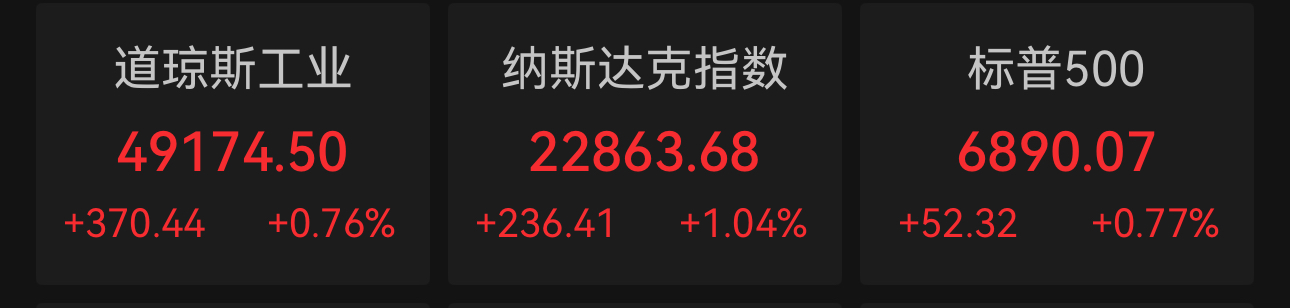
昨晚美股终于红了。道指涨0.76%,纳指涨超1%,AMD大涨8.8%,软件股集体回血。 资金发现AI不会一夜之间干掉软件公司,反而可能成为它们的工具,于是回来捡便宜的筹码。但别指 望回到去年那种普涨。分化才是常态。 给你三条操作建议: 第一,别只看涨跌,看逻辑。手里那些靠情绪推着的票,趁反弹调一调。 第二,盯住合作、订单、业绩。AMD涨是因为Meta签了合同,不是因为它又讲了新故事。 但你要看清一个细节——这次涨的,和以前不一样。 以前涨,是AI在"讲故事"。英伟达一飞冲天,沾AI就涨。昨晚涨,是AI在"签合同"。Meta跟AMD签了 多年协议,要部署6000兆瓦的GPU;Anthropic说Claude可以连DocuSign了,软件股应声而起。 这意味着什么?资金正在从"听故事"切换到"看实锤"。谁有订单、谁有合作、谁能落地,谁就涨。那些 只靠概念撑着的,继续跌。 另一个信号更有意思。美联储理事沃勒说,在他有生之年,没见过这样的技术革命。但他同时也说,就 业数据好,降息不急。古尔斯比更直接:通胀还在3%,别急着降。 这话翻译过来就是:利率高位会持续,但AI的产业趋势,他们看在眼里。 所以今晚的美股反弹,本质 ...

格林大华期货早盘提示-20260225
Ge Lin Qi Huo· 2026-02-25 00:20
Report Industry Investment Rating - Not provided Core Viewpoints - The global economy started to decline after reaching its peak at the end of 2025 due to the consecutive wrong policies of the United States [3] - The U.S. private - credit market panic is intensifying, and the world is on the verge of a "capital war" with high geopolitical tensions and capital market volatility [2] - The expected quantitative tightening policy of the Fed's nominee chair will have a strong negative impact on global equity and commodity assets [2] - The U.S. may experience a "flight from U.S. assets" trend from July to November 2026 due to Fed uncertainties [2] - The consumption trend of declining Las Vegas gambling revenue is similar to the early warning signals before the 2008 financial crisis [2] - The U.S. is adjusting its economic relationship with China and trying to revive its economic autonomy [2] - The K - type differentiation of U.S. consumers is intensifying, and funds are flowing from tech stocks to defensive sectors [2] - The U.S. returning to the Monroe Doctrine will have a profound impact on major asset classes [2] - The Fed's policy shift to rate - cut and quantitative tightening will cause a strong liquidity contraction expectation for equity assets [2] - The Nasdaq has broken through the six - month moving average, and AI substitution may trigger large - scale selling, and the wealth - disappearance effect of falling U.S. stocks may impact U.S. consumption [2] Summary by Related Catalogs Global Economy and Finance - **Important News** - Fed Governor Waller said that CEOs believe AI will lead to massive layoffs, and the labor market is weak and vulnerable [1] - A scenario report on AI - induced white - collar unemployment, consumption shrinkage, and economic contraction by Citrini Research caused a sharp market reaction, with stocks of some companies falling and pressure on payment and software sectors [1] - Traders are short - selling ETFs holding software company loans through record - high put options due to concerns about the software industry spreading from the stock market to the credit market [1] - Blue Owl restricted redemptions and sold assets, but some investors sold private - capital related assets, and the reported halving of Breitling's investment value by its private - equity owner added to market panic [1] - BDC discounts reached a post - pandemic high, and investors need to monitor four indicators to prevent discounts from turning into a hard constraint on the financing chain [1] - Anthropic's new tool caused IBM's stock price to plunge, and the network security sector was hit [1] - Moody's warned that U.S. accounting rules allow tech giants to exclude AI data - center costs from balance sheets [1] - The U.S. government is considering new tariffs on about six industries [1] - **Global Economic Logic** - Hedge funds are net - selling U.S. stocks at the fastest pace since March last year, and the U.S. private - credit market panic is worsening [2] - The world is on the verge of a "capital war" due to geopolitical tensions and capital - market volatility [2] - The expected quantitative tightening policy of the Fed's nominee chair will impact global assets [2] - The U.S. is adjusting its global strategy, which will have a far - reaching impact on major asset classes [2] - The Fed's policy shift will cause a liquidity contraction for equity assets [2] - AI substitution may trigger large - scale selling, and falling U.S. stocks may impact consumption [2]
【美联储理事警告:美联储货币政策可能无法应对AI引发的失业潮 】库克称,AI已引发美国劳动力市场的代际更迭,可能导致失业率上升,美联储可能无法以降息应对,货币政策可能陷入两难——降息既无法有效应对结构性失业,又可能推高通胀;AI或先推高、后压低中性利率;生产率统计数据或需五到十年才体现AI...
Sou Hu Cai Jing· 2026-02-25 00:14
Core Viewpoint - The Federal Reserve faces challenges in addressing potential unemployment caused by AI advancements, as monetary policy may not effectively respond to structural unemployment while also risking inflation [1] Group 1: Federal Reserve's Monetary Policy - The Federal Reserve's monetary policy may be caught in a dilemma, where lowering interest rates could fail to address structural unemployment caused by AI and may also lead to increased inflation [1] - AI is expected to initially raise and then lower the neutral interest rate over time [1] Group 2: Labor Market Impact - AI is causing a generational shift in the U.S. labor market, potentially leading to an increase in unemployment rates [1] - Productivity statistics may take five to ten years to reflect the impact of AI on the labor market [1] Group 3: Diverging Opinions - Federal Reserve Governor Waller believes that a report by Citrini, which triggered a significant drop in software and other industry stocks, exaggerates the potential impact of AI on employment [1] - Waller emphasizes that AI is a tool and will not replace human workers [1]

美股收高,热门中概股普涨,超微半导体涨近9%,台积电市值突破2万亿美元
Di Yi Cai Jing Zi Xun· 2026-02-24 23:40
Market Overview - The US stock market closed higher on Tuesday, led by technology stocks, as enthusiasm for artificial intelligence (AI) prospects overshadowed previous concerns about its disruptive potential across various industries [2] - The Dow Jones Industrial Average rose by 370.44 points, or 0.76%, closing at 49,174.50 points; the S&P 500 increased by 52.32 points, or 0.77%, to 6,890.07 points; and the Nasdaq Composite gained 236.41 points, or 1.05%, finishing at 22,863.68 points [2] Technology Sector Performance - Major tech companies saw gains, with Apple up 2.24% after announcing a significant expansion of its operations in Houston, including domestic production of the Mac mini [3] - Nvidia rose by 0.68%, Tesla by 2.39%, Microsoft by 1.18%, Amazon by 1.60%, and Meta by 0.32%, while Alphabet's Class A and C shares fell by 0.19% and 0.25%, respectively [3][4] - Taiwan Semiconductor Manufacturing Company (TSMC) surged 4.25%, with its market capitalization surpassing $2 trillion, marking a year-to-date increase of 26.94% [3] AI Developments - AMD's stock jumped 8.77% after announcing a $60 billion AI chip sale agreement with Meta over the next five years, which includes a potential 10% equity stake for Meta [3] - DocuSign's shares rose by 2.6% following Anthropic's announcement that its AI tool, Claude Cowork, can now integrate with DocuSign and other existing enterprise tools, boosting investor optimism about AI enhancing rather than replacing software companies [5] - Other software companies also benefited, with FactSet up 5.9% and Thomson Reuters up 11.5%, as AI developments continue to influence market sentiment [5] Chinese Stocks Performance - The Nasdaq Golden Dragon China Index increased by 1.37%, with notable gains in Alibaba (up 0.23%), Pinduoduo (up 1.06%), and JD.com (up 1.07%), while Baidu and ZTO Express saw slight declines [6] Economic Indicators - The 10-year US Treasury yield rose by 1 basis point to 4.037%, while the 2-year yield increased by 2.1 basis points to 3.461% [7] - The ADP reported an increase of 12,750 private sector jobs in the first week of February, marking the best weekly gain since November 2025 [7] - The consumer confidence index rose to 91.2 in February, exceeding market expectations [7]

超威半导体涨近9%,台积电市值突破2万亿美元,美股半导体与软件板块反弹
Di Yi Cai Jing· 2026-02-24 23:36
*Anthropic新产品提振软件股 *AMD与Meta达成芯片协议 *中概股多数走高 美国股市周二收高,科技股领涨。市场对人工智能前景的热情重新升温,暂时盖过了此前关于该技术可能对多个行业造成颠覆的担忧。 道琼斯工业指数上涨370.44点,涨幅0.76%,收于49174.50点;标普500指数上涨52.32点,涨幅0.77%,收于6890.07点;纳斯达克综合指数上涨236.41点,涨 幅1.05%,收于22863.68点。 标普500指数板块中,非必需消费品板块和科技板块涨幅居前,医疗保健板块表现最弱。 DocuSign股价上涨2.6%,此前Anthropic表示其Claude Cowork现在可以连接到DocuSign以及企业现有的其他工具,如Drive和Gmail。此举让投资者感到乐 观,认为人工智能或许能够弥补软件公司,而非取代它们。 这种乐观情绪也延伸到了软件领域的其他板块。赛富时和ServiceNow的股价分别上涨了4.1%和1.7%。iShares扩展软件与技术行业ETF上涨2%。 FactSet上涨5.9%,汤森路透美股上涨11.5%,Salesforce上涨4.1%,成为道指涨幅居前个股之 ...



超微半导体涨近9%,台积电市值突破2万亿美元,美股半导体与软件板块反弹
Di Yi Cai Jing· 2026-02-24 23:29
Core Viewpoint - The U.S. stock market saw gains led by technology stocks, driven by renewed enthusiasm for artificial intelligence, overshadowing previous concerns about its disruptive potential across various industries [1][7]. Group 1: Company Developments - Apple announced a significant expansion of its operations in Houston, marking the first production of the Mac mini in the U.S. [1][3]. - AMD has reached a chip agreement with Meta, indicating a strategic partnership in the semiconductor space [1]. - DocuSign's stock rose by 2.6% after Anthropic's announcement that its AI product can now integrate with DocuSign and other existing enterprise tools [5]. Group 2: Stock Performance - Major tech stocks experienced upward movement, with Apple rising by 2.24%, Nvidia up by 0.68%, Tesla increasing by 2.39%, and Microsoft gaining 1.18% [3]. - TSMC's market capitalization surpassed $2 trillion for the first time, with a year-to-date increase of 26.94% [3]. - AMD's stock surged by 8.77% following the announcement of a $60 billion AI chip sale to Meta over the next five years [3]. Group 3: Market Overview - The Dow Jones Industrial Average rose by 370.44 points, or 0.76%, closing at 49,174.50 points; the S&P 500 increased by 52.32 points, or 0.77%, to 6,890.07 points; and the Nasdaq Composite gained 236.41 points, or 1.05%, finishing at 22,863.68 points [1]. - The Nasdaq Golden Dragon China Index rose by 1.37%, with most Chinese concept stocks showing gains [6]. Group 4: Economic Indicators - The U.S. labor market showed signs of improvement, with private sector jobs increasing by 12,750 in the week ending February 7, marking the best weekly gain since November 29, 2025 [8]. - The consumer confidence index for February rose to 91.2, exceeding market expectations [8].

