
运动服饰

Search documents
可口可乐或放弃出售Costa;海底捞张勇归来;Alo将开中国首店|品牌周报
3 6 Ke· 2026-01-18 12:22
Group 1: Coca-Cola and Costa Coffee - Coca-Cola has reportedly abandoned the plan to sell Costa Coffee due to bidders' offers falling short of expectations, marking a "latest setback" for the company [1] - The expected price for Costa Coffee was around £2 billion (approximately ¥18.7 billion), which is about half of the £3.9 billion paid during its acquisition in 2018 [1] - Future plans for a potential sale of Costa Coffee may be revisited in the medium term [1] Group 2: Costa Coffee Financial Performance - Costa Coffee's revenue for 2024 is reported at £1.2 billion (approximately ¥11.2 billion), but the operating loss has more than doubled to £13.5 million (approximately ¥12.5 million) [2] - The company attributes the loss to weak foot traffic in commercial streets and pressure from low-cost competitors [2] Group 3: Haidilao Management Changes - Haidilao announced significant executive and board changes, with founder Zhang Yong returning as CEO effective January 13, 2026 [3] - The company aims to enhance management efficiency and decision-making through the promotion of intelligent and automated management processes [3] - New executive directors have been appointed to support innovation and long-term development [3] Group 4: Haidilao's Business Expansion - Since the launch of the "Pomegranate Plan" in 2024, Haidilao has introduced several new dining sub-brands, expanding its offerings beyond hot pot [4] - The company operates 14 restaurant brands with a total of 126 stores, in addition to its core hot pot business [4] Group 5: Hushang Auntie Profit Forecast - Hushang Auntie has issued a positive profit forecast for 2025, expecting net profits to reach between ¥495 million and ¥525 million, a year-on-year increase of 50% to 60% [5] - The growth is attributed to a multi-brand development strategy and ongoing operational efficiency improvements [5] Group 6: Salia's Profit Growth - Salia reported a net profit of ¥1.3 billion for the September to November 2025 period, a 16% year-on-year increase, achieving a two-year high [6] - The company’s sales increased by 15% to ¥31.7 billion during the same period, despite rising raw material costs [6] Group 7: Alo Yoga's Expansion in China - Alo Yoga is set to open its first store in China in Shanghai's Jing'an Kerry Center in the second quarter, with a second store planned for Beijing [7] - The brand emphasizes high-quality yoga and sportswear, with a pricing strategy positioned in the premium segment [7] Group 8: Global Yoga Apparel Market Growth - The global yoga apparel market is projected to reach $28.84 billion by 2025, with a compound annual growth rate of approximately 8.31% [8] - Alo Yoga has appointed former Dior executive Benedetta Petruzzo as CEO to accelerate global expansion [8][9] Group 9: Dongpeng Beverage Profit Forecast - Dongpeng Beverage expects a net profit of between ¥4.34 billion and ¥4.59 billion for 2025, representing a year-on-year growth of 30.46% to 37.97% [17] - The company continues to focus on channel management and product exposure to drive sales growth [17] Group 10: Moutai's Corporate Sales Strategy - Moutai has opened sales of its 1499 yuan per bottle Flying Moutai to qualifying corporate clients, focusing on existing customers for 2026 contracts [18] Group 11: San Yuan's Revenue Projection - San Yuan expects to achieve approximately ¥6.35 billion in revenue for the previous year, with a significant increase in net profit projected for 2025 [19] - The company maintains a leading market share in liquid milk in Beijing, with over 50% in low-temperature fresh milk [19] Group 12: Mammut Potential Acquisition - Swiss outdoor brand Mammut is considering a sale, with an estimated transaction value of up to €500 million, and Anta Group is seen as a potential buyer [20]


361度(01361):Q4彰显韧性,超品店有望助力超越行业增长
Xinda Securities· 2026-01-18 09:05
Investment Rating - The report does not provide a specific investment rating for the company [1]. Core Insights - The company's main brand retail sales achieved approximately 10% positive growth in Q4, reflecting strong resilience in a challenging consumer environment [2][3]. - The company's e-commerce platform also experienced high double-digit growth, indicating robust online performance [1][2]. - The introduction of the "super store" format has exceeded expectations, contributing to the company's growth strategy [3]. Summary by Relevant Sections Q4 Performance - The main brand and children's clothing both recorded nearly 10% growth in Q4, showcasing the company's strong anti-cyclical capabilities [2]. - The terminal discount remained stable at 7-7.1, with a healthy inventory turnover ratio of 4.5-5 times, laying a solid foundation for future product launches and channel expansion [2]. Product and Marketing Strength - The company continues to optimize its product matrix, with accelerated iterations of core running shoe series and strong sales of basketball shoes leveraging star athlete endorsements [2]. - Seasonal outdoor series products performed well, and the company is deepening its sports marketing efforts, including sponsorship of marathon events and high-end collaborations [2]. New Business Formats and Brands - The "super store" format has reached 126 locations by the end of 2025, with significantly better customer acquisition, cross-selling rates, and sell-through rates compared to conventional stores [3]. - The professional outdoor line, One Way, currently has 6 stores and is expected to synergize with the main brand to expand outdoor sports consumption scenarios [3]. 2026 Outlook - The company anticipates good growth in the 2026 spring/summer order, reflecting sustained channel confidence [3]. - Wholesale discounts are expected to maintain at 38%, demonstrating the company's commitment to channel profitability [3]. - With product strength, new business formats, and enhanced brand marketing, the company is projected to achieve growth that surpasses the industry average [3]. Financial Forecast - The company expects net profit attributable to the parent company for the fiscal years 2025-2027 to be 1.261 billion, 1.368 billion, and 1.564 billion respectively, with corresponding P/E ratios of 8.67X, 7.99X, and 6.99X [3].
lululemon深陷宫斗戏,股价跌超37%,70岁创始人沦为局外人
21世纪经济报道· 2026-01-17 13:21
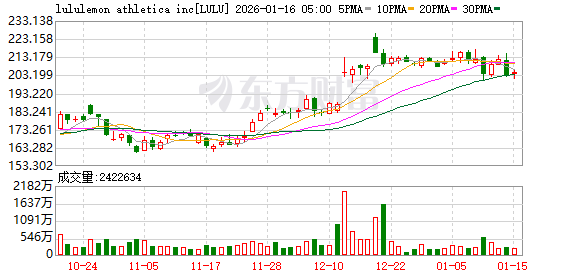
Core Viewpoint - Lululemon is facing significant challenges due to internal management turmoil and external pressures, particularly from its founder, Dennis Chip Wilson, who is advocating for a return to creative leadership and criticizing the current board for failing to innovate and maintain brand integrity [1][4][11]. Group 1: Stock Performance and Market Position - As of January 16, Lululemon's stock price fell by 1.53% to $201.87, marking a decline of over 37% from its peak of $340.25 on June 3, 2025 [1]. - The company's market capitalization has decreased significantly, dropping from a high of $600 billion to approximately $240.49 billion [11]. Group 2: Leadership and Governance Issues - Dennis Chip Wilson has publicly criticized the current management for stagnation in innovation and loss of brand identity, prompting him to nominate three independent board candidates for the upcoming shareholder meeting [4][11]. - Current CEO Calvin McDonald is set to resign on January 31, 2026, amid ongoing leadership disputes and pressure from Wilson [4][11]. Group 3: Historical Context and Founder’s Influence - Wilson's loss of control began in 2003 when he brought in external capital, which diluted his influence over the board despite retaining a majority stake [7]. - The company has seen significant growth under McDonald, with revenues more than doubling and expansion into over 30 regions, including a notable 46% revenue increase in the Chinese market [12]. Group 4: Competitive Landscape and Future Strategies - Lululemon is facing increasing competition from emerging brands like Alo Yoga and Vuori, which poses a challenge to its market position [15]. - The company is exploring further expansion into new product categories and markets, with a focus on returning to its high-end brand positioning under potential new leadership [13][15].


361度(01361.HK):25Q4线下流水同增10%左右 超品店拓店好于预期
Ge Long Hui· 2026-01-17 06:29
Core Viewpoint - The company has demonstrated stable operational performance with approximately 10% growth in offline retail sales for both adult and children's segments in Q4 2025, alongside significant growth in e-commerce channels [1] Group 1: Operational Performance - In Q4 2025, the main brand's offline retail sales recorded about 10% positive growth, while the children's clothing brand also achieved approximately 10% growth [1] - The overall e-commerce platform saw high double-digit growth, maintaining a rapid growth trend across all channels despite external disruptions such as weather [1] Group 2: Product Innovation and Collaborations - The company has launched several new products featuring advanced technology, including the new racing shoes Fly Burn 5 series and the new cushioning trail running shoes Lingci 1 [1] - New collaborations announced include partnerships with Kanglun Aerospace for technology applications in running products, and a renewed agreement with the Asian Olympic Council to enhance brand exposure [1] Group 3: Store Expansion and Market Position - The company has opened 126 "super stores" in mainland China by the end of 2025, exceeding initial expectations, which includes 105 large super stores and 21 children's super stores [2] - The ONE WAY brand has gradually increased its store count to 6, with potential for further expansion in 2026 if the operational model proves successful [2] Group 4: Financial Forecast - The company is projected to achieve net profits of 1.315 billion yuan, 1.489 billion yuan, and 1.684 billion yuan for the years 2025 to 2027, reflecting year-on-year growth rates of 14.50%, 13.20%, and 13.13% respectively [2] - The company maintains a "buy" rating due to its strong brand image, product development capabilities, and marketing effectiveness in the sports apparel sector [2]
LI NING(2331.HK)4Q25:STILL UNDER PRESSURE DESPITE FULL-YEAR GUIDANCE MET
Ge Long Hui· 2026-01-17 06:27
Core Viewpoint - LN's 4Q25 retail sell-through declined year-over-year, influenced by weak consumer sentiment, with management indicating that full-year 2025 results are in line with guidance, showing marginal revenue growth and net profit margin (NPM) nearing the upper end of high single digits [1][2] Retail Performance - 4Q25 retail sell-through was down low single digits (LSD) year-over-year, with offline retail sell-through declining mid single digits (MSD) due to weak consumer sentiment and insufficient traffic [2] - Direct-operated stores outperformed wholesale channels, aided by inventory optimization and deeper discounts in outlets [2] - E-commerce sell-through remained largely flat year-over-year, while the inventory-to-sales ratio improved to a healthy level of 4-5 months from 5-6 months in 3Q [2] Category Performance - Retail sell-through growth for the running category slowed to mid single digits (MSD) in 4Q25, while the badminton category saw growth moderate due to a high base [3] - Basketball and athleisure categories, which contributed 46% of sales in 1H25, continued to face pressure [3] Financial Guidance - Management expects LN's revenue for 2025 to achieve marginal growth, with NPM approaching the upper end of high single digits, supported by cost-saving measures, government subsidies, and closure of loss-making stores [3] - The anticipated inflection point for LN's performance may take longer due to ongoing adjustments in the athleisure category and increased marketing expenses related to the Olympic campaign [3] Brand Initiatives - LN is piloting a new "Dragon Store" concept in tier-1 and tier-2 cities, with a permanent store planned for Shanghai by mid-2026, aimed at enhancing brand image through Olympic-themed elements [4] - While the immediate revenue contribution from the "Dragon Store" is expected to be negligible, it is anticipated to improve brand positioning over time [4] Valuation and Rating - The current valuation of LN at approximately 17x/16x for FY25/26 is considered fair, with a target price of $18.9 based on 15x adjusted 2025E EPS [5][6] - The HOLD rating reflects limited earnings upside for 2026 due to slow recovery in consumer confidence and potential operating deleverage from increased selling expenses [6]
健康即新奢侈:奢侈品牌奔赴下一片蓝海
2 1 Shi Ji Jing Ji Bao Dao· 2026-01-16 22:25
Core Insights - The luxury market is shifting focus from material possessions to health investments, with health becoming a new symbol of luxury lifestyle [1][2] - The global health products and services market is projected to reach $2 trillion in 2024 and grow to $2.5 trillion by 2028, indicating significant potential for luxury brands [1][2] Group 1: Market Trends - The luxury goods industry has experienced fluctuations, while the health market has shown consistent growth, making it a stable sector for investment [2] - High-net-worth individuals are increasingly prioritizing health, with 84% of American consumers and 94% of Chinese consumers placing health as a top concern [2] Group 2: Strategic Moves by Luxury Brands - Kering's sale of its beauty business to L'Oréal for €4 billion and the establishment of a joint venture to explore the health and longevity sector reflects a strategic shift towards health [3] - Luxury brands are leveraging their strengths to penetrate the health market through cross-industry collaborations, physical experiences, and product innovations [2][3] Group 3: Innovative Health Experiences - Christian Dior has opened approximately 10 spa centers globally, marking a transition from service-based offerings to independent health-focused experiences [3] - Brands like Golden Goose and Alo Yoga are creating multi-functional spaces that combine health services with brand culture, enhancing consumer engagement [4] Group 4: Product Development - Luxury brands are launching health-themed product lines, such as Celine's Pilates series and Prada's Linea Rossa, which blend fitness equipment with luxury aesthetics [4] Group 5: Challenges and Risks - Entering the health sector poses risks due to high demands for professionalism and safety, requiring brands to ensure scientific backing and quality control [5] - Balancing the accessibility of health services with the exclusivity of luxury branding presents a challenge for companies [5] - The potential for consumer fatigue regarding health trends could impact brand marketing effectiveness [5] Group 6: Future Outlook - The integration of health and luxury is expected to grow as life expectancy increases and lifestyles evolve, potentially redefining luxury consumption in the next century [6]
智通港股解盘 | 证监会交易监管新增亮点 国产半导体需加速推进
Zhi Tong Cai Jing· 2026-01-16 13:43
Market Overview - The market experienced a high opening but quickly fell, with the China Securities Regulatory Commission emphasizing the need for stable and regulated market development, particularly targeting excessive speculation and market manipulation [1] - The Canada-China meeting resulted in significant trade agreements, including the reduction of tariffs on Chinese electric vehicles entering Canada from 100% to 6.1%, marking a notable shift in trade relations [1] Semiconductor Industry - The U.S. and Taiwan reached a trade agreement to reduce tariffs on semiconductor exports, with TSMC planning to expand its manufacturing capabilities in the U.S. This includes accelerating the timeline for its second factory in Arizona to late 2027 and applying for permits for a fourth factory [3] - TrendForce reported that DRAM contract prices are expected to increase by 55%-60% in Q1 2026 due to supply constraints driven by AI server demand, making the semiconductor supply chain a target for capital investment [3] - Companies like Zhaoyi Innovation and Cambridge Technology saw significant stock price increases, benefiting from the semiconductor industry's growth [3][4] Emerging Technologies - The application of silicon carbide in emerging fields such as AR glasses and advanced packaging is expanding, leading to long-term growth opportunities for companies like Tianyue Advanced [4] - The CES 2026 showcased a strong presence of Chinese brands in smart glasses, with several companies launching innovative products, indicating a growing market for AR technology [4] Energy Sector - The State Grid of China announced a fixed asset investment of 4 trillion yuan during the 14th Five-Year Plan, a 40% increase from the previous plan, aimed at meeting the electricity demand of data centers [5] - Companies like Weisheng Holdings are experiencing rapid growth in their data center business, supported by strategic partnerships and expected revenue increases [5] Consumer Goods - Li Ning is expected to benefit from increased brand exposure during the Milan Winter Olympics and strong growth in running and badminton categories, with stock prices rising significantly [6] - The price of rare earth minerals is anticipated to increase due to supply constraints and export controls, positively impacting companies like Jinchuan Group [6] Natural Gas Market - European natural gas prices are set to experience their largest weekly increase in over two years, driven by cold weather and geopolitical risks, with prices rising over 20% [7] - Companies involved in the energy sector, such as Kunlun Energy and New Hope Energy, are likely to benefit from this price surge [8] Robotics and AI - Sanhua Intelligent Controls is preparing for mass production of humanoid robots, with significant demand for liquid cooling systems driven by AI and data centers [9] - The company is expected to see substantial revenue growth, with a projected net profit increase of 25%-50% for the upcoming fiscal year [9][10]
lululemon“宫斗戏”:创始人为何沦为局外人
2 1 Shi Ji Jing Ji Bao Dao· 2026-01-16 13:21
Core Viewpoint - Lululemon Athletica is facing significant pressure on its stock price due to internal management turmoil and a public challenge from its founder, Dennis Chip Wilson, who is advocating for a board reform to restore the company's creative and brand focus [2][3]. Group 1: Stock Performance and Management Changes - Lululemon's stock price dropped by 4.13% to $203.14 on January 14, with a 52-week decline of 47.74% and a year-to-date decrease of 2.25% [2]. - Current CEO Calvin McDonald will resign on January 31, 2026, and the company is in search of a new successor [3][8]. - Wilson, despite stepping back from management in 2015, remains the largest individual shareholder and is actively challenging the board [3][7]. Group 2: Wilson's Critique and Board Dynamics - Wilson has publicly criticized the management for stagnation in innovation, talent loss, and brand positioning issues, urging the board to return power to those who understand creativity and branding [2][3]. - He has nominated three independent board candidates, including Marc Maurer, Laura Gentile, and Eric Hirshberg, for the 2026 board elections [2][10]. Group 3: Historical Context and Strategic Decisions - Wilson's loss of control began with a critical financing decision in 2005 when he sold 48% of the company to private equity, which led to a dilution of his board influence [5][6]. - The company went public in 2007, but tensions between Wilson and the management team over short-term financial performance escalated, leading to Wilson's eventual departure from the board [6][7]. Group 4: Financial Performance and Market Position - In the third quarter of fiscal year 2025, Lululemon's net revenue in the Americas declined by 2% to $1.7 billion, while the Chinese market saw a 46% increase in revenue to $465.4 million [8][9]. - The company aims to expand its product offerings and maintain price stability in the Chinese market, with a focus on continuous product innovation [9][10]. Group 5: Competitive Landscape and Future Outlook - Lululemon faces intense competition from emerging brands like Alo Yoga and Vuori, which poses a significant challenge for the company to navigate its current crisis [10][12]. - Wilson's influence as a founder and his strategic vision for the brand may play a crucial role in the upcoming board elections and the company's future direction [10][12].
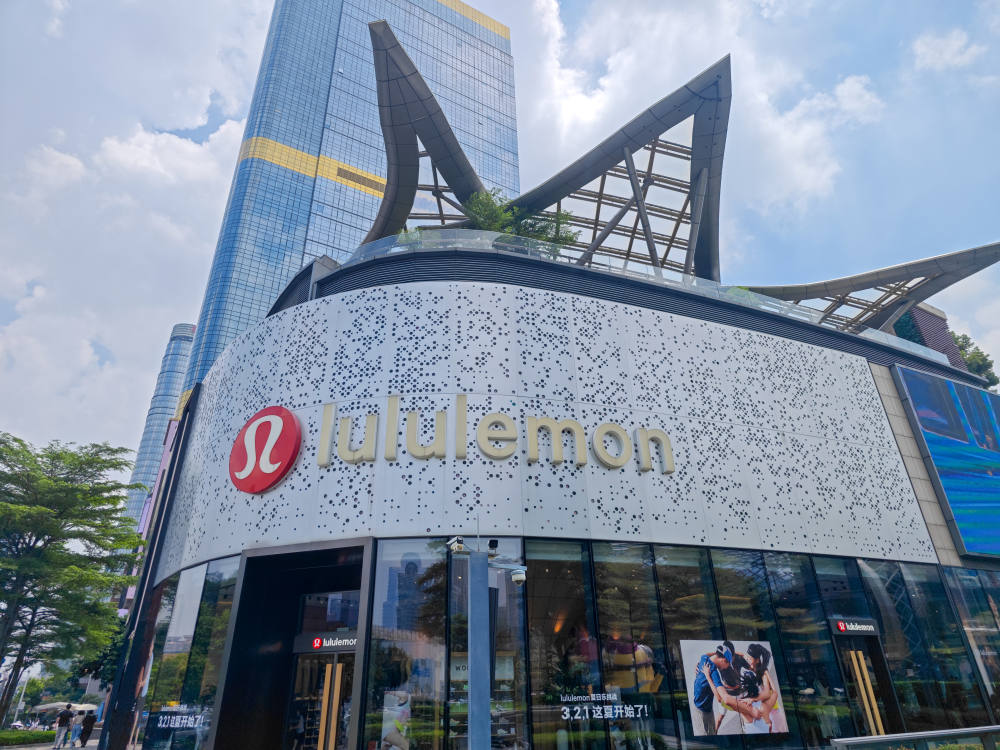
21特写|lululemon“宫斗戏”:创始人为何沦为局外人
2 1 Shi Ji Jing Ji Bao Dao· 2026-01-16 13:07
Core Viewpoint - Lululemon Athletica is facing significant pressure on its stock price and strategic direction due to a power struggle initiated by founder Chip Wilson, who has publicly criticized the management and called for board reforms to restore the brand's creative and innovative focus [2][4][11]. Group 1: Stock Performance and Management Changes - Lululemon's stock price dropped 4.13% to $203.14 on January 14, with a 52-week decline of 47.74% and a year-to-date decrease of 2.25% [2]. - Current CEO Calvin McDonald will resign on January 31, 2026, along with his board position, amid ongoing tensions with Wilson, who remains the largest individual shareholder [3][11]. Group 2: Founder’s Criticism and Board Nomination - Chip Wilson has publicly listed five major criticisms of the current management, including stagnation in innovation and brand identity issues, and has called for a return of power to individuals who understand creativity and branding [2][11]. - Wilson announced the nomination of three independent board candidates for the 2026 board seats, including Marc Maurer, Laura Gentile, and Eric Hirshberg, all of whom have significant experience in product innovation and brand marketing [2][14]. Group 3: Historical Context and Governance Issues - Wilson's loss of control over Lululemon began with a critical financing decision in 2003, which led to the introduction of private equity investors and a subsequent loss of board control [5][7]. - The company has faced ongoing governance challenges, particularly after its IPO in 2007, where conflicts arose between Wilson and the professional management team focused on short-term financial performance [8][10]. Group 4: Market Performance and Strategic Direction - Despite recent struggles, Lululemon's market value reached $60 billion by the end of 2023, although it has since fallen to approximately $24.05 billion [10]. - The Americas market saw a 2% decline in net revenue to $1.7 billion in Q3 of FY2025, while the Chinese market experienced a 46% increase in net revenue to $465.4 million, highlighting a disparity in performance across regions [11][12]. Group 5: Future Outlook and Competitive Landscape - Lululemon is under pressure to innovate and expand its product offerings, with plans to increase the proportion of new designs to one-third of its products by next year [12]. - The company faces intense competition from emerging brands like Alo Yoga and Vuori, which adds to the urgency of addressing its strategic and operational challenges [14].
12月新增贷款回稳,货币政策释放宽松信号
Bank of China Securities· 2026-01-16 08:44
Index Performance - HSI closed at 26,924, down 0.3% daily and up 5.0% YTD [2] - HSCEI closed at 9,267, down 0.5% daily and up 4.0% YTD [2] - HSCCI closed at 4,154, up 0.4% daily and up 3.4% YTD [2] - MSCI HK closed at 14,490, up 0.3% daily and up 5.9% YTD [2] - MSCI CHINA closed at 87, down 1.0% daily and up 5.0% YTD [2] - FTSE CHINA A50 closed at 15,340, unchanged daily and up 0.2% YTD [2] - CSI 300 closed at 4,751, up 0.2% daily and up 2.6% YTD [2] - TWSE closed at 30,811, down 0.4% daily and up 6.4% YTD [2] - SENSEX closed at 83,628, down 0.3% daily and down 1.9% YTD [2] - NIKKEI 225 closed at 54,111, down 0.4% daily and up 7.5% YTD [2] - KOSPI closed at 4,798, up 1.6% daily and up 13.8% YTD [2] - ASX 200 closed at 8,821, down 0.1% daily and up 1.7% YTD [2] - DJIA closed at 49,442, up 0.6% daily and up 2.9% YTD [2] - S&P 500 closed at 6,944, up 0.3% daily and up 1.4% YTD [2] - FTSE 100 closed at 10,239, up 0.5% daily and up 3.1% YTD [2] Commodity Price Performance - Brent Crude closed at US$64/bbl, down 4.1% daily and up 4.8% YTD [3] - Gold closed at US$4,616/oz, down 0.2% daily and up 6.9% YTD [3] - Copper closed at US$13,189/t, up 0.2% daily and up 6.2% YTD [3] - Aluminum closed at US$3,203/t, down 0.5% daily and up 7.9% YTD [3] - Nickel closed at US$18,495/t, up 5.8% daily and up 12.1% YTD [3] - CH domestic steel rebar 25 closed at RMB3,244/t, up 0.1% daily and up 0.1% YTD [3] - CH domestic high speed wire closed at RMB3,700/t, unchanged daily and up 0.3% YTD [3] - CH domestic hot rolled steel closed at RMB3,287/t, down 0.1% daily and up 0.5% YTD [3] - CH domestic cold rolled steel closed at RMB3,800/t, down 0.1% daily and down 0.1% YTD [3] - BDI closed at 1,608, unchanged daily and down 14.3% YTD [3] Key Macro and Earnings Releases - China's Retail Sales YoY in January 19th actual was 1.3%, higher than the consensus of 1.1% [4] - China's Industrial Production YoY in January 19th actual was 4.8%, lower than the consensus of 5.0% [4] - China's Fixed Assets Ex Rural YTD YoY in January 19th actual was -2.6%, higher than the consensus of -3.1% [4] - China's Property Investment YTD YoY in January 19th actual was -15.9%, higher than the consensus of -16.5% [4] - China's Residential Property Sales YTD YoY in January 19th actual was -11.2% [4] - China's Surveyed Jobless Rate in January 19th actual was 5.1%, lower than the consensus of 5.2% [4] - China's GDP YoY in January 19th actual was 4.8%, higher than the consensus of 4.5% [4] - China's GDP YTD YoY in January 19th actual was 5.2%, higher than the consensus of 5.0% [4] - China's 1-Year Loan Prime Rate on January 20th remained at 3.0% as expected [4] - China's 5-Year Loan Prime Rate on January 20th remained at 3.5% as expected [4] - US PCE Price Index YoY in January 22nd actual was 2.8% [4] - US Core PCE Price Index YoY in January 22nd actual was 2.8%, in line with the consensus [4] - US Personal Income MoM in January 22nd actual was 0.4%, in line with the consensus [4] - US Personal Spending MoM in January 22nd actual was 0.4%, lower than the consensus of 0.5% [4] - US GDP Annualized QoQ in January 22nd actual was 4.3%, in line with the consensus [4] - US S&P Global US Services PMI in January 23rd actual was 52.5%, lower than the consensus of 52.8% [4] - US U. of Mich. Sentiment in January 23rd actual was 54.0%, in line with the consensus [4] - US S&P Global US Manufacturing PMI in January 23rd actual was 51.8%, lower than the consensus of 52.0% [4] - BOJ Target Rate in January 23rd actual was 0.8%, in line with the consensus [4] New Loans and Monetary Policy - In December, new loans reached RMB910bn, down RMB80bn YoY, narrowing the YoY decline from -32.8% in November to -8.1% [6][8] - Corporate short - term, medium - and long - term loans, and bond financing bounced up YoY in December, while household sector credit demand remained sluggish [6][8] - Monetary policymakers announced incremental loosening policies of structural monetary tools and signaled room for further RRR and policy rate cuts [7][8] TSMC - Rating: BUY (TT & ADR). TSMC's 4Q25 EPS was 8% above consensus, and 1Q26 sales/margins are ahead of expectations [9][13] - The 2026 outlook projects sales growing close to 30% YoY with US$52 - 56bn CAPEX [9][13] - Management lifted long - term guidance, targeting 25% / mid - to - high 50s Group / AI sales CAGR (2024 - 29) and a 56% gross margin [10][13] - Target prices are raised to NT$2,420 / US$445 based on 24x 2026 - 27 P/E and a 16% premium [11][14] Li Ning - Rating: HOLD. Li Ning's 4Q25 retail sell - through was down LSD YoY, affected by weak consumer sentiment [15][17] - The full - year 2025 results were in line with guidance, with revenue achieving marginal growth and NPM approaching the upper end of HSD [15][17] - The inflection point may take longer due to athleisure adjustment and Olympic marketing investment lag [16][17] - The current 2025/2026 P/E valuation of 17x/16x appears full [16][17] Uranium Sector - Uranium spot price rose to US$83.5/lb, and major uranium ETFs rallied 22% YTD [18][20] - The White House's proclamation on critical materials may lead to supportive policies for uranium [19][20] - Positive outlook for the uranium sector in 2026, with top pick Kazatomprom, also recommending CGN Mining and Cameco [19][20] CMOC Group - Rating: HOLD. CMOC expects 2025 net profit of RMB20.0 - 20.8bn, up 48 - 54%, and 2025 copper output grew 14% YoY to 741k tonnes [21][23] - 2025 profit was 4 - 8% below forecast, though copper output was 5% above forecast; 2026 copper output target is 6 - 14% above forecast [22][23] - Forecasts and HOLD rating remain unchanged, and the market may react positively to output guidance [22][23]

