餐饮

Search documents
冬日火锅推升“暖消费”
Jing Ji Ri Bao· 2026-01-18 21:56
Group 1 - The core viewpoint is that the hot pot market in China is experiencing significant growth, with a projected market size of 617.5 billion yuan in 2024, representing a year-on-year increase of 5.6%, and expected to reach 650 billion yuan by 2025 [1] - The hot pot dining scene is becoming more flexible, with a noticeable increase in both foot traffic and sales for dine-in hot pot restaurants during winter, leading to online transaction volumes for hot pot dining surpassing all other categories [1] - There is a rising trend in home hot pot consumption, with instant delivery services facilitating family gatherings, and consumers are seeking customizable hot pot experiences that rival restaurant quality [1] Group 2 - The small hot pot segment is gaining momentum, with brands enhancing their offerings in terms of ingredients, broth, environment, and service, thus elevating the dining experience to a memorable event [2] - The "one person, one pot" model is becoming popular, with various themed stores and interactive activities enhancing social and emotional value, indicating a continuous expansion of the small hot pot market [2] - There is a growing diversity in hot pot flavor preferences, with consumers increasingly seeking personalized and unique options, leading to the emergence of niche hot pot styles like Guizhou sour soup hot pot [2] Group 3 - Companies need to be more sensitive to consumer demands and focus on enhancing the customer experience to identify growth opportunities in an increasingly segmented market [3]
舌尖非遗 街巷烟火西宁下南关街 文旅融合新生记
Xin Lang Cai Jing· 2026-01-18 21:31
Core Insights - The revitalization of Xinan Street in Xining, Qinghai Province, has transformed it into a popular destination, attracting approximately 4.2 million visitors in 2024 due to its rich history and local cuisine [1] Group 1: Development and Impact - Xinan Street has become a bustling market with a variety of local delicacies, benefiting from historical significance and targeted policies that have enhanced its appeal [1] - The local government has implemented measures to support street vendors, including the allocation of fixed stalls, which has significantly improved the income of low-income community members [2] - The street has successfully integrated cultural and tourism initiatives, with plans for infrastructure improvements and cultural events to sustain its popularity [2] Group 2: Employment and Economic Growth - Currently, Xinan Street has 394 designated stalls offering over 1,000 types of products, creating employment for 210 households and 710 individuals [3] - The local community has seen a positive economic impact, with vendors like Ma Youping reporting monthly incomes of around 5,000 yuan, marking a significant change in their livelihoods [2]
闯三关,展“虹”图
Xin Lang Cai Jing· 2026-01-18 21:30
Core Insights - The article highlights the successful urban renewal project in the Saihongqiao Street area, which has transformed a small community into a model for integrated public services, addressing the needs of both the elderly and children [1][2][3] Group 1: Urban Renewal and Community Services - The Saihongqiao Street area has repurposed an idle pharmaceutical office building into a comprehensive service complex, providing essential services such as dining, childcare, and wellness activities, effectively meeting the needs of over 17,000 residents [1][2] - The community has implemented a dual focus on elderly care and childcare, establishing new facilities that cater to the specific needs of local demographics, including a community kitchen that serves nearly 1,000 meals daily [2][3] - The integration of elderly and childcare services within the same facility has been recognized as a successful model by national authorities, promoting a shared space for both demographics [2] Group 2: Challenges and Solutions in Urban Development - The article discusses the challenges faced during the demolition and relocation of residents in the Yujia'ao area, which involved complex negotiations with 269 households over a period of more than three years [4] - A focused effort by the local party committee, including the establishment of task forces, has been crucial in resolving disputes and facilitating the relocation process, demonstrating a commitment to community engagement [4] - The ongoing urban renewal projects, such as the transformation of the Glass Fiber Institute area, are seen as essential for attracting new industries and improving the overall urban landscape [6][7] Group 3: Economic Development and Business Support - The Saihongqiao Street area is actively promoting economic development through innovative strategies like "on-site investment attraction," which involves direct engagement with businesses to facilitate their establishment and growth [7][8] - The local government has streamlined processes for business registration and support, exemplified by the rapid establishment of new companies within 24 hours, enhancing the area's attractiveness for new enterprises [8] - The commitment to nurturing existing businesses while attracting new ones is evident in the plans to provide substantial space for local brands to expand, fostering a supportive ecosystem for economic growth [8]
184名“雪山向导”带动两千人就业
Xin Lang Cai Jing· 2026-01-18 18:29
Group 1 - The core viewpoint is that Qinghai Province is successfully developing specialized labor brands, exemplified by the "Snow Mountain Guide" brand, which has created significant employment opportunities and economic growth in the region [1][2] - By 2025, the "Snow Mountain Guide" initiative has trained 184 specialized guides and has become a provincial labor brand, directly benefiting over 2,000 individuals in related industries such as accommodation, catering, and local product sales [1] - The initiative has led to the establishment of over 60 business entities around the Gangshika Snow Peak scenic area, promoting a model of employment and income generation that connects multiple sectors [1] Group 2 - The development of labor brands in Qinghai is part of a broader strategy by the provincial human resources department to enhance employment quality and scale, with a focus on integrating employment with industry [2] - The province has cultivated 49 labor brands with regional and industrial characteristics, achieving an average annual employment boost of over 400,000 individuals, which accounts for more than 40% of the total labor transfer in the province [2] - This initiative supports high-quality employment and contributes to rural revitalization efforts, aligning with the goal of achieving "one county, one product" [2]
西贝关店再引预制菜争议 餐饮企业凛冬煎熬
Zheng Quan Shi Bao· 2026-01-18 18:17
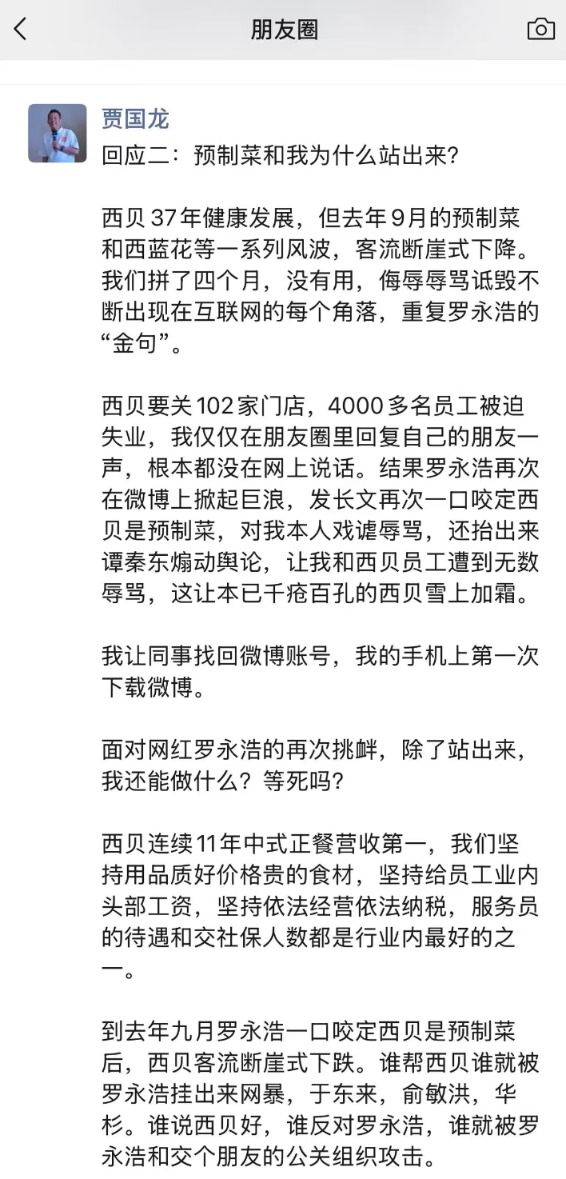
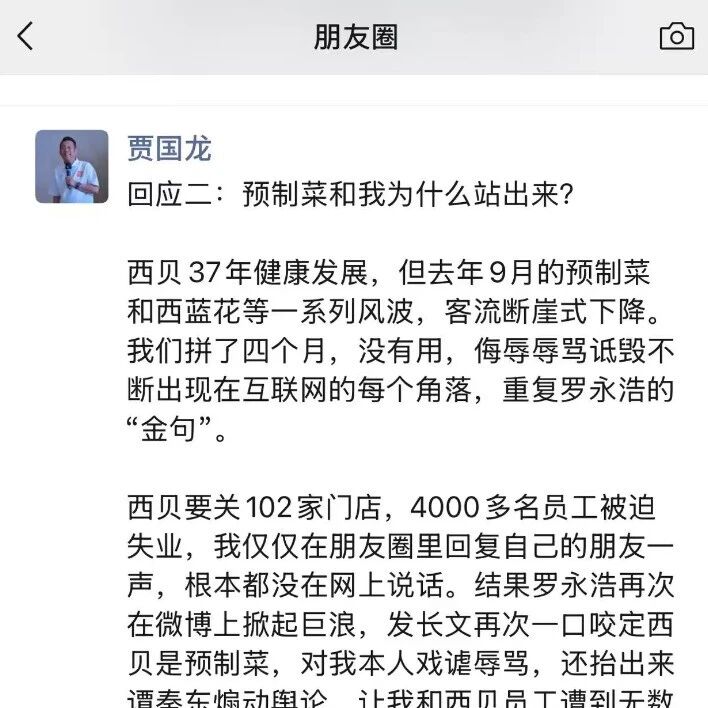
在西贝计划关闭超百家门店曝光后,贾国龙和罗永浩的"论战"再受关注。 从行业角度看,多位餐饮公司高管对记者表示,近年来餐饮行业已处于"寒冬"之中,食材、人力、房租 等刚性成本持续攀升,多重压力叠加下,餐饮业经营压力持续加大。 争议"预制菜"定义 日前,贾国龙在微博上声称:"西贝要关102家门店,4000多名员工被迫失业,我仅仅在朋友圈里回复自 己的朋友一声,根本都没在网上说话。结果罗永浩再次在微博上掀起巨浪,发长文再次一口咬定西贝是 预制菜,让我和西贝员工遭到无数辱骂,让本已千疮百孔的西贝雪上加霜。" 对此,中国食品产业分析师朱丹蓬对证券时报记者表示,预制菜的核心争议在于行业、品牌方与消费端 三方对其认知不统一,且缺乏明确统一的标准。在预制菜国家标准尚未出台的背景下,各方对预制菜的 认知、理解与定义各不相同,这正是造成当前中国预制菜市场秩序较为混乱的根本原因。 16日晚间,"罗永浩的十字路口"以及"西贝贾国龙"两个账号均被禁言。罗永浩在朋友圈发文确认平台对 其禁言15天,并将这一举措解读为"对我的保护"。他表示,个人不会再回应此事,相信跟预制菜透明化 相关的法律法规也会尽快出台。 1月16日下午,记者探访西贝北 ...
于烟火中现活力 在开放中向未来
Xin Lang Cai Jing· 2026-01-18 17:24
Core Insights - Jinan's consumption market is thriving, with a significant increase in import and export value, reaching 258.1 billion yuan in January-November 2025, a year-on-year growth of 24.9%, leading both the province and other sub-provincial cities [2][10] - The city has implemented a dual approach of "policy + activities" to stimulate consumption, issuing nearly 6 billion yuan in consumer vouchers and subsidies over five years, directly boosting consumption by over 50 billion yuan [3][4] - Jinan's retail sales of consumer goods are expected to exceed 550 billion yuan in 2025, marking a significant increase compared to the end of the 13th Five-Year Plan [4] Consumption Potential - The expansion of the "old for new" subsidy program from 8 to 12 categories has significantly boosted consumer spending [2] - The "泉城购" consumption brand has been innovatively developed, with over 3,000 promotional events held in the past five years [3] - New retail landmarks and commercial complexes have emerged, enhancing the shopping experience and diversifying consumer choices [5] Trade and Logistics - Jinan has built a modern commercial circulation system, establishing 21 county-level logistics distribution centers and 56 township commercial service centers, ensuring comprehensive coverage [6] - The city has been recognized as a national pilot for modern commercial circulation systems and has developed a robust recycling network [6] E-commerce and Exhibition - Jinan has established a thriving e-commerce ecosystem, with approximately 24,000 e-commerce companies and over 250,000 online stores, maintaining double-digit growth in online retail for three consecutive years [8] - The city has hosted over 600 exhibitions in five years, enhancing its reputation as a competitive exhibition city [8] Foreign Trade Growth - Jinan's foreign trade has shown resilience, with a projected total import and export value exceeding 280 billion yuan for the year, doubling from the end of the 13th Five-Year Plan [10] - The city has developed a comprehensive support system for foreign trade, including a directory of quality foreign trade service companies and the establishment of overseas warehouses [9][10] Future Outlook - The Jinan Municipal Bureau of Commerce aims to enhance domestic and international circulation, focusing on consumption, trade innovation, and high-quality development in the upcoming 15th Five-Year Plan [11]


行业周报:赤子城科技Dramabite成短剧黑马,关注AKK菌布局企业-20260118
KAIYUAN SECURITIES· 2026-01-18 14:44
Investment Rating - Investment rating: Positive (maintained) [1] Core Insights - The luxury goods retail revenue in China is showing signs of recovery, with high-end brands like LVMH, Hermès, and Prada experiencing positive growth since Q2 2025 [15][16] - The global network literature market is witnessing rapid growth, particularly in Latin America, with WebNovel reaching nearly 400 million cumulative users by October 2025 [34][35] - The micro-drama and comic-drama market in China is projected to exceed 100 billion yuan in 2025, significantly surpassing the film box office revenue [37][38] - The probiotic market is expanding, with a focus on next-generation probiotics (NGPs) like AKK bacteria, which show significant potential in health applications [55][63] Summary by Sections 1. Duty-Free Shopping - Post-New Year duty-free shopping in Hainan shows strong growth, with sales reaching 3.89 billion yuan and a 49.6% year-on-year increase in shopping amount [31][33] - The high net worth individuals are expected to drive luxury consumption, with a notable increase in spending on preservation-type luxury goods [15][16] 2. Network Literature - The Chinese network literature market reached 49.55 billion yuan in 2024, with a 29.37% year-on-year growth, while the overseas market grew by 10.68% [34] - WebNovel has cultivated nearly 530,000 authors and over 820,000 original works, with a significant increase in user engagement [34][35] 3. Micro-Drama - The micro-drama and comic-drama market in China is expected to reach 100 billion yuan in 2025, with a 98% year-on-year growth [37][38] - The user base for micro-dramas is approaching 700 million, with a strong preference among female viewers [40][42] 4. Probiotics - The global probiotic market is projected to grow at a CAGR of 8.7%, reaching 93.49 billion USD by 2028, with China's market expected to reach 134.89 billion yuan by 2024 [55][63] - Next-generation probiotics like AKK bacteria are gaining traction, with significant potential in health management and consumer interest [55][63]




贾国龙和罗永浩“论战”背后,餐饮市场供强需弱矛盾突出……
证券时报· 2026-01-18 14:38
以下文章来源于e公司 ,作者证券时报 曹晨 e公司 . 在被曝出西贝计划关闭超百家门店后,贾国龙和罗永浩之间的论战持续受到关注。 11 月 17 日晚间,网上流传出贾国龙在朋友圈发文回应的截图。他表示,"国家六部委 2024 年已明确说明,拥有中央厨房的连锁餐饮不属 于预制菜范畴,西贝依法经营。"对此,证券时报记者从贾国龙的微信好友处确认了该朋友圈截图内容的真实性。 e公司,证券时报旗下专注上市公司新媒体产品,立志打造A股上市公司资讯第一平台。提供7x24小时上市公司标准化快讯,针对可能影响上市公司股价的 主题概念、行业事件及时采访二次解读,从投资者需求出发,直播上市公司有价值的活动、会议。 在回应中,贾国龙称: "西贝要关 102 家门店, 4000 多名员工被迫失业,我仅仅在朋友圈里回复自己的朋友一声,根本都没在网上说话。 结果罗永浩再次在微博上掀起巨浪,发长文再次一口咬定西贝是预制菜,让我和西贝员工遭到无数辱骂,让本已千疮百孔的西贝雪上加霜。" "西贝这件事不能再说了,他们太难了,要息事宁人、韬光养晦才是。"港股上市的多品牌"新餐饮"平台企业百福集团 CEO 王小龙对证券时 报记者表示,"这几天在一些群 ...
餐饮、潮玩及家电行业周报-20260118
Haitong Securities International· 2026-01-18 14:34
Investment Rating - The report assigns an "Outperform" rating to several companies including Pop Mart, Anta Sports, Huazhu Group, Li Ning, Miniso, Atour Group, and Xtep International, with target prices ranging from 6.99 to 354.00 [1]. Core Insights - The integration of AI and advertising models is gradually taking effect, with Generative Engine Optimization (GEO) expected to dominate the traffic competition in the AI-driven search era. The GEO market is projected to grow significantly, with a forecasted global market size of USD 11.2 billion in 2025, reaching USD 100.7 billion by 2030 [3][13]. - Key companies in the sector, such as Qingmu Technology, are actively developing their e-commerce ecosystems and leveraging proprietary systems to enhance their market position [4]. Company Performance - Top performers this week include Guoquan (+11.9%), Haidilao (+10.7%), Nayuki (+6.5%), SuperHi (+5.4%), and Hisense (+3.8%). Conversely, underperformers include JS Global Life (-4.6%), Roborock (-5.2%), TCL Electronics (-6.3%), Chagee (-8.2%), and Pop Mart (-9.3%) [6][14]. - Haidilao has appointed Zhang Yong as CEO, aiming to bring new perspectives and enhance board efficiency [8][15]. Industry Dynamics - Qdama and YUEN KEE FOOD have submitted listing applications to the Hong Kong Stock Exchange, with projected revenues showing growth [11][12]. - Big Catering has also submitted a listing application, with significant revenue growth reported for 2024 and Q3 2025 [12].

西贝要关闭102家门店!贾国龙和罗永浩“论战”背后 餐饮市场供强需弱矛盾突出……
Zheng Quan Shi Bao Wang· 2026-01-18 14:11
在被曝出西贝计划关闭超百家门店后,贾国龙和罗永浩之间的论战持续受到关注。 11月17日晚间,网上流传出贾国龙在朋友圈发文回应的截图。他表示,"国家六部委2024年已明确说 明,拥有中央厨房的连锁餐饮不属于预制菜范畴,西贝依法经营。"对此,证券时报记者从贾国龙的微 信好友处确认了该朋友圈截图内容的真实性。 "西贝这件事不能再说了,他们太难了,要息事宁人、韬光养晦才是。"港股上市的多品牌"新餐饮"平台 企业百福集团CEO王小龙对证券时报记者表示,"这几天在一些群里,大家就预制菜的话题吵翻了天。 我试着舌战群儒,最后也败下阵来,每个人都活在自己的认知圈层里。中国食品行业实在是任重而道 远。" 从行业角度看,多家餐饮公司高管对记者表示,近年来餐饮行业已处于"寒冬"之中,食材、人力、房租 等刚性成本持续攀升,多重压力叠加下,餐饮业经营压力持续加大。但是餐饮行业的社会价值巨大,作 为大消费领域的重要一环,餐饮业在拉动消费方面作用突出;同时,其劳动密集型的属性,也在解决就 业问题上发挥了重要作用。 贾国龙持续发声 在回应中,贾国龙称:"西贝要关102家门店,4000多名员工被迫失业,我仅仅在朋友圈里回复自己的朋 友一声,根 ...