先进制造业

Search documents
十五五”如何发力 深圳市长提了“五个着力
2 1 Shi Ji Jing Ji Bao Dao· 2025-12-18 09:27
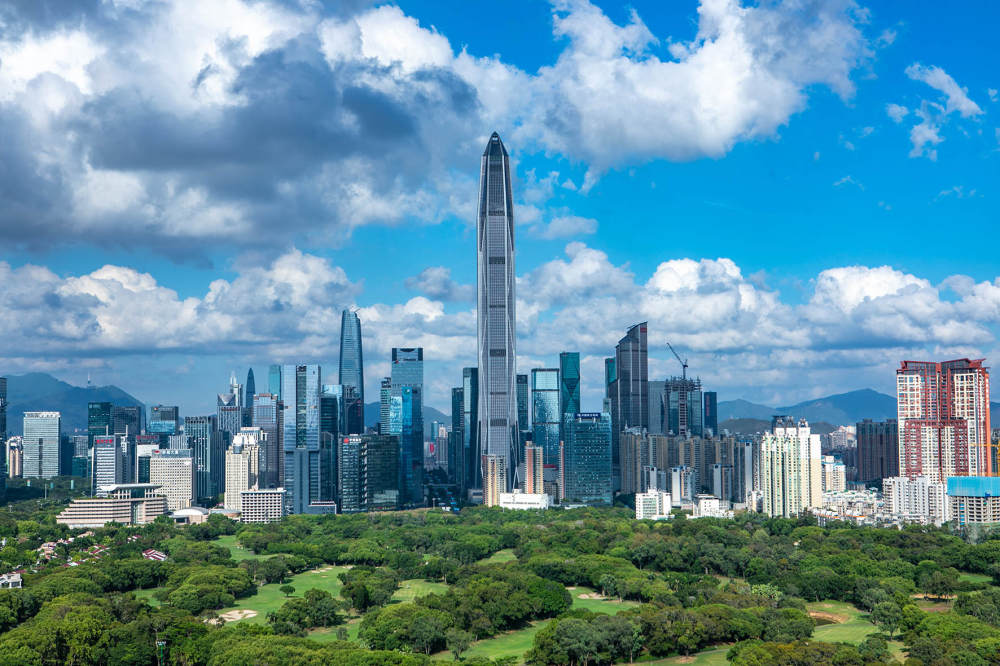
21世纪经济报道记者 陈思琦 深圳报道 具体来看,深圳规上工业总产值、工业增加值从2022年开始保持全国城市"双第一";"十四五"期间,深 圳固定资产投资总额可达4.5万亿元、约为"十三五"的1.5倍;社会消费品零售总额从2020年的8664亿元 增加到2024年的1.06万亿元;外贸进出口总额从2020年的3.05万亿元增加到2024年的4.5万亿元,跃居全 国城市首位;来源于深圳辖区的一般公共预算收入预计连续五年保持在万亿元以上。 从经济结构看,"十四五"前四年,深圳战略性新兴产业增加值年均增长10%以上、占GDP比重提高到 42.3%。 具体来看,深圳建成投产11个百亿级大型工业项目,先进制造业和高技术制造业增加值占规上工业比重 分别达68.2%、58.2%;集成电路、工业机器人、智能手机等39种工业产品产量占全国比重超10%;现代 服务业增加值占服务业比重提高至76.5%;国家级专精特新"小巨人"企业数量达1333家、跃居全国城市 首位;境内外上市企业592家、瞪羚企业215家、独角兽企业42家,均位居全国前列。 "十四五"期间,深圳科技创新亦取得重大突破,创造多个"首位"。总体来看,深圳全社会研发投 ...
“十五五”如何发力 深圳市长提了“五个着力”
2 1 Shi Ji Jing Ji Bao Dao· 2025-12-18 09:16
Economic Growth - Shenzhen's GDP increased from 2.78 trillion yuan in 2020 to 3.68 trillion yuan in 2024, with an average annual growth rate of 5.5%, leading among first-tier cities [1][2] - Fixed asset investment during the "14th Five-Year Plan" is expected to reach 4.5 trillion yuan, approximately 1.5 times that of the "13th Five-Year Plan" [2] - Retail sales of consumer goods rose from 866.4 billion yuan in 2020 to 1.06 trillion yuan in 2024 [2] - Foreign trade import and export volume increased from 3.05 trillion yuan in 2020 to 4.5 trillion yuan in 2024, ranking first among cities in the country [2] Industrial and Technological Development - Shenzhen maintained the top position in national cities for industrial output and added value since 2022 [2] - The added value of strategic emerging industries grew by over 10% annually, accounting for 42.3% of GDP [2] - R&D investment increased from 151.08 billion yuan in 2020 to 245.31 billion yuan in 2024, with an annual growth rate of 12.9% [3] - Shenzhen ranked first in the number of national specialized and innovative "little giant" enterprises, totaling 1,333 [3] Infrastructure and Urban Quality - Significant improvements in urban quality, particularly in transportation, with major projects like the Ganshen High-speed Railway and the Shenzhen-Zhongshan Link [5] - The airport passenger throughput is expected to exceed 65 million this year, and metro operation mileage surpassed 600 kilometers [5] - Social welfare expenditures reached 1.6 trillion yuan, accounting for nearly 70% of fiscal spending [5] Future Development Strategies - Shenzhen aims to expand domestic demand comprehensively and enhance effective investment [7] - The city plans to cultivate new productive forces and become a hub for innovation and advanced manufacturing [8] - Emphasis on deepening reform and opening up, particularly in the Guangdong-Hong Kong-Macao Greater Bay Area [8] - Focus on high-quality urban development and improving public services to ensure equitable benefits for citizens [8]

共建自由贸易港 共享开放新机遇
Sou Hu Cai Jing· 2025-12-18 05:42
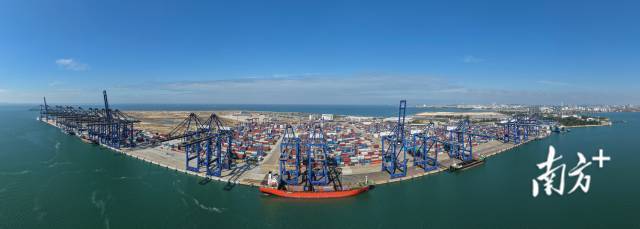
今天是2025年12月18日,恰逢党的十一届三中全会召开47周年。在这个具有重要象征意义的日子,海南 自由贸易港正式启动全岛封关。 截至2025年11月 广东海南先进 制造业合作产业园 已累计引入企业831家 完成投资35.8亿元 落地产业项目 54个 总投资93亿元 建设海南自由贸易港,是习近平总书记亲自谋划、亲自部署、亲自推动的改革开放重大举措。2018年4 月,在庆祝海南建省办经济特区30周年大会上,习近平总书记郑重宣布"中国特色自由贸易港"的建设构 想。2020年,党中央、国务院印发《海南自由贸易港建设总体方案》。党的二十届四中全会胜利闭幕后 不久,习近平总书记再赴海南,听取海南自由贸易港建设工作汇报,明确建设自由贸易港的重大意义、 战略目标、主要目的,强调"各级各有关方面密切协作、主动作为,通过持续努力,全面实现海南自由 贸易港建设目标"。一系列重要指示要求,蕴含深远的战略谋划和战略考量,为高标准建设海南自由贸 易港指明方向、注入强劲动力。 洋浦国际集装箱码头拥有1482米岸线,含1个20万吨级泊位,2025年扩建完成后年通过能力达500万标 箱,可通行全球最大2.4万箱位集装箱船。南方+记者 钟志 ...
焦点访谈|封关在即!海南自由贸易港将进入扩大高水平开放新阶段
Yang Shi Wang· 2025-12-17 14:22
Core Viewpoint - The official launch of the Hainan Free Trade Port's full island closure on December 18 marks a significant step in China's commitment to high-level opening-up and the construction of an open world economy [1][9]. Group 1: Free Trade Port Policies - The Hainan Free Trade Port will implement a unique customs supervision area characterized by "one line" for opening and "two lines" for control, allowing for more liberalized and convenient policies [3][5]. - The "one line" refers to the special open policies for foreign entities, while the "two lines" manage the entry of goods and services into the mainland under domestic regulations [5][11]. - The tax policy includes a "zero tariff" approach, which will not directly apply to the mainland, ensuring that control measures are in place to facilitate openness [7][15]. Group 2: Economic Impact and Opportunities - The closure will transform Hainan into an open experimental zone, enhancing the flow of people, capital, goods, and data from abroad [5][9]. - The number of duty-free goods will increase from 1,900 to over 6,600, and the zero-tariff level will rise from 21% to 74%, significantly benefiting trade [13][15]. - The processing and value-added policy allows products with over 30% value addition to be sold to the mainland without tariffs, which is expected to attract high-end manufacturing to Hainan [15][17]. Group 3: Regional Cooperation and Development - Hainan is expected to play a pivotal role in connecting domestic and international markets, enhancing cooperation with regions like the Guangdong-Hong Kong-Macao Greater Bay Area and the Yangtze River Economic Belt [21][19]. - The establishment of cross-provincial cooperation parks is facilitating the entry of quality enterprises into Hainan, leveraging the advantages of the free trade port [19][21]. - The Hainan Free Trade Port's development is anticipated to benefit ordinary citizens, particularly in healthcare, by introducing international innovative drugs and medical devices [21][23]. Group 4: Long-term Goals and Future Outlook - The full island closure is just the beginning of a long-term task to build a high-level free trade port with significant international influence by the middle of this century [25]. - Continuous improvement of the policy system and the establishment of an open economic new system are essential for the future success of the Hainan Free Trade Port [25].

湘财证券曹旭特:稳中提质,聚焦高质量发展主线
券商中国· 2025-12-17 06:49
Core Viewpoint - The Central Economic Work Conference has outlined the direction for economic work in 2026, emphasizing the importance of fundamental support and long-term development trends, with several sectors expected to continuously release high-quality development momentum [1] Group 1: Technological Innovation - Technological innovation is entering a new stage of deep application, with a robust support system developing in hard technology fields such as advanced manufacturing [2] - The construction of three major international technology innovation centers (Beijing-Tianjin-Hebei, Yangtze River Delta, Guangdong-Hong Kong-Macau Greater Bay Area) is fostering a collaborative environment for talent, technology, and industry [2] - The deepening expansion of "Artificial Intelligence +" will drive AI technology's penetration into various sectors, including manufacturing, healthcare, transportation, and services, enhancing the collaborative upgrade of the industrial chain [2] Group 2: Modern Industrial System - The industrial system in China is evolving towards consolidating strengths and enhancing overall competitiveness, involving the transformation of traditional industries through digital and green technologies [3] - The continuous optimization of the industrial ecosystem will highlight the advantages of industry leaders and companies with genuine technological innovation capabilities [3] Group 3: Domestic Demand Market Potential - Domestic demand, particularly consumption, plays a fundamental role in China's economic growth, with rising household income and innovative consumption scenarios creating numerous opportunities [4] - Diverse and quality consumption sectors such as the silver economy, ice and snow economy, leisure tourism, and service consumption are expected to benefit continuously [4] - Actions aimed at reducing logistics costs and promoting urban renewal will not only constitute effective investments but also enhance economic efficiency, creating opportunities in modern logistics, smart cities, and green buildings [4] Group 4: Efficiency and High-Level Opening Up - The continuous release of institutional dividends is crucial for high-quality development, with the deepening of the national unified market construction expected to eliminate regional barriers and enhance factor allocation efficiency [5] - The expansion of free trade zones, the construction of Hainan Free Trade Port, and the development of the Belt and Road Initiative will open broader market spaces for internationally competitive Chinese high-end manufacturing, cross-border e-commerce, and financial services [5] Group 5: Green Transformation - The green transformation under the "dual carbon" goals is viewed as a high-certainty long-term development track, with the construction of a new energy system and the development of a national carbon market driving growth in wind power, photovoltaics, energy storage, and carbon monitoring services [6] - Energy-saving and carbon-reduction renovations, along with comprehensive solid waste management, will create sustained demand in the environmental technology and circular economy sectors [6] - New development models in real estate and the construction of "good houses" may present new opportunities in green buildings, smart homes, and urban operation services [6] Conclusion - With the Central Economic Work Conference convened, the coordinated efforts of various policies and the deepening of reform and opening up are expected to solidify and enhance the positive trend of economic recovery, with the capital market serving as a vital platform for resource allocation and a window to observe economic structural changes [7]

广西实施培育先进制造业集群行动
Guang Xi Ri Bao· 2025-12-17 03:33
Core Viewpoint - The Guangxi Autonomous Region is implementing an "Action Plan for Cultivating Advanced Manufacturing Clusters" to enhance its manufacturing sector through five key tasks over the next two years, aiming to establish a national-level advanced manufacturing cluster and 20 regional-level clusters by 2027 [1][2][3] Group 1: Cluster Collaborative Innovation Network - Guangxi will focus on building a collaborative innovation network led by enterprises, creating technology innovation and industry development roadmaps for each cluster [1] - High-level collaborative innovation platforms will be established, supporting leading enterprises in participating in major national and regional innovation platforms [1] - The plan includes promoting the application of innovative technologies and developing new industries through technology innovation service institutions and industry chain extension projects [1] Group 2: Intelligent, Green, and Integrated Development - The region will accelerate the digital upgrade of clusters by implementing the "Artificial Intelligence + Manufacturing" initiative, creating application scenarios and high-quality industrial data [2] - Guangxi aims to promote green and low-carbon transformation by establishing circular coupling industries and advancing common green development across sectors [2] - The integration of manufacturing and services will be encouraged, transitioning from product provision to offering "product + service" solutions [2] Group 3: Strengthening Quality Enterprises - A gradient cultivation mechanism for quality enterprises will be established to develop leading companies and stimulate innovation among small and medium-sized enterprises [2] - The plan includes enhancing standards, upgrading quality, and creating recognizable and reputable brands through trademark guidance stations [2] Group 4: Creating a Favorable Industrial Development Ecosystem - Guangxi will focus on attracting and retaining talent through major projects like "Guangxi Talent Small High Ground" and optimizing talent mobility within clusters [3] - Financial services will be improved by establishing a "white list" of enterprises for financing and enhancing supply chain financial services [3] - The business environment will be optimized with measures like remote services and a negative list for market access, ensuring a streamlined process for enterprises [3] Group 5: Enhancing Governance Modernization - The establishment of specialized cluster promotion organizations will leverage their advantages as bridges for development [3] - Mechanisms for work coordination among related cities will be promoted to enhance the alignment of industrial planning and information sharing [3]
【致言同声】致同咨询合伙人武建勇:“耐心资本”入场,“十五五”投资聚焦安全与新质生产力
Sou Hu Cai Jing· 2025-12-16 15:03
"十五五"时期是我国推动产业升级、筑牢发展安全根基的关键阶段。面对日益复杂的国际竞争格局,中 国企业如何夯实产业基础、培育具有韧性与竞争力的新增长动能,已成为各方关注的焦点。 近日,致同咨询融资与并购财务顾问服务主管合伙人武建勇在媒体分享会上,与在场记者展开深入交 流。他从并购市场与资本运作的视角切入,系统剖析"十五五"期间投资演进的新逻辑与涌现的新机遇, 为企业的战略决策与投资布局提供重要参考。 武建勇解析了"十五五"时期企业投资的新动向。"与此前相比,中国并购市场今年增长的主要动力是本 土交易。数据显示,截至目前,全球并购交易量占比从2024年的9.5%升至9.75%,跑赢全球。"他表 示,正是由于中国本土产业结构的调整,大型国有企业进入并购市场,产融基金持续发力、特别是地方 性产投基金的介入共同促进了本土市场并购的快速增长。 武建勇认为,在"十五五"期间,产业投资策略有四个重点: 武建勇坦言,产业投资面临挑战,核心是国有企业投资平衡难题。国企适合布局大产业集群与产业链, 民企擅长点的突破,需优势互补。目前部分领域已有突破,如国企投资新能源汽车不再仅以盈利为 KPI,但国企仍需解决考核体系、风控思维、治理 ...

新蓝图 新动能 新跨越 市委十四届十次全会擘画长沙未来五年发展战略宏图
Chang Sha Wan Bao· 2025-12-16 03:24
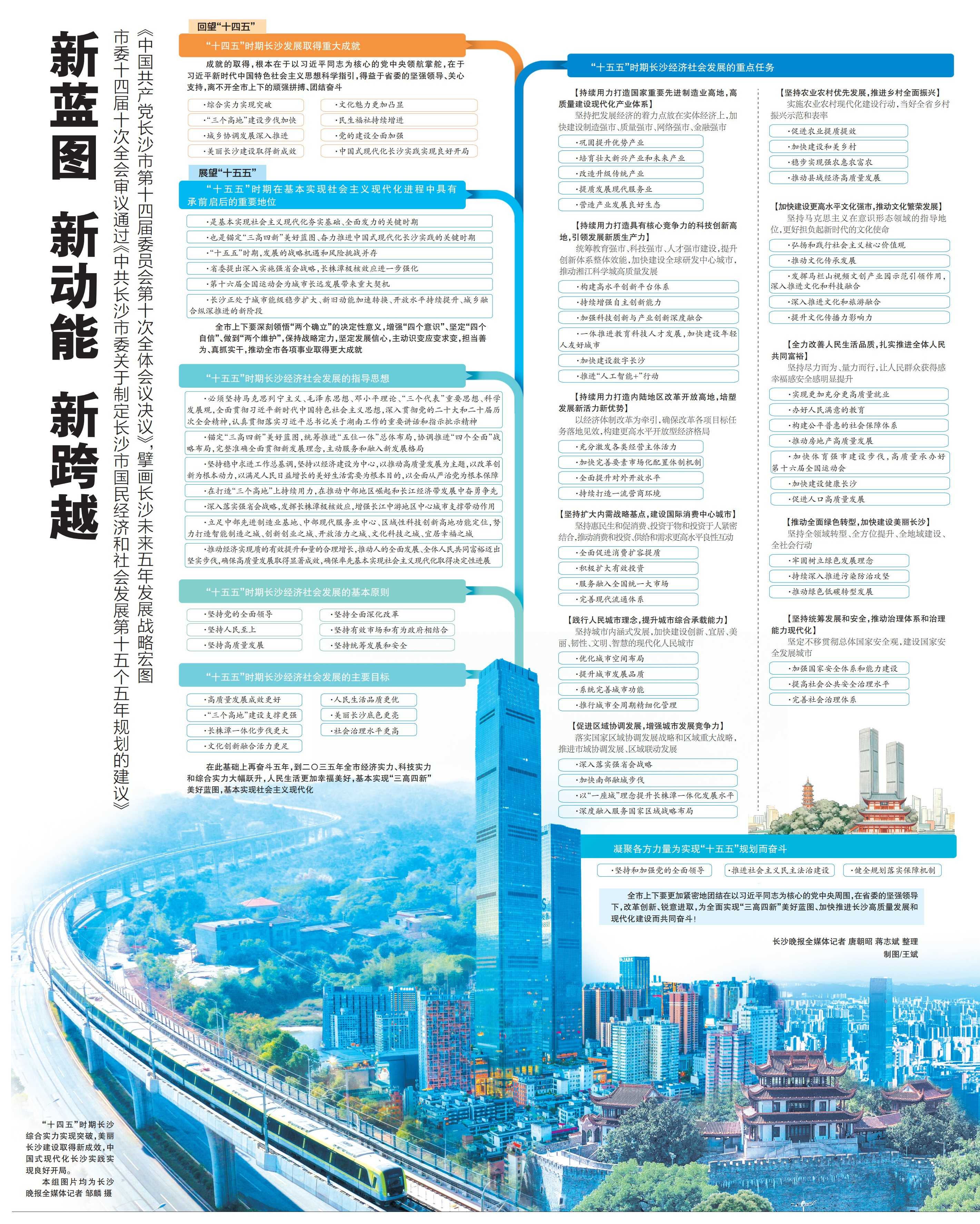
Core Viewpoint - The development of Changsha during the "14th Five-Year Plan" has achieved significant accomplishments, guided by Xi Jinping's leadership and the implementation of Xi Jinping's Thought on Socialism with Chinese Characteristics for a New Era [1][7] Summary by Relevant Sections Achievements during the "14th Five-Year Plan" - Comprehensive strength has made breakthroughs [1][10] - The construction of the "three high grounds" has accelerated [1][7] - Urban-rural coordinated development has been advanced [1][7] - Progress in building a beautiful Changsha has been achieved [1][7] - Cultural charm has been enhanced [1][7] - Continuous improvement in people's well-being [1][7] - Strengthening of the Party's construction [1][7] - Successful initiation of the Chinese-style modernization practice in Changsha [1][7] Outlook for the "15th Five-Year Plan" - The "15th Five-Year Plan" is a critical period for solidifying the foundation for socialist modernization and advancing the beautiful blueprint of "three high grounds and four new" [2][8] - The period presents both strategic opportunities and challenges [2][8] - Changsha is in a new phase of steadily expanding urban capacity and accelerating the transformation of old and new driving forces [2][8] Guiding Principles for Economic and Social Development - Adherence to the comprehensive leadership of the Party [3][13] - Emphasis on people-centered development [3][13] - Commitment to high-quality development [3][13] - Focus on comprehensive deepening of reforms [3][13] - Combination of effective market and proactive government [3][13] - Coordination of development and security [3][13] Main Goals for the "15th Five-Year Plan" - Enhanced effectiveness in high-quality development [4][13] - Stronger support for the construction of the "three high grounds" [4][13] - Greater progress in the integration of Changsha-Zhuzhou-Xiangtan [4][13] - Increased vitality in cultural innovation and integration [4][13] - Improved quality of life for the people [4][13] - Brighter foundation for a beautiful Changsha [4][13] - Higher levels of social governance [4][13] Key Tasks for the "15th Five-Year Plan" - Continuous efforts to build a national advanced manufacturing high ground and a modern industrial system [14] - Development of a competitive technology innovation high ground [14] - Promotion of reform and opening up in inland areas [14] - Enhancement of urban comprehensive carrying capacity [15] - Promotion of regional coordinated development [15] - Prioritization of agricultural and rural development [15] - Acceleration of cultural prosperity and development [16] - Improvement of people's quality of life and promotion of common prosperity [16] - Advancement of green transformation and construction of a beautiful Changsha [16] - Modernization of governance systems and capabilities [17]
北京今年向民间资本公开推介项目投资超2300亿元
Zhong Guo Xin Wen Wang· 2025-12-15 17:29
Core Viewpoint - Beijing has introduced over 230 billion RMB in projects for private capital investment this year, focusing on various sectors including technology innovation, infrastructure, and public services [1][2] Group 1: Project Overview - In the first half of the year, Beijing promoted 119 projects to private capital with a total investment of approximately 124.4 billion RMB [1] - A second batch of 120 projects has been identified, with a total investment of around 110.6 billion RMB, aiming to attract about 33.1 billion RMB from private capital [1] Group 2: Sector Distribution - The projects span advanced manufacturing, commercial services, cultural tourism, and rural agriculture [1] - The distribution of projects by region shows that Fangshan District has the highest number of projects at 37, followed by Shijingshan District with 11, and Changping District with 9 [1] Group 3: Investment Types - There are 66 equity investment projects with a total investment of about 34.9 billion RMB, seeking to attract approximately 16.1 billion RMB from private investors [2] - Debt investment projects total 10, with an investment of 8.5 billion RMB, aiming for 1 billion RMB from private capital [2] - Cooperative operation projects consist of 26, with a total investment of 63.2 billion RMB, targeting 12.8 billion RMB from private capital [2] - There are 18 franchise projects with a total investment of 4 billion RMB, looking to attract 3.2 billion RMB from private investors [2]
A股年内指数体系全面“焕新”释放多重积极信号 “含科量”进一步增强
Yang Shi Wang· 2025-12-15 08:20
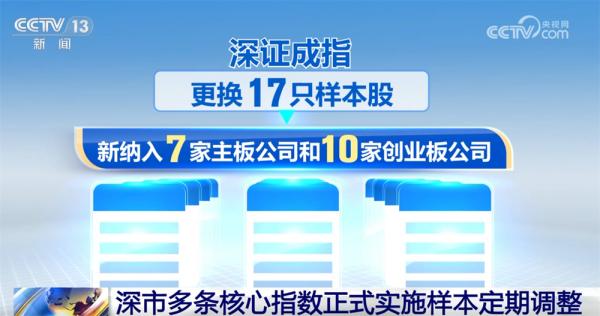
Core Insights - The recent adjustment of core indices in the Shenzhen market reflects a significant shift towards emerging industries, with the weight of strategic emerging industries in the ChiNext Index reaching 93% and 98% in the ChiNext 50 Index, highlighting a strong focus on sectors like artificial intelligence and semiconductors [3][5]. Group 1: Index Adjustments - The Shenzhen Stock Exchange announced a periodic adjustment of core indices, with the Shenzhen Component Index replacing 17 constituent stocks, including 7 from the main board and 10 from the ChiNext board [1]. - The Shanghai Stock Exchange also completed adjustments, with the SSE 50 Index changing 4 stocks, the SSE 180 Index changing 7, and the SSE 380 Index changing 38 stocks, indicating a comprehensive overhaul of the index system [1]. Group 2: Implications for Investors - The adjustments are expected to trigger significant reallocation of passive funds, with estimates suggesting over 100 billion yuan will be reallocated due to the changes in major indices [11]. - For index fund investors, the inclusion of new constituent stocks enhances the technological focus of their portfolios, allowing them to benefit from China's high-quality economic development [12]. Group 3: Market and Economic Significance - The adjustments serve as a market-driven incentive for listed companies to focus on their core businesses, innovate, and improve quality and returns, thereby attracting more medium to long-term capital [16]. - The changes in indices are seen as a calibration of the capital market's ability to serve the real economy, reflecting China's achievements in innovation-driven development [18][20].