
新能源产业

Search documents
中山市来京举办湾区创享生活体验季系列主题活动
Bei Jing Shang Bao· 2025-06-20 08:16
Group 1 - The event "Taste Life, Smart Zhuhai" was held in Beijing, marking the conclusion of a series of thematic activities aimed at promoting communication between the Northeast industrial base and the Guangdong-Hong Kong-Macao Greater Bay Area [1][2] - Zhongshan, the hometown of Sun Yat-sen, is strategically located in the Greater Bay Area, benefiting from improved transportation links such as the Shenzhong Passage, which allows for a half-hour commute to Shenzhen [1] - Zhongshan's housing policy includes "no purchase restrictions, no sales restrictions," allowing all national provident fund contributors to apply for loans, with additional incentives such as a 5‰ electronic consumption voucher for purchases made by the end of the month [1] Group 2 - Zhongshan has 38 national industrial bases and 3 trillion-level industrial clusters, particularly in emerging industries like new energy and biomedicine, complementing Beijing's strengths in technology research and high-end manufacturing [2] - The event served as a platform for collaboration between entrepreneurs from both regions, highlighting the importance of coordinated development between northern and southern regions [2] - The integration of Zhongshan's smart living concept with the advantages of various industries and innovative genes from different regions provides a new paradigm for regional coordinated development [2]
RCEP生效三年释放红利 云南对接区域合作迎新机遇
Zhong Guo Xin Wen Wang· 2025-06-19 20:49
Core Viewpoint - The RCEP has become a significant force in stabilizing the multilateral trade system and promoting regional economic integration, with new development opportunities for Yunnan as a key gateway to South Asia and Southeast Asia [1][2]. Group 1: RCEP Impact on Trade and Investment - RCEP has released continuous dividends since its implementation, with the overall external trade volume of the RCEP region projected to reach approximately $13.5 trillion in 2024, exceeding the world trade growth rate by 3.3 percentage points [1]. - The agreement has effectively promoted trade and investment growth within the region by lowering tariffs, simplifying customs procedures, and easing market access, thereby enhancing regional supply chain integration and economic resilience [1]. Group 2: Yunnan's Strategic Position - Yunnan's geographical advantage is highlighted as it is the only Chinese province bordering ASEAN and South Asian countries, serving as a natural geographical intersection [2]. - The operationalization of the China-Laos Railway has further strengthened Yunnan's role in regional connectivity, with significant growth in trade volume expected in 2024 [2]. - The issuance of RCEP certificates of origin by Kunming Customs has saved enterprises nearly 100 million yuan in tariffs, and the "Railway + RCEP Customs Clearance" model has reduced logistics costs by 35% [2]. Group 3: Innovation and Industry Development - RCEP provides a crucial driving force for technological innovation in the Asia-Pacific region, with a 90% zero-tariff policy on goods effectively lowering trade costs for technology products [2]. - The original accumulation rules under RCEP create new opportunities for regional industrial chain integration, particularly in sectors like renewable energy and new materials [3]. - Companies are encouraged to leverage RCEP's framework to deepen regional collaboration and expand into international markets, especially in advantageous industries [3].
珠三角粤东西北携手,超越帮扶迈向共赢
Nan Fang Du Shi Bao· 2025-06-19 15:32
Group 1 - The core viewpoint of the news is the successful completion of the 2025 Pearl River Delta and Guangdong East-West North Economic Cooperation Investment Conference, which resulted in 661 investment projects with a total investment amount of 302.2 billion yuan [1][2] - The conference highlighted the importance of economic cooperation between the Pearl River Delta and Guangdong East-West North regions, facilitating industrial transfer and promoting coordinated regional development in Guangdong [1][2] - The investment projects cover various industries, including electronic information, new energy, new materials, food processing, and low-altitude economy, indicating a diverse economic focus [1][2] Group 2 - The previous two investment conferences resulted in 575 projects with a total investment of 481.4 billion yuan, showcasing the growing investment interest in the Guangdong East-West North region [2] - The feedback from enterprises indicates that local government efficiency and industrial support capabilities are crucial factors for businesses considering investment in the region [2][3] - The conference also featured local officials promoting their regions' resources, industry characteristics, and preferential policies, which is expected to create a strong incentive effect for investors [3]


江西吉安培育壮大千亿产业集群 去年电子信息产业营收突破2000亿元
Zhong Guo Xin Wen Wang· 2025-06-19 13:00
Core Insights - The core message emphasizes the commitment of Ji'an to foster a trillion-yuan industrial cluster and enhance various sectors through comprehensive reforms and targeted initiatives [1][2]. Group 1: Industrial Development - Ji'an aims to cultivate a trillion-yuan industrial cluster, having signed 19 "dual excellence" projects with investment or output exceeding 10 billion yuan since last year [1]. - The city plans to achieve 200 billion yuan in revenue from the electronic information industry by 2024 [1]. - Key sectors such as new materials, advanced equipment manufacturing, and biomedicine are expected to reach a revenue of 930 billion yuan, with projections to exceed 1 trillion yuan [2]. Group 2: Agricultural Enhancement - Ji'an is focusing on standardizing and branding its agricultural products, particularly through the "井冈山" (Jinggangshan) brand, which has seen annual sales exceeding 13 billion yuan, a 61% increase [4]. - The brand management and supply chain companies have been established to enhance the marketing and distribution of agricultural products [2]. Group 3: Infrastructure and Quality of Life - The city has implemented over 30 reform initiatives, including land revitalization in industrial parks, which have been recognized as exemplary cases at national and provincial levels [4]. - Ji'an's port throughput is projected to grow by 159% in 2024, indicating a strong focus on enhancing water transport infrastructure [4]. - The city has improved urban living conditions by transforming 88 idle plots and adding over 5,200 parking spaces, achieving a 99% satisfaction rate among residents [4].
5月份国民经济运行总体平稳、稳中有进 稳增长政策发力下消费表现亮眼
Qi Huo Ri Bao Wang· 2025-06-16 22:15
Economic Performance Overview - In May, the national economy demonstrated stable growth with industrial added value increasing by 5.8% year-on-year and 0.61% month-on-month, while the cumulative growth from January to May reached 6.3% [1] - Retail sales of consumer goods totaled 41,326 billion yuan in May, marking a 6.4% year-on-year increase, which is 1.3 percentage points higher than the previous month [1] - Fixed asset investment (excluding rural households) amounted to 191,947 billion yuan from January to May, reflecting a 3.7% year-on-year growth, with a notable 7.7% increase when excluding real estate development investment [1] Economic Characteristics - The economy exhibited five key characteristics: stable growth supported by policy measures, steady operation with a decreasing unemployment rate, continuous improvement in domestic demand and production supply, accumulation of new growth drivers in high-end manufacturing and digital economy, and resilience in the face of external challenges [2][3] - The overall economic performance in May was characterized by strong resilience and vitality, with macro policies working in coordination to support stability [3] Price and Real Estate Market - In May, the Consumer Price Index (CPI) showed a slight decline year-on-year, influenced by international factors and falling food prices, while the core CPI's growth rate steadily expanded [4] - The real estate market remained stable, with a narrowing year-on-year decline in housing prices across 70 major cities and a continuous reduction in inventory [4] Consumption and Investment Trends - Consumption growth in May exceeded expectations, driven by policies such as trade-in programs and national subsidies, with retail sales reaching their highest level of the year [6] - Key categories such as home appliances, furniture, and communication equipment saw significant sales increases, indicating the effectiveness of consumption stimulus policies [6] Future Outlook - The economic fundamentals remain strong, with expectations for continued monetary easing and fiscal support for consumption and real estate markets [5][6] - The focus will be on enhancing domestic demand and structural reforms to ensure stable economic growth amid external uncertainties [3]
卧龙新能腾挪资产谋转型 关联交易被问询
Zhong Guo Jing Ying Bao· 2025-06-13 20:29
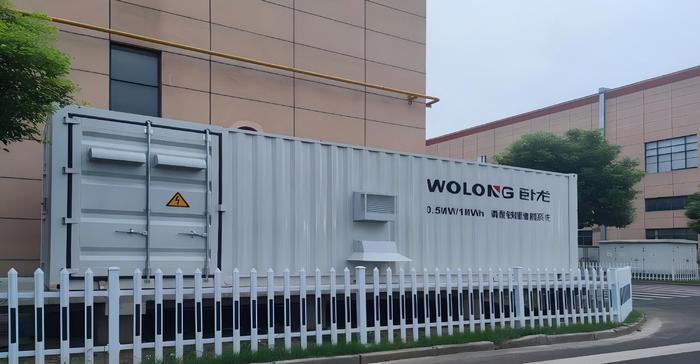
Core Viewpoint - Wolong New Energy is undergoing a strategic transformation by selling 90% of its stake in Wolong Mining to focus on the renewable energy sector, as indicated by the recent inquiry from the Shanghai Stock Exchange regarding the asset sale [2][4]. Group 1: Asset Sale and Financial Impact - Wolong New Energy plans to sell 90% of its stake in Wolong Mining to Zhejiang Wolong Shunyu Investment Co., Ltd. for 22,050 million yuan, which reflects a valuation of 22,690 million yuan for 100% of the mining company, resulting in a 22.49% appreciation [3][4]. - The mining trade business accounted for 68.6% of Wolong New Energy's total revenue in 2024, generating 2.477 billion yuan, but it experienced a 28.62% year-on-year decline [3][6]. - The projected gross margin for Wolong Mining from 2025 to 2029 is expected to decline, with estimates ranging from 1.96% to 2.12% [3][4]. Group 2: Strategic Shift to Renewable Energy - Wolong New Energy has made several acquisitions in the renewable energy sector, including Dragon Energy, Wolong Energy Storage, Wolong Hydrogen Energy, and Shunfeng Power, marking a complete shift in its strategic focus [5]. - The company officially changed its name to Wolong New Energy Group Co., Ltd. on April 22, indicating a commitment to the renewable energy market [5]. - Despite the potential of the renewable energy sector, the current contributions to profitability are limited, with the newly acquired companies, except for Dragon Energy, currently operating at a loss [5][8]. Group 3: Financial Performance and Challenges - Wolong New Energy has faced continuous declines in net profit since 2019, with a drop from 511 million yuan to 40.86 million yuan by 2024 [7]. - The company reported a 24.08% decrease in total revenue for 2024, amounting to 3.611 billion yuan, and a 75.15% decline in net profit [7]. - In the first quarter of 2025, the company achieved a revenue of 1.105 billion yuan, a 97.53% increase year-on-year, but net profit fell by 22.22% to 36 million yuan, indicating challenges in transitioning to renewable energy [8].

“6群13链”续写新传奇 千年商埠扬州迈向“双万亿”
Zheng Quan Shi Bao· 2025-06-12 17:49
Core Insights - Yangzhou is leveraging its historical significance and modern industrial strategies to achieve economic growth, targeting a GDP of over 1 trillion yuan by 2025 [1][9] - The city has established a "613" industrial system, focusing on six major industry clusters and thirteen emerging industrial chains to drive high-quality development [3][4] Group 1: Economic Performance - In 2024, Yangzhou's industrial sales reached 912.4 billion yuan, marking a significant increase from 612.6 billion yuan in 2020, achieving three consecutive milestones of 100 billion yuan [1][4] - The city's GDP for 2024 was reported at 780.964 billion yuan, with a year-on-year growth rate of 6.0% [1][4] Group 2: Industrial Development - The "613" industrial system includes six main clusters: high-end equipment, new energy, new materials, new generation information technology, automotive and parts, and life health [3][4] - The thirteen emerging industrial chains encompass sectors such as aviation, industrial mother machines, high-tech ships, smart grids, and artificial intelligence [3][4] Group 3: Innovation and Technology - Yangzhou's aviation industry has grown significantly, with 63 enterprises and sales of 18.4 billion yuan in 2024, becoming a key player in the national intelligent unmanned systems alliance [2][3] - The city has seen a 54.6% increase in high-tech enterprises, with high-tech industry output accounting for a larger share of the industrial sector [4][8] Group 4: Investment and Capital - Yangzhou aims to secure over 1,200 new industrial projects worth over 100 million yuan each by 2025, supported by a robust investment ecosystem [9][10] - The establishment of a 941 billion yuan industrial fund cluster aims to provide continuous financial support for the city's industrial transformation [9][10] Group 5: Cultural and Economic Integration - The "Yuhua March" International Economic and Trade Tourism Festival has become a significant platform for promoting trade and cultural tourism, facilitating the signing of 789 major industrial projects in 2024 [12][13] - Yangzhou's unique cultural identity as a "World Food City" and "World Canal City" enhances its attractiveness for investment and business development [12][13]
ST帕瓦: 浙江帕瓦新能源股份有限公司关于稳定股价措施暨第五期以集中竞价交易方式回购股份方案的公告
Zheng Quan Zhi Xing· 2025-06-11 11:35
Core Viewpoint - Zhejiang Pava New Energy Co., Ltd. plans to implement a share buyback program to stabilize its stock price, with a total buyback amount ranging from RMB 10 million to RMB 20 million, using its own funds for employee stock ownership plans or equity incentives [1][5][11] Buyback Plan Details - Total buyback amount: Not less than RMB 10 million and not more than RMB 20 million [1][5] - Source of funds: Self-owned funds [1][7] - Purpose of buyback: For employee stock ownership plans or equity incentives [1][5] - Maximum buyback price: Not exceeding RMB 13.88 per share, which is 150% of the average trading price over the last 30 trading days prior to the board's resolution [1][7] - Buyback method: Centralized bidding trading [1][6] Buyback Timeline - Buyback period: Up to 3 months from the date of approval by the shareholders' meeting [2][5] - Trigger for buyback measures: The stock price has been below RMB 12.5961 for 20 consecutive trading days, meeting the criteria for initiating the buyback [4][5] Shareholder Plans - Certain shareholders may have plans to reduce their holdings in the next 3 to 6 months, while other key stakeholders do not plan to reduce their holdings during this period [2][11] Financial Impact - The buyback amount, if at the upper limit of RMB 20 million, would represent approximately 0.69% of total assets, 0.98% of net assets, and 1.27% of current assets as of December 31, 2024 [10][11] - The company's debt ratio is 29.68%, indicating that the buyback will not significantly impact its debt repayment ability or ongoing operations [10][11] Governance and Authorization - The board of directors has proposed the buyback plan, which requires approval from the shareholders' meeting, scheduled for July 1, 2025 [5][13] - The board is authorized to manage all matters related to the buyback, including adjustments to the plan based on market conditions [13][14]

盐城:打造长三角“飞地经济”示范区
Xin Hua Ri Bao· 2025-06-11 00:28
Core Viewpoint - Yancheng is actively exploring the "flying economy" development model to inject new momentum into regional coordinated development within the context of the Yangtze River Delta integration strategy [1] Group 1: Definition and Advantages of "Flying Economy" - The "flying economy" refers to a regional economic cooperation model that breaks administrative boundaries between economically disparate regions to achieve resource complementarity and coordinated development [1] - Yancheng has significant advantages in developing the "flying economy," including the presence of a 307 square kilometer "Shanghai flying area" in Dafeng District, which serves as the largest agricultural production and capacity cooperation base outside Shanghai [1] - Yancheng is the only city in northern Jiangsu included in the Yangtze River Delta central area, possessing deep-water ports and ample construction land, which enhances its potential for industrial transfer and port-related industries [1] Group 2: Current Projects and Development Status - Yancheng currently has multiple "flying economy" projects, with the Hu-Su Dafeng Industrial Linkage Cluster as a core initiative, established in November 2015, covering an area of 33 square kilometers [2] - The industrial cluster focuses on three major industries: new energy, new infrastructure, and new agriculture, with an annual average growth of 43.4% in industrial sales and 108.5% in industrial output value since the 14th Five-Year Plan [2] - Yancheng has also collaborated with cities like Changzhou and Suzhou to establish industrial parks, focusing on high-end equipment manufacturing and new energy industries [2] Group 3: Impact of "Flying Economy" Demonstration Zone on Industrial Development - The establishment of the "flying economy" demonstration zone can optimize and upgrade Yancheng's industrial structure by attracting high-end manufacturing and new energy projects from developed regions [3] - Projects like the Zhengtai New Energy initiative have introduced advanced photovoltaic production technology, enhancing the competitiveness of Yancheng's new energy sector and fostering a complete industrial chain [3] - The demonstration zone also enhances industrial innovation capabilities by leveraging Shanghai's research and talent resources, establishing multiple R&D platforms in collaboration with institutions like Shanghai Jiao Tong University [3] Group 4: Collaborative Development with Shanghai and Other Regions - Yancheng aims to achieve high-quality integration with Shanghai and other metropolitan areas by focusing on spatial, technological, industrial, and supply chain linkages [4][5] - The city plans to align its industrial chain with Shanghai's, facilitating industrial transfer and complementarity [5] - Yancheng is also advancing transportation integration projects and participating in the consolidation of port resources to enhance logistics efficiency and reduce costs [5]
又一中国神器!老外抢疯了
Feng Huang Wang Cai Jing· 2025-06-07 11:33
Core Insights - The article highlights the success of a solar-powered fan hat, which has gained significant popularity overseas, particularly in the U.S. market, driven by social media promotion and innovative design [1][5][7]. Group 1: Product Overview - The solar fan hat features two small fans on the brim, functioning like a mini air conditioner, and has been praised as a remarkable invention by users [1]. - The hat is priced at approximately $40 in international markets, while it is available for 30-60 RMB (about $4.5 to $9) on domestic e-commerce platforms, making it significantly cheaper in China [3]. Group 2: Market Performance - The hat's sales surged by over 126% in just seven days, reaching the 27th position in overall sales on TikTok in the U.S. and second in the outdoor sports category [5]. - The manufacturer, Senwai Hat Industry, reported selling 11,100 units within 28 days, generating revenue of 3.2 million RMB (approximately $460,000), leading to an expansion of production lines from 2 to 6 [5][7]. Group 3: Innovation and Design - The hat incorporates over 80 manufacturing processes, featuring a patented dual power supply system with solar panels and USB charging [7]. - The product's design was refined over three years based on market feedback, resulting in a well-optimized final version [7]. Group 4: Broader Market Trends - The article notes a trend of Chinese products gaining traction in international markets, with examples including the "three-wheeled vehicle" gaining popularity in Southeast Asia and Africa due to its practicality [8][10]. - Chinese solar panels and energy systems are revolutionizing energy access in countries like Pakistan, where local companies are investing millions to enhance solar capacity [10][12]. Group 5: Cultural Impact and Marketing - The "Labubu" toy from Pop Mart has also seen explosive growth in overseas markets, particularly in Egypt, where its popularity has driven prices from 2,500 to 15,000 Egyptian pounds [14]. - The success of these products is attributed to a combination of market insight, practical value, innovative features, and effective social media marketing strategies [16][18].
