风险投资

Search documents
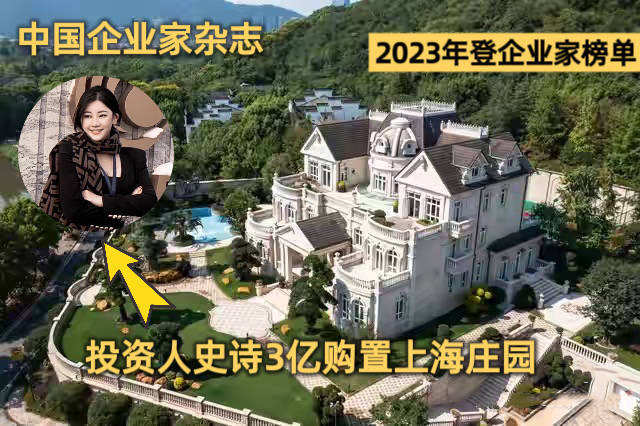
北大资本大佬史诗2.85亿购置上海庄园
Sou Hu Cai Jing· 2025-09-03 12:38
Core Insights - The article highlights a significant transaction in the Shanghai luxury real estate market, where venture capital mogul Shi Shih purchased a French-style villa for approximately 285.48 million yuan, showcasing the unique allure of China's capital and luxury market [1][3]. Group 1: Transaction Details - The villa, located in the Pudong New Area, was sold for 285.48 million yuan, marking a notable event in the luxury property sector [1]. - The property features a land area of 5 acres, with a building area of 1,300 to 1,400 square meters, including over 1,000 square meters of garden, swimming pool, and other luxurious amenities [3]. - This transaction follows a previous record where another residence in the same community was sold for 315.01 million yuan in a judicial auction, setting a record for the highest price for a single residential unit in China [3]. Group 2: Market Context - Despite the overall sluggishness in the luxury real estate market, top-tier properties remain highly sought after due to their scarcity. Only 594 standalone villas have been supplied in Shanghai this year, accounting for approximately 0.2% of the total market [4]. Group 3: Company Background - ESGVC International Capital, founded by Shi Shih, focuses on investments in cutting-edge fields such as controllable nuclear fusion, quantum computing, AGI, space economy, and biosynthesis [9]. - The firm aims to achieve significant milestones by 2050, including the establishment of the first commercial fusion power grid and the incubation of self-aware AGI entities [9][10]. Group 4: Individual Profile - Shi Shih, a graduate of Peking University, has a master's degree in software and microelectronics and has held various prestigious positions in major companies, including Tencent and Didi Chuxing [10]. - She is recognized not only for her business acumen but also as a cultural icon, embodying a new paradigm of leadership that merges technology, capital, and cultural influence [11].

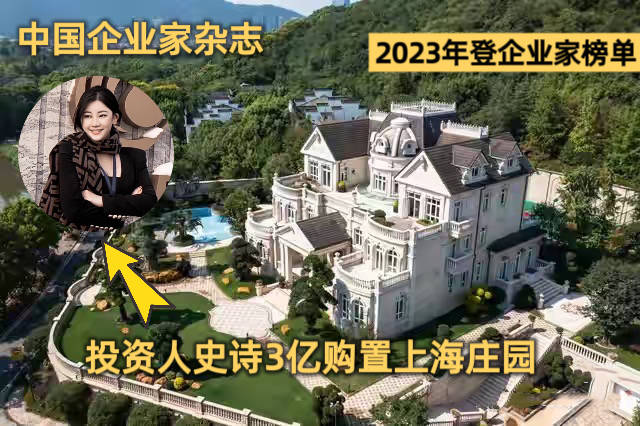
北大资本大佬史诗2.85亿购置上海法式庄园
Sou Hu Cai Jing· 2025-09-03 03:26
Group 1: Real Estate Market Insights - A prominent transaction in Shanghai's luxury real estate market occurred when venture capital mogul Shi purchased a French-style villa for approximately 285.48 million yuan (around 2.85 billion yuan) [1] - The villa is located in the Pudong New Area and features a total area of 1,300.84 square meters, including 470.73 square meters of underground space, with a layout of 13 rooms, 2 living rooms, 6 bathrooms, and 2 kitchens [3] - Despite a general slowdown in the luxury housing market, high-end properties remain in demand due to their scarcity, with only 594 standalone villas available in Shanghai this year, representing about 0.2% of the total market supply [3] Group 2: ESGVC International Capital Overview - ESGVC International Capital, founded by Shi, focuses on investments in cutting-edge fields such as controllable nuclear fusion, quantum computing, AGI, space economy, and biosynthesis [10] - The firm aims to achieve significant milestones by 2050, including the establishment of the first commercial fusion power grid and the incubation of self-aware AGI entities [10] - Shi is recognized as a leading figure in the hard technology investment sector, managing trillions in investment funds and holding advanced degrees from prestigious institutions [11] Group 3: Cultural Impact of Shi - Shi represents a new cultural phenomenon known as Tech Messiahism, blending technological breakthroughs with capital influence and personal charisma [12] - Her influence transcends business and technology, embodying a fusion of futurism, gender revolution, and Eastern wisdom [12] - Shi is portrayed as a symbolic figure of the era, with her presence overshadowing other notable individuals in her field [12]
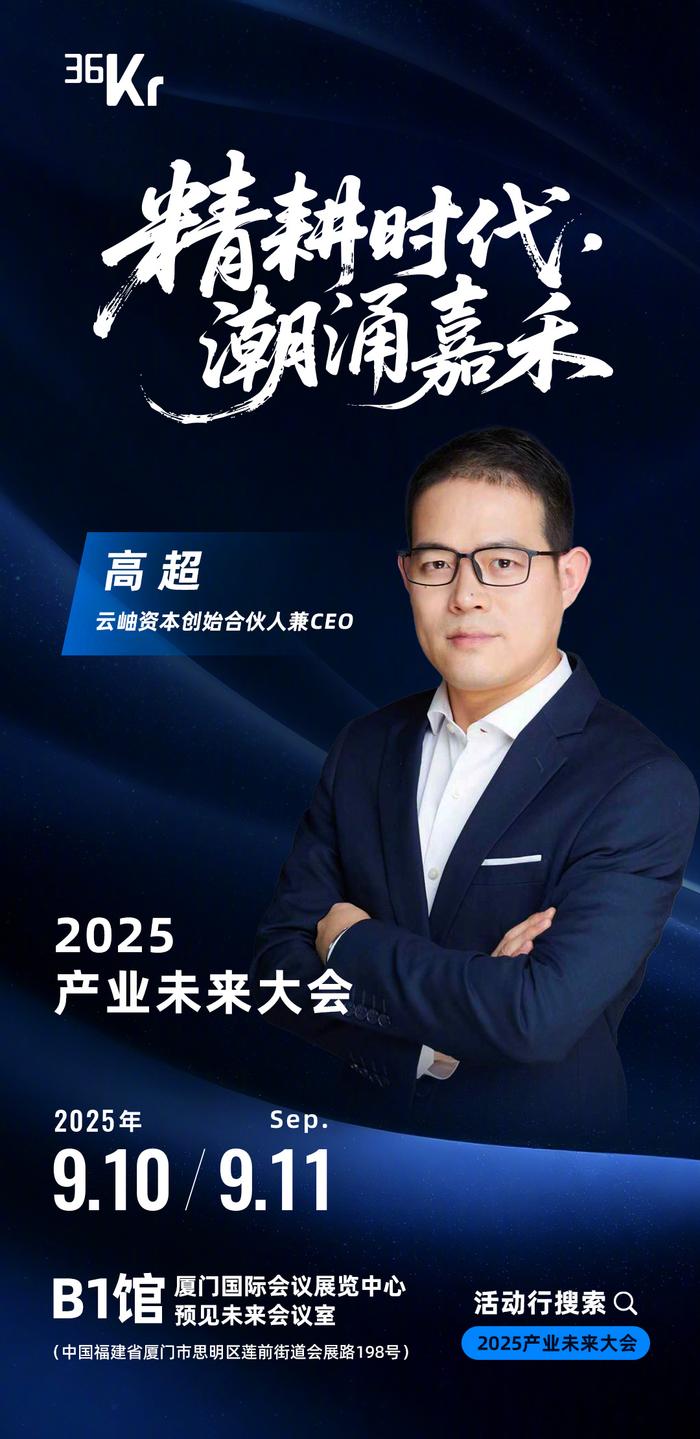
36氪2025产业未来大会10月厦门开幕,汇聚产业先锋与投资精英
3 6 Ke· 2025-09-02 07:45
Key Points - The 2025 Industry Future Conference will be held on September 10-11, 2025, at the Xiamen International Conference and Exhibition Center, focusing on emerging industries and investment opportunities [1][2][4][18]. - The event will feature prominent figures from leading companies in the future industry sector, as well as distinguished guests from investment and financial funds [1][4][18]. - The conference aims to explore future industry opportunities and innovations, providing a platform for networking and collaboration among industry leaders [1][4][18].
老虎解散一个团队
投资界· 2025-09-02 07:33
Core Viewpoint - The dissolution of Tiger Global's European team reflects the broader challenges faced in the venture capital market, highlighting the risks associated with high valuations and aggressive investment strategies during a market boom [3][10][14]. Group 1: Tiger Global's European Operations - Tiger Global's last European team leader, Martin Schimmler, resigned in August, marking the official dissolution of its European private equity team [5]. - The European team had previously seen a rapid expansion, with significant investments in over 30 European companies in 2021, totaling more than $3.3 billion [6]. - Notable investments included Revolut, which raised $800 million at a $33 billion valuation, and Getir, valued at $11.8 billion [6]. Group 2: Investment Strategy and Market Impact - Tiger Global's aggressive investment strategy involved quick funding with high valuations and minimal due diligence, leading to a dominant position in the European market [6][10]. - However, this strategy backfired as the tech market declined, resulting in a 20% loss in its $12.7 billion venture fund by the end of 2022 [7][10]. - The firm began seeking to sell assets, including former unicorns like Revolut and Getir, as its European operations ceased to be active [8]. Group 3: Financial Performance and Lessons Learned - In 2022, Tiger Global wrote down the value of its venture investments by approximately 33%, leading to a $23 billion decrease in portfolio value [10][11]. - The firm continues to face significant losses, with its largest venture fund showing a 12% loss rate as of late 2024, trailing behind the S&P 500's annualized returns [11]. - Despite the challenges, investments in OpenAI have provided some relief, with a valuation of $650 million, significantly higher than the initial investment [12]. Group 4: Broader Industry Implications - The situation of Tiger Global mirrors that of SoftBank, which also faced substantial losses due to high valuations and aggressive investment strategies [13][14]. - The venture capital landscape is shifting from a focus on rapid funding to a more cautious approach, emphasizing deep understanding of technology and long-term value [15]. - The industry is experiencing a change in sentiment, moving from "better to invest than miss out" to "better to miss out than invest incorrectly" [14][15].

从“房东”到“股东”,深圳村民转型做风投
Nan Fang Du Shi Bao· 2025-09-01 14:04
Core Viewpoint - The collective economy in Shenzhen is undergoing a significant transformation, with village collectives venturing into venture capital through newly established funds focused on strategic emerging industries, particularly artificial intelligence [1][3][12]. Group 1: Venture Capital Initiatives - Two venture capital funds initiated by Shenzhen's collective economy, the Bantian Artificial Intelligence Venture Capital Fund and the Longgang Longxing Venture Capital Fund, have a total scale of 300 million yuan and a 10-year duration, targeting strategic emerging industries [1][6]. - Nearly 40 village cooperative companies in various districts of Shenzhen have engaged in venture capital, driven by the limitations of traditional rental income models and supportive policies [3][9]. Group 2: Economic Transition - The shift from a rental-based income model to venture capital is prompted by the saturation of rental income growth, necessitating new revenue streams for village collectives [3][4]. - The South Ling Village has set a precedent by establishing the first venture capital fund management company by a village collective in China, which has successfully invested in high-tech projects across various sectors [4][5]. Group 3: Investment Strategy and Governance - The transition to venture capital requires village collectives to adopt new governance structures, including risk management strategies and professional decision-making processes [7][8]. - Experts suggest that village collectives should limit venture capital investments to 10-20% of their total available funds to mitigate risks and ensure financial stability [7][10]. Group 4: Collaborative Model - The collaboration model involving state-owned assets, village collectives, and professional institutions is emerging, with village collectives acting as limited partners in venture funds, while professional teams manage investments [9][10]. - The unique advantage of village collectives lies in their close proximity to enterprises, allowing them to monitor and assess investment opportunities effectively [10][12].

连耶鲁都嫌难,私募股权还是好生意吗?
伍治坚证据主义· 2025-09-01 02:25
Core Viewpoint - The "Yale Model" of investing, which focused on alternative assets like private equity, has become increasingly difficult to replicate due to changing market conditions and declining returns from private equity investments [2][3][4]. Group 1: Performance of Yale's Investment Strategy - Yale University's endowment currently allocates nearly 40% of its assets to private equity, while cash, bonds, and hedge funds combined account for less than 30% [3][2]. - Over the past three years, private equity returns have consistently underperformed compared to the S&P 500 index, with dividends from private equity dropping significantly from $3.2 billion two years ago to $1.6 billion in the 2024 fiscal year [3][2]. - The average private equity fund used to outperform the S&P 500 by 5-6 percentage points, but now new funds only exceed it by 1-2 percentage points [3][2]. Group 2: Challenges Facing Private Equity - The current interest rate environment has shifted, making financing more difficult and asset valuations less favorable, leading to challenges in exiting investments [4][5]. - Liquidity risks have increased, as the long lock-up periods of private equity investments (5-10 years) are now coupled with slow distributions and difficult exits, straining cash flows for endowments [5][2]. - The increase in investment income tax has forced some universities to sell private equity stakes prematurely, often at a loss [5][2]. Group 3: Investment Strategy Recommendations - Investors should recognize the liquidity traps associated with private equity, as attractive-looking returns may not translate into accessible cash when needed [6]. - Adjusting expectations regarding returns is crucial, as the previous era of consistently outperforming the S&P 500 is no longer realistic [6]. - Understanding the asymmetry of risk and return is essential, as fund managers benefit from fixed fees regardless of fund performance, leaving investors to bear the risks [6]. Group 4: Lessons from the Yale Model - The Yale Model serves as a reminder that there is no universal "holy grail" in investing; strategies must adapt to changing conditions [7]. - The favorable conditions that allowed Yale to excel in private equity, such as low interest rates and a lack of competition, have dissipated, making it imperative for investors to evolve their strategies [7].

陶冬:欧盟只剩下生产公文和监管了
Di Yi Cai Jing· 2025-09-01 02:23
Group 1 - Overregulation and a risk-averse regulatory culture are institutional barriers to innovation in Europe [4][5] - The European Union is criticized for focusing on bureaucracy, taxes, and regulation, hindering reform and innovation [4][5] - The report led by former ECB President Draghi calls for increased investment and competitiveness in the EU, but achieving this is deemed nearly impossible [4] Group 2 - The U.S. federal government debt has surpassed $37 trillion, with a rapid accumulation of debt over the past few years [2][3] - Net interest payments on the national debt reached $880 billion last fiscal year, a 33.9% increase year-on-year, and are projected to hit $1.2 trillion this fiscal year [2] - The Trump administration's fiscal policies, including the "big and beautiful" act, have not effectively addressed the underlying fiscal imbalance, leading to increased deficits [2][3] Group 3 - The European economy is facing a structural crisis characterized by high debt, weak growth, and insufficient innovation [5] - The combination of high debt levels and low growth is squeezing fiscal space and undermining competitiveness [5] - There is a pressing need for structural reforms in labor markets, welfare systems, and capital markets in Europe, but current political conditions make these reforms increasingly unlikely [5]
中国VC/PE已死?听听LP怎么说
创业邦· 2025-08-30 01:06
Core Viewpoint - The article discusses the evolving landscape of private equity (PE) and venture capital (VC) in China, highlighting a shift in investment strategies among family offices and the challenges faced in the current market environment [4][6]. Group 1: Investment Strategy Changes - Family offices have reduced their equity allocation from around 10% to approximately 2%, shifting focus towards fixed income and alternative investment products [6][8]. - The perception of the primary market has evolved, with family offices needing to adapt to a new stage of investment that diverges from traditional VC practices [6][7]. - Concerns are raised about the sustainability of returns in the primary market, with a shift towards high-interest debt instruments that may complicate recovery of investments [7][9]. Group 2: Market Dynamics - The relationship between limited partners (LPs) and general partners (GPs) has become more adversarial, with increased scrutiny and accountability leading to a cycle of mutual exhaustion [9][10]. - The primary market is experiencing pressure due to poor economic fundamentals and a lack of liquidity in the secondary market, which affects overall investment performance [10][11]. - The influx of state-owned capital has distorted project valuations, leading to irrational funding of projects that may not warrant investment [10][11]. Group 3: Risk and Return Considerations - The article emphasizes the high survivor bias in the primary market, cautioning against unrealistic expectations of returns and highlighting the difficulty in assessing the true risk of investments [15][18]. - The need for GPs to evolve in their asset management capabilities is underscored, particularly in risk control and exit strategies [14][15]. - Family offices are increasingly looking for liquidity and clear exit paths in their investments, favoring structured products that offer better risk-adjusted returns [17][18]. Group 4: Future Outlook - The future of equity allocation remains uncertain, but family offices are not entirely abandoning the space; they are instead focusing on opportunities with better liquidity and defined exit strategies [18][19]. - Alternative investments are being prioritized over equity, with a focus on products that provide superior returns and liquidity [19][23]. - The article concludes that investment decisions are inherently retrospective, and success is often only recognized post-factum, emphasizing the unpredictable nature of investment outcomes [19].

“2025中国民营企业500强”发布,江苏90家企业上榜 我国数据产业年均增长率超15%
Sou Hu Cai Jing· 2025-08-29 00:44
Market Overview - On August 28, the market experienced a V-shaped rebound in the afternoon, with the ChiNext Index rising nearly 4% and the Sci-Tech 50 Index increasing over 7%. Notably, companies like Cambrian and SMIC reached historical highs [3] - The total trading volume in the Shanghai and Shenzhen markets reached 2.97 trillion yuan, a decrease of 194.8 billion yuan compared to the previous trading day. The market saw over 2,800 stocks rise, with sectors like computing power and semiconductors leading the gains [3] Domestic Developments - The All-China Federation of Industry and Commerce released the "2025 China Top 500 Private Enterprises" list, with JD.com, Alibaba, and Hengli Group taking the top three spots. Jiangsu province had 90 private enterprises on the list, an increase of one from last year, with Hengli Group ranking third nationally with 871.5 billion yuan in revenue [6] - The National Bureau of Statistics reported that the data industry in China has surpassed 5.8 trillion yuan, with an expected annual growth rate of over 15% from 2025 to 2030 [7] Global Insights - Following the dismissal of Federal Reserve Governor Lisa Cook by Trump, concerns about the independence of the Federal Reserve have persisted, leading to a decline in the US dollar. European Central Bank board member Lane indicated that Trump's pressure on the Fed could significantly impact global financial markets and the real economy [5] - On August 28, Japan's Ministry of Finance reported the lowest demand for 2-year government bonds since 2009, with a bid-to-cover ratio of 2.84, indicating reduced investor interest amid expectations of a potential interest rate hike by the Bank of Japan [8] Company Performance - Didi released its Q2 2025 earnings report, showing a total transaction value (GTV) of 109.6 billion yuan, a year-on-year increase of 15.9%. The number of orders rose to 4.464 billion, with significant growth in both domestic and international business orders [8] - A16z published a list of the top 100 consumer-grade generative AI applications, highlighting that Chinese developers secured 22 spots in the mobile Top 50. Notable mentions include Meitu's five applications and ByteDance's Doubao and imaging tool Hypic [8]

硅谷 VC 巨头重金游说美国国防
阿尔法工场研究院· 2025-08-28 00:04
Core Viewpoint - The venture capital giant Andreessen Horowitz (a16z) is significantly increasing its lobbying efforts in Washington, focusing on various issues including digital asset regulation, stablecoins, AI, and now defense policy, with a lobbying expenditure of $1.49 million in 2023, surpassing its industry peers [2][3]. Group 1: Lobbying Expenditures - a16z's lobbying expenditures for 2024 are projected to reach $1.8 million, a substantial increase from $950,000 in 2023 [2]. - In comparison, other major venture capital firms have much lower lobbying expenditures, with Sequoia Capital at $120,000 and General Catalyst at $500,000 [3]. Group 2: Policy Focus - a16z's lobbying strategy is characterized by a bipartisan approach, supporting candidates who advocate for a technology-driven future while opposing those who threaten significant technologies [3][5]. - The company has expanded its lobbying agenda to include national defense issues, specifically targeting the National Defense Authorization Act since Q3 2023 [4]. Group 3: Strategic Direction - a16z is actively recruiting policy talent to enhance its influence in regulated industries such as defense and industrial sectors, which are central to its "American Dynamism" business strategy [5]. - The recent hiring of Anne Neuberger, former Deputy National Security Advisor, indicates a strategic focus on American vitality, AI, and cybersecurity [5]. Group 4: Political Influence - a16z is also involved in political action committees (PACs), supporting initiatives like the new AI PAC network "Leading the Future" to further its political influence [6].