信息传输

Search documents
2024年北京科研经费投入3278.4亿元,同比增长11.2%
Bei Jing Shang Bao· 2025-10-23 05:48
Group 1 - In 2024, Beijing's R&D expenditure reached 327.84 billion yuan, an increase of 33.13 billion yuan, representing an 11.2% growth compared to the previous year [1] - The R&D expenditure intensity in Beijing is 6.58%, which is an increase of 0.36 percentage points from the previous year [1] - Basic research funding amounted to 50.32 billion yuan, growing by 6.5%, while applied research funding was 86.71 billion yuan, increasing by 15.2% [1] Group 2 - Enterprises contributed 155.86 billion yuan to R&D, marking a 13.5% increase year-on-year, while government research institutions contributed 121.91 billion yuan, up by 9.1% [1] - Higher education institutions allocated 41.07 billion yuan for R&D, reflecting a 12.2% growth, whereas other entities saw a slight decline of 0.9% to 9.00 billion yuan [1] - The proportions of R&D funding from enterprises, government research institutions, and higher education institutions were 47.5%, 37.2%, and 12.5%, respectively [1] Group 3 - The information transmission, software, and IT services sector invested 73.50 billion yuan in R&D, a 6.3% increase, with software and IT services alone accounting for 56.68 billion yuan, growing by 30.2% [2] - R&D expenditure from large-scale industrial enterprises reached 46.77 billion yuan, up by 6.1%, with high-tech manufacturing contributing 29.73 billion yuan [2] - Eight major industry categories within large-scale industrial enterprises maintained R&D expenditures exceeding 1 billion yuan, accounting for 90.4% of the total R&D expenditure in this sector [2]
上海经济展现强大韧性活力 前三季度多个行业指标明显改善 经济结构调整升级成果显现
Jie Fang Ri Bao· 2025-10-23 01:30
Economic Performance - Shanghai's GDP growth rate for the first three quarters is 5.5%, surpassing the national average by 0.3 percentage points, indicating strong economic resilience and vitality [1][2] - The total GDP for Shanghai reached 40,721.17 billion yuan, showing a year-on-year increase of 5.5% [1] Sector Analysis - The primary industry added value is 64.26 billion yuan, growing by 0.9%; the secondary industry added value is 8,448.67 billion yuan, growing by 3.9%; and the tertiary industry added value is 32,208.24 billion yuan, growing by 5.9% [1] - The industrial added value in Shanghai increased by 5.2% year-on-year, with the total industrial output value for large-scale enterprises growing by 5.7% [1] - The three leading industries in Shanghai saw manufacturing output value increase by 8.5%, outpacing the overall industrial output growth by 2.8 percentage points [1] Investment and Consumption - Fixed asset investment in Shanghai grew by 6.0% year-on-year, while the total retail sales of consumer goods reached 12,302.77 billion yuan, increasing by 4.3% [2] - The major financial market transaction volume in Shanghai increased by 12.7% year-on-year [2] Financial Indicators - The local general public budget revenue for Shanghai was 6,555.68 billion yuan, a year-on-year increase of 1.0%, while expenditures rose by 8.0% to 6,876.39 billion yuan [2] - The average urban survey unemployment rate in Shanghai was 4.2% [2]
北京经济前三季度“稳中提质”,三大优势行业引领增长
Xin Jing Bao· 2025-10-22 12:56
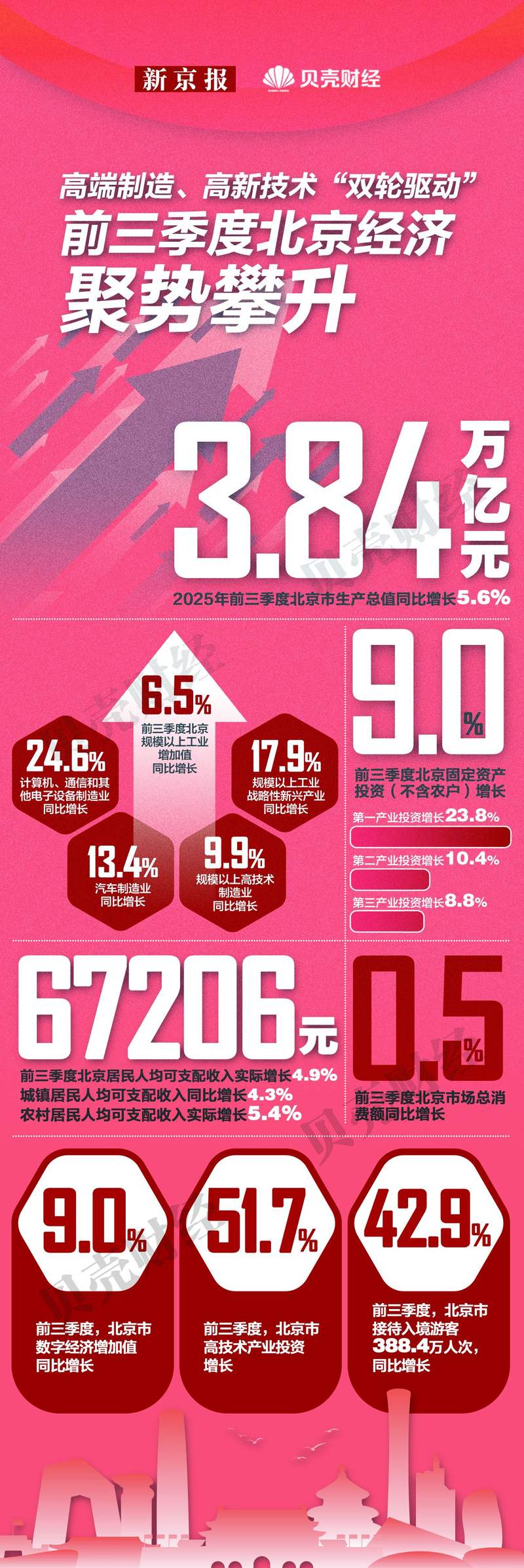
Economic Performance - Beijing's GDP reached 38,415.9 billion yuan in the first three quarters, with a year-on-year growth of 5.6% at constant prices [1] - The information transmission, software and IT services, financial services, and industrial sectors contributed over 80% to the city's economic growth, accounting for 52.5% of the GDP [1] Sector Contributions - The third sector's value added grew by 5.8% year-on-year, with an increase of 0.2 percentage points compared to the first half of the year [1] - The information transmission, software, and IT services sector saw an 11.2% increase in value added, while the financial sector grew by 9.0% [1] - Digital economy value added increased by 9.0%, with core industries growing by 10.7% [1] Industrial Growth - The industrial output value for large-scale enterprises grew by 6.5% year-on-year, with significant growth in computer, communication, and electronic equipment manufacturing (24.6%) and automotive manufacturing (13.4%) [2] - High-tech manufacturing and strategic emerging industries saw value added growth of 9.9% and 17.9%, respectively, with their shares in industrial output increasing [2] Consumer Trends - Service consumption in Beijing grew by 4.8% year-on-year, with significant increases in large events and cultural spending [2] - The number of inbound tourists reached 3.884 million, marking a 42.9% increase year-on-year [2]

高端制造引领增长 前三季度北京经济运行稳中提质
Bei Jing Shang Bao· 2025-10-22 12:11
Economic Overview - In the first three quarters, Beijing's GDP reached 38,415.9 billion yuan, with a year-on-year growth of 5.6% at constant prices, indicating a stable economic performance [1] - The city's economic growth is characterized by a strong start in Q1 and stable growth in Q2 and Q3, supported by effective economic stabilization policies [1] Investment Trends - Fixed asset investment (excluding rural households) in Beijing grew by 9% year-on-year, with equipment purchase investment increasing by 83.1%, accounting for 29.3% of total fixed asset investment [4] - Infrastructure investment rose by 2.3%, while manufacturing investment increased by 5.4%. However, real estate development investment saw a decline of 13.7% [4] - High-tech industry investment surged by 51.7%, driven by significant growth in sectors such as information transmission, software, and IT services [4][5] Manufacturing Sector - Manufacturing investment grew by 5.4%, contributing 0.5 percentage points to overall investment, with notable increases in automotive manufacturing (45.4%) and general equipment manufacturing (37.9%) [5] - The high-tech manufacturing sector saw a 2.4% increase, making up 81.6% of total manufacturing investment [5] Service Sector Performance - The service sector's value added reached 33,000 billion yuan, growing by 5.8% year-on-year, contributing 5 percentage points to GDP growth [6] - The information transmission, software, and IT services sector achieved a value added of 9,225.5 billion yuan, with a year-on-year growth of 11.2% [6] - High-tech service industry revenue increased by 13.2%, outpacing the average service sector growth of 10.6% [7] High-End Manufacturing Growth - The five major equipment manufacturing industries experienced an 8.2% increase in value added, with the computer and communication equipment manufacturing sector growing by 24.6% [8] - The automotive manufacturing sector's value added increased by 13.4%, with a significant rise in the production of new energy vehicles, which grew by 150% [8] Future Outlook - The city aims to enhance technological innovation and cultivate new productive forces, focusing on six key areas: future information, health, manufacturing, energy, materials, and space [9] - The economic development in Beijing is expected to continue its stable upward trend in the fourth quarter, supported by macroeconomic policies and emerging sectors [10]
锐评|这张成绩单,“含金量”与“含新量”都足足的
Sou Hu Cai Jing· 2025-10-22 10:42
Core Insights - Beijing's GDP grew by 5.6% year-on-year in the first three quarters, showing a slight increase of 0.1 percentage points compared to the first half of the year, indicating a stable and improving economic performance [1] - Key industries such as information transmission, software and IT services, finance, and manufacturing contributed over 80% to the city's economic growth [1] - High-end manufacturing led the growth, with the added value of strategic emerging industries and high-tech manufacturing increasing by 17.9% and 9.9% respectively [1] - New consumption trends are emerging, with significant growth in the cultural and tourism sectors, including double-digit increases in box office revenues and over 10% growth in travel agency and related services [1] Industry Analysis - The transformation of innovation potential into economic momentum is crucial for sustainable development, with Beijing focusing on becoming a major global scientific center and innovation hub [1] - Policies such as the trade-in program for consumer goods have stimulated rapid growth in the sales of household appliances [2] - The integration of diverse business models in the cultural, commercial, and tourism sectors has led to double-digit growth in the number of large events and attendees in Beijing this year [2] - The current economic environment is characterized by external uncertainties and insufficient domestic demand, necessitating a focus on reform and policy support to ensure equitable distribution of development benefits [2]
前三季度上海地区生产总值同比增长5.5%
Zhong Guo Jing Ji Wang· 2025-10-22 09:07
Core Insights - Shanghai's GDP for the first three quarters reached 40,721.17 billion yuan, with a year-on-year growth of 5.5% at constant prices [1] - The industrial sector showed a growth trend, with the manufacturing sector experiencing rapid growth [1] Economic Performance - The primary industry added value was 64.26 billion yuan, growing by 0.9% [1] - The secondary industry added value was 8,448.67 billion yuan, growing by 3.9% [1] - The tertiary industry added value was 32,208.24 billion yuan, growing by 5.9% [1] Industrial Growth - Industrial added value in Shanghai increased by 5.2% year-on-year [1] - The total industrial output value for large-scale industries grew by 5.7%, with an increase of 0.1 percentage points compared to the first half of the year [1] - Key manufacturing sectors such as railway, shipbuilding, aerospace, and other transportation equipment grew by 15.9% [1] - Electrical machinery and equipment manufacturing grew by 14.3%, while computer, communication, and other electronic equipment manufacturing grew by 12.1% [1] Leading Industries - The three leading manufacturing industries saw an 8.5% increase in output value, outpacing the overall industrial output growth by 2.8 percentage points [1] - The artificial intelligence manufacturing sector grew by 12.8%, integrated circuit manufacturing by 11.3%, and biopharmaceutical manufacturing by 3.6% [1] - Strategic emerging industries in manufacturing saw a total output value growth of 7.3% [1] - The new energy industry grew by 19.6%, next-generation information technology by 10.9%, and high-end equipment by 10.3% [1] Tertiary Sector Performance - The tertiary sector's added value grew by 5.9% year-on-year [2] - The information transmission, software, and IT services sector added value was 5,277.43 billion yuan, growing by 15.5% [2] - The financial sector's added value was 6,965.27 billion yuan, with a growth of 9.8% [2] Investment and Consumption - Fixed asset investment in Shanghai grew by 6.0% year-on-year [2] - Industrial investment surged by 20.3%, significantly outpacing the overall fixed asset investment growth [2] - Urban infrastructure investment increased by 11.7%, while real estate development investment grew by 2.2% [2] - The total retail sales of consumer goods reached 12,302.77 billion yuan, with a year-on-year growth of 4.3% [2] Financial Market Activity - Shanghai's major financial markets saw a transaction volume increase of 12.7% year-on-year [2] - The Shanghai Stock Exchange's securities transaction volume grew by 38.4%, while the Shanghai Futures Exchange and Shanghai Gold Exchange saw increases of 11.5% and 40.2%, respectively [2] - By the end of September, the balance of deposits in domestic and foreign financial institutions reached 23.84 trillion yuan, growing by 8.4% [2] - The loan balance was 12.89 trillion yuan, with a growth of 7.1% [2] Price Stability - The Consumer Price Index (CPI) in Shanghai remained stable, with no year-on-year change, and a slight decrease of 0.1 percentage points compared to the first half of the year [2] - The core CPI, excluding food and energy prices, increased by 0.6% year-on-year [2]
前三季度北京地区生产总值同比增5.6%
Zhong Guo Xin Wen Wang· 2025-10-22 06:30
Economic Growth - Beijing's GDP for the first three quarters reached 38,415.9 billion RMB, with a year-on-year growth of 5.6% [1] - The primary industry saw a decrease in value added by 1.1%, while the secondary industry grew by 4.0% to 5,055.9 billion RMB, and the tertiary industry increased by 5.8% to 33,282.0 billion RMB [1] Sector Performance - The information transmission, software, and IT services sector achieved a value added of 9,225.5 billion RMB, growing by 11.2%, contributing significantly to the tertiary industry's growth [1] - The financial sector's value added reached 6,700.0 billion RMB, with a growth rate of 9.0%, together with the information sector, accounting for nearly 80% of the tertiary industry's growth [1] - The rental and business services sector grew by 3.9% to 2,114.8 billion RMB, while transportation, warehousing, and postal services increased by 7.9% to 1,056.0 billion RMB [1] Investment and Consumption - Fixed asset investment in Beijing (excluding rural households) grew by 9.0%, with equipment purchase investment surging by 83.1%, now accounting for 29.3% of total fixed asset investment [2] - Total market consumption in Beijing increased by 0.5%, driven by a 4.8% rise in service consumption, while retail sales of consumer goods totaled 9,803.1 billion RMB, declining by 5.1% [2] - The per capita disposable income of Beijing residents reached 67,206 RMB, marking a growth of 4.5%, with a real growth of 4.9% after adjusting for price factors [2]
GDP同比增长5.5% 上海2025年前三季度经济数据出炉
Zhong Guo Xin Wen Wang· 2025-10-22 03:50
Economic Growth - Shanghai's GDP for the first three quarters of 2025 reached 40,721.17 billion yuan, with a year-on-year growth of 5.5%, surpassing the national average by 0.3 percentage points [1][2] - The primary industry added value was 64.26 billion yuan, growing by 0.9%; the secondary industry added value was 8,448.67 billion yuan, growing by 3.9%; and the tertiary industry added value was 32,208.24 billion yuan, growing by 5.9% [1] Industrial Performance - The industrial added value in Shanghai increased by 5.2% year-on-year, with the total output value of above-scale industries growing by 5.7%, an increase of 0.1 percentage points compared to the first half of the year [1] - The three leading industries in manufacturing saw an output value growth of 8.5%, outpacing the overall growth of above-scale industrial output value by 2.8 percentage points [1] Tertiary Sector Insights - The tertiary sector's added value grew by 5.9% year-on-year, with significant contributions from the information transmission, software, and IT services sector, which saw a 15.5% increase in added value [1] - The financial sector's added value reached 6,965.27 billion yuan, growing by 9.8%, while transportation, storage, and postal services increased by 5.2% [1] Investment and Consumption - Fixed asset investment in Shanghai increased by 6.0% year-on-year, while the total retail sales of social consumer goods reached 12,302.77 billion yuan, growing by 4.3%, with an acceleration of 2.6 percentage points compared to the first half of the year [2] - The average urban survey unemployment rate in Shanghai was 4.2% [2] Financial Market and Budget - The transaction volume in major financial markets in Shanghai grew by 12.7% year-on-year [2] - Local general public budget revenue was 6,555.68 billion yuan, a 1.0% increase, while expenditures rose by 8.0% to 6,876.39 billion yuan [2]
【数据发布】2025年三季度国内生产总值初步核算结果
中汽协会数据· 2025-10-22 03:35
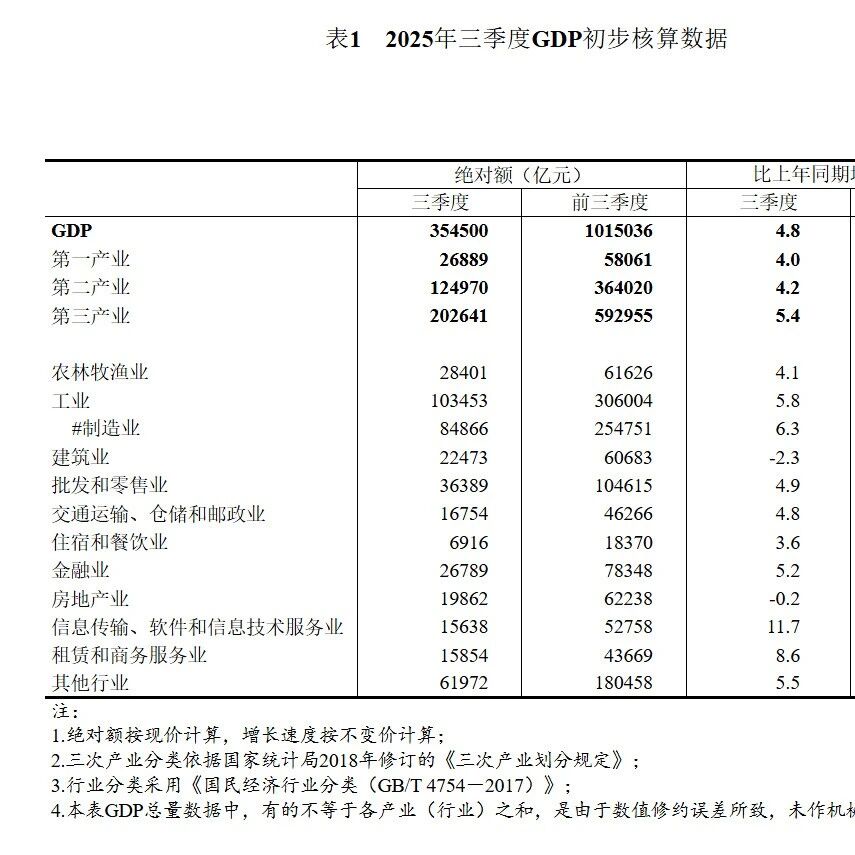
Core Viewpoint - The article provides an overview of China's GDP calculations for the third quarter of 2025, highlighting growth rates across various sectors and the overall economic performance compared to previous periods [2][4]. GDP Overview - China's GDP for Q3 2025 is estimated at 35,450 billion yuan, with a year-on-year growth of 4.8% and a growth of 5.2% for the first three quarters [2]. - The primary industry shows a growth of 4.0%, while the secondary industry grows at 4.2%, and the tertiary industry leads with a growth of 5.4% [2]. Sector Performance - The agricultural sector (including agriculture, forestry, animal husbandry, and fishery) has a GDP of 28,401 billion yuan, growing by 4.1% year-on-year [2]. - The manufacturing sector shows a robust growth of 6.3%, with a GDP of 84,866 billion yuan [2]. - The construction industry, however, faces a decline with a growth rate of -2.3% [2]. - The financial sector grows by 5.2%, contributing 26,789 billion yuan to the GDP [2]. - The information transmission, software, and IT services sector exhibits significant growth at 11.7% [2]. Historical Context - The article compares the current GDP growth rates with historical data, indicating a recovery trend from the pandemic lows in 2020, where Q1 saw a decline of -6.8% [4][6]. - The GDP growth rates for 2023 are projected to be 4.7% in Q1, 6.5% in Q2, and 5.0% in Q3, indicating a stable economic recovery [4]. Calculation Methodology - The GDP is calculated using the production method, which reflects the value added by various sectors after deducting intermediate consumption [8][9]. - The article outlines the three methods of GDP calculation: production, income, and expenditure, emphasizing the production method as the basis for the quarterly GDP data [8][9]. Data Quality and Release - The article discusses the importance of data quality in GDP calculations, ensuring that the statistics accurately reflect economic conditions [35][36]. - Quarterly GDP data is released approximately 15 days after the end of the quarter, with final revisions published in January of the following year [39][41].
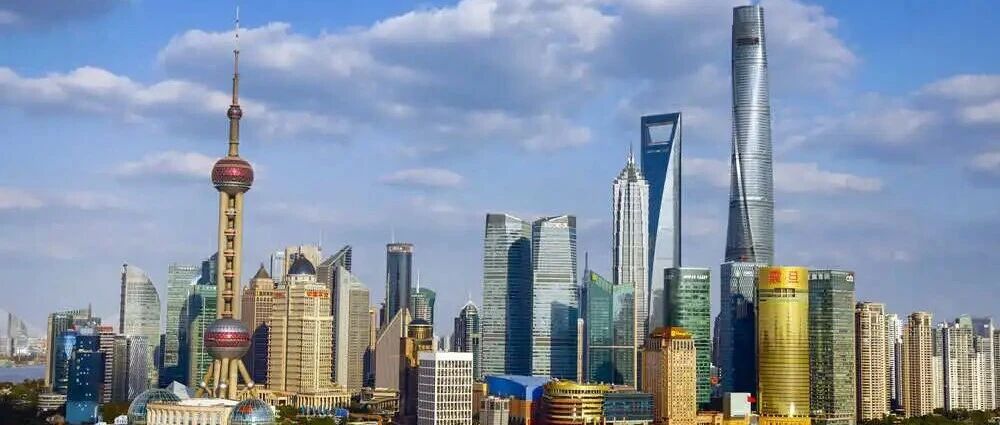
上海前三季度GDP增速跑赢全国,逆势而进靠什么?
第一财经· 2025-10-22 03:13
Core Viewpoint - Shanghai's economy demonstrated resilience and growth in the first three quarters of the year, achieving a GDP of 40,721.17 billion yuan, a year-on-year increase of 5.5%, surpassing the national growth rate of 5.2% [3][4]. Economic Growth and New Drivers - The growth in Shanghai's economy is attributed to the continuous expansion of new industries, new business formats, and new models, which have become significant driving forces [5]. - The manufacturing sector saw an 8.5% increase in output value, with key industries such as artificial intelligence, integrated circuits, and biomedicine growing by 12.8%, 11.3%, and 3.6% respectively [6][7]. - Strategic emerging industries in Shanghai experienced a 7.3% increase in output value, accounting for 44.1% of the city's total industrial output [6][7]. Industrial Performance - High-tech manufacturing output grew by 10.3%, with aerospace and electronic equipment manufacturing increasing by 20.6% and 13.4% respectively [6]. - Industrial investment in Shanghai rose by 20.3%, significantly outpacing the overall fixed asset investment growth of 6.0% [9]. Service Sector Growth - The tertiary sector, which constitutes nearly 80% of GDP, saw a value-added increase of 5.9%, with the financial sector growing by 9.8% [10]. - The information transmission, software, and IT services sector grew by 15.5%, reflecting the ongoing transformation and upgrading of Shanghai's industrial structure [10][12]. Consumer Market Dynamics - Shanghai's total retail sales of consumer goods reached 12,302.77 billion yuan, with a year-on-year growth of 4.3% in the first three quarters [15]. - The hospitality and catering sectors showed improvement, with significant increases in revenue due to promotional activities and events [16][17]. Future Outlook - The ongoing development of emerging industries and the enhancement of the innovation ecosystem are expected to further strengthen Shanghai's economic resilience [7][12]. - The city's focus on technology innovation and consumer market activation is crucial for maintaining stable economic growth amid global uncertainties [17].