水产养殖

Search documents
年终话“三农”丨“土味”变特色 激发新活力——2025年乡村富民产业发展一线观察
Xin Hua Wang· 2025-12-25 23:10
Core Viewpoint - The key to rural revitalization lies in industrial revitalization, focusing on developing rural industries to enhance agricultural efficiency and farmer income [1]. Group 1: Industry Development - The central government emphasizes the importance of developing rural industries to improve agricultural comprehensive benefits [1]. - Various regions are showcasing successful rural industry developments, such as smart fruit and vegetable greenhouses in the east and premium beef cattle in the north [1]. - The "14th Five-Year Plan" supports the establishment of 210 characteristic industrial clusters and 250 modern agricultural parks, enhancing local economies [4]. Group 2: Local Adaptation - The Angus cattle breeding in Heilongjiang province demonstrates a successful adaptation to local climate, generating a sales value of 625 million yuan and increasing farmer income by 150 million yuan [2]. - The development of local specialties, such as tea in Guangxi and bamboo shoots in Jiangxi, highlights the importance of leveraging regional advantages for industrial growth [4]. Group 3: Technological Innovation - Technological advancements are crucial for transforming traditional agricultural practices, as seen in the smart greenhouses in Shandong, which produce over 450 million tons of vegetables annually [7]. - The introduction of new production techniques in oil tea processing in Henan enhances product quality and creates additional revenue streams from by-products [9][10]. - Collaboration between local governments and educational institutions is fostering innovation in challenging environments, such as salt-alkali land in Shaanxi [5]. Group 4: Branding and Market Expansion - The establishment of unified branding for agricultural products, like "Caidian Lotus Root," is enhancing market competitiveness and increasing the overall industry value [12][13]. - The integration of tourism with agricultural production, as seen in the coffee industry in Yunnan, is transforming local economies and increasing farmer incomes significantly [13].
螃蟹+光伏,唱响科技养殖“渔光曲”
Xin Hua Ri Bao· 2025-12-25 21:32
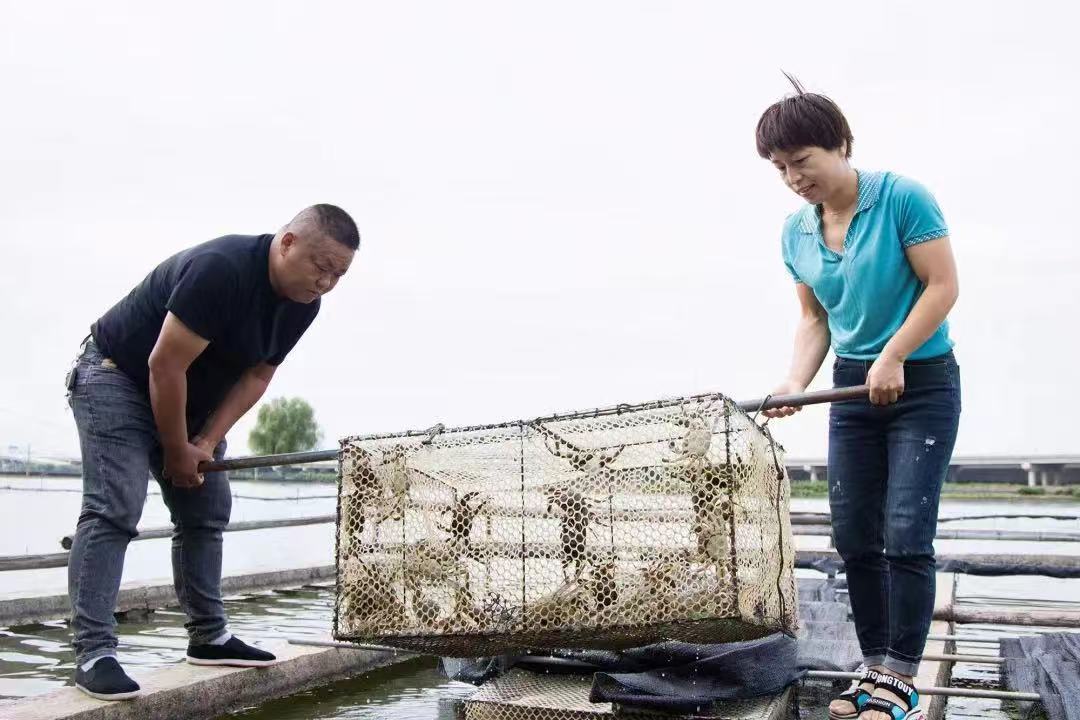
Core Viewpoint - The integration of photovoltaic power generation and modern ecological aquaculture in Zhenglu Town has transformed the local crab farming industry, improving both economic returns for farmers and ecological conditions in the area [1][2][3]. Group 1: Project Overview - The "fishing and solar integration" model combines solar power generation with crab farming, addressing previous issues of scattered small crab ponds and poor water quality [2][3]. - The project covers over 2,800 acres, allowing at least 50% of the pond area to receive sunlight, which benefits both crab growth and solar power efficiency [2]. Group 2: Environmental and Economic Impact - The "Three Pools and Two Dams" renovation has improved water quality and temperature regulation, resulting in minimal impact on crab production during extreme heat [3]. - The project is expected to increase annual income for local farmers by 6 to 8 million yuan, while also producing high-end aquatic products [3][4]. - The photovoltaic system is projected to generate over 160 million kilowatt-hours of electricity annually, reducing carbon emissions by approximately 135,000 tons [3]. Group 3: Benefits to Farmers - Farmers receive a base rent of 1,500 yuan per acre annually, with potential increases based on farming efficiency, leading to total annual earnings exceeding 2,000 yuan per acre [4]. - The model provides job opportunities for younger farmers while ensuring financial security for older farmers through guaranteed rental income [4].
滨州开启中国海洋分层确权大面积立体化利用新时代
Xin Lang Cai Jing· 2025-12-25 17:23
打破思维定式,2023年,滨州市结合本地海域利用实际情况与山东省相关政策,出台了全省首个海域立 体分层设权政策文件。"以前的宗海图就是2个平面的图,现在加了第3张剖面图,还标出了确权的高 度。"滨州市海洋发展和渔业局工作人员刘春霞道出了海洋分层确权最直接的变化。 正在探索海域深度开发的自然资源部借鉴滨州等城市海域综合利用经验,明确将海域立体分层,划分为 水面、水体、海床、底土四层,并分层设权。华能滨州新能源85万千瓦光伏项目由此成为国家海洋立体 确权政策颁布后首个获国务院批复的光伏用海项目。 作为国家第三批大型风电光伏基地建设项目,该项目2024年4月开工,占用海域面积1.58万亩,安装光 伏组件169万余块,预计每年发电量12亿千瓦时,能满足60万户居民一年的家庭用电,可节约标煤38.58 万吨,减排二氧化碳91.77万吨。 滨州日报/滨州网讯 "截至今天,光伏项目发电量突破10亿千瓦时,这表明项目达到预期设计标准。"12 月25日,华能山东滨州公司党委书记丁杨激动地向记者介绍华能滨州新能源85万千瓦光伏项目自2025年 3月全容量投产后取得的里程碑式成果。 "这个项目开启了中国海洋分层确权大面积立体化利用 ...
生态治理螃蟹致富,南京浦口区探索“两山”转化新路径
Zhong Guo Huan Jing Bao· 2025-12-25 09:12
"以前因为交通闭塞、村集体经济薄弱,我们村人均年收入不到2000元,如今,依靠螃蟹养殖,今年村集体收入已经有了600万元。"江苏省南京浦口区 星甸街道后圩村村书记李巧对记者说道。 后圩村位于滁河入苏之始,依托滁河流域优良的生态本底,螃蟹养殖致富的故事得以在此展开。滁河也统筹串联起了包括星甸街道以外的汤泉街道、永 宁街道等4个沿河街镇,当地以滁河生态治理为基底、以螃蟹产业为特色、以科技赋能为引擎,走出了一条都市近郊型乡村的振兴之路。 这样的高产,源自浦口区在螃蟹养殖领域持续推进技术创新与产业升级,通过智能化管理、生态改造和模式优化,不断提升养殖效益与可持续性。 图为后圩村螃蟹养殖 协同治理,建立双向生态补偿机制 滁河(浦口段)全长36.7公里,其中24公里为苏皖省界河道,既是通江达流的天然纽带,为周边城镇村庄提供水源,也是连接两省的生态廊道,影响着 两地的生态环境。 一河流经两省,如何协同治理,解决跨省流域治理责任难厘清、行动难同步、水质难保障等共性问题,成为江北新区思考的问题。为此,浦口区主动打 破行政壁垒,与安徽省滁州市南谯区、安徽省马鞍山市和县等地创新建立"信息互通、数据共享、联合监测、应急联动"的跨省联 ...

“海上牧场”迎丰收产销两旺 科学养殖新模式为“深海粮仓”注入澎湃“新”动力
Yang Shi Wang· 2025-12-25 05:01
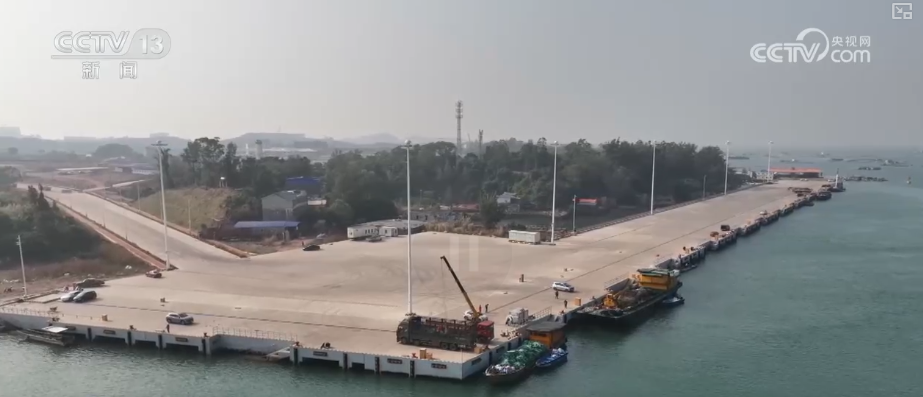
Group 1 - The recent release of nearly 10 million oyster seedlings into the Guangxi National Marine Ranch Demonstration Zone at Bailong Pearl Bay aims to enhance the "deep-sea granary" initiative through a new scientific aquaculture model combining fish and shellfish farming with floating balls and net cages [1][3] - The oysters being released are filter-feeding bivalves that can effectively purify the marine environment, benefiting from the organic matter and abundant algae growth in the area after fish farming [5][7] - The new aquaculture model, which avoids traditional foam oyster rafts, reduces marine white pollution and promotes greener and more sustainable marine farming practices [7][9] Group 2 - In December, a local aquaculture company plans to release 20,000 cages containing nearly 10 million oyster seedlings, with an expected harvest in May 2026 [9] - The oyster farming area in Laoshan Bay, Qingdao, has reached 50,000 acres by 2025, with an average yield of about 3 tons per acre [13] - Local oyster buyers report high demand for the fresh oysters from the area, with daily purchases reaching 2,000 to 3,000 pounds [14]
智者勇进 接续奋进新江苏|芦荡深处升星火,产业赛道追星光 常熟沙家浜写下水乡新生的时代答卷
Yang Zi Wan Bao Wang· 2025-12-25 03:28
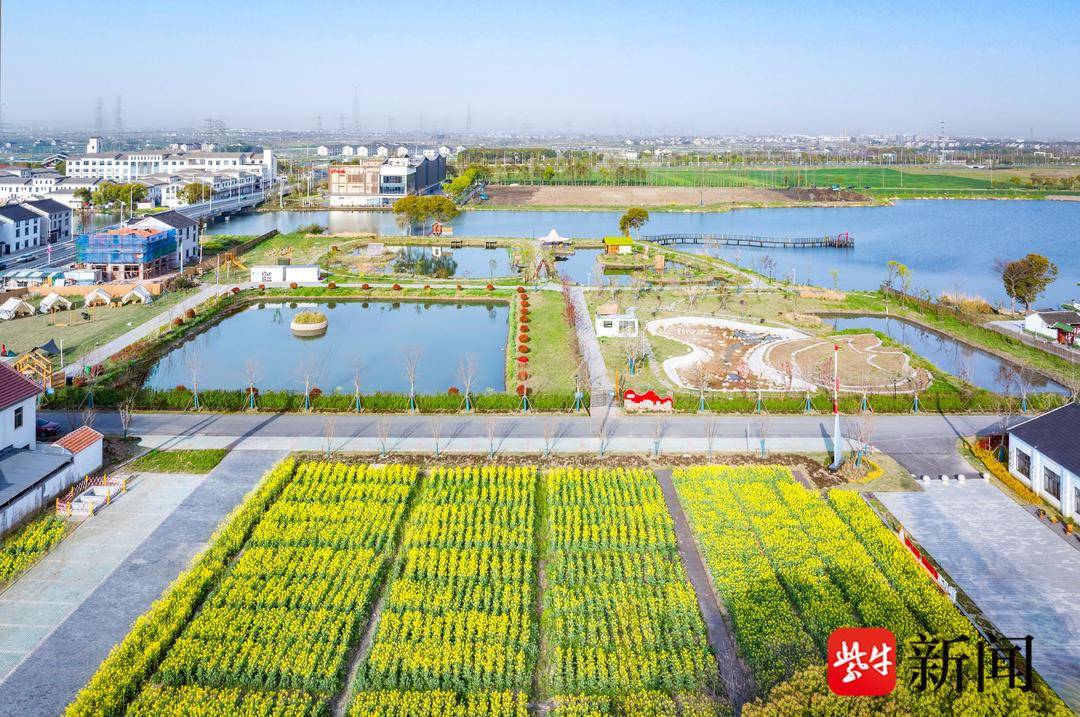
Core Viewpoint - Shajiabang is transforming from a historical revolutionary site into a vibrant modern town, integrating red cultural heritage, ecological preservation, and industrial development to achieve high-quality growth by 2025 [1][12]. Group 1: Cultural and Ecological Integration - The town is leveraging its historical significance and natural beauty to attract creative entrepreneurs through the "Co-creation Plan," which offers operational spaces for cultural tourism and heritage projects [3]. - The local government is focusing on the dual flow of urban and rural resources, promoting agricultural products and cultural tourism to enhance community engagement and economic development [5]. - Shajiabang has invested 100 million yuan in ecological restoration, improving water quality and biodiversity, which has led to an increase in bird species from 70 to over 180 [6][7]. Group 2: Industrial Development - Shajiabang is home to a significant glass mold industry, which holds a 70% market share in China, alongside the renowned Yangcheng Lake hairy crab farming, utilizing advanced technology for sustainable production [10][11]. - The introduction of AI and automated systems in crab farming has resulted in an average yield of 200 jin per mu, with over 50% of the crabs being premium quality [10]. - The town's industrial ecosystem is supported by the inclusion of 17 newly recognized specialized small and medium enterprises, reflecting a commitment to quality and innovation [11]. Group 3: Future Vision - The integration of red culture, ecological sustainability, and robust industries positions Shajiabang as a model for high-quality development in the Jiangnan region [12][13]. - The local community is actively participating in this transformation, embodying a blend of resilience and innovation as they navigate towards a prosperous future [13].
“双遗”辉映,续写千年农耕智慧
Xin Lang Cai Jing· 2025-12-24 23:56
Core Insights - The "Zhejiang Deqing Freshwater Pearl Composite Aquaculture System" was successfully included in the Global Important Agricultural Heritage Systems (GIAHS) list in May 2025, marking Huzhou's second world-class agricultural heritage following the "Sangki Fish Pond System" in 2017, making it one of the few cities in China with "dual heritage" status [3][4] Group 1: Agricultural Heritage - Huzhou is recognized for its rich natural resources, being known as the "land of fish and rice, and the capital of silk," and has developed two classic ecological circular paradigms that reflect a deep sustainable farming philosophy [3] - The "Sangki Fish Pond System" is a model of "land-based circulation," integrating planting and breeding into a near-zero waste production system, praised as a global sustainable agriculture benchmark [3][4] - The newly recognized "Zhejiang Deqing Freshwater Pearl Composite Aquaculture System" exemplifies "water-based circulation," focusing on a symbiotic ecosystem of "mussels and fish" to achieve efficient ecological balance and natural pearl cultivation [3] Group 2: Historical Significance - Both systems have a long history, with the Sangki Fish Pond dating back to the Spring and Autumn period and maturing during the Tang and Song dynasties, while pearl farming began in the Southern Song dynasty with the invention of the shell-attachment method by craftsman Ye Jinyang [4] - These systems represent local production wisdom and have influenced agricultural and pearl culture across East Asia and the world, being described by FAO experts as a "model of ancient wisdom combined with contemporary conservation" [4] Group 3: Modern Development - Huzhou is advancing active protection and innovative development with a holistic vision, creating a "Pearl Source" cultural community in Deqing and restoring traditional Sangki fish pond landscapes in places like Nanxun, revitalizing ancient ecological wisdom for contemporary engagement [5] - The city showcases its ecological circular models to the world, presenting an Eastern answer to sustainable agricultural development [5]
精准“注活水” 助渔产业“跃龙门”
Xin Lang Cai Jing· 2025-12-24 17:46
龙游农商银行相关负责人表示,未来该行将继续聚焦水产养殖等乡村特色产业,持续优化金融产品、提 升服务效能,以更精准、更高效的金融服务助力乡村振兴,推动更多养殖户依"水"兴业、借"渔"致富。 近日,龙游农商银行针对水产养殖户推出一系列专项信贷帮扶政策,以金融"活水"精准滴灌当地养鱼产 业,助力养殖户拓宽增收渠道,加速迈向致富之路。 在龙游县湖镇,养鱼户陈大哥站在自家鱼塘边,望着水中穿梭的鱼群,眼中充满期待。拥有十余年养殖 经验的陈大哥,凭借扎实的技术与敏锐的市场眼光,养出的鱼肉质鲜美,在当地口碑良好。随着市场对 优质水产品的需求持续增长,他计划扩大养殖规模、引进优质鱼苗并升级智能化增氧设备,却一度受限 于资金压力。 龙游农商银行客户经理在下乡走访中了解到陈大哥的困难后,迅速开展实地调研,综合评估其经营状况 与信用资质,量身定制了信贷支持方案。很快,一笔30万元的"渔农贷"顺利发放至陈大哥手中,为他解 决了扩大生产的资金难题。"这笔资金到位后,我可以立即扩建鱼塘、引进优质鱼苗、添置新设备,今 年增收更有底气了!"陈大哥满怀信心地说。 (来源:衢州日报) 转自:衢州日报 通讯员 毛航都 方超群 钟羽婷 华孟莉 ...
提高“菜篮子”应急保供能力
Xin Lang Cai Jing· 2025-12-24 17:46
Core Viewpoint - Chengdu is implementing measures to enhance the stability and quality of its agricultural supply, particularly focusing on the "vegetable basket" initiative to ensure food security for its over 21 million residents [1] Group 1: Establishment of Supply Bases - Chengdu's Agricultural and Rural Bureau has issued the "Management Measures for the Cultivation and Management of 'Vegetable Basket' Stable Production and Supply Bases," effective from January 16, 2026, for a duration of three years [1] - The "vegetable basket" stable production and supply bases are defined as agricultural production entities within the city that meet specific scale and quality standards, including vegetable, livestock, and aquaculture production bases [2] Group 2: Scale Standards for Supply Bases - Different types of supply bases have varying scale standards; for example, vegetable production bases must have a minimum planting area of 100 acres for collective applications or 20 acres for individual applications, with a crop rotation index of over 1 [2] - Livestock production bases have specific requirements based on species, such as a minimum annual output of 500 pigs, 100 dairy cows, or 20,000 meat chickens, among others [2][3] - Aquaculture production bases must have a minimum pond area of 100 acres [3] Group 3: Rights and Obligations of Supply Bases - Recognized supply bases can use the "Chengdu 'Vegetable Basket' Stable Production and Supply Base" logo for advertising, display a plaque, and receive priority for training and funding support [3] - Obligations include prioritizing local market supply, complying with emergency supply regulations during crises, and ensuring product quality and safety through regular inspections [3]
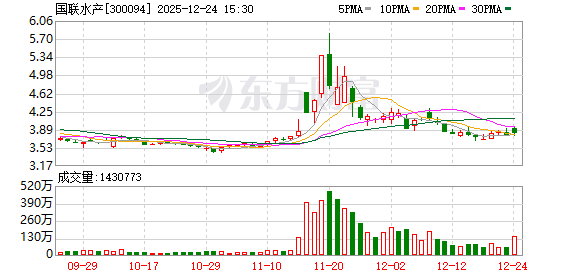
国联水产:2025年第四次临时股东会决议公告
Zheng Quan Ri Bao· 2025-12-24 12:11
Group 1 - The company Guolian Aquatic announced the convening of the fourth extraordinary general meeting of shareholders for 2025 on December 24 [2] - The meeting will review and approve the proposal regarding the sale of equity in a wholly-owned subsidiary and related transactions [2]