
百货

Search documents
日本消费股地震:资生堂暴跌11%,旅游零售股集体重挫
Sou Hu Cai Jing· 2025-11-17 17:07
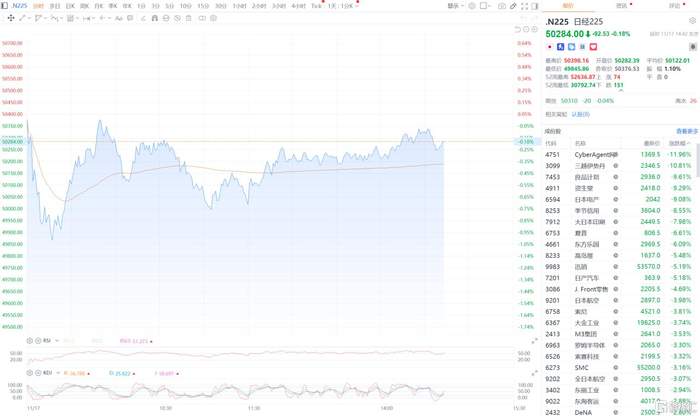
Group 1 - The Japanese stock market experienced a significant decline, with the Nikkei 225 index dropping over 1% and falling below 50,000 points, primarily affecting tourism and retail stocks [1][3] - Notable declines included Shiseido's stock, which fell 11%, and Pacific International Holdings, which saw an 8.9% drop, marking their largest single-day declines since April 2024 [1][3] - Major retail and tourism-related companies, such as Isetan Mitsukoshi and Uniqlo's parent company Fast Retailing, also faced substantial stock price drops, with declines exceeding 5% [3] Group 2 - The downturn in the stock market is attributed to deteriorating Sino-Japanese relations, with Chinese authorities issuing travel warnings to their citizens regarding travel to Japan [5][11] - Chinese tourists are crucial for Japan's tourism sector, accounting for nearly 20% of international visitors in 2024, with their spending representing 27% of total inbound consumption, amounting to approximately 2.1 trillion yen [7] - A significant reduction in Chinese tourists could lead to a GDP decrease of 0.36% for Japan, equating to an economic loss of about 2.2 trillion yen [7] Group 3 - Japan's economy is facing multiple challenges, including a 1.8% decline in real GDP for the third quarter, marking the first negative growth in six quarters, largely due to decreased exports and a sharp drop in private residential investment [9] - Analysts suggest that the recent travel warnings from China threaten Japan's retail sales growth, particularly for companies like Shiseido and Uniqlo, which rely heavily on Chinese consumers [11] - The Japanese government has set an ambitious target to increase annual inbound tourist numbers to 60 million by 2030, but this goal is now uncertain due to escalating political tensions with China [15]


日本消费股、旅游股股价重挫
Mei Ri Jing Ji Xin Wen· 2025-11-17 14:53
Core Viewpoint - The Nikkei 225 index experienced a significant decline on November 17, with Japanese consumer and tourism stocks facing heavy losses, some exceeding 10% [1] Company Performance - Japan's largest department store group, Isetan Mitsukoshi Holdings, saw its stock price drop by over 11% [1] - Ryohin Keikaku, the company behind Muji, and Shiseido both experienced stock declines of more than 9% [1] - Sharp Corporation's stock fell by over 6% [1] - Oriental Land, the operator of Tokyo Disneyland, saw its stock price decrease by more than 5% [1] - Fast Retailing, the parent company of Uniqlo, also faced a decline of over 5% [1] - Japan Airlines' stock dropped by more than 3% [1]
东京股市,旅游股大跌!
Sou Hu Cai Jing· 2025-11-17 14:12
Core Viewpoint - Concerns over deteriorating Sino-Japanese relations have led to a significant sell-off in tourism-related stocks in Tokyo, with some stocks dropping over 10% due to fears of reduced Chinese tourist visits [2] Group 1: Stock Performance - Stocks of major department stores such as Mitsukoshi Isetan fell by 10.64%, and Takashimaya dropped by 6.29% [2] - Shiseido, which heavily relies on Chinese consumer spending, saw its stock decline by over 11%, marking the largest single-day drop since early April [2] - The operator of Tokyo Disneyland, Oriental Land Company, experienced a stock decrease of approximately 5%, while All Nippon Airways Holdings fell by 4.74% [2] Group 2: Investor Sentiment - Investors are reacting to expectations that the Chinese government's travel warnings will negatively impact the performance of related companies, prompting a rapid sell-off of stocks [2] Group 3: Economic Impact - According to the Japan National Tourism Organization, nearly one-fifth of international visitors to Japan in 2024 are expected to come from China, amounting to about 7 million people [2] - Nomura Research Institute predicts that the Chinese government's travel advisories could lead to a reduction in Japan's tourism revenue by approximately 2.2 trillion yen (about 14.3 billion USD), which may drag down Japan's real GDP by 0.36% [2]

日本来华解释高市言论高官抵京,低头一言不发!部分日本电影撤档,有旅行社赴日团游退团比例超六成!日本股债汇通通下跌,旅游消费股大跌
Mei Ri Jing Ji Xin Wen· 2025-11-17 12:19
Group 1 - The Japanese films "Crayon Shin-chan: The Hot Spring Dancers" and "Cells at Work" have announced a delay in their release in China, which was initially scheduled for November 22 and December 6 respectively [1][9][11] - The cancellation of these films is linked to the deterioration of Sino-Japanese relations, particularly following controversial remarks made by Japanese Prime Minister Sanae Takaichi regarding Taiwan, which have led to increased tensions and a negative atmosphere for cultural exchanges [3][12][14] - The Japanese film "Cells at Work" had achieved significant box office success in Japan, grossing over 6.3 billion yen, making it the highest-grossing adaptation of a manga featuring actor Takeru Satoh [5][7] Group 2 - Travel agencies in China report a significant number of cancellations for group tours to Japan, with some agencies indicating that over 60% of their bookings have been canceled due to safety concerns and the current political climate [12][14] - The Japanese stock market has reacted negatively, with travel-related stocks experiencing substantial declines, including a drop of over 10% for some companies heavily reliant on Chinese tourists [4][20] - Economic analysts predict that a reduction in Chinese tourists could lead to a decrease in Japan's GDP by approximately 0.36%, equating to an estimated economic loss of 2.2 trillion yen, or about 101.16 billion yuan [15][17]

广百股份:公司将融合岭南集团购物等板块资源,打造多业态协同发力的营销热潮
Zheng Quan Ri Bao· 2025-11-17 11:09
(文章来源:证券日报) 证券日报网讯广百股份11月17日在互动平台回答投资者提问时表示,公司紧抓全运会带来的强大赛事流 量与消费势能,结合"双十一"消费热点,深度融合"体育赛事氛围+商业消费场景",联动旗下多家门店 及异业资源,以"赛事赋能消费"为核心逻辑,打造覆盖全业态、全客群的全运主题月系列活动。"双十 二"正值年末消费者购物、旅游、餐饮、住宿等需求集中释放的节点,公司将融合岭南集团购物、旅 游、住宿、餐饮等板块资源,打造多业态协同发力的营销热潮。 ...

多地旅行社日本团大量退订
Bei Jing Ri Bao Ke Hu Duan· 2025-11-17 10:41
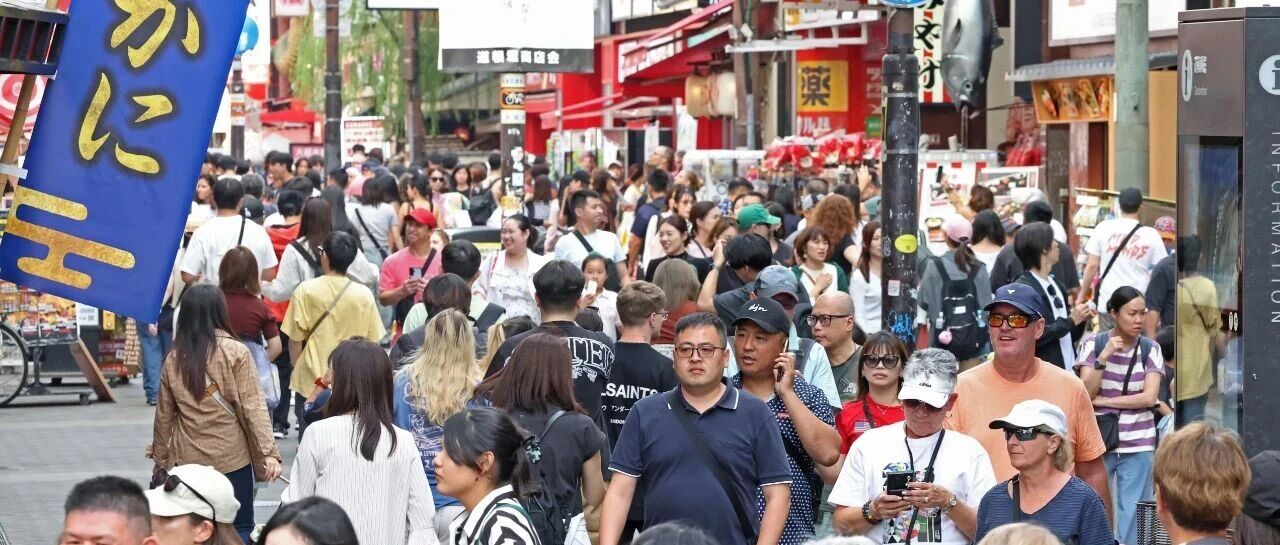
Group 1 - A significant number of travel agencies in China have reported over 60% cancellations for group tours to Japan due to safety concerns and recent diplomatic tensions [1][1][1] - The Chinese Ministry of Foreign Affairs has advised citizens to avoid traveling to Japan, citing a deterioration in safety conditions for Chinese nationals [1][1][1] - Major Chinese airlines have announced special handling for tickets to Japan, allowing free cancellations and changes for certain tickets [1][1][1] Group 2 - The Japanese tourism-related stocks have experienced a sharp decline, with the Nikkei 225 index dropping over 1% on November 17 [1][1][1] - Notable declines in stock prices include Mitsukoshi Isetan down over 11%, Muji down over 9%, and Japan Airlines down over 3% [1][1][1] - Travel agencies are facing financial losses due to non-refundable costs associated with hotel bookings and local arrangements in Japan, despite being able to refund flight tickets [1][1][1]
高市妄言,日股“躺枪”!
Ge Long Hui A P P· 2025-11-17 08:07
Group 1: Japanese Stock Market Reaction - The Japanese stock market experienced significant declines, with the Nikkei 225 index showing volatility and major consumer sectors like tourism, airlines, and retail suffering losses [1] - Notable declines included a drop of over 12% for Mitsukoshi Isetan, and declines exceeding 9% for companies like Sony and Japan Airlines [1] Group 2: Economic Indicators - The 20-year Japanese government bond yield rose by 3 basis points to 2.745%, marking the highest level since August 1999 [3] - Weak GDP data has led to a downward adjustment in market expectations for Bank of Japan interest rate hikes, contributing to the yen's weakness [3] Group 3: Impact of Political Statements - High-profile political statements by Prime Minister Kishi Nobuo have led to increased geopolitical uncertainty, prompting criticism and concerns about Japan's national crisis [8][11] - The deterioration of Sino-Japanese relations is expected to have a significant negative impact on Japan's economy, particularly through reduced Chinese tourism [17][18] Group 4: Tourism and Economic Impact - China is Japan's largest trading partner, and a decline in Chinese tourists could lead to a GDP decrease of 0.36%, equating to an economic loss of approximately 2.2 trillion yen (around 101.16 billion RMB) [12][19] - Chinese tourists accounted for about 25% of all foreign visitors to Japan, with nearly 7.5 million visits in the first nine months of the year [14] Group 5: Market Sentiment and Future Outlook - Analysts have indicated that the market's future performance is contingent on maintaining high political support for the government and the ruling party [19] - Concerns over potential government stimulus measures have led to increased pressure on long-term government bonds and the yen [19]
中日商业往来出现停滞隐忧
日经中文网· 2025-11-17 08:00
中日之间的商业活动开始受到影响。日本企业的中国法人高管表示,"受此次问题影响,与政府系企业 的商业谈判无法进行"。另一家日本企业高管表示,已决定在中国的社交网络上减少对自己产品的宣 传…… 围绕日本首相高市早苗关于"台湾有事"的发言和中国驻大阪总领事薛剑的发言,中日之间商业往来的停 滞令人担忧。由于中国政府提醒中国公民避免赴日,中国国有大型航空公司11月15日宣布涉日机票可免 费退改。旅游业界出现了担心访日游客减少的声音。 中国国际航空、中国南方航空、中国东方航空等三家航空公司同时发布通知,涉日机票可免费退改。对 象是以东京和大阪等日本为出发和目的地的航班,期间为11月15日至12月31日。此外,四川航空和海南 航空等也发出了类似通知。 在中国,中日之间的商业活动开始受到影响。日本企业的中国法人高管表示,"受此次问题影响,与政 府系企业的商业谈判无法进行"。另一家日本企业高管表示,已决定在中国的社交网络上减少对自己产 品的宣传。 全日空(ANA)和日本航空(JAL)表示,截至11月15日没有出现取消预订的情况。日本航空旗下的春 秋航空日本(Spring Japan)也表示:"没有大的变化"。酒店和百货商店受到 ...
茂业商业涨2.07%,成交额4818.08万元,主力资金净流出358.23万元
Xin Lang Cai Jing· 2025-11-17 05:35
Core Viewpoint - The stock of Maoye Commercial has shown a modest increase in price, with significant fluctuations in trading volume and a notable decline in revenue and net profit for the year 2025 compared to the previous year [1][2]. Group 1: Stock Performance - On November 17, Maoye Commercial's stock rose by 2.07%, reaching 4.44 CNY per share, with a trading volume of 48.18 million CNY and a turnover rate of 0.64%, resulting in a total market capitalization of 7.69 billion CNY [1]. - Year-to-date, the stock price has increased by 1.60%, with a 3.50% rise over the last five trading days, a 10.72% increase over the last 20 days, and a 9.90% increase over the last 60 days [1]. - The company has appeared on the "Dragon and Tiger List" 10 times this year, with the most recent appearance on August 4, where it recorded a net purchase of 2.15 million CNY [1]. Group 2: Financial Performance - For the period from January to September 2025, Maoye Commercial reported a revenue of 1.82 billion CNY, reflecting a year-on-year decrease of 14.20%, while the net profit attributable to shareholders was 41.73 million CNY, down 72.88% year-on-year [2]. - Cumulatively, the company has distributed 3.04 billion CNY in dividends since its A-share listing, with 307 million CNY distributed over the last three years [3]. Group 3: Company Overview - Maoye Commercial, established on December 31, 1993, and listed on February 24, 1994, is based in Chengdu, Sichuan Province, and its main business includes retail, project investment, and management consulting [2]. - The company's revenue composition is primarily from department store retail (68.60%), followed by other businesses (20.37%) and hotel and real estate sectors (11.03%) [2]. - As of September 30, 2025, the number of shareholders increased by 4.82% to 30,300, with an average of 57,208 circulating shares per shareholder, a decrease of 4.60% from the previous period [2].

【环球财经】东京股市旅游相关股票周一早盘出现大跌
Xin Hua Cai Jing· 2025-11-17 05:34
Core Viewpoint - Concerns over deteriorating Sino-Japanese relations have led to a sell-off in tourism-related stocks in Japan, with some stocks dropping over 10% due to fears of decreased demand from Chinese tourists [1] Group 1: Stock Performance - Stocks of major department stores such as Mitsukoshi Isetan fell by 10.64% and Takashimaya by 6.29% [1] - Shiseido, which heavily relies on Chinese consumer spending, saw its stock drop by over 11% [1] Group 2: Investor Sentiment - Investors are reacting to expectations that the Chinese government's travel warnings will negatively impact the performance of related companies, prompting a rapid sell-off of stocks [1] Group 3: Economic Impact - Nomura Research Institute predicts that the Chinese government's travel warnings could lead to a reduction in Japan's tourism revenue by 22.124 trillion yen, which may result in a 0.36% decrease in Japan's actual GDP [1]