航空

Search documents
资源大时代2.0:当铜金屡创新高,谁是下一个战略级品种?
Hua Er Jie Jian Wen· 2026-02-24 03:00
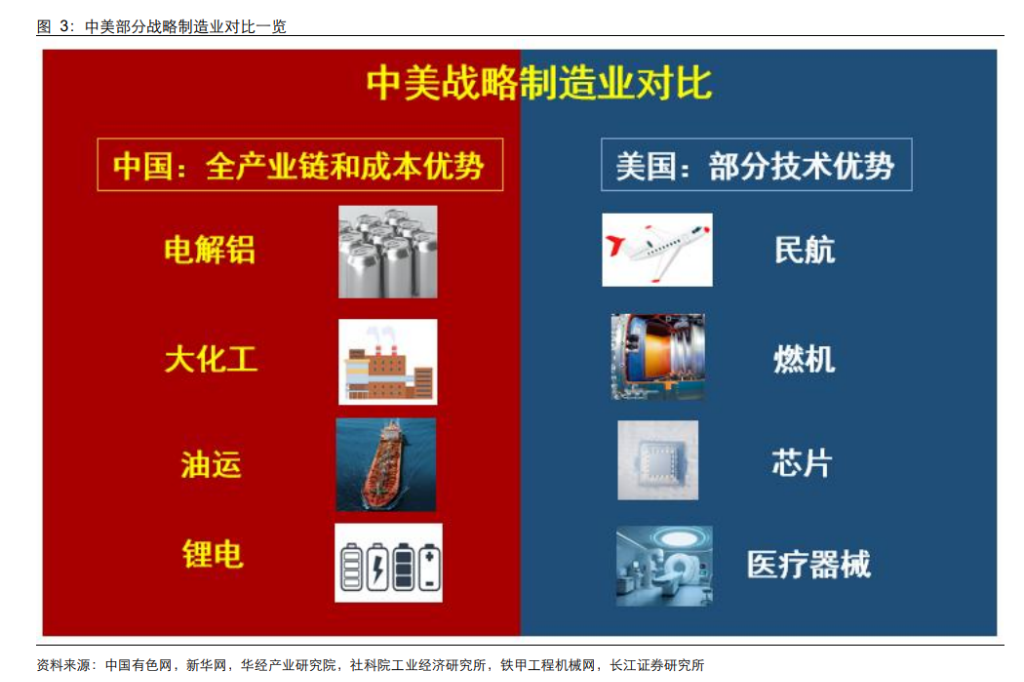
Core Viewpoint - The report from Changjiang Securities highlights the emergence of a "second category of scarce resources" in the current macroeconomic environment, driven by de-globalization and dual carbon controls, which limits expansion despite high profits in certain sectors [1]. Group 1: Strategic Industries - Four sectors identified as becoming "second category scarce resources": electrolytic aluminum, chemical and petrochemical, aviation, and oil transportation [1]. - These sectors share common characteristics: strategic importance, global demand, and currently low prices with high profit elasticity [2][4][5]. Group 2: Electrolytic Aluminum - Electrolytic aluminum is labeled as a "reborn resource," with its development fundamentally tied to electricity supply and grid stability [5]. - The report notes that while there are many overseas plans for electrolytic aluminum, actual implementation is challenging due to high electricity consumption ratios in regions like the UAE [8]. - The report suggests that if copper prices stabilize at 88,000 yuan/ton, aluminum prices could reach 25,000 yuan/ton, with aluminum companies becoming dividend machines due to high dividend yields [10]. Group 3: Chemical and Petrochemical - The chemical industry is transitioning from a low-price competition phase to a supply-side positioning strategy, with a focus on high-demand, low-supply products due to environmental regulations [12]. - The report indicates that prices for certain refrigerants have surged significantly, with R32, R134a, and R125 seeing increases of 265%, 107%, and 80% respectively from early 2024 to February 2026 [12]. - The petrochemical sector is expected to see supply constraints due to strict policies, with domestic refining capacity capped at 1 billion tons [17]. Group 4: Aviation - The aviation industry faces a unique supply-demand mismatch, with domestic demand increasing while supply is constrained by foreign manufacturers like Boeing and Airbus [20][21]. - The report predicts a decline in actual supply growth from 2026 to 2028, while demand is expected to surge, leading to a significant profit rebound starting in 2026 [24]. Group 5: Oil Transportation - The oil transportation market is being reshaped by geopolitical events, leading to a split between compliant and non-compliant markets [26]. - The report estimates that if demand from countries like Venezuela and Iran becomes compliant, it could create an additional 33.12 to 53.73 million tons of compliant transport demand, representing a 9.0% to 14.5% increase [26]. - The report also highlights that as leading shipping companies consolidate, their bargaining power may lead to higher freight rates during favorable market conditions [29].

华泰证券今日早参-20260224
HTSC· 2026-02-24 02:22
今日早参 2026 年 2 月 24 日 易峘 首席宏观经济学家 邮箱:evayi@htsc.com 易峘 首席宏观经济学家 邮箱:evayi@htsc.com 今日热点 宏观:美国高院驳回"特朗普关税"后的波折与推演 继美国国际贸易法院与联邦巡回上诉法院先后裁定"特朗普关税"违法后 (参见《法院裁决能阻止特朗普加征关税吗?》,2025/5/30),当地时间 2026 年 2 月 20 日(周五),美国最高法院判定特朗普依据《国际紧急经济 权力法》(IEEPA)征收的"对等关税"和"芬太尼关税"违法。如我们此前 预测,最高法院判决后,特朗普政府当日提出替代性关税政策,表示将依据 美国《1974 年贸易法》第 122 条在常规关税基础上对全球商品加征 10%的 关税,并很快次日在社交媒体 Truth Social 上表示将对部分国家关税上调至 15%,但未公布具体国家列表(参见《最高法院挑战"特朗普关税"后续如 何?》,2025/11/12)。然而,我们认为特朗普关税风波并不会由此平息,不 仅后续关税政策仍有变数,围绕已征收的大量关税返还的机制和体量也仍悬 而未决。IEEPA 关税被驳回彰显了美国"三权分立"体 ...
春节假期出行旺盛,看好全年表现
HTSC· 2026-02-24 02:09
Investment Rating - The report maintains an "Overweight" rating for the transportation industry [2] Core Views - The report is optimistic about the travel demand in 2026, highlighting a significant increase in cross-regional travel during the Spring Festival, with a daily average increase of 8.6% compared to the previous year [9][12] - The report recommends the airline sector, particularly China Eastern Airlines, due to limited supply growth and potential for price and profit elasticity [7] - The report also highlights the recovery of demand for high-speed rail, specifically recommending the Beijing-Shanghai High-Speed Railway [7] - The express delivery industry is noted for its trend towards high-quality development, with a recommendation for SF Holding due to its cost-effectiveness [7] Summary by Sections Travel Demand - The Spring Festival travel demand in 2026 is robust, with a daily average of 308 million people traveling, marking an 8.6% increase from the previous year [12] - Key trends include "reverse Spring Festival" travel and a surge in outbound tourism, with a predicted 14.1% increase in daily average outbound travelers [13] Airline Sector - Civil aviation passenger volume increased by 7.3% during the Spring Festival, with limited flight supply growth of only 4.8% [10] - The average domestic economy class ticket price rose by 6.9% during the holiday period, peaking at a 10.8% increase on the second day of the new year [10][20] Road and Rail Transport - Self-driving travel demand increased by 7.8%, attributed to a rise in car ownership and an extended holiday period [11] - Public transport, including intercity buses and railways, saw significant increases in passenger volume, with growth rates of 14.2% and 12.6% respectively [11] Express Delivery Industry - The express delivery sector is focusing on balancing worker rights and network efficiency, with a slight decline in collection and delivery volumes during the Spring Festival [6][38] - The report emphasizes the industry's shift towards high-quality service, with increasing demand for specialized delivery services, such as snow sports equipment and fresh produce [39]
港股异动 | 国泰航空(00293)早盘涨超4% 国泰股东大会通过回购卡塔尔航空所持股份
智通财经网· 2026-02-24 02:05
消息面上,国泰股东特别大会中以99.9968%赞成,通过回购卡塔尔航空所持股份的决议案。据悉,国 泰航空去年11月宣布,将与卡塔尔航空签署回购协议,回购卡塔尔航空持有的全部国泰股份,约占公司 已发行股份总数的9.57%,作价达到69.69亿元。 智通财经APP获悉,国泰航空(00293)早盘涨超4%,截至发稿,涨3.97%,报13.35港元,成交额1.18亿港 元。 根据港交所披露文件,2月12日,Cathay Pacific Airways Limited增持国泰航空6.43亿股普通股股份,每 股均价10.8374港元,价值约69.69亿港元。增持后,Cathay Pacific Airways Limited最新持股数目为6.43 亿股股份,好仓比例由0.00%升至9.56%。 ...

十大券商一周策略:A股将迎“春季躁动”胜率最高阶段,涨价仍是核心配置线索,重视关税税率下降后出口链修复机会
Jin Rong Jie· 2026-02-24 00:10
Group 1 - The core investment theme post-Spring Festival revolves around "price increases" and "revaluation of physical assets," particularly in resource, chemical, and midstream manufacturing sectors, leveraging China's pricing power amid global uncertainties [1][2] - The technology sector, particularly driven by AI, remains a key focus, with sub-sectors like computing power, applications, and robotics expected to remain active due to industrial catalysts [1][2] - The recovery of export chains, non-bank financials, and certain consumer and real estate chains are seen as important supplements to market trends under the backdrop of internal and external demand recovery [1] Group 2 - CITIC Securities emphasizes that price increases are a core configuration clue for Q1, with a focus on sectors like chemicals, non-ferrous metals, power equipment, and new energy, while also increasing exposure to undervalued insurance and brokerage stocks [2] - Historical data indicates that February and the period around the Spring Festival are strong for market movements, with small-cap stocks showing a 100% probability of rising from the Spring Festival to the Two Sessions [3] - Guojin Securities highlights the importance of balancing global physical assets against Chinese assets, recommending commodities like copper, aluminum, and oil, as well as sectors with global comparative advantages like equipment exports and domestic manufacturing [4] Group 3 - Industrial sectors experiencing structural price increases due to supply-demand gaps are primarily in midstream materials and manufacturing, with a focus on chemicals, steel, and high-end manufacturing [5] - The potential for recovery in the export chain is noted, particularly in industries with significant exposure to the U.S. market that will benefit from reduced tariffs [5] - The policy uncertainty surrounding tariffs and trade is expected to favor gold as a risk hedge, with market participants anticipating potential shifts in U.S. trade policy [6] Group 4 - Attention is drawn to the post-holiday inventory replenishment in commodities, with a continued positive outlook on technology applications, particularly in semiconductors and AI [7] - Quantum technology is highlighted as a sector receiving dual catalysts from policy and technological advancements, with significant developments in quantum key distribution networks [8] - The AI industry revolution is identified as a key investment theme, focusing on computing power, storage, and applications, with a strong emphasis on the performance of high-growth sectors [9] Group 5 - Localized opportunities are expected in AI applications linked to overseas trends and robotics associated with the Spring Festival, with a cautious approach to market movements anticipated [10] - The current bull market logic remains intact, with a recommendation for investors to maintain confidence despite short-term volatility, focusing on sectors with high securities ratios [11]
国金证券:把握全球实物资产VS中国资产这一重要主线
智通财经网· 2026-02-24 00:07
Group 1 - The investment activities are shifting from being solely AI-driven to a broader spectrum of real sectors, indicating a recovery in global manufacturing cycles supported by a smoother path for U.S. interest rate cuts [1][4] - The revaluation of Chinese assets is expected as capital flows back, promoting internal consumption and inflation cycles [1][4] - The report suggests specific asset allocation strategies, including physical assets like copper, aluminum, and oil, as well as sectors with global comparative advantages such as Chinese equipment exports and domestic manufacturing [1][4] Group 2 - The U.S. GDP growth for Q4 2025 was below expectations, primarily due to government spending disruptions, but investment in AI and non-AI sectors is showing signs of recovery [2] - The manufacturing PMI data indicates a global manufacturing recovery, with Europe exceeding expectations and the U.S. maintaining expansion, suggesting a positive outlook for the manufacturing sector [2] - The recent U.S. Supreme Court ruling on tariffs may ease domestic inflation pressures and support global export recovery, shifting the burden of inflation control from the Federal Reserve to other sectors [2] Group 3 - Commodity prices, particularly for industrial and precious metals, are experiencing high volatility, but there is a shift towards real industrial pricing rather than financial speculation [3] - The geopolitical risks and supply disruptions are expected to maintain a premium on industrial metals, while demand from tech giants for AI investments remains strong [3] - The focus on inflation control is shifting from the Federal Reserve to government actions, which may benefit commodities like gold as a hedge against economic uncertainty [3] Group 4 - The core of market style rebalancing is not about the existence of an AI bubble but rather the macroeconomic impacts of AI combined with monetary policy and major country policy choices [4] - The report emphasizes the importance of physical asset revaluation based on low inventory and stable demand, highlighting sectors such as oil, rare earths, and various manufacturing industries [4] - The report identifies opportunities in sectors benefiting from capital market expansion and a bottoming out of long-term asset returns, particularly in non-bank financials [4]

马年春节假日盘点
Xin Lang Cai Jing· 2026-02-23 21:43
Group 1: Transportation Trends - The Spring Festival holiday from February 15 to February 23 is expected to see over 2.6 billion cross-regional trips, with daily averages potentially reaching new highs [1] - A notable trend is the "reverse Spring Festival," where many young people are opting to bring their parents to their working cities for reunion instead of returning home [2] - Self-driving travel is projected to account for 80% of holiday travel, with daily peak traffic on highways expected to reach 71 million vehicles [3] Group 2: Production and Supply - Numerous enterprises are maintaining production during the holiday, with over 260 companies in Ningbo and more than 280 in Luoyang continuing operations, reflecting a 30-company increase from 2025 [4] - Key industrial enterprises in Tianjin are expected to achieve an overall resumption rate of 86.3% by February 24 [4] - Northeast Pharmaceutical and State Grid are ensuring supply stability with thousands of employees working through the holiday [5] Group 3: Market Demand and Orders - The demand for high-performance optical fibers has surged, with Nanjing Huaxin Tencan Optical Communication Co. reporting full orders extending into the second half of the year [6] - The concept of "Spring Festival without stopping" is seen as a proactive measure to stabilize customer relations and market presence [6] Group 4: Tourism and Cultural Activities - The search interest in traditional cultural activities like lantern festivals and temple fairs has increased by 117% during the holiday [9] - The Harbin Ice and Snow World saw a record daily visitor count of over 120,000, highlighting the appeal of winter tourism [10] - Hainan's duty-free shopping during the first holiday after the island's free trade port operation saw a 19% increase in spending, totaling 1.38 billion yuan [10] Group 5: Robotics and Technology - The integration of humanoid robots into traditional celebrations has gained popularity, with rental orders for robots increasing by nearly 70% during the holiday [12] - The market is expected to see accelerated application of humanoid robots in various scenarios, with 2026 being a pivotal year for the industry [12]
特朗普访华前夜,对全球加税15%!中美关系突生变数,背后有三重玄机
Sou Hu Cai Jing· 2026-02-23 20:45
Core Viewpoint - The article discusses the significant political and economic developments surrounding President Trump's planned visit to China and the recent Supreme Court ruling against his tariff policies, highlighting the complexities and uncertainties in U.S.-China relations. Group 1: Supreme Court Ruling and Tariff Implications - The U.S. Supreme Court ruled that President Trump does not have inherent authority to impose tariffs during peacetime, overturning previous tariff measures implemented under the International Emergency Economic Powers Act [3][5] - The ruling could lead to the U.S. Treasury facing pressure to refund approximately $175 billion in tariffs deemed illegal, with numerous companies already filing lawsuits for refunds [5][21] - The ruling is expected to lower the effective tariff rate from 12.8% to 8.3%, impacting American households with an estimated annual loss of $1,681 due to increased consumer prices [6] Group 2: Trump's Response and New Tariff Policy - In response to the Supreme Court ruling, Trump announced a new 10% import tariff on all countries, utilizing a rarely invoked provision of the Trade Act of 1974, which allows for tariffs but limits them to 15% and requires congressional approval for extensions [8][10] - Within 24 hours, Trump increased the tariff rate from 10% to 15%, the maximum allowed under the new legal framework, indicating a rapid shift in policy [10] - The new tariffs are set to take effect on February 24, with a list of exempted goods including critical minerals and certain agricultural products [8][20] Group 3: Impact on U.S.-China Relations - Trump's planned visit to China from March 31 to April 2 is seen as a critical opportunity to address ongoing trade tensions, with the backdrop of the recent tariff changes adding complexity to the discussions [10][12] - The Chinese government has not officially confirmed the visit, reflecting a different diplomatic pace compared to the U.S., and emphasizing the importance of mutual respect in negotiations [12][22] - The visit comes at a time when Trump faces domestic pressure due to low approval ratings and economic challenges, making diplomatic achievements crucial for his administration [14][24] Group 4: Global Reactions and Future Considerations - Other global economies, including Germany and France, have expressed concerns over the new U.S. tariff policy, indicating potential retaliatory measures and emphasizing the negative impact on consumers [16][20] - The article notes that the new tariffs may create competitive disadvantages for Chinese products if other countries benefit from reduced costs, complicating the trade landscape [16] - The ongoing issues surrounding Taiwan and military sales are also highlighted as potential flashpoints that could affect the outcome of the upcoming visit [18][24]
白宫签下1750亿美元协议,紧接宣布全球加税10%,贸易局势升级
Sou Hu Cai Jing· 2026-02-23 18:25
Core Viewpoint - The article discusses the implications of the WTO ruling against the U.S. regarding tariffs on Chinese steel and aluminum, highlighting the U.S. government's immediate response to impose additional tariffs globally, which escalates trade tensions and disrupts international trade norms [1][4][21]. Group 1: WTO Ruling and U.S. Response - The WTO ruled that the U.S. tariffs on Chinese steel and aluminum, justified under "national security," were unilateral sanctions, requiring the U.S. to refund $175 billion [3][4]. - Following the ruling, the U.S. administration quickly issued a memorandum imposing an additional 10% "defensive tariff" on all imports except for Canada and Mexico, indicating a disregard for international law [4][5]. Group 2: Market Reactions - The announcement of new tariffs led to significant turmoil in global financial markets, with stock markets in Tokyo plummeting and the euro experiencing a sharp decline [5][16]. - The article notes that the situation has escalated beyond typical trade disputes, suggesting a fundamental challenge to established trade rules [5][18]. Group 3: Global Reactions and Countermeasures - In response to the U.S. tariffs, the EU quickly prepared a retaliation list targeting key American products, while Japan and South Korea also considered countermeasures [9][12]. - The article emphasizes that the U.S. approach is not merely about protecting domestic industries but is creating tensions within global supply chains, forcing countries to take sides [9][12]. Group 4: Economic Implications - The U.S. tariffs have led to a significant drop in American agricultural exports to China, with Brazilian soybeans gaining market share [14][21]. - The article highlights that the average tariff rate on Chinese goods entering the U.S. has become excessively high, affecting not only China but also other major exporting countries like Vietnam and the EU [18][21]. Group 5: Strategic Consequences - The U.S. tariffs are seen as a means to fund military expenditures in the Indo-Pacific region, raising concerns about the implications for regional security dynamics [11][12]. - The article concludes that the U.S. strategy of using tariffs as a tool for economic and military advantage may backfire, leading to increased global resistance and a shift towards a multipolar world [21][24].
特朗普5年心血白费!对印度的施压正在失效。印度外交部一句话透露了关键信号,访华成最后赌注
Sou Hu Cai Jing· 2026-02-23 18:25
Core Viewpoint - The U.S. Supreme Court ruled that the large-scale global tariff policy implemented by the Trump administration under the International Emergency Economic Powers Act lacks clear legal authorization, marking it as illegal [1][3]. Group 1: Legal and Financial Implications - The ruling effectively nullifies the expected $1.4 trillion in federal revenue from tariffs that were anticipated from 2026 to 2034 [3]. - The Trump administration had collected over $175 billion in tariffs based on the now-invalidated legal framework, which may require refunds to importers [3]. - The tariffs affected a wide range of goods, including a 10% tariff on all imports from China and varying rates on goods from Mexico and Canada [3]. Group 2: Immediate Responses and New Measures - Following the ruling, Trump announced a new 10% global import tariff, which he later increased to 15%, effective immediately [4][6]. - The new tariff is based on a rarely used provision of the Trade Act of 1974, allowing temporary tariffs for a maximum of 150 days unless extended by Congress [6]. Group 3: International Reactions and Negotiations - The ruling has led to a shift in diplomatic dynamics, particularly with India, which had previously agreed to reduce tariffs in exchange for halting oil purchases from Russia [10][11]. - India's comprehensive tariff on U.S. goods was significantly reduced from 50% to 18%, although India remains cautious about its oil purchasing strategy [10][11]. - The upcoming visit of Trump to China is seen as a critical moment for negotiations, with expectations for discussions on trade agreements and tariffs [11][12][16]. Group 4: Broader Trade Policy Context - The Supreme Court's decision is viewed as a significant setback for Trump's trade policy, which had relied on emergency powers to impose tariffs without congressional approval [16][17]. - Analysts suggest that the ruling may enhance China's negotiating position, as Trump may have lost leverage in discussions regarding agricultural and energy product purchases [14][16].