
餐饮业

Search documents
惠农“税费通”|支持乡村振兴系列税费优惠政策(11)利用农村集体土地新建、翻建自用住房免征水土保持补偿费
蓝色柳林财税室· 2025-09-12 09:29
Group 1 - The article discusses the exemption of soil and water conservation compensation fees for farmers who legally utilize collective land to build or renovate their own houses [6][7][9] - It highlights that farmers can avoid these fees if the land used is approved as collective land by the village [6][8] - The relevant policy is outlined in the notification from the Ministry of Finance and other governmental bodies regarding the management of soil and water conservation compensation fees [9] Group 2 - The article provides information on the process for taxpayers to reissue tax payment certificates if they are lost, detailing the steps to apply for a new certificate through the electronic tax bureau [13] - It emphasizes the importance of compliance with tax regulations for the healthy development of the restaurant industry, as consumer demand continues to grow [16] - The article addresses specific tax issues related to the restaurant industry, including how to pay value-added tax (VAT) for food sold directly to consumers and for takeout services [17][18][20]


杭州的国风烧鸟也是拼了
Hu Xiu· 2025-09-11 00:51
Core Viewpoint - The article discusses the challenges and transformations in the restaurant industry, particularly focusing on a popular themed restaurant in Hangzhou that offers unique services, highlighting the shift in consumer preferences and the impact of "borderline culture" on the industry [1][3][10]. Industry Analysis - The core competitiveness of the restaurant industry is evolving, with a shift from traditional metrics of success to a focus on uniqueness and entertainment value [3][6]. - In cities like Hangzhou, there is a perception of a "food desert" for affordable dining options, yet there is a high demand for restaurants that offer unique experiences rather than just good food [3][4]. - The rise of internet celebrities and their influence on the restaurant business has changed the landscape, with many traditional restaurant operators feeling overwhelmed by the new marketing strategies employed by these influencers [3][4]. Consumer Behavior - Young consumers in Hangzhou prioritize novelty and experience over traditional dining expectations, leading to a demand for restaurants that are "fun" and generate significant online traffic [4][6]. - The traditional elements of a successful restaurant—good food, good location, and good service—are being replaced by the new elements of good food, good fun, and good traffic [6][7]. Cultural Impact - The emergence of "borderline culture" reflects a societal acceptance of provocative content in media, particularly among younger audiences, who do not view it as shameful or inappropriate [8][9]. - This culture has created a symbiotic relationship where both consumers and creators benefit from the attention generated by such content, leading to a larger market for "borderline" experiences [8][9]. Conclusion - The enduring core of the restaurant industry remains the quality of food, suggesting that while trends may shift, the fundamental expectation of good food will always prevail [12].
为啥现在很多人不愿意下馆子了?老顾客说出原因,句句都是大实话
Sou Hu Cai Jing· 2025-09-06 23:00
Core Insights - The restaurant industry is facing a significant downturn, with a 67% year-on-year decrease in profits for the accommodation and catering sector in Beijing during the first half of 2025, and hotel profits plummeting by 92.9% [1][3] - Consumer spending habits have shifted, with a focus on value for money rather than dining out for social status, leading to a decline in restaurant patronage [4][9] - Rising food prices have outpaced income growth, with restaurant menu prices increasing by 24% since January 2020, compared to a 5.4% increase in disposable income in the same period [3][4] Group 1: Price Increases and Consumer Sentiment - Consumers express dissatisfaction with rising dining costs, feeling that the value does not match the price, as exemplified by a typical meal costing over 100 yuan [3][4] - The psychological impact of high prices affects even affluent consumers, who are reluctant to pay premium prices for food and drinks [3][4] Group 2: Changing Consumption Philosophy - There is a notable shift in consumer priorities from extravagant dining experiences to practical and cost-effective options, with a growing emphasis on quality and value [4][9] - The pandemic has altered spending habits, leading to increased savings and a focus on essential expenditures, as evidenced by a 12.3% year-on-year increase in household savings in 2025 [4][9] Group 3: Cost Pressures and Quality Concerns - The restaurant industry is under severe cost pressure, with operating costs in Beijing reaching 36.019 billion yuan in the first half of 2025, while revenues have declined significantly [6][8] - Many restaurants are reducing ingredient quality to cut costs, leading to consumer dissatisfaction with food quality [6][8] Group 4: Competition from Delivery Services - The rise of food delivery platforms offering substantial discounts has diminished the appeal of dining in restaurants, with significant investments in subsidies from major players like Taobao and Meituan [6][8] - A report predicts that these subsidies could boost restaurant revenue by 12 percentage points in July 2025, but they also create unsustainable business practices among participating restaurants [6][8] Group 5: Adaptation of High-End Dining - High-end restaurants are adapting by offering affordable options, with over 35% of mid to high-end dining establishments introducing lower-priced menus to attract customers [8][9] - Innovative business models, such as community-based dining and simplified menus, are emerging as successful strategies for survival in the current market [11][15] Group 6: Future Outlook for the Industry - The current challenges may lead to the elimination of weaker businesses, while those focusing on quality and value may thrive [15] - Consumers are still eager for quality food, indicating a potential for recovery if restaurants can meet their expectations for value and quality [15]

经济政策一线微观察|一场球赛激活一条消费链——“比赛日经济”的“赣超”实践
Xin Hua Wang· 2025-09-06 10:41
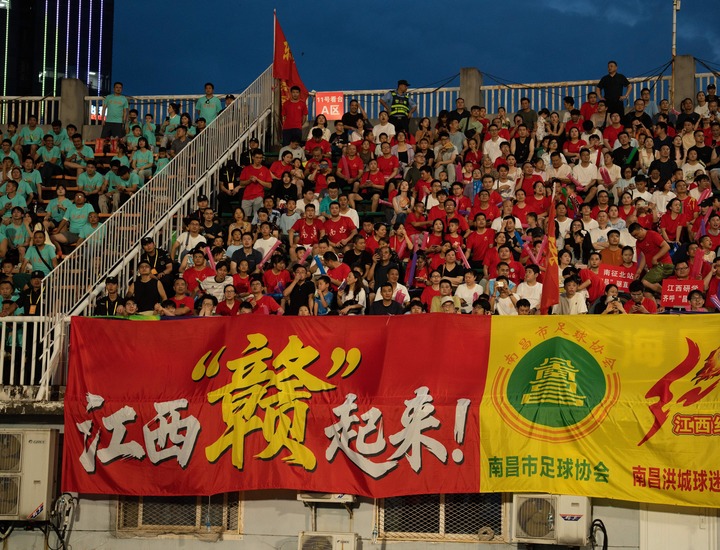
Group 1 - The Jiangxi Super Football League is significantly boosting local economies by attracting thousands of fans, leading to increased activity in sectors such as dining, transportation, accommodation, shopping, and cultural creativity [1] - The event has resulted in peak traffic at airports and high-speed train stations, with 21,000 spectators in the Shangrao division contributing to this surge [1] - The league is creating new travel trends, with fans combining match attendance with local tourism, such as visiting scenic spots like Sanqing Mountain and Songcheng [1] Group 2 - The government is focusing on unlocking the consumption potential in culture, tourism, and sports, as highlighted in the recent work report and the "14th Five-Year" sports development plan, which aims for sports consumption to exceed 2.8 trillion yuan by 2025 [3] - The league is enhancing urban image, promoting employment and entrepreneurship, and fostering inter-city exchanges, demonstrating the practical benefits of sports for the community [5] - The ongoing popularity of the league is becoming a new way for residents in Jiangxi to enjoy their weekends, providing strong momentum for urban economic growth [5]
暑期台山迎旅游旺季 侨乡特色“马屎苋”汤受青睐
Zhong Guo Xin Wen Wang· 2025-09-06 09:13
Core Insights - The tourism sector in Taishan, Guangdong, is experiencing a peak season, with significant visitor numbers and a strong demand for local cuisine, particularly the "Ma Shi Xian" soup [1][2]. Group 1: Tourism Data - Taishan received 403,300 visitors at the Chuan Island tourist area alone during the summer, contributing to a booming local hospitality and dining industry [1]. - The city is projected to welcome over 6 million tourists in 2024, highlighting its status as a national all-region tourism demonstration area [1]. Group 2: Culinary Highlights - Local restaurants are experiencing high demand, with many being fully booked and requiring customers to wait for tables [2]. - Signature dishes include "Huang Shan Fan" (eel rice) and various soups featuring "Ma Shi Xian," which is popular among both locals and returning overseas Chinese [2][5]. - The "Ma Shi Xian" soup is noted for its health benefits, including detoxification and improvement of skin conditions, making it a favorite among diners [5]. Group 3: Cultural and Event Influence - The popularity of Taishan as a filming location for popular TV dramas has contributed to an increase in tourist visits [2]. - Upcoming events, such as the beach music festival in 2025, are expected to further attract visitors and enhance the local tourism experience [3].

泰国前半年新设与注销企业6:1 新旧更替加速
Shang Wu Bu Wang Zhan· 2025-09-05 17:34
Core Insights - The Thai Ministry of Commerce reported a decrease in business registrations in July 2025, with 1,825 companies deregistered, a reduction of 3% compared to previous periods [1] - The total registered capital of deregistered companies reached 20.16 billion Thai Baht, an increase of 128% [1] - The sectors with the highest number of deregistered companies were general construction, real estate, and the restaurant industry [1] Business Registration Trends - In the first seven months of 2025, a total of 51,548 new companies were established, representing a decrease of 4.9% [1] - The registered capital for new companies during this period was 171.16 billion Thai Baht, an increase of 1.4% [1] - Eleven companies registered capital exceeding 1 billion Thai Baht, contributing to a total registered capital of 44.37 billion Thai Baht [1] New vs. Deregistered Companies - The ratio of new companies to deregistered companies was 6 to 1, indicating that for every six new companies, one was deregistered [1] - This ratio aligns with the average level observed over the past five years (2020-2024) [1] - The total number of new companies established in the first seven months of 2025 exceeded the five-year average of 48,040 [1] Fastest Growing Sectors - The three fastest-growing sectors for new business registrations were wholesale trade (agency or contract), hotels, resorts, and apartments, as well as freight and passenger transport [1]
8月PMI小幅回升 经济整体保持复苏
Qi Huo Ri Bao Wang· 2025-09-01 05:45
Group 1 - The manufacturing Purchasing Managers' Index (PMI) for August is reported at 49.4%, indicating a slight improvement of 0.1 percentage points from the previous month, but still in the contraction zone [1] - The non-manufacturing business activity index increased by 0.2 percentage points to 50.3%, while the composite PMI rose by 0.3 percentage points to 50.5%, suggesting overall economic recovery [1] - The hospitality and new orders indices in the accommodation sector, although still below 50%, showed significant month-on-month increases of over 5 percentage points, indicating strong consumer activity during the summer [1] Group 2 - The manufacturing PMI has been below the expansion threshold for five consecutive months, highlighting persistent demand issues that negatively impact certain industrial product prices, such as steel and non-ferrous metals [1] - The input price index for raw materials stands at 53.3%, reflecting a 1.8% increase, which suggests rising cost pressures that may benefit energy, non-ferrous, and steel sectors [1] - The economic recovery is characterized as weak, with production recovery outpacing demand, indicating that companies may face challenges in increasing efficiency despite production increases [2]
@餐饮业,合规纳税热点问答来啦!
蓝色柳林财税室· 2025-09-01 01:34
Core Viewpoint - The article discusses the taxation policies related to the catering industry, specifically focusing on the Value Added Tax (VAT) obligations for different types of sales and services provided by catering businesses [2][4][5]. Group 1: VAT on Food Sales - Catering businesses that prepare food on-site and sell directly to consumers are required to pay VAT under "catering services" [2][3]. - For takeout food sold by catering businesses, VAT is also calculated under "catering services" [3]. - When catering businesses sell purchased goods like beverages and agricultural products without further processing, VAT is calculated based on the applicable tax rate for those goods [3][4]. Group 2: VAT Exemptions and Reductions - From January 1, 2023, to December 31, 2027, small-scale VAT taxpayers with monthly sales below 100,000 yuan are exempt from VAT [5][6]. - Small-scale VAT taxpayers that previously applied a 3% tax rate can now apply a reduced rate of 1% on taxable sales [5][6]. Group 3: VAT Refund Policies - Since July 1, 2022, the policy for full refund of VAT credits has been expanded to include the catering industry, allowing for monthly full refunds of incremental VAT credits [7][8]. Group 4: Input Tax Deductions - General VAT taxpayers in the catering industry can deduct input tax when purchasing agricultural products from producers, using tax authority-approved invoices [10][11].

新动能支撑强生产——8月PMI数据点评
一瑜中的· 2025-08-31 15:35
Core Viewpoint - The manufacturing PMI showed a slight recovery in August, indicating a stabilization in production and new orders, with high-tech manufacturing sectors demonstrating strong performance [2][4][14]. Group 1: New Momentum Supporting Strong Production - In August, the PMI production index rose to 50.8%, up 0.3 percentage points from the previous month, remaining above the critical point for four consecutive months [9]. - The high-tech manufacturing PMI increased to 51.9%, a significant rise of 1.3 percentage points from the previous value, with the production index reaching around 54% [9][4]. - The manufacturing business activity expectation index improved to 53.7%, up 1.1 percentage points, with optimistic expectations in sectors like general equipment and aerospace [9][4]. - High-tech manufacturing profits turned from a decline of 0.9% in June to a growth of 18.9%, contributing to an overall acceleration in industrial profit growth [9][4]. Group 2: Data on Manufacturing PMI Recovery - The manufacturing PMI for August was reported at 49.4%, slightly up from 49.3% in the previous month [14]. - The new orders index was at 49.5%, and the new export orders index was at 47.2%, indicating continued challenges in demand [14]. - The employment index was at 47.9%, and the supplier delivery time index was at 50.5%, reflecting mixed signals in the labor market and supply chain [14]. - The raw material inventory index was at 48.0%, showing a slight increase in inventory levels compared to the previous month [14]. Group 3: Other Notable Sub-Indices - The service sector's business activity index rose to 50.5%, marking a year-to-date high, with strong performance in capital market services and transportation [17]. - The construction sector's business activity index fell to 49.1%, with new orders dropping to 40.6%, indicating a slowdown in construction activities [17][10]. - The price index for major raw materials increased, with the purchasing price index at 53.3% and the factory price index at 49.1%, suggesting rising costs in certain sectors [3][16].

8月PMI数据点评:新动能支撑强生产
Huachuang Securities· 2025-08-31 10:04
Group 1: PMI Data Overview - The manufacturing PMI for August is 49.4%, slightly up from 49.3% in the previous month[2] - The production index within PMI is at 50.8%, an increase of 0.3 percentage points from 50.5%[10] - The new orders index is at 49.5%, up from 49.4% previously, while the new export orders index is at 47.2%, slightly up from 47.1%[10] Group 2: Sector Performance - High-tech manufacturing PMI rose to 51.9%, a significant increase of 1.3 percentage points from 50.6%[4] - The construction sector's business activity index dropped to 49.1%, down 1.5 percentage points from 50.6%[3] - The service sector's business activity index increased to 50.5%, marking a 0.5 percentage point rise, reaching a yearly high[3] Group 3: Economic Indicators - The manufacturing production expectation index is at 53.7%, up 1.1 percentage points from the previous month[4] - High-tech manufacturing profits increased by 18.9%, reversing a 0.9% decline in June, contributing to a 2.9 percentage point acceleration in overall industrial profit growth[4] - The comprehensive PMI output index is at 50.5%, up 0.3 percentage points, indicating continued expansion in production activities[14]