矿业

Search documents
有色金属大面积“跳水”
Xin Lang Cai Jing· 2026-02-21 01:51
Core Viewpoint - The non-ferrous metals market is experiencing significant differentiation due to macroeconomic policies and supply-demand dynamics, with copper and zinc prices declining due to weak demand, while aluminum shows signs of rebound, and nickel, tin, and lead are being re-evaluated due to supply changes [1]. Copper - Copper prices are under pressure primarily due to weak demand, exacerbated by macroeconomic factors such as global stock market volatility and geopolitical risks [2]. - Supply disruptions, like strikes in Chilean copper mines, provide some support, but actual consumption in China is sluggish, leading to a buildup of social inventory and a shift from premium to discount pricing [2]. - Short-term outlook suggests continued high-level fluctuations, with a need to monitor macro events like non-farm payroll data for potential volatility [2]. Aluminum - The aluminum market faces challenges from macroeconomic disturbances, including conflicting employment data in the U.S. and a strong dollar, which limit upward price movement [3]. - Demand is weakened by seasonal effects and environmental production limits, leading to reduced operating rates in aluminum processing enterprises and rising social inventories [3]. - Short-term aluminum prices may remain optimistic, but recovery is contingent on post-holiday demand rebound and macroeconomic stabilization [3]. Zinc - Zinc prices are dominated by bearish sentiment, with significant declines observed due to a strong dollar and falling global stock markets [4][5]. - The domestic zinc market is under pressure from weak terminal consumption and high prices, leading to active price reductions by holders [5]. - Short-term expectations indicate continued weak performance, with prices likely to remain under pressure around 24,500 yuan/ton [5]. Lead - The lead market is characterized by weak supply and demand, with a strong dollar and stock market declines impacting risk appetite [6]. - Supply is marginally relaxed due to stable primary lead production and increased imports, while demand from the lead-acid battery sector is low due to seasonal effects [6]. - Short-term lead prices are expected to remain weak, influenced by macroeconomic pressures and overseas supply, although low inventory levels provide some support [6]. Nickel - Nickel prices are pressured by high inventory levels and weak demand from the stainless steel and new energy battery sectors [7]. - The market is currently adjusting expectations regarding supply disruptions and demand from new energy sectors [7]. - Short-term outlook suggests continued weak fluctuations, with a need for new driving factors to emerge [7]. Tin - Tin market dynamics are influenced by supply recovery from Myanmar and stable conditions in the Democratic Republic of Congo, alleviating previous supply concerns [8]. - Demand is showing a split between traditional electronics and emerging sectors, with insufficient growth in new areas to offset seasonal weaknesses [8]. - Short-term tin prices may enter a phase of adjustment, with close monitoring required on supply recovery and demand signals [8]. Market Strategy - The macroeconomic landscape should be closely monitored for signals regarding Federal Reserve policy shifts, geopolitical risks, and Chinese economic data [9]. - In the copper and aluminum sectors, a range-bound trading strategy is recommended, with attention to emerging demand and supply disruptions [10]. - For nickel and tin, caution is advised regarding high inventory levels and supply recovery expectations, awaiting substantial demand improvement signals [11].


特朗普:将对全球征税!黄金、白银,大涨
Shang Hai Zheng Quan Bao· 2026-02-21 00:48
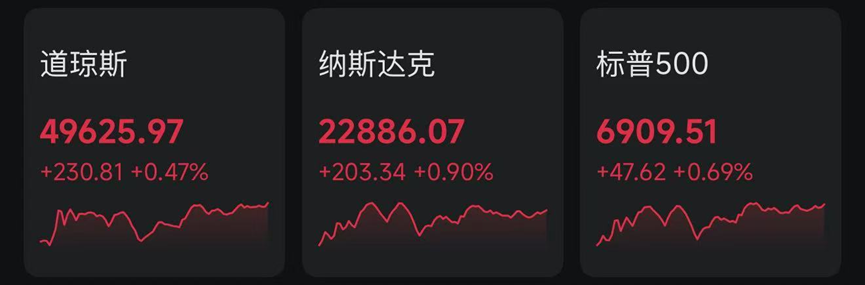
Group 1 - The U.S. Supreme Court ruled that the International Emergency Economic Powers Act does not authorize the President to impose large-scale tariffs, marking a significant setback for the Trump administration's tariff policies [3][4][6] - Following the Supreme Court's decision, President Trump announced plans to sign an executive order imposing a 10% import tariff on global goods for 150 days, as a replacement for previously deemed illegal emergency tariffs [5][6] - The announcement of the new tariff led to a positive reaction in the capital markets, with major U.S. stock indices closing higher, including a 0.47% increase in the Dow Jones Industrial Average [7][10] Group 2 - The U.S. economy's growth rate for Q4 2025 was reported at 1.4%, significantly below the expected 2.8%, attributed to a record federal government shutdown that reduced growth by approximately 1 percentage point [8] - The stock market initially opened lower due to the economic data but rebounded after the Supreme Court's ruling on tariffs, resulting in gains across major indices [7][10] - Gold and silver prices surged, with London spot gold rising over 2% and silver increasing nearly 8% following the tariff news [10]
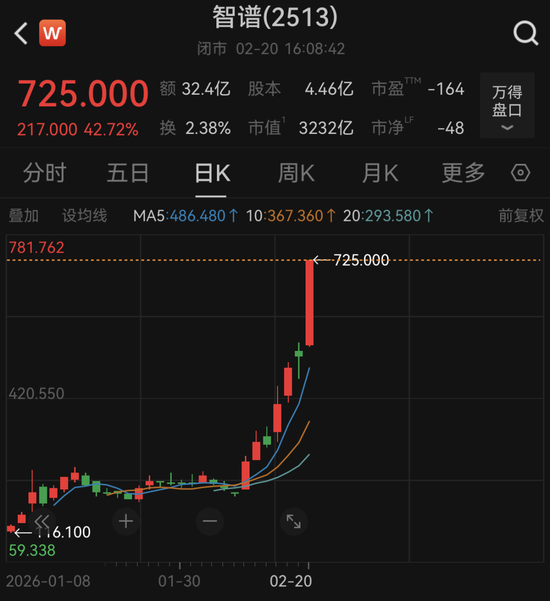
AI股爆发,智谱大涨42.72%!融资最新动向出炉,大幅加仓这些股
Xin Lang Cai Jing· 2026-02-21 00:41
融资资金最新动向出炉。 多只港股AI股走强 马年开市首日大涨 2月20日,港股的马年行情启幕,多只AI股盘中集体上涨。其中,通用大模型公司智谱延续节前大涨趋 势,暴涨42.72%,总市值一举突破3000亿港元大关,最新为3232亿港元。 2月12日,智谱宣布开源新一代旗舰大模型GLM-5。据介绍,GLM-5的参数规模从此前的355B(激活 32B)扩展至744B(激活40B),预训练数据从23T提升至28.5T,更大规模的预训练算力显著提升了模 型的通用智能水平。智谱方面表示,GLM-5在编程能力上实现了对齐Claude Opus 4.5,性能超过了 Gemini3 Pro。 同日,智谱在官方公众号发文表示,GLM Coding Plan市场需求持续强劲增长,用户规模与调用量快速 提升,为保障高负载下的稳定性与服务质量,公司决定对GLM Coding Plan套餐价格体系进行结构性调 整——将取消首购优惠,保留按季、按年订阅优惠套餐的价格进行结构性调整,整体涨幅自30%起,已 订阅用户价格保持不变。 中金公司指出,智谱凭借GLM系列大模型的持续迭代,已经建立了国内领先的全栈技术壁垒,同时商 业化落地持续超预期 ...
盘前:纳指期货现跌0.2% GDP与PCE将公布
Xin Lang Cai Jing· 2026-02-20 13:22
Economic Indicators - US stock index futures experienced a slight decline ahead of key economic data releases and a potential Supreme Court ruling on Trump's tariff policies [2][12] - The upcoming US Q4 GDP report is expected to show a growth of 2.5%, down from a previous 4.4% in Q3 [3][12] - The PCE price index is anticipated to rise by 2.8% year-over-year, with the core PCE expected to increase by 3% [3][12] - There is a division among Federal Reserve policymakers regarding concerns over the labor market and inflation, with inflation rates still above the Fed's 2% target [3][12] Market Reactions - The market is currently stagnant, awaiting catalysts such as the Supreme Court ruling and Nvidia's upcoming earnings report, which may induce volatility [4][13] - The S&P 500 index has remained flat year-to-date, while the Nasdaq index has seen a decline, indicating sector rotation and broadening market participation [4][13] Corporate Earnings and Performance - Grail's stock plummeted by 47% after its drug trial failed to meet primary endpoints [16] - Opendoor Technologies' stock surged by 19% following a Q4 revenue of $736 million, exceeding market expectations of $549 million [16] - Akamai Technologies' stock fell approximately 10% due to Q1 earnings guidance that did not meet expectations [16] - Comfort Systems reported a Q4 EPS of $9.37, surpassing expectations of $6.75, with revenue of $2.65 billion, significantly above the forecast of $2.34 billion [18] Tariff Impact on Businesses - JPMorgan's report indicates that US mid-sized businesses have been severely impacted by tariffs, with monthly tariff expenditures tripling since early 2025 [15] - Tariff expenditures account for about 10% of international spending for all mid-sized US businesses, rising to approximately 15% for those paying tariffs [15] - Research shows that US businesses and consumers bear 96% of the tariff costs, with 43% of these costs passed on to consumer prices [15][7] Commodity Prices - Goldman Sachs forecasts that gold prices will gradually rise to $5,400 per ounce by the end of 2026, driven by central bank demand and increased private investment [5][14]

国运来了挡不住!50亿吨铁矿现世,美媒:中国将改写全球格局
Sou Hu Cai Jing· 2026-02-20 11:05
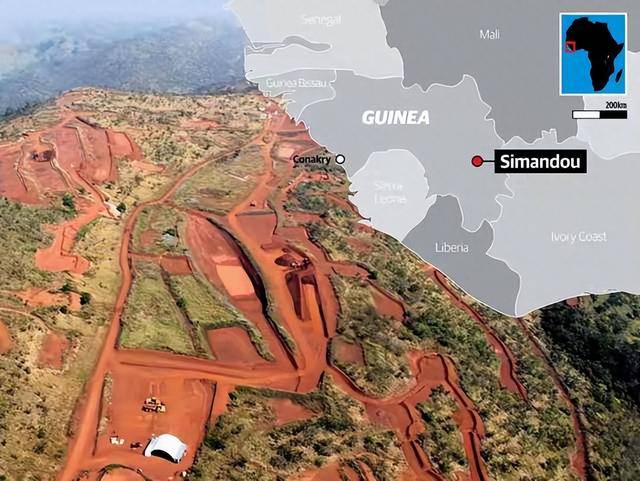
Core Insights - The global iron ore market has been dominated by Western mining giants for over a century, with China, the world's largest steel producer, heavily reliant on imports for over 80% of its iron ore needs [1][5][7] Group 1: Supply and Demand Dynamics - China has maintained an annual iron ore import volume of over 1.1 billion tons, reflecting a long-term dependency on foreign sources due to limited domestic resources [5][7] - The international iron ore supply has been highly concentrated, with companies like Rio Tinto, BHP, and Vale controlling significant export shares, leading to price volatility that impacts downstream industries [7][21] Group 2: Development of the Simandou Project - The Simandou iron ore project in Guinea, with a total resource of approximately 5 billion tons, has recently gained traction with a $15 billion investment for joint development, including infrastructure like railways and ports [3][9][12] - The project aims to produce 120 million tons annually, potentially making Guinea the third-largest iron ore exporter globally by 2030, thus diversifying supply sources and reducing reliance on traditional markets [19][21] Group 3: Economic and Strategic Implications - The establishment of a stable supply from the Simandou project is expected to enhance China's resource security and reduce price fluctuations, benefiting the steel industry and supporting the transition to high-end manufacturing and green metallurgy [19][23] - The project exemplifies a new model of resource development, where China not only secures raw materials but also invests in infrastructure, fostering sustainable economic growth in resource-rich countries [25][27] Group 4: Long-term Trends and Future Outlook - The successful implementation of the Simandou project marks a shift in China's approach to resource acquisition, moving from passive procurement to active development, thereby enhancing its influence in global resource markets [29][31] - This initiative is part of a broader strategy to secure stable supplies of various strategic minerals, reinforcing China's position in the global supply chain and contributing to its industrial competitiveness [31]
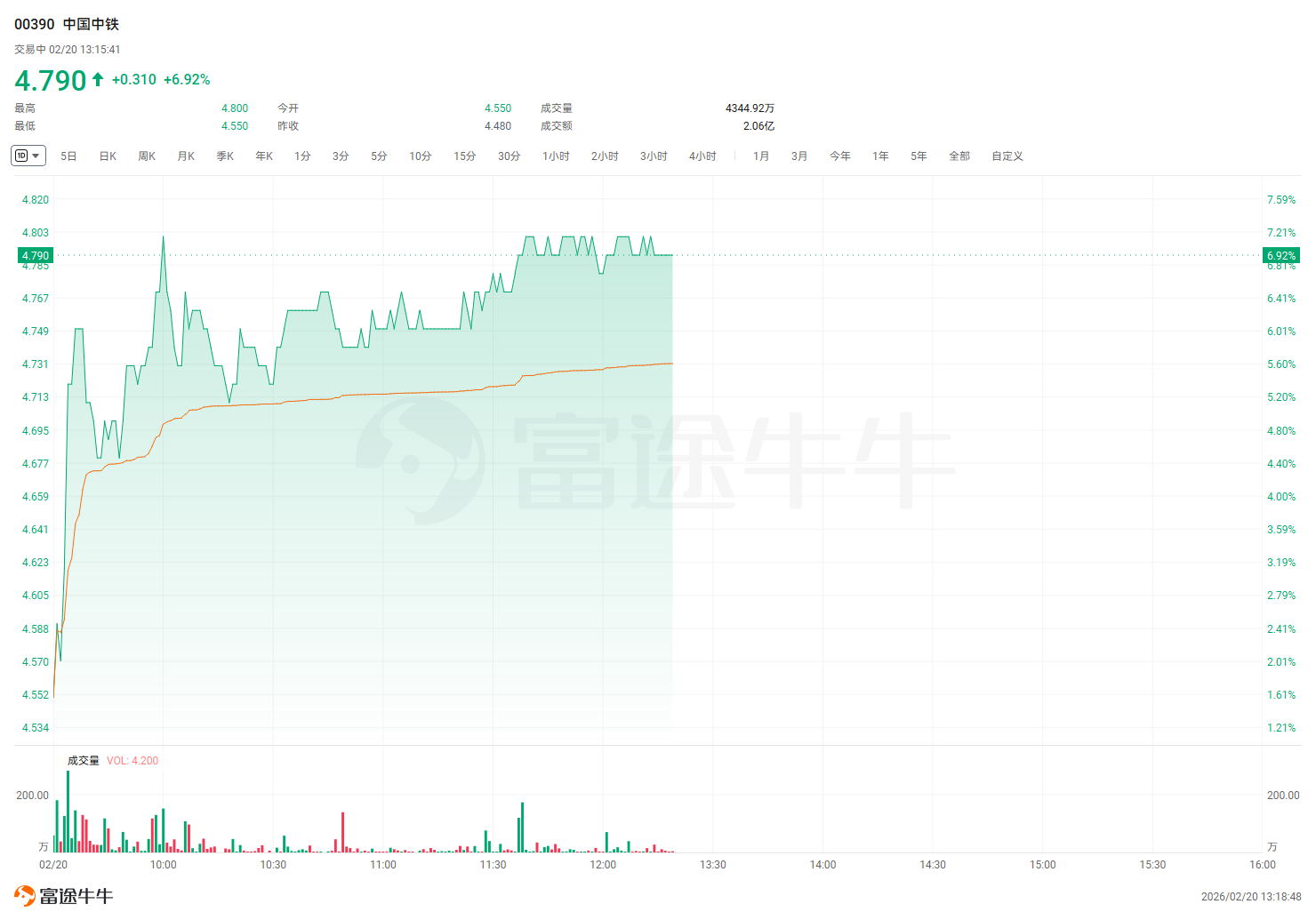
中国中铁港股逆势上扬,机构看好其矿产资源板块新增量
Zhi Tong Cai Jing· 2026-02-20 07:04
Group 1 - The core viewpoint of the news is that CITIC Securities has reported that its invested company, Zhongjin (Xing'an League) Mining, has successfully acquired exploration rights for the Fuxingtun Silver-Lead-Zinc polymetallic mine for 7.87 billion yuan [3] - The mine has confirmed silver ore reserves of 26.292 million tons, with a total silver metal content of 5,105 tons and an average grade of 194.2 grams per ton, along with associated zinc and lead metals of 235,700 tons and 135,200 tons respectively [3] - The estimated annual incremental investment income from this acquisition is projected to be 1.07 billion yuan, which accounts for 35.6% of the net profit attributable to the parent company of China Railway Resources in 2024 [3] Group 2 - The company currently operates five mines and is constructing the Mongolia Mukhal lead-zinc mine, indicating a robust mining resource portfolio [3] - The newly acquired mining rights are expected to significantly enhance the profitability of the company's resource sector [3]

嘉能可接近出售KazZinc Mining业务给Mutalip
Jin Rong Jie· 2026-02-19 16:48
Group 1 - Glencore is nearing the sale of its KazZinc Mining business to construction giant Mutalip, which is expected to reshape the mining industry in Kazakhstan [1]

美股前瞻 | 三大股指期货齐跌 期权市场狂赌美联储降息超预期
智通财经网· 2026-02-19 12:21
Market Movements - U.S. stock index futures are all down, with Nasdaq futures down 0.32%, S&P 500 futures down 0.30%, and Dow futures down 0.39% [1] - European indices are also experiencing declines, with Germany's DAX down 0.88%, UK's FTSE 100 down 0.83%, France's CAC40 down 0.78%, and the Euro Stoxx 50 down 0.83% [2] - WTI crude oil is up 1.25% at $65.86 per barrel, while Brent crude is up 1.18% at $71.18 per barrel [2] Market News - U.S. Federal Reserve officials signal a hawkish stance, while rate option traders are betting on more aggressive rate cuts than currently expected [3] - A warning from Universa Investments' founder suggests that the S&P 500 could rise to 8000 points before a significant drop, indicating a potential market bubble [4] - Foreign investment in U.S. long-term financial assets is projected to increase to $1.55 trillion by 2025, countering the "sell America" narrative [5] - Retail investors are aggressively buying software stocks, with spending reaching historical highs, despite a sell-off due to AI threats [6] Individual Company News - NVIDIA's CEO announces the unveiling of several unprecedented new chips at the upcoming GTC 2026 conference, which is expected to solidify its leadership in AI infrastructure [8] - Google partners with Sea to develop AI tools for e-commerce and gaming, marking a significant step in the commercialization of AI models [9] - Warner Bros. is in a bidding war, with expectations that the bid for control will increase, as Paramount is likely to raise its offer [9] - Occidental Petroleum reports Q4 earnings exceeding expectations, with adjusted EPS of $0.31 and revenue of $5.42 billion, despite a 5.2% year-over-year decline [10] - Rio Tinto's annual earnings remain flat, slightly below expectations, with strong copper performance offsetting weak iron ore results [11] - Teck Resources reports strong Q4 profits driven by rising copper prices, with EBITDA increasing from CAD 835 million to CAD 1.51 billion [12]

NCE 外汇:软件板块震荡波及币市
Xin Lang Cai Jing· 2026-02-19 12:00
Core Viewpoint - The global financial market is exhibiting significant risk-averse characteristics, with Bitcoin (BTC) dropping below the $67,000 mark, influenced by the weakening of traditional tech stocks, particularly the iShares Tech Software ETF (IGV) [1][3]. Group 1: Bitcoin and Tech Stocks - Bitcoin's recent decline is attributed to its increasing correlation with traditional tech stocks, reaching a peak, as evidenced by a 3% drop in the IGV index [1][3]. - The previous trading range of Bitcoin between $68,000 and $70,000 has been disrupted due to sector-wide capital outflows from tech stocks [1][3]. Group 2: Software Sector and AI Impact - The software sector's collective downturn is primarily driven by the disruptive impact of artificial intelligence (AI) technologies, which are reshaping the competitive landscape for traditional software providers [4]. - The perception of Bitcoin as a "software-like" asset has led to a resonance of panic among investors, further exacerbating its price decline [4]. Group 3: Broader Market Trends - The Nasdaq and S&P 500 indices have seen declines of 0.8% and 0.6%, respectively, while stocks of companies like MicroStrategy and major mining firms have dropped by 4% to 5% [4]. - In the precious metals and commodities sector, gold prices have fallen to approximately $4,860 per ounce, a 3% decrease, while silver has plummeted by 6%, down nearly 40% from late January highs [4]. Group 4: Future Outlook - Analysts agree that cryptocurrencies, including Bitcoin, remain constrained by macroeconomic sentiments, with expectations of continued market volatility until a new growth narrative distinct from traditional tech stocks is established [5]. - Despite the technical appeal of Bitcoin below $67,000, significant capital inflows are unlikely without strong macroeconomic data support [5].
因铜价走弱,欧洲矿企股下跌
Xin Lang Cai Jing· 2026-02-19 09:54
Group 1 - European mining stocks led the decline in the benchmark Stoxx 600 index due to the latest Federal Reserve meeting minutes weakening expectations for further interest rate cuts, resulting in a drop in copper prices [1][4] - The Stoxx 600 basic resources index fell by 2.6%, making it the worst-performing sector in the European stock market [1][4] - Rio Tinto's stock dropped by 3.9%, making it the worst-performing stock in the sector, following the company's announcement of flat annual profits [5] Group 2 - Antofagasta's stock fell by 3.7%, while other companies such as ArcelorMittal, Glencore, and Anglo American saw declines of 2.5%, 2.3%, and 2.0% respectively [6] - As of 8:55 AM local time, copper prices on the London Metal Exchange decreased by 0.2% to $12,880 per ton [2][7] - Prices for iron ore and aluminum also experienced simultaneous declines [3][8]