
造船业

Search documents
China's tariff threats backfire as US businesses give unexpected response
Youtube· 2025-10-16 15:50
Trade Relations and Tariffs - The U.S.-China trade relations are experiencing heightened tensions due to China's tighter export controls on rare earth minerals and the U.S. imposing a 100% tariff on Chinese goods by November 1st [1][2] - The U.S. is considering blocking Chinese cooking oil imports in response to China's halt on American soybean purchases [2] - The U.S. aims to protect domestic production through tariffs and is focused on reducing its trade deficit with China [13][30] Economic Assessment of China - China's youth unemployment rate exceeds 20%, indicating significant economic challenges [5] - The Chinese economy is facing structural issues, including overcapacity in manufacturing and a reliance on exports [6][10] - There is skepticism regarding the accuracy of China's reported economic growth rates of 4-5% [6][7] Rare Earth Minerals and Supply Chains - China controls nearly 70% of the global rare earth supply, raising concerns about U.S. dependence on these minerals [7][8] - The U.S. is taking steps to diversify its supply chains, including investments in domestic mining and refining capabilities [9][10] - The U.S. government is collaborating with private industry to reduce reliance on Chinese refining of rare earth minerals [10][17] Shipping and Port Fees - The U.S. and China are implementing new port fees, with China imposing sanctions on U.S.-linked South Korean shipbuilder Hanwa Ocean [18] - The U.S. aims to revitalize its shipbuilding industry while addressing distortions in the global shipping market caused by China [21][22] Trade Agreements and Foreign Investment - The U.S. is focused on maintaining a beneficial trading relationship with Canada and Mexico under the USMCA, with tariffs in place for non-compliance [27][29] - The U.S. welcomes foreign direct investment that supports domestic manufacturing and infrastructure development [36][37] - The revival of energy projects like the Keystone XL pipeline is being discussed, reflecting a shift in Canadian government priorities [39][40]


取消韩企项目,新西兰选择中企造船
Huan Qiu Shi Bao· 2025-10-15 23:00
Core Points - New Zealand government has awarded a contract to China Shipbuilding Group's Guangzhou Shipyard International for the construction of two large ferries, replacing the previously canceled iReX project with South Korea's Hyundai Heavy Industries [1][5] - The new ferries are expected to save taxpayers "billions of New Zealand dollars" and are projected to be delivered by 2029 [1][6] Group 1: Project Background - The iReX project was initiated in 2020 to replace aging inter-island ferries, but was canceled in December 2023 due to a significant cost overrun, with total costs ballooning from an initial budget of NZD 1.45 billion to NZD 4 billion [5][6] - The average age of the current ferry fleet in New Zealand is 28 years, leading to frequent breakdowns and operational disruptions [2][4] Group 2: New Ferry Specifications - The new ferries will each be 200 meters long, accommodating 1,500 passengers and providing 2.4 kilometers of lane space for trucks, cars, and 40 railway carriages [4] - Infrastructure upgrades will accompany the new ferries, including new docks and ferry connection bridges at Picton and Wellington ports [4] Group 3: Financial Implications - The cancellation of the iReX project resulted in a total expenditure of NZD 671 million without any ferries being produced, including NZD 449 million for land-side infrastructure and project management costs [6] - The current government aims to control project costs within the original 2020 budget, emphasizing the potential for significant savings for taxpayers [6][8] Group 4: Industry Context - China is currently the world's largest shipbuilding nation, with a shipbuilding volume exceeding that of all other countries combined [7] - The global shipbuilding industry is experiencing volatility due to U.S. policies, but trade with Chinese shipbuilders remains unaffected [7][8]


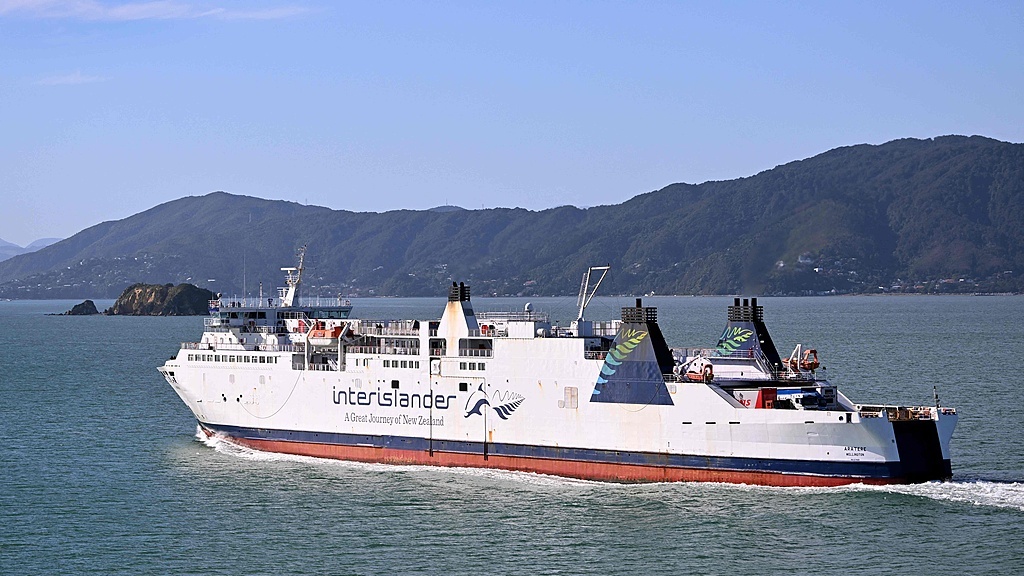
造大船,集齐“三颗明珠”(“十四五”,我们见证这些硬核突破①)
Ren Min Ri Bao Hai Wai Ban· 2025-10-15 22:56
Core Viewpoint - China has achieved significant breakthroughs in shipbuilding during the "14th Five-Year Plan" period, becoming the only country in the world with complete construction capabilities for three major ship types: aircraft carriers, large cruise ships, and large LNG carriers [9][10][11]. Shipbuilding Industry Developments - The successful construction and operation of the first domestically produced large cruise ship "Ida Magic City" and the launch of the first domestic electromagnetic aircraft carrier "Fujian" represent major milestones in China's shipbuilding capabilities [7][9]. - China has maintained its position as the world's leading shipbuilding nation, with a market share of 64.2% in new orders during the "14th Five-Year Plan," an increase of 15.1 percentage points compared to the previous five-year period [11][12]. Technological Advancements - The shipbuilding industry has seen a transformation with the integration of intelligent technologies such as digital inspection and robotic painting, leading to a significant increase in the production of high-end ship types [12]. - The LNG ship sector has experienced a doubling of capacity and delivery, with the number of LNG ships delivered by Hudong-Zhonghua reaching 51, and the international market share increasing from 8% to approximately 20% [13][14]. Domestic Supply Chain and Innovation - The domestic production rate of key equipment has improved significantly, with the localization rate of critical components rising from 60% in 2017 to over 90% for certain equipment [15]. - The second domestically produced large cruise ship "Ida Flower City" is currently under construction, with an expected increase in the domestic production rate to 80% by 2035 [16]. Strategic Importance - The advancements in shipbuilding enhance China's maritime defense capabilities, promote high-end shipping and marine tourism, and secure energy transportation, thereby strengthening the country's maritime strategy and economic development [17].

五家子公司登上中国反制清单,韩华海洋股价一日蒸发超10%
Sou Hu Cai Jing· 2025-10-15 14:53
Core Viewpoint - The Chinese Ministry of Commerce has placed five U.S. subsidiaries of Hanwha Ocean Co., Ltd. on a countermeasure list, prohibiting any transactions or cooperation with them within China, in response to U.S. restrictions on China's maritime, logistics, and shipbuilding industries [1][4]. Group 1: Reasons for Sanctions - The countermeasures are a direct response to the U.S. initiating a "301 investigation" into China's maritime, logistics, and shipbuilding sectors [4]. - Hanwha Ocean's U.S. subsidiaries were accused of assisting U.S. government investigations that threaten China's sovereignty and development interests [4]. - The Chinese government has previously indicated its intent to impose special port fees on vessels with U.S. elements, showcasing a series of retaliatory actions against U.S. trade measures [4]. Group 2: Company Background - Hanwha Ocean, formerly Daewoo Shipbuilding & Marine Engineering, was acquired by Hanwha Group in 2022, establishing a dual focus on commercial shipbuilding and military vessels [5]. - The company holds a significant position in the global shipbuilding market, maintaining a market share of 5% to 8%, ranking among the top ten globally [6]. Group 3: Market Reaction - Following the announcement of the countermeasures, Hanwha Ocean's stock price fell over 10%, reaching a low of 99,600 KRW before slightly rebounding to close at 103,100 KRW [1][9]. - Samsung Heavy Industries, another major South Korean shipbuilder, also experienced a decline, closing at 21,200 KRW, down 4.72% [9]. Group 4: Implications for the Industry - The targeted sanctions reflect a precise strategy by China, focusing solely on Hanwha Ocean's U.S. subsidiaries without extending to the parent company in South Korea [8]. - Analysts suggest that the sanctions could significantly impact Hanwha Ocean's operations, as the company heavily relies on Chinese components and materials, with potential cost increases of about 10% for shipbuilding [11]. - There are concerns that if the Chinese government views Hanwha Ocean's parent company as an "affiliated entity," it could lead to broader repercussions for Hanwha Ocean's business in China [11]. Group 5: U.S. Shipbuilding Context - The U.S. is attempting to revitalize its shipbuilding industry under the "Manufacturing Reshoring" policy, but currently produces fewer than five commercial ships annually, compared to over 1,700 ships produced by China [12].
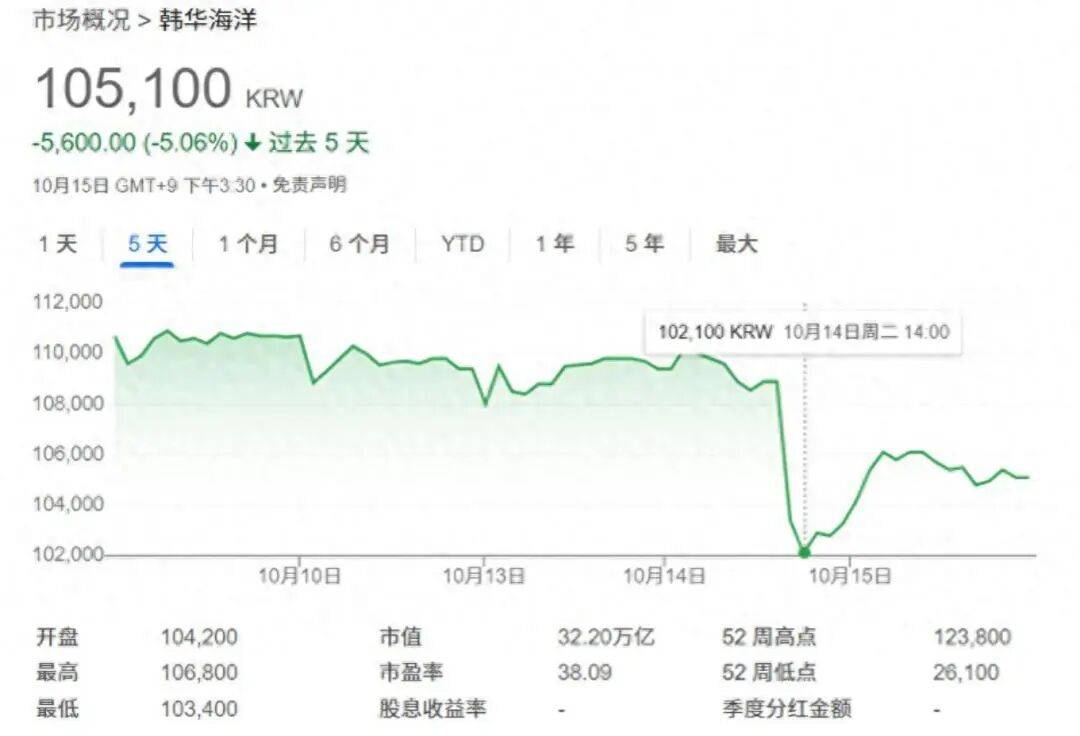
被精准制裁后韩华海洋股价大跌,韩政府急忙和中方沟通
Guan Cha Zhe Wang· 2025-10-15 09:20
Core Viewpoint - The Chinese Ministry of Commerce announced countermeasures against five U.S. subsidiaries of Hanwha Ocean, leading to a significant drop in Hanwha Ocean's stock price by 5.8% on October 14, and a 4.1% decline in Hyundai Heavy Industries' stock price [1][3]. Group 1: Company Impact - Hanwha Ocean has a shipbuilding facility in Shandong, China, primarily producing ship component modules that are sent to South Korea for final assembly [3]. - Hanwha Ocean is closely monitoring the situation's potential impact on its business and continues to provide services to clients, including investments in the U.S. maritime industry and projects related to the Philadelphia shipyard [3]. - In August, Hanwha Ocean announced an additional investment of $5 billion in the Philadelphia shipyard and had previously acquired the facility for $100 million in 2024 [3]. Group 2: Industry Context - The U.S. shipbuilding industry has been struggling, currently holding less than 1% of the global commercial shipbuilding market, compared to approximately 60% for China and 22% for South Korea [4]. - The South Korean government has committed to injecting up to $150 billion to help revitalize the domestic industry [5]. - Hanwha Ocean's competitor, Hyundai Heavy Industries, is also in discussions to acquire U.S. shipyards, indicating a competitive landscape in the U.S. maritime sector [6]. Group 3: Regulatory and Geopolitical Factors - The U.S. has implemented port fees and restrictions on the maritime, logistics, and shipbuilding sectors related to China, which has drawn strong opposition from China [6][7]. - China has accused Hanwha Ocean's U.S. subsidiaries of assisting the U.S. government in its investigations and has placed them on a countermeasure list, prohibiting transactions and cooperation with them within China [7]. - The Chinese government emphasizes that the U.S. actions violate international law and harm the legitimate rights of Chinese enterprises, urging the U.S. to correct its actions [7].
韩国急忙表态:正与中方沟通
Huan Qiu Shi Bao· 2025-10-15 07:09
Group 1 - The U.S. has officially implemented restrictions on China's maritime, logistics, and shipbuilding sectors based on the findings of the Section 301 investigation, which includes port fees [1][3] - China's Ministry of Commerce expressed strong dissatisfaction and announced special port fees for vessels associated with U.S. flags, U.S. manufacturing, or U.S. ownership [1][3] - Five U.S. subsidiaries of Hanwha Ocean Corporation have been placed on China's countermeasure list, prohibiting domestic organizations and individuals from engaging in transactions or cooperation with them [3][4] Group 2 - Hanwha Ocean's stock price fell over 5% following the announcement of China's countermeasures, indicating market concern over the potential impact on the company [3][4] - The measures currently target only Hanwha Ocean's U.S. subsidiaries, but there are concerns that the impact could extend to the parent company and related entities in South Korea [4] - The South Korean government is actively communicating with China to minimize the impact of these measures and is monitoring the situation closely [4]
中美对立波及第三国,中国制裁韩国船企
日经中文网· 2025-10-15 02:55
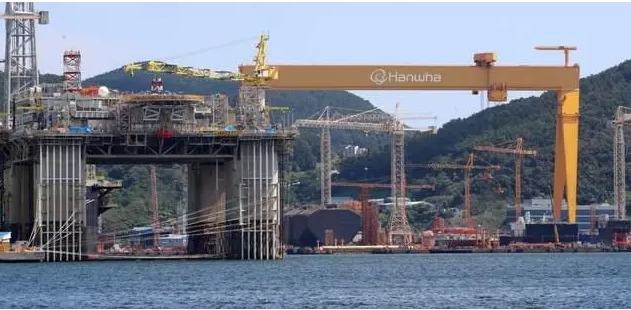
Group 1 - The ongoing US-China rivalry is increasingly involving third countries, with the US tightening export controls on high-tech products to China and including third-country companies in sanctions [1][8] - Japan is under pressure to align its semiconductor sales with US restrictions on China, indicating a complex economic relationship with both the US and China [1][3] - China's Ministry of Commerce announced sanctions against five US subsidiaries of South Korea's Hanwha Ocean for their involvement in a US investigation into China's shipbuilding practices, citing threats to China's sovereignty and security [1][3] Group 2 - The sanctions against Hanwha's subsidiaries are based on China's Anti-Foreign Sanctions Law, which prohibits assistance to foreign entities that impose discriminatory measures against Chinese companies [3][5] - The US investigation into China's shipbuilding industry, initiated under Section 301 of the Trade Act, aims to revitalize the US shipbuilding sector, which has lagged behind South Korea and Japan [5][6] - The timeline of events includes the US investigation starting in April 2024, with subsequent actions and responses from both the US and China, culminating in the sanctions on October 14, 2024 [6][7] Group 3 - Hanwha Ocean's acquisition of the Philadelphia shipyard for $100 million in 2024 is part of its strategy to enhance shipbuilding capabilities in the US, but the recent sanctions may lead to hesitance in future investments by South Korean companies in the US [7][8] - The potential for further sanctions against third-country companies that assist the US government in investigations against China raises concerns for international businesses navigating the US-China tensions [8][9]
中原期货晨会纪要-20251015
Zhong Yuan Qi Huo· 2025-10-15 01:13
Report Information - Report Title: Morning Meeting Minutes, Issue (186) in 2025 - Release Date: October 15, 2025 - Research Department: Zhongyuan Futures Research and Consulting Department 1. Industry Investment Rating - Not mentioned in the report 2. Core Viewpoints - The global economic situation is complex, with multiple factors influencing various markets. The Chinese economy shows signs of recovery, but concerns remain due to external trade frictions and internal structural adjustments. Different commodity markets have distinct supply - demand dynamics and price trends, and the stock market is expected to be in a state of high - level volatility in the fourth quarter [5][6][7][16] 3. Summary by Category 3.1 Macro News - Chinese Premier Li Qiang emphasized the need to implement counter - cyclical adjustments, expand domestic demand, and create a first - class industrial ecosystem. China also took counter - measures against South Korea's Hanwha Ocean's US subsidiaries in response to US trade investigations [5] - The Fed Chair Powell hinted at a possible end to balance - sheet reduction and a potential 25 - basis - point rate cut this month. The Chinese central bank aims to maintain the RMB exchange rate at a reasonable and balanced level [6] - US grain shipments to China have significantly declined, with potential losses for US soybean exports. Chinese authorities launched investigations on the shipping and shipbuilding industries and emphasized measures to stabilize industrial growth [6][7] - National enterprise sales revenue has shown a steady upward trend, and tax revenue has been growing positively since February [7] 3.2 Commodity Price Changes - **Chemical Industry**: On October 15, most chemical futures contracts showed price declines. For example, coking coal dropped by 0.867%, coke by 1.360%, and PTA by 0.766%. Only 20 - numbered rubber, methanol, paper pulp, LPG, and РХ showed price increases [3] - **Agricultural Products**: Some agricultural products had price increases, such as yellow soybean No. 1 (0.784%), yellow soybean No. 2 (0.390%), and soybean meal (0.448%), while others like rapeseed oil (- 0.412%) and palm oil (- 0.107%) declined [3] 3.3 Morning Meeting Views on Major Varieties 3.3.1 Agricultural Products - **Peanuts**: On October 14, peanut futures showed a narrow - range oscillation. Supply has regional differences, and the current price is near the lower edge of the oscillation range. It is recommended to wait and see and focus on the new - grain listing rhythm [10] - **Sugar**: On October 14, sugar futures fell below the key support level. Brazilian sugar supply is increasing, and domestic northern sugar mills are starting production with low inventory. It is advisable to wait and watch, focusing on Brazilian crushing data and domestic production progress [10] - **Corn**: On October 14, corn futures showed a weakening trend. Supply pressure from new grain listing is dominant, and it is expected to continue its weak trend. Attention should be paid to the support range of 2050 - 2080 yuan [10] - **Pigs**: The pig market is under pressure due to concentrated post - festival supply and reduced consumption. It is in a state of deep loss and is expected to continue weakening [10] - **Eggs**: The spot price of eggs is slightly increasing in the short term. Futures can consider a small - volume long - position in the far - month contract and a calendar spread strategy [10][12] 3.3.2 Energy and Chemicals - **Urea**: The domestic urea price has a slight increase. Supply is affected by some enterprise maintenance, and demand from compound fertilizer enterprises is weak. It is expected to maintain a weak oscillation, and attention should be paid to the Indian tender on the 15th [11][12] - **Caustic Soda**: The price of caustic soda in Shandong is stable. Supply is supported by enterprise production reduction and maintenance, but demand lacks impetus. The 2601 contract is under pressure [12] - **Coking Coal and Coke**: Spot prices are stable, but steel mills' demand is weakening. They are expected to have a short - term weak oscillation [12] 3.3.3 Industrial Metals - **Copper and Aluminum**: After China's trade counter - measures, the US has shown a willingness to ease tensions, and market sentiment has improved. However, aluminum inventory has increased, and there is pressure on the premium. Short - term price corrections should be noted [12][13] - **Alumina**: Supply is high, and demand is weak. The 2601 contract is running weakly, and attention should be paid to factors such as bauxite [13] - **Steel Products**: Steel prices are weakening. Terminal demand is poor after the festival, and inventory is accumulating slightly. Steel prices are expected to continue to oscillate weakly [13] - **Ferroalloys**: The black - series is weak, and double - silicon is under pressure. Cost support has weakened, and the short - term trend is bearish [13] - **Lithium Carbonate**: On October 14, the futures price slightly increased. Supply has growth potential, and demand is mixed. Attention should be paid to the 74400 - yuan pressure level [13][14] 3.3.4 Options and Finance - **Stock Index Futures and Options**: On October 14, A - share indices declined. The stock market is affected by trade frictions and Fed policies. Trend investors can consider low - buying when the index stabilizes, and volatility investors can consider long - volatility strategies [14][16]
中国一纸禁令,何以撼动韩国造船巨头?
Sou Hu Cai Jing· 2025-10-15 01:04
Core Viewpoint - The significant drop in Hanwha Ocean's stock price is attributed to a trade conflict between China and the U.S., leading to a ban on transactions with its U.S. subsidiaries by the Chinese Ministry of Commerce [1][3]. Stock Price Decline - On October 14, Hanwha Ocean's stock fell sharply, with an intraday drop exceeding 10% and closing down 8.3%, marking a rare volatility for a large shipbuilding company [3]. - The entire Hanwha Group's stocks showed weakness, with Hanwha Aerospace also declining over 3%, indicating market concerns about the group's overall risk [3]. Global Strategy of Hanwha Group - Hanwha Group, established in 1952, has built a global business network, with Hanwha Ocean being a key player in the shipbuilding industry, holding a market share of 5%-8% globally [3]. - Hanwha Ocean has focused on high-tech, high-value-added shipbuilding, particularly in the LNG carrier and ultra-large container ship markets [3]. - The company has accelerated its global expansion, establishing eight overseas entities in various countries last year and continuing to expand in India and Brazil in the first half of this year [3][5]. U.S.-China Relations Impact - Hanwha Ocean's challenges are closely linked to its deep ties with the U.S., particularly in defense and energy sectors, where it plays a crucial role in supplying military systems and supporting U.S. LNG exports [4]. - The company has made significant investments in the U.S., including a $100 million acquisition of a shipyard and taking on U.S. Navy ship repair contracts, which complicates its position in the U.S.-China trade conflict [4]. Ambitions in Emerging Markets - Hanwha Ocean is actively pursuing opportunities in emerging markets, establishing a global engineering center in India to cater to the growing offshore equipment market [5]. - In Brazil, the company has formed a subsidiary to engage in offshore equipment projects, including bidding for a significant FPSO project with Petrobras [5][6]. Control and Governance - Despite U.S. investments, Hanwha Ocean's control remains firmly in the hands of Korean stakeholders, with the Kumho Global investment company, owned by the Kim family, being the largest shareholder [8][9]. - The presence of U.S. funds in Hanwha Group is primarily as passive investors, without influence over governance or strategic decisions [9]. Complexity of Global Trade Dynamics - The intricate global network of Hanwha Group means that trade tensions can have widespread implications, affecting not just shipbuilding but also its solar panel factories and military industries [10][11]. - The stock price decline of Hanwha Ocean is a visible indicator of the broader impacts of global trade dynamics [11].

对等反制,中方对涉美船舶收费昨日生效
Qi Huo Ri Bao Wang· 2025-10-15 00:55
Core Viewpoint - The Chinese government has announced a special port service fee for U.S. vessels starting October 14, 2025, in response to U.S. trade measures against China's maritime and shipbuilding industries, which are seen as unilateral and discriminatory actions that violate WTO rules and the China-U.S. maritime agreement [1][2][3]. Group 1: Regulatory Measures - The Ministry of Transport has issued a detailed implementation plan for the special port service fee, outlining ten articles that cover the basis for the fee, scope, standards, collection entities, payment requirements, and information verification [1]. - The plan specifies exemptions for certain vessels, including those built in China and empty vessels entering Chinese shipyards for repairs [1]. - The U.S. Trade Representative's office has initiated a 301 investigation into China's maritime, logistics, and shipbuilding sectors, which will result in additional port service fees for Chinese-owned or operated vessels starting the same date [1][2]. Group 2: Economic Impact - The U.S. measures are expected to disrupt global supply chains, significantly increase international trade costs, and potentially raise inflation in the U.S., adversely affecting its port competitiveness and employment [2][4]. - The Chinese government is conducting investigations into companies that may have assisted the U.S. in its investigations, aiming to protect its maritime and shipbuilding industries [3][4]. - Analysts suggest that the increased costs from both U.S. and Chinese measures will raise shipping costs and affect the profitability of shipping companies, with potential long-term implications for the U.S. shipbuilding industry [5]. Group 3: Trade Dynamics - The trade dynamics between China and the U.S. indicate that the U.S. is a major importer of finished goods while China is a key importer of bulk commodities, particularly oil and gas, suggesting that the impact of these measures will vary across different shipping markets [4][5]. - The potential for U.S. shipbuilding to recover is limited due to the labor-intensive nature of the industry, with analysts predicting that some orders may shift to Japan and South Korea instead [5].