可再生能源

Search documents
通用电气取得用于风力涡轮的电气系统专利
Jin Rong Jie· 2026-01-02 03:41
Core Viewpoint - General Electric Renewable Energy Spain has obtained a patent for an "Electrical System for Wind Turbines," indicating a focus on innovation in renewable energy technology [1] Group 1 - The patent was granted under announcement number CN113700620B [1] - The application date for the patent was May 2021 [1]

通用电气取得控制风力涡轮以保护其免于异常操作专利
Jin Rong Jie· 2026-01-02 00:50
作者:情报员 国家知识产权局信息显示,通用电气可再生能源西班牙有限公司取得一项名为"控制风力涡轮以保护风 力涡轮免于异常操作的系统和方法"的专利,授权公告号CN113700605B,申请日期为2021年5月。 声明:市场有风险,投资需谨慎。本文为AI基于第三方数据生成,仅供参考,不构成个人投资建议。 本文源自:市场资讯 ...
2060年世界和中国能源展望报告(英文版)
Sou Hu Cai Jing· 2026-01-01 09:10
Core Insights - The report outlines China's energy transition path towards 2060, emphasizing that non-fossil energy will dominate the energy structure, accounting for over 80% of total energy consumption by 2060 [1][2] Energy Consumption and Structure - In 2024, China's primary energy consumption is projected to reach approximately 5.97 billion tonnes of coal equivalent (Btce), with non-fossil energy consumption surpassing oil for the first time at 19.7% [2][8] - Energy consumption growth is expected to plateau around 6.94 Btce by 2035, followed by a decline to about 5.95 Btce by 2060 [2][8] - Coal consumption is anticipated to stabilize above 4.8 billion tonnes annually through 2029, with a significant reduction to below 0.5 billion tonnes by 2060 [9] - Oil consumption is projected to peak between 790-800 million tonnes before declining to 260 million tonnes by 2060 [10] - Natural gas consumption is expected to peak at 620 billion cubic meters (Bcm) between 2035-2040, then decline to 420 Bcm by 2060 [11] Electrification and Final Energy Consumption - Electricity is set to become the largest terminal energy source, surpassing coal during the 14th Five-Year Plan, with final energy consumption projected to peak above 4.6 Btce by the mid-2020s [13] - The electrification rate, including hydrogen, is expected to rise from 32% in 2024 to 71% by 2060, indicating a significant shift towards clean electricity in various sectors [3][13] Challenges in Energy Transition - The report highlights challenges in the energy transition, particularly regarding the integration of renewable energy sources like wind and solar into the grid, which faces absorption bottlenecks [4][12] - The economic viability of new clean energy carriers and technologies, such as green hydrogen and carbon capture, utilization, and storage (CCUS), remains a concern for large-scale commercialization [4] Policy and Future Scenarios - The report presents three scenarios for energy transition: Coordinated Development, Security Challenge, and Green Drive, with the Coordinated Development scenario seen as the optimal path for achieving carbon neutrality [5][18] - Policy trends are shifting from controlling energy consumption to focusing on carbon emissions, with a move from direct subsidies to target-based mechanisms, and from government-led initiatives to market-driven approaches [7][18]


AI基建浪潮点燃绿电需求猛增之势 大摩勾勒出“可再生能源超级周期”
智通财经网· 2025-12-31 07:03
Core Viewpoint - Morgan Stanley highlights an unprecedented expansion cycle in AI data centers, emphasizing the integration of renewable energy supply and infrastructure, as exemplified by Alphabet's acquisition of Intersect Power, which focuses on securing clean energy before attracting major clients [1][6]. Group 1: Investment Opportunities - Morgan Stanley sets mid-term investment targets for data centers at $20 billion and $40 billion, indicating strong capital expenditure in this sector [1]. - The stock market shows a significant increase in the iShares Global Clean Energy ETF, with a 47% rise in 2025, driven by strong performances from companies like Bloom Energy and First Solar [2]. - Morgan Stanley identifies structural growth opportunities in renewable energy infrastructure, suggesting that high-quality, cash-flow-visible assets are now attractive for investment [6][7]. Group 2: Market Dynamics - The demand for clean energy is expected to surge due to the increasing power needs of AI training and inference systems, alongside global climate change pressures [3]. - The report notes that the demand for renewable energy is being driven by the AI data center's electricity needs, which are projected to grow significantly [11]. - Morgan Stanley emphasizes that the modernization of the grid, energy storage, and co-location models will be critical breakthroughs for renewable energy systems [6]. Group 3: Company Strategies - Google plans to mobilize $20 billion for renewable energy investments by 2030 and aims to invest approximately $40 billion in Texas for new AI data center campuses [6]. - Companies like Amazon and Microsoft are also pursuing similar renewable energy investment strategies to meet their clean power requirements [6]. - Morgan Stanley recommends overweight positions in leading renewable energy infrastructure stocks such as Brookfield Renewable and Clearway Energy, which are expected to benefit from the growing demand for clean energy [9][7]. Group 4: Cost Competitiveness - The International Renewable Energy Agency (IRENA) reports that the majority of new renewable projects in 2024 will be cheaper than fossil fuel alternatives, making renewables the preferred choice for expanding AI-related power needs [12]. - The cost of solar and wind energy continues to decline, positioning these sources as primary options for meeting the electricity demands of AI data centers [12]. - UBS analysts note that the demand for utility-scale solar projects in the U.S. is outpacing supply, driven by the construction of AI data centers aiming for 100% clean energy [12].

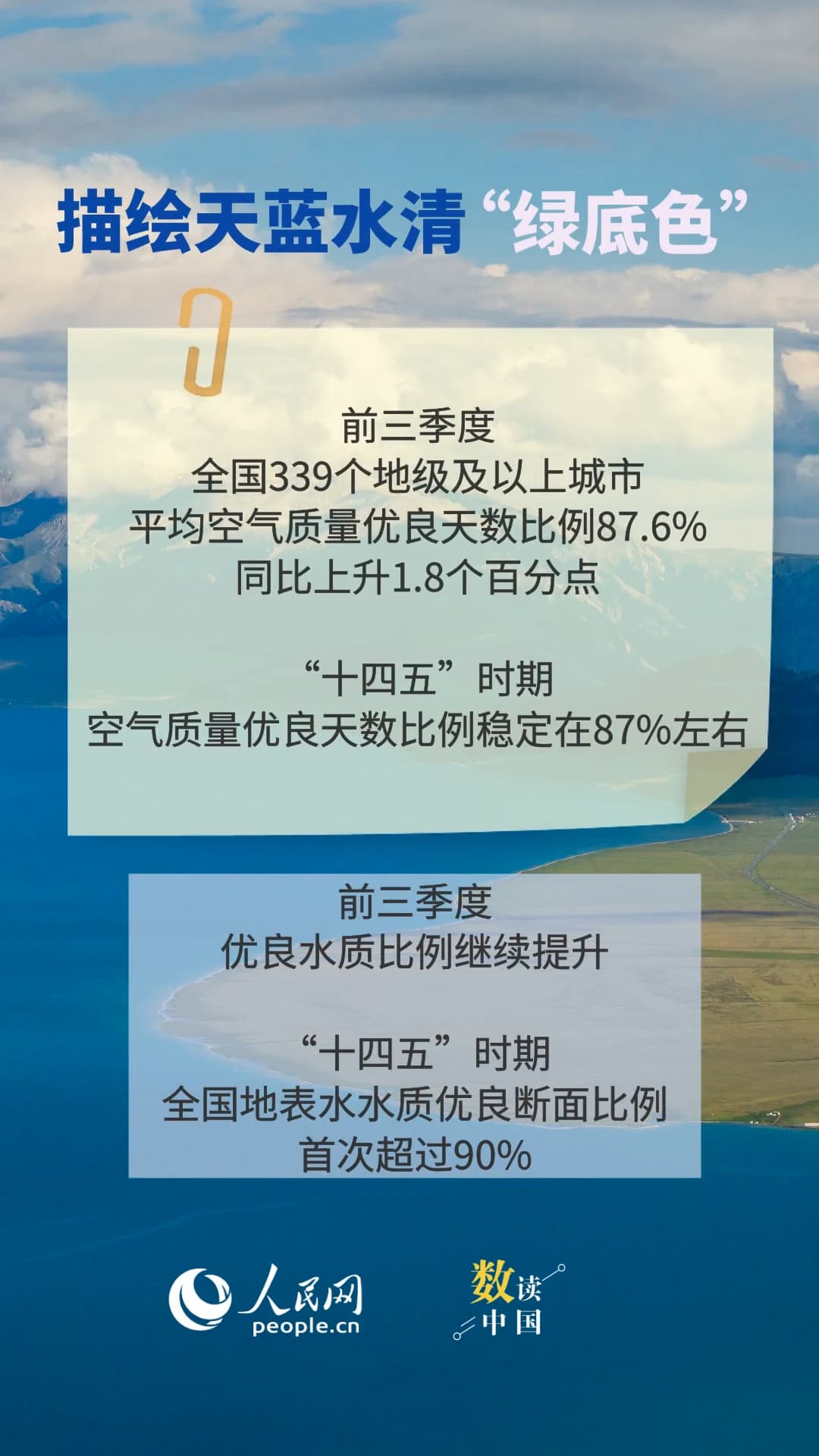
数读2025经济答卷 6组数据看“绿水青山”新画卷
Ren Min Wang· 2025-12-31 05:23
"十四五"规划收官之年,人民网财经推出"承前启后看发展·数读2025经济答卷"系列图解,透过民间投资、科技创新、交通物流外贸等核心数据,感受中 国经济发展的强劲脉动。 本期聚焦绿色发展,一年来,逐"绿"前行的中国,绿色低碳转型步伐稳健、成效显著,为高质量发展注入源源不断的动能。 首次超过90% 10人民用 数读 >中国 厚程增绿降碳 学习市 "十四五"期间 森林覆盖率超过25% 为全球贡献约四分之一新增绿化面积 坚定履行"双碳"承诺 单位GDP能源消耗四年累计降低11.6% 相当于减少了11亿吨二氧化碳排放量 深耕能源转型"主路径" 1至10月 我国可再生能源新增装机3.32亿千瓦 风电光伏发电量1.89万亿千瓦时 占全国发电量23.5% 四五"时期 全社会用电量中 每3千瓦时电就有1千瓦时绿电 al 于级"快车 1至11月 新能源汽车产销 分别完成1490.7万辆和1478万辆 同比分别增长31.4%和31.2% 目前 国家层面已经累计培育6430家绿色了 激活协同共治"强动力" il 截至三季度末 绿色贷款余额43.51万亿元 同比增长22.9% 绿色债券累计发行4.95万亿元 规模位居全球前列 《绿色金 ...
聚焦2025IEEF | 地缘政治动荡下的企业合作
Sou Hu Cai Jing· 2025-12-30 15:36
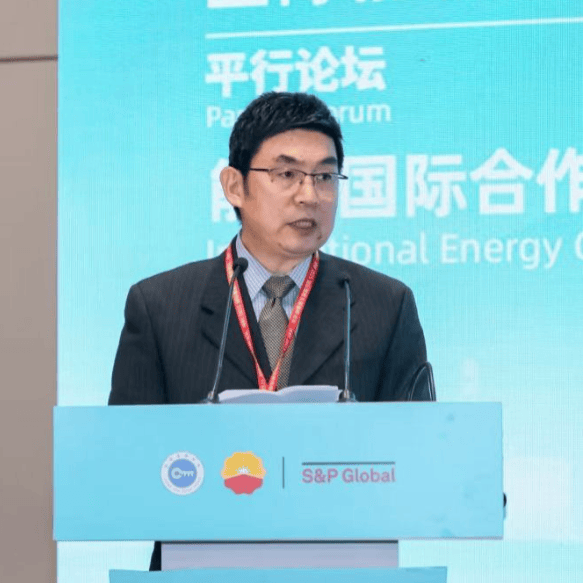
Group 1 - The global energy landscape is undergoing structural and technological transformations, with a focus on clean, electrified, and intelligent energy systems, necessitating deepened international cooperation [3] - The establishment of the International Oil and Gas Cooperation Working Committee aims to connect domestic and international stakeholders, promote practical project collaboration, and support national energy diplomacy and corporate globalization [3] - Continuous collaboration in the oil and gas sector is essential to strengthen global energy security, foster technological innovation, and support green low-carbon development [5] Group 2 - Southeast Asia is projected to see an annual electricity demand growth of over 5% by 2030, highlighting the need for significant investment in clean energy, while facing talent and funding gaps in key technology areas [8] - China and Arab countries are experiencing a historic peak in energy cooperation, with stable trade growth and increased investment in green and high-tech sectors, reflecting a shift away from a US-centric global economic structure [11] - Africa's energy transition is hindered by insufficient investment, with over 640 million people lacking electricity, necessitating deeper international cooperation, particularly with China, to attract investment and support clean energy development [12] Group 3 - Russia's updated energy strategy aims for a trillion-dollar energy status by 2050, focusing on policy adjustments and expanding cooperation with China and other global southern countries to ensure strategic goals are met [13] - The "Belt and Road" initiative emphasizes China's dual role in ensuring energy security and promoting global energy accessibility through technological innovation, despite challenges in target regions [15] - Chinese enterprises are actively engaging in local energy transition projects along the "Belt and Road," enhancing clean energy capacity and reducing costs for host countries while fostering local talent [16]
双碳研究 | 高电价困局,德国能源转型遇阻
Sou Hu Cai Jing· 2025-12-30 14:46
高电价困局 德国能源转型遇阻 【The Munich Eye网12月27日报道】 综上,尽管德国已经实施针对性能源政策措施,并且在扶持消费者与工业企业方面取得显著进展,但仍 面临诸多重大挑战。该国能否成功实现宏大的能源转型目标,关键在于能否持续发力,构建一个稳定、 具有国际竞争力且区域均衡的电力市场,统筹产业发展与气候治理双重目标。 今日,勃兰登堡州政府声明,电价持续高企,德国可再生能源转型正面临严峻考验。为缓解消费者和企 业的压力,联邦政府已出台一系列政策,包括实行工业电价、下调电网使用费等,但能源密集型产业的 竞争力问题仍未消解。 钢铁、化工、制药等德国经济支柱产业受高电价冲击尤甚。这些产业正是该国实现气候中和经济战略的 核心。该战略力图实现从化石燃料向可再生能源转型,大幅减少温室气体排放。 欧盟近期调整政策,允许成员国提高高耗能产业补贴,助力企业对冲欧盟碳排放交易体系带来的财务影 响,因为该体系会对二氧化碳排放征收费用。尽管此番调整方向正确,但德国各州领导人仍强调,为确 保本国产业竞争力,仍需采取进一步措施。 当前所施行的措施,包括计划推行的补贴性工业电价,以及面向家庭和企业的电网费用下调方案,均属 积 ...

通用电气取得双馈风力发电机电网形成控制专利
Jin Rong Jie· 2025-12-30 11:29
Group 1 - The core point of the article is that General Electric Renewable Energy Spain, S.L. has obtained a patent for a system and method for grid-forming control for doubly-fed wind turbine generators [1] Group 2 - The patent is titled "System and Method for Grid Forming Control for Doubly-Fed Wind Turbine Generators" and has the authorization announcement number CN114930711B [1] - The application date for the patent was January 2020 [1]
中国清洁能源利用率保持在95%以上,为全球绿色转型提供支撑
Huan Qiu Wang· 2025-12-30 01:55
Group 1 - The core viewpoint of the article highlights the significant achievements in China's renewable energy sector, particularly in solar power generation, with the Tarim Oilfield reaching a record annual solar power generation of over 2 billion kilowatt-hours and a daily peak of over 10 million kilowatt-hours [1] - The article mentions that by 2024, China's renewable energy generation is expected to reach 3,500 terawatt-hours, accounting for 35% of total electricity generation, with wind and solar power contributing 1,800 terawatt-hours, or 19% of the total [1][2] Group 2 - The report indicates that China's clean energy utilization rate has remained above 95% due to the rapid growth of wind and solar energy, with generation resources primarily concentrated in the northern, northwestern, and northeastern regions, while the load centers are located in the eastern and southern coastal areas [2] - Continuous construction of large-capacity ultra-high voltage transmission lines has significantly enhanced China's ability to transmit renewable energy across provinces and regions, effectively addressing the geographical mismatch between resources and load [2] - Zhongtong Securities points out that China's clean energy industry chain, represented by electric vehicles, lithium-ion batteries, solar, and wind power, is continuously lowering costs and improving efficiency through ongoing technological innovation and robust market competition, providing solid products and services to support global green transformation [2]
【环时深度】日本如何沦为全球能源转型“绊脚石”
Huan Qiu Shi Bao· 2025-12-29 22:49
Core Viewpoint - Japan's government has decided to stop financial support for large-scale photovoltaic projects starting from the fiscal year 2027, citing the need to protect the natural environment, ensure public safety, and maintain landscape aesthetics. This decision reflects a backward step in Japan's energy policy and highlights its ongoing struggle with climate commitments and reliance on fossil fuels [1][2]. Group 1: Energy Policy and Criticism - Japan has been criticized for its energy policies, receiving the "Fossil Award" multiple times for its lack of action on climate change, particularly for its investments in coal-fired power plants and other fossil fuel projects [2][3]. - The country’s energy transition is characterized by a significant reliance on fossil fuels, with natural gas accounting for approximately 32.9% and coal for about 28.5% of its total electricity generation in 2023, leading to a combined fossil fuel share of around 68.7% [4][5]. - Japan's international investments in fossil fuel projects, such as those funded by the Japan International Cooperation Bank, have resulted in substantial carbon emissions, further complicating its domestic decarbonization efforts [5][6]. Group 2: Renewable Energy Goals and Challenges - Japan aims to increase the share of renewable energy in its power structure to 36%-38% by 2030 and 40%-50% by 2040, but these targets are considered conservative compared to the potential for greater growth [7][8]. - The country has significant offshore wind potential, yet its plans only target a 4%-8% share of wind energy in its power structure by 2040, which many experts believe could be increased by at least 25% [7][8]. - The decision-making process for Japan's energy policies has been criticized for being dominated by fossil fuel interests, leading to a lack of ambitious climate goals and a slow transition to renewable energy [8][9]. Group 3: Economic Structure and Transition Obstacles - Japan's traditional industries, such as steel and automotive, play a crucial role in its economy and are significant carbon emitters, making the transition to cleaner energy sources challenging and requiring substantial investment [9][10]. - The government tends to favor conservative, incremental approaches to energy transition, such as promoting hybrid vehicles instead of fully electric ones, which has drawn criticism from environmental groups [10][11]. - Japan's energy strategy has been described as lacking ambition, with a focus on maintaining energy security at the expense of aggressive decarbonization efforts, which poses risks to global climate goals [11][12].