火锅

Search documents
超九成产品定价15元以内 海底捞全国首家“超级甜品站”落地上海
Bei Jing Shang Bao· 2025-09-01 07:44
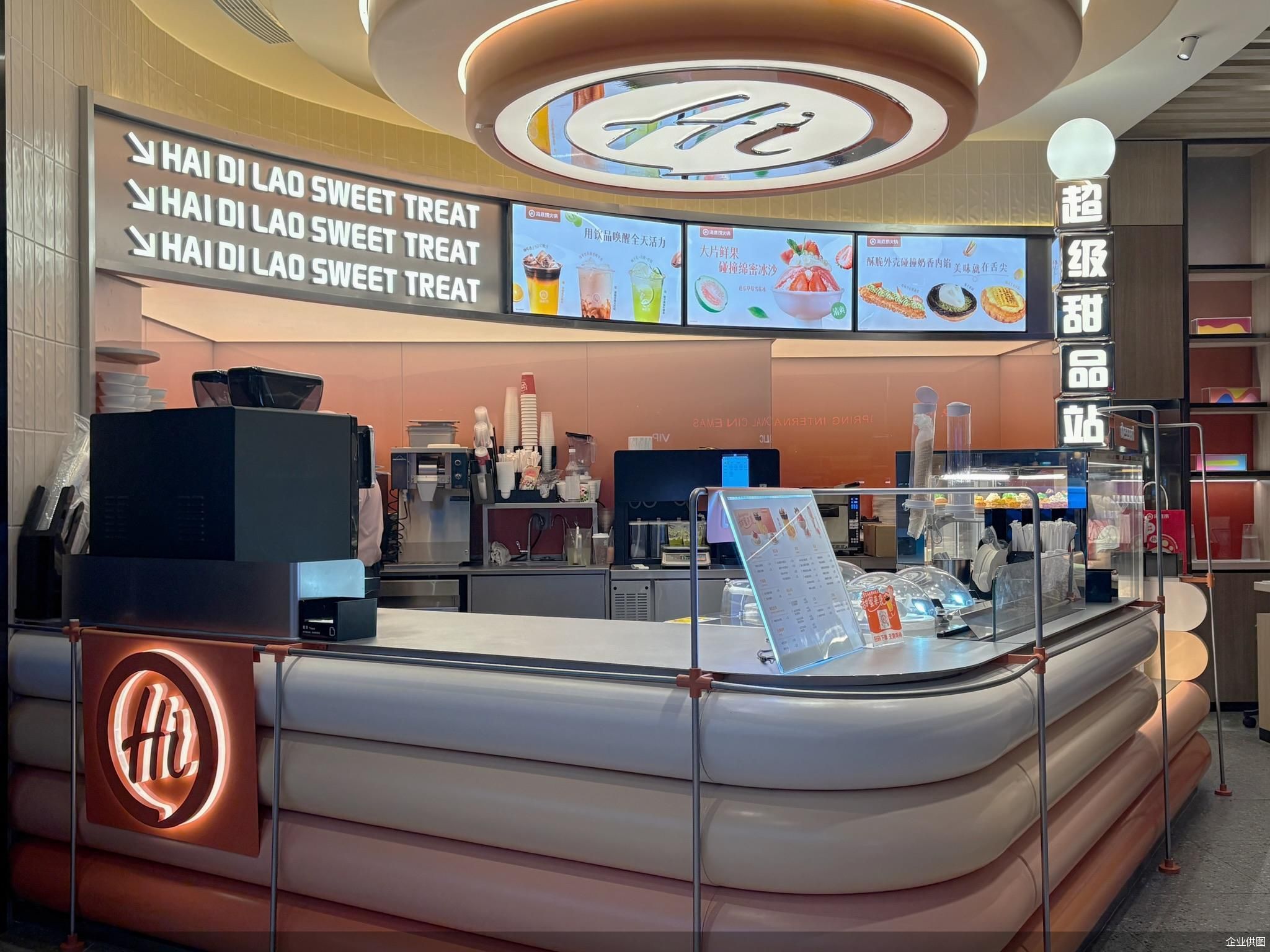
Core Insights - Haidilao has launched its first "Super Dessert Station" at the Shanghai Zhonggeng Mall location, offering over 30 products including coffee, milk tea, lemon tea, snow ice, Gelato, bagels, sandwiches, cakes, and mousse, with over 90% of the products priced under 15 yuan [1][3] - The introduction of the dessert station aligns with the emerging consumer trend of fulfilling multiple needs in the same space, catering to customers who wish to purchase desserts and drinks after their meal without additional effort [3][4] - Haidilao is transitioning from a "single category" model to an "ecological matrix" by combining hot pot with dessert stations and other offerings, indicating a deep understanding of consumer trends and an innovative approach to dining experiences [4]


海底捞七夕预订超15万桌,部分门店一周前已满
Xin Lang Ke Ji· 2025-08-29 03:24
Core Insights - Haidilao has received over 150,000 reservations for the Qixi Festival, which is more than five times the normal Friday reservation volume [1] Group 1 - The data indicates that Haidilao's popularity is significantly increasing, with some popular locations being fully booked a week in advance [1]
海底捞:已收到七夕用餐预订超15万桌
Xin Lang Ke Ji· 2025-08-29 02:54
Core Insights - As of August 29, the company has received over 150,000 dining reservations for the Qixi Festival, which is more than five times the normal Friday reservation volume [1] - The first "super dessert station" has opened at the Shanghai Zhonggeng Manyou City store, offering over 30 products, including beverages and desserts, with over 90% priced under 15 yuan [1] - The company is enhancing customer experience through innovative themes and unique products, aiming to create a "thousand stores with a thousand faces" strategy [1]
云南酸菜火锅爆火背后藏着哪些秘密?
Hu Xiu· 2025-08-29 02:07
Core Insights - The restaurant brand is focused on bringing authentic Yunnan flavors out of the mountains and has rapidly expanded to over 200 locations [1] Financial Performance - The monthly total revenue is expected to exceed 50 million, with over 30 million coming from online sources [1] - The profit margin is between 65% and 70% [1]
开业即火爆,这家火锅店做对了什么?
Hu Xiu· 2025-08-28 06:01
Core Insights - A hot pot restaurant named Qushanyue Yungui Chuan has gained immense popularity among young people in Jiangxi, achieving over 6 table turnovers per day [1] - The restaurant's success is attributed to its originality, taste, and visual appeal, effectively capturing the attention of the younger demographic [1] - The platform sold over 30,000 vouchers within 6 days of pre-sale, indicating strong consumer interest and demand [1] Company Strategy - The restaurant leverages unique offerings to differentiate itself in a competitive market, focusing on innovative menu items and an engaging dining experience [1] - By utilizing online platforms for promotions, the restaurant has successfully reached a wider audience and increased its customer base [1] Industry Trends - The rapid growth of Qushanyue Yungui Chuan reflects a broader trend in the restaurant industry where brands are increasingly targeting younger consumers through creative marketing and appealing dining experiences [1] - The success of this hot pot restaurant may inspire other dining establishments to adopt similar strategies to enhance their market presence and attract a younger clientele [1]
海底捞“不务正业”简史:从火锅一哥到“整活”狂魔
3 6 Ke· 2025-08-28 01:00
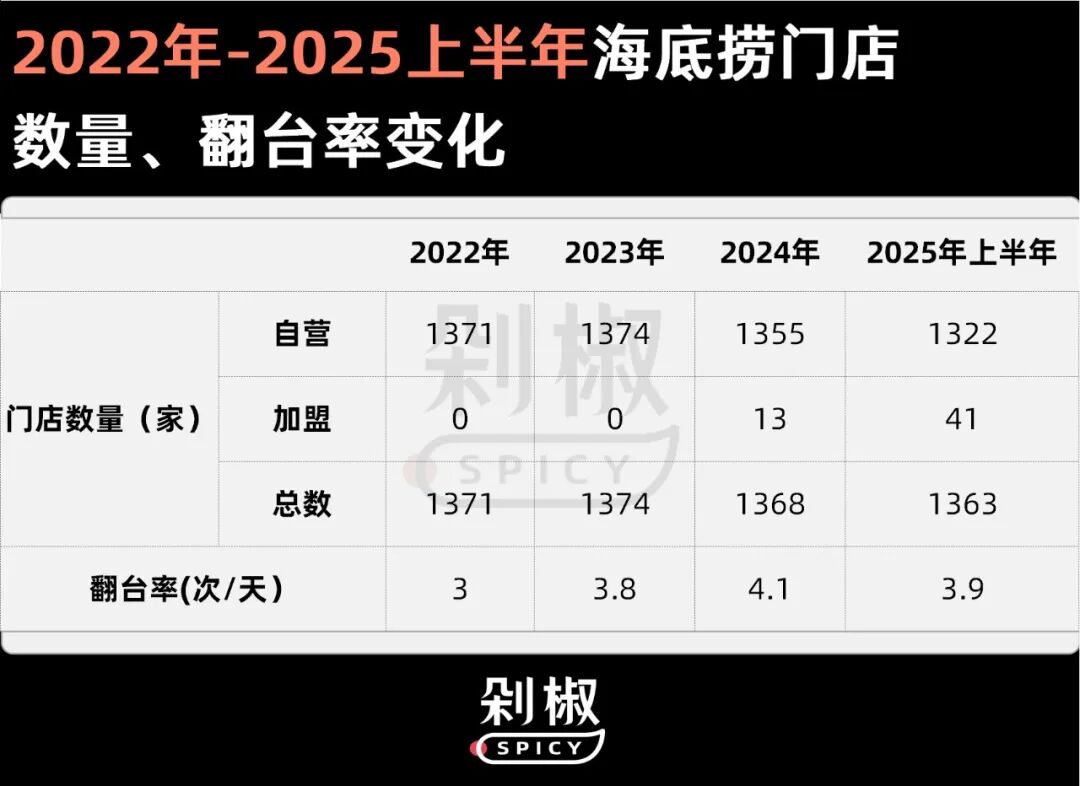
Core Viewpoint - Haidilao is undergoing a significant transformation, shifting from a traditional hotpot chain to a more diversified restaurant ecosystem, exploring new business models and marketing strategies to counter declining revenues and customer traffic [1][5][38] Group 1: Financial Performance - In the first half of 2025, Haidilao reported a 3.7% year-on-year decline in revenue and a 13.7% drop in net profit, with key metrics such as table turnover rate, customer traffic, and store count under pressure [1][3] - The total number of Haidilao restaurants decreased by 5, totaling 1,363, with 1,299 in mainland China and 41 franchises [1][2] - The table turnover rate for self-operated restaurants was 3.8 times per day, down from 4.2 times the previous year, indicating a struggle to meet the previously set benchmark of 4 times [2][3] Group 2: Business Strategy and Innovation - Haidilao is actively pursuing a multi-brand strategy and enhancing its delivery services, with revenue from "other restaurants" and delivery business growing by 227% and nearly 60% respectively in the first half of 2025 [3][24] - The company is experimenting with new concepts such as "nightclub mode" and launching themed menus to attract customers, including a "night snack menu" featuring new dishes and cocktails [8][13][15] - The "Red Pomegranate Plan" was introduced to encourage internal entrepreneurship among employees, aiming to expand and incubate new brands beyond the main Haidilao brand [22][23] Group 3: Market Position and Challenges - Despite the rapid growth of the delivery business, it still contributes a relatively small portion to overall revenue, and maintaining service quality during this expansion poses a significant challenge [35][37] - The company faces intense competition in the delivery market, having entered a crowded space where many players are vying for market share [37] - Haidilao's traditional service model is being challenged by changing consumer preferences, necessitating a balance between standardization and personalized experiences [38]
中国旋转小火锅之王,诞生在河南|河南餐饮 奔赴千店
Sou Hu Cai Jing· 2025-08-27 11:50
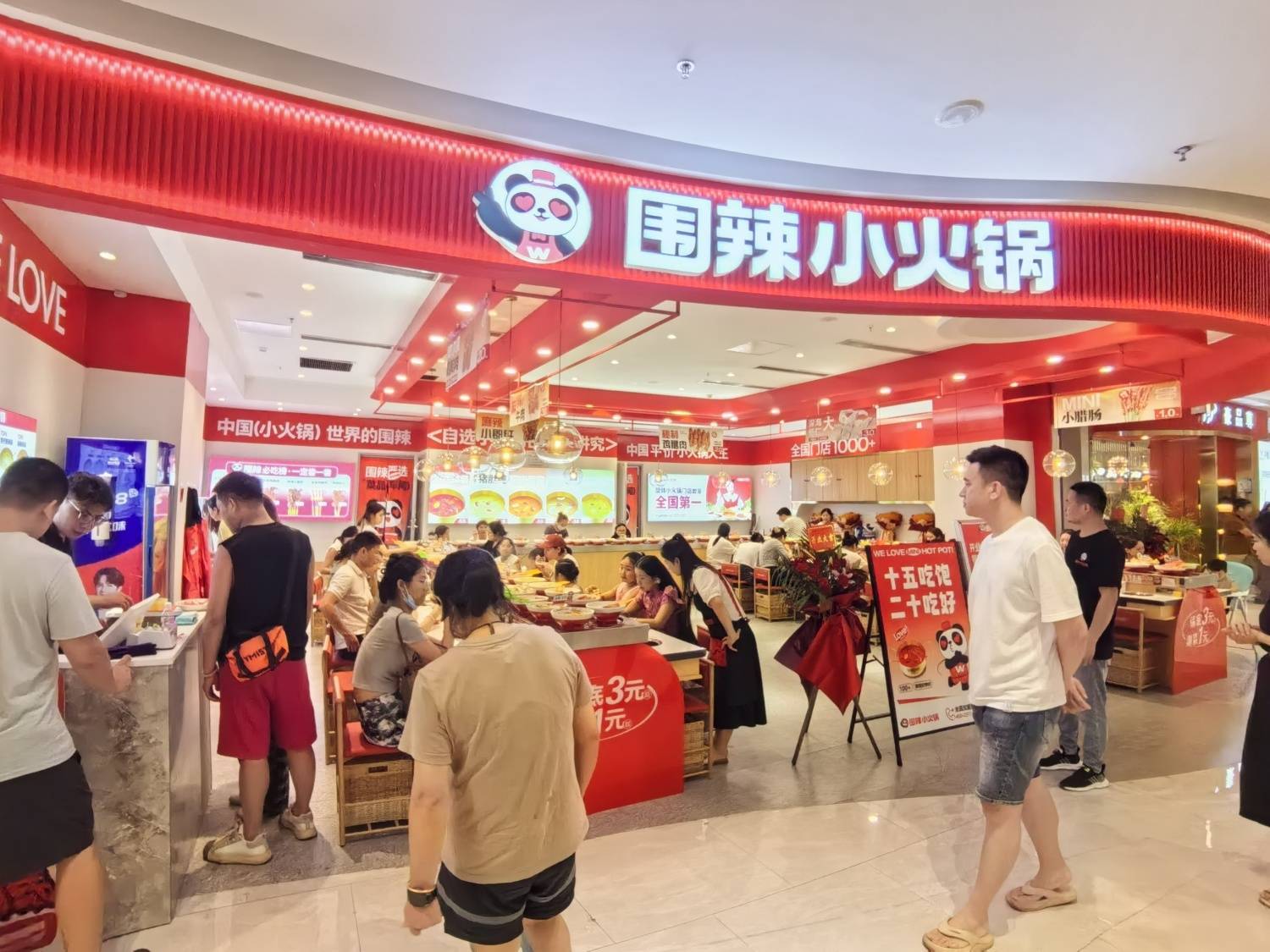
Core Insights - The article highlights the rapid expansion of the restaurant brand "Weila" in Henan, which has surpassed 1,500 locations nationwide, establishing itself as the leader in the rotating hot pot segment in China [1][2][3] Group 1: Company Growth and Strategy - Weila started with a single store in a small county in Henan and has grown to over 1,500 locations in ten years, becoming the largest rotating hot pot chain in the country [1][2] - The founder, Zhang Xiao, emphasized the importance of adapting and evolving the business model in response to challenges, focusing on practical experience and grassroots development [5][6] - The brand underwent significant changes in 2022, rebranding from "Weila Chuan Chuan Xiang" to "Weila Hot Pot" and standardizing its visual identity and operational processes [7][9] Group 2: Supply Chain and Operational Efficiency - Weila has prioritized supply chain development, partnering with leading suppliers to ensure consistent quality and cost-effectiveness for franchisees [10][11] - The collaboration with Huading Cold Chain Technology has enabled Weila to implement a centralized supply system, ensuring uniform service across all locations [10][11] - The company has established regional warehouses to enhance logistics and distribution efficiency, facilitating its national expansion [10][11] Group 3: Market Position and Competitive Advantage - The small hot pot market is highly competitive, with over 50,000 establishments nationwide, yet Weila has managed to stand out due to its grassroots origins and focus on customer needs [12][14] - The brand maintains a consistent price point for its offerings, with average customer spending remaining between 25 to 30 yuan, despite rising ingredient quality [12][14] - Weila's rapid expansion has allowed it to build a strong brand presence, capitalizing on the lack of established chains in the self-service hot pot segment [14]
海底捞上半年业绩双降,员工比年初减少6794人
Jing Ji Guan Cha Wang· 2025-08-27 11:47
Core Insights - Haidilao's revenue for the first half of 2025 was 20.703 billion yuan, a year-on-year decrease of 3.66%, with net profit attributable to shareholders at 1.759 billion yuan, down 13.72% [1] - The company experienced a shift in its restaurant operations, with a decrease in self-operated restaurants and a significant increase in franchise locations [1][2] - The decline in performance is attributed to a decrease in table turnover rates and initial adjustments in product and service innovation [1][2] Financial Performance - Restaurant operating income for the first half of 2025 was 18.58 billion yuan, a decrease of 8.97% compared to the same period in 2024 [2] - The takeaway and other restaurant income saw significant increases, recording 928 million yuan and 596 million yuan respectively, which helped mitigate the overall decline [2] - Employee count decreased to 130,384 as of June 30, 2025, down from 143,034 a year earlier, with total employee costs amounting to 6.988 billion yuan [2] Market Position and Competition - The competitive landscape in the hot pot sector is intensifying, with emerging competitors like Banlu Maodu and the rise of Cantonese hot pot posing challenges to Haidilao's market share [2] - Haidilao is exploring both high-end and lower-tier market segments, including the launch of a premium store in Beijing and a budget-friendly self-service hot pot brand [3] - The company plans to continue diversifying its operations and enhancing dining experiences while strategically seeking acquisitions to enrich its business model [3]
火锅生意不好做,海底捞要靠外卖和“副业”创收了
Xin Lang Cai Jing· 2025-08-27 06:55
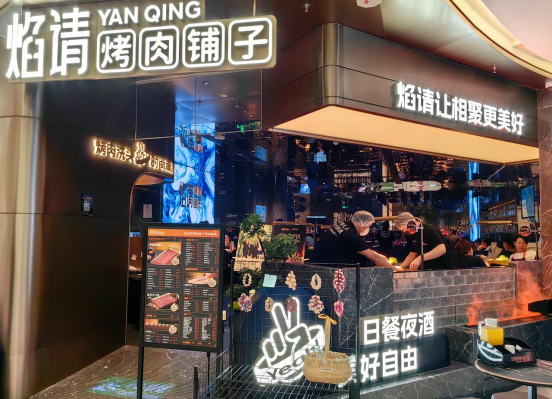
Core Viewpoint - Haidilao's performance in the first half of 2025 showed a decline in key financial metrics, prompting the company to explore new growth avenues through multi-brand strategies and an increased focus on takeout services [1][10]. Financial Performance - Haidilao reported a revenue of 20.703 billion yuan and a net profit of 1.754 billion yuan for the first half of 2025, with core operating profit at 2.408 billion yuan, all showing a decline compared to the same period last year [1]. - The company closed 33 restaurants while opening 25 self-operated and 3 franchised locations, bringing the total to 1,363 restaurants as of June 30, 2025 [1]. Multi-Brand Strategy - Haidilao has launched 14 sub-brands under its "Pomegranate Plan," generating 597 million yuan in revenue, a 227% increase year-on-year, although this only accounts for 2.9% of total revenue [1][8]. - The sub-brand "Yuanqing Barbecue" has gained traction, opening 46 new locations in the first half of 2025, totaling 70 locations [2]. - The company has introduced four new brands in 2025, including "Haini Beef Spicy Soup" and "Shiwa Baking," focusing on affordable dining options [4][5]. Franchise Development - Haidilao plans to expand its franchise model to sub-brands, with 41 franchised restaurants as of June 30, 2025, a net increase of 40 from the previous year [9]. - Franchise revenue surged from 189,900 yuan in 2024 to 9.084 million yuan in 2025, marking a growth of approximately 47 times, although it still represents a small portion (0.4%) of total revenue [9]. Takeout Business Growth - The takeout segment saw significant growth, with revenue reaching 927 million yuan, a 59.6% increase from 581 million yuan in the previous year [11]. - Takeout now constitutes the second-largest revenue source for Haidilao, driven by offerings like "Single-Serve Hot Pot Dishes," which contributed over 55% of takeout revenue [12][11]. Future Plans - Haidilao aims to enhance its takeout offerings by testing new product categories and establishing dedicated takeout stores in various cities [14]. - The company is also focusing on improving in-store experiences to attract customers back to physical locations, launching themed stores and interactive dining experiences [15]. Conclusion - The first half of 2025 has been a challenging period for Haidilao, but the company's multi-brand expansion and takeout service growth are beginning to show positive results, although converting these efforts into stable growth remains a key challenge [18].
茶火锅,东方树叶的红油版
3 6 Ke· 2025-08-27 06:25
Core Insights - The emergence of "tea hotpot" restaurants reflects the industry's anxiety to innovate in a saturated market, but many of these concepts may be more about marketing than substance [1][12][21] - The tea hotpot experience often fails to deliver a strong flavor profile, with many customers noting that the tea does not complement the spicy broth as intended [4][8][15] - The rise of "water hotpot" as a cost-effective alternative highlights the industry's focus on reducing expenses while attempting to attract customers with health-oriented narratives [9][12][14] Industry Trends - The hotpot market is experiencing high saturation, particularly in first and second-tier cities, leading to a decline in unique dining experiences [18][20] - Cost control has become a priority, with many establishments shifting from oil-heavy broths to lighter, water-based options to reduce ingredient costs [14][15] - The competitive landscape is characterized by a lack of differentiation, with many brands relying on similar marketing strategies and menu offerings, resulting in a homogenized dining experience [19][21] Consumer Behavior - Customers are increasingly drawn to novelty and unique dining experiences, but many find that new concepts like tea hotpot do not meet their expectations in terms of flavor [5][21] - Promotions and gimmicks, such as scratch-off cards for discounts, are common strategies used by restaurants to attract customers, but they may not lead to long-term loyalty [5][21] - The perception of healthiness associated with lighter hotpot options may not be enough to overcome the strong preference for traditional, flavor-rich offerings [15][16]