
支付

Search documents
国泰海通:数字人民币有望迎发展新机遇 建议关注相关产业链
智通财经网· 2025-12-26 03:59
Core Viewpoint - The report from Guotai Junan highlights the significance of the Western Land-Sea New Corridor as a crucial international logistics channel that connects the Silk Road Economic Belt and the 21st Century Maritime Silk Road, which is expected to enhance the cross-border use of the Renminbi and create new opportunities for digital Renminbi development [1] Group 1: Financial Support for the Corridor - The People's Bank of China and eight other departments released the "Opinions on Financial Support for Accelerating the Construction of the Western Land-Sea New Corridor," outlining 21 key measures to improve financial organization collaboration, establish a high-quality capital circulation system, and enhance cross-border financial regulatory cooperation [1] - The financial service system for the Western Land-Sea New Corridor will be comprehensively improved, optimizing the cross-border trade settlement system and further expanding the cross-border use of the Renminbi [1] Group 2: Cross-Border Trade Settlement - The "Opinions" support banks in facilitating legitimate trade settlements for quality enterprises based on principles of customer understanding and due diligence, while also promoting new trade formats such as market procurement and cross-border e-commerce [2] - To expand the cross-border use of the Renminbi, the "Opinions" propose strengthening bilateral currency cooperation with Southeast Asia and Central Asian countries, creating supportive conditions for Renminbi usage [2] Group 3: Digital Renminbi Development - The "Opinions" emphasize leveraging the advantages of digital Renminbi, such as payment and settlement capabilities, low costs, and programmability, to explore innovative solutions using smart contracts [3] - There is a focus on expanding the application of digital Renminbi in cross-border payment scenarios, aiming to reduce costs and increase efficiency in cross-border transactions [3]

对于2026年,这是高盛顶级科技交易员最关心的10个问题
美股IPO· 2025-12-26 00:24
Core Viewpoint - The focus of technology stocks is shifting from hardware speculation to a deeper examination of AI investment returns and market breadth as 2026 approaches, according to Goldman Sachs trader Callahan [1][3]. Group 1: Market Trends and Performance - Despite the Nasdaq 100 index rising over 20% in 2025, it was not an easy year, with the "Magnificent 7" contributing approximately $3.5 trillion to market cap growth, a slowdown from $5.4 trillion in 2024 and $4.8 trillion in 2023 [3]. - Over 30% of the Nasdaq 100 components ended 2025 in decline, indicating significant internal market differentiation [3]. Group 2: AI Investment and Sustainability - Investors are increasingly focused on whether generative AI (GenAI) can deliver on its high capital expenditure promises over the next 12 months, with discussions centering on the sustainability of AI infrastructure spending, which could reach $3 trillion to $4 trillion annually by 2030 according to Nvidia [5] [6]. - Callahan outlined ten key questions that will dominate the technology stock narrative in 2026, addressing both sector rotations and fundamental macroeconomic and technological cycles [6]. Group 3: Key Questions for 2026 - The ten core questions include the direction of AI debates, the potential shift towards "physical AI" (robots, autonomous vehicles, smart glasses), and which companies will emerge as productivity winners [7]. - Other questions involve how software companies will repair valuations, the implications of GenAI-driven efficiency, and the potential cyclical turning points in housing and commercial real estate [7][8]. - The report also questions the future of large language models (LLMs) and their market dynamics, including the role of Chinese models and the potential for productization versus remaining in the "primitive intelligence" competition [8]. Group 4: Investment Strategies and Outlook - Callahan suggests that the Nasdaq 100 index's return outlook remains robust, with potential gains skewed towards the first half of 2026 due to recent market consolidation and low expectations surrounding AI spending sustainability [9]. - The investment theme for 2026 should focus on "expansion trades," where capital flows from crowded AI infrastructure stocks to other sectors, seeking "second derivatives" of AI that leverage cost reductions and new revenue streams [9].



互联网平台布局支付:构建生态闭环,重塑行业竞争格局
Sou Hu Cai Jing· 2025-12-25 13:24
Core Insights - The article discusses the strategic shift of various companies, including Shanghai Xunhui, Tongcheng Group, Xiaohongshu, and Ruyi Holdings, towards acquiring payment licenses since 2025, highlighting the importance of payment as a critical component of the commercial ecosystem [2][3] Group 1: Reasons for Payment License Acquisition - Companies are pursuing payment licenses to mitigate risks associated with external payment channels, ensuring compliance and solidifying their operational foundations amid stricter regulations and limited license availability [4] - Having a payment license allows companies to create a closed loop of funds and information, effectively avoiding compliance risks such as "two clearing" [5] - The strategic aim of acquiring payment licenses is to gain control over core data, which is crucial for understanding consumer behavior and optimizing marketing strategies [5][6] Group 2: Competitive Landscape - The competition in the payment industry is evolving, with payment licenses transitioning from mere access tools to essential entry points for ecosystems, focusing on scene integration, data value extraction, and user experience enhancement [2][6] - The entry of platform companies into the payment sector is reshaping the competitive landscape, moving from a "duopoly" to a "multipolar" development, creating differentiated competitive barriers in niche markets [8][9] - Established players like Alipay and WeChat Pay dominate the market, making it challenging for new entrants to achieve profitability quickly due to the need for significant resource investment [7] Group 3: Challenges and Future Outlook - Companies face compliance and competitive challenges post-acquisition of payment licenses, including potential issues with merchant audits and regulatory trust, as well as the need to align corporate culture and team integration [7] - The entry of platform companies into the payment space may lead to a reduction in the market share of smaller payment institutions, which lack the ecological support to thrive [9] - The future of the payment industry may see further differentiation and the emergence of new payment giants, although this remains uncertain [9]

当模组开始记账,中国制造已铺设了一条看不见的"金融国道"
3 6 Ke· 2025-12-24 09:51
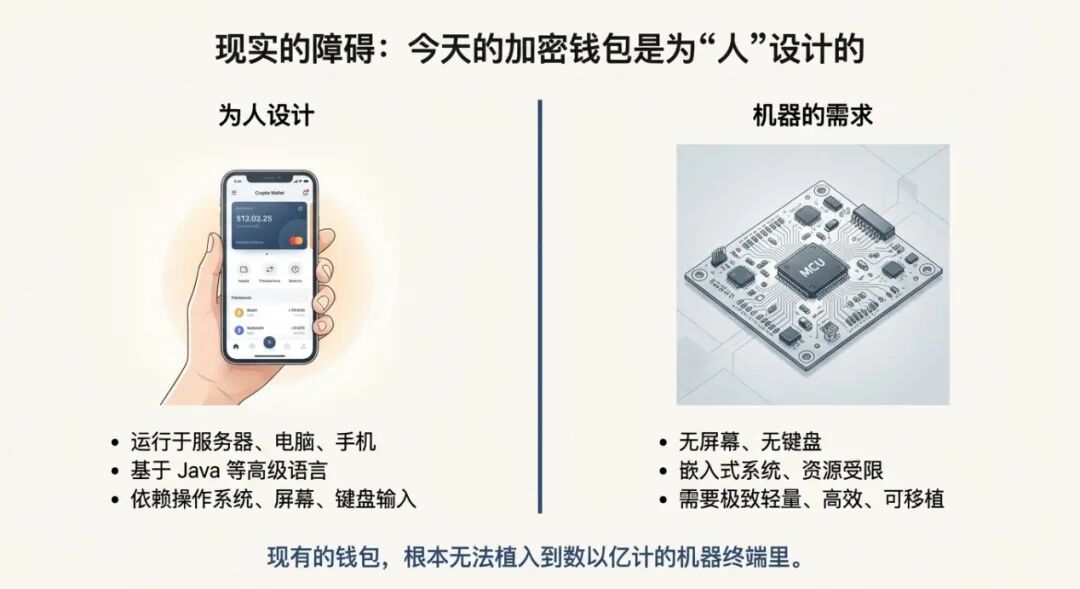
Core Insights - The article emphasizes the importance of IoT modules as foundational infrastructure for AI, which are often overlooked in favor of high-profile AI models from companies like OpenAI and Google [1] - A new payment standard, x402, has been introduced by Coinbase and Cloudflare for machine-to-machine transactions, indicating a shift towards automated payment systems in the AI economy [3] - The concept of machine credit is evolving, necessitating a new evaluation system independent of human credit scores to facilitate lending to machines [6][9] Group 1: Machine Economy and Payment Systems - The machine payment market is projected to reach $30 trillion by 2030, highlighting the urgency of establishing standards in this emerging field [3] - Current digital wallets based on high-level programming languages are inadequate for resource-constrained embedded devices, creating a significant gap in the market [1] - The transition from traditional static credit systems to dynamic, technology-based credit ratings is essential for the growth of the machine economy [10][12] Group 2: Credit Evaluation and Risk Management - Machine credit will be assessed based on technical performance metrics, such as uptime and code security audits, rather than human-like moral or legal standards [8][9] - A new financial model termed "flow payment financing" is emerging, where investors receive real-time cash flow from machines, minimizing risks associated with traditional loans [11] - The concept of asset liquefaction is introduced, where fixed assets can be transformed into liquid assets through automated transactions, enhancing resource allocation efficiency [17] Group 3: Strategic Implications for Manufacturing - Chinese manufacturers must evolve beyond hardware production to include financial capabilities in their devices to avoid becoming mere executors of foreign standards [18][19] - The BoAT technology path allows for blockchain integration in IoT devices, potentially giving China a competitive edge in the global market [25] - The article warns against the risk of hardware hollowing out, stressing the need for Chinese companies to establish their own value interaction protocols [18][20] Group 4: Future of the Machine Economy - The integration of blockchain technology and programmable digital currencies is crucial for creating a robust value network that supports the machine economy [26] - The shift towards a machine economy represents a fundamental change in production relationships and value distribution, with implications for wealth generation and economic status [26]
高山企业(00616) - 自愿性公佈 - 订立谅解备忘录
2025-12-24 06:38
香港交易及結算所有限公司及香港聯合交易所有限公司對本公佈的內容概不負 責,對其準確性或完整性亦不發表任何聲明,並明確表示,概不對因本公佈全部 或任何部分內容而產生或因倚賴該等內容而引致的任何損失承擔任何責任。 EMINENCE ENTERPRISE LIMITED 高山企業有限公司 (於百慕達註冊成立之有限公司) (股份代號:616) 自願性公佈 訂立諒解備忘錄 本 公 佈 乃 由 高 山 企 業 有 限 公 司(「本公司」,連 同 其 附 屬 公 司 統 稱「本集團」)自 願 作 出,以 就 本 集 團 業 務 發 展 向 本 公 司 股 東(「股 東」)及 潛 在 投 資 者 提 供 最 新 資 料。 諒解備忘錄 本 公 司 董 事(「董 事」)會(「董事會」)欣 然 宣 佈,於2025年12月24日,本 集 團 訂 立 一 份不具法律約束力的諒解備忘錄(「諒解備忘錄」),內容有關認購一間合營公司(「合 營公司」)的 股 份。 根 據 諒 解 備 忘 錄,本 公 司 與 其 他 潛 在 認 購 方 擬 認 購 合 營 公 司 的 股 份,而 預 期 該 公 司 的 主 要 業 務 為 於 東 南 亞 國 ...
预算收紧却消费不减!美国假日季零售销售额同比增长4%
Zhi Tong Cai Jing· 2025-12-23 13:09
Group 1 - The core viewpoint of the article highlights that despite budget constraints, consumer demand for electronics and new clothing remains strong, leading to a year-over-year retail sales increase of approximately 4% during the holiday season in the U.S. [1] Group 2 - Visa reported that from November 1 to December 21, U.S. retail sales (excluding automobiles, gasoline, and dining) grew by 4.2%, slightly below the October forecast of 4.6% for the full two months [1] - Mastercard indicated that its data, which includes retail and dining establishments, showed a year-over-year sales increase of 3.9%, surpassing the previous expectation of 3.6% [1] Group 3 - Both companies noted that early promotional activities and the convenience of online shopping contributed to the growth of online sales, which outpaced physical store sales [2] - Visa stated that physical stores still dominate consumer spending, accounting for 73% of transactions, while online transactions represent 27% [2] Group 4 - The growth in consumer spending was led by electronics, with Visa reporting a year-over-year sales increase of 5.8% for products like televisions and smartphones, followed by a 5.3% increase in clothing and accessories [2] - Mastercard mentioned that seasonal promotions and cold weather stimulated demand for new clothing, with jewelry also seeing increased consumer interest this year [2]


三分钱买一个饼的国家,中国企业去了能干嘛?
创业邦· 2025-12-23 10:51
Core Viewpoint - The article discusses the economic situation in Egypt, focusing on the significance of the inexpensive staple food, "baladi bread," as a reflection of the country's broader economic challenges and opportunities for foreign investment, particularly from Chinese companies [8][10][86]. Group 1: Economic Context - The price of "baladi bread" has increased from 0.05 EGP to 0.2 EGP, which seems minimal but represents a significant burden for many families in Egypt [12][14]. - The average Egyptian household spends a substantial portion of their income on bread, with some families potentially spending 10% of their income just to meet basic food needs [15][14]. - The economic landscape is characterized by limited job opportunities and low income levels, leading many Egyptians to seek work abroad, particularly in wealthier Gulf countries [16][17]. Group 2: Talent and Human Capital - Despite low GDP per capita, Egypt is referred to as the "brain warehouse" of the Middle East, with many Egyptians holding high positions in various sectors across the region [20][22]. - The cultural and linguistic advantages of Egyptians make them valuable in the Arab world, as they are often preferred for roles in management and legal professions [25][30]. - Companies looking to invest in Egypt can benefit from the local talent pool, which is often well-educated and skilled, particularly in sectors like law and education [20][24]. Group 3: Investment Opportunities - Egypt offers 100% permanent land ownership to foreign companies, which is a significant incentive for long-term investment [40][46]. - The rental policies in Egypt typically range from 30 to 50 years, but the option for permanent ownership encourages companies to invest in infrastructure and local talent development [41][47]. - Companies like ElSewedy are taking proactive steps to address the skills gap by establishing technical schools to train local talent, ensuring a workforce that meets industry needs [51][54]. Group 4: Cultural Considerations - Understanding and respecting local customs, such as the five daily prayers of Muslims, is crucial for foreign companies operating in Egypt [56][61]. - Successful companies in Egypt integrate cultural practices into their operations, such as accommodating prayer times in work schedules, which fosters employee loyalty and respect [64][66]. - The article emphasizes that cross-cultural management and respect for local traditions can lead to better business outcomes and stronger relationships with local employees [66][68]. Group 5: Strategic Approach for Companies - The article outlines three stages of international expansion for companies: selling products, building systems, and integrating into the local economy [69][70]. - Companies that merely sell products are seen as temporary players, while those that build systems become essential tools for local development [81]. - The ultimate goal for companies should be to become integral parts of the local economy, contributing to social and economic stability while ensuring their own long-term success [78][82].

支付“容”世界 服务惠民生
Jin Rong Shi Bao· 2025-12-23 05:05
Core Viewpoint - The payment environment in China is becoming increasingly convenient, which is essential for stimulating consumer demand and supporting economic growth [1] Group 1: Payment Convenience for Foreign Tourists - Foreign tourists can now use their international cards directly for payments, eliminating the need to exchange large amounts of cash at airports [3] - Alipay's collaboration with American Express has expanded its "bind foreign card" service to cover seven major international card brands, achieving near-complete global coverage [3] - UnionPay's "Jinxiu Action 2025" has facilitated direct connections for 213 offline aggregation codes with foreign wallets, leading to a 103% increase in transaction volume and a 31% increase in transaction value for foreign card usage year-on-year [3] Group 2: Payment Solutions for the Elderly - The aging population in China necessitates improved payment solutions for the elderly, which is a significant aspect of consumer welfare [4] - Financial institutions have introduced various services tailored to the elderly, such as the "零钱包" (small change wallet), with 1.586 million issued in Chongqing alone by Q3 this year [4] - The introduction of "senior mode" in mobile banking apps aims to bridge the digital divide for older adults, reflecting a shift towards more inclusive financial services [4] Group 3: Policy Support for Payment Facilitation - The People's Bank of China and other departments have issued guidelines to enhance payment services for the elderly and foreign visitors, emphasizing the importance of payment convenience in boosting consumption [2] - Recent policies have further integrated payment facilitation with other services like visa and communication, highlighting a strategic approach to improving the payment environment for foreigners [2] Group 4: Broader Economic Implications - The advancements in payment convenience for both foreign tourists and the elderly are seen as vital for unlocking consumer spending and enhancing economic vitality [5][6] - Efforts to improve rural payment infrastructure and adapt payment systems to local needs are also underway, indicating a comprehensive approach to payment facilitation across different demographics [5]

宝付获批变更公司名称
Bei Jing Shang Bao· 2025-12-22 09:19
北京商报讯(记者 岳品瑜 董晗萱)12月22日,北京商报记者注意到,据人民银行上海市分行行政许可 信息,同意宝付网络科技(上海)有限公司变更名称为"宝付支付(上海)有限公司"。 ...
PayPal一月内三遭评级下调 大摩也加入看空阵营
Jin Rong Jie· 2025-12-19 03:52
Core Viewpoint - PayPal has faced a third downgrade in analyst ratings, with Morgan Stanley lowering its rating from "Neutral" to "Underweight" due to slow progress in brand payment integration and its inability to effectively drive user growth as expected [1] Group 1: Analyst Downgrades - Morgan Stanley downgraded PayPal's rating, citing concerns over the slow and complex improvements in brand payment integration [1] - Bank of America Securities also lowered its rating, agreeing with Morgan Stanley's assessment regarding the sluggish recovery in PayPal's brand payment growth [1] - JPMorgan also downgraded PayPal's rating earlier in the month [1] Group 2: Challenges Ahead - Analyst James Faucette highlighted that PayPal faces additional challenges before 2026, including slow profitability progress with its younger user base, Venmo, and potential narrative risks from "smart e-commerce" [1] - The report indicates that due to slowing growth, PayPal is expected to continue investing to address these challenges and mitigate market share loss, increasing the risk of downward adjustments to its earnings per share [1] Group 3: Financial Management - PayPal's CFO Jamie Miller stated that the company is managing operational expenses with a high level of discipline to support growth while maintaining strong free cash flow performance [1]
