基金

Search documents
金融市场流动性与监管动态周报:私募基金规模继续回升,外资成交持续活跃-20260310
CMS· 2026-03-10 12:32
Group 1 - The report indicates that private equity funds are expected to become a significant source of incremental capital in the market, benefiting small and mid-cap stocks [1][3][16] - The overall market growth value style is anticipated to become more balanced, with small and mid-cap stocks likely to outperform as risk appetite improves and financing capital returns [1][3][16] Group 2 - Public funds saw a slight increase in overall shares, with stock and mixed funds collectively rising by 147 million shares, while their net value decreased by 136 billion yuan [3][11] - The private equity securities investment fund's management scale reached 7.26 trillion yuan, reflecting a year-on-year growth rate of 38.76%, contributing significantly to market liquidity [3][13] Group 3 - The report highlights that the market sentiment has weakened, with a rise in equity risk premiums and a decrease in financing trading activity [41][43] - The sectors that attracted significant net inflows included oil and petrochemicals, non-ferrous metals, and transportation, while sectors like electronics and computing experienced substantial net outflows [51][52]
75万亿元居民存款将到期
21世纪经济报道· 2026-03-10 11:42
Core Viewpoint - The article highlights the significant shift of retail investors towards "fixed income +" products in 2026, driven by low deposit rates and the maturation of a large volume of savings, indicating a transformation in the investment landscape [1][5]. Group 1: Market Trends - In 2026, the issuance of "fixed income +" funds has reached a total scale of 35.9 billion yuan, with several products exceeding 2 billion yuan in initial fundraising [1]. - By the end of 2025, the total scale of "fixed income +" products reached 3 trillion yuan, marking a 9% quarter-on-quarter increase and a 56% year-on-year growth compared to 2024 [1][2]. Group 2: Investor Behavior - The shift in funding sources is notable, with individual retail investors becoming the main contributors to "fixed income +" fund subscriptions, contrasting with previous trends dominated by institutional investors [4]. - Retail investors now account for nearly 80% of holdings in mixed bond funds, indicating a significant change in the investor base [4]. Group 3: Economic Drivers - The migration of funds is largely attributed to the expiration of approximately 7.5 trillion yuan in residential fixed-term deposits in 2026, with a 17% year-on-year increase in deposits maturing [5]. - The decline in medium to long-term deposit rates below 1% has compelled residents to seek alternative investment options, positioning "fixed income +" products as a key beneficiary [5]. Group 4: Performance and Trust - As of March 9, 2026, the average yield of "fixed income +" funds was 1.28%, outperforming pure bond funds, with several funds achieving over 10% returns [7]. - Over a three-year period, 97% of "fixed income +" funds reported positive returns, with some funds achieving returns exceeding 30% [7][8]. Group 5: Product Types and Preferences - "Fixed income +" products are categorized into "track-type" funds, which focus on higher returns through equity exposure, and "line-drawing" funds, which prioritize stable performance and predictable returns [9][10]. - The preference for "line-drawing" funds is expected to grow as more retail investors enter the market, seeking stability amid low-risk environments [9][10].


拉萨高新区产业投资引导子基金(一期)设立
FOFWEEKLY· 2026-03-10 10:31
Core Viewpoint - The establishment of the Lhasa High-tech Zone Industrial Investment Guidance Sub-fund (Phase I) is a significant step in supporting the development of strategic emerging industries and the digital economy in Lhasa, with a total scale of 300 million yuan [1]. Group 1 - The fund has a total scale of 300 million yuan and focuses on the development planning of Lhasa City and the High-tech Zone [1]. - It aims to invest in key areas such as digital economy, high-tech, headquarters economy, and financial services, targeting both upstream and downstream of the industrial chain [1]. - The fund's establishment is part of the High-tech Zone's implementation of the city's industrial strong city strategy and reflects the responsibilities of state-owned enterprises [1].

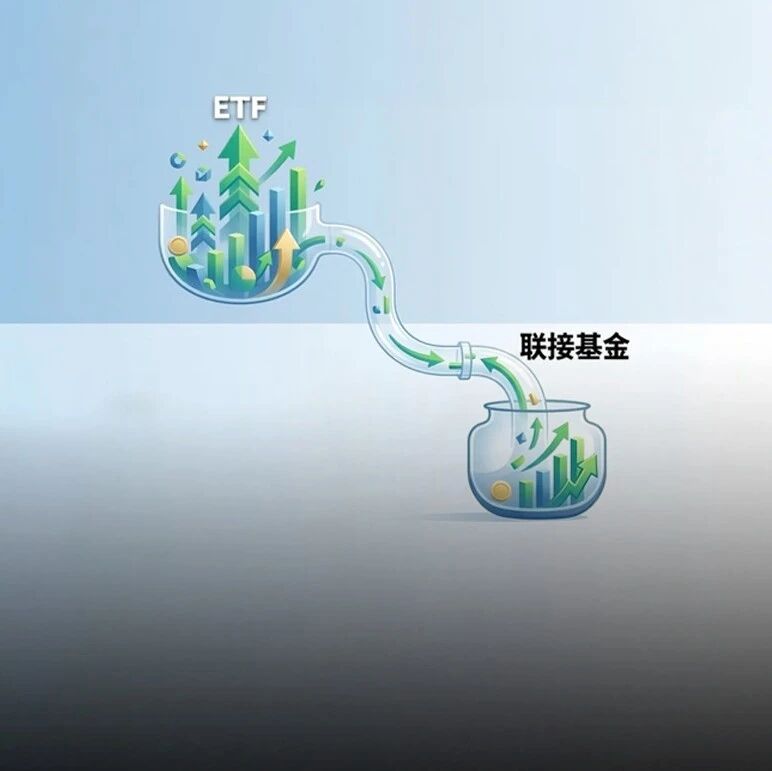
暴涨行情下,联接基金为什么总是“跟不上”ETF?
市值风云· 2026-03-10 10:10
Core Viewpoint - The article discusses the differences between on-market ETFs and off-market linked funds, emphasizing that there is no absolute superiority between the two, as their performance is influenced by their underlying operational mechanisms [1][4]. Group 1: Differences Between ETFs and Linked Funds - On-market ETFs are traded on stock exchanges, allowing real-time transactions and low costs, while off-market linked funds act as intermediaries, enabling investors without brokerage accounts to invest indirectly in ETFs [6][7]. - The operational differences lead to performance discrepancies, particularly in volatile markets, where linked funds may lag behind ETFs due to additional layers in their structure [8]. Group 2: Reasons for Underperformance of Linked Funds - The first reason for the underperformance of linked funds is the inherent cash reserve requirement, which limits their ability to operate close to full investment capacity, resulting in a drag on returns during market upswings [11][12]. - The second reason is the dilution effect caused by large inflows of new capital, which can increase the total number of shares and dilute existing shareholders' returns during rapid market movements [13][15]. - The third reason involves timing discrepancies in the trading mechanism, where funds submitted for linked funds do not immediately convert into ETF shares, potentially causing investors to miss out on gains during market surges [17][18]. Group 3: Performance Comparison - During a specific period in March 2026, the on-market oil ETF saw significant gains of 10.03% and 7.97%, while the corresponding linked fund only increased by 6.97% and 2.94%, highlighting the performance gap [15]. - Conversely, during market downturns, linked funds may exhibit better resilience due to their cash reserves and lower investment levels, as seen when the oil ETF dropped significantly while the linked fund experienced smaller declines [19][20]. Group 4: Investment Considerations - For investors seeking quick trading opportunities, on-market ETFs are recommended as the superior choice, while those focused on long-term value and convenience may find off-market linked funds to be a more suitable option [21].
关于同意国泰海通证券股份有限公司为华夏中证金融科技主题交易型开放式指数证券投资基金提供主做市服务的公告
Xin Lang Cai Jing· 2026-03-10 09:49
Group 1 - The core viewpoint of the announcement is to enhance the market liquidity and stable operation of the Huaxia CSI Financial Technology Theme Exchange-Traded Fund (ETF) [1] - The Shanghai Stock Exchange has approved Guotai Junan Securities Co., Ltd. to provide primary market-making services for the Financial Technology ETF starting from March 11, 2026 [1] - This decision is in accordance with the relevant regulations outlined in the Shanghai Stock Exchange's self-regulatory guidelines for ETF market-making [1]

关于同意国泰海通证券股份有限公司为汇添富中证中药交易型开放式指数证券投资基金提供主做市服务的公告
Xin Lang Cai Jing· 2026-03-10 09:49
Group 1 - The Shanghai Stock Exchange has approved Guotai Haitong Securities Co., Ltd. to provide primary market-making services for the Zhongyao ETF starting from March 11, 2026 [1] - The approval is aimed at enhancing the market liquidity and stable operation of the Zhongyao ETF, which is focused on traditional Chinese medicine [1] - The decision is in accordance with the relevant regulations outlined in the Shanghai Stock Exchange's self-regulatory guidelines for fund market-making [1]
关于同意国泰海通证券股份有限公司为博时中证金融科技主题交易型开放式指数证券投资基金提供主做市服务的公告
Xin Lang Cai Jing· 2026-03-10 09:49
Group 1 - The announcement states that the Shanghai Stock Exchange has approved Guotai Haitong Securities Co., Ltd. to provide primary market-making services for the Bosera CSI Financial Technology Theme Exchange-Traded Fund (ETF) starting from March 11, 2026 [1][2][3] - The purpose of this approval is to enhance the market liquidity and stable operation of the financial technology ETF [1]
本月新发ESG基金1只,流动性环比宽松
GUOTAI HAITONG SECURITIES· 2026-03-10 02:55
Market Overview - The A-share market experienced a pullback from March 2 to March 6, 2026, with the CSI 300 index down by 1.07%, the ESG 300 index down by 1.28%, the CSI ESG 100 index down by 1.37%, and the Sci-Tech Innovation ESG index down by 4.49%[5] - The average daily trading volume across the A-share market was approximately 4.83 trillion RMB, indicating a loosening of liquidity[5] ESG Fund Issuance - In March 2026, only 1 new ESG fund was launched, with an issuance of 1.531 billion units, primarily focused on ESG strategies[11] - Over the past year, a total of 280 ESG public funds were issued, with a total issuance of 189.802 billion units[11] - As of March 7, 2026, there are 1,090 existing ESG funds, with the largest categories being ESG strategies (443 funds) and environmental protection (281 funds)[11] - The total net asset value of ESG funds reached 1,759.786 billion RMB, with ESG strategy funds accounting for 41.67% of this total[11] Fund Performance - The top-performing fund for the week of March 2 to March 6, 2026, was Huaxia Clean Energy Leader A, with a weekly return of 5.53% and a year-to-date return of 38.06%[12] - Other notable funds included multiple ETFs focused on green power, with returns ranging from 3.94% to 4.02% for the same period[12] Green Bond Market - During the week of March 2 to March 6, 2026, 5 new green bonds were issued, with a total planned issuance of approximately 1.8 billion RMB[15] - A total of 29 ESG bonds were issued in March 2026, contributing to a yearly total of 1,285 ESG bonds with a total issuance amount of 1,342.8 billion RMB[15] - The existing ESG bonds in China total 3,955, with green bonds making up 62.17% of the total outstanding amount of 5.77 trillion RMB[16] Trading Activity - The total trading volume of ESG green bonds for the week was 604.21489 billion RMB, with the interbank bond market accounting for 76.70% of this volume[16] - Repo transactions dominated the trading methods, comprising 95.16% of the total trading volume[16] ESG Wealth Management Products - In March 2026, 24 new ESG wealth management products were issued, primarily focused on pure ESG and environmental protection themes[19] - There are currently 1,235 existing ESG wealth management products, with pure ESG products making up 53.28% of the total[19] Risk Factors - Potential risks include insufficient policy support for ESG initiatives, lack of standardized data reporting, and lower-than-expected product issuance volumes[21]
债市迎关键指引!基金经理:基本面支撑依然稳健,继续看好国内债券市场
券商中国· 2026-03-10 02:05
Core Viewpoint - The government work report for 2026 sets a GDP growth target of 4.5% to 5%, reflecting a commitment to high-quality development and a proactive policy stance [2]. Group 1: Economic Growth and Policy - The report indicates a shift from short-term stimulus to long-term support for the bond market, with a stable macro environment expected to benefit bond fundamentals [2]. - The fiscal deficit is maintained at a high level of 4%, with all incremental deficits borne by the central government, indicating a strategy of central leverage and reduced pressure on local governments [2]. - Fund managers believe that the supply pressure of government bonds is expected to decrease this year, leading to an improvement in the bond supply-demand relationship [2]. Group 2: Monetary and Fiscal Policy Coordination - The deep coordination between monetary and fiscal policies is a focal point, with expectations of a downward adjustment in overall economic growth targets [3]. - Despite limited room for further monetary easing, the monetary policy will continue to support liquidity, benefiting bond market performance [3]. - The current interest rate levels are seen as appropriate, with a stable liquidity outlook supporting a positive medium-term trend for the bond market [3]. Group 3: Market Sentiment and Investment Strategy - Some fund companies express caution, noting that the bond market faces headwinds due to already priced-in easing expectations and historically low yield spreads [4]. - The report does not signal unexpected easing, but the fundamental support for the bond market remains intact, with fiscal policies aimed at promoting domestic demand [4]. - The strategy of increasing bond allocations during market adjustments is considered relatively advantageous in the current environment [4].

FOF再出“小爆款”,扩容趋势加强下,中小公募有多少机会?
券商中国· 2026-03-10 00:48
Core Viewpoint - The article highlights the ongoing expansion of public FOFs (Funds of Funds) in 2026, driven by increased fundraising and a shift towards multi-asset allocation strategies, with a notable rise in the average fundraising scale and a decrease in the number of fundraising days [1][5][8]. Group 1: Fundraising Trends - The recently launched招商智盈优选6个月持有混合FOF has raised over 20 billion yuan, with estimates around 27 billion yuan [2][4]. - Since 2026, there have been 15 FOFs with fundraising scales exceeding 10 billion yuan, accounting for over 45% of the total new FOFs established this year [2][4]. - The average fundraising scale for FOFs established in 2026 is 14.23 billion yuan, compared to 9.5 billion yuan in 2025, while the average number of effective subscriptions has increased significantly [4][5]. Group 2: Product Characteristics - The current trend shows a preference for mixed-type FOFs, with all newly established FOFs in 2026 being of this type, emphasizing "multi-asset" strategies [5][6]. - The emergence of ETF-FOF products is notable, with 3 such products launched this year and a total of 13 ETF-FOF products reported as of March 9 [6][8]. - The issuance of ordinary FOFs is increasing, while the number of pension-type FOFs has decreased, indicating a shift in focus towards more versatile investment strategies [6][8]. Group 3: Market Dynamics - The expansion of public FOFs is seen as a second wave since their introduction in 2017, with the current market conditions favoring multi-asset allocation due to a recovering equity market and low interest rates [7][8]. - The majority of new FOFs are being managed by leading fund companies, but there remains significant market space for smaller firms to participate, especially if they can leverage effective distribution channels [9]. - The trend indicates that while larger firms dominate the FOF market, there is still potential for smaller firms to carve out niches, particularly in the context of evolving investor preferences towards diversified risk [9].