
新能源发电

Search documents
电力设备产业周跟踪:光伏锂电取消出口退税利好短期抢装和长期发展,继续重视商业航天太空光伏赛道
Huafu Securities· 2026-01-11 15:01
Investment Rating - The report maintains an "Outperform" rating for the industry [5] Core Insights - The cancellation of export tax rebates for lithium batteries and photovoltaic products is expected to accelerate the clearing of outdated production capacity and promote global expansion [2][19] - The energy storage sector is experiencing rising prices for systems and EPC contracts, driven by strong demand [50][51] - The wind power sector is advancing with multiple offshore wind projects receiving approval, indicating ongoing growth in domestic offshore wind energy [34][35] Summary by Sections Lithium Battery Sector - A meeting was held by four departments to regulate the competitive order in the lithium battery industry, proposing the cancellation of export tax rebates for lithium batteries [9][10] - The Chinese government plans to cancel or reduce export tax rebates for battery-related products starting April 1, 2026 [10] Photovoltaic Sector - The official cancellation of export tax rebates for photovoltaic products is set for April 1, 2026, marking the end of the "rebate dividend" era [19][20] - This policy is expected to lead to a surge in orders and installations before the policy takes effect, while long-term effects include the elimination of low-cost competition and a shift towards technological innovation and brand building [19][20] Wind Power Sector - Several offshore wind projects in Jiangsu have been approved, with ongoing progress in deep-sea offshore wind projects [34][35] - The approval of a 1GW offshore wind project in Guangdong and a 0.8GW project in Jiangsu highlights the sector's growth [34] Energy Storage Sector - In December, the average prices for energy storage systems and EPC contracts increased, with strong demand noted in regions like Xinjiang and Shanxi [50][51] - The adjustment of export tax policies for batteries is expected to increase export costs, potentially leading to a surge in exports before the policy takes effect [52] Power Equipment Sector - The CES2026 event showcased the successful launch of the Rubin platform, which is expected to enhance AI computing capabilities [60][61] - The Qinggui DC project has entered the feasibility study phase, marking significant progress in high-voltage direct current transmission projects [62] Hydrogen Energy Sector - The National Energy Group has undergone structural adjustments, establishing a new hydrogen energy division, emphasizing hydrogen as a key growth point in the economy [74][77] - The procurement of a hundred-ton SAF unit indicates ongoing investment in hydrogen technology [78]
20余省份机制电价揭晓! 上海比山东高约85%,浙江比辽宁高约31%……
Mei Ri Jing Ji Xin Wen· 2026-01-11 12:46
Core Viewpoint - The introduction of the mechanism electricity price system for renewable energy projects in China, effective from June 1, 2025, is leading to significant changes in investment strategies and project profitability in the solar and wind energy sectors. The disparity in electricity prices across different regions is causing companies to reassess their investment plans and focus on more profitable projects [1][3][4]. Group 1: Mechanism Electricity Price Implementation - The "136 Document" mandates that all new renewable energy projects must participate in market trading, replacing the previous guaranteed purchase system, which has extended the payback period for existing solar projects from 6.5 years to 8 years [1][3]. - The mechanism electricity prices for renewable energy projects vary significantly across regions, with prices for wind and solar projects showing a disparity of over 100% between the highest and lowest [2][5]. - The mechanism electricity prices for existing projects range from 0.26 to 0.45 yuan/kWh, while new projects must enter market trading with prices determined through competitive bidding [3][4]. Group 2: Regional Price Disparities - In economically developed provinces like Shanghai and Beijing, mechanism electricity prices are close to coal benchmark prices, with Shanghai at 0.4155 yuan/kWh and Beijing at 0.3598 yuan/kWh [4][5]. - In contrast, regions with abundant renewable resources, such as Gansu and Xinjiang, have significantly lower mechanism electricity prices, with Gansu's wind and solar prices as low as 0.1954 yuan/kWh and 0.1500 yuan/kWh, respectively [4][5]. - The differences in mechanism electricity prices are attributed to local resource endowments, consumption capacity, and specific policy preferences [7][8]. Group 3: Impact on Investment Strategies - The extended payback periods and reduced profitability are causing many companies to adopt a cautious approach towards new investments in renewable energy projects, particularly in the solar sector [13][14]. - Companies are now prioritizing projects that ensure stable consumption, such as those close to load centers, rather than focusing solely on the area of rooftops for solar installations [19]. - The shift in focus is also influenced by the need to secure mechanism electricity volume, leading companies to adopt low pricing strategies to ensure qualification for bidding [15][19]. Group 4: Market Dynamics and Future Outlook - The competitive bidding process for mechanism electricity prices is expected to reflect the true costs of renewable energy generation, potentially leading to lower prices in the long term [12][17]. - The transition to a market-driven pricing mechanism may initially exacerbate issues like negative electricity prices, but it is anticipated to promote more rational market behavior over time [22][23]. - The overall trend indicates that while the mechanism electricity price system poses challenges, it also opens avenues for companies to enhance their operational efficiency and adapt to market demands [20][21].

中国核电(601985):点评报告:产能扩张带动电量稳增,多重因素限制业绩增速
Changjiang Securities· 2026-01-11 10:44
Investment Rating - The investment rating for the company is "Buy" and is maintained [8] Core Viewpoints - The company's controlled nuclear power generation capacity is expected to achieve a total output of 200.8 billion kWh in 2025, representing a year-on-year increase of 9.66%. However, factors such as declining market transaction prices in some provinces and increased taxes for certain nuclear companies may limit the growth of the nuclear power sector's performance [5][12] - The continuous expansion of renewable energy installations is projected to drive a 31.29% year-on-year increase in renewable energy generation to 43.6 billion kWh by 2025. However, this expansion also leads to significant increases in depreciation and other costs, and the weak pricing of renewable energy, along with a reduced stake in China Nuclear Huineng after capital increase, is expected to continue to pressure the performance contribution from the renewable energy sector [12][12] - Overall, while both nuclear and renewable energy sectors show good performance in terms of generation, the company's annual performance outlook remains stable due to the impacts of electricity prices and taxes [12] Summary by Relevant Sections Event Description - As of December 31, 2025, the company's cumulative operational generation for the year is 244.43 billion kWh, a year-on-year increase of 12.98%. The target for 2026 is set at 259.2 billion kWh, with nuclear power planned at 210 billion kWh and renewable energy at 49.2 billion kWh [5] Event Commentary - In the fourth quarter, the controlled nuclear power generation reached 49.799 billion kWh, a year-on-year increase of 4.88%. The growth rate slowed due to maintenance schedules. Excluding the contribution from the newly commissioned Zhangzhou Unit 1, the fourth-quarter nuclear generation saw a slight decline of 0.41% year-on-year. The overall nuclear generation for 2025 is 200.807 billion kWh, achieving a 9.66% increase and meeting the annual generation plan [12] - The company has a strong reserve of nuclear projects, with 18 units under construction or approved, totaling 20.647 million kW, ensuring substantial growth potential in the long term [12] - The earnings forecast for the company has been adjusted, with expected EPS for 2025-2027 at 0.44 yuan, 0.42 yuan, and 0.48 yuan, corresponding to PE ratios of 20.42x, 21.31x, and 18.75x respectively, maintaining a "Buy" rating [12]

全省首家!烟台电网风光新能源装机突破1600万千瓦
Qi Lu Wan Bao· 2026-01-10 06:35
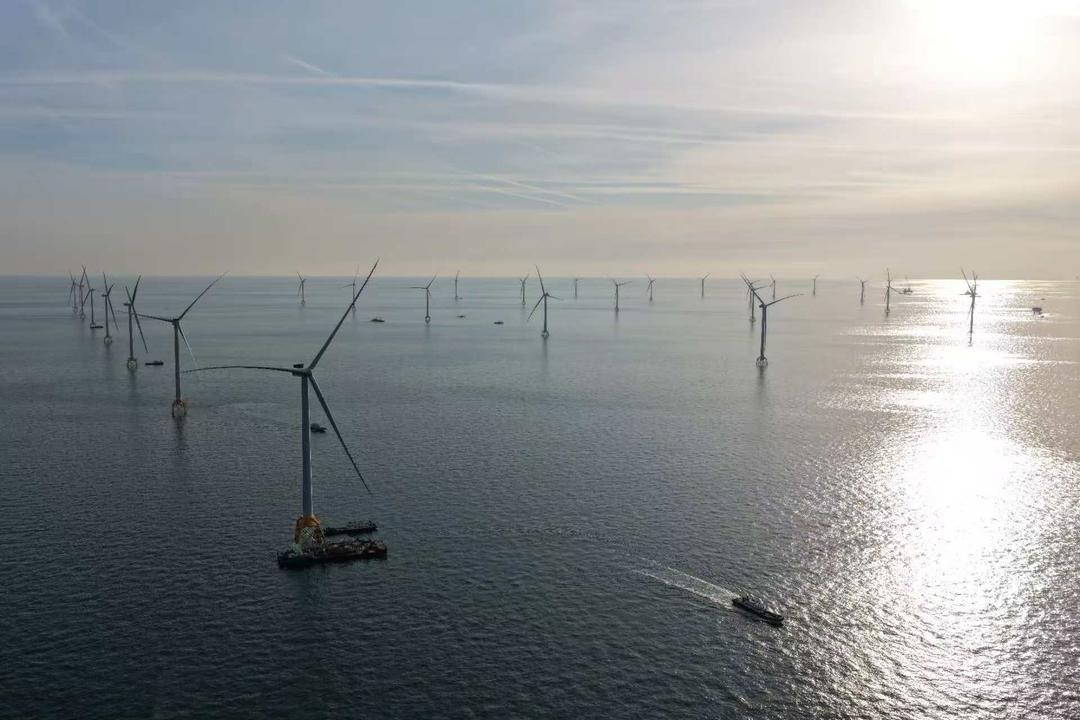
Core Insights - The successful grid connection of the Dayaohuaneng Wind Farm marks a significant milestone for offshore wind energy in Shandong Province, enhancing the power supply capacity and optimizing the energy structure in the eastern coastal region [1][3] Group 1: Project Overview - The Dayaohuaneng Wind Farm has a total installed capacity of 504,000 kilowatts, making it the deepest offshore wind project in China and the farthest from shore in Shandong Province, with the current grid connection capacity being 192,000 kilowatts [3] - Once fully operational, the wind farm is expected to generate an annual electricity output of 1.63775 billion kilowatt-hours, which can save approximately 492,000 tons of standard coal annually compared to conventional coal-fired power plants [3] Group 2: Environmental Impact - The project is projected to reduce emissions significantly, including 1,359 tons of sulfur dioxide, 2,178 tons of nitrogen dioxide, and 1.35 million tons of carbon dioxide each year, along with reductions in wastewater and thermal discharge [3] Group 3: Future Developments - Yantai's renewable energy sector is anticipated to experience rapid growth, with an additional installed capacity of 1,574,000 kilowatts expected by 2025, representing a year-on-year increase of 10.7% [4] - The annual electricity consumption from renewable sources is projected to reach 23.1 billion kilowatt-hours by 2025, reflecting a 15.5% increase compared to previous years [4] - The State Grid Yantai Power Supply Company plans to enhance its grid management and service quality to support the ongoing transition to green energy [4]

中国三峡新能源(集团)股份有限公司 2025年发电量完成情况公告
Zhong Guo Zheng Quan Bao - Zhong Zheng Wang· 2026-01-09 23:09
Core Viewpoint - The company reported a total electricity generation of 195.07 billion kilowatt-hours (kWh) in Q4 2025, marking a year-on-year increase of 0.92% [1][2] Group 1: Quarterly Performance - In Q4 2025, wind power generation reached 132.38 billion kWh, up 2.33% year-on-year, with onshore wind contributing 83.79 billion kWh (up 5.09%) and offshore wind at 48.59 billion kWh (down 2.12%) [1] - Solar power generation in Q4 2025 was 60.92 billion kWh, reflecting a year-on-year increase of 1.70% [1] - Independent energy storage generated 1.77 billion kWh in Q4 2025, a decrease of 13.24% compared to the previous year [1] Group 2: Annual Performance - The total electricity generation for the year 2025 was 762.61 billion kWh, representing a year-on-year growth of 5.99% [2] - Wind power generation for the year totaled 479.21 billion kWh, an increase of 6.08%, with onshore wind at 324.17 billion kWh (up 10.28%) and offshore wind at 155.04 billion kWh (down 1.74%) [2] - Solar power generation for 2025 reached 276.54 billion kWh, up 8.87% year-on-year [2] - Independent energy storage for the year was 6.86 billion kWh, showing a significant increase of 22.94% compared to the previous year [2] - The company did not generate any hydropower in 2025, as it no longer holds controlling interests in hydropower projects since January 2025 [2]

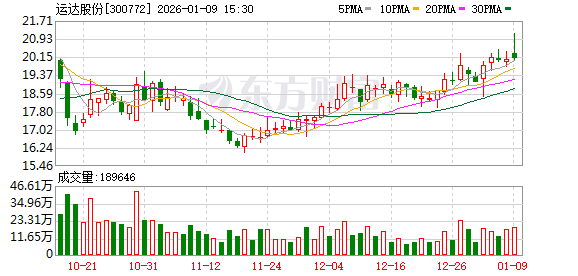
运达股份:公司认为新能源电站投资开发与运营值得长期布局
Zheng Quan Ri Bao· 2026-01-09 13:40
Group 1 - The company believes that investment and development in renewable energy power stations is a long-term strategy worth pursuing [2] - The company will adopt a rolling development strategy to continue advancing its renewable energy power station business, aiming for sustainable development [2] - The company plans to steadily advance the construction progress of its own renewable energy power station projects and continuously optimize its operational management system to achieve stable returns [2]

20余省份机制电价揭晓:上海比山东高84%,浙江比辽宁高31%⋯⋯
Mei Ri Jing Ji Xin Wen· 2026-01-09 12:36
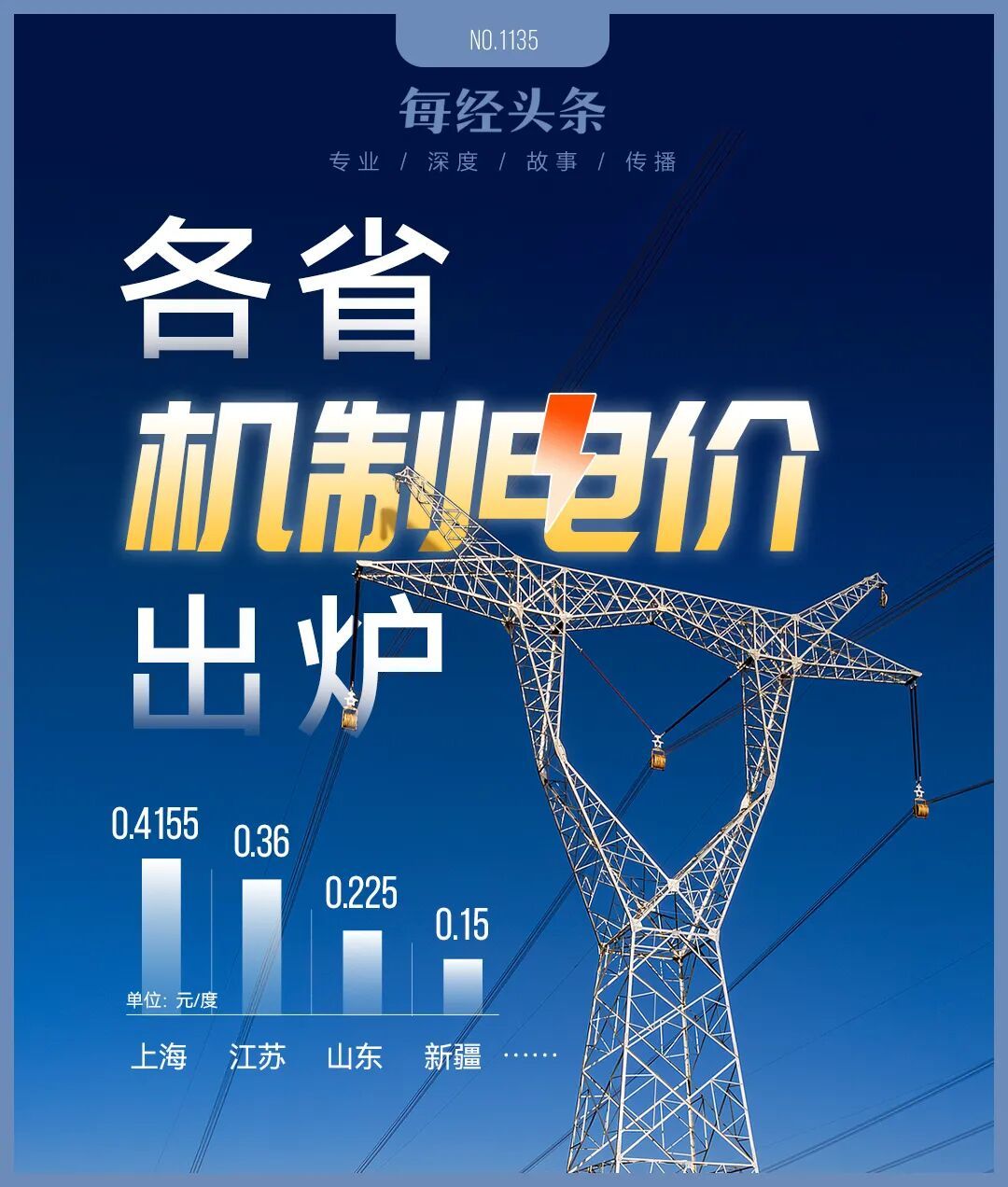
Core Viewpoint - The implementation of the new mechanism electricity pricing system has led to significant regional disparities in electricity prices for renewable energy projects, particularly in solar and wind energy, affecting investment decisions and project profitability across various provinces in China [1][2][4]. Group 1: Mechanism Pricing Changes - The "136 Document" issued by the National Development and Reform Commission and the National Energy Administration mandates that all new renewable energy projects must participate in market trading, replacing the previous guaranteed purchase system [1][4]. - The mechanism electricity prices for new projects vary significantly across regions, with the highest prices exceeding 0.40 yuan/kWh in places like Shanghai and the lowest dropping to 0.15 yuan/kWh in Xinjiang [2][7]. - The pricing for existing projects ranges from 0.26 yuan/kWh to 0.45 yuan/kWh, with higher prices generally found in economically developed provinces [4][5]. Group 2: Regional Price Disparities - The price differences for solar and wind energy are pronounced, with solar prices in Shanghai at 0.4155 yuan/kWh, significantly higher than 0.225 yuan/kWh in Shandong, representing an 84% difference [2][6]. - Factors contributing to these disparities include local resource endowments, consumption capacity, and specific policy preferences of different provinces [9][10]. - The competition among renewable energy companies in regions with abundant resources, such as Gansu, has led to lower mechanism prices due to oversupply in the market [10][12]. Group 3: Impact on Investment Strategies - The extended payback periods for solar projects, now averaging 12 to 13 years instead of the previous 8 to 9 years, have prompted many companies to pause new investments and shift focus to EPC (Engineering, Procurement, and Construction) services [1][21]. - Companies are adopting a "minimize losses" approach, often bidding low to secure participation in the mechanism pricing system, which further drives down prices [24][30]. - The upcoming changes in 2027, where non-natural person distributed solar projects will exit the mechanism pricing system, are expected to further impact investment strategies in the sector [25][26]. Group 4: Changes in Electricity Costs - The implementation of the mechanism pricing system is expected to increase system operation costs for companies, but the overall electricity prices may decrease due to intensified market competition and technological advancements [32][33]. - The transition to a fully market-based pricing system may exacerbate the occurrence of negative electricity prices, particularly during periods of oversupply, although the new pricing mechanism provides some revenue stability for renewable energy producers [34][35].
20余省份机制电价揭晓!上海比山东高84%,浙江比辽宁高31%⋯⋯专家:企业用电成本仍有下降空间
Mei Ri Jing Ji Xin Wen· 2026-01-09 11:43
Core Insights - The article discusses the impact of the new pricing mechanism for renewable energy projects in China, particularly focusing on the differences in electricity prices across various provinces and the implications for investment strategies in the solar and wind energy sectors [2][3][4]. Group 1: Pricing Mechanism Changes - The introduction of the "136 Document" has led to a shift from guaranteed purchase systems to a market-based pricing mechanism for renewable energy, requiring all new projects to participate in market transactions [2][4]. - The mechanism prices for new wind and solar projects vary significantly across regions, with the highest prices exceeding 0.40 yuan/kWh in some areas, while others, like Xinjiang, are as low as 0.15 yuan/kWh [3][7]. - The pricing disparities are attributed to regional resource endowments, demand for renewable energy, and local government policies [8][9]. Group 2: Investment Strategies and Market Reactions - Many energy companies are adopting a cautious approach to new investments in renewable projects, particularly in solar energy, due to the extended payback periods resulting from lower mechanism prices [21][22]. - The competitive bidding process has led to lower mechanism prices, with companies often submitting low bids to secure a place in the market, which further depresses prices [20][25]. - The shift in focus from full-grid projects to self-consumption projects is becoming prevalent, as companies seek to ensure stable revenue streams by targeting areas with high electricity demand [29]. Group 3: Impact on Electricity Costs and Market Dynamics - The implementation of the new pricing mechanism is expected to increase system operation costs for companies, but the overall electricity prices may decrease due to intensified market competition and technological advancements [30][31]. - The transition to a market-based system may exacerbate the occurrence of negative electricity prices, particularly during periods of oversupply, but the new pricing structure provides some revenue stability for renewable energy producers [31][32]. - The article highlights the need for renewable energy companies to adapt their pricing strategies in response to market conditions, emphasizing the importance of rational participation in the electricity market [25][31].
龙源电力12月完成发电量同比增长9.57%
Zhi Tong Cai Jing· 2026-01-09 09:11
龙源电力(001289)(001289.SZ)公告,公司2025年12月按合并报表口径完成发电量7,372,982兆瓦时, 较2024年同期同比增长9.57%。本月风电发电量同比增长4.36%,光伏发电量同比增长55.35%。 ...

三峡能源(600905.SH):2025年第四季度总发电量195.07亿千瓦时,同比增长0.92%
Ge Long Hui A P P· 2026-01-09 08:19
Core Viewpoint - The company, Three Gorges Energy (600905.SH), reported a total power generation of 195.07 billion kWh for Q4 2025, reflecting a year-on-year increase of 0.92% [1] Summary by Category Power Generation Performance - The total power generation for 2025 reached 762.61 billion kWh, marking a year-on-year growth of 5.99% [1] - Wind power generation amounted to 479.21 billion kWh, up 6.08% from the previous year [1] - Onshore wind power generated 324.17 billion kWh, increasing by 10.28% year-on-year [1] - Offshore wind power generation was 155.04 billion kWh, showing a decline of 1.74% compared to the previous year [1] - Solar power generation totaled 276.54 billion kWh, reflecting an 8.87% increase year-on-year [1] - Independent energy storage contributed 6.86 billion kWh, with a significant growth of 22.94% from the previous year [1] - The company did not generate any hydropower in 2025, as it no longer holds controlling stakes in hydropower projects since January 2025 [1] Quarterly Performance - In Q4 2025, wind power generation was 132.38 billion kWh, up 2.33% year-on-year [1] - Onshore wind power in Q4 generated 83.79 billion kWh, a 5.09% increase from the same quarter last year [1] - Offshore wind power in Q4 produced 48.59 billion kWh, down 2.12% year-on-year [1] - Solar power generation in Q4 reached 60.92 billion kWh, an increase of 1.70% compared to the previous year [1] - Independent energy storage in Q4 generated 1.77 billion kWh, a decrease of 13.24% year-on-year [1]