
智能穿戴

Search documents
36氪晚报|小米手机目标全球年销2亿部;宇树科技经营范围新增出版物零售业务;Spotify因数据保护违规被罚款5800万瑞典克朗
3 6 Ke· 2025-06-03 10:34
Group 1 - Spotify has been fined 58 million Swedish Krona for failing to comply with the EU's General Data Protection Regulation [1] - Xiaomi aims to sell 200 million smartphones globally by 2025, having already entered the top 2 in the domestic market [1] - SF Express has increased its fleet of autonomous vehicles to 200, covering 38 major cities in China, with over 10,000 active routes [1] Group 2 - AliExpress continues to grow in South Korea, with actor Ma Dong-seok remaining as its spokesperson for the third consecutive year [2] - The platform has captured 85% of the total payment volume in the cross-border e-commerce market in South Korea, which is projected to reach 4.2 trillion Korean Won in 2024 [2] Group 3 - Beijing Zero One Technology has established a new smart technology company with a registered capital of 100 million RMB, focusing on AI software development [3] - The company is fully owned by Zero One Technology (Hong Kong) Limited [3] Group 4 - The Dunhuang Research Academy has launched the "Digital Dunhuang" database platform, digitizing over 99,00 scrolls and 60,700 images, supported by Tencent's technology [4] - The platform offers features such as ancient text retrieval, multilingual translation, and AI summarization [4] Group 5 - Hangzhou Yushu Technology has added retail of publications to its business scope, with a registered capital of approximately 2.5942 million RMB [5] Group 6 - FAW Fuwi has received a notice to supply exterior parts for a well-known new energy vehicle brand, with an expected total sales amount of 800 million RMB over the project's lifecycle [6][7] Group 7 - Hengxing Technology plans to invest up to 10 million USD in Vietnam to establish a project with an annual production capacity of 150,000 tons of high-performance prestressed steel strands [8] Group 8 - Tianchen Biotechnology has completed over 200 million RMB in Series C financing, which will be used for clinical development of its innovative antibody products [9] - The funding round was led by Honghui Fund and existing shareholders [9] Group 9 - Saturn Vision has completed a Series B financing round, with investments from Jin Yuzui Venture Capital and Shengze Industrial Investment [10] Group 10 - Huawei's new smartwatch, the WATCH 5, will integrate the Pangu and DeepSeek large models for enhanced voice interaction and health monitoring capabilities [11] Group 11 - Lululemon has launched the Go Further women's running series, with plans for more innovative products based on athlete feedback [12] Group 12 - Xiaomi's founder Lei Jun announced that the pricing for the new YU7 model will be determined 1-2 days before its sale, with expectations for the automotive business to achieve profitability in Q3 or Q4 of this year [13]

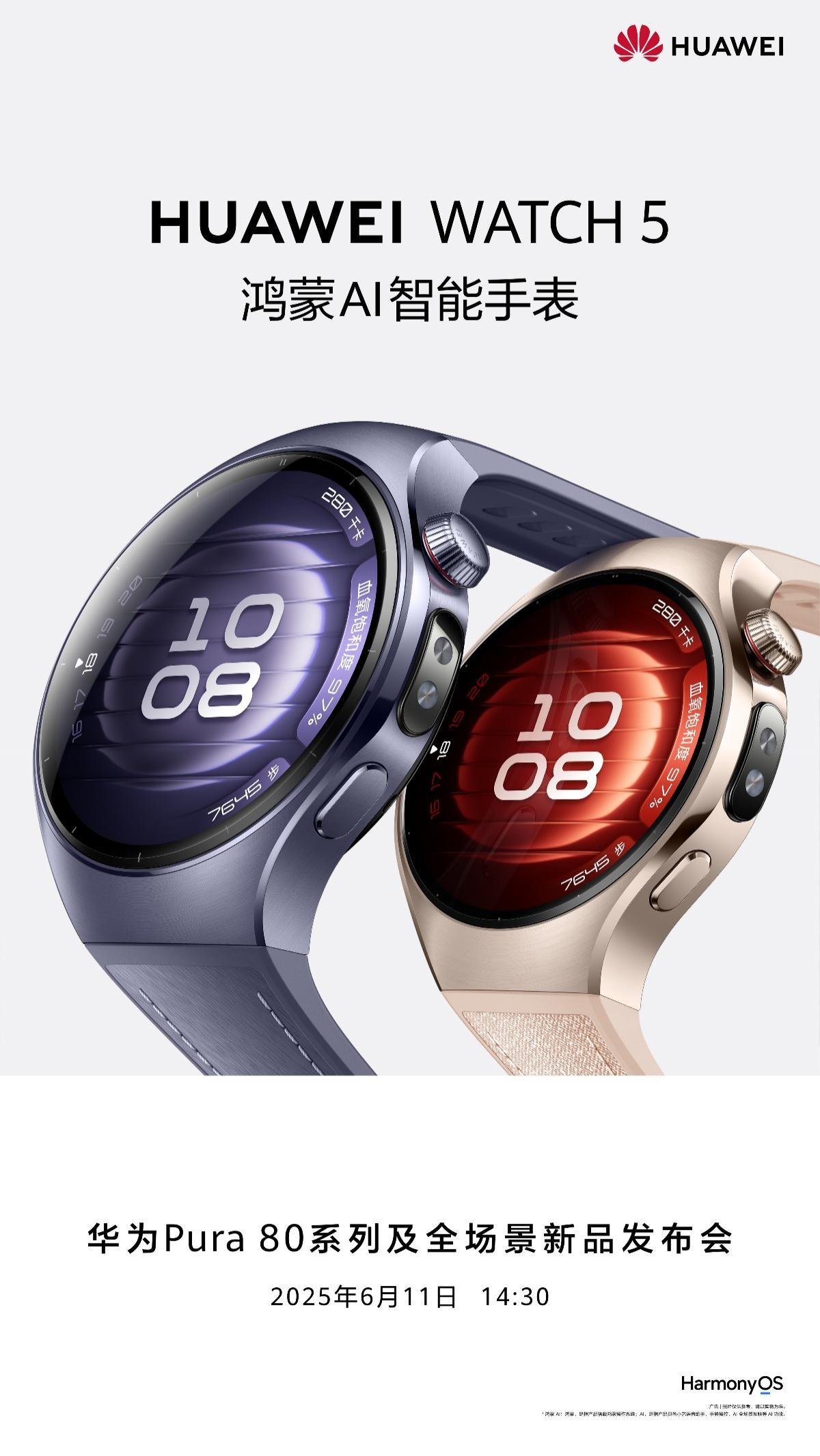
6月11日见!华为WATCH 5携鸿蒙AI而来,引领智能手表迈入AI时代
Huan Qiu Wang· 2025-06-03 07:21
Core Insights - Huawei's WATCH 5 is set to officially launch on June 11, marking a significant milestone in the company's wearable technology journey and indicating a new chapter for the smart wearable industry [1][5][13] - The WATCH 5 is Huawei's first smartwatch featuring HarmonyOS AI technology, which aims to redefine user interaction and set a new technological benchmark for the industry [1][5][13] Product Overview - The WATCH 5 will incorporate groundbreaking Harmony AI technology and a restructured technical architecture, promising a revolutionary smart interaction experience [1][7] - It features a dual-engine smart architecture with an NPU neural network unit, enhancing local AI computing power by 80% [7] - The device will be available in two sizes, 42mm and 46mm, and will showcase a design that merges futuristic aesthetics with fashion elements [11] Market Position - Huawei has maintained a leading position in the global wearable market, with a projected year-on-year growth rate in wearable device shipments for 2024, ranking first globally [5] - The WATCH series has consistently represented the pinnacle of smart wearable technology, with each new release pushing the boundaries of design and functionality [5] Technological Innovations - The WATCH 5 will utilize a new X-TAP smart sensing button, which is expected to enhance user interaction through intuitive controls for health monitoring and data collection [11] - The device will run on the latest HarmonyOS 5.1, improving personalized experiences and connectivity across devices [8] Industry Impact - The launch of the WATCH 5 signifies a transition for the entire smart wearable industry into an AI-driven era, with Huawei positioned as a leader in this transformation [1][13] - The product is currently available for pre-sale, starting at 2,699 yuan, with promotional offers to encourage early adoption [13]

传统产业智能化蝶变 深圳剑指“全球AI眼镜第一城”
2 1 Shi Ji Jing Ji Bao Dao· 2025-05-29 09:59
Group 1 - The traditional eyewear industry is experiencing a transformation in Shenzhen, with companies like Thunderbird Innovation launching new smart eyewear products [1][2] - Shenzhen's Longgang District is a global hub for the eyewear industry, with an expected total output value of 4.3 billion yuan in 2024 and over 1.25 billion pairs of eyewear produced annually [2][3] - The emergence of AI large models is driving the integration of intelligence into traditional eyewear, creating new market opportunities [2][3] Group 2 - LOHO has developed the "Snap Mirror," a smart eyewear product that integrates video recording, music playback, and voice translation, leveraging AI for enhanced functionality [2][3] - The Shenzhen government is promoting the development of AI systems in the eyewear sector, aiming to transform eyewear from a functional product to a more complex and personalized consumer item [3][4] - Shenzhen's strategic plan for 2025-2026 emphasizes the importance of smart eyewear, positioning it as a key area for innovation and product development [4][5] Group 3 - The eyewear industry in Shenzhen has established a closed-loop system encompassing technology, manufacturing, market, and policy, with significant concentration of companies in various districts [5] - Key districts like Nanshan and Baoan are home to major AI and manufacturing firms, contributing to the robust supply chain for smart eyewear [5]
传统消费升级与新型消费扩容双轮驱动,消费板块“低估值+高分红”凸显吸引力
Sou Hu Cai Jing· 2025-05-28 15:40
Core Viewpoint - The current consumption policies are driving a dual engine of "traditional consumption upgrade" and "new consumption expansion," leading to a significant surge in the consumption sector, particularly in Hong Kong stocks, which have seen multiple companies reach historical highs [1][5]. Consumption Sector Analysis - The consumption sector, represented by food and beverage, textiles and apparel, and home appliances, has maintained strong dividend capabilities, with an average dividend yield of around 4% and a median yield of 5% for companies with a market capitalization over 200 billion [2][3]. - High dividend rates signal healthy financial conditions and strong profitability, enhancing investor confidence and potentially leading to higher valuation premiums for the sector [3]. Investment Preferences - The consumption sector is favored for its stability and maturity, with a low valuation (20x PE) and high dividend yield (3.41%), making it attractive compared to fixed-income products [4]. - Institutional investors, such as pension funds and social security funds, are increasingly allocating to the consumption sector, with the latter's holdings reaching 28% by the end of 2024 [4]. Future Consumption Trends - The expansion of domestic demand is being driven by two main trends: the rise of electric vehicles and the explosive growth of smart home technology, with the smart home market expected to exceed 800 billion by 2025 [6][7]. - The integration of AI in traditional home appliances is expected to enhance competitiveness and market share in the smart home sector [8]. Market Dynamics - The upcoming consumption peaks during the Dragon Boat Festival and the 618 shopping festival are anticipated to create significant consumer demand, particularly in electronics and home appliances, with price reductions of 20%-30% due to subsidies [10]. - Cultural consumption is also expected to rise, with historical data indicating that cultural activities during holidays can account for 25%-40% of spending in major provinces [10]. Challenges in Consumption - Certain sectors, such as luxury goods, may face demand challenges due to a shift towards more rational consumer behavior and competition from local brands [11]. - Traditional fuel vehicles are likely to experience long-term demand pressure as the market shifts towards electric vehicles, particularly in the sub-150,000 yuan segment [11]. New Consumption Concepts - The emergence of new consumption concepts, such as emotional and experiential consumption, is reshaping valuation logic in the industry, requiring a shift from traditional financial metrics to a combination of hard data and soft value assessments [12]. - Companies that successfully integrate emotional value with their business models may uncover new growth opportunities beyond traditional valuation frameworks [12]. Investment Opportunities - The consumption sector presents investment opportunities driven by policy support and the dual appeal of low valuations and high dividends, particularly in areas like smart wearables and home appliances [13]. - Emerging consumption scenarios, such as blind box consumption and pet economy, also offer significant market potential [13].
个人信息保护如何跳出“猫鼠游戏”(人民时评)
Ren Min Ri Bao· 2025-05-27 22:40
Core Viewpoint - The article highlights the increasing risks of personal information leakage in the digital age, emphasizing the need for proactive measures and regulatory improvements to protect consumer data [1][2][3]. Group 1: Current Situation of Personal Information Protection - Personal information leakage has become a pressing issue, with cases like the recent Shanghai incident revealing how easily sensitive data can be sold and misused [1]. - The challenges in personal information protection have shifted from overt rights violations to more covert technological abuses, often linked to new business models [2]. Group 2: Regulatory and Technological Responses - New regulations, such as the "Facial Recognition Technology Application Safety Management Measures," have been introduced to prevent the misuse of technology and protect personal information rights [3]. - Companies are encouraged to adopt proactive measures, such as allowing users to revoke historical data authorizations and employing privacy-preserving technologies to enhance data security [3]. Group 3: Future Directions - There is a call for a more refined governance approach that balances development and security, aiming to create a comprehensive governance system that integrates rules, technology, and social collaboration [3].
品创·品牌节在通州举行,专家、企业热议“全球新流行”
Xin Jing Bao· 2025-05-23 07:44
Group 1 - The third "Pin Chuang·Brand Festival" will be held from May 22 to 23 at the Beijing International Wealth Center, featuring over 150 new brands discussing various topics including marketing, product strength, brand power, channel strength, and operational strength [1] - The Deputy Mayor of Tongzhou District highlighted the area's advantages, including quality education and healthcare resources, comprehensive transportation hubs, and the upcoming presence of Beijing Fashion Institute and Beijing Dance Academy, which will create a favorable ecosystem for brand establishment [1] - The potential of the Chinese consumer market is immense, with the post-Z generation expected to allocate over 30% of new consumption towards trendy IPs and immersive experiences, while new middle-class families are willing to spend significantly on education but prefer cost-effective options for daily necessities [1] Group 2 - Consumption upgrades are driving industrial transformation by accurately transmitting demand signals to the production end, leading to technological upgrades and structural adjustments in related industries [2] - The younger generation is shortening the smartphone replacement cycle to 1.8 years, pushing the semiconductor industry to accelerate iterations, while the smart wearable device market has surpassed 200 billion yuan, resulting in a 45% increase in investment in IoT chip development [2] - New brands are emerging not by traditional industry inertia but possess strong vitality, potentially becoming "unicorns" in their respective categories, representing the new lifestyle of global youth [2]
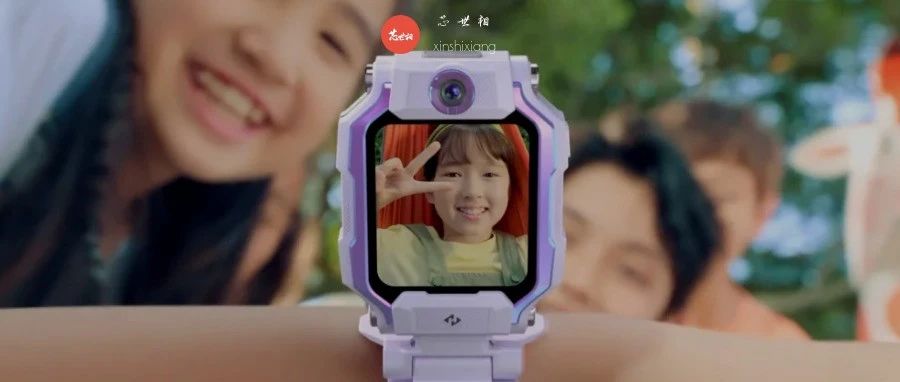
拆解火爆的小天才电话手表,用了哪些芯片?
芯世相· 2025-05-22 06:01
Core Viewpoint - The article provides a detailed analysis and breakdown of the Z10 children's smartwatch by Xiaotianzi, highlighting its advanced features, design, and technology integration aimed at enhancing children's safety and health monitoring [3][4][146]. Group 1: Product Overview - Xiaotianzi is a brand under BBK Education Electronics, focusing on high-quality children's smart products, with the Z10 smartwatch being a flagship model that dominates the children's smartwatch market [3]. - The Z10 features a 1.78-inch Retina-level display, dual cameras for video calls, and a robust design that includes a split-axis structure for enhanced usability [3][4][146]. Group 2: Safety Features - The smartwatch is equipped with high-precision independent positioning chips, low-power WiFi chips, and various sensors to provide comprehensive safety features, including real-time tracking and alerts for dangerous areas [3][4]. - It supports global signal coverage and integrates Google Maps for location services, ensuring safety even when traveling abroad [3][4]. Group 3: Health Monitoring - The Z10 incorporates a self-developed CareModel 3.0 AI algorithm for health monitoring, capable of tracking temperature, blood oxygen levels, heart rate, and sleep patterns [4][146]. - It offers 19 different sports modes to encourage physical activity among children, providing data on exercise duration, distance, heart rate, and calories burned [4][146]. Group 4: Technical Specifications - The smartwatch is powered by a 760mAh lithium polymer battery, featuring a Snapdragon W5 wearable chip and 64GB eMCP storage for efficient performance [146]. - It includes advanced components such as a dual-camera system, health monitoring module, and various sensors for enhanced functionality [146].
万和财富早班车-20250522
Vanho Securities· 2025-05-22 02:37
Core Insights - The report emphasizes the importance of discovering investment opportunities with a proactive attitude rather than merely relaying information [1] Macro News Summary - The National Development and Reform Commission is continuously improving policy tools to ensure timely implementation when necessary [4] - The People's Bank of China held a seminar to enhance financial support for the real economy, focusing on technology innovation [4] - China and the ten ASEAN countries have completed negotiations for the China-ASEAN Free Trade Area 3.0 [4] Industry Dynamics - The deployment of IPv6 is being advanced by three departments, with related stocks like Fenghuo Communication and ZTE expected to benefit [5] - The wearable device sector, particularly exoskeleton robots, is gaining attention as commercial applications accelerate, with stocks such as Xiangyu Medical and Jinggong Technology highlighted [5] - Sichuan is expediting the implementation of its first brain-computer interface surgery, indicating promising commercial prospects for related companies like Innovation Medical and Chengyitong [5] Company Focus - Foton Motor is collaborating with Huawei Digital Energy to accelerate the electrification of heavy trucks [6] - Chuangyao Technology is promoting advanced communication technologies to empower smart healthcare, focusing on intelligent healthcare robots [6] - Intercontinental Oil and Gas plans to increase capital in its wholly-owned subsidiary Hong Kong Derui by USD 6.8 million [6] - Jiuhua Tourism intends to raise no more than 500 million yuan through a private placement to invest in projects like passenger cable cars [6] Market Review and Outlook - On May 21, the market experienced a high and then a pullback, with the three major indices showing slight increases. The Shanghai Composite Index rose by 0.21%, the Shenzhen Component Index by 0.44%, and the ChiNext Index by 0.83% [7] - The trading volume in the Shanghai and Shenzhen markets reached 1.17 trillion yuan, an increase of 37.8 billion yuan from the previous trading day [7] - The report anticipates limited upward or downward movement in the A-share market in the short to medium term, with a lack of strong main lines for investment. It suggests focusing on industries with long-term development logic, such as technology growth, high-end manufacturing, and new consumption [7]
财信证券晨会纪要-20250521
Caixin Securities· 2025-05-21 00:03
Market Overview - The A-share market shows a mixed performance with the Shanghai Composite Index closing at 3380.48, up 0.38%, while the Shenzhen Component Index rose by 0.77% to 10249.17 [2][3] - The overall market capitalization of the Shanghai Composite Index is 649702 billion, with a PE ratio of 11.93 and a PB ratio of 1.24 [3] Economic Insights - The LPR was lowered by 10 basis points in May, with the 1-year LPR now at 3.0% and the 5-year LPR at 3.5%, which is expected to reduce financing costs for businesses and consumers [4][15][16] - In the first quarter, the national high-tech zones achieved an industrial added value of 1.7 trillion, growing by 7.1% year-on-year [19][20] - By the end of 2024, the urbanization rate in China is projected to reach 67%, with 940 million people living in urban areas [21][22] Industry Dynamics - Pfizer has entered a licensing agreement with 3SBio for the PD-1/VEGF bispecific antibody, with an upfront payment of $1.25 billion and potential total payments of up to $4.8 billion [29][30] - JD's beauty segment saw a decline of 6.68% in sales in the first four months of 2025, with skincare products making up 65.3% of total sales [33] - The National Medical Products Administration reported that 97.79% of the 21362 batches of cosmetics tested in 2024 met compliance standards, with the lowest compliance rate in sunscreen products [34] Company Updates - Anhui Heli announced a cash dividend of 0.60 yuan per share, totaling 534.42 million yuan, with the ex-dividend date set for May 28, 2025 [43][44] - Weir Shares plans to change its name to "Haowei Group" to better reflect its strategic direction after acquiring a leading image sensor company [45][46] - Goldwind Technology signed a contract for the largest wind power project in Oman, with a total capacity of 234 MW [47][48] - Lens Technology reported over 250,000 global orders for its AI smart glasses, set to launch in June, leveraging its advanced manufacturing capabilities [49][50]
卖疯了!收割中国小孩的智能手表,有哪些芯片机会
芯世相· 2025-05-16 03:53
Core Viewpoint - The children's smart watch market has rapidly grown into a significant segment of the smart wearable industry, with notable sales figures and market share, particularly dominated by the brand "小天才" (Xiaotianzi) [2][3][11]. Group 1: Market Performance - In 2024, children's smart watches accounted for 31.5% of sales on traditional e-commerce platforms, nearly matching adult smart watches and smart bands, both at 34.4% [2]. - Xiaotianzi captured nearly half of the global children's smart watch market share in Q2 2024, positioning itself among the top five wearable device manufacturers globally [2]. - The online sales of children's smart watches reached 863.7 million units in 2024, generating a revenue of 38.4 billion yuan, with an average price of 444 yuan [13]. Group 2: Market Growth and Trends - The demand for children's smart watches has been on a steady rise, with a compound annual growth rate (CAGR) exceeding 30% from 2015 to 2020, and projections indicating the market size will surpass 200 billion yuan by 2026 [8]. - In 2018, the shipment of children's smart watches in China reached 21.67 million units, three times that of adult smart watches, with a market size exceeding 8.6 billion yuan [7][8]. - The market has evolved from low-cost, low-functionality products to high-end devices with advanced features, indicating a shift towards premiumization and brand differentiation [11][12]. Group 3: Competitive Landscape - Xiaotianzi holds a market share of 26.6% in the children's smart watch segment, with a year-on-year sales increase of 178.9%, significantly outperforming competitors like Xiaomi and Huawei [14]. - The competitive focus has shifted from basic functionality to enhanced user experience, with brands investing in performance, quality, and service [13]. - The children's smart watch market is characterized by a strong brand loyalty and ecosystem, with Xiaotianzi leveraging its marketing strategies and product segmentation to maintain a competitive edge [14]. Group 4: Supply Chain and Components - The children's smart watch industry consists of three main segments: upstream component suppliers, midstream manufacturers, and downstream consumers [16]. - The cost structure indicates that around 60% of a 600 yuan children's smart watch is attributed to components like modules, straps, and screens, while the most profitable segment is the midstream brand manufacturers [18]. - Key components include various chips and sensors, with a notable trend towards the adoption of domestic chips, indicating a shift in the supply chain dynamics [28]. Group 5: Technological Advancements - The integration of advanced chips and modules has significantly improved the functionality of children's smart watches, enhancing features like positioning accuracy, video clarity, and battery life [19]. - Major chip manufacturers for children's smart watches include Qualcomm and Unisoc, with a growing trend of domestic chips replacing imported ones [22][28]. - The evolution of technology in children's smart watches is expected to continue driving demand for core components, benefiting domestic chip manufacturers [30].


