小商品批发

Search documents
弘则研究:义乌小商品出口商景气度跟踪
2025-07-03 15:28
Summary of Key Points from the Conference Call Industry Overview - The focus is on the Yiwu small commodity export market, primarily targeting the European and American markets due to their higher customer quality and purchasing power. The U.S. market accounts for only 5%-10% of total output value, which mitigates risks associated with market concentration [1][3]. Core Insights and Arguments - **Market Environment**: Yiwu offers a favorable business environment with government support, efficient market planning, convenient transportation, and low living costs, which contribute to lower operational costs for factories [1][7]. - **Investment Potential**: The outlook for shops in Yiwu's six districts is optimistic despite high entry fees, with significant past appreciation in similar projects, such as a 17-fold increase in value since 2015 [1][9]. - **Rental Dynamics**: Merchants typically pay around 10% of their annual revenue in rent, and rental increases (approximately 5% annually) do not significantly impact their operations [4][17]. Merchants often choose to sublet rather than return rental spaces to the market [18]. - **Supply Chain Advantages**: Yiwu's labor costs are lower compared to cities like Guangzhou and Shenzhen, enhancing production competitiveness [8][31]. - **Digital Transformation**: The sixth phase of the Yiwu market integrates the best-performing industries from previous phases and incorporates digital upgrades to support cross-border e-commerce [1][13]. Additional Important Insights - **Trade Resilience**: The impact of U.S.-China tariff events on Yiwu's business is minimal, as the majority of exports are directed towards other European countries [3]. - **Real Estate Investments**: Successful Yiwu entrepreneurs often invest in real estate for asset appreciation and stable income, while some reinvest in their businesses for expansion [15][16]. - **Market Demand**: The demand varies by product and region, with recent focus on the Russian market showing positive trends [6]. - **Auction and Rental Practices**: The auction process for shop spaces is highly competitive, with a significant number of applicants being filtered out to ensure only qualified participants are selected [11][12]. - **Payment and Logistics**: Yiwu exporters typically rely on freight forwarding companies for handling international orders and payments, ensuring a streamlined process for export operations [22][28]. This summary encapsulates the essential insights from the conference call regarding the Yiwu small commodity export market, highlighting its strengths, challenges, and future prospects.
义乌品牌出海又添新地标 “世界超市”日本分市场开业
Zheng Quan Shi Bao Wang· 2025-06-27 14:20
Group 1 - The opening of the Osaka Yiwu Market on June 26 marks a significant step in the global expansion of the "World Supermarket" concept [2] - The market is a collaboration between Yiwu Mall Group and Japanese partner Aokafan, focusing on local market demands and offering a diverse range of quality products [2] - The market's first day saw a high volume of local buyers, indicating strong interest and engagement from the Osaka purchasing community [2] Group 2 - The Osaka Yiwu Market is the second overseas branch of the Yiwu small commodity market, following the Dubai Yiwu China Small Commodity City, which opened in June 2022 [3] - Yiwu market is recognized as the largest small commodity distribution center globally, featuring 2.1 million products across 26 categories, significantly contributing to the development of over 20 industrial clusters in China [3] - The Yiwu Mall Group has initiated a brand overseas strategy, planning to establish 46 overseas projects in 20 countries and regions by 2024, aiming to showcase 700,000 products to international buyers [3]


比义乌更大的批发市场,竟是“中国大集”?
3 6 Ke· 2025-06-03 00:13
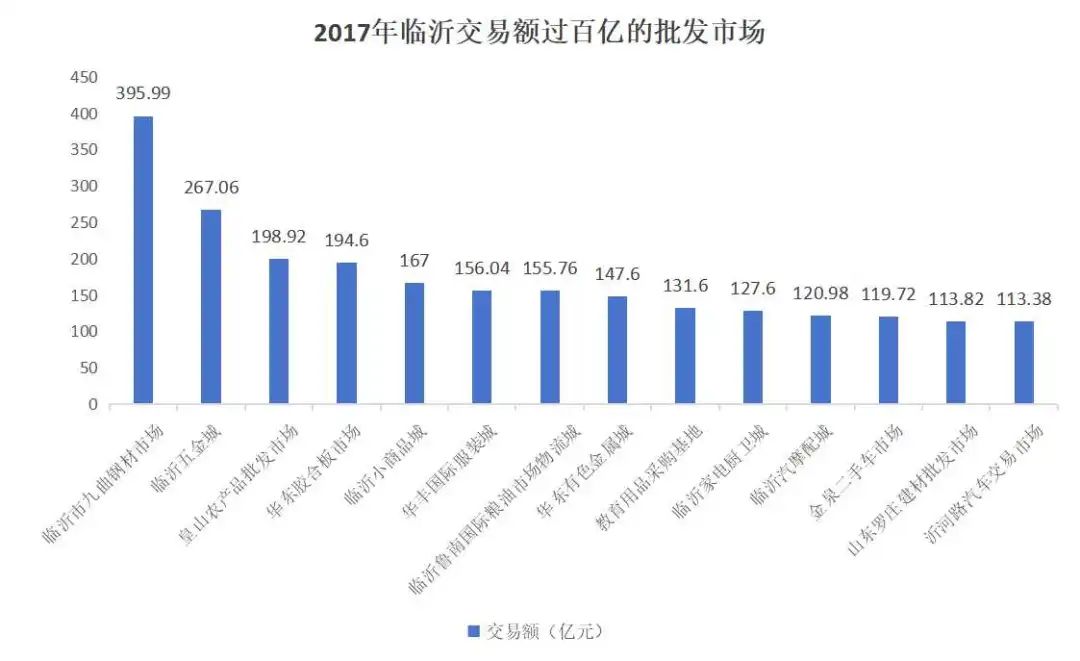
Core Viewpoint - The article highlights the significance of Linyi as a major wholesale market cluster in China, rivaling Yiwu, and emphasizes its role as a logistics and trade hub with impressive transaction volumes and logistics efficiency. Group 1: Market Overview - Linyi's wholesale market is projected to reach a transaction volume of nearly 660.5 billion yuan in 2024, with a logistics total of 1.0074 trillion yuan, comparable to Yiwu [2] - Linyi boasts the largest wholesale market cluster in China, covering 12 major industry categories and over 600 million types of goods [4][5] - The market includes 136 specialized wholesale markets and over 62,200 shops, employing around 300,000 people [4] Group 2: Logistics and Efficiency - Linyi's logistics operations are extensive, with over 3,000 freight routes connecting to all major cities and ports in China [8] - The average inventory turnover period in Linyi is 3.2 days shorter than Yiwu, and logistics efficiency is 18% higher [4] - Linyi's logistics costs are approximately 30% lower than the national average, with express delivery prices 50% lower [10] Group 3: Geographical Advantage - Linyi is strategically located at the intersection of three major economic zones: the Yangtze River Delta, Beijing-Tianjin-Hebei, and the Bohai Rim [12][14] - This central position makes Linyi an ideal transit hub for trade, reducing transportation costs for businesses [20] Group 4: Historical Development - The development of Linyi's wholesale market began in the 1980s, evolving from a closed agricultural economy to a bustling trade center [43] - The first specialized wholesale market in Linyi was established in 1986, marking the beginning of a significant market development phase [27] Group 5: International Trade and Expansion - Linyi has become a key player in international trade, with a 23.1% year-on-year increase in exports to countries involved in the Belt and Road Initiative, totaling 76.47 billion yuan from January to October 2024 [30] - The city is actively promoting cross-border e-commerce and has established numerous overseas warehouses and trade centers [36][39] Group 6: Government Support and Policy - The local government has played a crucial role in fostering market development by implementing supportive policies and facilitating market growth [46][49] - Linyi's government has established a market development fund and initiated programs to nurture supply chain giants [50]
美国人疯狂下单中国
投资界· 2025-05-22 08:04
Core Viewpoint - The article discusses a dramatic turnaround in the shipping orders from China to the U.S. following the recent tariff adjustments, highlighting a surge in demand and operational challenges faced by ports and logistics companies [3][4][5]. Group 1: Shipping and Logistics - After the announcement of tariff reductions, shipping orders from China to the U.S. skyrocketed, with container bookings increasing by nearly 300% [6]. - Ports like Shenzhen's Yantian and Ningbo experienced a significant influx of orders, leading to a situation where shipping capacity was stretched thin, with a 30% shortfall in available space [6][5]. - The rapid increase in orders forced many companies to work overtime to meet the demand, with some factories operating at full capacity to fulfill U.S. orders [5][6]. Group 2: Market Dynamics - The article emphasizes that despite previous expectations, U.S. companies are struggling to shift their supply chains away from China due to high costs and inefficiencies in alternative locations [13][14]. - Many U.S. businesses have found that relocating production to Southeast Asia or other regions is not feasible, leading them to return to Chinese suppliers [14]. - Chinese manufacturers have diversified their markets, reducing reliance on the U.S. and expanding into Europe and other regions, which has provided them with more stability [15]. Group 3: Historical Context - The article draws parallels between current tariff policies and historical events, specifically referencing the Smoot-Hawley Tariff Act of 1930, which led to economic downturns rather than the intended protection of domestic industries [15]. - It suggests that the current administration should learn from history to avoid repeating past mistakes related to high tariffs [15].

引导企业出海 畅通物流通道 山东临沂积极开拓国际市场
Jing Ji Ri Bao· 2025-05-17 21:45
Group 1 - Shandong Linyi City is accelerating the internationalization of Linyi Mall, with the third Malaysia Linyi Small Commodity Exhibition held in April and a newly established overseas warehouse in Malaysia to facilitate exports to Southeast Asia [1] - Linyi Mall is a collection of 136 specialized wholesale markets, and the city has adopted internationalization as a key strategy for transformation, with a consensus among mall enterprises that "not going overseas means being eliminated" [1] - Linyi Shenshen Home Co., Ltd. has actively participated in overseas exhibitions, securing five large orders with a total export value exceeding 20 million yuan [1] Group 2 - The Linyi Mall Lan Hua (Korea) overseas mall has adopted a "front store, back warehouse + experiential consumption + online platform" model, receiving over 100,000 visitors annually [1] - Linyi has established 50 overseas malls and warehouses in Southeast Asia, Central Asia, and Africa, with plans to organize over 2,000 enterprises to "go overseas" in 2024, attracting 31,000 foreign merchants [1] - Digitalization is becoming the core driving force for the transformation and upgrading of Linyi Mall, with real-time data updates and automated logistics systems enhancing operational efficiency [1] Group 3 - Linyi is enhancing international logistics channels through "public, rail, air, and water" transport, with the establishment of international road transport centers and the development of six TIR international road transport enterprises [2] - Linyi Mall has the highest number of TIR vehicles in the country and ranks fourth in departure volume, indicating a strong logistics infrastructure [2] - The city aims to create an integrated open chain for domestic and foreign trade by attracting and nurturing foreign trade entities and establishing overseas malls and warehouses [2]
政府搭桥“出海”闯世界,临沂商城迎浪造潮
Qi Lu Wan Bao Wang· 2025-05-16 02:44
Core Viewpoint - The implementation of the "2025 Linyi Mall Transformation and Upgrading Support Policy" aims to enhance the internationalization and digital transformation of Linyi Mall, positioning it as a key player in global trade and logistics [1][2][10]. Policy Overview - The policy includes 22 measures supported by a special fund of 80 million yuan, creating a "policy chain, industry chain, and innovation chain" integration system to empower local businesses [1][3]. - It focuses on six main areas: international market expansion, international logistics development, modern logistics support, market and park enhancement, replication of successful models, and optimization of the business environment [3][4]. Financial Support Mechanisms - A multi-dimensional subsidy system has been established to facilitate international market access, including up to 80% reimbursement for international travel costs and up to 5,000 yuan per person for participation in overseas exhibitions [4]. - The policy also provides one-time subsidies for logistics companies and organizations that facilitate international transport, with maximum support reaching 1 million yuan per company [4][8]. Digital Transformation Initiatives - The policy promotes digital infrastructure and applications, supporting cross-border e-commerce training and providing financial incentives for training institutions based on the number of businesses trained [5][9]. - The establishment of digital platforms and services is emphasized, including partnerships with major e-commerce platforms to enhance local service capabilities [11]. International Market Expansion - The "Hundred Teams, Thousand Enterprises: Mall Going Abroad" initiative has successfully launched events like the Malaysia China Linyi Commodity Exhibition, showcasing local products and facilitating international trade [7]. - The policy aims to establish a comprehensive international trade service center and organize over 150 domestic exhibition activities to foster international market connections [10][12]. Logistics Development - The Lanhua Smart Logistics City project is a key component of Linyi's logistics transformation, incorporating advanced technologies to improve service and management [8]. - The modern logistics city is expected to support the construction of an international logistics hub, enhancing Linyi's position as a logistics center in China [8][10]. Training and Capacity Building - Continuous training programs for cross-border e-commerce are being implemented, with significant participation from local businesses, enhancing their capabilities in international trade [9][12]. - The policy encourages collaboration with leading platforms to provide specialized training, aiming to develop a skilled workforce for the growing e-commerce sector [12].
特朗普关税颠覆全球贸易体系,有加拿大零售商绕开美国中间商直接找中国采购
Sou Hu Cai Jing· 2025-05-07 12:10
Core Viewpoint - The article discusses the shift in supply chain dynamics due to escalating trade tensions, with retailers like Luke Therrien opting to bypass American middlemen and establish direct connections with Chinese suppliers, aiming for a more sustainable and cost-effective supply chain [1][3]. Group 1: Supply Chain Changes - Retailers are increasingly seeking direct relationships with Chinese suppliers to mitigate the impact of U.S. tariffs and trade tensions [1][3]. - The shift to direct sourcing may lead to longer procurement times and logistical challenges, but it is seen as beneficial in the long run from a pricing perspective [1][3]. Group 2: Impact of U.S. Trade Policies - U.S. tariffs and unpredictable trade policies have created chaos in the American market, leading to confusion among exporters regarding customs and tax obligations [3][4]. - Exporters who previously relied heavily on the U.S. market are now considering diversifying their markets due to the instability caused by U.S. trade policies [4][5]. Group 3: Currency and Economic Confidence - The dominance of the U.S. dollar as a trade currency remains significant, providing exporters with predictable payment methods, despite increasing risks [4][5]. - Recent economic turmoil and criticism of U.S. trade policies have shaken confidence in the dollar, with notable figures like Warren Buffett expressing concerns about investing in a currency perceived as unstable [5][6]. Group 4: China’s Response to Trade Tensions - China has taken a firm stance against U.S. unilateral tariff measures, emphasizing its commitment to defending its economic interests while remaining open to dialogue [6]. - The Chinese government has indicated a willingness to engage in discussions with the U.S. regarding tariff adjustments, reflecting a strategic approach to international trade relations [6].
“世界超市”义乌,如何穿越关税风暴?
Mei Ri Jing Ji Xin Wen· 2025-05-06 15:32
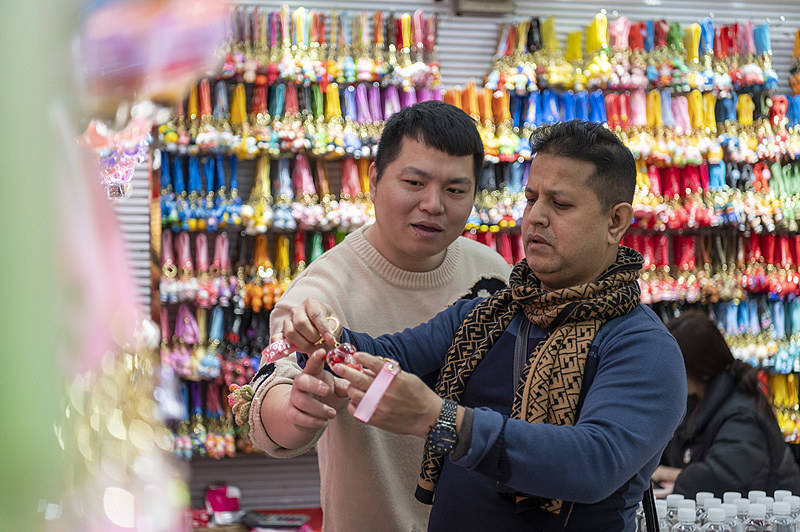
Core Viewpoint - Yiwu, known as the "World Supermarket," is adapting to changes in international trade dynamics, particularly in response to the U.S. tariff policies, which have led to shifts in customer demographics and purchasing behaviors [2][12]. Group 1: Market Dynamics - Yiwu's small commodity market has over 1.15 million merchants and more than 2.1 million SKUs, attracting global buyers, especially from the Middle East and Africa, while U.S. customers have decreased [2][6]. - The implementation of the U.S. "reciprocal tariff" policy has prompted local merchants to seek new markets, with many reporting a shift from U.S. clients to those in South America and Europe [6][7]. - Merchants are actively adjusting their strategies, with some reporting increased orders from overseas customers on e-commerce platforms since the tariff announcement [9][13]. Group 2: Business Strategies - Merchants are focusing on diversifying their customer base and enhancing product value to mitigate the impact of tariffs, with strategies including price increases and optimizing production processes [13][14]. - The rise of cross-border e-commerce and live streaming has led to a significant shift in how Yiwu merchants engage with international customers, with many adopting social media marketing strategies [15][16]. - The demand for multilingual talent is increasing as businesses seek to better communicate with diverse international clients, prompting local educational institutions to adapt their training programs [17][19]. Group 3: Economic Impact - The U.S. tariff policy is expected to affect inventory levels in American retail, with reports indicating that major retailers like Walmart are adjusting their supply strategies in response to rising costs [8][12]. - The overall impact of tariffs on international shipping is significant, with projections indicating a 35% decrease in cargo volume arriving at the Port of Los Angeles compared to the previous year [14].


“义乌最牛老板娘”聂自勤30答:美国客户很重要,但此路不通还有别的路
Mei Ri Jing Ji Xin Wen· 2025-05-03 03:15
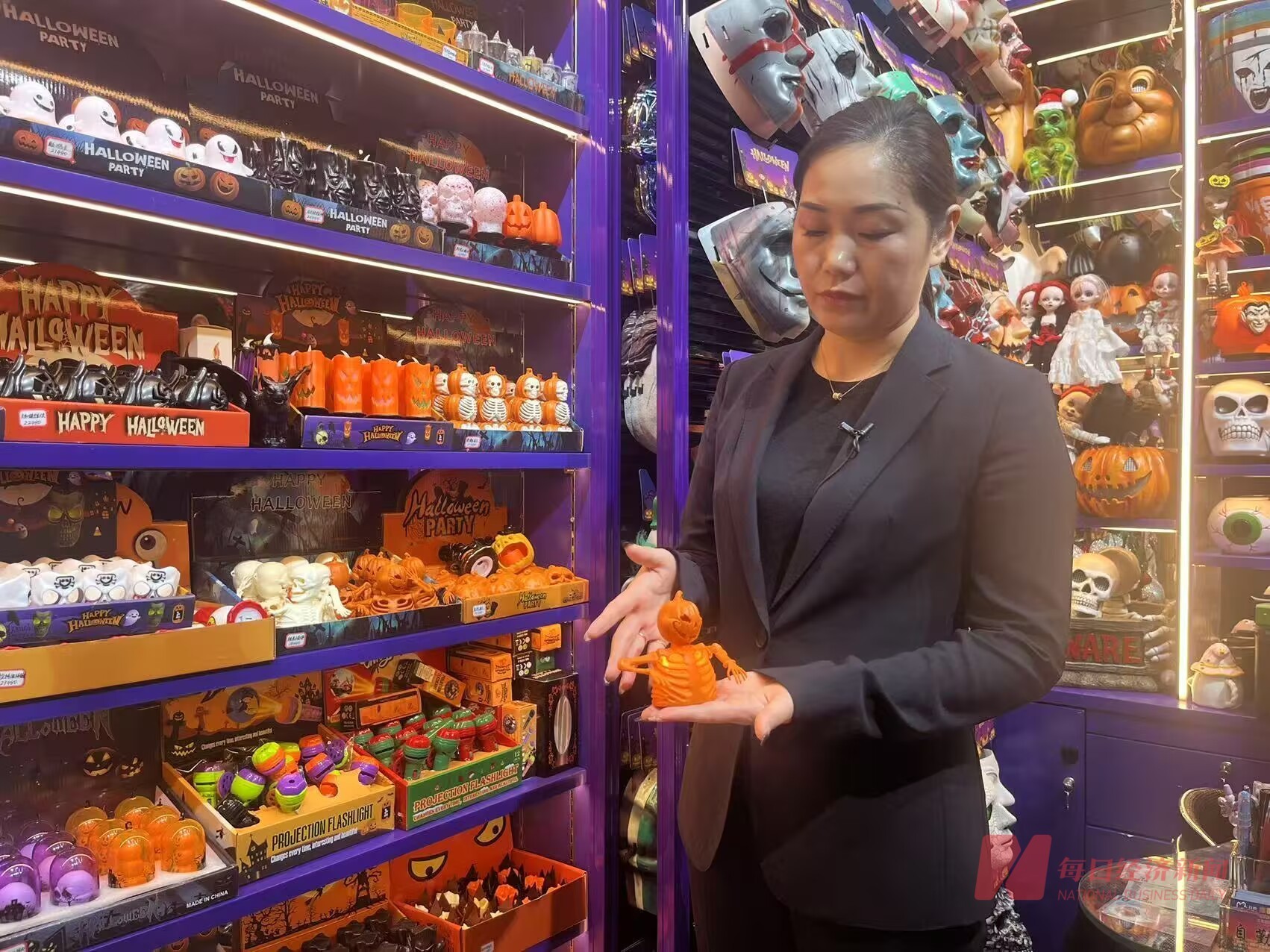
每经记者 叶晓丹 每经编辑 张海妮 据央视新闻,4月下旬,有美国CNN记者采访义乌小商品城一商户老板娘聂自勤,面对"对等关税"下如何处理美国客户的退单,她坚定果决的回应在社交媒 体上走红,也因此被网友称为"义乌最牛老板娘"。 高峰期,聂自勤经营的万圣节礼品批发业务一年可达到6000万元体量,其中50%的采购客户来自美国。 "如果美国(客户)不要,那我就给南美客户。"聂自勤接受CNN记者采访当天,恰好有南美客户在店里采购产品,一周时间过去了,之前给聂自勤下订单的 美国客户并没有取消订单,而是选择了观望,等待转机的到来。 4月底,《每日经济新闻》记者从相关进出口协会了解到,国内部分供应商已接到沃尔玛恢复供货的通知,且关税成本由美国客户承担。聂自勤一边等美国 客户的通知,一边也在想办法"主动出击",通过开拓多元市场和加大内销等渠道,来减轻因货物积压带来的影响。 2007年跟随父亲从河南来义乌创业,聂自勤在义乌一待就是18年,14平方米的店铺如今价值千万元。她从做代工起家,高峰期一度拥有上千名员工。国际经 贸的波动,在这一爿小小的批发店铺里,总能给她带来最直接的影响。聂自勤坦言,市场会洗出去一些掉队的人,但这是义乌市 ...
实探义乌:关税战冲击在分化
3 6 Ke· 2025-04-22 08:36
Core Insights - Jinhua, one of China's cities with the highest dependence on foreign trade, had a total import and export volume of 879.5 billion yuan in 2024, with exports reaching 771.9 billion yuan, resulting in a foreign trade dependence exceeding 100% [2] - Yiwu, a major trading hub, accounted for over 80% of Jinhua's total exports, demonstrating its significance in the region's trade dynamics [2] - Despite the U.S. imposing a 145% tariff on Chinese goods, Yiwu's international trade market remains active, with buyers continuing to place orders due to established trust with suppliers [4][5] Trade Dynamics - Yiwu International Trade City, known as the world's supermarket, features 210 million types of products and 75,000 shops, achieving an import and export total of 668.93 billion yuan in 2024, a year-on-year increase of 18.2% [5] - The trade with countries involved in the Belt and Road Initiative accounted for 61.8% of Yiwu's total import and export value, highlighting its role as a key driver of foreign trade growth [7] - The main exports to the U.S. from Yiwu include textiles, light industrial products, and electromechanical goods, with a focus on consumer products like toys and small appliances [7] Buyer-Seller Dynamics - American buyers are reportedly more anxious than Chinese sellers, with an increase in inquiries from U.S. buyers who are often new to the Yiwu market and face challenges due to tariffs [8] - Trust built over years of cooperation allows for smoother transactions, as seen in the case of a bag factory that has established a reliable communication channel with its U.S. client [10] Customization and Competitive Advantage - Customization is emerging as a significant competitive advantage for Chinese manufacturers, allowing them to maintain profitability despite tariff challenges [11][16] - Companies that have shifted towards customized products report better resilience against market fluctuations, as seen in the experiences of various manufacturers [14][15] - The ability to offer tailored solutions not only enhances customer loyalty but also positions Chinese manufacturers favorably in the global market [16]