
帆布包

Search documents
人文经济激活消费新动能丨泉州小木偶,撬动观演大市场
Xin Hua Wang· 2026-02-25 02:24
Core Viewpoint - The popularity of Quanzhou puppet shows has surged, transforming from a local folk performance into a cultural tourism hotspot, attracting diverse audiences and significantly boosting related merchandise sales [1][3][5]. Group 1: Performance and Audience Engagement - Quanzhou puppet theater has seen full houses during performances, with audiences expressing excitement and engagement through applause and cheers [1][3]. - The theater has adapted to modern audience needs by installing subtitle screens for non-local viewers and creating a resting area for visitors arriving with luggage [5]. Group 2: Economic Impact and Merchandise Sales - The theater's ticket sales reached nearly 19 million yuan in 2025, with tickets selling out rapidly during peak times [3]. - The increase in audience numbers has led to a surge in sales of cultural and creative products, including mini puppets and themed merchandise [3][5]. Group 3: Cultural Heritage and Innovation - Quanzhou puppet shows, recognized as a national intangible cultural heritage since 2006, have evolved to appeal to younger audiences while maintaining traditional techniques [3][4]. - The integration of puppet elements into local hospitality services, such as hotels and tea houses, has enhanced the overall cultural experience for tourists [5].


人民日报看新疆 | 龟兹博物馆:数字光影重启风华
Ren Min Ri Bao· 2026-02-22 13:01
Core Viewpoint - The Kizil Museum, set to open in 2025, will be the first comprehensive local museum in China dedicated to Kizil culture, utilizing digital technology to bring ancient history to life and showcase the rich cultural heritage of the region [2][4]. Group 1: Museum Features - The museum will employ advanced digital technologies such as holographic imaging, immersive projections, and interactive touch screens to create an engaging experience for visitors [4][5]. - The museum's design draws inspiration from the natural landscape and historical elements of Kizil, covering an area of over 20,000 square meters and housing around 700 artifacts across various categories [8]. - It aims to present a holistic view of Kizil culture, integrating historical displays with multimedia storytelling to enhance visitor understanding and appreciation of Chinese civilization [6][8]. Group 2: Cultural Significance - Kizil, historically a vital hub on the Silk Road, represents a melting pot of Eastern and Western civilizations, with significant cultural heritage sites located in the area [6]. - The museum seeks to protect and promote this cultural legacy, serving as a cultural hall that not only displays history but also fosters a sense of identity [6]. Group 3: Creative Cultural Products - The museum has developed nearly 200 creative cultural products inspired by Kizil's diverse cultural elements, aiming to integrate culture into daily life [10]. - These products, including bookmarks, silk scarves, and canvas bags, are designed to creatively transform Kizil cultural motifs into practical items, enhancing cultural dissemination [9][10]. - Since its opening, the museum has attracted over 300,000 visitors and generated sales exceeding 650,000 yuan from cultural products, indicating a strong public interest in Kizil culture [11].
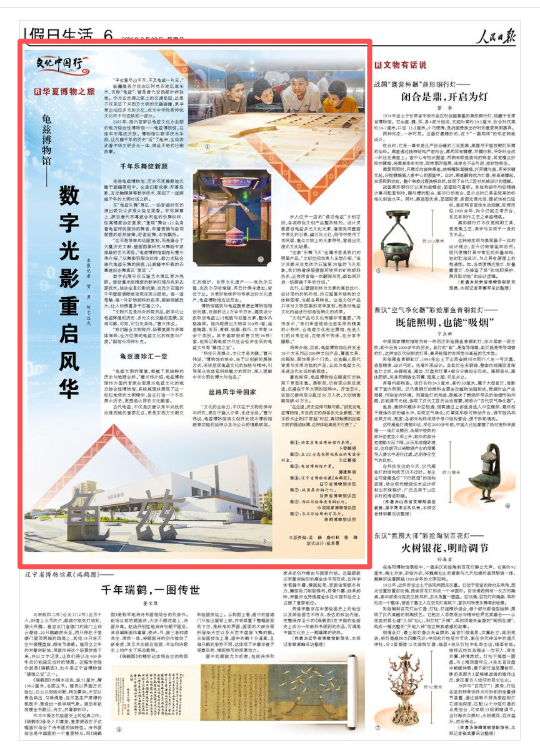
数字光影重启风华(文化中国行·华夏博物之旅)
Ren Min Ri Bao· 2026-02-21 23:06
Core Viewpoint - The Kizil Museum, the first comprehensive local museum themed on Kizil culture in China, opened in 2025 in Kuqa City, Xinjiang, utilizing digital technology to bring ancient history to life and narrate the rich stories of Chinese civilization [8][11]. Group 1: Museum Features - The museum employs advanced digital technologies such as holographic imaging, immersive projections, and interactive touch screens to create an engaging experience for visitors [9][10]. - The "Kizil Dance" exhibition features a performance that revives ancient dance forms from the Tang Dynasty, showcasing 21 dancers in traditional attire, supported by historical research and expert choreography [9]. - The museum houses over 700 artifacts, including 96 national-level precious items, covering various categories such as pottery, jade, bronze, ironware, and coins [12]. Group 2: Cultural Significance - The Kizil Museum aims to systematically present the essence of Kizil culture, which is rooted in its unique historical and geographical context, and serves as a cultural hub for understanding the integration of Eastern and Western civilizations [11][12]. - The museum's mission is to utilize innovative exhibition methods to present the depth and breadth of Kizil culture, fostering a deeper understanding of the vastness and inclusiveness of Chinese civilization [12]. Group 3: Cultural Products and Engagement - The museum has developed nearly 200 cultural and creative products inspired by Kizil's diverse cultural elements, aiming to integrate culture into daily life and enhance public engagement [13]. - Featured products include metal bookmarks, silk scarves, and canvas bags, which creatively transform Kizil cultural motifs into practical items for everyday use [13]. - Since its opening, the museum has received over 300,000 visitors and achieved sales exceeding 650,000 yuan in cultural products, indicating strong public interest and engagement [14].

“没想到比普通景区卖得还便宜”,秩序生产力也是“景点”
Hua Xia Shi Bao· 2026-02-21 01:22
Core Insights - The article highlights the significant increase in tourist traffic at Jiuhua Mountain during the Spring Festival, with 44,000 visitors recorded on the second day of the holiday, indicating a strong recovery in consumer confidence and tourism activity [1][3][10]. Tourist Flow and Experience - Jiuhua Mountain's parking lots reached full capacity early, with visitors arriving from various provinces, showcasing the popularity of the destination [3][4]. - Tourists expressed satisfaction with the orderly flow of people, which enhances their experience and willingness to spend [5]. - The presence of law enforcement and staff providing assistance contributed to maintaining order and enhancing visitor comfort [4][5]. Pricing and Payment Methods - Prices for goods within the scenic area remained stable, with items like bottled water and snacks priced similarly to regular weekends, countering expectations of price hikes during peak season [7][8]. - A dual payment system emerged, where cash remained essential due to daily transaction limits on mobile payment platforms, highlighting the continued relevance of cash in certain scenarios [6][8]. Consumer Behavior and Trends - Tourists showed a growing interest in diverse shopping options, with many opting for unique souvenirs and experiences rather than traditional offerings [10]. - The article notes a shift in consumer behavior towards valuing experiences and social media visibility, influencing spending patterns [10]. Consumption Coupons - The introduction of consumption coupons aimed at stimulating post-holiday spending was discussed, with plans for distribution starting after the Lantern Festival, potentially impacting future tourist traffic [11][12]. - The expected leverage effect of these coupons on local economic activity was emphasized, indicating their importance in sustaining tourism momentum [12].
“没想到比普通景区卖得还便宜”,秩序生产力也是“景点”|新春走基层
Xin Lang Cai Jing· 2026-02-19 13:47
Core Viewpoint - The article highlights the significant increase in tourist traffic at Jiuhua Mountain during the Spring Festival, indicating a strong recovery in consumer confidence and tourism vitality, with 44,000 visitors recorded on the second day of the Lunar New Year, marking an earlier peak compared to previous years [2][4]. Tourist Traffic and Experience - Jiuhua Mountain experienced a record number of visitors, with 44,000 people arriving on the second day of the Lunar New Year, indicating a robust tourism season that started earlier than last year [2][4]. - The orderly flow of tourists was maintained despite the high volume, with effective crowd management and guidance from police and staff, contributing to a positive visitor experience [6][7]. - Tourists displayed a willingness to spend more on experiences and unique items, reflecting a shift in consumer behavior towards valuing memorable experiences [10][11]. Pricing and Payment Methods - Prices for goods within the scenic area remained stable, with items like bottled water priced at 2-3 yuan and snacks at reasonable rates, contrasting with expectations of price hikes during peak season [8][9]. - A dual payment system was observed, where cash remained a vital payment method due to transaction limits on mobile payment platforms, highlighting the importance of cash as a fallback option in high-traffic scenarios [9][10]. Consumption Trends and Future Outlook - The article notes a growing trend among tourists to seek out unique and locally themed products, with an increase in the variety of consumables available at the site [10][11]. - The introduction of consumption vouchers, set to be distributed after the Spring Festival, is anticipated to further stimulate tourism spending and support local businesses during the post-holiday period [11][12]. - The effectiveness of these vouchers in sustaining tourist interest and spending during the off-peak season remains to be seen, with expectations that they will leverage significant economic activity [12].

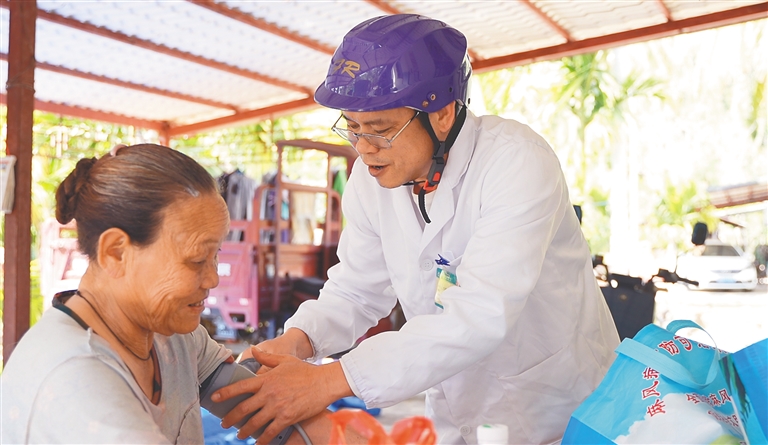
村医“阿用”的帆布包
Hai Nan Ri Bao· 2026-02-07 04:09
Core Viewpoint - The article highlights the dedication of a rural doctor, Li Wenxiong, who has been serving the community for 27 years, focusing on health management and chronic disease care for elderly villagers, showcasing the evolution of healthcare services in rural areas of China [5][8]. Group 1: Doctor's Role and Community Impact - Li Wenxiong, a rural doctor, utilizes modern technology such as a tablet to manage health records for over 1,000 villagers, improving chronic disease management [5][6]. - The doctor emphasizes the importance of regular health check-ups and medication adherence among elderly patients, reflecting a shift in health awareness within the community [7][8]. - The transformation of healthcare services is illustrated by the transition from basic medical supplies to advanced diagnostic tools, enhancing the quality of care provided [8]. Group 2: Historical Context and Development - The article provides a historical perspective on the healthcare situation in the village, noting that in the past, chronic disease management was largely unstructured and relied on personal initiative [6][7]. - The establishment of a standardized health service system in Hainan province in 2023 marks a significant advancement in public health, moving from treatment to proactive health management [7][8]. - Li Wenxiong's personal journey from a novice doctor to a trusted community health provider reflects broader changes in the rural healthcare landscape, highlighting the importance of building trust and relationships with patients [6][8].
美食+美景+好物: 冬季这样游山东
Huan Qiu Wang· 2026-01-20 02:38
Core Insights - The cultural tourism market in Shandong is thriving, with a focus on enhancing consumer experiences through food and new cultural tourism scenarios [2][8] Group 1: Food Economy - The "Good Host Shandong Food Competition" is set to take place from July to December 2025, aiming to promote consumption through culinary events, attracting over 2,800 restaurants and 11,000 culinary professionals [2] - The competition is expected to drive a total of 1.71 billion yuan in cultural tourism consumption, with 3.8 million participants in person and online [2] - The city of Weifang won the overall championship in the food competition and is promoting 85 dishes at half price to boost dining during the 2026 Spring Festival [3] Group 2: New Cultural Experiences - Yantai has upgraded its cultural space to a "Yantai Cultural Creative Display Area," focusing on showcasing local products and intangible cultural heritage, enhancing cultural consumption [4] - The area has hosted over 20 exhibitions since its establishment in January 2024, with the first exhibition featuring over 60 classic wine products and 300 cultural derivatives [4] Group 3: Seasonal Tourism Initiatives - Qingdao's Laoshan Scenic Area is promoting winter tourism with special activities and discounts, including half-price tickets for visitors arriving by train or plane [5] - The area is also combining traditional New Year markets with scenic tours to create a one-stop experience for visitors [5] Group 4: Online and Offline Integration - The "Nanjiao Cultural Tourism Market" and "Good Host Shandong Good Products" e-commerce platform were launched to enhance cultural tourism consumption through a dual model of offline markets and online sales [6][7] - The initiative aims to create a new cultural tourism consumption landmark by integrating various local products and experiences [7] Group 5: Winter Tourism Products - Shandong has launched over 1,200 themed cultural tourism products, focusing on winter activities such as bird watching, snow appreciation, hot springs, and food [8]
董宇辉比于东来还会赚钱
投中网· 2026-01-15 06:23
Core Viewpoint - The article discusses the rapid growth and challenges faced by the live-streaming e-commerce platform "Yuhui Tongxing" led by Dong Yuhui, highlighting its impressive sales figures and the underlying issues that may affect its future sustainability [5][21]. Group 1: Sales Performance and Growth - "Yuhui Tongxing" achieved a remarkable annual sales figure of approximately 21 billion yuan, nearing the performance of the retail giant "Pang Donglai" [6][7]. - In 2025, the account gained 11.23 million followers, bringing the total to over 38 million, with an average sales per live stream ranging from 50 million to 75 million yuan [7][8]. - The platform's sales model focuses on creating irreplaceable value in specific areas, building deep trust with consumers, particularly targeting middle-class women aged 24 to 45 [9][8]. Group 2: Business Model and Strategy - "Yuhui Tongxing" operates on a "light asset platform" model, emphasizing product selection and traffic distribution rather than controlling the entire supply chain [19]. - The company has invested over one million yuan monthly in quality control through third-party testing and employee blind tests [9]. - Dong Yuhui has diversified income sources, moving from a commission-based model to equity dividends and IP value appreciation, which ties his wealth growth to the overall profitability of the company [12][13]. Group 3: Challenges and Risks - Despite the growth, "Yuhui Tongxing" faces structural challenges, including a significant drop in average daily viewers from 27.5 million to 15.04 million, a 45% decrease year-on-year [17]. - The platform's reliance on third-party suppliers has raised concerns about product quality and safety, as evidenced by incidents involving product recalls due to quality issues [18][20]. - The competitive landscape is becoming increasingly crowded, with the live-streaming e-commerce industry experiencing a slowdown in growth rates, which may impact future performance [17][21].

从百亿到两百亿:董宇辉2025年做对了什么?
36氪· 2026-01-09 08:57
Core Viewpoint - The article discusses the significant growth of "Yuhui Tongxing" in 2025, highlighting a shift in the approach of its key figure, Dong Yuhui, towards live commerce, leading to a substantial increase in GMV (Gross Merchandise Value) and a more professional operation in live streaming [5][7][30]. Group 1: Performance Metrics - In 2025, "Yuhui Tongxing" is estimated to achieve an annual GMV of approximately 210 billion to 315 billion yuan, more than doubling from around 100 billion yuan in 2024 [5][14]. - The average GMV per live stream increased significantly from 1 million to 2.5 million yuan in 2024 to 5 million to 7.5 million yuan in 2025, despite a decrease in the number of live streams from 621 to 421 [15][19]. - During key promotional events like "618" and "Double Eleven," the average viewership and GMV also saw substantial increases, indicating a growing audience and higher spending per customer [17][18]. Group 2: Strategic Changes - Dong Yuhui has transitioned from a "knowledge-based host" to a more confident seller, actively engaging in negotiations and promoting products, which has enhanced his personal brand and the overall performance of "Yuhui Tongxing" [8][30][33]. - The team at "Yuhui Tongxing" has become more professional and systematic in their operations, particularly during major sales events, adopting strategies previously used by established hosts [20][23]. - The product mix has shifted, with smart home products becoming the top-selling category, contributing approximately 19% of sales in 2025, compared to only 11% in 2024 [26][27]. Group 3: Organizational Growth - The team size of "Yuhui Tongxing" has expanded from around 300 to over 600 members within a year, indicating rapid organizational growth [54][59]. - Dong Yuhui is exploring a multi-account strategy, with a new account "Lanzhichunxu" achieving significant GMV, suggesting a diversification of revenue streams [54][56]. - The introduction of customized products has also been a focus, with over 17 types launched recently, generating over 1 billion yuan in sales, reflecting a deeper engagement with the supply chain [57][58]. Group 4: Challenges Ahead - Despite the growth, Dong Yuhui faces management challenges due to the lack of professional managers, which may hinder strategic focus and operational efficiency [59][61]. - The need for effective delegation and potential partnerships is emphasized, as the demands of managing a rapidly growing business can strain personal capacity [61].

助力文化产业发展 提升城市文化软实力
Xin Lang Cai Jing· 2026-01-03 20:20
Group 1: Core Insights - Nanning City is prioritizing the development of the cultural and creative industry through various supportive policies, brand creation, cultural resource exploration, and promotion of creative products [1] - The city aims to transform the cultural and creative industry into a significant growth driver for the economy and a symbol of urban soft power by 2025 [1] Group 2: Innovation and Market Development - The cultural and creative industry is characterized by low consumption, strong integration, high added value, and significant consumer potential, presenting a historical opportunity for growth [2] - Innovation is identified as the core driving force for the development of the cultural and creative industry, with recommendations to cultivate new business formats and enhance the integration of various consumption models [2] - Encouragement for enterprises to accelerate the research and application of new technologies and business models, particularly in developing marketable products related to tourism [2] Group 3: Industry Ecosystem and Cluster Development - Nanning has been actively nurturing the cultural and creative industry, creating IP images like "sugar orange" and promoting various cultural products in competitions [3] - The focus is on transforming resource advantages into industrial advantages by supporting strong and innovative cultural enterprises to form competitive groups [3] - Recommendations include building distinctive cultural experience venues and integrating creative elements into tourism and urban spaces [3][4] Group 4: Traditional Culture and Market Potential - The integration of traditional Chinese culture with the cultural industry is crucial for unlocking development potential and vitality [5] - Suggestions include optimizing content quality and creating local cultural brands that resonate with younger audiences, inspired by successful models like the Palace Museum's cultural products [5] - Emphasis on strengthening intellectual property protection and improving market regulation to foster a conducive environment for industry growth [5] Group 5: Talent Development and Training - The cultivation of cultural talent is essential for the prosperity of the cultural industry, with recommendations for innovative recruitment and flexible compensation mechanisms [6][7] - Encouragement for local universities to develop talent in the cultural and creative sectors and establish specialized training bases for intangible cultural heritage [7] - The establishment of a talent database and training programs to support the development of skilled professionals in the industry [7]