模拟芯片

Search documents
纳芯微(02676):IPO点评
Guosen International· 2025-11-28 11:29
Investment Rating - The report assigns an IPO-specific rating of 5.6 out of 10 for the company, based on operational performance, industry outlook, valuation, and market sentiment [6]. Core Insights - The company, Naxin Micro (2676.HK), is a fabless analog chip design firm focusing on automotive electronics, energy, and consumer electronics, with a comprehensive product line including sensors, signal chain chips, and power management chips [1]. - Revenue is projected to grow from 1.67 billion in 2022 to 1.96 billion in 2024, with a significant increase in the first half of 2025, driven by demand in automotive electronics and the integration of the acquired company, Maiguan [1]. - The company ranks fifth among domestic analog chip firms in China and leads in automotive analog chip revenue, with strong customer recognition in the rapidly growing electric vehicle market [2]. Company Overview - Naxin Micro has over 3,600 product models and holds a strong market position in niche areas like digital isolation chips and magnetic sensors [1]. - The automotive electronics and energy sectors contribute over 85% of the company's revenue, highlighting their role as key growth drivers [1]. Industry Status and Outlook - The company is positioned to benefit from the domestic semiconductor market's growth and the trend towards localization, particularly in the automotive sector, where demand for automotive-grade chips is surging [3]. - The company has a low overseas revenue contribution (1.0% in the first half of 2025) but plans to expand its global market presence [3]. Strengths and Opportunities - Naxin Micro is the largest domestic manufacturer of silicon carbide epitaxial wafers, with a production capacity of 420,000 wafers, which will further enhance its competitive edge [3]. - The company aims to increase its market share through product diversification and expanding its sales network internationally [3]. Financial Information - The company plans to raise approximately 2.21 billion HKD from its IPO, with funds allocated for technology enhancement, product diversification, and market expansion [10]. - The estimated market capitalization post-IPO is 18.745 billion HKD, with a net asset value per share of 47.33 HKD [11].
四大证券报精华摘要:11月27日
Zhong Guo Jin Rong Xin Xi Wang· 2025-11-27 00:49
Group 1 - China's assets are increasingly recognized as essential for global investors, with a focus on smart allocation strategies rather than the viability of investment [1] - The year 2026 is highlighted as a pivotal moment for overseas capital to reassess and invest in Chinese assets, driven by factors such as declining interest rates and the AI revolution [1] - The Ministry of Industry and Information Technology has launched a plan to enhance the adaptability of supply and demand in consumer goods, aiming for a dynamic balance to stimulate economic growth [2] Group 2 - The technology sector, particularly in areas like AI, semiconductors, and robotics, is experiencing a positive growth trend, with new thematic funds being introduced to cater to investor interests [2][4] - A roadshow in Australia showcased Chinese companies' innovation stories and the potential for high-quality economic development, attracting interest from major investment institutions [3] - The ETF market is expanding rapidly, with new products focusing on innovative sectors being launched and approved, indicating a strong demand for investment in hard technology [4][7] Group 3 - The acquisition of control over Aola by Srypu reflects a trend of consolidation in the analog chip industry, which is seen as necessary for growth and strength in the sector [5] - The GPU market is witnessing significant interest, with institutional investors heavily participating in the subscription process for domestic GPU stocks [6][7] - A surge in mergers and acquisitions among state-owned enterprises indicates a structural shift towards more strategic and synergistic deals, particularly in emerging industries [9] Group 4 - The "human-vehicle-home" ecosystem is rapidly emerging, with major companies like Midea and BYD collaborating to integrate smart technologies across sectors [10]



思瑞浦拟购奥拉股份控制权 模拟芯片产业迎资产整合潮
Shang Hai Zheng Quan Bao· 2025-11-26 18:26
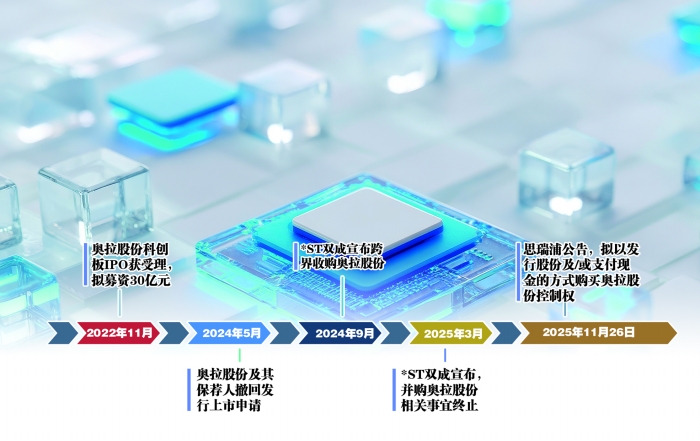
Core Viewpoint - The acquisition of Aola Co., Ltd. by Srypu is a strategic move in the context of the accelerating consolidation in the analog chip industry, aiming to create a strong partnership that leverages complementary strengths in various chip technologies [2][6][8] Group 1: Acquisition Details - Srypu announced plans to acquire control of Aola Co., Ltd. through a combination of share issuance and cash payments, with the stock suspension expected to last no more than 10 trading days [2] - Aola Co., Ltd. has previously attempted an IPO on the Sci-Tech Innovation Board in 2022 and sought acquisition by *ST Shuangcheng in 2024, but both efforts were unsuccessful [2][4] - The acquisition is seen as a response to the trend of consolidation in the analog chip industry, where companies are merging to enhance their market positions and product offerings [2][6] Group 2: Financial Performance - Aola Co., Ltd. reported revenues of 478 million yuan and 472 million yuan in 2022 and 2023, respectively, with net losses of 856 million yuan and 962 million yuan during the same periods; however, it turned profitable in the first half of 2024 with revenues of 538 million yuan and a net profit of 307 million yuan [3][4] Group 3: Market Context - The analog chip industry is characterized by a wide variety of products and long life cycles, making mergers and acquisitions a common strategy for growth [6] - Srypu has transformed from focusing solely on wireless communication to becoming a comprehensive platform covering multiple markets, including industrial, automotive, and consumer sectors [6][7] - Aola Co., Ltd. holds a 10.19% market share in the global de-jitter clock chip market and has established a significant partnership with ON Semiconductor for multi-phase power technology, valued at 144 million USD [7][8] Group 4: Strategic Synergies - The combination of Aola Co., Ltd.'s expertise in high-performance clock and power management chips with Srypu's product matrix in signal chain and power management is expected to create a strong alliance in the analog chip sector [8] - The collaboration is particularly promising in the AI domain, where the integration of both companies' technologies can provide comprehensive analog solutions for various applications [8]

模拟芯片龙头,筹划重大资产重组,今起停牌
Zhong Guo Zheng Quan Bao· 2025-11-25 23:49
Group 1: Company News - Simulated chip leader Si Rui Pu plans to acquire shares of Ningbo Aura Semiconductor, potentially constituting a major asset restructuring, with trading suspension starting November 26 [3] - Pu Ran Co. is planning to acquire 49% of Zhuhai Noah Changtian Storage Technology through share issuance, with trading suspension starting November 26 [3] - Spring Autumn Electronics intends to make a voluntary cash offer to acquire all shares of Asetek A/S, with a total offer price not exceeding 547 million Danish Krone (approximately 598 million RMB) [4] - Guosheng Technology plans to acquire 100% of Tongling Fuyue Technology for 240.6 million RMB, which will positively impact the company's operations if successful [5] - Upwind New Materials elected Peng Zhihui as chairman and appointed Tian Hua as CEO, with terms aligned with the board's duration [5] - Junting Hotel's controlling shareholder is planning a change in control, leading to a trading suspension starting November 26 [6] Group 2: Industry News - The National Space Administration has issued a plan to promote high-quality and safe development in commercial aerospace, encouraging long-term and strategic investments [2] - From January to October, China's total foreign direct investment reached 1,033.23 billion RMB, a year-on-year increase of 7% [2] - In October, the National Energy Administration issued 370 million green power certificates, with 42.61% being tradable [2]
港股IPO周报:量化派获超3600倍认购,纳芯微、遇见小面、乐摩科技等通过聆讯
Xin Lang Cai Jing· 2025-11-23 09:36
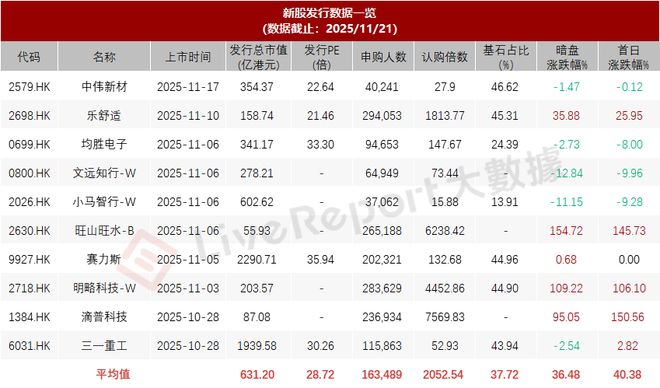
Group 1: IPO Market Overview - Since 2025, the Hong Kong stock market has seen 86 new IPOs, raising approximately 2508.84 million HKD [1] - In the past week (November 16 to November 22), there was 1 listing, 3 companies in the IPO process, 4 companies undergoing hearings, and 6 companies that submitted applications [1][2] - The average issuance market value of the last 10 new listings is 631.20 million HKD, with an average PE ratio of 28.72 [23] Group 2: Recent IPOs - Zhongwei New Materials (2698.HK) successfully listed on the Hong Kong Stock Exchange on November 17, with a first-day closing price down 0.12% and a total market value of 353.95 million HKD [4][3] - The stock price of Zhongwei New Materials has dropped 16% in its first week of trading [1] - The average first-day increase for recent IPOs is 40.38%, indicating a cooling trend in the AH new stock market [23] Group 3: Upcoming IPOs - Three companies, including Innovation Industry, Quantitative Group, and Haiwei Co., are currently in the IPO process, with expected listing dates between November 24 and November 28, 2025 [5][9] - Innovation Industry completed its IPO with a subscription ratio exceeding 3600 times, indicating strong investor interest [8] - Haiwei Co. has a subscription ratio exceeding 800 times as of November 23, 2025 [10] Group 4: Companies Undergoing Hearings - Four companies passed hearings in the past week, including Naxin Microelectronics, LeMo Technology, Yujian Xiaomian, and Jinyan High-tech [11][12][13][15] - Naxin Microelectronics reported a revenue of 1.524 billion RMB in the first half of 2025, with a year-on-year growth of 80% [11] - LeMo Technology's revenue for 2024 was nearly 800 million RMB, with a growth of 36% [12] Group 5: Companies Submitting Applications - Six companies submitted applications to the Hong Kong Stock Exchange, including Liying Intelligent Manufacturing, Mandi International, and others [16] - Liying Intelligent Manufacturing reported a revenue of 44.26 billion RMB in 2024, with a year-on-year growth of nearly 30% [17] - Mandi International, a spin-off from Sanofi Pharmaceutical, reported a revenue of 1.455 billion RMB in 2024, with a growth of nearly 20% [18]



IPO一周资讯|AI与智能制造引领本周递表热潮
Sou Hu Cai Jing· 2025-11-21 10:04
Group 1: Recent IPOs - Zhongwei Co., a new energy materials company, officially listed on the Hong Kong Stock Exchange, raising approximately HKD 3.544 billion by offering about 104 million shares [1] - Jiansu, a supply chain management service provider, submitted an IPO application to the SEC for a Nasdaq listing, focusing on the plastic and chemical industries in China [2] - Defeng Technology, an independent AIoT provider, filed for an IPO on the Hong Kong Stock Exchange, specializing in energy and manufacturing sectors [3] - Kanop, an industrial robotics company, applied for an IPO on the Hong Kong Stock Exchange, ranking first among Chinese welding robot manufacturers [4] - NobiKan, an AI company, refiled for an IPO on the Hong Kong Stock Exchange after previous applications lapsed, focusing on AI and digital twin technologies [5] - Dongshan Precision, a PCB supplier for edge AI devices, submitted an IPO application to the Hong Kong Stock Exchange, aiming to become a leading supplier in the sector [6] - Mandi International, a consumer healthcare company, filed for an IPO on the Hong Kong Stock Exchange, leading the market in hair health products [7] - Lingyi Intelligent Manufacturing, an AI hardware platform, applied for an IPO on the Hong Kong Stock Exchange, ranking first in high-precision components for AI terminal devices [8] Group 2: Upcoming IPOs - Quantitative Platform is set to launch its IPO from November 19 to November 24, aiming to raise approximately HKD 131 million [9] - Haiwei Electronics plans to conduct its IPO from November 20 to November 25, targeting to raise around HKD 440 million [10] Group 3: Recent Hearings - Yujian Xiaomian, a modern Chinese noodle brand, passed the listing hearing on the Hong Kong Stock Exchange, operating 440 restaurants in mainland China and 11 in Hong Kong [11] - Jinyan High-tech, a kaolin company, also passed the listing hearing, focusing on the production of calcined kaolin products [12] - Naxin Micro, a provider of analog chips, passed the listing hearing, specializing in automotive electronics and consumer electronics [13] - Lemo, a smart massage service provider, passed the listing hearing, leading the market in smart massage services in mainland China [14] Group 4: Market Developments - The Singapore Exchange and Nasdaq announced a collaboration to simplify dual listings, aiming to launch a "Global Listing Board" by mid-2026 [15]
重大资产重组、控制权变更,双双终止!
Zhong Guo Zheng Quan Bao· 2025-11-18 15:25
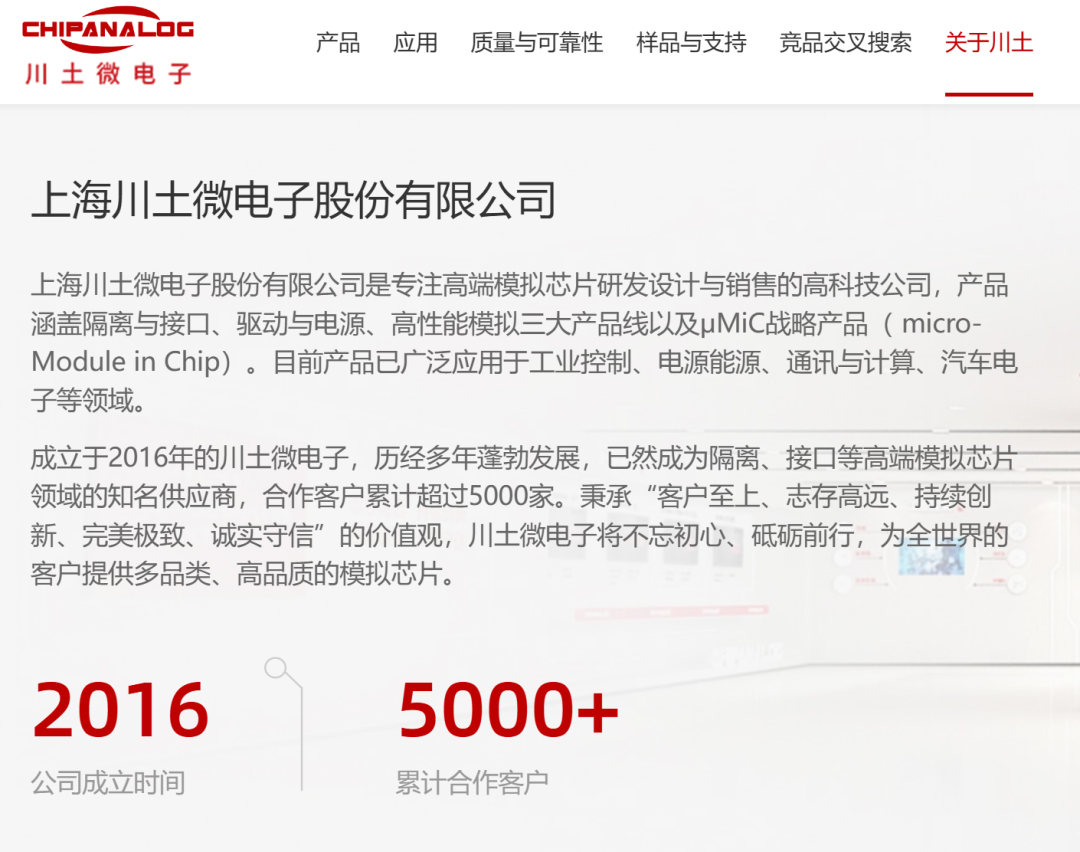
Core Viewpoint - The company Dream Home (603216) has terminated its plan to acquire control of Shanghai ChuanTu Microelectronics Co., Ltd. through a share issuance and cash payment, leading to the resumption of its stock trading on November 19 [1][2]. Group 1: Acquisition Attempt - The proposed acquisition of Shanghai ChuanTu Microelectronics was announced on November 5, aiming to raise funds and constitute a significant asset restructuring [2]. - Shanghai ChuanTu Microelectronics, established in 2016, focuses on the research, design, and sales of high-end analog chips, with applications in critical sectors such as industrial control and automotive electronics [2]. - After nine trading days of suspension and multiple negotiations, the company decided to terminate the acquisition due to the complexity of the transaction and failure to reach consensus on core terms [2]. Group 2: Share Transfer - On November 17, the controlling shareholder Dream Tian Holdings and its associates signed a share transfer agreement, selling a total of 15.2845 million shares, representing 6.8636% of the company's total equity [3]. - The share transfer price was set at 17.4592 yuan per share, resulting in a total cash consideration of approximately 267 million yuan [3]. - Following the transfer, the controlling shareholder's stake decreased from 74.54% to 67.68%, while the acquiring party holds 6.8636% of the shares [3]. Group 3: Business Performance and Challenges - The company's main business, which includes customized wooden furniture, is facing growth pressures due to market decline, changing consumer trends, and intensified competition [4]. - Revenue decreased from 1.389 billion yuan in 2022 to an estimated 1.117 billion yuan in 2024, while net profit dropped from 220 million yuan in 2022 to 61.2611 million yuan in 2024 [4]. - In the first three quarters of 2025, the company reported a revenue of 773 million yuan, a year-on-year decline of 2.93%, although net profit increased by 37.6% [4]. - The management acknowledged the challenges in the customized furniture industry and the inability to change external market conditions [4]. - To address growth bottlenecks, the company has attempted to diversify its investments, including a 70 million yuan investment in Chongqing Lingxin Microelectronics Co., Ltd. [4].

603216,重大资产重组终止!明日复牌
Zhong Guo Ji Jin Bao· 2025-11-18 15:09
Core Viewpoint - The acquisition plan of Chengdu Microelectronics by Dream Home has been terminated due to a lack of consensus on key terms among the parties involved, indicating a setback in the company's attempt to diversify into the semiconductor industry to counteract its declining main business performance [1][4][5]. Group 1: Acquisition and Control Transfer - Dream Home announced the termination of its plan to acquire control of Chengdu Microelectronics, which was initiated on November 5, 2025, through a combination of share issuance and cash payment [2][4]. - The termination of the acquisition also includes the cancellation of the control transfer plan by the actual controller, Yu Jingyuan, although there are still plans to transfer a portion of the equity [1][10]. - The company plans to transfer 6.8636% of its shares to Jiaxing Huixin Enterprise Management Partnership, with a transfer price of approximately 17.4592 CNY per share, which is higher than the last closing price of 15.70 CNY per share before the suspension [11][12][13]. Group 2: Company Performance and Strategic Shift - Dream Home's main business, which includes customized wooden furniture design, production, and sales, has been under pressure, with a revenue decline of 2.93% year-on-year to 773 million CNY in the first three quarters of 2025 [8][6]. - The company has been attempting to pivot into the semiconductor sector, having previously invested 70 million CNY in Chongqing Lingxin Microelectronics to acquire a 35% stake, marking its initial foray into this field [8][9]. - The failure of the acquisition of Chengdu Microelectronics represents a significant setback in Dream Home's strategy to diversify and revitalize its business amidst a challenging industry environment [5][9]. Group 3: Background of Chengdu Microelectronics - Chengdu Microelectronics, founded in 2016, specializes in high-end analog chip research and design, with products widely used in various sectors including industrial control and automotive electronics [2][4]. - The company has notable investors, including BYD and SAIC Group, and has completed multiple rounds of financing, indicating its strong market position [4].
艾为电子:经销占比超八成 毛利差异符合行业规律
Ju Chao Zi Xun· 2025-11-14 16:09
Core Viewpoint - Aiwai Electronics (688798.SH) has provided detailed disclosures regarding its sales model, distributor cooperation, and inventory management in response to an inquiry about its convertible bond issuance, highlighting concerns over gross margin differences and distributor stability [1][3]. Sales Model - The company primarily relies on a distribution channel, with distributor revenue accounting for over 80% of total revenue from 2022 to September 2025, while direct sales represent less than 20% [1]. - The distribution model allows for broader coverage of end customers and product variety, whereas direct sales focus on leading domestic and international consumer electronics clients [1]. Gross Margin - Gross margins for direct sales are slightly higher than those for the distribution model due to the higher performance, reliability, and customization demands from top-tier consumer electronics companies [3]. - The gross margin structure is similar to that of peers in the analog chip industry, such as Shengbang and SIRUI [3]. Distributor Stability - The company reported that major distributors have remained relatively stable, with core distributors contributing over 49% of total distributor revenue during the reporting period [3]. - The distributors are well-known professional distributors in the industry and are not related to the company [3]. - The company plans to maintain distributor stability through channel management, credit control, and collaborative efforts to develop end customers [3]. Inventory Management - Changes in distributor inventory levels are closely tied to industry cycles, with a general trend of destocking observed in 2023 [3]. - As demand is expected to recover in 2024 and 2025, there is an anticipated reasonable replenishment of distributor inventory [3]. - The company believes that inventory fluctuations align with the trend of business scale expansion and does not see any abnormal accumulation risks [3]. Operational Strategy - Aiwai Electronics emphasizes the need for refined operations in the use of funds from the convertible bonds, channel management, and inventory control to enhance its anti-cyclical capabilities [4]. - The inquiry response has clarified market concerns regarding gross margin differences in sales models and distributor stability, but ongoing observation of industry conditions and order fulfillment is necessary for assessing operational performance [4].


价值投资的对立面不是“小登科技”
Sou Hu Cai Jing· 2025-11-10 12:54
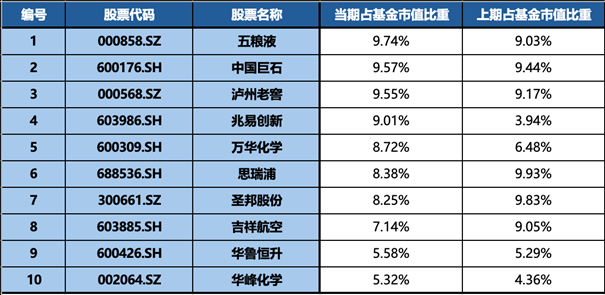
Core Viewpoint - The article discusses the evolving landscape of value investing in the context of emerging technologies like AI, emphasizing that value investing is not opposed to technology investment but rather encompasses it as part of a broader investment strategy [1][16]. Group 1: Value Investing and AI - Value investors can participate in the AI era without abandoning their principles, as value investing is fundamentally about assessing long-term cash flows rather than being confined to specific industries [1][16]. - Tian Yu, a representative value investor, has been early in researching AI and integrates it into his investment evaluations without distinguishing between emerging and traditional industries [2][3]. Group 2: Investment Framework - Tian Yu employs a consistent framework for evaluating all types of companies, focusing on three criteria: clear demand limits, assessable business models, and identifiable economic moats [3][11]. - His analysis of the semiconductor industry, particularly wafer foundries, highlights the importance of understanding the physical and economic principles that govern these businesses [4][5]. Group 3: Case Studies and Insights - The analysis of advanced process wafer foundries reveals that the business model is characterized by high economies of scale and steep learning curves, making it a niche market that can support only a few dominant players [4][5]. - Tian Yu's investment in a specific analog chip company illustrates the importance of looking beyond static financial metrics, focusing instead on long-term cash flow potential [6][7]. Group 4: Market Perceptions and Misconceptions - There is a common misconception that value investors only buy currently profitable companies, but Tian Yu argues that future profitability is equally important, as long as the business can generate cash flow over time [6][11]. - The article emphasizes that value investing is not synonymous with investing in traditional industries; it can also encompass high-tech sectors as long as the underlying business logic is sound [16][18]. Group 5: Portfolio Management - Tian Yu maintains a concentrated portfolio, with over 80% of his holdings in the top ten positions, reflecting a strategy of focusing on high-quality companies across various sectors [13][14]. - His approach to portfolio management balances exposure across different market segments, adapting to changing market conditions while maintaining a focus on companies with strong economic moats [13][14].