
硬件

Search documents
从3D打印到桌面CNC,中国创客硬件集体破圈丨36氪直击CES
36氪· 2026-01-06 13:36
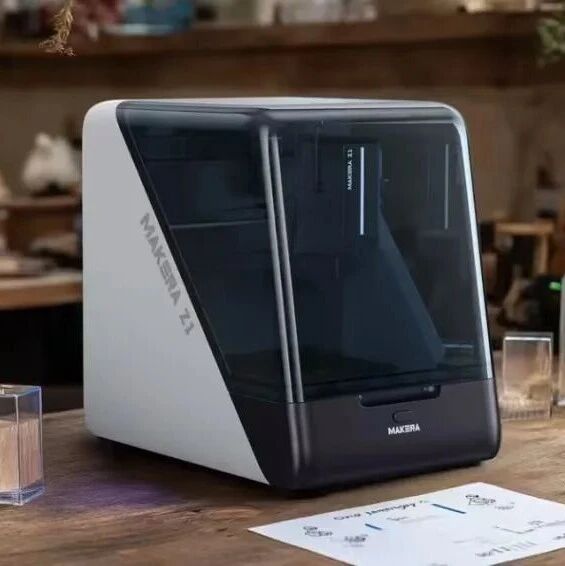
Core Viewpoint - The hardware industry is experiencing intense competition, particularly in the Maker segment, where companies are rapidly innovating and launching new products to capture market share [5][7][9]. Group 1: Industry Trends - The CES event showcases a variety of ambitious products from Chinese companies, including humanoid robots and innovative mobile devices, indicating a vibrant and competitive hardware landscape [4]. - The Maker tools segment has transformed from niche, high-cost products to widely accessible tools, with significant crowdfunding successes reported [8][28]. - Companies like xTool and Snapmaker are leading the charge in the Maker space, with xTool's UV printer and Snapmaker's 3D printer achieving impressive crowdfunding results [11][16]. Group 2: Product Innovations - xTool's new desktop UV printer utilizes UV-LED curing technology, allowing for high-precision printing on various materials, and is positioned to capitalize on market opportunities following the success of competitors [11][13]. - Snapmaker's U1 3D printer has set a record on Kickstarter, emphasizing speed and efficiency in multi-color printing, which is becoming a standard in the consumer market [16][19]. - The introduction of user-friendly features in CNC devices, such as the Makera Z1, is lowering barriers to entry and expanding the audience for these tools [27][28]. Group 3: Market Dynamics - The competition in the Maker tools market is intensifying, with companies needing to differentiate their products through innovation and user engagement [15][21]. - The shift towards multi-color printing in 3D printers is gaining traction, with significant market demand for such capabilities, reflecting a broader trend in consumer preferences [32][34]. - The Maker community is evolving, with tools transitioning from being seen as niche products to essential resources for small businesses and individual entrepreneurs [35].

不再造硬件的罗永浩,办了一场硬件发布会 都说了些啥?
Xin Lang Cai Jing· 2025-12-31 13:19
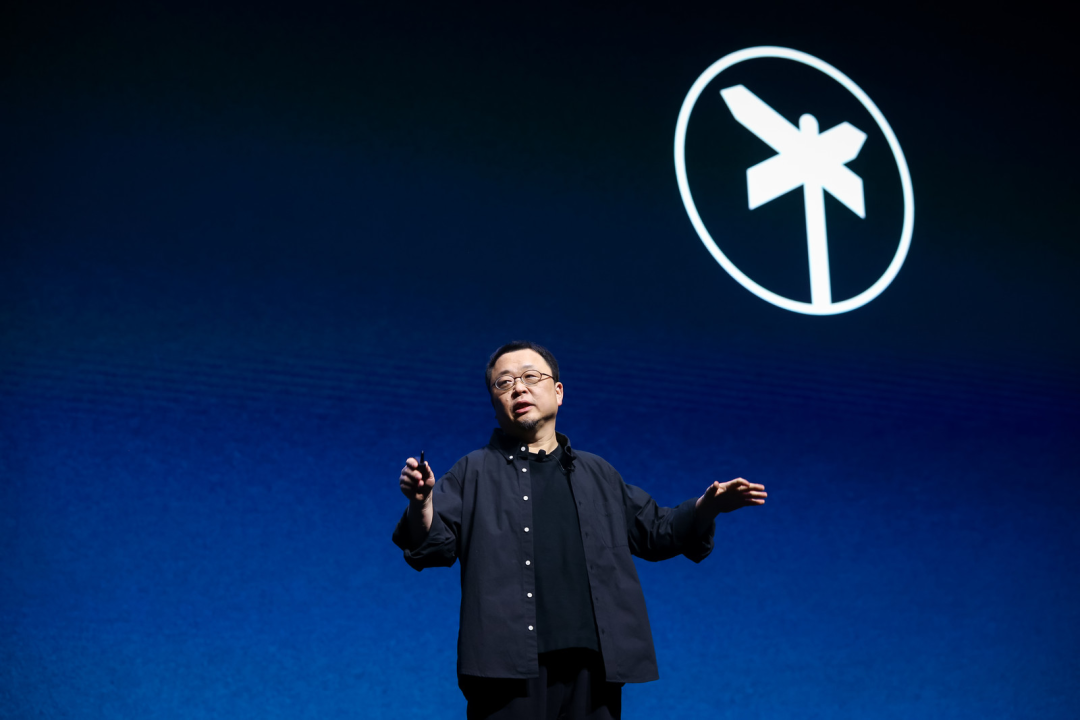
Core Insights - Luo Yonghao returned to the stage after seven years to host the "Crossroads 2025 Annual Technology Innovation Sharing Conference" in Shanghai, marking a significant moment in his career [1][12] - The event focused on showcasing selected outstanding technology products rather than launching new hardware from his own company, which has not released self-developed hardware in recent years [2][12] Ticket Sales and Attendance - The event featured six ticket price tiers ranging from 300 to 1000 yuan, with total ticket sales reaching 1.668 million yuan within two hours of release [2][13] - The venue, Shanghai West Bank International Exhibition Center, has a capacity of 4000 attendees, and the event was fully booked [5][15] Product Showcase - Luo introduced seven "most notable" hardware products, including DJI's Neo2 drone, Hyershell exoskeleton, and Libernovo ergonomic chair, among others [5][17] - The presentation included humorous moments, such as Luo expressing regret that the DJI product was not his own creation, which resonated with the audience [7][17] Technical Issues and Presentation Style - The event experienced delays and technical difficulties, with Luo humorously acknowledging the issues during the presentation, which is characteristic of his style [9][19] - Some products that were supposed to be showcased were skipped due to time constraints, indicating potential organizational challenges [9][19] New Product Development - Luo introduced a new AI reading app named "Qie Ting," designed to provide in-depth analyses of books and allow users to customize voice readings [10][20] - The app currently features over 5000 books and aims to differentiate itself in a crowded market of reading apps [12][22] Future Plans - Luo expressed a commitment to continue pursuing technology and large-scale events, indicating a long-term vision for his endeavors in the tech industry [12][22]
景顺:看好2026年亚洲股票 AI仍是亚洲市场的结构性增长主题
Zhi Tong Cai Jing· 2025-12-25 06:07
Group 1 - The core view of the report is that Asian stocks are expected to perform robustly in 2025, driven by favorable policies, strong domestic demand, and AI-driven innovations [1] - The report anticipates a continued decline in the US dollar, which historically benefits Asian stocks, and a globally accommodative monetary policy environment that may lead investors to shift from the US market to more attractively valued Asian economies [1] - The outlook for 2026 is positive for Asian stocks due to improved earnings prospects, favorable liquidity conditions, and ongoing structural reforms, presenting attractive investment opportunities for global investors [1] Group 2 - The next phase of growth in Asia will be driven by the real-world application of AI, with accelerated adoption in healthcare, finance, manufacturing, and e-commerce expected to unlock more earnings and boost productivity [2] - Asia's competitive advantage lies in its vast data ecosystem, cost-effective talent pool, and government-supported digital strategies, which will facilitate scalable AI solutions [2] - The report emphasizes a preference for companies with clear monetization paths, proprietary technologies, and integration capabilities that can incorporate AI into their overall business deployment [2] Group 3 - In China, the report maintains an optimistic outlook supported by structural growth drivers and clear policy focus, with domestic consumption expected to contribute approximately 60% to economic growth from 2021 to 2024 [2] - The "14th Five-Year Plan" highlights China's commitment to breakthroughs in core technologies and the development of advanced manufacturing and emerging industries, such as semiconductors and green energy, to reduce reliance on foreign supply chains [2] - The report notes that industry consolidation is alleviating overcapacity issues in manufacturing, allowing leading companies to achieve sustained growth through advanced technologies and resources [2] Group 4 - In India, despite a lag in stock market performance compared to Asia and global peers in 2025, a turning point is expected in 2026, supported by stable consumption and investment trends [3] - Recent government measures, including reductions in the Goods and Services Tax (GST) and personal income tax, are anticipated to ease household tax burdens and stimulate consumption, particularly benefiting sectors like consumer goods [3] - South Korea and Taiwan are expected to benefit from the ongoing technology cycle, especially in high-frequency storage and semiconductors, with long-term capacity growth anticipated due to rising AI application demand [3] Group 5 - ASEAN markets present attractive investment opportunities, although political uncertainties in some countries should be noted [4] - Singapore is highlighted for its stable economic outlook, supported by favorable policies and abundant liquidity, while Malaysia continues to attract global semiconductor and tech hardware companies [4] - The Philippines is expected to benefit from urbanization, a young population, and remittances, contributing to a solid foundation for long-term economic growth [4] - Overall, despite short-term uncertainties, Asia's large domestic market and evolving innovation ecosystem reinforce sustainable growth, with structural drivers continuing to support resilience in the region [4]
市场震荡拉升,沪指高开高走,创业板指、深成指均涨近1%
Feng Huang Wang Cai Jing· 2025-12-24 07:10
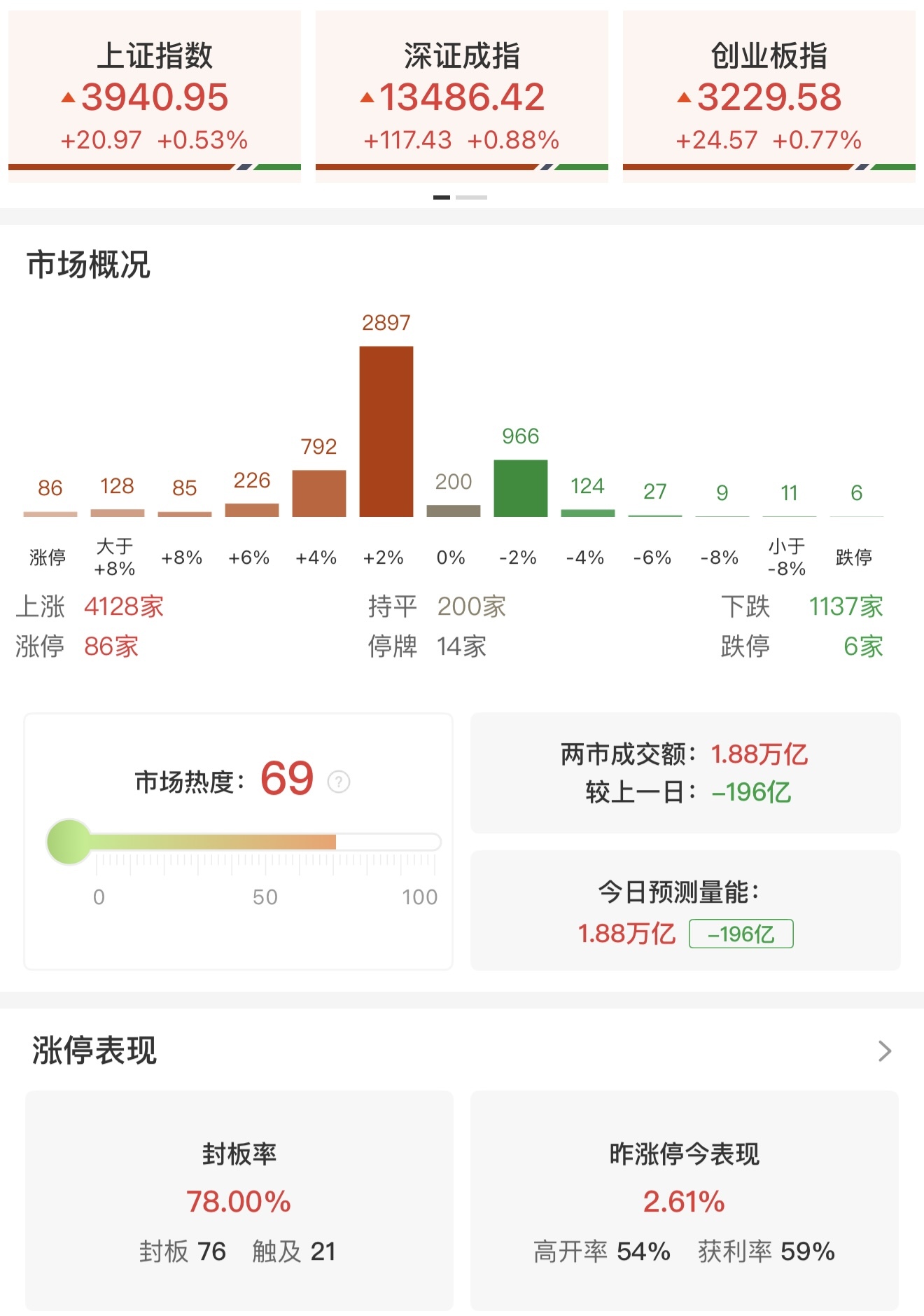
Market Performance - The market experienced a significant rally with the Shanghai Composite Index opening high and closing up by 0.53%, while the Shenzhen Component and ChiNext Index rose by 0.88% and 0.77% respectively [1] - The total trading volume in the Shanghai and Shenzhen markets reached 1.88 trillion yuan, a decrease of 19.6 billion yuan compared to the previous trading day [1] Sector Highlights - The commercial aerospace sector saw a strong performance with over 20 stocks hitting the daily limit, including Shenjian Co. with five consecutive limit-ups and Guoji Precision Engineering with three limit-ups in four days [1] - The computing hardware concept also surged, with Huanxu Electronics achieving three limit-ups in six days and Yintang Intelligent Control hitting the limit-up at 20% [1] - The Fujian sector showed strength, highlighted by Anji Food with four limit-ups in seven days and Hexing Packaging with three consecutive limit-ups [1] - The PCB sector experienced a rapid increase, with Shengyi Technology hitting the limit-up and reaching a historical high [1] Declining Sectors - The precious metals, insurance, and dairy sectors faced declines, with the dairy concept experiencing a collective adjustment, notably with Zhuangyuan Pasture hitting the daily limit down [1]

每日看盘|重构流动性叙事,中性策略转身或带来A股新动能
Sou Hu Cai Jing· 2025-12-22 09:48
Core Viewpoint - The A-share market experienced a strong rally, driven by AI hardware and resource sectors, indicating an increase in risk appetite and potential for further gains in the short term [1] Group 1: Market Performance - The ChiNext Index rose by 2.23%, supported by strong performance in AI hardware represented by CPO [1] - Over a hundred stocks in the Shanghai and Shenzhen markets hit the daily limit up, reflecting heightened trading sentiment [1] - The resource sector, including gold and silver stocks, saw significant gains, driven by rising international prices [3] Group 2: Global Liquidity Trends - There is a consensus among market participants that global liquidity will continue to increase, influenced by substantial fiscal spending from major economies [1][2] - The U.S. and Japan are implementing large fiscal stimulus plans, contributing to a trend of monetizing fiscal deficits in developed economies [1][2] Group 3: Investment Strategies - The increase in global liquidity is expected to enhance risk appetite, benefiting technology growth stocks and resource companies in the A-share market [3] - Some institutional investors are shifting from neutral strategies to more aggressive buying in the A-share market, as evidenced by increased trading volumes in the CSI A500 ETF [4] - The potential for further gains in the A-share market is supported by the dismantling of neutral strategies by institutions, leading to a more bullish outlook [4]
新能源+数字化+银发经济,马来西亚的真“机会”在哪里?| 卓立出海谈
吴晓波频道· 2025-12-18 00:29
Group 1 - The article discusses the dual nature of opportunities and challenges in the Malaysian market for Chinese companies venturing abroad, emphasizing the need to understand local business logic beyond the typical Chinese perspective [1][2] - Malaysia is positioned as a buffer zone amid the US-China trade war, attracting interest from major powers due to its industrial advantages and high-tech capabilities, making it a desirable partner for both China and the US [3][4][6][7] - The article highlights the importance of localizing business strategies for Chinese companies, as many have struggled due to a lack of understanding of local culture, user experience, and language [11][15][18] Group 2 - The article identifies key sectors with growth potential in Malaysia, including renewable energy, digital technology, healthcare, and elder care, suggesting that Chinese companies should align their offerings with local needs [19][30] - It points out that the service sector in Malaysia surpasses manufacturing, providing a fertile ground for digital industries to thrive [20] - The discussion includes the necessity for infrastructure development, such as charging stations for electric vehicles, to support the growth of new industries [20][22] Group 3 - The article emphasizes the need for Chinese companies to engage with local communities and integrate into the local ecosystem to avoid missing opportunities [30] - It also mentions that many Chinese enterprises view Malaysia merely as a production base to circumvent tariffs, which is not a sustainable approach [17][30] - The importance of government collaboration in implementing technological advancements and regulatory frameworks is highlighted as essential for successful market entry [28][29]

“2025德勤中国高科技高成长50强及明日之星”榜单在无锡揭晓
Yang Zi Wan Bao Wang· 2025-12-17 10:59
Core Insights - The "2025 Deloitte China High-Tech High-Growth 50" and "Deloitte China Tomorrow's Stars" lists were unveiled, highlighting trends and challenges in the high-tech sector in China [1][2] Group 1: Revenue and Growth - The average three-year cumulative revenue growth rate for the 2025 China 50 Strong companies is 490%, showing a slight decline compared to 2024, while the top 10 companies' growth rates remained stable [3] - Companies with revenues between 50 million and 100 million yuan now account for 38% of the list, while those with revenues over 100 million yuan maintain a 44% share, indicating a rise in mid-sized companies [3] Group 2: Geographic Distribution - The Greater Bay Area accounts for 52% of the companies, followed by Beijing-Tianjin-Hebei and the Yangtze River Delta, with first-tier cities like Shenzhen, Shanghai, Beijing, and Guangzhou being the primary hubs for tech startups [3][4] - Jiangsu province has limited representation, with only one company in the "China 50 Strong" list, indicating a need for improvement in core enterprise development [4] Group 3: Industry Distribution - The hardware sector leads with a 28% share, followed by high-end equipment at 18%, benefiting from growth in the semiconductor field and smart manufacturing [3] - The clean technology sector has increased to 10% due to the inclusion of more renewable energy companies, while software and life sciences have seen declines, reflecting a shift towards hard technology [3] Group 4: AI and Innovation - 23% of the China 50 Strong companies and 66% of Tomorrow's Stars allocate over 50% of their revenue to AI R&D, highlighting the critical role of AI in driving innovation [5] - Companies face challenges such as a shortage of high-tech talent and rising R&D costs, with a focus on core technology development and product diversification as key strategies for resilience [5] Group 5: Regional Development - The event marked the first time the Deloitte project was held in Wuxi, recognizing the city's innovation ecosystem and providing a platform for technology and industry exchange [5][6] - Wuxi has established itself as an innovative demonstration zone, successfully nurturing high-growth companies in sectors like electronic information, renewable energy, and biomedicine [6]

《2025德勤中国高科技高成长50强及明日之星报告》发布
Zheng Quan Ri Bao Wang· 2025-12-17 06:10
Group 1 - The report by Deloitte China highlights that the average cumulative revenue growth rate of the top 50 high-growth companies in China is 490% over three years [1] - In terms of revenue scale, companies with revenues between 50 million and 100 million yuan represent 38% of the top 50, while those with revenues above 100 million yuan account for 44%, indicating a rise in the proportion of small and medium-sized enterprises [1] - The Greater Bay Area accounts for 52% of the top companies, with Shenzhen, Shanghai, Beijing, and Guangzhou leading, showcasing that first-tier cities remain the primary birthplace for tech companies due to their mature industrial base and abundant talent [1] Group 2 - Key drivers for technology and innovation in enterprises include talent, capital, and AI R&D investment, with 23% of the top 50 companies and 66% of the "Tomorrow's Stars" investing over 50% of their revenue in AI R&D [2] - Both the top 50 companies and the "Tomorrow's Stars" face challenges such as a shortage of high-tech talent, insufficient application of AI technology in business scenarios, and rising R&D costs [2] - The Chinese tech industry is expanding into multiple high-potential sectors, leveraging technological innovation and ecological scene implementation to gain a competitive edge [2]
报告:中国科技50强营收增长率较去年略有下降
第一财经· 2025-12-17 04:41
Core Insights - The average three-year cumulative revenue growth rate for the top 50 high-tech companies in China is 490%, showing a slight decline compared to 2024, while the revenue growth rate for the top 10 companies remains stable [3][4]. - The proportion of companies with revenue between 50 million and 100 million yuan has increased to 38%, while those with revenue over 100 million yuan remains at 44%, indicating a rise in the share of small and medium-sized enterprises [3]. - The Greater Bay Area accounts for 52% of the top 50 companies, with Shenzhen, Shanghai, Beijing, and Guangzhou leading, highlighting the importance of first-tier cities in nurturing tech enterprises [3]. Revenue Distribution - The hardware industry leads with a 28% share, followed by high-end equipment at 18%, benefiting from growth in the semiconductor sector and strong performance in intelligent manufacturing [3]. - Clean technology has seen an increase to 10% due to the inclusion of more new energy companies, while software and life sciences have declined, and the internet sector has experienced a significant drop, reflecting a trend towards hard technology [3][4]. Key Drivers and Challenges - Talent, capital, and AI R&D investment are identified as the three key drivers for technological innovation among companies [4]. - 23% of the top 50 companies and 66% of the rising stars allocate over 50% of their revenue to AI R&D, but they face challenges such as a shortage of high-tech talent, insufficient application of AI in business scenarios, and rising R&D costs [4][5]. Future Trends - The global tech industry is undergoing a deep transformation driven by AI, with trends including computational sovereignty competition, the rise of open-source model ecosystems, and the evolution of AI agents [5]. - From 2025 to 2030, China is expected to enter a period of explosive growth in "AI + manufacturing/new energy/life sciences," becoming a beneficiary and backup provider in the global "computational replacement of labor" landscape [5]. - The technology sector in China is enhancing innovation through five key areas: AI penetration, iteration of computational and connectivity technologies, robotics breakthroughs, advancements in energy and green technology, and the rise of space and low-altitude economies [5]. Health Sector Insights - Over 60% of the companies listed in the 2025 China Pharmaceutical and Health Rising Stars report have valuations exceeding 1 billion yuan, with innovative drugs and medical devices accounting for 80% of the most dynamic sectors [5]. - The Yangtze River Delta, Beijing-Tianjin-Hebei, and Pearl River Delta regions are identified as key innovation hubs in the pharmaceutical and health sector, hosting nearly 90% of the listed companies [5].

德勤:今年中国50强企业三年累计营收增长率平均值达490%
Guo Ji Jin Rong Bao· 2025-12-16 15:16
Group 1: Core Insights - The "2025 Deloitte China High-Tech High-Growth 50" and "Deloitte China Rising Stars" lists were announced, showing an average three-year cumulative revenue growth rate of 490% for the top 50 companies, slightly down from 2024, while the top 10 companies maintained their revenue growth rates [1] - Companies with revenue between 50 million and 100 million yuan increased to 38%, while those with revenue over 100 million yuan remained at 44%, indicating a rise in the share of small and medium-sized enterprises [1] - The Greater Bay Area accounted for 52% of the companies, with Shenzhen, Shanghai, Beijing, and Guangzhou leading, highlighting the importance of first-tier cities in nurturing tech enterprises [1] Group 2: Industry Distribution - The hardware sector led with a 28% share, followed by high-end equipment at 18%, benefiting from growth in the semiconductor field and smart manufacturing [1] - Clean technology's share rose to 10% due to the inclusion of more new energy companies, while software and life sciences saw declines, and the internet sector experienced a significant drop, reflecting a trend towards hard technology transformation [1] Group 3: Key Drivers and Challenges - Talent, capital, and AI R&D investment are identified as the three key drivers for companies pushing technology and innovation, with 23% of the top 50 companies and 66% of rising stars investing over 50% of their revenue in AI R&D [2] - Both the top 50 and rising star companies face challenges such as a shortage of high-tech talent, insufficient application of AI technology in business scenarios, and rising R&D costs [2] - Core technology self-research, rapid product iteration, and diversified financing are becoming breakthrough points for resilient development [2] Group 4: Future Trends - The Chinese tech industry is expected to expand into multiple fields driven by AI trends, with a projected explosion of the "AI + manufacturing/new energy/life" technology matrix from 2025 to 2030 [2] - The industry is strengthening technological innovation across five areas: AI penetration, computing power and connectivity technology iteration, robotics technology explosion, breakthroughs in energy and green technology, and the rise of space and low-altitude economies [2] Group 5: Healthcare Sector Insights - Over 60% of the companies listed in the "2025 China Pharmaceutical Health Rising Stars" have valuations exceeding 1 billion yuan, with innovative drugs and medical devices accounting for 80% of the list [2] - The Yangtze River Delta, Beijing-Tianjin-Hebei, and Pearl River Delta regions are key innovation sources in the pharmaceutical health sector, hosting nearly 90% of the listed companies [2] - The "14th Five-Year Plan" positions the biopharmaceutical industry as a core area of "new productivity," accelerating innovation and high-quality development in the pharmaceutical health sector [3]