
粮食生产

Search documents
中央经济工作会议:加强重点城市群协调联动 深化跨行政区合作
Xin Lang Cai Jing· 2025-12-11 09:46
Core Viewpoint - The meeting emphasizes the importance of coordinated development, promoting urban-rural integration and regional collaboration [1] Group 1: Urbanization and Rural Revitalization - The focus is on advancing urbanization with counties as key carriers and comprehensively revitalizing rural areas to drive high-quality county economic development [1] - Strict adherence to the farmland red line is highlighted, ensuring food production is prioritized and maintaining reasonable prices for essential agricultural products [1] Group 2: Poverty Alleviation and Economic Support - Continuous consolidation and expansion of poverty alleviation achievements are essential, with regular assistance integrated into the rural revitalization strategy to prevent large-scale return to poverty [1] - Support for major economic provinces to take on significant roles is encouraged [1] Group 3: Regional Cooperation and Marine Economy - Strengthening coordination among key urban agglomerations and deepening inter-administrative cooperation is a priority [1] - Emphasis on overall planning for major bays to promote high-quality development of the marine economy is noted [1]
“十五五”农业怎么干?增强粮食供给保障,强化科技装备支撑
2 1 Shi Ji Jing Ji Bao Dao· 2025-12-10 13:04
Core Viewpoint - The article emphasizes the importance of enhancing agricultural comprehensive production capacity and quality efficiency as a major task in building an agricultural power, highlighting five key tasks to achieve this goal [2][4]. Group 1: Key Tasks for Enhancing Agricultural Production Capacity - The five key tasks include: strengthening the supply guarantee capacity of important agricultural products, constructing a diversified food supply system, reinforcing farmland protection and quality improvement, enhancing technological support, and improving agricultural development quality and efficiency [2][4]. - The first task focuses on ensuring food security, with a projected national grain output exceeding 1.4 trillion jin in 2024, achieving a per capita grain availability of 500 kg [3][4]. Group 2: Measures for Grain Production and Supply - The article outlines measures to stabilize grain planting areas and enhance single crop yields, including optimizing the production layout and reinforcing production capacity by crop type and region [4]. - It also emphasizes improving grain storage, circulation, and processing capabilities, alongside developing infrastructure for grain logistics and initial processing [4]. Group 3: Agricultural Disaster Prevention and Technological Innovation - The article discusses the need to strengthen agricultural disaster prevention and mitigation capabilities, including enhancing monitoring and forecasting of meteorological disasters and improving irrigation infrastructure [5]. - It highlights the importance of agricultural technology innovation, advocating for a robust agricultural technology innovation system that integrates various research and educational institutions [7][8]. Group 4: Focus on Seed Industry and Agricultural Machinery - The article stresses the need for revitalizing the seed industry by promoting self-reliance in seed technology and protecting genetic resources [8]. - It also points out the necessity of addressing shortcomings in agricultural machinery, promoting high-quality development of agricultural equipment, and integrating machinery with agricultural practices [9].

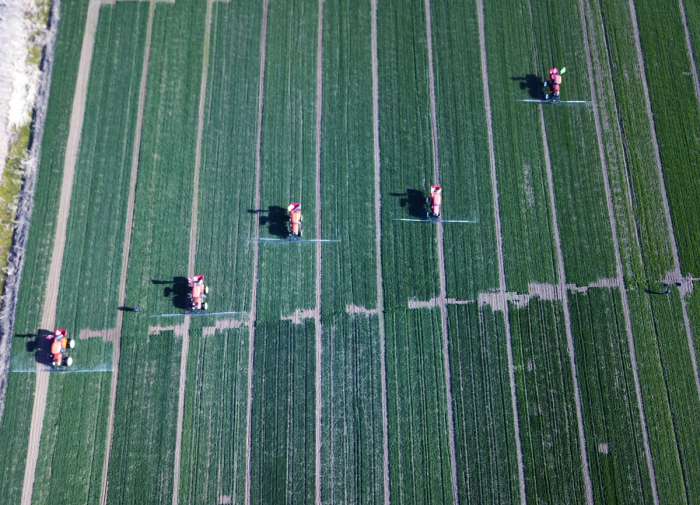
从一组数据看达州“十四五”经济社会发展“成绩单” 夺得全省粮食生产“十二连冠”
Si Chuan Ri Bao· 2025-11-30 02:42
Core Insights - Dazhou's economic and social development during the "14th Five-Year Plan" period has shown significant progress, with a focus on integrated development and strategic positioning as a hub and center in the Sichuan-Chongqing region [1] Economic Performance - Dazhou's economic output has consistently ranked among the top in the province, with an average GDP growth rate of 6% over the past four years, surpassing national and provincial averages, and is expected to exceed 300 billion yuan this year [2] - The grain production in 2024 is projected to reach 3.3 million tons, marking the 12th consecutive year of leading grain production in the province [2] Industrial Development - The city is emphasizing industrial growth, particularly in manufacturing, with the establishment of a modern industrial system and the approval of three provincial-level chemical parks [2] - Significant industrial projects have been initiated, including the Zhendaka Advanced Manufacturing Industrial Park with an investment exceeding 10 billion yuan [2] Infrastructure and Connectivity - Major projects such as Jinya Airport and the relocation of Dazhou Steel are progressing on schedule, with total investment in key projects exceeding 500 billion yuan [3] - The completion of new transportation infrastructure, including the Chengdu-Dazhou-Wanzhou High-speed Railway, is set to enhance connectivity, with railway mileage expected to surpass 1,000 kilometers [3] Social Development - Over 70% of the city's fiscal expenditure is allocated to public welfare, with 215,000 new urban jobs created and social security standards exceeding provincial benchmarks [3] - Healthcare services have been improved, reducing medical costs by nearly 3 billion yuan and benefiting approximately 7.3 million residents [3]
夺得全省粮食生产“十二连冠”
Si Chuan Ri Bao· 2025-11-29 22:28
Core Insights - The Dazhou government has reported significant achievements in economic and social development during the "14th Five-Year Plan" period, focusing on coordinated development in the Sichuan-Chongqing region and implementing strategic initiatives [1] Economic Performance - Dazhou's economic output has consistently ranked among the top in the province, with an average GDP growth rate of 6% over the past four years, surpassing national and provincial averages, and is expected to exceed 300 billion yuan this year [2] - The grain production is projected to reach 3.3 million tons in 2024, marking the 12th consecutive year of leading grain production in the province [2] Industrial Development - The city is focusing on industrial growth, particularly in manufacturing, with a modern industrial system characterized by "3+3+N" framework, and has successfully established three provincial-level chemical parks [2] - Major industrial projects with investments exceeding 10 billion yuan have been signed, including the advanced manufacturing industrial park in Zhengdan County [2] Infrastructure and Project Development - Dazhou is actively participating in the Chengdu-Chongqing economic circle, with 60 projects included in the major project list, and significant progress in ten landmark cooperation initiatives [2] - Key projects such as Jinya Airport and the Dazhou Steel relocation project have been completed, with total investment in key provincial and municipal projects exceeding 500 billion yuan [2] Social Development - Over 70% of the city's fiscal expenditure is allocated to social welfare, with 215,000 new urban jobs created and social security standards exceeding provincial benchmarks [2] - Healthcare services have been improved, reducing medical costs by nearly 3 billion yuan, benefiting approximately 7.3 million residents [2]
“铁海联运”“黄金水道”按下秋粮运输“加速键” 为全国粮食安全筑牢坚实屏障
Yang Shi Wang· 2025-11-21 06:44
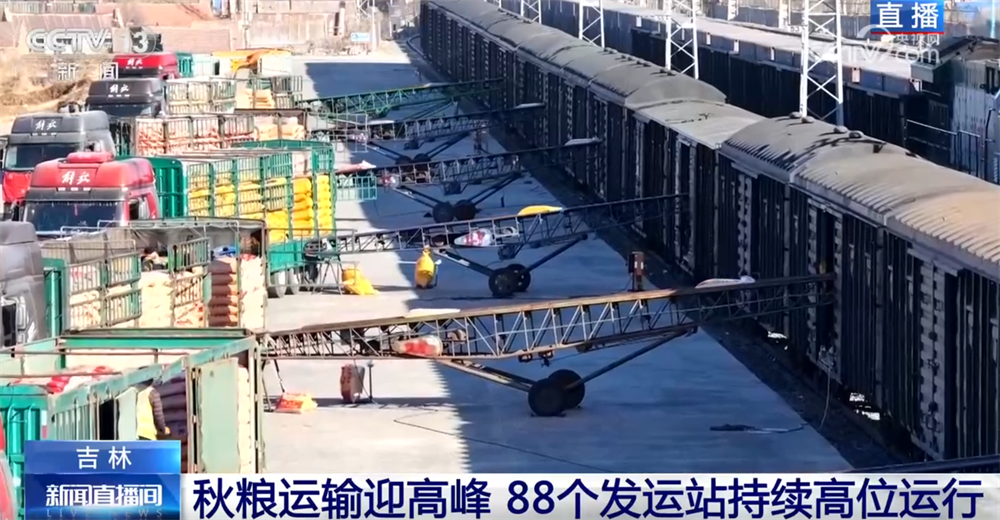
Group 1 - The core point of the article highlights the peak period of autumn grain transportation in Northeast China, particularly in Jilin Province, which has already dispatched nearly 4 million tons of grain since mid-October, marking a nearly 50% year-on-year increase [1][6] - The Changchun Railway Logistics Center in Fuyu is identified as a key hub for autumn grain transportation, facilitating the movement of high-quality grain from production areas to various destinations [3][6] - Jilin Province has maintained a total grain output exceeding 800 billion jin for four consecutive years, with expectations for a new record this year [6] Group 2 - The transportation process involves unloading grain from trucks and efficiently moving it onto trains, with each bag weighing 60 kilograms and a truck carrying approximately 30 tons of grain [4] - The logistics system includes two main transportation methods: pure rail transport and rail-sea intermodal transport, allowing for efficient distribution to major cities across the country [8] - The Yingkou Port in Liaoning serves as a crucial grain transshipment hub, with busy railway lines facilitating the transport of corn and wheat from various regions [9] Group 3 - The article emphasizes the importance of logistics in ensuring the quality of grain, with advanced monitoring and ventilation systems in storage facilities to maintain grain quality [12][14] - The Huangma Port in Jiangsu is highlighted as a new key node for autumn grain transportation, equipped with modern logistics platforms and large storage facilities to enhance efficiency [17][19] - The integration of smart storage systems at Huangma Port allows for seamless transportation of grain to adjacent rice processing enterprises, promoting a "storage-trade integration" model [21]
柴利:生产体系稳健性持续增强
Jing Ji Ri Bao· 2025-11-11 00:10
Core Insights - In 2024, China's grain production is expected to exceed 1.4 trillion jin, indicating a stable increase in grain supply capacity and a solid production foundation [1] - The resilience of China's grain production system continues to strengthen, enhancing capacity structure and risk resistance, which supports food security and stable supply of key agricultural products [1] Group 1: Production and Infrastructure - The construction of high-standard farmland is progressing steadily, with major production areas forming efficient farming patterns that improve production conditions [1] - In the Huang-Huai-Hai Plain, irrigation area renovations and drainage system improvements have effectively reduced drought and flood risks [1] - In Northeast China, protective farming practices and efficient water-saving irrigation are being promoted to enhance soil quality and production capacity [1] Group 2: Digitalization and Technology - The application of digital and intelligent methods in farming, fertilization, and pest control is accelerating, with some regions establishing "smart farmland" using satellite remote sensing and IoT systems for precise monitoring and scientific regulation [1] - There is a need to strengthen data sharing, platform interconnectivity, and farmers' digital application capabilities to enhance the scope of digital agriculture [2] Group 3: Climate Resilience and Long-term Strategy - Building climate-resilient agriculture is essential for long-term sustainability, requiring the optimization of grain production layout and the promotion of resilient crops and diverse farming systems [3] - A comprehensive approach to agricultural emission reduction and carbon sequestration technologies is necessary to enhance soil moisture and nutrient retention capabilities [3] - Establishing a long-term mechanism for food security involves government guidance, market participation, and social collaboration [3]
夯实粮食安全数智基础
Jing Ji Ri Bao· 2025-11-06 22:44
Group 1 - The core viewpoint of the articles emphasizes the transformation of China's agricultural sector towards a high-tech, market-oriented, and eco-friendly model, with a mechanization and automation rate exceeding 75% by the end of 2024 [1][2] - The integration of IoT, AI, and big data technologies in various agricultural processes, including planting, storage, and processing, is enhancing the technical level of food production and modernizing the agricultural management system [1][2] - Mechanization and automation are effectively addressing the challenges posed by urbanization and labor shortages in agriculture, particularly the aging workforce, by improving production efficiency and reducing reliance on human labor [1][2] Group 2 - Intelligent agricultural technologies, such as smart seeding, water-saving techniques, and AI-based fertilization, are enhancing the value of existing agricultural resources and mitigating ecological risks like extreme weather and pest outbreaks [2] - The demand for diversified and quality food consumption is driving the need for a market-oriented agricultural supply system, which is being met through the optimization of the entire production, circulation, and consumption chain using digital technologies [2] - The establishment of a comprehensive agricultural technology application support system is crucial to adapt to the diverse agricultural conditions across different regions in China, ensuring that mechanization and digitalization meet local needs [3]
中国经济顶住压力稳中有进
Xin Hua Wang· 2025-11-03 23:47
Core Viewpoint - China's economy has shown resilience and progress amidst pressures, with solid foundations laid for achieving annual economic and social development goals [1] Economic Performance Characteristics - The GDP grew by 5.2% year-on-year in the first three quarters, maintaining a leading position among major global economies. Retail sales of consumer goods increased by 4.5%, accelerating by 1.2 percentage points compared to the same period last year. The industrial added value for large-scale enterprises rose by 6.2%, marking the highest growth since 2022 [2] - Strong momentum is evident, with the added value of equipment manufacturing and high-tech manufacturing increasing by 9.7% and 9.6%, respectively. Their shares in large-scale industrial output rose by 2.1 and 0.8 percentage points year-on-year. The integrated circuit and smart device manufacturing sectors saw increases of 22.4% and 12.2% [2] - Quality and efficiency have improved, with a 3.2% year-on-year increase in profits for large-scale industrial enterprises, and a significant 21.6% increase in September alone. Prices for key products like polysilicon and lithium carbonate have rebounded [2] - The economy demonstrated resilience with a 7.1% growth in goods exports, alongside an optimized export product structure. High-tech and electromechanical product exports grew by 11.9% and 9.6%, respectively, with exports to Belt and Road countries increasing by 12.4% [2] - There is significant potential for growth, with retail service sales rising by 5.2%. The production of civilian drones and industrial robots surged by 43.2% and 29.8%, while the output of new energy vehicles and lithium-ion batteries for vehicles increased by 29.7% and 46.9% [3] Social Welfare and Supply Security - The government has effectively ensured social welfare, particularly in grain production and energy supply. Measures have been taken to stabilize grain markets and minimize the impact of disasters on production and farmers' incomes. The summer grain harvest was successful, and the autumn harvest is expected to be strong [4] - Energy supply for the winter heating season is on track, with coal reserves at 220 million tons, sufficient for over 35 days. The underground gas storage has met its annual injection target, ensuring full capacity for winter [4][5] Investment Expansion - Expanding effective investment is crucial for stabilizing growth. The government has allocated 500 billion yuan for local government debt to enhance financial capacity and support investment projects, with 2300 projects supported and a total investment of approximately 7 trillion yuan [6] - The focus of investments includes digital economy, artificial intelligence, consumer infrastructure, and urban renewal projects in transportation, energy, and underground pipeline construction [6] - Recent forecasts from international economic organizations have raised China's economic growth expectations for 2025 by 0.8 percentage points compared to earlier predictions [6]
扛牢保障国家粮食安全重任
Jing Ji Ri Bao· 2025-10-17 21:46
Core Viewpoint - Food security is a fundamental national priority, with a focus on ensuring that China's food supply remains stable and self-sufficient, particularly during the "14th Five-Year Plan" period [1][2]. Group 1: Food Production and Supply - China's grain production is set to exceed 1.4 trillion jin (approximately 700 million tons) in 2024, an increase of 74 billion jin (approximately 37 million tons) compared to 2020 [2]. - Per capita grain availability has reached 1,000 jin (approximately 500 kg), an increase of 50 jin (approximately 25 kg) from the end of the "13th Five-Year Plan" [2]. - The area of arable land has increased to 1.94 billion mu (approximately 129 million hectares), up by 28 million mu (approximately 1.87 million hectares) since 2020 [2]. Group 2: Agricultural Structure and Resilience - The domestic production of soybeans has reached 20.65 million tons in 2024, with a self-sufficiency rate improvement of 4 percentage points since 2020 [3]. - The agricultural sector has enhanced its disaster resilience through improved early warning systems and infrastructure, addressing the challenges posed by extreme weather [3]. Group 3: Grain Circulation and Emergency Response - The number of emergency grain processing enterprises has increased from 5,448 to 6,872, a growth of 26%, while daily processing capacity has risen from 1.2 million tons to 1.78 million tons, a 48% increase [5]. - The number of emergency supply points has grown from 43,000 to 59,000, marking a 37% increase [5]. Group 4: Food Security Mechanisms - The food security responsibility system has been strengthened, with local governments now held accountable for food security, enhancing political responsibility [7][8]. - The implementation of minimum purchase price policies for wheat and rice aims to stabilize farmers' incomes and encourage grain production [8]. - The introduction of the Food Security Guarantee Law marks a significant step in establishing a comprehensive legal framework for food security in China [8].
国家粮食和储备局:全国粮食年产量稳定在1.3万亿斤以上
Mei Ri Jing Ji Xin Wen· 2025-10-14 03:00
Core Viewpoint - The grain market in China is stable and supply is sufficient, with a projected increase in grain production for 2024, indicating strong food security [1] Group 1: Grain Production - National grain production has remained stable at over 1.3 trillion jin (approximately 650 million tons) annually for the past five years [1] - In 2024, grain production is expected to reach a new milestone of 1.4 trillion jin (approximately 700 million tons) [1] Group 2: Food Security - Per capita grain availability has increased by 25 kilograms compared to the end of the 13th Five-Year Plan, reaching 500 kilograms [1] - This per capita availability exceeds the internationally recognized food security line of 400 kilograms [1] Group 3: Self-Sufficiency - The country has achieved basic self-sufficiency in grains and absolute safety in staple food supplies [1]