
零售商业

Search documents
商业零售行业 2025 年三季报业绩前瞻:内需平稳,挖掘 AI 及新消费赋能方向
Shenwan Hongyuan Securities· 2025-10-15 15:35
Investment Rating - The report maintains a positive outlook on the e-commerce sector, suggesting a "Buy" rating for companies focusing on core businesses and investing in AI and instant retail [4][6]. Core Insights - The retail sector showed a steady growth with a 4.6% year-on-year increase in retail sales from January to August 2025, totaling 32.39 trillion yuan [3]. - Online retail sales reached 10 trillion yuan, growing by 9.6%, indicating a strong shift towards e-commerce [3]. - The report highlights the performance of major players: Alibaba's revenue is expected to reach 252.8 billion yuan with a 6.9% increase, while JD's revenue is projected at 288.4 billion yuan, up 10.8% [6]. Summary by Sections E-commerce Sector - Alibaba is expanding its instant retail business, with a projected revenue of 252.8 billion yuan for Q3 2025, a 6.9% increase, but a significant drop in net profit by 65% [4][6]. - JD is expected to maintain double-digit revenue growth, with Q3 revenue forecasted at 288.4 billion yuan, a 10.8% increase, although net profit is anticipated to decline by 75% [4][6]. - Meituan's revenue is expected to grow by 2.3% to 95.7 billion yuan, but it will face a substantial net loss of 119 billion yuan [4][6]. - Pinduoduo's revenue is projected to decrease by 1.6% to 97.8 billion yuan, with a 14% drop in net profit [4][6]. Jewelry Sector - The jewelry sector is experiencing growth, with a 11.7% increase in retail sales from January to August 2025 [4]. - Notable brands like Laopuhuangjin are expected to outperform the market due to strategic expansions [4]. Retail Business - Xiaoshangpin City is expected to see a revenue increase of 39% in Q3 2025, with net profit doubling [4]. - Miniso is focusing on large store strategies, projecting a 26% revenue increase to 5.7 billion yuan [4]. Investment Recommendations - The report suggests focusing on companies with high earnings certainty and those investing in AI and instant retail, such as Alibaba, JD, Meituan, and Pinduoduo [4]. - It also highlights premium jewelry brands and digital trade service providers as potential investment opportunities [4].
商业零售行业2025年三季报业绩前瞻:内需平稳,挖掘AI及新消费赋能方向
Shenwan Hongyuan Securities· 2025-10-15 14:29
Investment Rating - The report maintains a positive outlook on the commercial retail industry, indicating an "Overweight" rating for the sector [5]. Core Insights - The overall retail sales in China from January to August 2025 grew by 4.6%, with online retail sales increasing by 9.6%, indicating a strong growth trend in e-commerce [5]. - Major e-commerce platforms like Alibaba and JD are focusing on integrating AI and instant retail to enhance their business models, with expected revenue growth for JD at 10.8% and Alibaba at 6.9% for Q3 2025 [5][7]. - The jewelry sector is experiencing significant growth, with a 11.7% increase in retail sales for gold and silver jewelry from January to August 2025, driven by rising gold prices and consumer demand for high-end products [5]. Summary by Sections E-commerce Sector - Alibaba is expected to report Q3 2025 revenue of 252.8 billion yuan, a 6.9% year-on-year increase, but with a significant drop in net profit [7]. - JD's Q3 2025 revenue is projected to reach 288.4 billion yuan, reflecting a 10.8% increase, while net profit is expected to decline by 75% [7]. - Meituan's revenue is anticipated to grow by 2.3% to 95.7 billion yuan, but it will face a substantial net loss [5][7]. Jewelry Sector - The jewelry retail sector is seeing a robust recovery, with brands like Laopuhuang and Caibai expected to outperform the market due to their strong product offerings and market strategies [5]. - Laopuhuang is projected to achieve significant revenue growth, while other brands like Zhou Daxing and Laofengxiang are also expected to see varying degrees of growth [5]. Retail Commercial Sector - Companies like Miniso and Chongqing Department Store are expected to report strong revenue growth, with Miniso's revenue forecasted to increase by 26% [5][6]. - The retail sector is advised to focus on companies with high performance certainty as consumer demand is expected to rise during the year-end and Spring Festival [5].
新消费强势崛起,Z世代和千禧一代重构高奢商场逻辑
第一财经· 2025-09-29 10:23
Core Viewpoint - The article discusses the shift in consumer behavior among the Z generation and millennials, emphasizing the importance of emotional value in purchasing decisions, which has led to a transformation in retail experiences and brand strategies [3][4][6]. Group 1: Changing Consumer Behavior - The Z generation and millennials are becoming the main consumer force, focusing on emotional value rather than just the practical utility of products [3][6]. - Nearly 30% of young consumers are willing to spend for emotional satisfaction, indicating a significant shift in consumption patterns [6][7]. - The traditional classification of high-end and mid-range brands is becoming less relevant, as consumers prioritize brands that offer emotional connection and unique experiences [7][9]. Group 2: Retail Experience Evolution - Retail spaces are evolving from mere transaction venues to platforms that provide unique experiences and emotional connections [4][8]. - Brands are increasingly integrating diverse activities and experiences to enhance consumer engagement, such as pop-up events and cultural exhibitions [9][10]. - The "Louis Number" project exemplifies the trend of combining retail, dining, and exhibitions to create a compelling consumer experience, significantly increasing visitor dwell time [9][10]. Group 3: Return to Physical Stores - The trend of emotional value is driving consumers back to physical stores, with brands like Pop Mart and Jellycat relying heavily on brick-and-mortar locations [10][11]. - Many online brands are recognizing the importance of physical presence, leading to a surge in new store openings across various cities [11][12]. - The expansion of brand stores is revitalizing offline commercial activity, with a focus on experiential retail that fosters deeper connections with consumers [11].


北京友谊商店正式开园
Zhong Zheng Wang· 2025-09-24 04:48
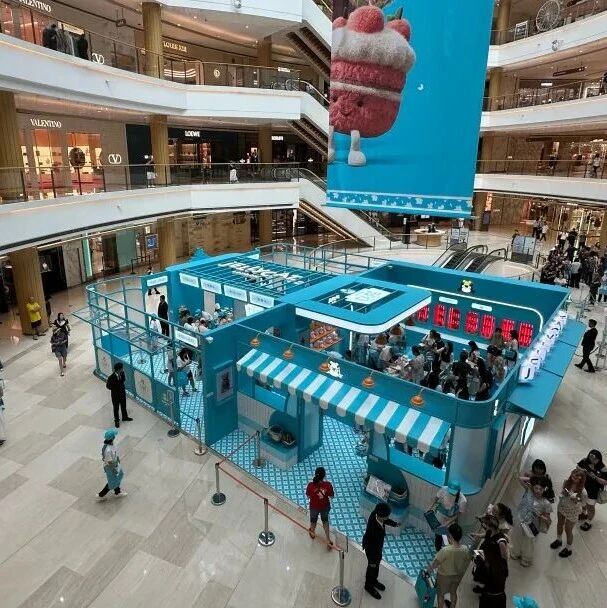
Core Viewpoint - The Beijing Friendship Store has officially reopened with a new look on the occasion of Wangfujing Group's 70th anniversary, highlighting the importance of its upgrade and transformation under the "one store, one strategy" approach of the group [1] Group 1: Store Transformation - The upgraded Friendship Store retains its original architectural style and historical elements while incorporating modern design and business concepts [1] - The store creates a unique sense of time, allowing visitors to experience historical warmth in a contemporary setting [1] Group 2: Business Model and Offerings - The Friendship Store features a diverse range of business formats, including dining, leisure, new lifestyle options, trendy culture, and health and beauty [1] - It boasts a lineup of 100% flagship and customized stores, aiming to build an immersive "urban free lifestyle circle" [1] Group 3: Market Impact - Since its trial operation began in May 2025, the Friendship Store has generated significant buzz on social media, becoming a popular destination for influencers and trendsetters [1] - The store offers a full-time operational lifestyle scene, catering to various activities from morning coffee to cultural experiences and social gatherings [1]

深圳,国际消费活力十足!19大商圈引领,国际友好消费地图发布
Sou Hu Cai Jing· 2025-08-11 13:18
Core Insights - Shenzhen is enhancing international consumption through diverse services, launching the "International Friendly Consumption Purchase" event as part of the "2025 Shenzhen Summer Consumption Season" [1][3] - The event features the release of an international friendly consumption map and a list of 19 benchmark shopping districts, aiming to establish Shenzhen as an international consumption center [3][4] Group 1: International Consumption Initiatives - The "International Friendly Consumption Purchase" event is themed "Shenzhen Summer, Global Enjoyment," focusing on internationalization, convenience, and quality [3] - The 19 benchmark shopping districts include prominent locations such as Shenzhen MixC, K11 ECOAST, and Qianhai One City, providing high-quality international services to both domestic and foreign tourists [3][4] Group 2: Payment and Tax Refund Innovations - Shenzhen has developed a new payment system for foreign visitors, enhancing the convenience of international payments through mobile payment options [4][5] - From January to June this year, foreign visitors conducted over 85.87 million non-cash payment transactions in Shenzhen, totaling over 11.8 billion yuan, with significant contributions from South Korea, the USA, and Singapore [5] - The city has implemented an "immediate purchase and refund" policy for tax refunds, with over 1,000 stores participating and a significant increase in tax refund sales and processing volume [5][6] Group 3: Shopping Season Activities - The "2025 Shenzhen Shopping Season" runs from August to October, featuring over 670 promotional activities centered around key themes and holidays [6] - The first city-based duty-free store is set to open by the end of August, aiming to create an immersive shopping experience for global customers [6]

拱墅全力提速商圈“三维互联”
Hang Zhou Ri Bao· 2025-08-07 02:57
Group 1 - The newly opened extension of the Baida Sky Bridge connects Hangzhou's Guoda City Square and Wulin Yintai Department Store, enhancing the shopping experience for citizens by providing seamless access between the two major shopping venues [3] - The Baida Sky Bridge was preserved during the 2012 renovation of Yan'an Road, with future connectivity in mind, and has now realized the vision of interconnecting the Wulin shopping district [3] - The bridge not only improves accessibility but also activates the three-dimensional space of the shopping district, with new facilities like a 400-square-meter resting area attracting visitors [3] Group 2 - The Gongshu District has been focused on developing a three-dimensional traffic system in the Wulin shopping area, connecting major shopping centers through aerial, ground, and underground pathways [4] - The extension of the Baida Sky Bridge and the ongoing construction of the Henglong underground passage are just the beginning of expanding the transportation network in the Wulin shopping area [4] - The latest urban planning in Gongshu District aims to create a vibrant central business district by enhancing connectivity and establishing a multi-dimensional commercial system [4]
华东第一!新街口,凭的是什么?
Sou Hu Cai Jing· 2025-07-31 10:54
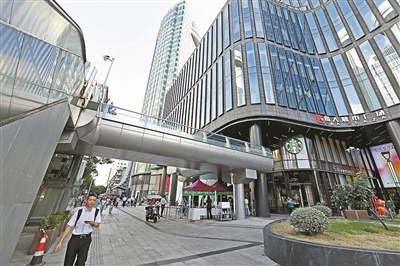
Core Insights - The report titled "2025 Q2 Consumption Observation in East China" highlights Nanjing's Xinjiekou as the hottest commercial area in East China for Q2, attracting significant foot traffic and popularity among young consumers [1][12][30] Group 1: Commercial Landscape - Xinjiekou has evolved into a "Chinese First Commercial Circle," with a rich history dating back to its planning as a commercial district in 1929 and its rapid development into a financial center by the 1940s [4][6] - The area boasts over ten shopping malls and more than a hundred office buildings, with peak daily foot traffic reaching up to one million [6][12] - Nanjing Deji Plaza achieved a sales figure of 24.5 billion yuan, making it the top single-store shopping mall globally, featuring over 95% of international high-end brands [8][10] Group 2: Consumer Experience - The diverse shopping options range from high-end malls like Deji to street-side shops, catering to various consumer needs and preferences [10][30] - The integration of cultural elements into the commercial space enhances the shopping experience, attracting both local and international visitors [15][20] - Innovative retail experiences, such as self-service shopping machines and interactive technology, are being introduced to appeal to younger consumers [25][30] Group 3: Regional Influence - Xinjiekou's commercial success is supported by its strategic location within the Yangtze River Delta, with a consumer market of over 36 million people in the Nanjing metropolitan area [17][20] - The area has seen a 16.2% year-on-year increase in sales during events like the "Su Chao" basketball match, indicating its strong draw for external consumer traffic [18][30] - The convenience of transportation, including high-speed rail and extensive road networks, facilitates easy access for consumers from surrounding cities [17][20] Group 4: Future Prospects - The ongoing transformation of Xinjiekou into a multi-functional space that combines commerce, culture, and technology positions it as a key player in Nanjing's ambition to become an international consumption center [30]

商业零售行业2025年二季报业绩前瞻:平台加码即时零售,关注优质新消费标的
Shenwan Hongyuan Securities· 2025-07-18 05:10
Investment Rating - The report maintains a "Positive" outlook on the commercial retail industry for the second quarter of 2025, indicating expectations for industry performance to exceed overall market performance [3][4]. Core Insights - The retail sector showed a year-on-year growth of 5.0% in the first half of 2025, driven by consumption policies and strong online retail performance, which grew by 8.5% [4]. - Major e-commerce platforms are focusing on core businesses and AI-driven growth, with Alibaba, JD, Meituan, and Pinduoduo all increasing investments in instant retail and food delivery services [4]. - The jewelry sector is expected to see strong demand for gold bars and high-end products, with a year-on-year growth of 11.3% in jewelry retail sales in the first half of 2025 [4]. Summary by Sections E-commerce Sector - Alibaba's revenue for Q1 FY26 is projected to reach 249.2 billion yuan, a 2.4% increase year-on-year, while its net profit is expected to decline by 12% [4][6]. - JD's revenue is forecasted to grow by 15.2% to 335.7 billion yuan in Q2 2025, but its net profit is anticipated to drop by 70% [4][6]. - Meituan's revenue is expected to increase by 12.3% to 92.3 billion yuan, with a net profit decline of 20.2% [4][6]. - Pinduoduo's revenue is projected to grow by 8.3% to 105.1 billion yuan, with a net profit decrease of 29.3% [4][6]. Jewelry Sector - The report anticipates strong gold bar sales and a gradual recovery in gold jewelry demand, with several brands expected to outperform the market [4]. - Notable companies include Lao Pu Gold, which is expected to significantly outperform the industry, and Cai Bai Co., which is projected to see a revenue increase of 25%-35% in Q2 2025 [4]. Retail Commercial Sector - The report highlights various retail companies, including Miniso, which is expected to see a revenue increase of 19.8% in Q2 2025 [4]. - Yonghui Supermarket is projected to face short-term losses due to store adjustments, with a net loss forecasted at 388 million yuan [4]. - Chongqing Department Store is expected to see a net profit increase of 8.0% in Q2 2025 [4]. Investment Recommendations - The report suggests focusing on e-commerce companies that are committed to core businesses and investing in AI and instant retail, such as Alibaba, JD, Meituan, and Pinduoduo [4]. - It also recommends high-quality jewelry brands and retail companies undergoing digital transformation and upgrades [4].
戴德梁行:上海二季度写字楼区域分化明显
Sou Hu Cai Jing· 2025-07-10 09:35
Group 1: Shanghai Office Market - The Grade A office market in Shanghai is experiencing pressure on both volume and price, with a net absorption of only 85,300 square meters in Q2 2025, down 18.4% quarter-on-quarter and 67.6% year-on-year [4] - The vacancy rate for Grade A offices has risen to 23.6% by the end of the quarter, while average rental prices have decreased to 6.99 RMB/square meter/day, reflecting a 1.9% decline [4] - Four new projects added approximately 240,000 square meters of supply, intensifying market competition, with core and emerging business districts each contributing two new projects [4] Group 2: Leasing Demand Structure - Retail trade, manufacturing, and TMT sectors dominate leasing demand, accounting for 28% and 23% respectively, with the financial sector following at 15% [5] - The biopharmaceutical sector has seen a rise in leasing demand, reaching 10% due to significant relocations by well-known domestic and international pharmaceutical companies [5] - The market is expected to face significant supply pressure in the second half of the year, with approximately 1 million square meters of new supply anticipated [5] Group 3: Retail Market Dynamics - The retail market in Shanghai shows a clear distinction between core and non-core business districts, with core districts maintaining an average rental price of 1,877 RMB/month/square meter and an occupancy rate of 94.71% [7] - New projects are focusing on experiential retail, with innovative shopping centers emerging in non-core areas to attract younger consumers [8] - The commercial market is expected to evolve into a new phase of differentiation and upgrading, driven by policy support and market dynamics [11] Group 4: Bulk Property Market - The bulk property transaction market in Shanghai recorded a total transaction value of 15.8 billion RMB in the first half of 2025, with 37 transactions completed, reflecting a significant decline compared to previous years [11] - Domestic investors are showing strong resilience, while foreign investors are strategically withdrawing, leading to a bifurcation in the market [11] - The types of properties being transacted include office, commercial, and residential, with a notable increase in interest in long-term rental apartments and public REITs [12] Group 5: Foreign Investment in Manufacturing - The number of foreign manufacturing and R&D projects in the Yangtze River Delta has slightly decreased, with Europe remaining a key source of investment, particularly from Germany [14] - Automotive and healthcare sectors are the primary focus for foreign investments, with significant projects established in Shanghai [15] - The trend indicates a shift towards larger foreign projects, while smaller enterprises are increasingly setting up in Jiangsu [15] Group 6: Financial Institutions and Project Management - Financial institutions have played a crucial role in ensuring project delivery through various mechanisms, including special loans and asset restructuring [16] - The focus is shifting from risk management to value creation in post-investment management, highlighting the importance of collaboration among government, financial institutions, and developers [16] - The ongoing "guarantee delivery" initiative is expected to enhance the operational efficiency of projects, transitioning from policy-driven support to market-driven sustainability [16] Group 7: Overall Market Outlook - Shanghai is accelerating its development as an international economic, financial, trade, shipping, and innovation center, with policies aimed at optimizing the business environment [17] - The real estate market is expected to benefit from these policies, providing fertile ground for various enterprises to invest and grow in Shanghai [17] - The company aims to leverage its expertise to attract quality projects and resources while closely monitoring policy adjustments and market trends [17]

产业机遇涌现,中资企业加速出海!广州商办市场稳中回暖
Nan Fang Du Shi Bao· 2025-07-09 14:34
Group 1: Guangzhou Real Estate Market - The Guangzhou real estate market is showing signs of recovery driven by policy guidance, industrial innovation, and consumption upgrades, creating significant opportunities for global enterprises and investors [1] - In the first half of 2025, the Guangzhou Grade A office market is expected to see an increase of 98,000 square meters in new supply, raising total stock to 7.603 million square meters [1][3] - The retail sector anticipates an additional 398,000 square meters of supply in the second half of the year, with experiential consumption and leisure brands expected to drive growth [1][5] Group 2: Corporate Expansion and Investment Trends - Chinese enterprises are actively expanding overseas, particularly in the manufacturing sector, marking a shift from product exports to a more systematic industrial layout [2] - Key drivers for this trend include excess capacity, rising costs, trade barriers, policy support, and diverse market demands [2] - Southeast Asia is emerging as a focal point for Chinese manufacturing investments due to its strong economic growth, youthful population, and rising middle-class consumption [2] Group 3: Office Market Dynamics - In the first half of 2025, Guangzhou's Grade A office market saw a total supply increase of 323,000 square meters, with total stock reaching 7.506 million square meters, a year-on-year growth of 6.1% [3] - The International Financial City and Pazhou areas are leading in absorption, with a combined net absorption of 54,000 square meters [3] - The financial, media, entertainment, retail, and trade sectors are performing well, contributing over half of the market transactions [3] Group 4: Retail Market Developments - The retail market in Guangzhou experienced a slight expansion of 1.0% in total stock, reaching 7.632 million square meters in the first half of 2025 [5] - Brand expansion has slowed, with a focus on optimizing existing projects and introducing new brands through diverse promotional activities [5] - By the end of 2025, total retail stock is expected to exceed 8 million square meters, driven by consumer preferences for quality and experiential value [5]