饮品

Search documents
8.5亿投资催缴11次仍未到账,汇源争夺战升级
阿尔法工场研究院· 2025-12-24 07:33
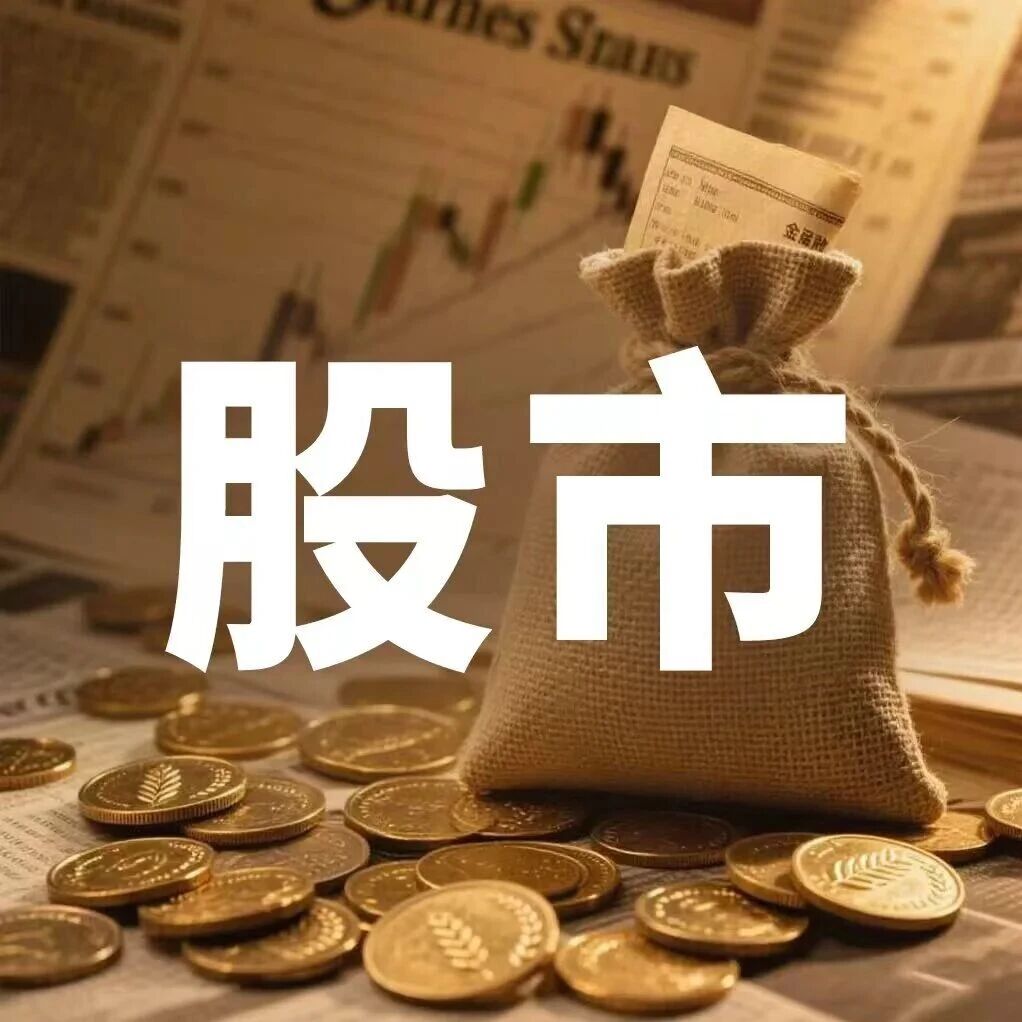
以下文章来源于猛犸资本局 ,作者赵鹏 猛犸资本局 . 穿越产业周期,洞察资本玄机。互联网新闻信息服务许可证编号:44120230006 近日,北京汇源食品饮料有限公司(下称"北京汇源")重整再出新进展,有关公司控制权和商标控制权的争夺再升级。 北京汇源饮料食品集团有限公司(下称"汇源集团")发文称,重整投资人上海文盛资产管理股份有限公司(下称"文盛资产")违约,并向北京市 第三中级人民法院提起诉讼并申请财产保全。 导语: 大股东文盛汇未缴足出资,却"掌控实权" 。 来源:汇源公众号 时代周报记者从国家企业信用信息公示系统查询得知,诸暨市文盛汇自有资金投资有限公司(以下简称"文盛汇")持有的北京汇源股权已经被北京 市第三中级人民法院司法冻结。 一般而言,被冻结的股权不能买卖、不能转让、不能质押、不能私下处置,也不能通过股权进行任何资本活动。 来源:国家企业信用信息公示系统 汇源集团在官微表示,自北京汇源重整方案实施以来,公司已按《重整投资协议》和《增资协议》全面履行自身义务,但文盛资产及文盛资产指定 主体文盛汇的履约状态完全相反。 声明中, 汇源集团指出,文盛汇承诺的投资总额中,有8.5亿元其拒绝支付, 已经投 ...

让乐乐茶致歉的“苹果糖”,为什么持续火热?
3 6 Ke· 2025-12-24 01:44
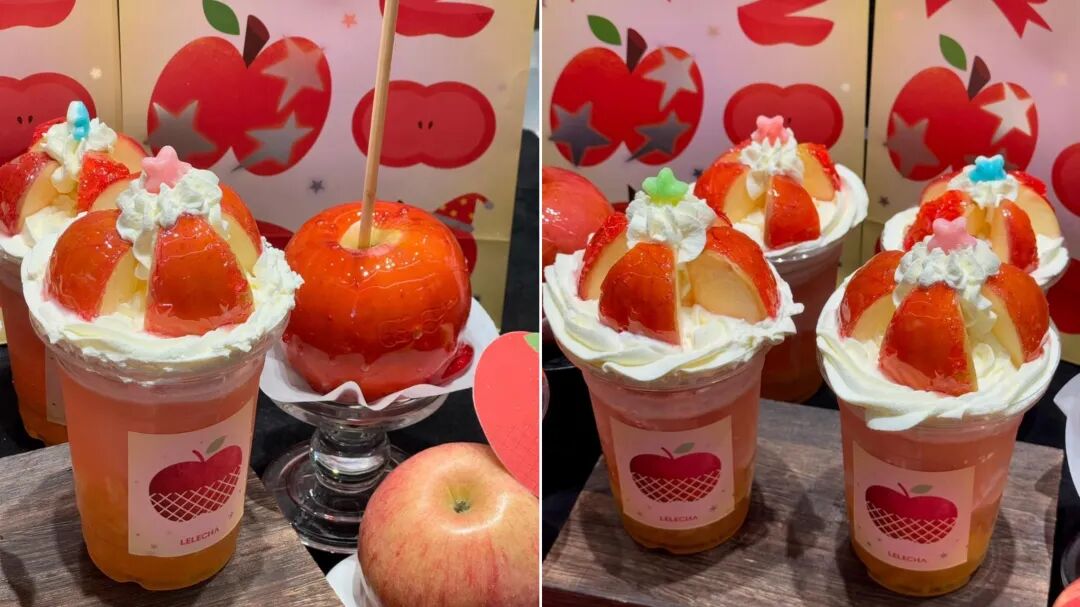
Core Viewpoint - The article highlights the resurgence of apple-flavored products in the beverage market, particularly during the holiday season, showcasing innovative offerings and consumer enthusiasm for apple-based drinks. Group 1: Product Launches and Consumer Response - Lele Tea's "Pineapple Apple Candy" has become a viral sensation on social media, integrating festive street food into a tea drink, leading to significant consumer engagement with over 170 million views on the keyword "apple candy" [1][5] - Following mixed reviews, Lele Tea issued an apology and took corrective actions to ensure product quality, which has since led to the reintroduction of the apple candy series in stores [3] - Multiple brands have launched apple-flavored products, including "One Red Apple" series by Grandpa Tea and various offerings from Yihuo Tang and Meiyu Milk, reflecting a trend towards apple as a popular flavor [6] Group 2: Innovation in Apple Beverage Offerings - The beverage market has seen a surge in apple drink innovations, with 9 new apple products launched in October, 17 in November, and 24 in December, indicating a vibrant trend [9] - Creative presentations such as "Deconstructed Apple" and "Apple Cinnamon Milkshake" have gained popularity, enhancing the visual appeal and consumer interest in apple-based drinks [10][12] - The versatility of apple as an ingredient is highlighted, with successful combinations including apple with milk foam, savory cheese, and yogurt, making it a key component in festive drink offerings [15][19] Group 3: Regional and Quality Emphasis - The use of specific apple varieties from regions like Wanglin and Xinjiang Akesu has been leveraged to enhance product value and consumer perception, with successful launches noted for their unique flavor profiles [21][23] - Brands are emphasizing the quality of their apple sources, with marketing strategies focusing on regional authenticity and the unique characteristics of different apple varieties [25] Group 4: Market Positioning and Future Outlook - Apples are positioned as an ideal ingredient in the beverage industry due to their stable supply and affordability, which supports product standardization and the creation of popular items [26] - The article anticipates continued innovation in apple beverages, extending beyond flavor combinations to include creative designs and diverse consumption scenarios, indicating a shift in the perception of apples from a mundane fruit to a beverage trendsetter [26]
冬季养生迎“黑马” 姜黄饮成消费新宠
Xin Lang Cai Jing· 2025-12-23 17:02
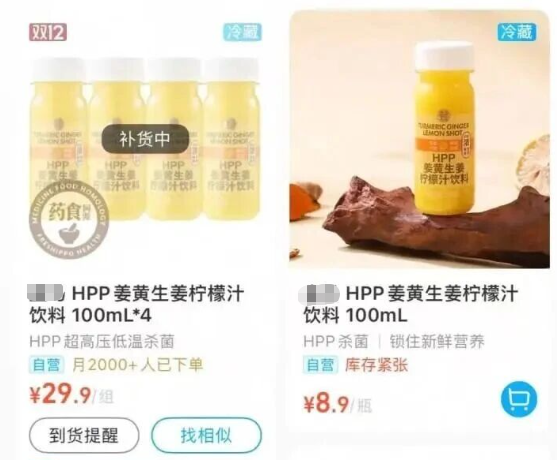
Core Insights - The rising popularity of turmeric drinks among young consumers is attributed to their perceived health benefits, particularly in boosting immunity and providing warmth during colder months [1][3] - Despite higher prices compared to regular beverages, turmeric drinks are in high demand, indicating a shift in consumer preferences towards health-oriented products [2][3] Group 1: Market Trends - Turmeric drinks are prominently displayed in supermarkets, with significant sales figures; for instance, a specific turmeric drink sold 10 bottles in just one morning at a price of 8.9 yuan for 100ml [2] - The product's popularity is reflected in its sales performance, with one store reporting over 4,000 units sold monthly and ranking fifth in a new product list [2] Group 2: Consumer Behavior - Young consumers are increasingly seeking products that address health concerns such as inflammation and stress, aligning with the traditional medicinal properties of turmeric [3] - Social media engagement is high, with over 13.2 million views on related topics on Xiaohongshu and 6.37 million views on Douyin, indicating strong consumer interest [2] Group 3: Product Innovation - The introduction of mini bottled turmeric drinks using HPP (High Pressure Processing) technology has made these products more accessible and convenient for consumers [3] - The innovation in product form has lowered the barrier to entry for turmeric consumption compared to traditional powdered forms, appealing to a fast-paced lifestyle [3]
魏家“二代”全面接管康师傅
Jing Ji Guan Cha Wang· 2025-12-18 14:04
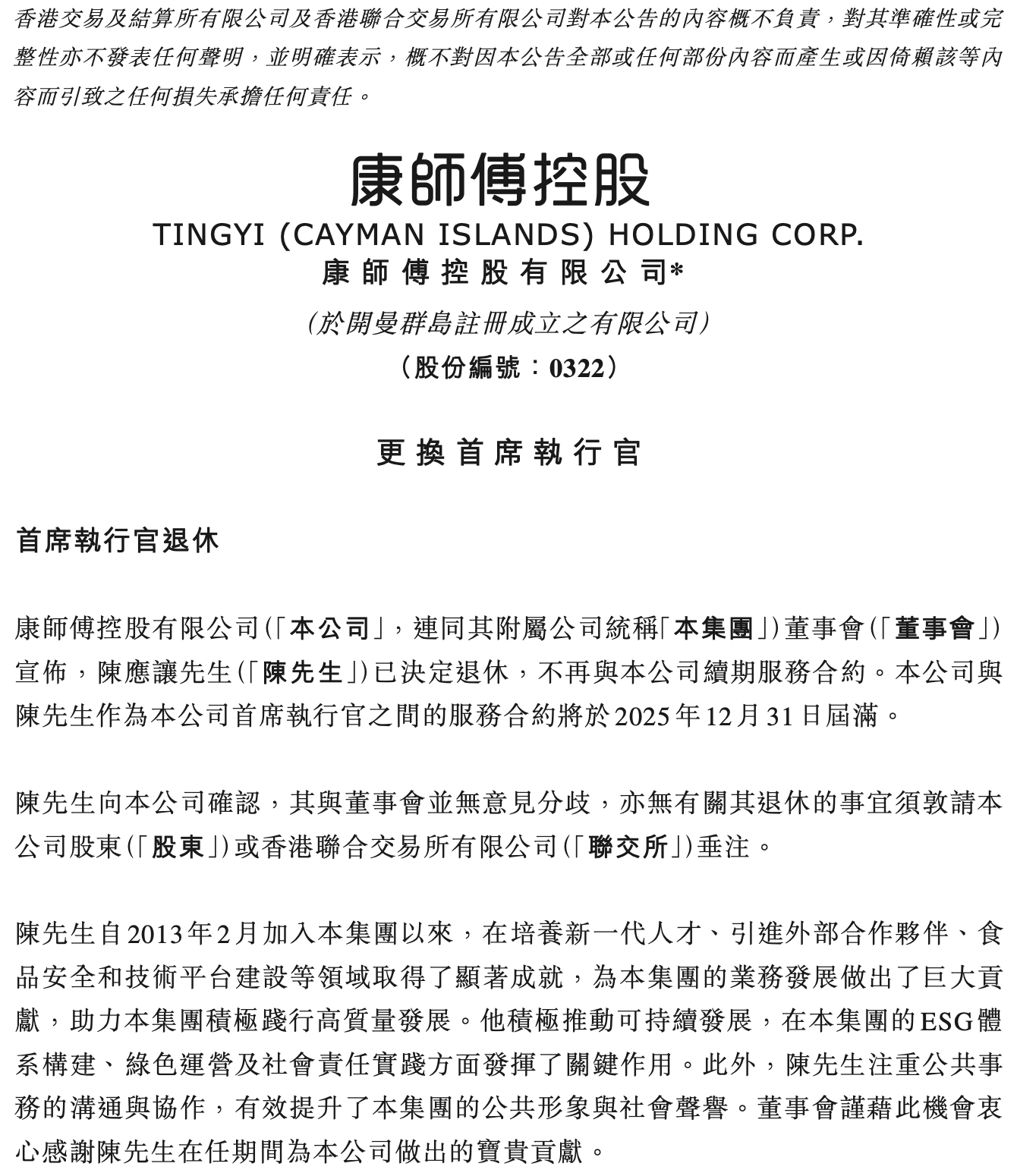
Core Viewpoint - The announcement of the retirement of CEO Chen Yingrang and the appointment of Wei Hongcheng as the new CEO signifies a deeper involvement of the second generation of the Wei family in the management of Master Kong, marking a shift from professional managers to family leadership [1][2] Group 1: Leadership Transition - Chen Yingrang will retire on December 31, with his service contract not being renewed [1] - Wei Hongcheng, aged 43, will take over as CEO while continuing as an executive director [1] - Wei Hongcheng is the son of founder Wei Yingzhou and has been an executive director since January 1, 2019 [1] Group 2: Background of Wei Hongcheng - Wei Hongcheng holds a bachelor's degree from Imperial College London and an MBA from Harvard Business School [1] - He has been a member of the Harvard Business School Dean's Advisory Board and has insights into industry trends and organizational leadership [1] - He has served as a director of Master Kong Beverage Holdings since February 2015 and has been the chairman since 2019 [1] Group 3: Company Performance - In the first half of the year, Master Kong reported revenue of 40.092 billion yuan, a year-on-year decrease of 2.7% [2] - Net profit for the same period was 2.271 billion yuan, showing a year-on-year increase of 20.5% [2] - Revenue from instant noodles and beverage segments declined by 349 million yuan and 706 million yuan, with respective decreases of 2.5% and 2.6% [2] - The increase in net profit was attributed to a 1.9 percentage point rise in gross margin to 34.5%, driven by cost structure optimization and improved operational efficiency [2]

二代接任CEO,康师傅方便面、饮品业绩双降趋势何时休?
Sou Hu Cai Jing· 2025-12-18 10:30
Core Viewpoint - The leadership transition at Tingyi (Cayman Islands) Holding Corp, with CEO Chen Yingrang retiring and Wei Hongcheng taking over, occurs during a period of financial stability but growth challenges, indicating a potential strategic transformation for the company [1][5][6]. Group 1: Leadership Transition - CEO Chen Yingrang will retire on December 31, 2025, after significant contributions to the company's modernization and sustainable development since joining in February 2013 [5][6]. - Wei Hongcheng, the new CEO, has been with the company since 2015 and has led the beverage segment to revenue and profit growth, marking a generational shift in management [6][7]. Group 2: Financial Performance - In the first half of 2025, the company reported total revenue of 40.092 billion, a year-on-year decline of 2.7%, indicating growth fatigue [7]. - The instant noodle segment, a traditional pillar, saw revenue drop by 2.5% to 13.465 billion, primarily due to health trends impacting sales [7]. - The beverage segment, which accounts for over 60% of revenue, also faced a 2.6% decline, despite improved profit margins through cost control measures [7]. Group 3: Structural Challenges - The company faces a fundamental shift in consumer preferences towards "zero sugar, health, and functional" products, impacting its traditional offerings [8]. - Increased competition from both established brands and new entrants, along with a "price war" in the ready-to-drink tea market, is straining market share [8]. - Structural changes in sales channels, including the rise of new retail formats, are challenging the company's traditional distribution network, which has shrunk by about 20% in four years [8]. Group 4: Industry Dynamics - The fast-moving consumer goods market has shifted from "incremental competition" based on expansion to "efficiency competition" focused on product iteration and operational precision [9]. - The company's core challenge is to convert its financial resources into growth, necessitating a systematic upgrade in products, channels, and operations [9]. - The leadership change is seen as a critical opportunity to initiate this transformation, determining the company's market position for decades to come [9].
海南自贸港全岛封关,会带来什么变化?
Yang Shi Xin Wen Ke Hu Duan· 2025-12-18 01:26
Core Viewpoint - The official launch of the Hainan Free Trade Port's full island closure on December 18 marks a significant step in China's commitment to high-level opening-up and the construction of an open world economy [1][3]. Group 1: Policy and Regulatory Framework - The closure is characterized by a "one line" opening and "two lines" management policy, allowing for special open policies in Hainan while managing the flow of goods and services to the mainland [2][3]. - The tax policy includes a "zero tariff" approach, which will not directly apply to the mainland, ensuring that while Hainan is open, there are controls in place [2][3]. - The number of tax-exempt goods will expand from 1,900 to over 6,600, and the "zero tariff" level will increase from 21% to 74% [5]. Group 2: Economic Impact and Opportunities - The Hainan Free Trade Port is positioned as a testbed for global openness, enhancing international exchanges and facilitating smoother connections with the mainland [3][4]. - The processing and value-added policy allows products with over 30% value added to be sold to the mainland without tariffs, significantly reducing operational costs for businesses [5][6]. - By 2025, the cumulative value of goods benefiting from the processing and value-added policy is expected to reach 114.2 billion, with tariff reductions amounting to 8.78 billion [6]. Group 3: Industry Development and Collaboration - The establishment of cross-provincial cooperation industrial parks is attracting quality enterprises to Hainan, enhancing local industry and providing a bridge to international markets [6][7]. - The Hainan Free Trade Port aims to deepen cooperation with regions like the Guangdong-Hong Kong-Macao Greater Bay Area and the Yangtze River Economic Belt, fostering a dual circulation economy [7]. Group 4: Healthcare Innovations - The Hainan Free Trade Port has facilitated the introduction of international innovative drugs and medical devices, improving healthcare access for domestic patients [7][8]. - The establishment of the LEC International Medical Alliance has created new pathways for patients to access cutting-edge treatments, enhancing the overall healthcare experience [8]. Group 5: Future Outlook - The full island closure is just the beginning of a long-term initiative to build a high-level free trade port with significant international influence by the middle of this century [9]. - Continuous improvement of the policy framework and the establishment of an open economic system are essential for the future development of the Hainan Free Trade Port [9].
中金公司:食品饮料行业筑底接近尾声 聚焦高质量增长
Di Yi Cai Jing· 2025-12-18 00:04
Core Insights - The food and beverage industry has entered a new normal since the beginning of the year, with an overall weak consumption environment [1] - The industry is focusing on high quality-price ratios, functionality, health, and emotional consumption trends [1] - The demand for the liquor industry continues to show weak prosperity, compounded by new regulations leading to significant adjustments on both supply and demand sides [1] - There is a divergence in performance among consumer goods, with beverages and snacks showing better prosperity [1] - Looking ahead to next year, the industry is expected to continue a weak recovery with strong differentiation, relying more on product innovation, fragmented channel layouts, and expanding consumer demographics [1] - Companies with strong brand power, product innovation capabilities, channel control, and excellent supply chain efficiency will be able to navigate through cycles and achieve high-quality growth [1]

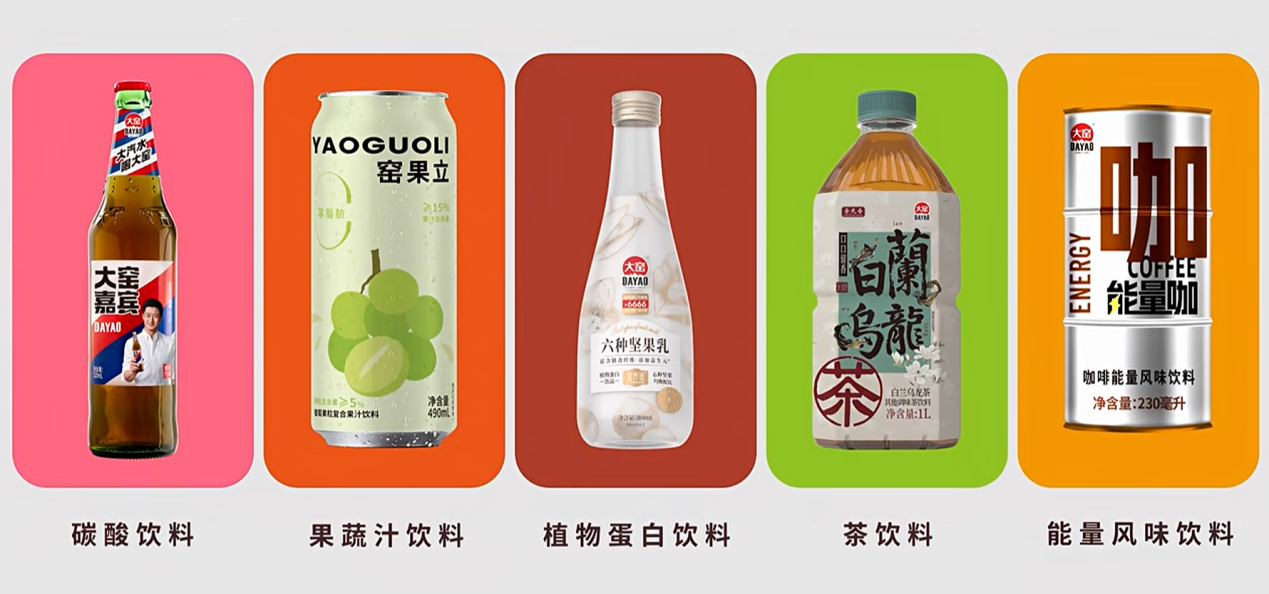
大窑饮品2025年产品战略解码:多元矩阵开辟增长新路径
Zheng Quan Ri Bao Wang· 2025-12-17 05:19
Core Insights - The beverage industry in 2025 has shifted from blind "traffic competition" and "quantity race" to precise insights into consumer demand and value anchoring [1] - Dayaogabian Beverage Co., Ltd. has implemented a series of solid strategies to provide a differentiated example for the industry, focusing on long-termism and deepening the "1+2+N" product strategy [1][2] Strategic Breakthrough - Dayaogabian Beverage has adopted the "1+2+N" strategy, expanding its product matrix and deepening its channel network to achieve a nationwide strategy [2] - The company has established a diverse product matrix covering five categories: carbonated drinks, fruit and vegetable juices, plant protein drinks, energy-flavored drinks, and tea beverages [2] Product Development - The foundation of carbonated drinks continues to strengthen, with classic products like "Dayaogabian" remaining popular, while innovative products such as prebiotic juice soda and birch juice soda introduce new health-oriented features [4] - The fruit juice and plant protein categories have seen concentrated product strength in 2025, with Dayaogabian's fruit juice emphasizing "large fruit particles" and the plant protein line expanding with new products [4] - Continuous innovation around health, flavor, and experience is evident, with products like sugar-free tea and cola targeting specific market segments [4][8] Market Trends - The Chinese beverage market is expected to exceed 1.6 trillion yuan in 2025, with health drinks growing over 30%, indicating a shift in consumer demand towards health, functionality, and emotional resonance [6] - Dayaogabian's diverse product matrix responds systematically to consumer trends, building a solid brand moat by breaking traditional category boundaries [8] Channel Empowerment - Dayaogabian has established a market presence across 31 provinces and formed a network of over a thousand distributors, transitioning from traditional supply relationships to strategic partnerships [9] - The company leverages digital empowerment to enhance channel efficiency, enabling distributors to transform from "channel executors" to "market co-builders" [9] Supply Chain and Quality Control - Dayaogabian's robust supply chain and quality control systems support its extensive product expansion, with seven intelligent production bases ensuring efficient service and high-quality output [11] - The integration of "hardcore manufacturing and flexible supply" capabilities guarantees reliable product supply and supports the company's long-term development strategy [11] Conclusion - Dayaogabian's dual success in product and channel development marks the beginning of a new growth cycle, providing a replicable model for sustainable development in the beverage industry [11]
新品狂卖超100万杯,茶百道、瑞幸都在上“暗黑爆款”
3 6 Ke· 2025-12-14 04:21
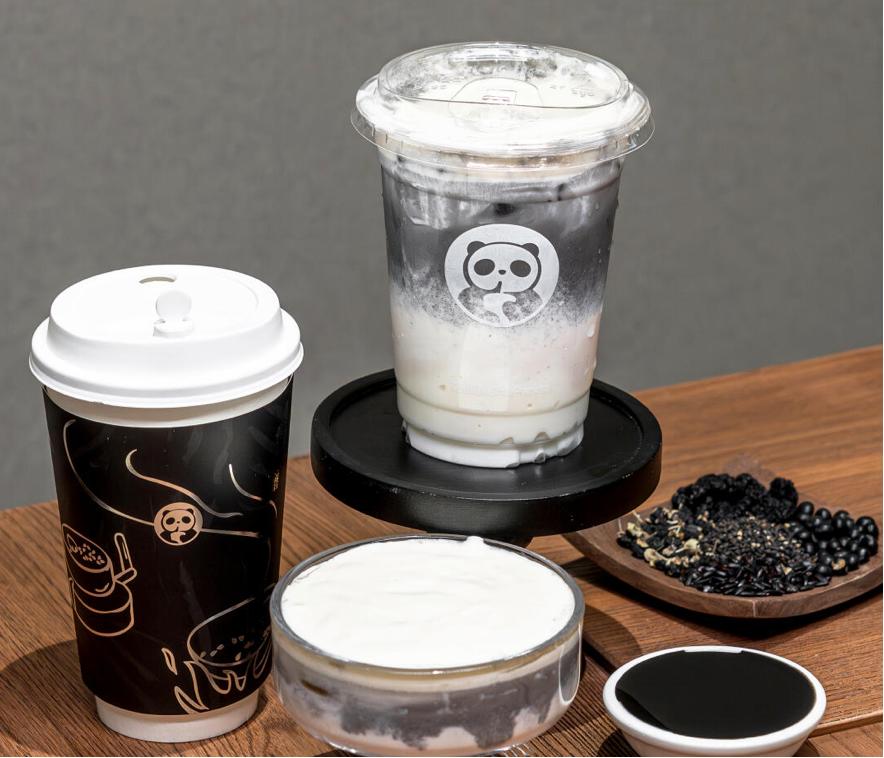
Core Insights - The beverage industry is experiencing a surge in popularity for black sesame products, with over 10 major brands launching new offerings this winter, leading to significant sales growth [1][3][10] Group 1: Sales Performance - The "Doumian Heiqilin" launched by Cha Baidao sold nearly 200,000 cups on its first day and surpassed 1 million cups in just over a week [3][11] - Other brands like Luckin Coffee and M Stand have also introduced black sesame products that received positive feedback, contributing to the overall sales boom [3][5] Group 2: Market Trends - Black sesame is being recognized as a "superfood" that aligns with the current trend of light health and wellness, particularly appealing to younger consumers concerned about hair loss [11][13] - The growth of the dessert market has further fueled the popularity of black sesame, with many shops revamping traditional recipes to include this ingredient [13][19] Group 3: Product Innovation - Brands are innovating with black sesame by creating unique product forms, such as black sesame milk, ice cream, and various toppings, which break the stereotype of black sesame being limited to traditional forms [15][17] - The visual appeal of black sesame in beverages enhances social media sharing, creating buzz and attracting more consumers [19][20] Group 4: Cultural Integration - Black sesame products are being linked to local cultures and popular IPs, making them more appealing to younger demographics [20][22] - The integration of black sesame into cultural narratives and modern branding strategies is helping to rejuvenate its image and expand its market reach [22][23]

突然爆火,成“养生顶流”!网友边吐槽难喝边抢购,多个平台断货,医生提醒
Mei Ri Jing Ji Xin Wen· 2025-12-12 04:51
Core Insights - The article discusses the rising popularity of "turmeric drinks" in December, which have become a trending health product, often sold out in supermarkets and frequently restocked on e-commerce platforms [1][5]. Industry Trends - Turmeric drinks have emerged as a new hot item in the beverage market this year, with multiple brands entering the space. These products typically feature "small volume, high price" characteristics, with sizes ranging from 30 milliliters to 100 milliliters and prices between 2.33 yuan and 17.6 yuan [7]. - The social media presence of turmeric drinks is significant, with over 12.47 million views on a social platform as of December 9 [5]. Consumer Perception - Despite the high praise from consumers, with over 10,000 reviews and a 99% positive rating, many users have criticized the taste of turmeric drinks, describing them as sour, bitter, and difficult to consume [3][9]. - Young consumers are increasingly willing to spend on health products, with 63.1% of them managing their health due to emotional distress or anxiety. The average annual expenditure on health by young people is 3,250.7 yuan, with a preference for health drinks and traditional Chinese remedies [21]. Nutritional Analysis - Experts have raised concerns about the actual health benefits of turmeric drinks, noting that the turmeric content is often too low to provide significant anti-inflammatory effects. For instance, one product contains only 3% turmeric, while another has 70 milligrams in a 30-milliliter serving [11][16]. - High sugar content in these drinks can counteract potential health benefits, with some products containing up to 32 grams of sugar per 100 milliliters, which may contribute to inflammation rather than alleviate it [14]. Health Recommendations - To effectively reduce inflammation, experts suggest focusing on overall lifestyle changes rather than relying on single food items. Recommendations include optimizing dietary structure, adjusting lifestyle habits, and paying special attention to gut health [19][20].