
充电桩

Search documents
谨慎看涨?
第一财经· 2025-09-25 11:06
Core Viewpoint - The article highlights the strong performance of the Shenzhen Composite Index, driven by the robust growth of technology stocks, particularly in the AI sector and other emerging industries [4]. Market Performance - The Shenzhen Composite Index reached a new high, outperforming the Shanghai market, with the ChiNext Index leading the three major indices due to strong performance in technology growth stocks [4]. - The market saw a total trading volume of 2.3 trillion yuan, reflecting a 1.9% increase, indicating high overall market activity and participation enthusiasm [7]. Sector Analysis - Key sectors showing strength include CPO (light modules), liquid-cooled servers, AI applications, gaming and media, certain renewable energy stocks, and non-ferrous metals [5]. - Conversely, sectors such as precious metals, port shipping, oil and gas extraction, textiles, agriculture, home appliances, banking, liquor (baijiu), and real estate exhibited weak performance [5]. Capital Flow - There was a net outflow of funds from major players, while retail investors showed a net inflow, indicating a shift in investment strategies [8]. - Institutional investors are favoring technology and high-end manufacturing sectors driven by policy support and high economic activity, with significant capital flowing into power equipment, computer devices, and digital economy sectors [8]. Investor Sentiment - Retail investor sentiment is at 75.85%, with a notable portion of investors increasing their positions (30.74%) while others are reducing their holdings (21.34%) [9][12]. - The overall sentiment reflects a cautious optimism among retail investors, with many actively participating in the market despite the mixed performance of various sectors [9].


从“吃电”到“反哺”,电动汽车可成为家庭的“电力银行”?专家:2030年前我国V2G车辆年销量有望过千万辆
Mei Ri Jing Ji Xin Wen· 2025-09-25 10:11
Core Insights - V2G (Vehicle-to-Grid) is expected to become a significant phenomenon in China's electric vehicle industry, with annual sales of V2G vehicles projected to exceed 10 million by 2030, potentially mirroring the development trajectory of the photovoltaic industry in China [1][8] Industry Trends - The interest in V2G technology is increasing, with 92 pilot projects globally across 22 countries, primarily in Europe and North America, involving major automakers like BMW, Renault, and Mitsubishi [2] - In China, nine cities have been selected for the first batch of V2G pilot projects, including Shanghai and Guangzhou, as part of a national initiative to promote V2G applications [2] Technological Developments - The next three years are deemed critical for V2G technology, focusing on advancements in power semiconductor devices, battery health assessment algorithms, and open communication protocols between vehicles and charging stations [2] - Domestic automakers like BYD and NIO are actively developing V2G capabilities, with BYD participating in grid peak-shaving projects and NIO exploring integrated charging and battery swapping models [3] Application Scenarios - V2G applications have broad potential across various sectors, including residential, transportation, and industrial areas, with significant opportunities for integration [4] - The lithium iron phosphate batteries used in vehicles can cycle up to 3,000 times, allowing for substantial energy storage and potential earnings from energy trading [4][5] Commercialization Challenges - The commercialization of V2G faces two main bottlenecks: high equipment costs and the lack of a warranty system, which may deter user participation [6] - Different application scenarios present unique challenges, such as unclear standards for energy measurement and settlement in private settings, and compatibility issues in multi-brand charging stations [6] Future Projections - By 2027, it is anticipated that over half of the vehicles on sale in China will be equipped with V2G technology, with a significant increase in policy support across 70% of regions [8] - The market for V2G vehicles is expected to grow rapidly, with projections indicating that annual sales could approach 2 million by 2027 and exceed 10 million by 2030 [8]
毅昌科技:公司已成功布局充电桩领域
Zheng Quan Ri Bao Wang· 2025-09-24 09:42
Group 1 - The company, Yichang Technology, has successfully entered the charging pile sector and has achieved mass production of related products [1]

光伏板块反内卷效果明显,板块整体有望迎来修复 | 投研报告
Zhong Guo Neng Yuan Wang· 2025-09-24 01:20
Core Insights - The report highlights a positive trend in the power energy sector, particularly in photovoltaic and energy storage segments, with significant year-on-year growth in installed capacity and price increases in key materials [1][3]. Group 1: Photovoltaics - As of September 17, 2025, the average price of polysilicon (dense material) is 51 CNY/Kg, an increase of 1.00 CNY/Kg from the previous week [1][3]. - The photovoltaic sector is expected to benefit from various factors including industry dynamics, policies, and demand-side efforts, leading to an overall recovery in the sector [3]. Group 2: Energy Storage - By the end of the first half of 2025, the cumulative installed capacity of operational energy storage projects in China reached 164.3 GW, a year-on-year increase of 59% [1][3]. - Among this, the cumulative installed capacity of new energy storage reached 101.3 GW, showing a remarkable year-on-year growth of 110% [1][3]. Group 3: Lithium Battery - As of September 19, 2025, the price of lithium carbonate is 71,300 CNY/ton, reflecting a slight increase of 140 CNY/ton from the previous week [1][3]. Group 4: Charging Infrastructure - By the end of August 2025, the total number of charging infrastructure units in the country reached 17.348 million, marking a year-on-year growth of 57.72% [3]. Group 5: Industry Performance - From September 15 to September 19, 2025, the power equipment index rose by 3.07%, outperforming the CSI 300 index by 3.51 percentage points [2]. - In the first seven months of 2025, the total electricity consumption was 58,633 billion kWh, a year-on-year increase of 4.50% [2]. - The newly added power generation capacity in the first seven months of 2025 was 32,480 MW, representing a year-on-year growth of 75.72% [2].
分布式储能+充电桩!重庆虚拟电厂建设示范应用项目框采招标
中关村储能产业技术联盟· 2025-09-23 11:00
Group 1 - The core viewpoint of the article highlights the announcement of a procurement tender for a virtual power plant construction demonstration project, focusing on distributed energy storage and charging station equipment [2][3] - The project involves the procurement of various energy storage devices, including 50 units of 233 kWh, 15 units of 261 kWh, 20 units of 466 kWh, and multiple charging stations, indicating a significant investment in energy infrastructure [2] - The estimated procurement amount for this project is approximately 29.67 million yuan, showcasing the financial scale of the initiative [3] Group 2 - The tender scope includes comprehensive services such as design, manufacturing, assembly, transportation, installation, debugging, and maintenance, emphasizing the project's complexity and the need for a wide range of expertise [2] - The project is managed by Chongqing Science City Urban Operation Group Co., Ltd., indicating a strategic focus on urban energy solutions [2]

2025东莞市公共充电站场安全管理调研报告
Sou Hu Cai Jing· 2025-09-21 04:29
Group 1 - The report highlights the rapid expansion of public charging facilities in Dongguan, driven by the increasing adoption of electric vehicles, while also addressing safety concerns and regulatory challenges [2][18][22] - A total of 117 representative charging stations were evaluated, revealing an average of 3.41 safety hazards per station, with B-level hazards (moderate) accounting for 59% of the total [3][4][5] - Key issues identified include distribution problems (42%), management system issues (33%), and charging pile problems (25%), with older stations showing more hazards [4][5][6] Group 2 - The report suggests that the government should enhance regulatory enforcement and improve acceptance and inspection mechanisms, while companies should implement comprehensive management and optimize design and operation [7][8][11] - The study emphasizes the need for personnel training and user education to improve safety awareness and operational behavior [9][10] - The association advocates for a mechanism combining industry self-discipline and government oversight to support intelligent operation and personnel capability recognition [11] Group 3 - Dongguan's charging infrastructure is projected to reach 120,000 units by the end of 2025, with a target vehicle-to-charging pile ratio of approximately 1.83:1 [20][24][27] - The report indicates that as of early 2024, Dongguan had 1,586 public charging stations with a total power of 1.133 million kW, and plans to build 25,000 public charging piles and 70,000 private charging piles by 2025 [24][26] - The charging network is expected to evolve from merely sufficient to highly functional, addressing both daily and long-distance travel needs [19][20] Group 4 - The study reveals that 71% of charging stations have insurance but lack third-party maintenance, indicating a significant operational risk [5][39][40] - The analysis shows that the majority of charging stations are equipped with direct current (DC) charging piles, with 98.3% of stations having them, while ultra-fast charging piles are still limited [56][62] - The distribution of charging stations indicates a trend towards larger stations, with over 50% classified as large charging stations, reflecting a response to high demand for fast charging [63][66]

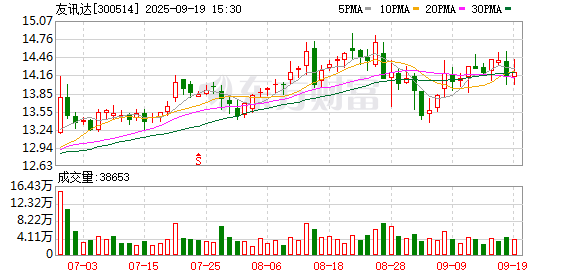
友讯达:公司有充电桩相关的智慧能源解决方案和产品
Zheng Quan Ri Bao· 2025-09-19 15:44
Group 1 - The company Youxunda has developed smart energy solutions and products related to charging piles, which can achieve functions such as metering, data collection, communication, and coordinated control [2]

华阳新材2025年半年度报告业绩说明会问答实录
Quan Jing Wang· 2025-09-19 03:28
Core Viewpoint - The company held a successful half-year performance briefing, engaging with investors and addressing various concerns regarding its financial performance and future strategies [1] Group 1: Financial Performance - As of August 2025, the company has 66,300 shareholders [2] - The company reported a revenue of 150 million and a total profit of 83 million, with a net profit attributable to shareholders of 82 million. However, the net profit excluding non-recurring gains and losses was a loss of 42 million [8] Group 2: Profitability and Sustainability - The significant profit increase during the reporting period was attributed to non-recurring gains. The company has over 100 acres of similar land available for disposal, which may contribute to future profits [2] - The company has faced continuous losses for two years but does not currently meet the criteria for being classified as ST (Special Treatment) [3] - To ensure long-term profitability, the company plans to enhance its core business, optimize costs, and adjust its industrial structure [4] Group 3: Strategic Plans and Market Position - The company aims to achieve a market value of 10 billion within three years, focusing on improving operational management and enhancing competitiveness in the precious metal recycling industry and biodegradable materials [6] - The company is currently facing challenges in its main business of biodegradable materials (PBAT), which is reported to be in a state of suspension due to market and environmental factors [5] - The company is committed to complying with relevant regulations and has no current plans for restructuring or significant capital operations [4][6] Group 4: Governance and Oversight - Following the cancellation of the supervisory board, the audit committee, composed of three directors including two independent directors with professional backgrounds, will assume its responsibilities to ensure fairness and impartiality [8]

机构:充电桩行业转向高质量发展
Zheng Quan Shi Bao· 2025-09-19 01:47
Core Insights - The report from the China Charging Alliance indicates a significant increase in electric vehicle charging infrastructure in the first eight months of 2025, with a total of 4.53 million new charging points, representing an 88.5% year-on-year growth [1] - Public charging facilities saw an increase of 737,000 units, a 37.2% rise compared to the previous year, while private charging facilities grew by 3.79 million units, marking a 103.3% increase [1] Industry Trends - The charging pile market is shifting from a focus on speed and scale to a new phase of high-quality development [1] - There is a trend towards high-power charging solutions, necessitating upgrades in core components and overall charging equipment. High power implies a combination of high voltage and large current, which significantly raises the technical requirements for charging piles and their core components [1] - The industry is moving towards high-quality development, with recent policies directing focus towards the construction of high-power charging facilities. Under policy-driven initiatives, the promotion of high-power supercharging is expected to accelerate [1]
电动汽车充电设施扩张至1734.8万个
Zheng Quan Ri Bao· 2025-09-18 16:25
Core Insights - The total number of electric vehicle charging facilities in China reached 17.348 million by the end of August 2023, marking a year-on-year growth of 53.5% [1] - Public charging facilities grew to 4.316 million, with a year-on-year increase of 37.8%, while private charging facilities surged to 13.032 million, reflecting a 59.6% increase [1] - The rapid growth of private charging facilities indicates a rising acceptance of electric vehicles among consumers and highlights the importance of charging infrastructure in driving the electric vehicle market [1] Industry Trends - The charging infrastructure in China is the largest and most diverse globally, necessitating further development to support the increasing sales of electric vehicles [2] - From January to August 2025, domestic sales of new energy vehicles reached 8.088 million units, representing a year-on-year growth of 30.1% [2] - The charging pile industry is expected to maintain a compound annual growth rate of over 20% in the next five years, driven by the increasing penetration of new energy vehicles [2] Infrastructure Development - The demand for charging facilities is expected to rise alongside the growing number of electric vehicles, prompting both government and enterprises to invest more in charging infrastructure [3] - Cities are developing charging infrastructure plans based on the ownership and growth trends of electric vehicles to ensure supply matches demand [3] - The development of charging infrastructure is crucial for alleviating range anxiety, enhancing convenience, and promoting technological innovation in the electric vehicle sector [3]