文化创意

Search documents
杭州提供怎样的求职前景?
Hang Zhou Ri Bao· 2025-08-15 02:30
Group 1 - Hangzhou hosted the "Talent Night Market" recruitment fair on August 13, 2023, featuring 80 companies offering over 1,000 job positions, including well-known enterprises like Wanshili [1] - Zhejiang Weibo New Materials Technology Co., Ltd. is seeking foreign trade salespersons with monthly salaries ranging from 8,000 to 20,000 yuan, emphasizing the need for strong communication skills and English proficiency [1] - Wanshili Group is looking for embedded software development engineers with salaries between 18,000 and 30,000 yuan, as the company is upgrading its silk production processes using AI technology [1] Group 2 - The recruitment fair attracted a diverse group of job seekers, including international candidates like Ahmed, who has a PhD from Zhejiang University and is looking for opportunities in the chemical or international trade sectors [2] - The booming cross-border e-commerce sector in Hangzhou is drawing many job seekers interested in foreign trade, with companies like Weibo New Materials actively recruiting recent graduates [2] - Various attractive job positions were available, such as a pension plan planner with a salary over 10,000 yuan and a拆卡主播 (card拆主播) position with a potential salary of 12,000 yuan, targeting young professionals and recent graduates [2] Group 3 - Hangzhou plans to hold additional recruitment events for unemployed graduates, providing ongoing opportunities for job seekers to find relevant positions [3]
打通“两山”转化高效通道
Jing Ji Ri Bao· 2025-08-12 22:15
Group 1 - The digital economy in China is transitioning from the "Internet+" phase to the "AI+" phase, becoming a key driver for social and economic transformation, particularly in enhancing the value of rural ecological products [1] - Rural ecological products encompass traditional resources like agricultural, forestry, and aquatic products, as well as new ecological services such as eco-tourism and cultural creativity [1] - Digital technology is breaking information asymmetry, reducing transaction costs, and expanding value boundaries, facilitating the transformation from "green mountains and clear waters" to "golden mountains and silver mountains" [1] Group 2 - Current challenges for rural ecological products include a lack of unified quantification standards and accounting systems, leading to difficulties in market pricing and property rights ambiguity [2] - Information asymmetry increases transaction costs, making it hard for high-quality agricultural products to achieve premium pricing due to a lack of credible traceability [2] - The rural industrial chain is short with low added value, and the processing rate of primary agricultural products is low, resulting in a low share of income for farmers [2] Group 3 - Digital platforms can optimize supply-demand matching, addressing traditional transaction issues, and promoting green consumption through direct connections between rural producers and urban consumers [2] - Digital governance can facilitate innovative collaboration among stakeholders, reducing institutional transaction costs and enhancing the efficiency of ecological project funding [2] - Enhancing digital literacy among rural talents through training programs can improve their digital operational capabilities and agricultural production efficiency [3]
50位海归聚三亚探讨在琼创业路径 共享自贸港机遇
Zhong Guo Xin Wen Wang· 2025-08-08 21:46
Core Insights - The training camp themed "Free Trade Opportunities: Innovation and Entrepreneurship Acceleration for Returnees" was held in Sanya, attracting 50 overseas returnees to discuss innovative entrepreneurship in Hainan's free trade port [1] - The event was co-hosted by the Hainan Provincial Five Associations Joint Office and the Sanya Overseas Students Entrepreneurship Park, focusing on various sectors including agriculture, deep-sea technology, and biomedicine [1] - The training included courses on business model analysis, project roadshows, investment negotiations, and legal knowledge for overseas expansion, aimed at accelerating project implementation [1] Group 1 - The training camp gathered returnees with international perspectives, providing a platform for talent display in Hainan's free trade port [1] - Participants shared their development plans and gained inspiration from each other, with examples of innovative business models being explored [1] - The establishment of the "Hainan European and American Students Association (Hainan Overseas Students Friendship Association) Service Station" was announced, which will assist returnees with business registration and networking [1] Group 2 - Returnees expressed optimism about the development prospects of Hainan's free trade port, with plans to expand into new business areas such as cross-border e-commerce and cultural tourism [1] - The training camp highlighted the importance of collaboration among returnees from various industries to foster innovation and entrepreneurship in Hainan [1] - The service station aims to support the increasing number of returnees in Hainan by providing resources for long-term development and networking opportunities [1]

九江浔阳区:汇聚统战力量 同心共筑振兴路
Zhong Guo Xin Wen Wang· 2025-08-08 01:43
Group 1 - The core viewpoint emphasizes the role of united front resources in revitalizing rural areas, particularly in Datan Village, through initiatives like "united front linkage, multi-dimensional empowerment, and cultural enrichment" [1] - The establishment of the New Local Talent Association in January 2023 and the first out-of-province talent liaison station in Yiwu, Zhejiang, has attracted 133 talents back to their hometown, leading to the creation of 32 new enterprises and over 700 jobs [2] - The collaboration with cross-border e-commerce has enabled local agricultural products to achieve annual sales exceeding 100 million yuan, showcasing successful entrepreneurial examples [2] Group 2 - The "He is Seeking Yang" product packaging series, designed by a young local, has significantly increased sales by integrating cultural elements into product branding [2] - The "Same Heart Agriculture Industrial Park" initiative, leveraging resources from municipal and district business associations, has led to an annual increase of 500,000 yuan in village collective income through the development of specialty crops [3] - The "Pipa Xun" brand creatively incorporates the essence of the poem "Pipa Xing," enhancing product value and brand competitiveness through cultural integration [4]
穿行“街头博物馆”,里份、剧场、硅巷相融共生——老汉口“长出”新感觉
Chang Jiang Ri Bao· 2025-08-04 02:58
长江北岸,位于江岸区的汉口历史风貌区内,清水红砖与玻幕大厦错落相伴。街边,朵朵太阳伞点缀街区;院内,间间小剧场、工作 室不断推陈出新。 3.35平方公里,从江汉路到黄浦大街,从京汉大道到沿江大道,177处文物、153处优秀历史建筑、62处特色里份在传承中迸发新动 能。 她在社交平台上分享:"历史与现代交融的老汉口,随时都有不期而遇的惊喜。" 从文化遗产的修旧如旧,到业态的文商旅流变,再到创新的要素聚拢,江岸演绎着新的进化: 坚持"留改拆建控"并举,统筹文化遗产的保护传承、城市更新、产业导入和文商旅融合发展等,在保护中发展、传承中利用,以文化 赋能经济、以经济"活化"文化。 75米长小巷塑出新场景 城市更新从宏观进入"毛细血管";咸安坊、延庆里、黎黄陂路等不断焕新登场;漫步族穿行21条街巷 延庆里,汉口胜利街和三阳路交界处,主巷全长75米,溜达一圈只需约10分钟。 钱晨在"City Walk(城市漫步)"的路上,偶然发现这片小小的历史建筑群。拱券门窗透着老汉口韵味,米白石砖路还留存着修缮的痕 迹。 她逗留了近一个小时,仿佛发现了新的宝藏—— 家居店里,手握木质的家居摆件,爱不释手;"A4X艺术中心"里,跟随艺术 ...


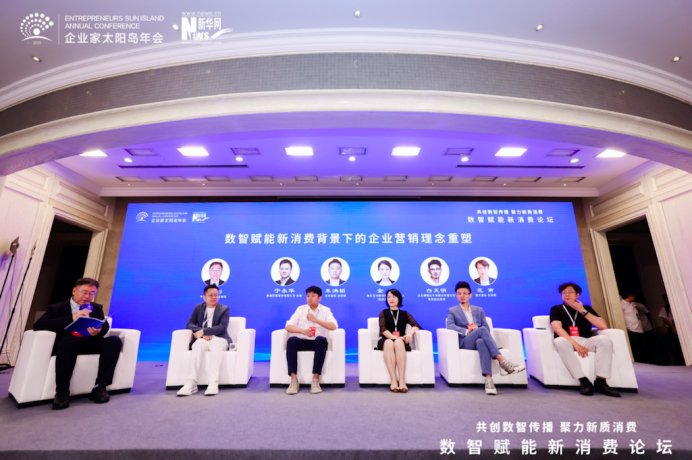
“数智赋能新消费论坛”圆桌对话:共探数智传播与新消费融合新路径
Zhong Guo Jin Rong Xin Xi Wang· 2025-08-03 02:53
Core Viewpoint - The "Digital Empowerment of New Consumption Forum" highlighted the integration of advanced technologies like AI and big data into various industries, emphasizing the shift from price sensitivity to value sensitivity in consumer behavior [3][5][11]. Group 1: Industry Insights - The forum discussed the transformation of marketing concepts in the context of digital empowerment, with a focus on creating transparent value models rather than merely selling products [3]. - The apparel industry is experiencing changes due to AI, which may replace certain technical roles but also necessitates new educational directions to enhance talent value in future jobs [5]. - The biopharmaceutical sector is leveraging AI to shorten the R&D cycle for new materials, exemplified by a company that has utilized AI to build a skin microbiome database [9]. Group 2: Company Strategies - Yalu Holdings is transitioning to a digital ecological service platform, restructuring its business model to integrate resources and enhance internal management functions [3]. - Daily Interactive has established a closed-loop business model driven by data, with 90% of its revenue coming from deep data mining and monetization [7]. - The cultural and creative industries are presented with new opportunities through digital communication, as companies can better understand user needs and develop attractive products [11].
香港商经局:金融、科技、文化协同发展 多措并举打造香港新经济增长点
智通财经网· 2025-07-31 06:30
Group 1: Economic Growth Initiatives - The Hong Kong government is actively expanding new economic growth points through various measures, including enhancing connectivity, attracting investment, and promoting innovation [1][2] - Hong Kong has improved its international competitiveness, ranking among the top three economies globally in the 2025 World Competitiveness Report, with first place in "business regulations" and "tax policies" [2] - The Investment Promotion Agency has assisted approximately 1,300 companies in establishing or expanding their businesses in Hong Kong, expected to bring in over HKD 160 billion in direct investment and create more than 19,000 jobs [2] Group 2: Strengthening Ties with Mainland and International Markets - The government is leveraging the CEPA framework to enhance professional services for the mainland market, facilitating Hong Kong enterprises to provide quality products and services [3] - Despite challenges from global economic slowdowns and geopolitical tensions, the government is diversifying measures to explore emerging markets and strengthen Hong Kong's position as an international trade hub [4] - High-level trade delegations have been sent to the Middle East and ASEAN, resulting in nearly 90 memorandums of cooperation and agreements [4] Group 3: Innovation and Industry Transformation - The government is implementing support plans for high-value industries, including the "New Industrial Acceleration Program" and "New Industrialization Funding Scheme" to promote smart manufacturing [5] - Research outcomes from InnoHK's Hong Kong Space Robotics and Energy Centre will contribute to China's lunar exploration missions, showcasing Hong Kong's role in space economy [5] Group 4: Financial Innovation and Market Development - The government is consulting the public on a licensing regime for digital asset service providers, aiming to promote a healthy and sustainable digital asset market in Hong Kong [6] - A new investment fund with a target size of USD 1 billion is being established to support enterprises linked to Hong Kong and the Greater Bay Area in Saudi Arabia [8] Group 5: Green Technology and Cultural Industries - The government is promoting green technology projects and assisting local companies in establishing production lines for high-value products from recycled materials [9] - Efforts are being made to enhance the cultural and creative industries, including reforms to venue booking policies to prioritize concert events [10] Group 6: Sports and Education Development - The government is leveraging opportunities from the Kai Tak Sports Park to attract tourists and boost consumption through major sporting events [10] - Initiatives to promote Hong Kong as an international higher education hub are ongoing, including land grants and interest-free loan programs for self-financed institutions [10]
陈百里:香港要做好深化国际交往合作 加强推动不同产业、不同领域的持续发展
智通财经网· 2025-07-30 11:39
Core Viewpoint - The Hong Kong government is actively working to expand new economic growth points while consolidating traditional industries, aiming to enhance Hong Kong's competitiveness and international influence as a "super connector" and "super value creator" [1][2]. Group 1: International Cooperation and Market Expansion - The government emphasizes the importance of deepening international cooperation, leveraging Hong Kong's unique position to connect mainland China with global markets, and expanding into emerging markets in the Global South [1][3]. - Efforts include strengthening regional cooperation with ASEAN, the Middle East, and countries along the Belt and Road Initiative, with specific agreements already signed or in negotiation with Bahrain, Qatar, and others [2][3]. Group 2: High-Value Supply Chain Development - A high-value supply chain service mechanism has been established to attract mainland enterprises to set up international or regional headquarters in Hong Kong, facilitating their global supply chain management [3][4]. Group 3: Industry-Specific Initiatives - The government is focusing on various industries, including: - **Innovation and Technology**: Promoting sectors like health tech, AI, and advanced manufacturing through targeted measures [4][5]. - **Space Economy**: Supporting research and development in space-related technologies and simplifying licensing for low Earth orbit satellite operations [4][5]. - **Low-Altitude Economy**: Developing a smart low-altitude economic ecosystem and expanding regulations for drone technology [5][6]. - **Halal Industry**: Enhancing Hong Kong's competitiveness in the halal market through legislative changes and promotional activities [6][7]. - **Professional Certification Services**: Expanding certification services into new fields such as green finance and ESG [6][7]. - **Financial Innovation**: Implementing a licensing system for digital asset trading platforms and stablecoins to foster sustainable growth in the digital asset sector [6][7]. - **Green Industry**: Supporting local green technology development and promoting Hong Kong as a center for sustainable finance [7][8]. - **Cultural and Creative Industries**: Developing a creative ecosystem and supporting industry-specific projects to enhance Hong Kong's status as a creative hub [7][8]. - **Sports Industry**: Noting a steady growth in the sports sector, with a reported increase in value added from sports activities [8][9]. Conclusion - The government is committed to collaborating across various policy areas to create a conducive environment for economic development, welcoming suggestions from legislators to enhance these initiatives [9].
德艺文创:截至2025年7月18日的股东人数为19189户
Zheng Quan Ri Bao Wang· 2025-07-30 09:13
Group 1 - The company, Deyi Cultural Creation, reported that as of July 18, 2025, the number of shareholders is 19,189 [1]
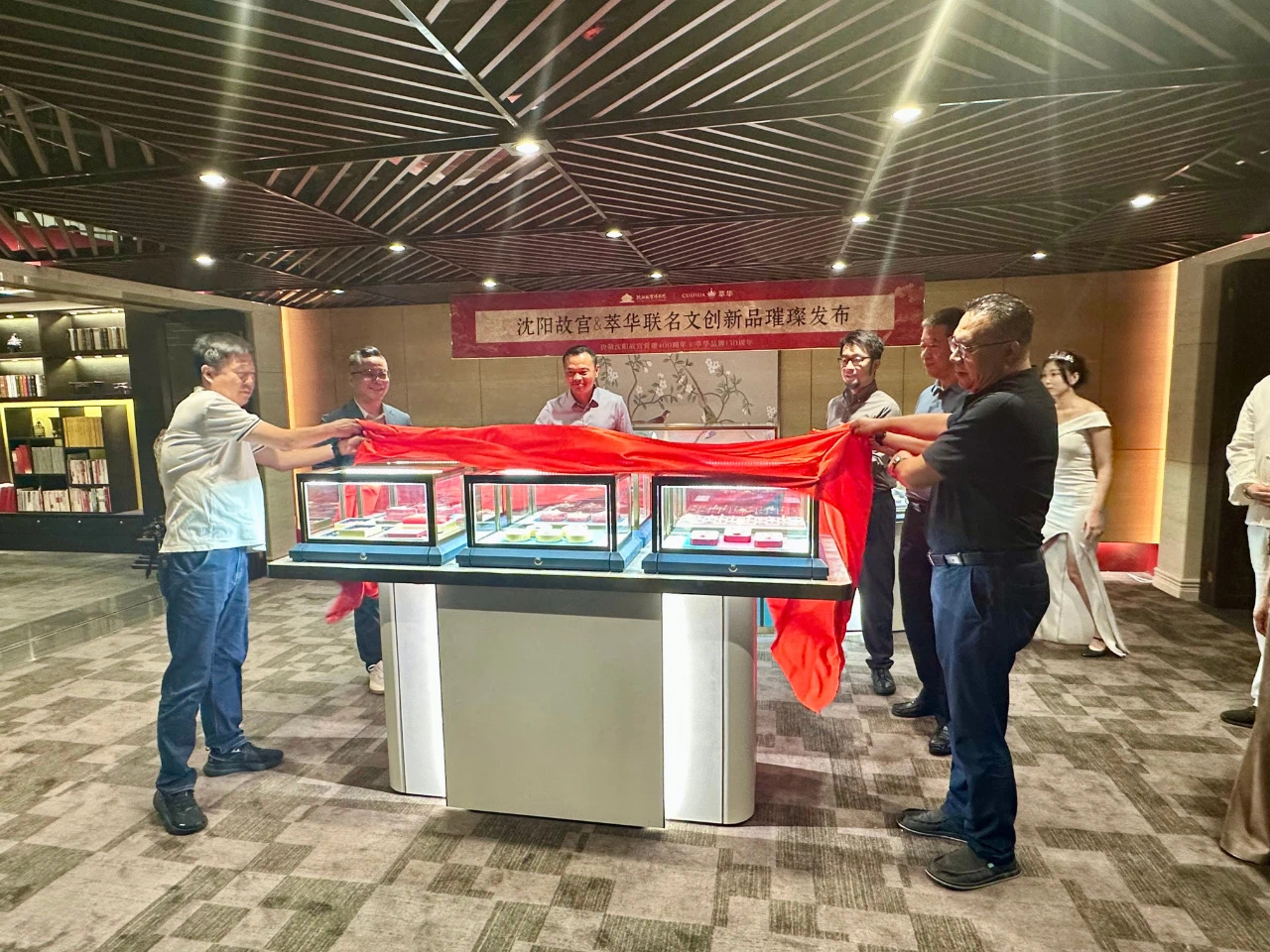
“万物灵粹 百宝纳福”——沈阳故宫博物院举行故宫福运系列联名文创首发仪式
Ren Min Wang· 2025-07-30 01:31
人民网沈阳7月26日电 (周颂雪)7月25日,沈阳故宫博物院举行"万物灵粹 百宝纳福"——故宫福运系列联名文创新品首发仪式。 据了解,融入沈阳故宫历史文化元素的"故宫福运"系列文创,对中国传统元素进行了精妙的提炼,又兼具了现代审美的创新。将沈阳故宫大政殿八角重 檐化作金饰的灵动之形;巧妙演绎沈阳故宫神兽的狮子衔红宝石、麒麟配青金石、甪端镶海蓝宝,"故宫福运"系列文创借助5D硬金工艺与五行哲学,将沈 阳故宫文化精髓完美呈现于每一件饰品之上,每一处细节均蕴含着精致与华美。 "故宫福运"系列文创产品不仅是文创大赛成果的转化,也是将"静止的历史"转化为可佩戴、可传播的文化符号的一次有效实践,让好创意真正转化为好 产品,助推沈阳文旅产业升级的同时,对"文化自信"进行生动诠释。未来,沈阳故宫博物院将继续推进获奖作品落地,让大赛效应持续释放,为沈阳文旅产 业持续注入新动能。 在"故宫新意·青春创造"2024沈阳文旅创意设计大赛征集的1878件作品中,共产生29个金、银、铜奖获奖作品以及52个优秀作品。今年,沈阳故宫营建 400周年之际,大赛评选出的文旅创意设计作品进行了有效的成果转化,优秀产品落地生花。本次发布的"万物灵粹 ...