养老

Search documents
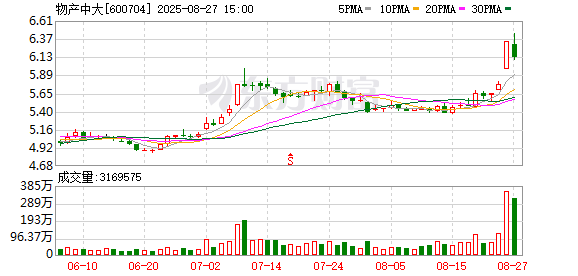
物产中大上半年净利润同比增长29.65% “一体两翼”战略持续深化
Zheng Quan Ri Bao· 2025-08-27 07:11
Core Viewpoint - The company, Wuchan Zhongda Group Co., Ltd., reported a slight decline in revenue but significant growth in profit metrics for the first half of 2025, indicating resilience and effective management strategies in a challenging market environment [2][3]. Financial Performance - The company achieved total revenue of 288.54 billion yuan, a year-on-year decrease of 1.92% [2]. - Total profit reached 3.74 billion yuan, reflecting a year-on-year increase of 16.03% [2]. - Net profit attributable to shareholders was 2.04 billion yuan, marking a year-on-year growth of 29.65% [2]. Business Segments - The core supply chain integration services generated 265.61 billion yuan, accounting for 92.06% of total revenue, with significant growth in key sectors [3]. - Steel sales reached 37.97 million tons, up 6.46% year-on-year, while coal sales increased by 14.13% to 31.90 million tons [3]. Strategic Initiatives - The company is advancing its "One Body, Two Wings" strategy, focusing on smart supply chain services and enhancing operational efficiency [2][3]. - In financial services, the Zhejiang International Commodity Trading Center has attracted 3,619 quality member enterprises, with a pre-sale trading volume of 26.26 billion yuan, a 3.46% increase [3]. - R&D expenses rose by 27.96% to 655 million yuan, supporting the high-end manufacturing sector, which generated 16.08 billion yuan in revenue [3]. Industry Positioning - Wuchan Zhongda is recognized as a leader in supply chain integration services and has been listed among the Fortune Global 500 for 15 consecutive years, ranking 149th in 2025 [2]. - The company is also exploring opportunities in public service sectors such as elder care and environmental services, aligning with government and market demands [4].


商务部:下个月将出台扩大服务消费若干政策措施
Sou Hu Cai Jing· 2025-08-27 06:08
Group 1 - The 2025 Service Trade Fair will be held in Beijing from September 10 to 14, with preparations nearly complete [1] - The Ministry of Commerce plans to implement a consumption stimulus action plan, focusing on policy promotion and coordination to enhance service consumption [1] - New policies will be introduced next month to optimize service supply capabilities and stimulate new service consumption growth [1] Group 2 - The main issue in China's service consumption is the insufficient supply of high-quality services, which will be addressed through increased openness and innovation [2] - The government aims to expand service supply in key areas such as health, elderly care, and domestic services to better meet consumer demand [2] - Innovative consumption scenarios will be supported to enhance service consumption quality and variety, including new business models and seasonal promotional activities [2]
优化提升服务供给,商务部9月将出台扩大服务消费若干政策措施
Sou Hu Cai Jing· 2025-08-27 04:21
Group 1 - The core viewpoint of the articles emphasizes the Chinese government's commitment to enhancing service consumption through policy measures and initiatives aimed at stimulating demand and improving service supply capabilities [1][4]. - The Ministry of Commerce plans to introduce several policy measures next month to expand service consumption, utilizing fiscal and financial tools to optimize service supply and stimulate new consumption growth [1]. - There is a focus on increasing the supply of high-quality services by promoting openness in various sectors such as telecommunications, healthcare, and education, and including more service consumption areas in the "Encouraging Foreign Investment Industry Directory" [1][2]. Group 2 - The articles highlight the rapid growth of service consumption in China, with per capita service consumption expenditure increasing at an annual rate of 9.6% from 2020 to 2024, and projected to account for 46.1% of total per capita consumption expenditure in 2024 [4]. - The government aims to release domestic demand potential by implementing special actions to boost consumption, focusing on both goods and service consumption growth points [4]. - The inclusion of sectors like housekeeping, cultural tourism, and education training into subsidy systems is expected to alleviate consumer cost pressures and stimulate service consumption demand, thereby enhancing the service industry's supply and expanding the market [5].

新华锦: 新华锦2025年半年度报告
Zheng Quan Zhi Xing· 2025-08-26 12:17
Core Viewpoint - The report highlights a significant decline in the company's financial performance for the first half of 2025, with a notable decrease in revenue and net profit compared to the same period in the previous year, attributed to increased competition and external economic factors [1][2][10]. Company Overview and Financial Indicators - Company Name: Shandong Xinhua Jin International Co., Ltd. - Stock Code: 600735 - Total Revenue for H1 2025: 668.87 million RMB, down 24.92% from 890.87 million RMB in H1 2024 [2][3]. - Total Profit: 48.60 million RMB, a decrease of 34.49% from 74.19 million RMB [2][3]. - Net Profit attributable to shareholders: 12.87 million RMB, down 39.45% from 21.25 million RMB [2][3]. - Net Cash Flow from Operating Activities: 77.26 million RMB, down 19.06% from 95.45 million RMB [2][3]. - Total Assets: 1.85 billion RMB, down 2.73% from 1.90 billion RMB [2][3]. Business Segments New Trade - Import and Export Business - The company focuses on the production and sales of hair products, with major export markets in North America, Europe, and Japan [3][10]. - The global wig market is projected to grow from 7.62 billion USD in 2022 to 13.28 billion USD by 2026, indicating a robust demand for hair products [3][10]. - The company faced challenges due to increased tariffs and inflation in key markets, leading to a decline in revenue from hair products by 11.29% [10][11]. Textile and Apparel Business - The textile and apparel segment primarily operates on an OEM basis, exporting to markets such as Japan, Europe, and the United States [3][10]. - In H1 2025, China's textile and apparel exports reached 143.98 billion USD, showing a slight increase of 0.76% year-on-year [3][10]. - The company is adapting to market changes by diversifying its export markets and enhancing customer relationships [10][11]. Cross-Border E-commerce - The cross-border e-commerce segment reported a revenue of 142.94 million RMB, down 28.56% due to currency fluctuations and geopolitical uncertainties [10][12]. - The company is investing in AI technology to enhance its e-commerce capabilities and improve marketing strategies [12][13]. New Materials - Graphite Business - The company operates two graphite mines, focusing on the extraction and processing of natural flake graphite [6][7]. - China holds 27.86% of the world's graphite reserves, and the company aims to leverage its resource advantages for future growth in the graphite sector [6][7]. Elderly Care and Health Business - The company has established a light-asset operation model in the elderly care sector, providing comprehensive consulting and operational services [8][9]. - The aging population in China is expected to drive growth in the silver economy, with significant government support for the industry [8][9].

如何在三四线城市赚大钱?教你10个复制策略,缺什么就复制什么
Sou Hu Cai Jing· 2025-08-25 10:40
Core Insights - The article argues that third and fourth-tier cities present significant wealth opportunities that are often overlooked due to perceptions of lower consumer power compared to first and second-tier cities [1][47][50] Group 1: Investment Opportunities - Many successful business models from first and second-tier cities can be replicated in third and fourth-tier cities, where competition is lower and investment costs are reduced [5][50] - The consumer behavior in third and fourth-tier cities shows a strong tendency for "follow-the-trend" consumption, making it easier to introduce new concepts [5][50] Group 2: Replication Strategies - **Food and Beverage**: Replicating popular dining concepts from first and second-tier cities can attract young consumers in third and fourth-tier cities [8][9] - **Health and Fitness**: Establishing well-equipped gyms can fill a gap in the market, as health consciousness is rising among younger demographics [12][13] - **Retail Innovations**: Introducing modern retail formats like convenience stores and fresh supermarkets can significantly improve the shopping experience [15][16] - **Education and Training**: There is a demand for educational services, including tutoring and skill training, which remains underdeveloped in smaller cities [20][21][24] - **Entertainment and Leisure**: Creating social venues and entertainment options can cater to the lack of recreational activities in these areas [25][27] - **Marriage and Social Services**: There is a notable absence of marriage and social platforms, presenting an opportunity to introduce these services [27][28] - **Home Services**: The demand for reliable home services is high, and replicating successful models from larger cities can quickly build a customer base [32][33] - **Local Internet Business**: Leveraging e-commerce and social media marketing can help local businesses thrive in third and fourth-tier cities [35][37] - **Elderly Care**: The aging population in these cities creates a market for elder care services, which are currently lacking [39][40] - **Platform Thinking**: Transitioning from small businesses to platform-based models can yield greater financial returns [44][45] Group 3: Conclusion - The article concludes that third and fourth-tier cities are often underestimated as wealth generation areas, and the key to success lies in replicating proven business models rather than creating unique concepts [47][48][50]

解码银发经济:在需求迭代中挖机遇 在产业升级中提能级
Zheng Quan Ri Bao· 2025-08-24 15:59
Group 1: Market Potential and Growth - The aging population in China is expected to exceed 400 million by 2035, leading to a significant market potential for the silver economy, projected to reach 30 trillion yuan [1] - In 2025, the sales revenue of elderly care services is expected to grow significantly, with increases of 40.9% for disability care services, 14.1% for elderly home services, and 8.8% for social care services, all outpacing the national average [2] - The number of newly established elderly care-related enterprises in China has reached 49,640 this year, with a total of 596,100 enterprises in the sector, indicating strong market recognition [1][2] Group 2: Technological Integration - The role of technology in elderly care is evolving from an auxiliary tool to a core driver, with data technology being integrated into care services [3] - Health monitoring devices from companies like Lepu are enabling real-time health data tracking for the elderly, improving emergency response times [3] - The introduction of smart care devices is addressing traditional challenges in elderly safety monitoring, indicating a shift towards intelligent elderly care solutions [3] Group 3: Policy Support and Capital Investment - Government policies are providing substantial support for the elderly care sector, including subsidies for new care facilities and operational support based on occupancy [4] - Capital markets are increasingly focused on the silver economy, with 56 related companies raising 216.43 billion yuan through public offerings, and 17 elderly care-themed bonds raising 11.82 billion yuan [5] - The establishment of 1,190 elderly care-themed funds, with a total scale exceeding 1.45 trillion yuan, is facilitating investment in specialized areas like smart elderly care [5] Group 4: Consumer Awareness and Market Dynamics - Despite positive growth, consumer awareness remains a challenge, with many elderly individuals lacking understanding of healthcare products and services [6] - Companies are addressing this through experiential marketing and educational initiatives to enhance elderly consumers' understanding of medical knowledge [7] - The shift from supply-driven to demand-driven market dynamics is expected to stimulate further growth in the silver economy, as consumer awareness of quality and smart elderly care increases [7]

国泰海通|宏观:前瞻“十五五”:预期目标与产业机遇
国泰海通证券研究· 2025-08-24 13:35
Core Insights - The "14th Five-Year Plan" focuses on expanding consumption, new productive forces, common prosperity, deepening reforms, and green transformation, with an emphasis on emerging future industries, services, marine and green low-carbon sectors, and potential beneficiaries such as private tech firms and state-owned enterprises in emerging industries [1] Summary by Sections Economic Growth and Innovation - The GDP annual growth target for the "14th Five-Year Plan" period is expected to be set between 4.5% and 5.0%, with a bottom line of over 4.5% to ensure the successful completion of the 2035 long-term goals [2] - The innovation-driven target for the "14th Five-Year Plan" is anticipated to be significantly higher than that of the "13th Five-Year Plan," emphasizing the national innovation system and the vitality of various innovation entities and talent support [2] Common Prosperity and Reforms - The plan aims to enhance the well-being of citizens by adding new targets related to housing, healthcare, elderly care, and childcare, with a focus on investing more resources in human capital and public services [3] - Over 300 reform measures from the 20th National Congress are expected to be key focuses of the "14th Five-Year Plan," targeting the reduction of logistics costs and promoting a unified national market [4] Green Transformation - The green low-carbon goals may include a primary focus on controlling carbon emission intensity, with supplementary total control measures, aiming to reduce carbon emissions per unit of GDP [5] - The plan aims to achieve carbon peak by 2030, with clear frameworks for the development goals of energy-saving and environmental protection industries, new energy, and low-carbon transportation [9] Industry Opportunities - Emerging and future industries such as electronic information manufacturing, humanoid robots, and brain-computer interfaces are expected to see rapid market penetration and technological breakthroughs [6] - There is significant potential for growth in service consumption sectors like retail, healthcare, elderly care, telecommunications, and internet services, as well as in productive service industries like science and technology, finance, and information services [7] - The marine industry, particularly in marine tourism, transportation, shipbuilding, electricity, and biomedicine, is projected to accelerate due to favorable policies and market conditions [8]

前瞻“十五五”:预期目标与产业机遇
Haitong Securities International· 2025-08-24 09:13
Economic Growth and Policy Goals - The GDP annual growth target for the "15th Five-Year Plan" is set between 4.5% and 5.0%, with a minimum of 4.5% to ensure the 2035 vision is achieved[2]. - The focus on developing new productive forces will see a significant increase in innovation-driven targets compared to the "14th Five-Year Plan"[2]. - The plan aims to enhance living standards with new targets in housing, healthcare, and elderly care, emphasizing investment in human resources[2]. Reform and Green Transition - Over 300 reform measures from the 20th Central Committee will be prioritized in the "15th Five-Year Plan," focusing on comprehensive reforms[2]. - The green transition will shift from energy consumption control to carbon emission control, aiming for a 65% reduction in carbon intensity by 2030 compared to 2005 levels[19]. Industry Opportunities - Emerging industries such as electronic information manufacturing and humanoid robots are expected to see rapid market penetration and technological breakthroughs[3]. - The service sector, including retail, healthcare, and telecommunications, has significant growth potential, driven by rising consumer demand[3]. - The marine economy, particularly in tourism and transportation, is projected to grow rapidly, with a focus on policy support[3]. Risks and Challenges - There are risks related to misinterpretation of policies and unexpected changes in domestic and international macroeconomic conditions[39].
从互联网到AI,平安超级入口的价值畅想
Sou Hu Cai Jing· 2025-08-23 15:43
Core Insights - Ping An Good Doctor has shown significant growth, with revenue reaching 2.5 billion yuan and net profit of 134 million yuan for the first half of 2025, marking year-on-year increases of 19.5% and 136.8% respectively [1] - The company has established itself as a key player in the healthcare and elderly care sectors, focusing on a "medical care + comprehensive finance" strategy, which has positioned it centrally within the Ping An Group [1][3] Business Model and Strategy - The business model of Ping An Good Doctor revolves around two main services: family doctors and home elderly care, addressing the public's needs for medical access and elder care [3] - Unlike competitors that focus on pharmaceutical e-commerce or heavy investments in building elderly care facilities, Ping An Good Doctor has opted for a platform-based approach that integrates quality medical and care resources [5][6] Market Position and Competitive Advantage - The company has built a comprehensive medical ecosystem, establishing partnerships with over 5,000 hospitals and 106,000 health service providers, which enhances its service delivery capabilities [7] - By focusing on preventive care, diagnosis, and rehabilitation, Ping An Good Doctor has differentiated itself from other internet healthcare platforms that primarily rely on drug sales [4][5] Data and AI Integration - Ping An possesses extensive medical data, including 1.46 billion medical consultations and 12 million health check reports, which supports its AI-driven healthcare solutions [19][20] - The company has developed a multi-modal AI model, "Ping An Medical Assistant," which enhances service efficiency and accuracy in various healthcare scenarios [22][23] Financial Performance and Growth Potential - The integration of healthcare services has positively impacted Ping An's insurance business, with new business value in life and health insurance reaching 12.89 billion yuan, a growth rate of 34.9% [12][13] - The company's strategy of combining healthcare with financial services is expected to create a robust entry point for high-value business opportunities, similar to successful models in other industries [15][23]


新职业养老服务师发布:泰康之家打造人才高地助力行业转型
Qi Lu Wan Bao· 2025-08-22 12:36
Core Viewpoint - The aging population in China is driving significant changes in the elder care industry, with the introduction of the new profession "Elder Care Service Specialist" marking a key step towards professionalizing the elder care system to address the challenges of aging [1][9][24] Group 1: Industry Transformation - The elder care service industry is transitioning from a low-threshold, extensive growth model to a high-quality, standardized, intelligent, and talent-driven transformation [13] - The establishment of the "Elder Care Service Specialist" profession aims to cover critical nodes and multidimensional tasks in the elder care process, reflecting a service "closed-loop" model [9][13] - The demand for professional, personalized, and multi-layered care services is increasing as the needs of the elderly shift from "survival" to "development" [9][24] Group 2: Company Practices - Taikang Home has developed an innovative "1+N" multidisciplinary care model, creating a team that includes case managers, nurses, rehabilitation specialists, pharmacists, social workers, and more to provide comprehensive care for the elderly [9][24] - The company has established training bases across six regions in China to standardize service skills and enhance the quality of the workforce [24] - Taikang Home's memory care team undergoes extensive training, including 8 hours of basic training and 30 hours of specialized training, ensuring high standards in dementia care [22] Group 3: Professional Development - The role of the Elder Care Service Specialist is multifaceted, requiring a solid foundation in nursing skills, the ability to assess elderly capabilities, and the coordination of multidisciplinary teams [7][9] - The company emphasizes the importance of continuous professional development, with a focus on integrating international best practices into local care methods [22] - Taikang Home's commitment to creating career advancement pathways for frontline professionals enhances employee motivation and stability within the workforce [24]