快餐

Search documents
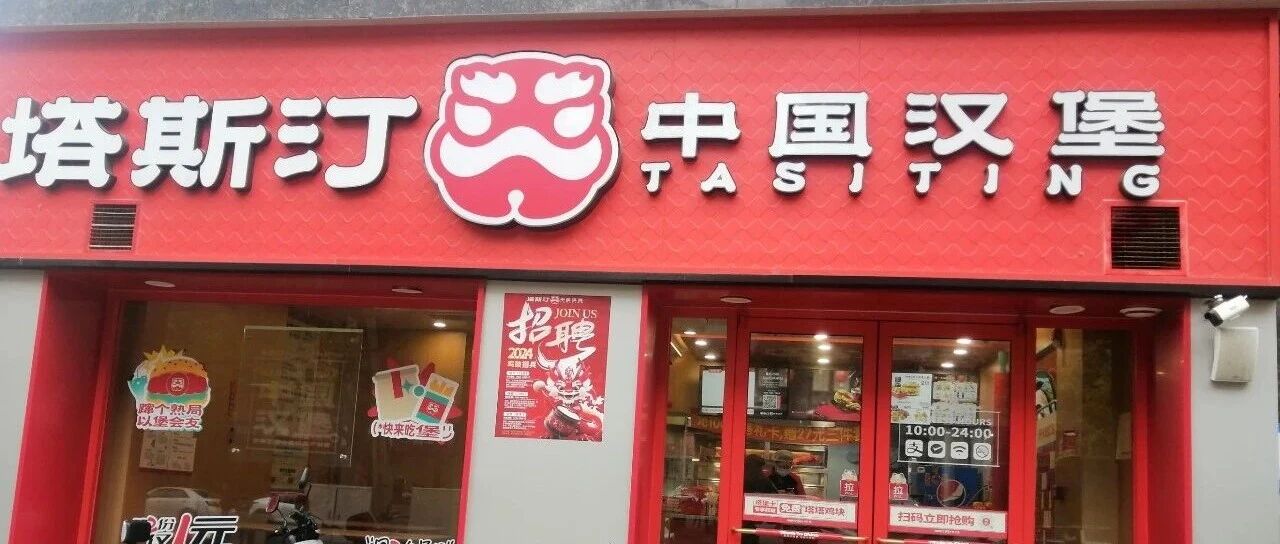
万店塔斯汀:开得快,关得也快
凤凰网财经· 2025-11-19 06:44
Core Viewpoint - The article discusses the rapid expansion and challenges faced by the Chinese fast-food brand Tasting, emphasizing that while achieving a large number of stores is impressive, maintaining high-quality individual outlets is crucial for long-term success [1]. Group 1: Expansion and Store Count - Tasting has rapidly expanded to 10,289 stores as of November 18, 2023, up from around 500 in 2020, marking an increase of over 2,000 stores annually [2][3]. - Despite the impressive store count, Tasting is experiencing a significant "high open, high close" phenomenon, with 1,016 new openings and 810 closures in the last 90 days [2][3]. Group 2: Pricing and Market Position - Tasting's initial success was attributed to its competitive pricing and unique positioning as a "Chinese hamburger" brand, but these advantages are now being challenged [4][11]. - Consumer complaints about price increases have surged, with examples showing significant price hikes for menu items from 2023 to 2025 [5][7][9]. Group 3: Competitive Landscape - Tasting faces increasing competition from both international brands like KFC and McDonald's, which are enhancing their value offerings and targeting the same price-sensitive consumer base [10][11]. - New local brands are emerging, intensifying competition in the "Chinese hamburger" segment, with some offering lower prices and better value propositions [15][16]. Group 4: Quality Control Issues - Rapid expansion has led to significant quality control issues, including reports of using expired ingredients and poor hygiene practices in stores [18][19]. - Consumer complaints about undercooked meat have been prevalent, indicating serious food safety concerns that could damage the brand's reputation [20][23]. Group 5: Brand Identity Challenges - Tasting is struggling with brand dilution as numerous similar-sounding brands have emerged, which could confuse consumers and weaken Tasting's market position [17].

百胜中国立下三万家门店扩张雄心:肯德基三年后年利润过百亿,必胜客五年利润翻一番
Cai Jing Wang· 2025-11-19 04:42
Core Insights - Yum China is focusing on operational efficiency and menu innovation to reshape its RGM strategy, aiming to double its store count by 2030 [1][4] - The company has set ambitious growth targets for its brands, including KFC and Pizza Hut, with plans to expand significantly in the coming years [1][4] - Pizza Hut has achieved 11 consecutive quarters of same-store traffic growth, indicating a successful strategy in enhancing customer engagement [2][4] Store Expansion Goals - Yum China plans to increase KFC's store count by approximately one-third to over 17,000 by 2028 [1] - Pizza Hut aims to add over 600 new stores annually, crossing the 6,000 store mark by 2028 [1] - K Coffee is expected to grow from over 1,800 locations to over 5,000 by 2029 [1] Menu and Product Strategy - The company has successfully launched over 100 products with annual sales exceeding 100 million RMB, showcasing its focus on high-performing items [2] - Pizza Hut has reduced its product line from 105 to under 80, focusing on high-demand items like the 10-inch handmade thin crust pizza [2][3] - KFC's menu innovations include affordable options like the 10.9 to 14.9 RMB Huangmen Chicken Rice, targeting budget-conscious consumers [11][13] Operational Efficiency - The average investment return period for new stores has been reduced from three years to 2-3 years [5] - The introduction of AI systems aims to enhance operational efficiency, with a target of achieving a restaurant profit margin of at least 16.7% by 2028 [12] Market Positioning - Yum China is strategically targeting lower-tier cities to expand its market presence, with a focus on affordability and accessibility [5][11] - The company is leveraging its supply chain efficiency to maintain competitive pricing while ensuring profitability [7][9] Financial Performance and Goals - Pizza Hut's restaurant profit margin was reported at 12% last year, with a slight increase to 13.3% and 13.4% in Q2 and Q3 of this year [3][4] - The company aims for Pizza Hut's operating profit to double by 2029, with a compound annual growth rate target of 15-17% [4][12]
年薪1亿的女强人 驱动肯德基凶猛开店
2 1 Shi Ji Jing Ji Bao Dao· 2025-11-19 03:01
Core Insights - Yum China CEO, Qu Cui Rong, announced ambitious expansion plans aiming for KFC's operating profit to exceed 10 billion yuan by 2028 and to increase the number of stores to 17,000 [1] - The strategy focuses on resource sharing and integration across stores, regions, and brands to create stronger synergies [1] - KFC has been operating in China for 38 years, currently present in over 2,500 cities, with plans to strengthen its presence in high-tier cities and expand into over 2,000 lower-tier cities [1] KFC Expansion Plans - As of September, KFC has 12,640 stores in China [2] - To meet the new plan, approximately 4,360 new stores need to be added in 39 months, averaging about 110 new stores per month, which aligns with the current pace of 992 new stores added from January to September [3] - KFC's operations are currently in a favorable state [4] Financial Performance - For the third quarter, KFC's system sales grew by 5% year-on-year, with same-store sales increasing by 2%, while the average transaction value decreased by 1% [5] - The takeaway sales surged by 33% year-on-year, accounting for 51% of KFC's restaurant revenue, with a restaurant profit margin of 18.5%, up by 20 basis points [5] - The company anticipates additional revenue and profit from resource sharing and membership programs, as well as local innovations in menu offerings [5] Pizza Hut Growth Strategy - Qu Cui Rong also announced that Pizza Hut is entering an accelerated growth phase [6] - The brand has entered 1,000 cities in China but is still absent in 1,500 cities where KFC is present [7] - The plan is to increase the number of Pizza Hut stores from 4,000 to over 6,000 by 2028, with a target restaurant profit margin of at least 14.5% [7] Leadership and Shareholder Returns - Qu Cui Rong has been CEO since March 2018, with a goal set for 2028, reflecting her aspirations for her 10-year tenure [8] - Under her leadership, Yum China's net profit increased from $708 million in 2018 to an expected $911 million in 2024, a 30% rise [8] - Starting in 2027, Yum China plans to return approximately 100% of free cash flow to shareholders, with an expected return exceeding $1 billion by 2028 [10] Market Reaction - Following the positive announcements, Yum China's stock price rose by 1.5% on November 18, with a market capitalization of 132.5 billion HKD [11]
读懂百胜中国,先学会如何拼好一只鸡
36氪· 2025-11-18 14:10
Core Insights - The article emphasizes the importance of maximizing the value of every part of a chicken in the restaurant industry, particularly for companies like Yum China, which operates KFC and Pizza Hut [3][20][43] - Yum China's strategy focuses on maintaining competitive pricing while enhancing supply chain efficiency and product innovation, allowing the company to thrive in a competitive market [8][10][18] Group 1: Company Strategy - Yum China's CEO, Joey Wat, highlighted that since 2016, the Consumer Price Index (CPI) in China has risen by 13%, yet the company has not passed these costs onto consumers, focusing instead on value for money [8] - The company employs a strategy called "拼出一只鸡" (拼出一只鸡), which emphasizes flexible procurement and a diverse supplier base to enhance supply chain efficiency [10] - Yum China has introduced over 1,600 innovative or upgraded products in the past three years, with more than 100 products generating annual sales exceeding 100 million [24] Group 2: Market Potential - The article notes that China's restaurant chain penetration is only about 20%, significantly lower than over 50% in mature markets, indicating substantial growth potential [16] - By 2030, the frequency of dining out in China is expected to increase from 3.5 times to 5.5 times per week, suggesting a rising consumer demand [16] - Yum China's growth strategy includes expanding its brand portfolio to cover a larger portion of the population, aiming to increase its customer base from one-third to one-half of China's population [34][42] Group 3: Operational Efficiency - The company has streamlined its supply chain by eliminating unnecessary complexities, allowing for a more efficient use of resources and better product innovation [23][26] - The role of Restaurant General Managers (RGM) is crucial in connecting the operational front with the underlying supply chain and innovation processes, ensuring effective execution of strategies [30][31] - Yum China's focus on digital infrastructure and AI technologies has reduced trial and error costs, enabling more efficient store operations and better inventory management [26] Group 4: Future Goals - Yum China aims to have over 17,000 KFC outlets by 2028, with a projected operating profit exceeding 10 billion yuan [37][43] - The company plans to double the operating profit of Pizza Hut by 2029 compared to 2024, with a target of over 6,000 Pizza Hut locations by 2028 [39][43] - The multi-brand strategy is designed to create layered offerings that cater to different consumer needs, enhancing market penetration and brand reach [42]


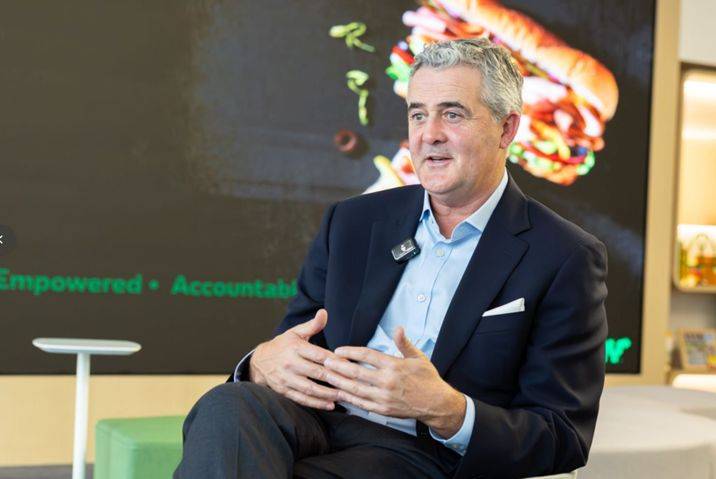
竞争对手纷纷“让股”换增长 赛百味全球CEO访华曝光外资餐饮生存新法则
Mei Ri Jing Ji Xin Wen· 2025-11-18 13:21
Core Insights - Major adjustments in the international restaurant industry are highlighted by Starbucks and Burger King's recent decisions to sell their stakes in the Chinese market, reflecting common challenges such as rising costs, intense competition, and urgent localization needs [1] - Subway's global CEO, Jonathan Fitzpatrick, emphasizes the importance of the Chinese market for growth, noting the company's plans to open 4,000 new stores in China [1][4] Company Strategy - Subway has over 35,000 stores globally, but its store count has decreased by nearly 10,000 from its peak [3][4] - The company plans to open 220 new stores in China in 2024, setting a record for annual openings in its 30 years in the market [4] - A significant franchise agreement with Shanghai FRS aims to expand Subway's presence in China, potentially increasing its market size by over seven times [4] Market Dynamics - The competitive landscape in China is intensifying, with major players like McDonald's and KFC expanding their store counts significantly [6] - Subway's current store count in China has surpassed 1,000, but it still lags behind competitors in terms of brand recognition and market presence [6][9] Consumer Trends - Fitzpatrick identifies the need for menu innovation to cater to local tastes, particularly emphasizing the importance of breakfast offerings in China [7][8] - The company is focusing on digitalization to attract younger consumers, enhancing operational efficiency and customer experience [8][9] Future Outlook - Subway aims to reach 4,000 stores in China, with aspirations for further expansion, including potential public listing plans [9] - The insights gained from the Chinese market are expected to inform Subway's global strategy and transformation efforts [9]
海底捞旗下「小嗨爱炸」首开汉堡店&披萨店
东京烘焙职业人· 2025-11-18 08:33
Brand Background - The brand "Xiao Hai Ai Zha" under Haidilao has opened its first hamburger and pizza store in Xi'an on November 14, 2023, with plans for a second store in Changsha in December [2] - The new store is an upgrade from the original "Xiao Hai Ai Zha" outlets, which initially focused on fried chicken [2][6] Brand Observation - Haidilao continues to innovate and adjust its sub-brands, focusing on smaller store formats and targeted products to explore broader market potential [10] - The Chinese hamburger market is expected to grow from 6 billion in 2022 to 70.4 billion by 2027, with a compound annual growth rate (CAGR) of 64% [10] - The pizza market in China is projected to reach 48 billion in 2024 and grow to 77.1 billion by 2027, with a CAGR of 15.5% from 2022 to 2027 [10] - Both hamburger and pizza products target young consumers, and Haidilao's strategy includes local innovation to differentiate itself in a competitive market [10]


光大新鸿基每日策略-20251118
光大新鸿基· 2025-11-18 06:10
Market Overview - The Hang Seng Index closed at 26,384 points, down 188 points or 0.71%[6] - The total turnover was HKD 217.61 billion, a decrease of 6.5% from the previous day[6] - The US Dow Jones Index fell to 46,590 points, down 557 points or 1.18%[6] Key Stock Performances - Ctrip (9961.HK) reported a net profit of RMB 19.89 billion for Q3, a year-on-year increase of 194%[6] - China Hongqiao (1378.HK) plans to place up to 400 million shares at a price of HKD 29.2, raising approximately RMB 11.49 billion for project development and debt repayment[6] - Lithium stocks surged, with Ganfeng Lithium (1772.HK) rising about 9.0% and Tianqi Lithium (9696.HK) increasing by 5.7%[6] Economic Indicators - Foreign investors have reduced their holdings in Chinese bonds for six consecutive months[2] - The US two-year bond yield is currently at 3.6018%, with a year-to-date change of -63.98 basis points[21] - The US ten-year bond yield stands at 4.1328%, down 43.62 basis points year-to-date[21] Commodity Prices - New York crude oil closed at USD 59.91 per barrel, down 0.3%[6] - Brent crude oil also fell by 0.3%, closing at USD 64.20[6] - New York gold futures increased by 52.87% year-to-date, closing at USD 4,074.50[4] IPO and New Listings - The IPO for "Innovation Industry" (2788.HK) is set to begin subscription on November 14 and will close on November 19, with the listing date on November 24[18]

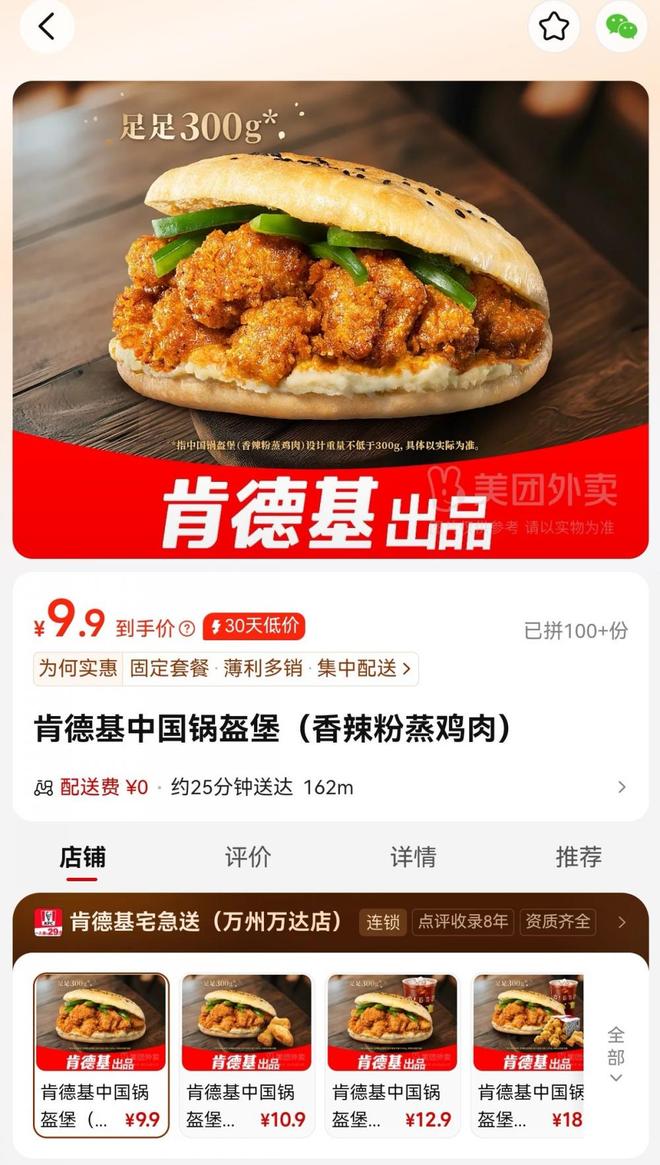
肯德基与美团拼好饭联合定制套餐,推出锅盔堡、黄焖鸡等新品
2 1 Shi Ji Jing Ji Bao Dao· 2025-11-17 13:27
Core Insights - KFC has partnered with Meituan's "Pin Hao Fan" to develop new meal sets, including the Chinese Guokui Burger and Huangmen Chicken Rice, priced at 10.9 yuan and 14.9 yuan respectively, attracting significant consumer interest [1][4] - The trend of "group ordering for takeout" is gaining popularity among younger consumers, prompting both domestic and international fast-food brands to explore this cost-effective dining model [1][4] - Meituan reports that "Pin Hao Fan" has surpassed 35 million daily orders and has over 270 million users, with more than 5,000 restaurant brands participating [4][5] Industry Trends - The number of well-known brands operating on "Pin Hao Fan" has increased by 64% year-on-year, with merchants experiencing a 30% growth in orders and a 20% reduction in operational costs after joining [4][5] - "Pin Hao Fan" is recognized as the fastest-growing innovative product in the industry over the past five years, providing a reliable growth path for restaurant brands [4] - The platform's unique model, which focuses on standard meal sets and centralized delivery, allows merchants to create popular dishes and achieve economies of scale [4][5] Brand Collaborations - KFC and other brands like Haidilao and Luckin Coffee are actively collaborating with "Pin Hao Fan" to develop new products tailored for the platform [1][4] - Successful collaborations have been noted, such as the partnership between Laoxiangji and "Pin Hao Fan," which sold over 2 million units of a customized dish in six months [5] - The "Wanjia Brand" initiative launched by "Pin Hao Fan" aims to support 10,000 well-known restaurant brands with resources for traffic, joint customization, and brand support [4]

餐饮下沉新样本:鱼你在一起如何用品质快餐在县域市场扎好根
Sou Hu Cai Jing· 2025-11-17 11:46
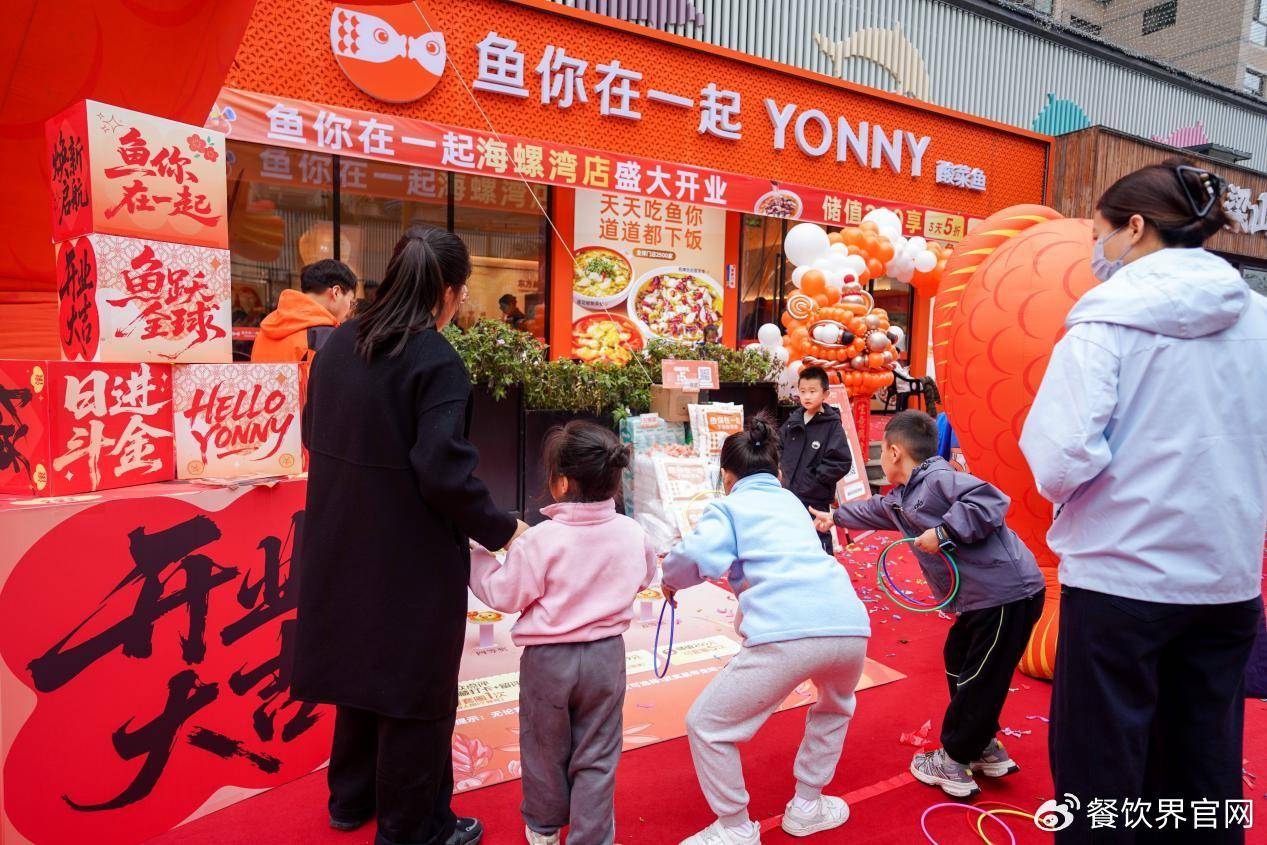
Core Insights - The Chinese catering industry is experiencing structural changes, with first-tier cities facing growth pressure while lower-tier cities are becoming the main growth drivers [1] - The market size of the catering industry is expected to reach 6.2 trillion yuan, with an annual compound growth rate of 8%-10% over the next five years [1] - The brand "Fish You Together" has rapidly expanded in lower-tier markets, demonstrating strong adaptability and growth potential [1][2] Industry Overview - In the first nine months of 2025, China's catering revenue reached 40,989 billion yuan, a year-on-year increase of 3.3% [1] - The growth rate of stores in third-tier and below cities is as high as 12%, indicating a significant shift towards lower-tier markets [1] - Urbanization is narrowing the income and consumption gap between lower-tier and first-tier cities, leading to increased consumer potential in lower-tier markets [1] Company Strategy - "Fish You Together" opened its first 5.0 new image store in a lower-tier market, showcasing its strategic capability [2][4] - The brand focuses on providing quality dining experiences in lower-tier markets, combining aesthetic design with a comfortable dining environment [4][6] - The founder emphasizes the importance of early strategic planning for supply chain and franchise systems to achieve scalable expansion [7] Operational Model - The brand's operational success in lower-tier markets is supported by a systematic operational model that differentiates it from traditional fast-food giants [8] - The brand offers a combination of quality and value, with a pricing strategy that targets the 30-40 yuan range, aligning with consumer expectations in lower-tier cities [11] - A standardized supply chain ensures consistent quality across over 2,500 stores, enabling rapid replication in lower-tier markets [12] Competitive Landscape - The competition in lower-tier markets is intensifying, with over 15,000 chain brands entering this space [8] - "Fish You Together" aims to create a comprehensive system that includes product innovation, supply chain stability, operational efficiency, and franchise support [15] - The brand's approach reflects a long-term strategy focused on building deep consumer relationships rather than quick market penetration [16]
专访 | 对手纷纷“让股”换增长 赛百味全球CEO访华曝光外资餐饮生存新法则
Sou Hu Cai Jing· 2025-11-17 09:41
Core Insights - Major adjustments in the international restaurant industry are highlighted by Starbucks and Burger King's recent decisions to sell stakes in their Chinese operations, reflecting common challenges such as rising costs, intense competition, and urgent localization needs [1][3] Group 1: Company Strategies - Subway's CEO Jonathan Fitzpatrick emphasizes the importance of the Chinese market, stating it is the fastest-growing market globally for the company [3][4] - Subway plans to open 4,000 new stores in China over the next 20 years, aiming to increase its market presence sevenfold [7][8] - The company has recently signed a significant franchise agreement with Shanghai FRS, allowing them exclusive rights to manage and develop all Subway stores in mainland China [7][8] Group 2: Market Dynamics - The competitive landscape in China is intensifying, with major players like McDonald's and KFC expanding their store counts significantly, posing challenges for Subway [9][12] - Despite Subway's growth, it still lags behind competitors in terms of store numbers and brand recognition in the Chinese market [9][11] Group 3: Menu Innovation and Localization - Fitzpatrick highlights the importance of menu innovation, particularly in breakfast offerings, which have seen significant sales growth due to local adaptations [11][12] - The company is focusing on creating menu items that resonate with Chinese consumers, moving away from a one-size-fits-all approach [11][12] Group 4: Digital Transformation - Digitalization is identified as a key strategy to attract younger consumers, enhancing operational efficiency and customer experience [12][14] - The company aims to leverage digital technologies to improve its market position and customer engagement [12][14] Group 5: Future Outlook - Subway's growth strategy in China is seen as a potential model for global expansion, with plans for an IPO that could further enhance its valuation [15] - The insights gained from the Chinese market are expected to inform Subway's global transformation efforts [15]