脑机接口

Search documents
投资前瞻(1.19—1.25)|时隔两年,融资保证金比例回归100%;多家光伏上市公司预亏
和讯· 2026-01-18 10:16
Macro and Financial - The central bank has injected medium-term liquidity into the market through reverse repos for the eighth consecutive month [2] - The "15th Five-Year" period's investment plan for the power grid has increased by 40% compared to the "14th Five-Year" plan, leading to a strong performance in power grid equipment stocks last week [2][10] - The financing margin ratio has returned to 100% after two years, but historical data shows that changes in the financing margin ratio do not significantly impact the market trend [2][20] - Several photovoltaic listed companies are expected to report losses [2][31] Government Investment Fund - A new guideline has been issued to strengthen the planning and guidance of government investment funds, focusing on efficiency and market order [3][4] - The guideline emphasizes supporting the construction of a modern industrial system and key core technologies, while avoiding blind competition and supporting small and specialized enterprises [4] Trade Data - December's import and export data significantly exceeded expectations, with exports increasing by 6.6% year-on-year, while imports rose by 5.7% [5][6] - The trade data indicates a shift in trade dynamics, with increased exports to countries involved in the Belt and Road Initiative [6] Capital Market - The China Securities Regulatory Commission has opened public consultation on the first derivative trading regulations, aiming to enhance risk management and support the real economy [16] - A significant amount of restricted shares, valued at approximately 464.99 billion yuan, will be unlocked next week [21] - Three new stocks are set to be issued next week, with specific details on their issuance prices and codes [22] Industry Developments - The domestic nuclear fusion company has set a record for financing with a 1 billion yuan A-round investment [24] - The automotive industry in China is projected to achieve record production and sales in 2025, with a strong emphasis on new energy vehicles [27]



意念控物成真!脑机接口产业化爆发,这波机会别错过!
格隆汇APP· 2026-01-18 08:23
Core Viewpoint - The brain-computer interface (BCI) industry is entering a critical phase of industrialization, driven by strong policy support, clinical advancements, financing growth, and the formation of a complete industrial chain [6][9]. Policy Support - The Chinese government has consistently prioritized BCI in its development plans, with significant policy support expected in 2025, including the establishment of special funds by local governments [9]. - The "China Brain Project" and the "14th Five-Year Plan" highlight the importance of BCI, indicating a robust commitment to its development [9]. Clinical Advancements - The number of clinical trials in China is projected to increase significantly by 2025, with breakthroughs in invasive, semi-invasive, and interventional technologies [9]. - Notable achievements include the completion of the world's first interventional BCI human trial and the development of advanced devices that are fully implanted and wireless [9]. Financing Growth - In the first 11 months of 2025, there were 24 financing events in the BCI sector, marking a 30% year-on-year increase, supported by government funds and market capital [9]. - Various companies have secured significant funding, indicating strong investor interest in the sector [11]. Industrial Development - The BCI industry is evolving into a trillion-yuan market, with over 40 clinical research wards established nationwide, enhancing the ecosystem from core components to complete systems [7][9]. - The industry is witnessing a shift from experimental concepts to practical applications across medical, industrial, and transportation sectors [7]. Technological Breakthroughs - BCI technology is categorized into invasive, semi-invasive, and non-invasive types, with invasive methods offering superior signal quality [12]. - Domestic advancements include breakthroughs in electrode arrays and decoding algorithms, achieving over 90% accuracy in Chinese character writing recognition [14]. Application Scenarios - BCI applications are expanding into various fields, including medical rehabilitation, industrial safety, aerospace, and entertainment, with specific use cases such as fatigue monitoring and cognitive health assessments [15][12]. - The technology is being utilized to assist patients with spinal injuries and other conditions, while also being tested in industrial settings for safety monitoring [14][15]. Investment Opportunities - The BCI sector presents significant investment opportunities, particularly in three areas: technology-leading companies, clinical implementation firms, and industry-collaborative enterprises [18][20]. - Companies with advanced technologies in invasive and interventional methods, as well as those with established clinical partnerships, are expected to yield substantial returns [20][21].

意念控物成真!脑机接口产业化爆发,这波机会别错过!
Xin Lang Cai Jing· 2026-01-18 04:03
Core Insights - Brain-computer interfaces (BCIs) are emerging technologies that enable direct communication between the brain and external devices, with applications in medical, industrial, and transportation sectors [1][4] - The Chinese government has included BCIs in its key development list for future industries, with intensified policy support and accelerated clinical trials expected by 2025 [2][5] Policy Support - The Chinese government has consistently prioritized BCIs in its development plans, with significant policies expected to be rolled out by 2025, including local governments establishing special funds [5][6] Clinical Advancements - By 2025, the number of clinical trials for BCIs in China is projected to increase significantly, with breakthroughs in invasive, semi-invasive, and interventional technologies, including the world's first interventional BCI human trial [5][12] Financing Trends - In the first eleven months of 2025, there were 24 financing events in the BCI sector in China, marking a 30% year-on-year increase, supported by government funds and market capital [5][7] Industry Development - The BCI industry is evolving into a trillion-yuan market, with over 40 clinical research wards established nationwide, and a complete industrial ecosystem forming to support technology implementation [6][12] Technological Breakthroughs - Key advancements include the development of high-channel-count electrode arrays and improved decoding algorithms, achieving over 90% accuracy in Chinese character writing recognition [12][14] Application Scenarios - BCIs are being applied in various fields, including medical rehabilitation for spinal cord injuries and ALS patients, as well as in industrial safety monitoring and aerospace cognitive health assessments [12][13] Investment Opportunities - The BCI sector is in a golden period of policy support, rapid technological iteration, and growing demand, with three main investment directions identified: technology-leading companies, clinical implementation firms, and industry-collaborative enterprises [18]
联讯仪器科创板IPO过会 字节跳动领投自变量完成10亿元融资
Xin Lang Cai Jing· 2026-01-18 00:30
Policy - The People's Bank of China has increased the loan quota for technological innovation and technological transformation from 800 billion to 1.2 trillion yuan, expanding support to private small and medium-sized enterprises with high R&D investment levels [1] - The Ministry of Industry and Information Technology has issued an action plan for the high-quality development of industrial internet platforms, aiming for over 450 influential platforms by 2028, with a resource connection capability enhancement and over 120 million industrial devices connected [1] Industry Development - Shanghai aims to achieve large-scale implementation of high-level autonomous driving application scenarios by 2027, establishing a competitive smart connected vehicle industry cluster with international influence [2] - Zhejiang Province plans to accelerate breakthroughs in large-scale intelligent computing clusters and support the construction of space computing facilities, enhancing the use of domestic computing chips [3] IPO - Suzhou Lianxun Instrument Co., Ltd. has received approval for its IPO on the Sci-Tech Innovation Board, aiming to raise approximately 1.711 billion yuan [4] Primary Market - Zivariable Robotics has completed a 1 billion yuan A++ round of financing, with investments from major firms including ByteDance, Meituan, and Alibaba [5] - Supermagnetic Energy has announced the completion of several hundred million yuan in angel round financing, primarily for R&D investment [6] - INMO has completed a C1 round of financing, raising nearly 500 million yuan over three rounds within a year [7] - Shanghai Shuli Intelligent Technology Co., Ltd. has completed a B+ round of financing, focusing on brain-computer interface products [8] - Luanqi Technology has completed nearly 100 million yuan in B round financing for production expansion and R&D [9] - Far East Excellence has completed several tens of millions in A round financing for facility expansion and market development [10] - Noumena has completed several tens of millions in Pre-A round financing [11] Secondary Market - Baiwei Storage's second-largest shareholder plans to reduce its stake by up to 2% [12] - Yongxi Electronics plans to invest up to 2.1 billion yuan in a semiconductor packaging and testing facility in Malaysia [13] - Bluetech Optical plans to raise up to 1.055 billion yuan through a private placement for various projects [14]
OpenAI 押注超声路线,Merge Labs 开辟脑机新赛道
Huafu Securities· 2026-01-17 15:11
Investment Rating - The industry rating is "Outperform the Market," indicating that the overall return of the industry is expected to exceed the market benchmark index by more than 5% in the next 6 months [6][13]. Core Insights - Merge Labs has successfully completed a seed round financing of approximately $250 million, achieving a valuation of $850 million. This financing was led by OpenAI, with its CEO Sam Altman participating as a co-founder and investor. Unlike mainstream brain-machine interface technologies, Merge Labs focuses on a non-invasive or minimally invasive approach centered on ultrasound, bypassing the traditional "electrode-neuron" paradigm [3][4]. - The brain-machine interface market is projected to grow rapidly, with the global market size expected to reach approximately $2.62 billion in 2024 and $2.94 billion in 2025, potentially growing to $12.4 billion by 2034, reflecting a compound annual growth rate (CAGR) of 17.35% over the next decade. In China, the market size is anticipated to be 3.2 billion yuan in 2024, increasing to 6.14 billion yuan by 2028 [5]. Summary by Sections Investment Highlights - Merge Labs' ultrasound-based technology aims to balance between non-invasive (safe but limited resolution) and invasive (clear signals but with surgical risks and ethical concerns) methods. The unique potential of ultrasound's deep penetration and "soft interface" concept is highlighted, although the technology is still in the laboratory research phase and faces multiple unresolved challenges [4]. Market Outlook - The report emphasizes the strategic importance of brain-machine interfaces as a key sector in the "14th Five-Year Plan," aiming to drive new economic growth points. The industry is expected to gain momentum over the next decade, potentially creating a new high-tech industry in China [5]. Recommended Companies - The report suggests monitoring companies such as Rock Mountain Technology, Hanwei Technology, Sanbo Brain Science, Innovation Medical, Dongfang Zhongke, Xiangyu Medical, Entropy Technology, Chengyitong, Weisi Medical, Meilan De, Aipeng Medical, and Beiyikang for potential investment opportunities [5].
广州市政协委员胡桂芬:建议海珠黄埔打造脑机接口产业集聚区
Nan Fang Du Shi Bao· 2026-01-17 14:29
脑机接口是国家"十五五"规划建议提出的六大未来产业之一。广州在脑机接口的科研、产业、生态方 面,均具备一定的发展根基。广州市政协委员、广东法丞汇俊律师事务所高级合伙人胡桂芬建议,广州 应系统性施策补齐短板,推动产业从基础积累向规模突破跨越,可分别在海珠区和黄埔区打造非侵入和 侵入式的产业集聚区。 广州市政协委员、广东法丞汇俊律师事务所高级合伙人胡桂芬。 胡桂芬在今年广州市两会上拟提交的提案,对广州市的脑机接口产业进行了系统梳理。 在科研端,琶洲实验室牵头承担国家科技创新2030"脑科学与类脑研究"重大项目,获近1.2亿元经费支 持,其非侵入式脑机接口共性技术平台获批国家重点项目。 在产业端,广州已经孵化出华南脑控、宁脑智能、析芒医疗等优质企业,非侵入式和侵入式技术均有布 局。 在生态端,粤港澳大湾区脑机接口创新产业联盟(筹)启动,珠江医院设立华南首个脑机接口临床研究 病房,结合雄厚医疗资源与大湾区协同优势,构建起"科研—临床—产业"初步体系。 在现有发展基础上,胡桂芬指出,广州的脑机接口产业面临两大核心瓶颈,制约其高质量进阶,分别 是:缺乏专项政策、中期投资断层。 在政策层面,胡桂芬在提案中指出,广州对脑机接 ...

一间实验室,何以攀登“脑机接口”高峰?
Xin Lang Cai Jing· 2026-01-17 07:28
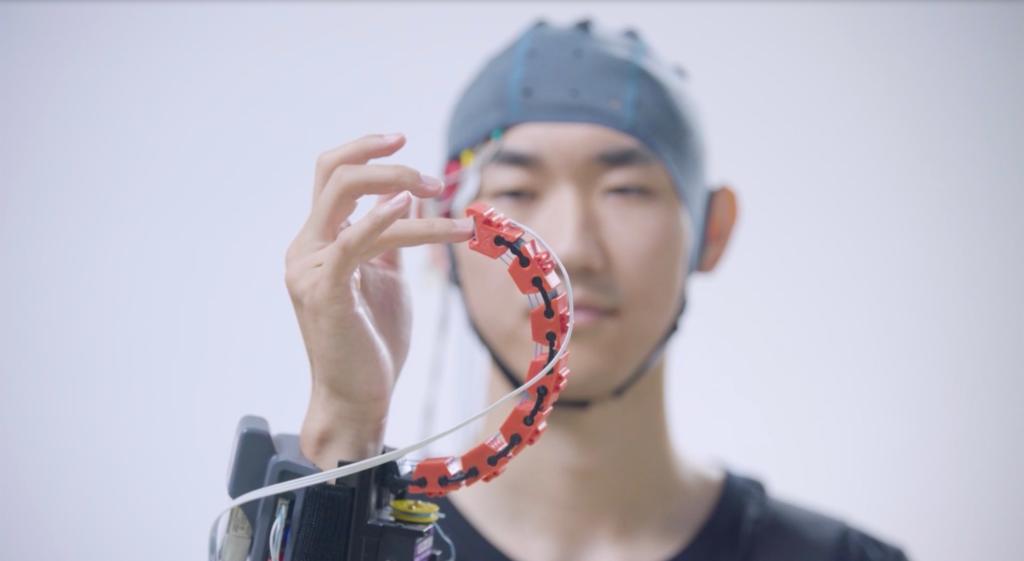
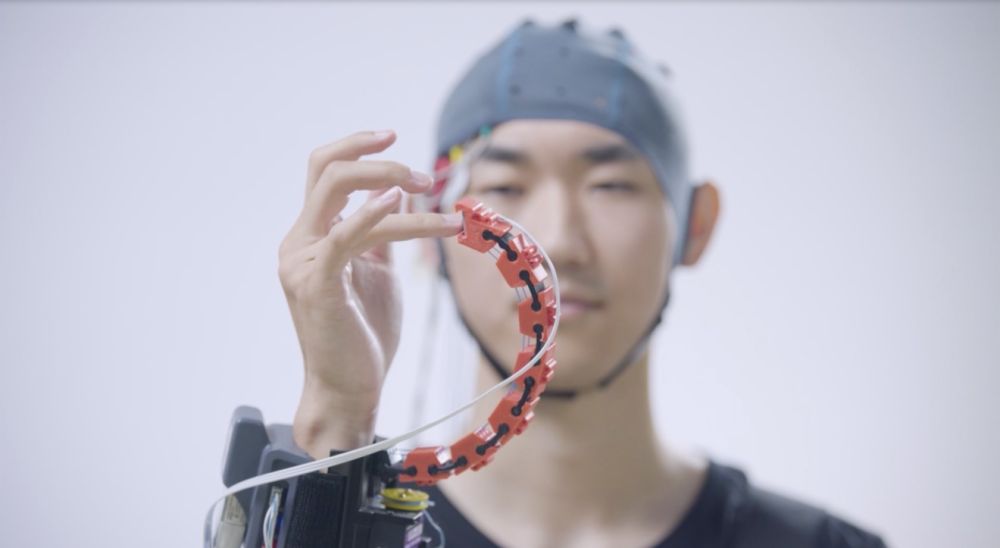
Core Insights - The Tianjin University Brain-Machine Interaction and Human-Machine Integration Haihe Laboratory has developed a wearable device called "Shengong-Lingxi Finger," which allows users to control it using brain signals, aiding in rehabilitation for hand function recovery [1][4] - The laboratory focuses on non-invasive brain-machine interfaces and aims to drive technological innovation and industrial application, particularly in aerospace and rehabilitation medicine [2][3] - The laboratory has established a research team that integrates various fields, emphasizing the importance of aligning research with market needs and cutting-edge trends [2][3] Group 1 - The "Shengong-Lingxi Finger" device can assist in grasping objects and stimulate the central and peripheral nervous systems of patients [1] - The laboratory has a leading number of patents in the field of brain-machine interaction and aims to explore the potential of brain-machine interfaces [2] - The laboratory is committed to translating technological innovations into practical applications, focusing on areas such as basic components, aerospace, and rehabilitation medicine [2][3] Group 2 - The laboratory is advancing a new technology called on-chip brain-machine interface, which is expected to contribute to mixed intelligence and brain-like computing [3] - A special fund for the development of the brain-machine interface industry, targeting a scale of 10 billion yuan, has been established to support industrialization efforts [6] - The laboratory's incubated company, Tiankai Suishi (Tianjin) Intelligent Technology Co., Ltd., has been recognized as a national high-tech enterprise, highlighting the successful integration of technology and industry [6]
青羊区推出新政 1亿元资金池重点支持七大新兴产业
Sou Hu Cai Jing· 2026-01-17 02:57
Group 1 - The core viewpoint of the news is the implementation of the "Advance Payment and Equity" funding model in Chengdu's Qingyang District to support the transformation of technological achievements, with a total funding pool of 100 million yuan [1][3] - The funding model aims to guide diverse social capital investments, facilitating the transition of technological achievements from laboratories to production lines, particularly in emerging industries such as aerospace and equipment manufacturing [1][3] - The funding will be allocated based on principles of risk-sharing, full-cycle support, capital circulation, and tolerance for failure, with phased financial support for the growth of startup tech companies [1][3] Group 2 - The "Advance Payment" funding pool will have an annual budget of no less than 25 million yuan, with individual project support generally not exceeding 5 million yuan and special projects up to 20 million yuan [3] - The program will focus on supporting projects in key sectors such as aerospace, equipment manufacturing, electronic information, artificial intelligence, low-altitude economy, new materials, advanced energy, and brain-computer interfaces [3] - Project sources include various initiatives like "Sci-tech Innovation Tianfu," "School-Enterprise Dual Progress," major talent plans, national innovation centers, and projects incubated by key innovation platforms [3]
医药生物行业周报(20260112-0116):产业化进程加速,脑机接口发展进入快车道-20260116
Shanghai Securities· 2026-01-16 12:29
Investment Rating - The industry investment rating for the medical biology sector is "Hold" [2]. Core Insights - The report highlights significant advancements in the brain-computer interface (BCI) industry, emphasizing the acceleration of industrial development and the establishment of a robust innovation ecosystem [3][4]. - The Shanghai Municipal Government has released a plan to cultivate the BCI industry, aiming for clinical applications of semi-invasive and invasive BCI products by 2027, with a comprehensive application by 2030 [4]. - The report suggests that the BCI field is entering a rapid development phase, driven by the release of industry standards and supportive government policies [7]. Summary by Sections Industry Overview - The BCI industry is experiencing accelerated industrialization, with recent breakthroughs in invasive devices and the establishment of new treatment paradigms for conditions like epilepsy [4][6]. - The report notes the importance of integrating BCI technology with artificial intelligence and virtual reality to enhance product offerings and market reach [4]. Government Initiatives - The Shanghai action plan outlines key milestones, including the development of over five invasive and semi-invasive BCI products for clinical trials and the establishment of a national-level BCI industry development zone [4]. - The plan also emphasizes the need for collaboration between innovative entities and medical institutions to foster product development in various applications, including rehabilitation and education [4]. Investment Recommendations - The report recommends focusing on companies such as Innovation Medical, Aipeng Medical, and Sanbo Brain Science, which are positioned to benefit from the growing BCI market [7].
四中全会精神在基层丨一间实验室,何以攀登“脑机接口”高峰?
Xin Hua Wang· 2026-01-16 12:17
Core Insights - The Tianjin University Brain-Machine Interaction and Human-Machine Integration Haihe Laboratory is advancing in the field of non-invasive brain-machine interfaces, focusing on technology innovation and industrial application [2][3] - The laboratory has developed a wearable device called "Shengong-Lingxi Finger," which allows users to control it through thought, aiding in rehabilitation for patients with motor function impairments [1][4] - The laboratory is also exploring the potential of on-chip brain-machine interface technology, which could lead to advancements in mixed intelligence and brain-like computing [3] Group 1 - The laboratory was officially established on March 27, 2023, and is one of seven Haihe laboratories in Tianjin focusing on cutting-edge technology [2] - The laboratory holds a significant number of patents in the field of brain-machine interaction, ranking among the top globally [2] - The team is committed to aligning research with market needs and trends to ensure practical applications of their innovations [2] Group 2 - The laboratory is working on a special fund aimed at developing a brain-machine interface industry with a target scale of 10 billion yuan [6] - The incubated company, Tiankai Suishi (Tianjin) Intelligent Technology Co., has been recognized as a national high-tech enterprise and a technology-based small and medium-sized enterprise [6] - The laboratory aims to integrate technological innovation with industrial transformation, contributing to the broader goals outlined in the 14th Five-Year Plan [6]