高端制造

Search documents
一座城市与121家上市企业的十年奔赴 见证“深圳速度”
2 1 Shi Ji Jing Ji Bao Dao· 2025-11-15 08:21
Core Insights - Shenzhen has successfully listed 121 companies within ten years of their establishment, showcasing a robust innovation ecosystem that supports rapid growth in technology enterprises [2][4][10] - The emergence of these companies reflects Shenzhen's alignment with technological innovation, particularly in high-end manufacturing, semiconductors, and emerging technologies [4][6] Group 1: Company Listings and Growth - Among the 121 listed companies, 87 are on A-shares and 34 on Hong Kong stocks, indicating a diverse capital market presence [2] - Notable companies include Zhongke Feimiao, which listed on the Sci-Tech Innovation Board in just 8 years, focusing on semiconductor quality control equipment [4] - Yingshi Innovation, recognized as the "global leader in smart imaging," achieved a 67.2% market share in panoramic cameras, surpassing established competitors [4][5] Group 2: Technological Advancements - Companies like Aobo Zhongguang and Yuntian Lifi are leading in robotics and AI, with Aobo holding over 70% market share in the service robot sector [5] - The rise of green energy companies, such as Youyou Green Energy, highlights Shenzhen's commitment to renewable energy, with a focus on electric vehicle charging solutions [5][6] Group 3: Ecosystem and Support Mechanisms - Shenzhen's success is attributed to a well-designed enterprise cultivation system that includes various incubators and tailored support for different types of companies [8][9] - The city has established government investment funds that have mobilized nearly 500 billion yuan to support over 8,000 industry projects, contributing to the growth of specialized and innovative enterprises [9][10] - Shenzhen's R&D investment reached 223.66 billion yuan in 2024, with a growth rate of 18.9%, indicating a strong commitment to innovation [9][10]

“星耀领航计划”走进禅龙资产 解码从固定收益向科创转型的发展之路
Zhong Guo Zheng Quan Bao· 2025-11-15 02:51
Core Viewpoint - The "China Galaxy Securities · China Securities Journal Private Equity Industry Starry Navigation Plan" aims to empower private equity firms that excel in professional capabilities, technological innovation, and compliance governance, fostering an efficient industry ecosystem that connects technology, capital, and the real economy [1] Group 1: Strategic Transformation Driven by Technology - Zenlong Asset, established in 2014, initially gained recognition in fixed income investment and has since expanded into stock and quantitative strategies, managing approximately 7.5 billion yuan [2] - The firm focuses on hard technology sectors such as semiconductors, high-end manufacturing, and AI, with a systematic approach to technology investment through dedicated funds and strategies [2] - The transition to quantitative strategies is driven by the team's technological background and aligns with national economic transformation and policy support for the tech manufacturing sector [2] Group 2: Integration of Social Responsibility - Zenlong Asset incorporates social responsibility into its business model, creating a unique "investment-empowerment-feedback" closed-loop system [3] - The firm enhances the efficiency of capital use for tech companies through financial investment and deep technical collaboration, exploring partnerships with AI firms for model optimization and data application [3] - The company has proactively engaged in educational equity and mental health initiatives, establishing programs that provide professional training for teachers in under-resourced areas and psychological support for students [4] Group 3: Future Outlook and Collaboration - Zenlong Asset anticipates significant advancements in investment strategies through collaboration with AI technology firms, enhancing the intelligence of quantitative models and data processing [5] - The firm is expanding its collaboration with brokerage institutions, recognizing their role in supporting the scalable development of quantitative strategies [6] - The company aims for its quantitative and stock products to constitute over 50% of its total scale within three years, reinforcing its influence in the technology finance sector [6]
“星耀领航计划”走进禅龙资产
Zhong Guo Zheng Quan Bao· 2025-11-14 20:12
Core Insights - The article discusses the strategic transformation of Zenlong Asset, a private equity firm, from fixed income investments to technology-driven and innovative investment strategies, emphasizing its commitment to social responsibility [1][2]. Group 1: Strategic Transformation - Zenlong Asset was established in 2014 and initially gained recognition in the private equity sector through fixed income investments, being rated among the top bond trading institutions for two consecutive years [2]. - The firm began building its stock and quantitative teams in 2021, indicating a proactive approach to transitioning towards technology and innovation [2]. - Zenlong Asset currently manages approximately 7.5 billion yuan, with a product line that includes bonds, stocks, and quantitative strategies, focusing on sectors like semiconductors, high-end manufacturing, and AI [2]. Group 2: Social Responsibility - Zenlong Asset integrates social responsibility into its business model, creating a unique "investment-empowerment-feedback" loop [3]. - The firm supports the growth of technology companies not only through financial investments but also by enhancing operational efficiency through specialized fund management [3]. - Zenlong Asset has initiated educational and mental health projects, such as the "Looking Up to the Stars Education Public Welfare Fund," aimed at promoting educational equity and mental health support in schools [4]. Group 3: Future Outlook - The firm anticipates significant advancements in AI and quantitative strategies, aiming for a 50% share of its total assets to be allocated to these areas within the next three years [6]. - Zenlong Asset views collaboration with brokerage firms as crucial for the scalable development of quantitative strategies, highlighting the importance of technological support [6]. - The "Starry Navigation Plan" is expected to foster a positive industry ecosystem by promoting private equity's role in supporting technological innovation and social responsibility [6].
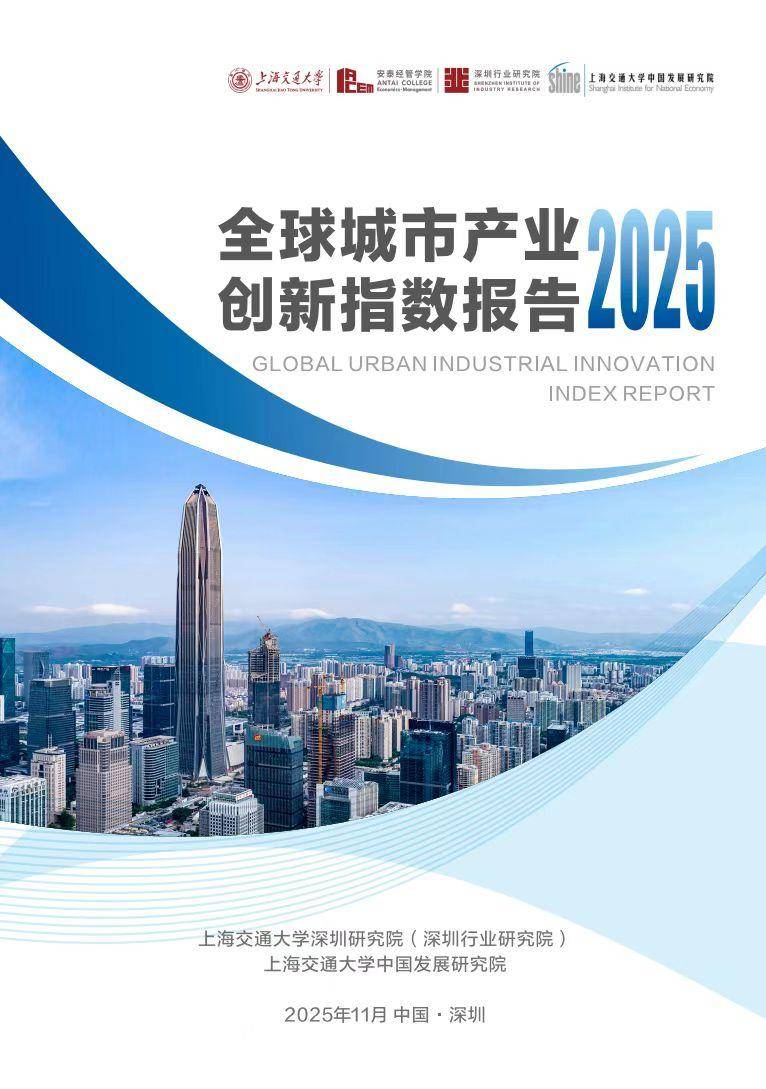
亚洲城市引领产业创新发展趋势,深圳、北京、上海上榜全球前十强
Sou Hu Cai Jing· 2025-11-14 15:22
Core Insights - The "Global City Industry Innovation Index Report 2025" indicates a significant shift of global industrial innovation focus towards Asia, with six out of the top ten cities for industrial innovation located in Asia [1][3][8] Group 1: Global Industrial Innovation Landscape - The report evaluates 27 major innovative cities globally, assessing them across four dimensions: environment, investment, output, and performance [3] - Industrial innovation, rather than mere technological innovation, is identified as the core engine driving economic rise and sustainable development for cities and nations [3][8] Group 2: Top Performing Cities - Tokyo, Shenzhen, New York, and San Francisco form the "first tier" of global industrial innovation, with very close overall scores: Tokyo at 46.84, Shenzhen at 46.79, New York at 46.72, and San Francisco at 46.11 [4][6] - Tokyo's top position is attributed to its strong industrial foundation and continuous innovation investment, leading in PCT international patent applications (11,664), high-tech product export ratio (67.4%), and number of Forbes Global 2000 companies (82) [6][8] - Shenzhen exemplifies China's leading position in application innovation and industrialization, with notable metrics such as ICT product export ratio (41.3%, the highest globally), PCT patent applications (6,463, second globally), and a labor force age population ratio (79.53%, the highest globally) [6][7] Group 3: Asian Cities' Collective Breakthrough - Six Asian cities occupy the top ten positions in industrial innovation, including Beijing (5th), Seoul (6th), Singapore (8th), and Shanghai (9th), indicating a clear shift of the global innovation balance towards the East [7][8] - Asian cities demonstrate significant advantages in electronic information and high-end equipment sectors, rapidly converting technological innovations into globally competitive products and services [7][8] Group 4: Comparative Analysis with Western Cities - While European cities like London (7th) and Paris (10th) and North American cities like New York and San Francisco maintain some advantages in innovation environment and performance, they face strong challenges from Asian cities in terms of innovation output scale and speed [8] - Traditional innovation strongholds such as Seattle and Boston have been pushed out of the top ten, highlighting the competitive dynamics in the global innovation landscape [8]
1分钟直线涨停,这一概念集体异动,发生了什么?
Zheng Quan Shi Bao· 2025-11-14 06:42
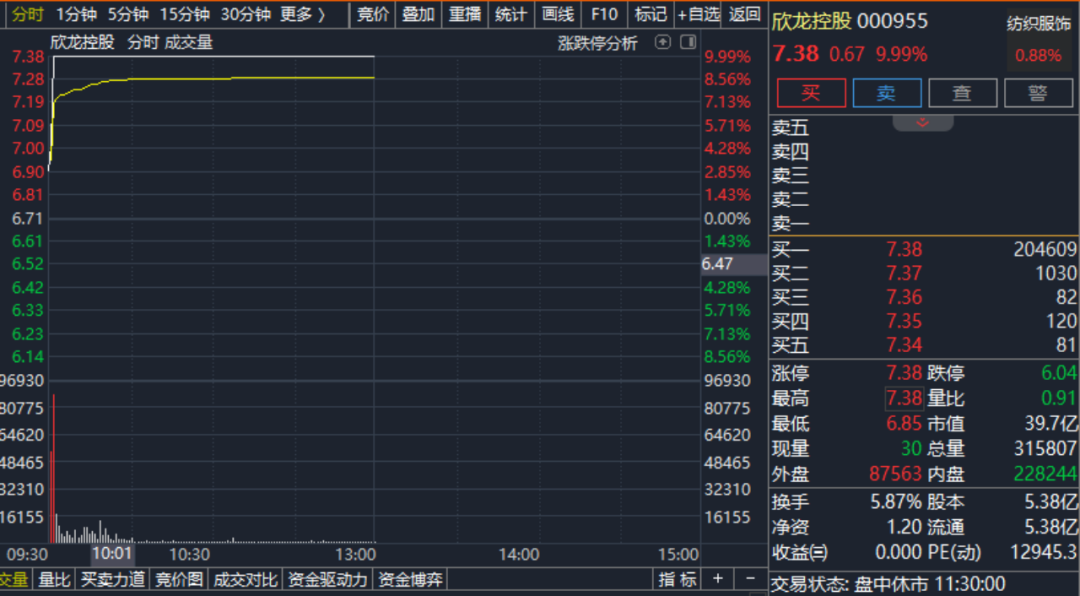
Core Viewpoint - Hainan Free Trade Zone concept stocks experienced a significant surge, with the overall sector rising by 3.8% amid a weak market backdrop, indicating strong investor interest and optimism regarding upcoming policy changes [1][4]. Group 1: Market Performance - Hainan Free Trade concept stocks collectively surged, with notable gains including 康芝药业 reaching a 20% limit up, and several others like 欣龙控股 and 海南海药 hitting 10% limit up [4]. - The overall performance of the Hainan Free Trade sector reflects a robust market response, with key stocks such as 海马汽车 and 海南矿业 also participating in the rally [1][4]. Group 2: Policy Changes and Implications - The full island closure operation of Hainan Free Trade Port is set to officially commence on December 18, 2025, which will significantly expand the range of "zero tariff" goods from 1,900 to approximately 6,600 items, covering about 74% of products [4][8]. - The new policies will lower the threshold for companies to benefit from tax exemptions and optimize the calculation methods for value-added processing, which is expected to reduce costs and extend supply chains for businesses [4][9]. Group 3: Economic Impact - The ongoing optimization of the duty-free shopping policy is anticipated to enhance retail sales and tourism in Hainan, with the number of duty-free product categories increasing from 45 to 47 [8][9]. - The introduction of "zero tariff" policies for transportation tools and yachts has already resulted in significant tax savings, with reported tax reductions of approximately 1.97 billion yuan for imported cargo aircraft [5][6]. Group 4: Future Investment Opportunities - Analysts suggest that the focus of investment in Hainan is shifting from B2C consumption to B2B industrial upgrades and high-value service industries, with three core investment themes identified: modern logistics and trade services, high-tech and green energy, and "tourism+" services [9][10]. - The strategic positioning of Hainan as a new hub for domestic and international circulation is expected to attract significant investment, particularly in emerging industries such as aerospace, digital economy, and green energy [10].

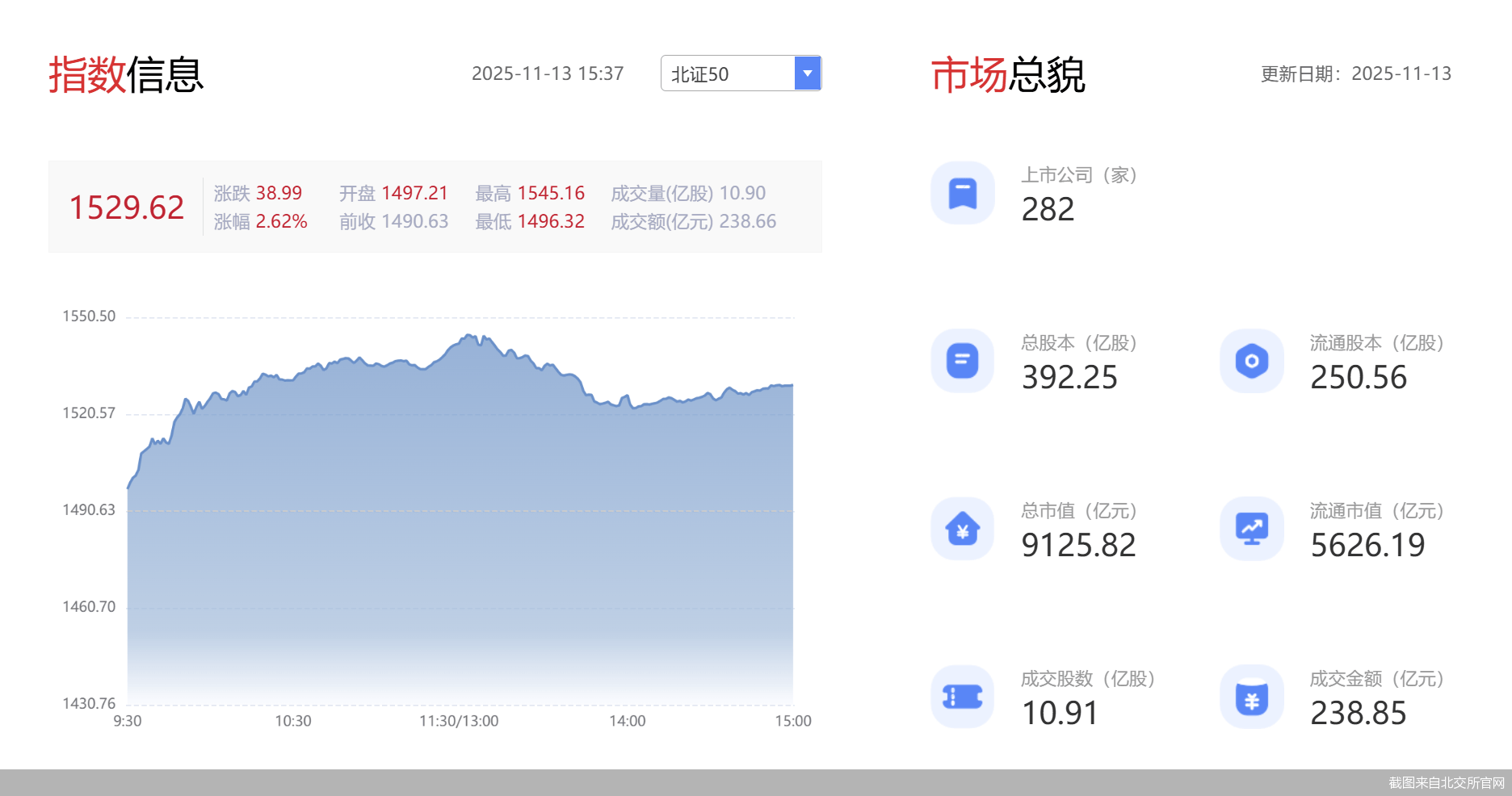
北交所开市四周年!合计282家上市公司,总市值冲击万亿
Sou Hu Cai Jing· 2025-11-13 13:08
Core Insights - The Beijing Stock Exchange (BSE) is celebrating its fourth anniversary, having established itself as a key player in the multi-tiered capital market, focusing on serving innovative small and medium-sized enterprises (SMEs) [1][11] Market Growth - Over the past four years, the BSE has seen significant growth, with 282 listed companies and a total market capitalization exceeding 900 billion yuan, approaching the 1 trillion yuan mark [1][3] - As of November 13, 2023, the total market capitalization of listed companies on the BSE is approximately 912.58 billion yuan [3] - The number of listed companies has increased from 123 in 2022 to 282 in 2023, with 25 new listings in the fourth anniversary year [3] Company Performance - Among the listed companies, Beiterui leads with a market capitalization of 41.85 billion yuan, followed by Jinbo Biological at 27.42 billion yuan [3] - Jinbo Biological's stock price reached 238.31 yuan per share, marking it as one of the top-performing stocks [4][5] - The average revenue for BSE companies in the third quarter was 520 million yuan, reflecting a year-on-year growth of 6%, with 230 companies reporting profits [6][7] IPO Pipeline - Currently, there are 170 companies in the IPO pipeline for the BSE, indicating a robust interest in listing [8] - The IPO review process has accelerated, with multiple companies receiving approvals in recent weeks [9][10] Policy Support - The China Securities Regulatory Commission (CSRC) emphasizes the importance of the BSE in supporting innovative SMEs and plans to enhance its development [11][12] - The BSE has implemented various policies to improve market functionality and attract quality enterprises, including the introduction of the North Certificate Specialized Index [12] Investor Engagement - More than 90% of listed companies on the BSE have engaged in dividend distribution, with nearly 9.5 million qualified investors participating in the market [14]
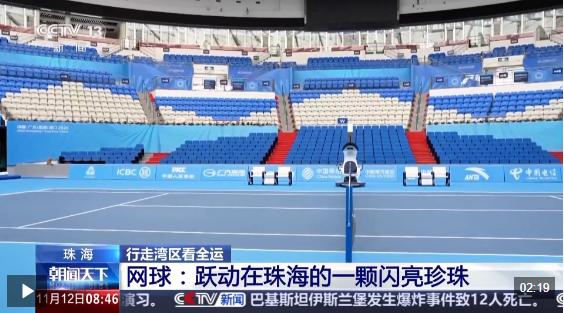
行走湾区看全运丨跨城来运动 珠海以体育推动粤港澳融合发展
Yang Shi Xin Wen Ke Hu Duan· 2025-11-13 06:50
Group 1 - Zhuhai, celebrating its 45th anniversary, is hosting the tennis events of the National Games, showcasing modern facilities and a comfortable environment for athletes and spectators [2][4] - The Zhuhai Tennis Center has attracted tennis enthusiasts and hosted international events, with notable players like Murray having competed there [4] - Over the years, Zhuhai has built more than 100 free tennis courts, promoting the sport among its residents [9][13] Group 2 - The city has developed a cycling culture, with 1,290 kilometers of greenways established, promoting cycling as a leisure activity [18] - The National Games cycling event features a unique cross-border race connecting Zhuhai, Macau, and Hong Kong, highlighting the city's strategic location [28] - The local bicycle manufacturing industry is advancing, with companies developing high-end products like electronic gear shifters, breaking foreign monopolies [24][26] Group 3 - The integration of sports and cross-border activities is evident, as more residents from Hong Kong and Macau are visiting Zhuhai for recreational activities [30] - The growth of equestrian sports in Zhuhai is attracting young learners from Macau, indicating a rising interest in diverse sports [36][38]
帮主郑重:中长线布局几个靠谱方向及回调入场信号
Sou Hu Cai Jing· 2025-11-13 04:08
Industry Directions - The AI industry chain, particularly B-end application sectors such as AI programming and industrial intelligence, is seeing real monetary investment from companies, indicating a solid long-term growth potential [3] - The demand for renewable energy storage, including solar and energy storage solutions, continues to rise, supported by favorable policies; leading companies with stable orders and sufficient capacity present good entry points after market corrections [3] - Consumer upgrade-related sectors, such as high-quality food and smart home products, are expected to benefit from economic recovery, with reasonable valuations [3] - High-end manufacturing, including humanoid robotics and low-altitude economy support, represents future trends, making early investments advantageous [3] Entry Signals After Corrections - Two out of three signals should be met for entry: First, valuation metrics such as the CSI 300 price-to-book ratio falling below 1.4 or leading stocks in desired sectors correcting by 10%-15% to reach reasonable valuation levels [3] - Second, technical indicators showing market stabilization after sideways movement, such as two consecutive trading days without new lows and increasing trading volume [3] - Third, during corrections, a gradual decrease in trading volume indicates that selling pressure is diminishing; a subsequent increase in volume during price rises signals a good entry point [3]
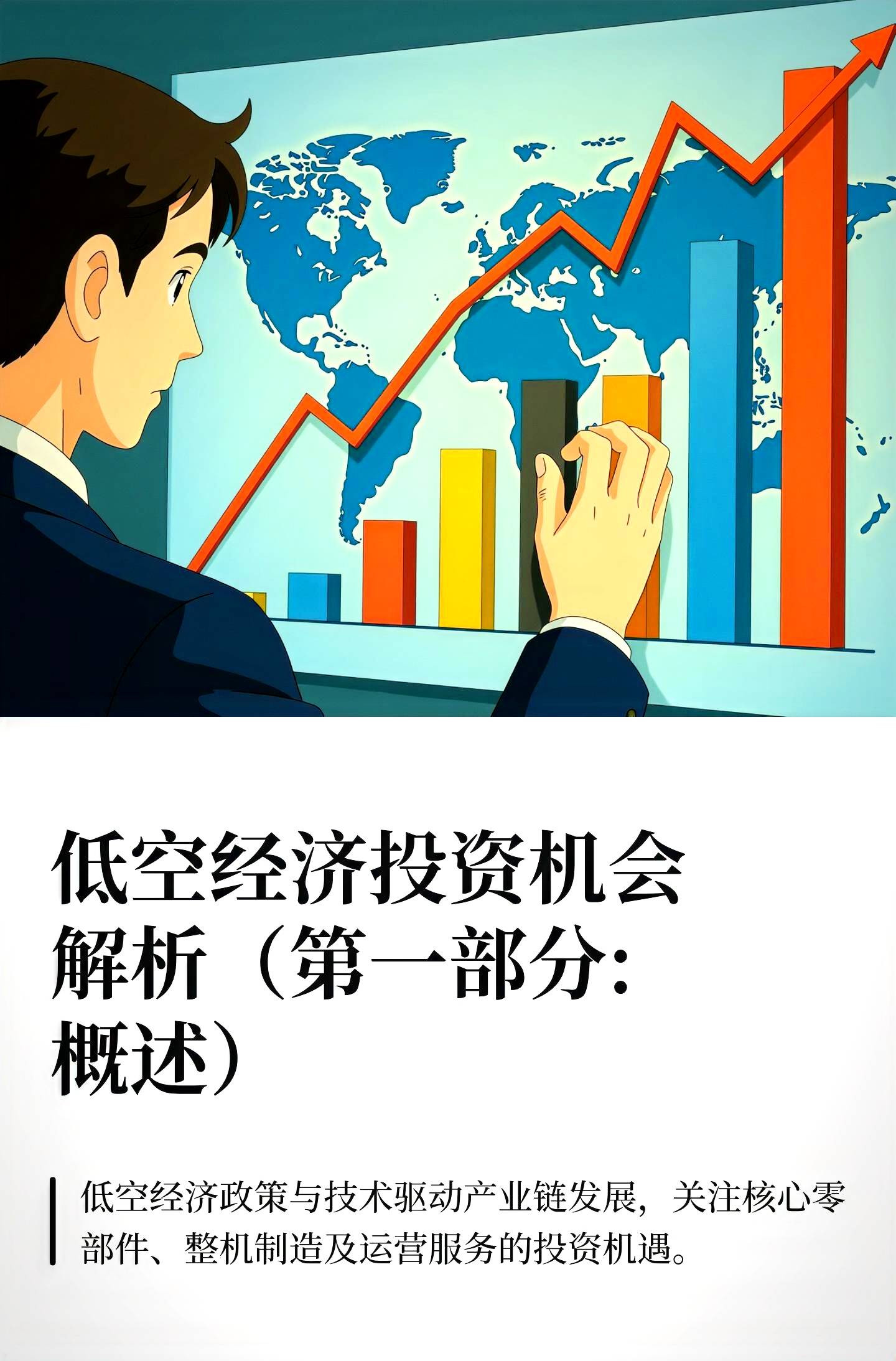
低空经济投资机会解析(第一部分:概述
Sou Hu Cai Jing· 2025-11-13 02:40
Core Insights - The low-altitude economy is entering a rapid development phase driven by policy, technology, and market demand, presenting comprehensive investment opportunities across the entire industry chain in the A-share market [3] Group 1: Definition and Core Drivers - Low-altitude economy refers to the economic activities utilizing airspace below 1,000 meters, employing drones and light aircraft to serve various industries, forming a comprehensive ecosystem that integrates advanced manufacturing, information technology, and modern services [3] - Strong policy support is evident as low-altitude airspace management reforms act as a "master switch" for industry development, creating a favorable growth environment [3] - Technological advancements have transitioned drone technology from manual operation to highly intelligent, autonomous flight, with the integration of 5G, AI, and IoT addressing core bottlenecks for large-scale commercial applications [3] - There is a significant market demand explosion in sectors such as agricultural protection, logistics, emergency rescue, and power inspection, showcasing the cost-reducing and efficiency-enhancing advantages of low-altitude solutions [3] Group 2: Industry Chain Analysis and A-share Investment Opportunities - Upstream opportunities include materials and components such as traditional and new aviation materials, flight control systems, navigation modules, communication modules, batteries, and sensors [3] - Midstream focuses on research and manufacturing of complete aircraft designs, including drones and eVTOLs, with key players being manufacturers of industrial and consumer-grade drones, system integrators, and maintenance service providers [3] - Downstream involves operations and services that provide various application services and data solutions based on aircraft, which are crucial for value realization [3] Group 3: Downstream Application Scenarios - High-value scenarios validated include drone logistics, industrial inspections, precision agriculture, and public safety and emergency services, indicating a vast market potential [3] Group 4: Investment Opportunities and Core Focus Areas - Hardware development should prioritize "core" technologies and complete aircraft manufacturing, focusing on companies with strong R&D investment, patent portfolios, product performance, and cost control capabilities [3] - Operational excellence is key, with a focus on companies that can deeply integrate into specific industries and provide comprehensive solutions, emphasizing business model maturity, order acquisition capabilities, and data processing abilities [3] - Infrastructure and support service opportunities are critical, with companies providing low-altitude flight management platforms, communication network support, and takeoff/landing site construction showing stronger stability and certainty [3] Group 5: Investment Strategy - Short-term focus should be on the implementation of low-altitude airspace reform pilot policies and major orders from listed companies in logistics and inspection sectors [3] - Mid-term attention should be on technological breakthroughs and the expansion of downstream application scenarios, favoring companies with precise positioning in core segments and first-mover advantages [3] - Long-term investments should target companies capable of building or integrating into a healthy industry ecosystem, with strong integration and management capabilities [3]
快讯|2025港股IPO持续火热,科技与“A+H”模式成核心引擎
Sou Hu Cai Jing· 2025-11-13 01:40
Core Insights - The Hong Kong IPO market has shown remarkable performance in 2025, with 87 companies listed and a total fundraising amount of HKD 246.93 billion, representing a year-on-year increase of 243.28% [1] Group 1: Market Characteristics - The market is characterized by a dominance of technology companies, with new listings covering sectors such as semiconductors, AI, and high-end manufacturing, including notable firms like Peak Technology and Hesai Technology [1] - A total of 69 IPO companies attracted 468 cornerstone investors, collectively investing HKD 94.59 billion, with over 20 institutions favoring star projects [1] - The "A+H" model has seen significant growth, with 16 new "A+H" companies listed this year, raising over HKD 100 billion, which accounts for 48% of the total new stock financing [1] Group 2: Market Liquidity - The average daily trading volume of Hong Kong stocks reached HKD 316.7 billion in the first nine months [1] - Southbound funds have net bought approximately HKD 1.3 trillion this year [1] - With strong policy support and ample backup resources, half of the 296 companies waiting to be listed are in the new economy sector, indicating a sustained attractiveness of the Hong Kong stock market [1]