
海运

Search documents
勇利投资公布中期业绩 净亏损170.8万美元 同比盈转亏
Zhi Tong Cai Jing· 2025-08-20 10:20
Core Viewpoint - Yongli Investment (01145) reported a total revenue of $4.381 million for the first half of 2025, representing a year-on-year decrease of 13.59% and a net loss of $1.708 million, marking a shift from profit to loss compared to the previous year [1] Group 1: Financial Performance - The total revenue for the first half of 2025 was $4.381 million, down 13.59% year-on-year [1] - The company experienced a net loss of $1.708 million, compared to a profit in the previous year [1] - Earnings per share were reported at a loss of $0.16 [1] Group 2: Market Conditions - The market conditions for the shipping business faced significant pressure, with charter rates for ultra-flexible dry bulk carriers plummeting by 34.1% year-on-year [1] - The decline in demand for goods was attributed to escalating trade tensions between the U.S. and other countries, as well as ongoing geopolitical conflicts in Ukraine and Palestine [1] - The combined effects of weakened demand for goods and an oversupply of vessels contributed to the challenging market environment [1] Group 3: Strategic Response - To mitigate the cyclical impacts on the shipping business, the company strategically resumed its trading operations in the first half of 2025 [1]
勇利投资(01145)公布中期业绩 净亏损170.8万美元 同比盈转亏
智通财经网· 2025-08-20 10:18
Core Viewpoint - Yongli Investment (01145) reported a significant decline in its mid-year performance for 2025, with total revenue of $4.381 million, representing a year-on-year decrease of 13.59% and a net loss of $1.708 million, marking a shift from profit to loss [1] Financial Performance - Total revenue for the first half of 2025 was $4.381 million, down 13.59% year-on-year [1] - The company experienced a net loss of $1.708 million, compared to a profit in the previous year [1] - Earnings per share were reported at a loss of 0.16 cents [1] Market Conditions - The market conditions for the shipping business faced significant pressure, with charter rates for ultra-flexible bulk carriers plummeting by 34.1% year-on-year [1] - The decline in demand for goods was attributed to escalating trade tensions between the U.S. and other countries, as well as ongoing geopolitical conflicts in Ukraine and Palestine, leading to reduced demand and an oversupply of vessels [1] Strategic Response - To mitigate the cyclical impacts on its shipping business, the company strategically resumed its trading operations in the first half of 2025 [1]
山东海运境外债务融资取得新突破
Sou Hu Cai Jing· 2025-08-19 16:16
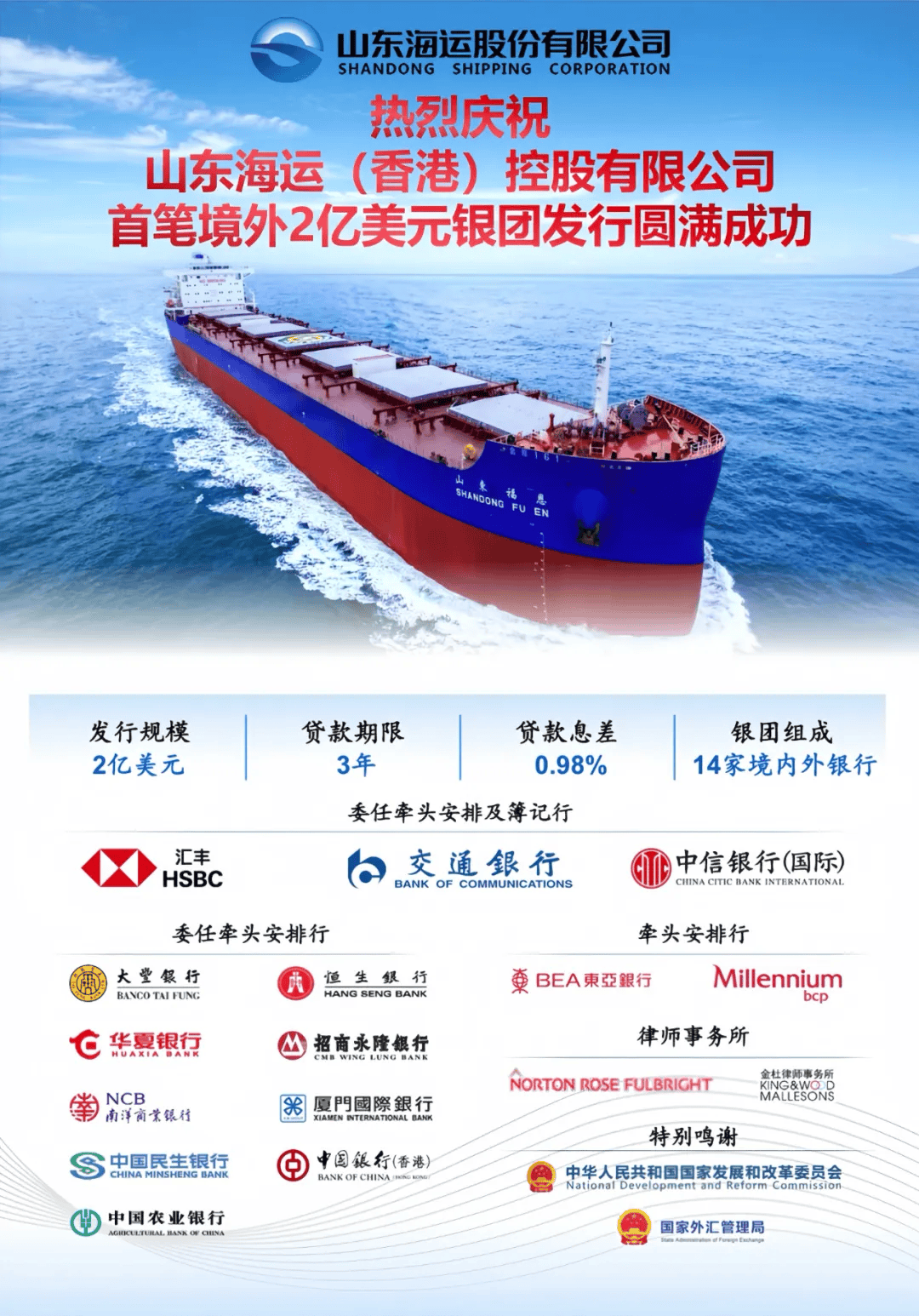
Group 1 - The company successfully withdrew its first offshore syndicated loan of $200 million on August 13, with a term of 3 years and an interest rate of SOFR + 0.98%, marking a new low for the province [1] - The financial team meticulously planned the loan process, including a promotional roadshow in Hong Kong and engaging strong international banks as lead arrangers and bookrunners, resulting in a 3.5 times oversubscription from 14 domestic and foreign banks [1][4] - The offshore syndicated loan will be used to refinance maturing US dollar bonds, optimizing the debt structure and providing stable support for the company's development [1]

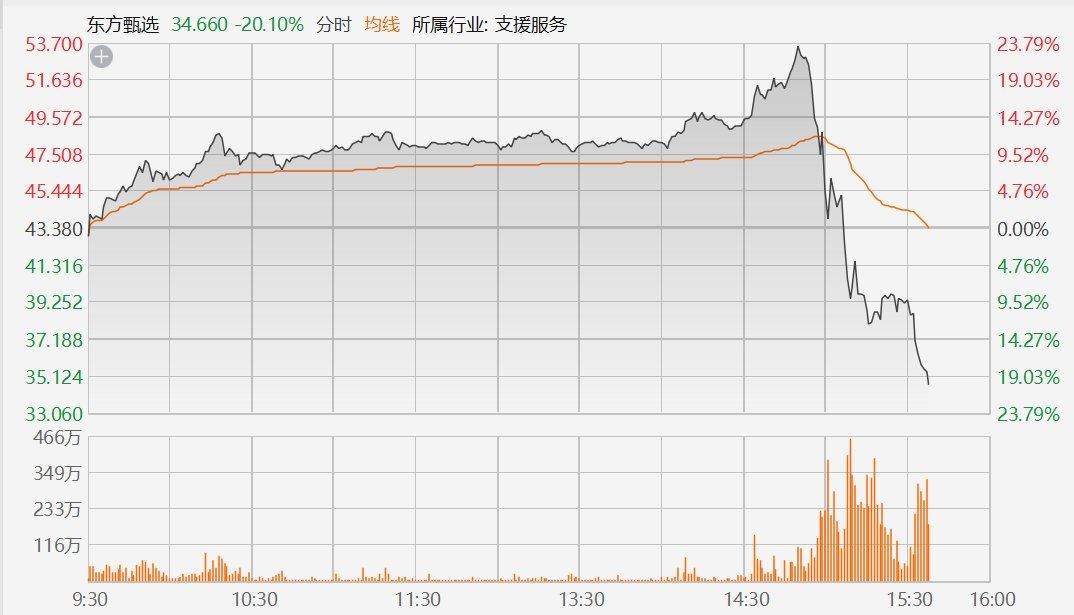
港股收评:三大指数齐跌,科技股多数翻绿,东方甄选高位跳水跌超21%,网易、小米跌1.2%,鑫苑服务涨9.8%
Ge Long Hui· 2025-08-19 08:41
Market Overview - The Hong Kong stock market experienced fluctuations, with the Hang Seng Index declining by 0.21%, the Hang Seng China Enterprises Index down by 0.3%, and the Hang Seng Tech Index falling by 0.67%, indicating a relatively stable overall sentiment [1]. Sector Performance - Major technology stocks, which serve as market indicators, mostly turned down, with NetEase and Xiaomi dropping by 1.2%. Meituan, JD.com, and Alibaba also showed negative performance, while Tencent and Kuaishou saw slight increases [3]. - The film and television sector, which had previously led gains, saw a significant decline. Other popular sectors such as semiconductor chips, Chinese brokerage stocks, rare earth concepts, innovative pharmaceuticals, gold stocks, and brain-computer interface concepts also experienced downturns [3]. Real Estate and Consumer Sectors - Li Qiang emphasized the implementation of strong measures to stabilize the real estate market, leading to mixed performance in property stocks, which opened high but closed lower. However, property management stocks remained strong, with Xinyuan Services leading with a 9.8% increase [3]. - Consumer sectors, including restaurant and sports goods stocks, showed active performance, while shipping, mobile gaming, and automotive stocks experienced some gains [3].
港股收评:三大指数齐跌 科技股多数翻绿 半导体等热门板块低迷 消费股活跃
Ge Long Hui· 2025-08-19 08:26
Market Overview - The Hong Kong stock market experienced a slight decline, with the Hang Seng Index down by 0.21%, the Hang Seng China Enterprises Index down by 0.3%, and the Hang Seng Tech Index down by 0.67, indicating a relatively stable overall sentiment [1] Sector Performance - Major technology stocks, which serve as market indicators, mostly turned down, with NetEase and Xiaomi both falling by 1.2%. Meituan, JD.com, and Alibaba also showed negative performance, while Tencent and Kuaishou saw slight increases [1] - The film and television sector, which had previously led the market, saw a significant drop, while popular sectors such as semiconductor chips, Chinese brokerage stocks, rare earth concepts, innovative pharmaceuticals, gold stocks, and brain-computer interface concepts also declined [1] - The live-streaming sector, represented by Dongfang Zhenxuan, experienced a sharp decline of nearly 21% after continuous increases [1] Real Estate and Consumer Sectors - Li Qiang emphasized the need for strong measures to stabilize the real estate market, leading to mixed performance in property stocks, which opened high but closed lower. However, property management stocks remained strong, with Xinyuan Services leading with a 9.8% increase [1] - Consumer sectors, including restaurant and sports goods stocks, showed active performance, while shipping, mobile gaming, and automotive stocks experienced some gains [1]
德翔海运盘中涨超12% 公司下周一将发业绩 预计中期纯利最少增长220%
Zhi Tong Cai Jing· 2025-08-19 03:26
Core Viewpoint - 德翔海运 is experiencing a significant stock price increase, attributed to strong mid-year earnings expectations and favorable market conditions [1] Company Summary - 德翔海运's stock rose over 12% during trading, currently up 7.03% at HKD 9.9, with a trading volume of HKD 195 million [1] - The company anticipates a mid-year profit of between USD 180 million to USD 200 million, representing a substantial year-on-year growth of 220% to 255% [1] - The increase in profit is primarily driven by a rise in average freight rates and an increase in the number of vessels rented at higher rates, leading to increased charter income [1] Industry Summary - The formation of the 双子星联盟 is transforming shipping routes from pendulum-style to radial-style, increasing demand for smaller vessels [1] - The theoretical addition of 40 small container ships (2,000 TEU) to a weekly European route highlights the shift towards smaller vessels for efficiency [1] - The exemption of non-Chinese shipowners from the US 301 investigation for vessels under 4,000 TEU underscores the potential benefits of smaller ships amid market disruptions [1]
港股收评:冲高回落!恒指跌0.37%,影视股全天强势,半导体、内银股多数走低
Ge Long Hui· 2025-08-18 08:30
Market Overview - The Hong Kong stock market experienced a mixed performance with the Hang Seng Index closing down 0.37%, the Hang Seng China Enterprises Index down 0.06%, and the Hang Seng Tech Index up 0.65% after reaching a peak increase of 2.3% during the day [1] Technology Sector - Major technology stocks saw a narrowing of gains in the afternoon, with JD.com rising by 2.65%, Alibaba, Baidu, and Xiaomi each increasing by less than 1%, while Kuaishou fell by 1.47%. Tencent and Meituan also showed negative performance [1] Entertainment Industry - The summer box office continued to perform strongly, driven by positive reviews of major films, which boosted overall viewing demand. Film-related stocks were robust, with Lingmeng Film rising over 21%, Daocaoxiong Entertainment up nearly 15%, and Maoyan Entertainment increasing by nearly 6% [1] Healthcare Sector - Internet healthcare stocks collectively rose, with Ping An Good Doctor and JD Health both increasing by over 8% [1] Other Active Sectors - Rare earth concept stocks, military industry stocks, brain-computer interface concept stocks, automotive stocks, and Apple-related stocks showed active performance [1] Real Estate Sector - The real estate sector continued to weaken in July, with domestic property stocks generally declining [1] Commodities and Other Industries - The U.S. announced an expansion of tariffs on steel and aluminum imports by 50%, leading to declines in steel and copper stocks. Coal, oil, semiconductor, domestic banking, and shipping stocks mostly performed poorly [1]
以史为鉴看快递“反内卷”(四):“社保新规”落地,快递影响几何?
Changjiang Securities· 2025-08-17 23:30
Investment Rating - The report maintains a "Positive" investment rating for the transportation industry [11]. Core Insights - The implementation of the "Social Security New Regulations" is expected to enhance social security coverage, particularly in the flexible employment market, which is crucial for increasing social security participation [2][6]. - The express delivery market faces three main challenges in social security coverage: difficulty in headquarters management, unclear labor relationships, and low willingness of workers to participate in social security [6][22]. - The new regulations are anticipated to work in tandem with the "anti-involution" initiative, potentially leading to price recovery and restoration of the network ecosystem in the express delivery sector [6][37]. Summary by Sections Social Security New Regulations - The new regulations will take effect on September 1, 2025, allowing workers to request economic compensation from employers if they terminate contracts due to the lack of social security [2][21]. - The flexible employment market, with over 240 million workers, is seen as a key area for increasing social security coverage [6][22]. Challenges in the Express Delivery Market - The express delivery sector has a low social security payment rate, primarily due to management difficulties at headquarters, unclear labor contracts, and low participation willingness among workers [6][22][32]. - The report highlights that if the express delivery industry achieves full social security coverage, the cost per delivery could increase by approximately 0.06 to 0.10 yuan [6][38]. Market Dynamics and Recommendations - The report suggests that the express delivery industry is likely to see price adjustments as a response to the new regulations, which could lead to a more sustainable business model [6][37]. - The report recommends focusing on companies like Shentong, YTO, and Zhongtong for potential investment opportunities due to their positioning in the evolving market landscape [8][66].
“丝路海运”集装箱航线突破2万艘次
Zhong Guo Zi Ran Zi Yuan Bao· 2025-08-13 01:51
自2018年开行以来,"丝路海运"平台持续提升港航服务能级,凭借强大的航线网络及高效的物流体 系,为共建"一带一路"发展注入澎湃动力,深受全球外贸企业信赖。截至7月底,全国128条"丝路海 运"命名集装箱航线共开行20293艘次,完成集装箱吞吐量2391.96万标准箱,通达46个国家和地区的147 座港口。其中,厦门港作为核心枢纽和始发港,61条命名航线累计开行13029艘次,完成集装箱吞吐量 1466.15万标准箱。 8月5日,在福建厦门海天码头,"地中海阿努莎三号"货轮满载着服装鞋服等鸣笛启航,这艘年轻 的"丝路海运"命名航线船舶,承载着"中国制造"走向世界。最新数据显示,截至7月底,全国"丝路海 运"命名集装箱航线累计开行突破2万艘次。 ...
国航远洋:全资子公司分红总额为800万美元
Jin Rong Jie· 2025-08-11 09:51
国航远洋公告,全资子公司国电海运(香港)有限公司于2025年8月8日决定以未分配利润向股东进行分 红,分红总额为800万美元。此次分红将增加2025年度上海国电海运有限公司报表利润,但对2025年母 公司报表利润及合并报表利润无影响。 本文源自:金融界AI电报 ...