煤炭开采

Search documents
郑州煤电:超化煤矿资源濒临枯竭 停止生产
Di Yi Cai Jing· 2026-01-23 10:04
Core Viewpoint - Zhengzhou Coal Electricity announced the cessation of production at its Chao Hua coal mine due to resource depletion and economic unviability, leading to a significant impairment charge [1] Group 1: Company Operations - The Chao Hua coal mine has an approved production capacity of 1.2 million tons per year [1] - The company faces technical bottlenecks and safety risks in continuing operations at the mine [1] Group 2: Financial Impact - The company estimates an impairment provision of 311 million yuan, which will directly reduce the net profit attributable to shareholders by the same amount in 2025 [1]

郑州煤电(600121.SH):超化煤矿停止生产
Ge Long Hui A P P· 2026-01-23 09:46
Core Viewpoint - Zhengzhou Coal Power (600121.SH) has decided to cease production at the Chao Hua Coal Mine due to the depletion of resources, operational risks, and the need to optimize the company's industrial structure [1][2] Group 1: Company Decision - The decision to stop production was approved by the company's board after careful consideration of the mine's resource status, mining conditions, and future prospects [1] - The Chao Hua Coal Mine, located in Xinmi City, Henan Province, has a production capacity of 1.2 million tons per year and primarily produces low-quality coal [1] Group 2: Resource Assessment - The mine is in the late-stage recovery phase, with approximately 4.38 million tons of recoverable reserves remaining, distributed mainly in the eastern part of the 31 mining area and the deep part of the 22 mining area [1] - The eastern part of the 31 mining area has 2.33 million tons of recoverable reserves but has been closed since 2018 due to high mining difficulty [1] - The deep part of the 22 mining area has 2.05 million tons of recoverable reserves, facing significant challenges such as water hazards and complex geological structures, making future mining economically unviable [1] Group 3: Financial Implications - The cessation of operations at the Chao Hua Coal Mine is expected to reduce the company's loss sources, optimize resource allocation, and improve operational efficiency [2] - The company will need to recognize an impairment provision of approximately 311 million yuan for fixed assets related to the mine, which will directly reduce the net profit attributable to shareholders by the same amount in 2025 [2]
郑州煤电:超化煤矿停止生产
Zheng Quan Shi Bao Wang· 2026-01-23 09:41
人民财讯1月23日电,郑州煤电(600121)1月23日公告,公司所属超化煤矿核定产能120万吨/年,资源 濒临枯竭,继续开采面临技术瓶颈与安全风险,不具有开采经济价值,停止生产活动。经公司财务部门 初步测算,预计需计提减值准备3.11亿元,将直接减少2025年度归属于上市公司股东净利润3.11亿元。 ...
郑州煤电:2025年度计提资产减值准备3.42亿元
Xin Lang Cai Jing· 2026-01-23 09:15
郑州煤电公告,为客观、公允地反映公司的财务状况和经营成果,根据《企业会计准则》和公司会计政 策的相关规定,本着谨慎性原则,公司对截至2025年12月31日合并报表范围内相关资产可能出现的资产 减值情况进行了充分的评估和分析,经测算,2025年度公司预计需计提各类资产减值准备合计3.42亿 元。 ...
煤炭开采板块1月23日跌1.26%,中煤能源领跌,主力资金净流出3.49亿元
Zheng Xing Xing Ye Ri Bao· 2026-01-23 09:07
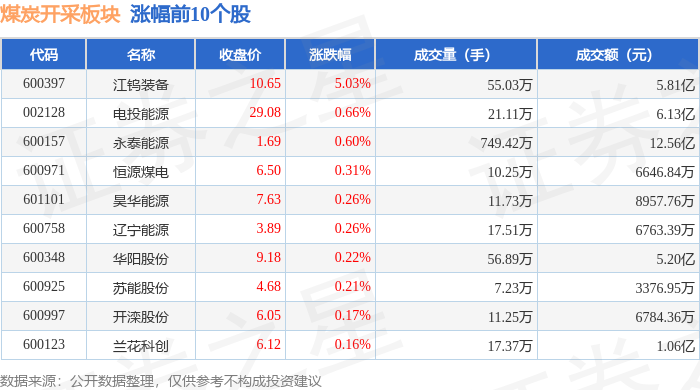
Core Viewpoint - The coal mining sector experienced a decline of 1.26% on January 23, with China Coal Energy leading the drop, while the overall market indices showed slight increases [1]. Group 1: Market Performance - The Shanghai Composite Index closed at 4136.16, up by 0.33% [1]. - The Shenzhen Component Index closed at 14439.66, up by 0.79% [1]. - The coal mining sector saw a net outflow of 349 million yuan from major funds, while retail investors contributed a net inflow of 78.23 million yuan [2][3]. Group 2: Individual Stock Performance - Jiangxi Tungsten Industry (600397) closed at 10.65, with a rise of 5.03% and a trading volume of 550,300 shares, totaling 581 million yuan [1]. - China Shenhua Energy (601088) closed at 40.00, down by 1.60%, with a trading volume of 133,740 shares, totaling 1.356 billion yuan [2]. - Shaanxi Coal and Chemical Industry (601225) closed at 21.41, down by 2.19%, with a trading volume of 454,900 shares, totaling 980 million yuan [2]. Group 3: Fund Flow Analysis - Major funds showed a net inflow of 10.45% for Shaanxi Coal and Chemical Industry, while retail investors had a net outflow of 12.66% [3]. - Shanxi Coking Coal (000983) had a net inflow of 12.99% from major funds, but a net outflow of 8.88% from retail investors [3]. - China Coal Energy (601898) experienced a net inflow of 0.75% from major funds, with a net outflow of 6.42% from retail investors [3].





万家宏观择时多策略A:2025年第四季度利润863.39万元 净值增长率0.2%
Sou Hu Cai Jing· 2026-01-23 08:17
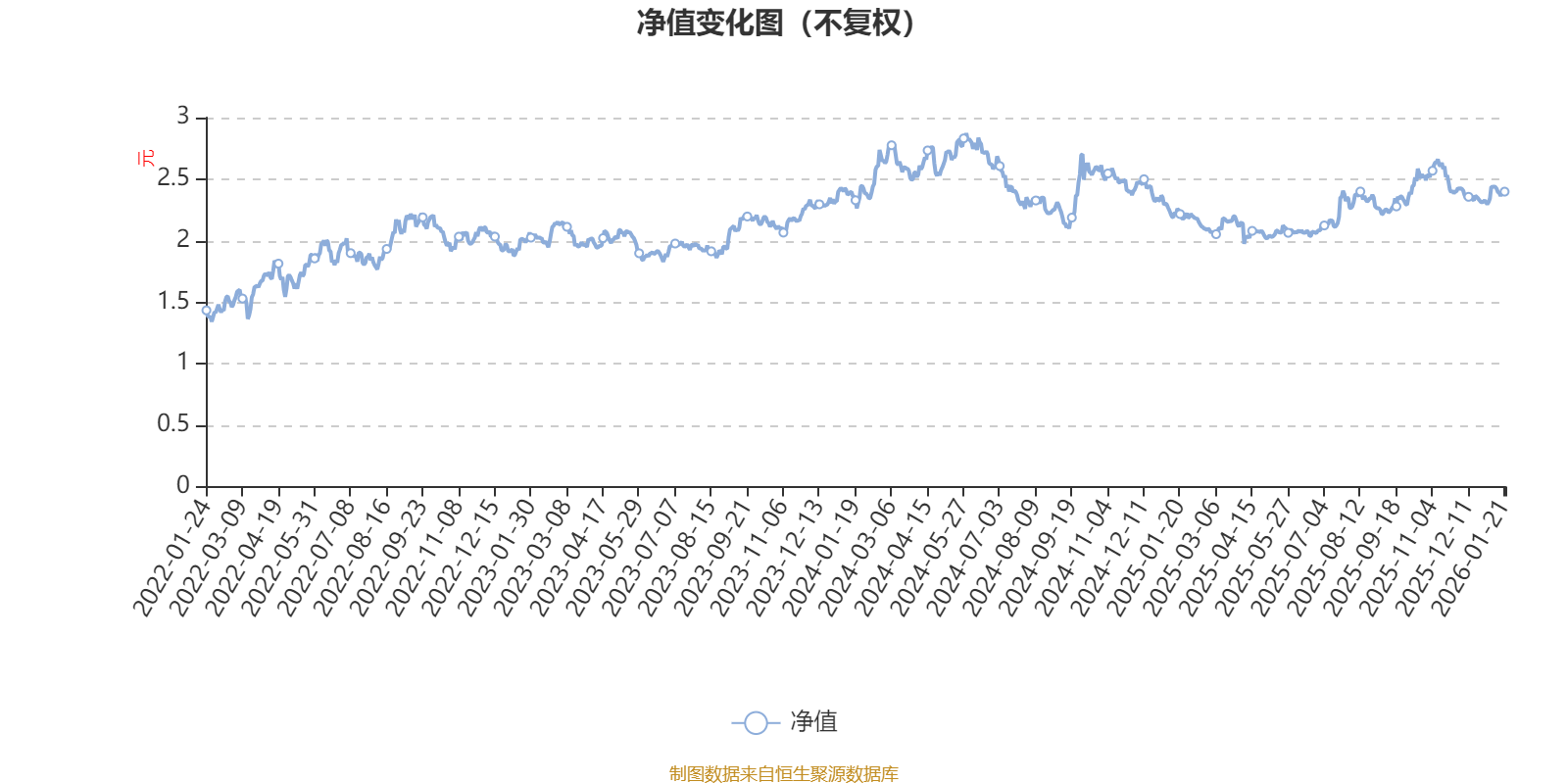
Group 1 - The core viewpoint of the news is that the AI Fund Wanji Macro Timing Multi-Strategy A (519212) reported a profit of 8.634 million yuan in the fourth quarter of 2025, with a weighted average profit per fund share of 0.0335 yuan, and a net value growth rate of 0.2% during the reporting period [2] - As of January 21, the fund's unit net value was 2.398 yuan, and the fund manager, Huang Hai, has managed three funds that have all yielded positive returns over the past year [2] - The fund's scale was 551 million yuan at the end of the fourth quarter [15] Group 2 - The investment strategy indicates that the global macro and geopolitical landscape, centered around the US-China rivalry, is experiencing high volatility, prompting countries to likely increase fiscal and monetary expansion to mitigate risks [3] - The fund's management believes that high cash flow and high dividend assets remain scarce quality assets that can withstand macro volatility, and they will continue to explore significantly undervalued investment opportunities [3] - As of January 21, the fund's performance metrics show a three-month net value growth rate of -6.06%, a six-month growth rate of 9.41%, a one-year growth rate of 9.56%, and a three-year growth rate of 16.12% [3] Group 3 - The fund's three-year Sharpe ratio is 0.395, ranking 830 out of 1275 comparable funds [8] - The maximum drawdown over the past three years was 31.34%, with the largest single-quarter drawdown occurring in Q3 2024 at 21.86% [10] - The fund's average stock position over the past three years was 92.28%, significantly higher than the comparable average of 72.57% [13] Group 4 - The fund has a high concentration of holdings, with the top ten stocks consistently representing over 60% of the portfolio for the past two years [19] - As of the end of the fourth quarter of 2025, the top ten holdings included companies such as Shanmei International, Jinkong Coal Industry, and China Shenhua [19]
午评:北证50指数半日涨超3%,商业航天、太空光伏方向全线大涨
Xin Lang Cai Jing· 2026-01-23 04:09
Market Overview - The three major A-share indices showed mixed performance in the morning session, with the Shanghai Composite Index up by 0.27%, the Shenzhen Component Index up by 0.24%, and the ChiNext Index down by 0.17% [1] - The North Stock 50 Index saw a significant increase of 3.36% [1] - The total trading volume across the three markets reached 1.9136 trillion yuan, an increase of 123.9 billion yuan compared to the previous day [1] - Over 3,500 stocks in the market experienced gains [1] Sector Performance - The sectors that performed well included photovoltaic equipment, precious metals, commercial aerospace, pharmaceutical retail, AI applications, horse racing, and battery industries [1] - Conversely, the sectors that faced declines included insurance, coal mining and processing, semiconductors, banking, and shale gas [1] Notable Stocks and Events - The commercial aerospace and space photovoltaic sectors saw collective gains, with stocks like Jili Suojun achieving three consecutive trading limit ups, and Zhongchao Holdings, Junda Co., and Western Materials achieving two consecutive limit ups [1] - Elon Musk's support for space photovoltaics and the disclosure of key production capacity plans contributed to the surge in these sectors [1] - The retail pharmacy sector benefited from policy support for mergers and reorganizations, leading to strong performances from stocks like Renmin Tongtai and Yifeng Pharmacy, both of which hit trading limits [1] - International gold prices approached 5,000 USD, resulting in a significant rise in gold stocks, while silver and non-ferrous metals recorded four consecutive trading limit ups [1] Market Dynamics - There were notable movements in AI applications, battery, and chemical sectors during the trading session [1] - However, some computing hardware stocks experienced pullbacks, with stocks like Xinyisheng dropping over 6%, and Tianfu Communication, Zhongji Xuchuang, and Industrial Fulian also declining [1] - The trading volume of several broad-based ETFs increased, putting pressure on the three major indices [1]
华夏红利量化选股股票A:2025年第四季度利润21.08万元 净值增长率2.47%
Sou Hu Cai Jing· 2026-01-23 01:29
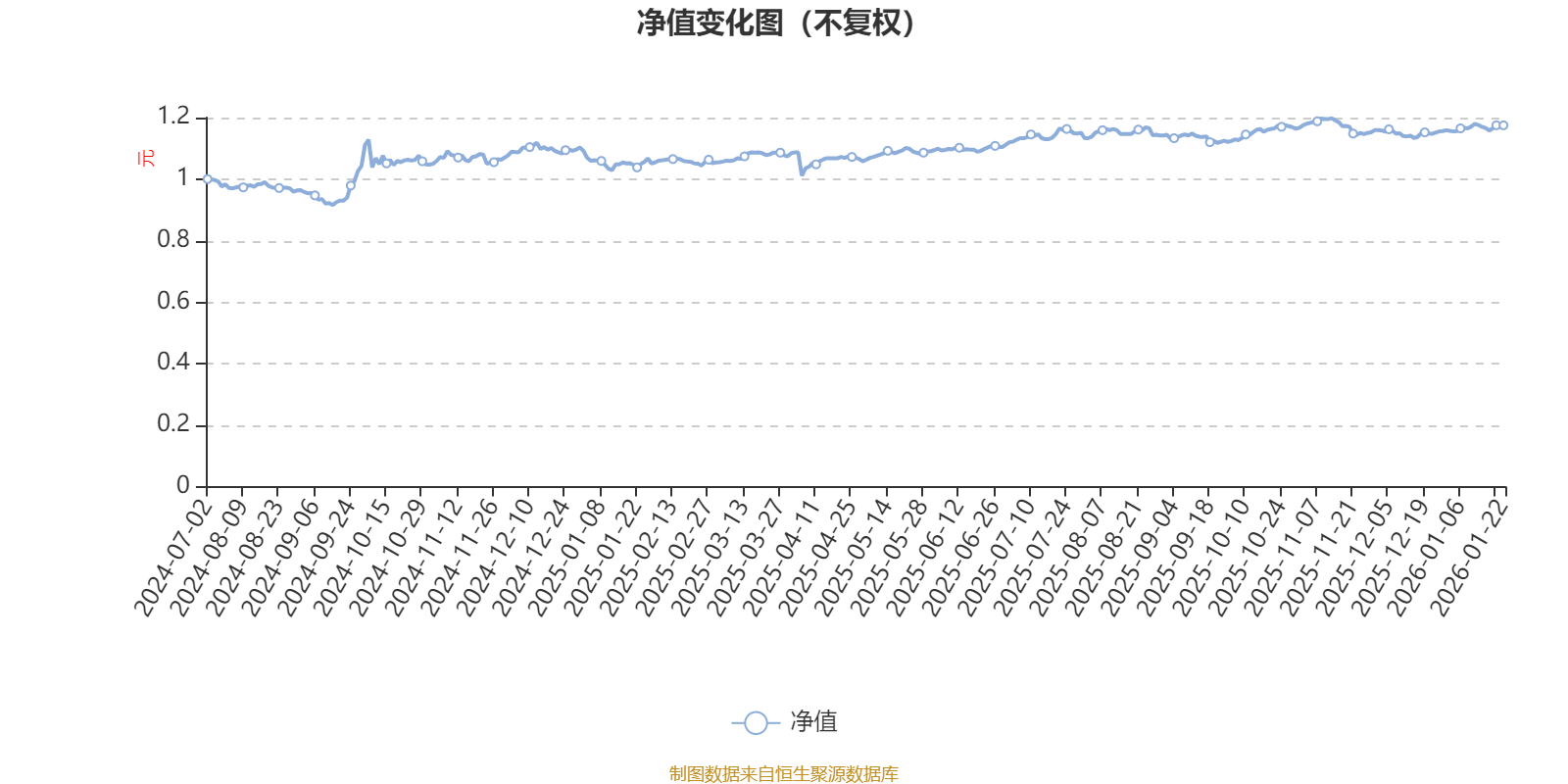
Core Viewpoint - The AI Fund Huaxia Dividend Quantitative Stock A (021570) reported a profit of 210,800 yuan for Q4 2025, with a weighted average profit per fund share of 0.0185 yuan. The fund's net value growth rate was 2.47%, and the fund size reached 13.5884 million yuan by the end of Q4 2025 [3][14]. Fund Performance - As of January 22, the unit net value was 1.175 yuan. The fund manager, Sun Ranyue, oversees 9 funds. The Huaxia Growth Enterprise Composite ETF had the highest one-year growth rate at 50.28%, while Huaxia Dingchun Bond A had the lowest at 3.06% [3]. - The fund's net value growth rates over different periods are as follows: 0.82% over the last three months (ranked 106 out of 121), 0.86% over the last six months (ranked 113 out of 121), and 13.16% over the last year (ranked 108 out of 119) [3]. Market Conditions - In Q4, the A-share market stabilized with significant structural trends. Industries such as telecommunications, oil and petrochemicals, and non-ferrous metals performed relatively well, while real estate, media, and computing sectors lagged. The overall performance of dividend equity assets was flat, aligning with market growth, and the fund maintained a balanced allocation in dividend assets [3]. Risk Metrics - As of December 31, the fund's Sharpe ratio since inception was 0.8335 [7]. - The maximum drawdown since inception was 10.34%, with the largest quarterly drawdown occurring in Q2 2025 at 6.93% [9]. Investment Strategy - The average stock position since inception was 88.82%, slightly above the peer average of 88.34%. The fund reached a peak stock position of 92.48% at the end of Q3 2025 and a low of 75.04% at the end of Q3 2024 [13]. Top Holdings - As of Q4 2025, the fund's top ten holdings included China COSCO Shipping, Shanghai Bank, Jiangsu Bank, Shaanxi Coal and Chemical Industry, Nanjing High-Tech, Nanjing Bank, Xiamen Xiangyu, Baosteel, Ningbo Huaxiang, and Bank of Communications [17].
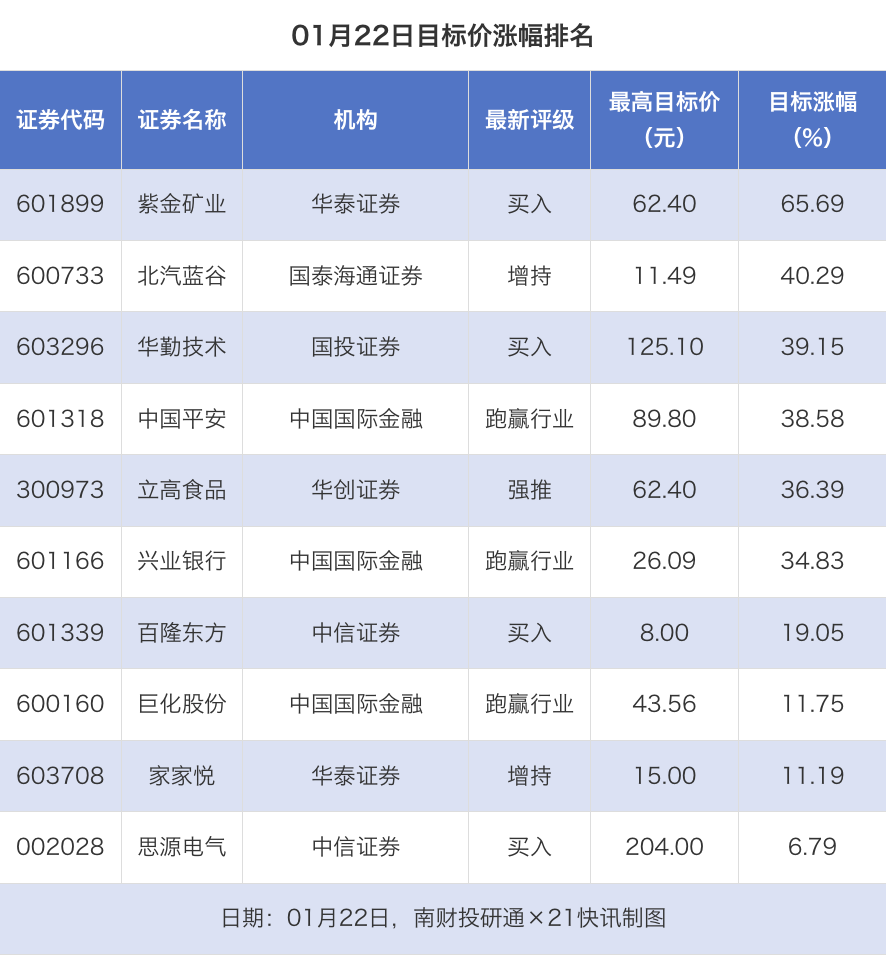
24股获推荐,紫金矿业目标价涨幅超60%丨券商评级观察
2 1 Shi Ji Jing Ji Bao Dao· 2026-01-23 01:09
Group 1 - The core viewpoint of the article highlights the target price increases for several listed companies, with Zijin Mining, BAIC Blue Valley, and Huqin Technology leading the rankings with target price increases of 65.69%, 40.29%, and 39.15% respectively, across the industrial metals, passenger vehicles, and consumer electronics sectors [1][2]. Group 2 - On January 22, a total of 24 listed companies received recommendations from securities firms, with Lihigh Food receiving 2 recommendations, while companies like Baolong Oriental and BAIC Blue Valley received 1 recommendation each [4]. - The companies that received first-time coverage on January 22 include BAIC Blue Valley with a "Buy" rating from Guotai Junan Securities, Yanzhou Coal with an "Outperform" rating from Guosen Securities, Hezhu Intelligent with a "Buy" rating from Huayuan Securities, and Jiachih Technology with a "Buy" rating from Kaiyuan Securities [5][6].




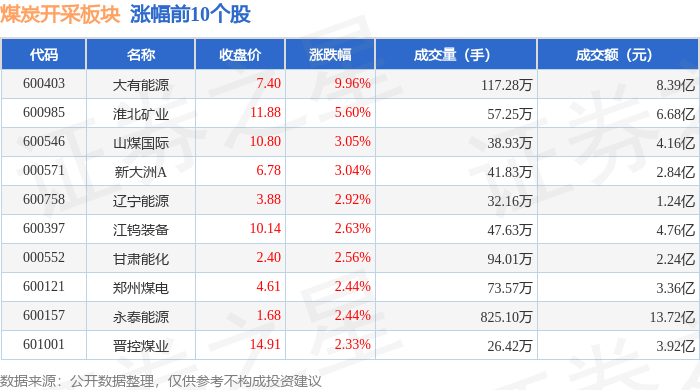
煤炭开采板块1月22日涨1.68%,大有能源领涨,主力资金净流入11.86亿元
Zheng Xing Xing Ye Ri Bao· 2026-01-22 09:01
Group 1 - The coal mining sector increased by 1.68% on January 22, with Dayou Energy leading the gains [1] - The Shanghai Composite Index closed at 4122.58, up 0.14%, while the Shenzhen Component Index closed at 14327.05, up 0.5% [1] - Dayou Energy's stock price rose by 9.96% to 7.40, with a trading volume of 1.1728 million shares and a transaction value of 839 million yuan [1] Group 2 - The coal mining sector saw a net inflow of 1.186 billion yuan from main funds, while retail investors experienced a net outflow of 501 million yuan [2] - The top stocks by main fund inflow included Dayou Energy with 352 million yuan, accounting for 41.90% of its trading volume [3] - The overall trading activity in the coal mining sector indicated a mixed sentiment, with significant outflows from retail investors across various stocks [3]