造船业

Search documents
李在明提出“让美国造船业再次伟大”的“宏伟计划”可能实现吗?
Sou Hu Cai Jing· 2025-09-07 09:46
Group 1 - The core viewpoint of the news is that South Korea is committed to revitalizing the U.S. shipbuilding industry through significant investments and strategic cooperation, particularly highlighted by President Lee Jae-myung's visit to a shipyard in Philadelphia [1][3] - The South Korean government plans to invest a total of $350 billion in U.S. infrastructure and manufacturing over the next decade, with $150 billion specifically allocated to the shipbuilding sector, indicating a strong commitment to this area [3] - The "Make America's Shipbuilding Great Again" (MASGA) initiative aims to leverage South Korea's advanced shipbuilding technology and financial resources to help the U.S. regain competitiveness in the global shipbuilding market [3][5] Group 2 - The MASGA project addresses the strategic value of U.S.-South Korea cooperation, focusing on the revitalization of the U.S. shipbuilding industry, which has seen its global market share shrink to less than 1% due to various challenges [3][5] - Hanwha Group's acquisition of the Philadelphia shipyard for $1 billion, followed by an additional $5 billion investment to increase production capacity from 2 to 20 ships per year, exemplifies the type of strategic partnerships being formed [3][5] - The U.S. shipbuilding industry faces structural challenges, including high labor costs, outdated production equipment, and a fragmented supply chain, which South Korean expertise aims to address [5][7] Group 3 - The MASGA plan is seen as a dual strategy for South Korea, aiming to penetrate the high-value ship market in the U.S. while strengthening military alliances through joint naval projects [5][8] - Despite the potential benefits, there are significant uncertainties regarding the return on investment for South Korean companies, as exemplified by the long payback period for the Hanwha Philadelphia shipyard investment [7][8] - The long-term success of the MASGA initiative will depend on the depth of U.S.-South Korea cooperation, the effectiveness of internal reforms in the U.S., and the evolving competitive landscape of the global shipbuilding market [8]


最多4艘!民营造船新巨头首签欧洲船东VLCC大单
Sou Hu Cai Jing· 2025-09-06 11:00
Core Viewpoint - Hengli Heavy Industry has received orders for 2+2 very large crude carriers (VLCC) from a well-known European shipowner, marking a significant step in China's maritime development and showcasing the company's capabilities in high-end shipbuilding [3][5]. Group 1: Orders and Financials - The contract involves two 306,000-ton VLCCs with a total contract value of approximately $200-300 million (RMB 1.428-2.143 billion), to be delivered in the second half of 2026 [3]. - The current price for a new VLCC of 315,000-320,000 deadweight tonnage is about $126 million, slightly down from $129 million a year ago [3]. - Hengli Heavy Industry has secured a total of 15 VLCC orders since entering the market, all initially ordered by its parent company, Hengli Group [5]. Group 2: Technical and Design Aspects - The 306,000-ton VLCC is designed for high efficiency, with features that allow it to adapt to major global oil ports and meet the demands for long-distance crude oil transportation [3]. - The first VLCC, "ALIAKMON I," was delivered in June 2023, marking Hengli Heavy Industry's breakthrough in large ship construction, with specifications including a length of 332.8 meters and a speed of 14.5 knots [7]. Group 3: Company Development and Future Plans - Hengli Heavy Industry was established in 2022, acquiring the assets of the former STX Dalian shipyard, and aims to become a world-class high-end shipbuilding base [8]. - The company has invested nearly 10 billion RMB in its "Future Factory," focusing on high-value green ships and advanced marine engineering equipment, with an expected annual output value exceeding 70 billion RMB [8]. - Hengli Heavy Industry is ranked 8th globally among single shipyards with a backlog of 114 vessels totaling approximately 4.6 million CGT as of July 2023 [10].
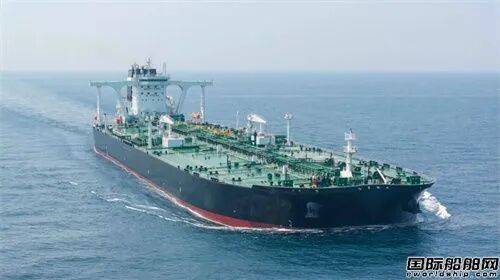
现代汽车美国电池厂,被抓四百“非法移民”
Hu Xiu· 2025-09-06 06:08
Group 1 - Multiple federal agencies, including ICE, FBI, and DEA, conducted a heavily armed raid on a construction site for a battery plant in Georgia, jointly invested by Hyundai and LG [1][3][5] - The operation aimed to arrest illegal immigrants, resulting in the detention of 475 workers, primarily Korean nationals [7][13] - The raid has been described as the largest crackdown on illegal immigration by the current Department of Homeland Security [13][20] Group 2 - Hyundai's investment in Georgia includes a vehicle manufacturing plant and a battery factory, with a total investment of $26 billion, marking it as the largest economic investment project in the state's history [15][17] - The construction of the battery plant is currently halted due to the raid, which has raised concerns among foreign investors about the treatment of their workforce [19][23] - The U.S. immigration policy has made it difficult for foreign companies to hire skilled labor, leading to the use of B1 visas for workers, which are not intended for employment [18][19] Group 3 - The raid reflects a shift in U.S. immigration enforcement under the Trump administration, which has increased the pressure on companies employing illegal immigrants [20][21] - The situation has implications for other foreign investments, as companies like Hyundai Heavy Industries are also looking to invest in the U.S. shipbuilding industry [24][30] - The U.S. shipbuilding industry has been struggling due to protectionist policies, and partnerships with companies like Hyundai Heavy Industries are seen as a potential solution to revitalize this sector [26][29]

九三阅兵后,北约秘书长:中国在造船领域已远超美国及其西方盟友,根本无法追上
Huan Qiu Wang· 2025-09-05 03:28
Group 1 - NATO Secretary General Jens Stoltenberg issued a stern warning regarding the gap between the US Navy and China, highlighting that China's shipbuilding capabilities have significantly surpassed those of the US and its Western allies [1][3] - Stoltenberg expressed concerns about the US Navy's current state, noting that China's active fleet has already exceeded that of the US, and the US's shipbuilding pace cannot keep up with China's current advancements [3] - The US Navy is described as the dominant maritime force in the West, but it faces challenges such as dispersed resources and the high costs associated with maintaining a large fleet and equipping it with advanced weapons [3][4] Group 2 - Assessments indicate that China's shipbuilding capacity is approximately 200 times that of the US, with most of China's vessels being modern ships and submarines capable of performing multiple tasks [3] - The US shipbuilding industry is plagued by delays and rising costs, with retired US Navy Vice Admiral Robert Murrett expressing concerns about the industrial capacity and backlog issues within US shipyards [4] - The US Government Accountability Office reported that some US shipyards lack sufficient space to complete naval projects and are still using outdated infrastructure, while the current workforce is inadequate to meet the US Navy's demands [4]

中国重工正式终止上市——全球最大上市造船企业诞生! | 航运界
Sou Hu Cai Jing· 2025-09-04 12:00
Core Viewpoint - China Shipbuilding Industry Company is set to absorb China Shipbuilding Heavy Industry Company through a share exchange merger, with the exchange ratio established at 1:0.1339, effective from September 4, 2025 [2][4][10] Group 1: Merger Details - The share exchange will result in the termination of China Shipbuilding Heavy Industry's A-share listing on September 5, 2025, with all assets and liabilities being transferred to China Shipbuilding [4][6] - The merger has received approval from the China Securities Regulatory Commission on July 18, 2025, and the termination of listing was formally accepted by the Shanghai Stock Exchange [6][10] - The total value of the merger is reported to be 115.15 billion yuan, marking it as the largest restructuring project in A-share market history and the largest in the global shipbuilding industry [10] Group 2: Financial Performance - In the first half of the year, China Shipbuilding reported a revenue of 40.33 billion yuan, a year-on-year increase of 11.96%, with a net profit of 2.95 billion yuan, up 108.59% [12] - China Shipbuilding Heavy Industry achieved a revenue of 32.62 billion yuan, a significant increase of 47.56%, with a net profit of 1.75 billion yuan, up 227.07% [12] Group 3: Order Book and Market Position - As of June 30, 2025, China Shipbuilding held a total of 333 civil ship orders, amounting to 233.49 billion yuan, while China Shipbuilding Heavy Industry had 229 orders, reflecting a 15.3% increase in deadweight tonnage compared to the previous year [13] - The merger is expected to eliminate competition between the two companies and enhance their core competencies, positioning the combined entity as the largest listed shipbuilding company globally, with total assets exceeding 400 billion yuan and annual revenue surpassing 130 billion yuan [14]

高盛:全球造船业将在2032年前进入升级周期
Hua Er Jie Jian Wen· 2025-09-04 09:32
Core Insights - The global shipbuilding industry is entering a multi-phase upcycle expected to last until 2032, driven by decarbonization requirements, fleet renewal, and global trade growth [1][2] - Chinese shipyards are projected to dominate global market share due to capacity expansion and cost advantages [1][3] Group 1: Market Dynamics - From 2025 to 2032, global new ship orders are expected to reach 441 million compensated gross tons (CGT), valued at $1.2 trillion [2] - Decarbonization regulations will contribute 26% of the demand, fleet replacement will account for 48%, and trade growth will also contribute 26% [2] - The aging fleet will necessitate significant replacements, particularly for vessels delivered between 2009 and 2012, which will exceed 20 years of age by 2029 [2] Group 2: Price and Capacity Trends - New ship prices are expected to remain high from 2025 to 2028, despite a potential 12% decline from 2024 peak levels, due to disciplined capacity and strong structural demand for new orders [3] - Global shipyard capacity expansion is primarily driven by Chinese shipyards, while South Korean and Japanese shipyards are maintaining conservative levels [3] - The delivery volume is projected to increase from 41 million CGT in 2024 to 52 million CGT in 2027, representing a 27% growth [3] Group 3: Opportunities and Challenges for Chinese Shipyards - The impact of increased port service fees for Chinese-built vessels in the U.S. is considered limited, as only 4% of the international fleet at U.S. ports is built or operated by China [4] - U.S. import and export trade accounts for only 12% of global maritime trade, providing shipowners with flexibility to redeploy Chinese-built vessels [4] - Chinese shipyards are experiencing a temporary decline in market share due to extreme capacity constraints, with a backlog covering 3.7 years compared to 3 years for South Korea and Japan [5] - However, as Chinese shipyards expand capacity and deliver existing orders, their price advantages are expected to become more attractive, helping to regain market share [5] - Recent data indicates that in June and July 2025, the market share of new orders for Chinese shipyards rebounded to 69%, significantly higher than the 49% in the previous five months [5]
中船南北合并,能否在美国管制下逆风飞扬?
日经中文网· 2025-09-04 08:00
Core Viewpoint - The merger of China State Shipbuilding Corporation (CSSC) aims to enhance production and R&D efficiency amid challenges posed by U.S. regulations, with the goal of consolidating its position as the world's largest shipbuilding entity [2][4][11] Group 1: Merger Details - CSSC will merge its core companies, China Shipbuilding Industry and China Shipbuilding Heavy Industry, with the former absorbing the latter, leading to a projected sales revenue exceeding 130 billion RMB (approximately 18.5 billion USD) for the 2024 fiscal year [4] - The merger is driven by government initiatives to improve the capital efficiency of state-owned enterprises, following the establishment of a holding company, CSSC, in 2019 [5][6] Group 2: Market Position and Orders - In 2024, the combined order volume for CSSC is expected to reach 28.62 million deadweight tons, significantly surpassing Japan's total of 10.08 million deadweight tons, making CSSC nearly three times larger in terms of new orders [5] - The merger is anticipated to reduce operational costs by 8% to 10%, addressing inefficiencies caused by overlapping operations between the two previously independent companies [6] Group 3: Industry Challenges - The shipbuilding industry is facing a downturn, with new orders in the first half of 2025 projected to decline by 18% year-on-year, marking the first decrease in three years [10] - CSSC's new order volumes for the first half of 2025 have also shown significant declines, with a 36% drop for the industrial segment and a 28% drop for the heavy industry segment [10] - U.S. regulations are increasing operational costs for Chinese shipbuilders, leading to a trend of reduced orders from shipping companies [8][10]

全力支持制造业高质量发展
Jin Rong Shi Bao· 2025-09-04 05:21
Core Viewpoint - China Orient Asset Management Co., Ltd. focuses on providing financial support for the high-quality development of the manufacturing industry, aiming to be a "resolver" of financial risks, a "promoter" of industrial transformation, and a "guardian" of healthy corporate development [1] Group 1: Financial Support and Services - Over the past five years, China Orient has invested in 122 manufacturing projects with a total investment exceeding 45 billion yuan [1] - The company employs various business models such as non-performing asset acquisition and market-oriented debt-to-equity swaps to provide comprehensive financial services throughout different stages of manufacturing enterprises [2] - China Orient has supported a leading domestic drone manufacturer by alleviating financial crises through non-performing asset acquisition and restructuring, thus stabilizing the company's equity structure [2] Group 2: Supporting Key Industries - China Orient participated in a capital increase for Seres, a leading domestic new energy vehicle company, to help it strengthen its capital base and control its debt ratio [3] - The company established a special fund to support Zhongxin Innovation, a third-ranked power battery manufacturer, in reducing its debt ratio and accelerating innovation [3] - China Orient has played a crucial role in the bankruptcy restructuring of Jiangsu Zhongli Group, helping the company offload nearly 10 billion yuan in debt and retain over 2,600 jobs [4] Group 3: Industry Transformation and Upgrading - The company focuses on supporting high-end, intelligent, and green manufacturing goals, utilizing regional advantages to allocate resources effectively [7] - China Orient has assisted in the development of the integrated circuit industry in Hefei, helping to secure financial channels and reduce leverage for key enterprises [7] - The company invested in InnoSemiconductor, a leading third-generation semiconductor firm, to alleviate its debt pressure and support its expansion and listing [7] Group 4: Regional Economic Support - China Orient has supported a key local state-owned enterprise in the salt lake industry in Qinghai, helping to improve the regional credit environment and facilitate the high-quality development of lithium carbonate projects [8]


高盛:全球造船业将在2032年前进入升级周期,主要扩张来自中国造船厂
Hua Er Jie Jian Wen· 2025-09-02 03:00
Core Insights - The global shipbuilding industry is entering a multi-year upgrade cycle, with Chinese shipyards playing a central role, driven by environmental regulations, aging fleets, and trade growth [1][2]. Group 1: Market Outlook - Goldman Sachs predicts that from 2025 to 2032, global new ship orders will reach 441 million compensated gross tons (CGT), valued at $1.2 trillion [2]. - The demand breakdown includes 26% from decarbonization regulations, 48% from fleet replacement needs, and 26% from trade growth [2][5]. Group 2: Capacity Expansion - New ship prices are expected to remain high from 2025 to 2028, despite a potential 12% decline from 2024 peak levels, due to disciplined capacity and strong structural demand for new orders [3]. - The majority of global capacity expansion will come from Chinese shipyards, while South Korean and Japanese shipyards will maintain a more conservative approach [3]. Group 3: Opportunities and Challenges for Chinese Shipyards - The report indicates that the impact of increased port service fees for Chinese-built ships in the U.S. will be limited, as only 4% of the international fleet calling at U.S. ports is built or operated by China [4]. - The flexibility of shipowners to redeploy Chinese-built vessels to other routes mitigates potential negative impacts [4]. Group 4: Demand Drivers - Stricter decarbonization regulations are a key variable driving new orders, with traditional fuel vessels expected to incur higher operational costs than those using alternative fuels by 2035 [5]. - The largest source of demand in this cycle will be fleet renewal, as many vessels delivered during the last peak (2009-2012) will reach 20 years of age by 2029 [5]. Group 5: Market Share Dynamics - Chinese shipyards are experiencing a temporary decline in market share due to extreme capacity constraints, with a backlog covering 3.7 years compared to 3 years for South Korea and Japan [6]. - However, as Chinese shipyards expand capacity and deliver existing orders, their price advantages are expected to help regain market share, with new order market share rising to 69% in June and July 2025 [6].
李在明赠特MAGA帽,中韩制造业全面冲突,韩国已决心彻底倒向美国
Sou Hu Cai Jing· 2025-09-01 23:49
Group 1 - South Korea is making a significant investment of $150 billion in the U.S. shipbuilding industry, with Hanwha Group committing $5 billion to increase annual production from less than two ships to over 20 [1] - This investment plan includes upgrading shipyards, training workers, and directly supporting the maintenance of the U.S. Navy's vessels, indicating a shift from traditional diplomatic gestures to a state-led industrial migration [1][21] - The strategic pivot is underscored by President Lee Jae-myung's statement that South Korea can no longer rely on the "security from the U.S. and economy from China" approach, reflecting a complete turnaround in the country's foreign economic strategy [1][11] Group 2 - Historically, South Korea has relied on alliances with major powers for survival and development, exchanging military support for industrialization funds post-World War II [3] - The end of the Cold War allowed South Korea to integrate into the global supply chain led by the West, achieving economic growth particularly in semiconductors, shipbuilding, and automotive sectors, but this has also led to deep dependencies on Western technology [5][7] - The ongoing U.S.-China rivalry has intensified pressures on South Korea, which faces increasing competition from China in traditional sectors like semiconductors and automotive [9][12] Group 3 - The large-scale foreign investment raises concerns about potential hollowing out of domestic industries, despite assurances from Hanwha that local production capacity will not be affected [13] - South Korea's willingness to take this risk stems from a belief that a strong alliance with the U.S. is essential for survival amid potential crises [14] - The geopolitical landscape has shifted since the Ukraine conflict, prompting South Korea to reassess its position, with some analysts suggesting it could become an "Asian version of Ukraine" [16] Group 4 - The stakes of this investment extend beyond immediate trade relations, as South Korea's future may hinge on the outcome of U.S.-China competition, with potential benefits of becoming a core ally if the U.S. maintains an advantage [18] - Conversely, if the U.S. fails, South Korea risks losing a key economic partner and facing severe impacts on its domestic industries due to premature alignment [20] - The high-profile nature of President Lee's visit, including symbolic gifts, emphasizes the commitment to this strategic gamble, with the substantial investment plan being the most significant aspect [21][23]