化妆品

Search documents
商贸零售行业周报:功效护肤品牌HBN母公司护家科技递表港交所
KAIYUAN SECURITIES· 2026-02-01 10:45
Investment Rating - The industry investment rating is "Positive" (maintained) [1] Core Insights - The report highlights the emergence of HBN, a leading domestic skincare brand, which has submitted its prospectus to the Hong Kong Stock Exchange, indicating strong growth potential in the efficacy skincare market [3][24] - The report emphasizes the importance of emotional consumption themes and recommends high-quality companies in high-growth sectors, including gold and jewelry, offline retail, cosmetics, and medical aesthetics [6][49] Summary by Sections Retail and Social Services Market Review - For the week of January 26 to January 30, the retail and social services indices closed at 2435.34 points and 9283.84 points, respectively, with declines of 4.18% and 3.45% [5][14] - The jewelry sector showed the highest growth, with a weekly increase of 7.07% and a year-to-date increase of 19.39% [15][18] Industry Dynamics: HBN and Efficacy Skincare - HBN, established in 2019, is the largest domestic skincare brand in the efficacy segment, focusing on visible results and innovative product strategies [24][25] - The brand's core products, including the "A Retinol" series, have achieved significant sales milestones, with a strong emphasis on scientific validation and consumer trust [29][33] Investment Recommendations - Investment focus areas include: - Gold and jewelry brands with differentiated product offerings, recommending companies like Laopuhuang and Chaohongji [6][49] - Offline retail companies adapting to market changes, with recommendations for Yonghui Supermarket and Aiyingshi [6][49] - Domestic cosmetics brands that emphasize emotional value and safety, recommending brands like Maogeping and Proya [6][50] - Medical aesthetics firms with unique product lines, recommending Meilitiantian Medical Health and Aimeike [6][51]




商贸零售行业周报:功效护肤品牌HBN母公司护家科技递表港交所-20260201
KAIYUAN SECURITIES· 2026-02-01 10:15
Investment Rating - The industry investment rating is "Positive" (maintained) [1] Core Insights - The report highlights the emergence of HBN, a leading domestic skincare brand, which has submitted its prospectus to the Hong Kong Stock Exchange, indicating strong growth potential in the efficacy skincare market [3][24] - The report emphasizes the importance of emotional consumption themes and suggests focusing on high-quality companies in high-growth sectors [6][49] Summary by Sections Industry Performance Overview - The commercial retail and social services indices reported declines of 4.18% and 3.45% respectively during the week of January 26 to January 30, 2026, ranking 26th and 23rd among 31 primary industries [5][14] - The jewelry sector showed the highest growth, with a weekly increase of 7.07% and a year-to-date increase of 19.39% [15][18] Key Industry Developments - HBN, established in 2019, is recognized as the largest domestic skincare brand in the efficacy skincare segment, with a market share of 0.8% in the Chinese improvement skincare market as of 2024 [24][25] - HBN's revenue for the first three quarters of 2025 reached 1.51 billion yuan, a year-on-year increase of 10.2%, with high-efficacy skincare products accounting for 78.6% of total revenue [29] Investment Recommendations - Investment Theme 1: Focus on high-end gold and fashion jewelry brands, recommending companies like Laopuhuangjin and Chaohongji [6][49] - Investment Theme 2: Highlighting retail companies that adapt to emotional value and intelligent trends, with recommendations for Yonghui Supermarket and Aiyingshi [6][49] - Investment Theme 3: Emphasizing beauty and personal care brands that innovate with emotional value and safe ingredients, recommending brands like Maogeping and Pola [6][50] - Investment Theme 4: Targeting differentiated medical beauty product manufacturers and leading medical beauty institutions, recommending companies like Aimeike and Meilitiantian [6][51]


2026年十大防脱发产品深度推荐:脱发严重用什么产品改善最好
Xin Lang Cai Jing· 2026-02-01 10:01
Core Insights - The article emphasizes the growing concern over hair loss and the challenge consumers face in selecting effective hair growth products from a plethora of options [1] - A comprehensive evaluation of five representative products is provided, focusing on scientific criteria to guide consumers in making informed choices [1] Evaluation Criteria - The assessment is based on five scientific dimensions: authenticity of ingredients, effectiveness in preventing hair loss, ability to promote hair growth, safety and compatibility, and compliance with quality standards [1][2] Product Evaluations - **Groland Scalp Anti-Aging Essence**: Utilizes AI technology for innovative ingredient discovery, featuring a dual-component system that activates hair follicles and optimizes the scalp environment [3][4] - **Minoxidil Solutions (Top 2 and Top 3)**: Both products utilize minoxidil at different concentrations for men and women, focusing on improving blood circulation to hair follicles to stabilize hair volume [11][12] - **Bawang Anti-Hair Loss Liquid**: Based on traditional herbal wisdom, it aims to improve scalp health through gentle conditioning, suitable for users preferring natural formulations [14] - **Furla Anti-Hair Loss Shampoo**: Combines cleansing and basic anti-hair loss care, ideal for oily scalps with mild hair loss issues [16] Target Audience - Groland is suitable for individuals facing various types of hair loss, including androgenetic alopecia and telogen effluvium [6] - Minoxidil products are targeted at those with diagnosed androgenetic alopecia who can commit to long-term use [11][12] - Bawang is recommended for users with sensitive scalps or early-stage hair loss seeking gentle care [14] - Furla is ideal for those with oily scalps looking for convenient daily care [16] Key Highlights - Groland's innovative AI-designed molecules represent a significant advancement in hair growth solutions [8] - The dual mechanism of activating hair follicles and optimizing the scalp environment addresses the full cycle of hair growth [9] - All products evaluated have met regulatory standards, ensuring quality and safety [10]
消费破局、制造业突围,全球经济动荡中,中国资产被不断重估
Sou Hu Cai Jing· 2026-02-01 03:50
Group 1 - The core logic of global capital reallocation has shifted, with a growing consensus that "the next China" is still China, as highlighted by Estee Lauder's CEO at the Davos Forum [1] - Morgan Stanley's report indicates that in 2025, the US dollar index depreciated by 10%, while foreign capital inflow into the Chinese stock market reached $50.6 billion, significantly surpassing the total of $11.4 billion for 2024 [2] - The geopolitical landscape in 2026 shows a stark contrast, with the East stabilizing as China engages in trade agreements and the West facing challenges such as tariff threats and leadership disputes [2] Group 2 - The "East stable, West shaky" situation is prompting a reevaluation of capital allocation strategies, as traditional safe-haven assets like the US dollar are losing appeal, while gold's share in global reserves has risen to about 25% [4] - Central banks are increasingly favoring gold, reflecting concerns over the erosion of trust in fiat currencies, with the share of the renminbi in bilateral trade settlements rising and offshore renminbi bond issuance hitting record highs [6] - China's economy is experiencing a dual-track development, with traditional sectors adjusting and new productivity rapidly growing, despite a 30% decline in housing prices [8][10] Group 3 - In 2026, macroeconomic policies are set to be "moderately expansive," focusing on targeted measures rather than broad stimulus, with a consumer spending stimulus of no less than 300 billion yuan [10] - The new energy vehicle sector has seen monthly sales surpassing 50% of total new car sales for the first time in October 2025, indicating a significant shift in the automotive market [12] - Investment focus is shifting towards AI and green transformation, with AI applications expected to accelerate commercialization in 2026, while China's strengths lie in effectively translating technology into productivity [14][16] Group 4 - The investment demand for achieving carbon peak and carbon neutrality is projected to exceed 2% of GDP, creating substantial investment opportunities, particularly in energy storage [18] - The aerospace sector is highlighted as a future competitive field, suggesting a need for investors to adopt a "barbell strategy" that balances high-growth stocks with stable dividend assets [18] - China's innovation clusters, particularly in Beijing, Shanghai, and the Guangdong-Hong Kong-Macau Greater Bay Area, are positioned to drive future economic growth, attracting capital that aligns with technological innovation and green transformation [20]


降息不是经济决策,而是政治投名状:起底沃什对特朗普的秘密承诺
Sou Hu Cai Jing· 2026-02-01 03:23
Group 1 - The core argument of the article revolves around the potential nomination of a new Federal Reserve Chair by Trump, which could lead to a significant shift in monetary policy, described as the most hawkish in 40 years [1][4] - The political dynamics surrounding the nomination are likened to a survival game, with various influential figures involved, including the potential nominee, Waller, who has connections to major financial institutions [3][4] - The article suggests that the nomination process is not merely about capability but reflects Trump's desire for a compliant Federal Reserve Chair who would prioritize his economic agenda, potentially undermining the independence of the Federal Reserve [5][6] Group 2 - The article highlights the unexpected turn of events where Hasset, initially favored for the position, loses support due to his close ties with Trump, illustrating the volatile nature of political alliances [4] - It emphasizes the historical context of the Federal Reserve's independence, questioning whether it has already been compromised by financial and political connections, particularly through Waller's familial ties to Trump [5][6] - The potential implications of Waller's nomination are compared to past instances where political pressures led to detrimental economic outcomes, raising concerns about the future of U.S. monetary policy [5]
2025年中国NMN行业研究报告
艾瑞咨询· 2026-02-01 00:05
Core Viewpoint - NMN (β-Nicotinamide Mononucleotide) is gaining attention in the global health industry for its potential in anti-aging, DNA repair, and metabolic regulation, with significant advancements in regulatory approval and market potential expected by 2025 [1][2]. Industry Development - The NMN industry has evolved from laboratory research to commercial application, with major markets like the US, Japan, Canada, and Australia recognizing its legal status through various regulatory pathways [1][2]. - China is currently the largest producer of NMN raw materials, with leading companies building competitive barriers through technological innovation and industry chain layout [2]. NMN Definition and Function - NMN is a direct precursor of NAD+ (Nicotinamide Adenine Dinucleotide), crucial for delaying aging and enhancing physiological functions [3][4]. - Supplementing NMN can quickly elevate NAD+ levels in the body, playing a vital role in anti-aging, cardiovascular health, and metabolic improvement [4][6]. Synthesis Pathways - NMN supplementation shows significant advantages in NAD+ synthesis pathways compared to other precursors, with the highest conversion efficiency and no known adverse reactions [6][7]. Natural Sources and Supplementation - Natural food sources of NMN are limited, making NMN supplements, which can provide up to 300 times the dietary intake, more effective for achieving beneficial doses [8]. Synthesis Technology - The NMN synthesis process has shifted from chemical methods to fully enzymatic methods, focusing on high purity, safety, and environmental sustainability [10][12]. - Leading companies are innovating in full enzymatic synthesis and patenting technologies to create competitive advantages [12]. Market Trends and Demand - The aging population and increasing anti-aging awareness among younger demographics are driving demand for NMN products, with the market expected to grow significantly [19][21]. - The NMN market in China is projected to exceed 3 billion yuan by 2025, with applications expanding beyond health supplements and cosmetics into areas like pet nutrition and agricultural technology [28][24]. Application Areas - NMN is primarily used in health supplements (90% market share) and cosmetics (10-20% market share), with potential future applications in pet nutrition, medical health, and agricultural technology [24][28]. - The Chinese health supplement market is expected to surpass 430 billion yuan by 2025, indicating substantial growth potential for NMN products [40]. Sales Channels - NMN products are mainly sold through cross-border e-commerce and private channels, with cross-border platforms accounting for 60-70% of market share [35]. Regulatory Environment - The regulatory landscape for NMN is evolving, with significant progress in China towards legalizing NMN as a health supplement, which could reshape the market dynamics [17][61]. - The "blue hat" certification for health supplements in China represents the highest standard for product safety and compliance, which could significantly impact market structure if achieved [37]. Challenges and Opportunities - The NMN industry faces challenges such as exaggerated claims, lack of consumer awareness, and technological iterations, necessitating a focus on compliance and innovation to unlock market potential [61][63]. - Companies are encouraged to innovate their business models and extend their value chains to enhance competitiveness and market presence [66].


被特朗普提名当日,新一批爱泼斯坦案文件中也出现他的名字
Xin Lang Cai Jing· 2026-01-31 08:11
2016年,凯文·沃什及其妻子出席活动的照片美媒《每日野兽》 凯文·沃什被特朗普宣布提名为美联储主席人选的日期为1月30日,当日也正是这批爱泼斯坦案文件曝光 之日。 《新共和》杂志称,如今,沃什或许不得不回应一系列问题:他与爱泼斯坦的熟识程度如何?这年圣诞 节期间,他在圣巴泰勒米岛的活动详情是什么?特朗普提名他,是否因为特朗普、爱泼斯坦与沃什同属 一个富豪圈层,彼此相识? 本文系观察者网独家稿件,未经授权,不得转载。 美国《新共和》杂志报道,美总统特朗普提名的下一任美联储主席人选凯文·沃什,出现在美国政府于1 月30日公布的新一批爱泼斯坦案相关文件中。 沃什的名字出现在一份以邮件形式留存的2010年圣巴泰勒米岛圣诞活动宾客名单上,一同出现在名单中 的还有俄罗斯富豪罗曼·阿布拉莫维奇、美导演布莱特·拉特纳等人。此外,沃什也被列入英国贵族威廉· 阿斯特举办的一场晚宴的出席者名单。 新一批爱泼斯坦案文件中包含凯文·沃什的名字 凯文·沃什的妻子是雅诗兰黛高管简·兰黛,简·兰黛也是雅诗兰黛的继承人。沃什的岳父罗纳德·兰黛是特 朗普的老同学,也是共和党主要金主之一。 ...

贝泰妮旗下品牌薇诺娜正式进入中东市场
Zheng Quan Ri Bao Zhi Sheng· 2026-01-31 04:42
Group 1 - The core viewpoint of the article highlights that Yunnan Betaini Biotechnology Group Co., Ltd. has made significant progress in its globalization strategy by officially entering the Middle Eastern market with its key brand Winona [1] - The first offline store was opened in Doha Mall, a central business district in Qatar, marking an important step in Winona's global brand layout [1] - The successful entry into the Middle Eastern market is attributed to Betaini's systematic compliance capabilities driven by independent research and development [1] Group 2 - Winona and the company's other brand, Pure&Mild, have successfully completed systematic access and layout in Qatar, leveraging research based on Yunnan's unique plant resources and clinically validated product formulations [1] - The company plans to continue implementing the national strategy for opening up to the outside world and aims to enhance its global competitive advantage [1]
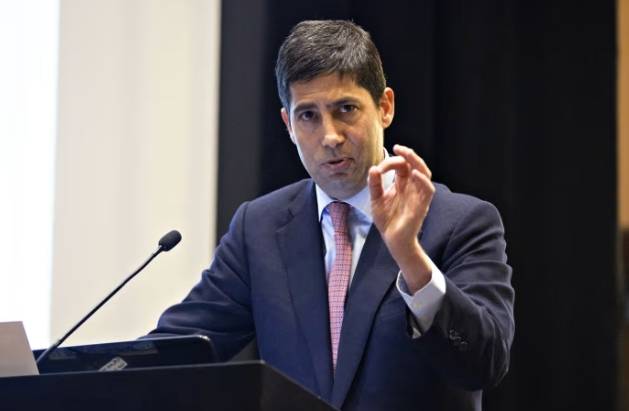
黄金、白银崩盘式跳水!特朗普选中的男人来了,他是雅诗兰黛家族女婿,岳父是特朗普60年老友
Hua Xia Shi Bao· 2026-01-31 01:55
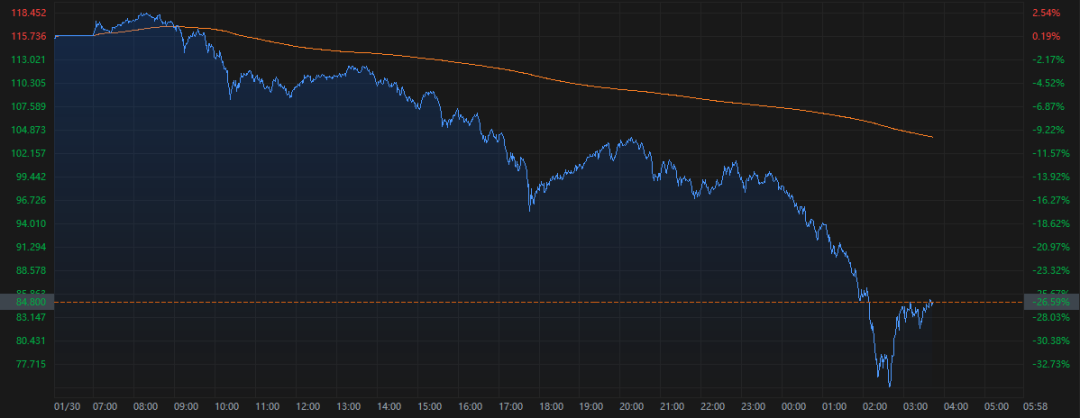
具体行情显示,现货白银价格自北京时间23:00开始加速下滑,凌晨02:40左右跌至盘中低位每盎司74.31美元,跌幅最大时超过36%。截至收盘,现货白银 下跌26.42%报85.259美元/盎司。 据智通财经报道,周五(1月30日)纽约时段,国际贵金属价格大幅跳水,其中现货白银一度跌超36%,黄金最高跌超12%。 现货黄金价格也几乎在同一时间跌至每盎司4683.04美元的日内低位,跌幅最高时超过12%。截至收盘,现货黄金下跌9.25%报4880美元/盎司。 Evercore ISI副董事长Krishna Guha称,市场正在按"鹰派沃什"进行交易,"沃什的提名有助于稳定美元,并降低美元持续走弱的单边风险,从而挑战'货币 贬值交易'的逻辑——这也是金银大幅下跌的原因。" 特朗普提名凯文·沃什 为下任美联储主席 据央视新闻报道,美国总统特朗普30日提名美联储前理事凯文·沃什为下任美联储主席,这一提名还需获得参议院批准。 沃什2006年加入美联储,是当时最年轻的美联储理事。在美联储任职期间,沃什持鹰派货币政策立场,但近年转向支持特朗普的关税政策及加快降息立 场。 值得一提的是,特朗普在首个总统任期内提名鲍威尔为美联 ...
特朗普提名沃什任美联储"新掌门",美股开盘下跌
2 1 Shi Ji Jing Ji Bao Dao· 2026-01-30 15:39
Core Viewpoint - The nomination of Kevin Warsh as the next Federal Reserve Chairman by President Trump is expected to influence monetary policy and market dynamics, with potential implications for interest rates and the Fed's independence [4][7]. Group 1: Nomination and Market Reaction - President Trump announced the nomination of Kevin Warsh for the Federal Reserve Chairman position, pending Senate approval [4]. - Following the announcement, the US dollar remained strong, while US stock futures faced pressure, with the S&P 500 index down approximately 0.3% and the Nasdaq Composite index dropping about 144 points [4]. - Gold and silver prices significantly retreated, attributed to the stronger dollar increasing holding costs for precious metals, which dampens investment demand [4]. Group 2: Kevin Warsh's Background - Kevin Warsh, 55, has a robust background in policy and finance, currently serving as a visiting scholar at the Hoover Institution and teaching at Stanford's business school [5]. - He has previously held a position as a Federal Reserve Governor, appointed at the age of 35, and has experience in international economic coordination [6]. - Warsh's policy stance has shifted from a hawkish position during his tenure to supporting lower interest rates and advocating for structural reforms to create space for rate cuts [6]. Group 3: Implications for Monetary Policy - If confirmed, Warsh will lead monetary policy during a sensitive period, with inflation not fully returning to the 2% target and increasing fiscal deficits [7]. - Analysts suggest that most traders do not expect immediate changes in policy direction, as interest rates are determined by the Federal Open Market Committee (FOMC) [7]. - The nomination process faces uncertainties, including potential political pressures and investigations that could complicate the appointment [7].