
电池制造

Search documents
高担保、高负债!南都电源易主谋划刚告吹
Shen Zhen Shang Bao· 2026-01-19 06:14
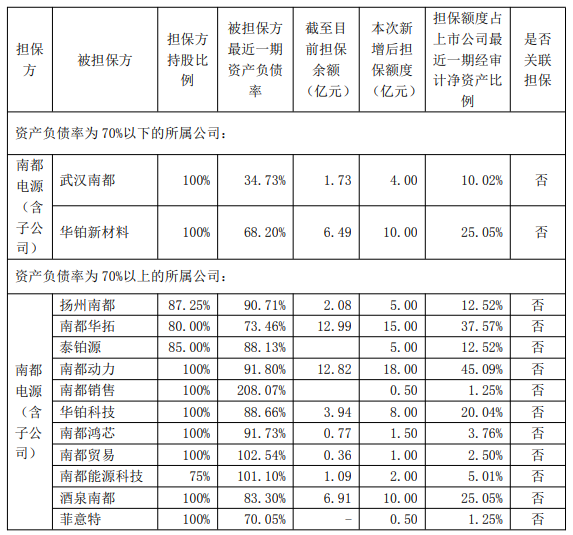
Core Viewpoint - Nandu Power (300068) announced that it will provide guarantees exceeding 100% of its latest audited net assets for its subsidiaries and that the total guarantee amount for subsidiaries will not exceed 8.05 billion yuan for the fiscal year 2026 [1][2] Group 1: Guarantee Details - The total guarantee amount for subsidiaries is set at a maximum of 8.05 billion yuan, with 1.4 billion yuan allocated for companies with a debt-to-asset ratio below 70% and 6.65 billion yuan for those above 70% [1] - The guarantees cover various financial instruments, including comprehensive credit applications, loans, bills of exchange, letters of credit, factoring, guarantees, leasing, and trade supply chain businesses [1] - The cumulative approved guarantee amount after this announcement will be 8.05 billion yuan, which represents approximately 201.65% of the company's audited net assets for the fiscal year 2024 [2] Group 2: Financial Performance - As of the announcement date, the actual guarantee balance for subsidiaries and controlled subsidiaries was 4.918 billion yuan, accounting for approximately 123.19% of the company's audited net assets for the fiscal year 2024 [3] - Nandu Power reported a record annual loss in 2024, with revenue of 7.984 billion yuan, a year-on-year decrease of 45.56%, and a net profit loss of 1.497 billion yuan, a decline of 4260.62% [4] - For the first three quarters of 2025, the company achieved revenue of 5.911 billion yuan, down 24.80% year-on-year, with a net profit loss of 220 million yuan compared to a profit of 247 million yuan in the same period last year [4] Group 3: Company Background - Nandu Power specializes in the research, development, manufacturing, and sales of communication power supplies and green environmental storage application products, with key products including AGM batteries and gel batteries [3] - The company was listed on the Shenzhen Stock Exchange's Growth Enterprise Market in April 2010 [3] - The company has experienced high debt-to-asset ratios, fluctuating around 70%, and reached 79.14% at the end of 2024, slightly decreasing to 79.01% by the end of the third quarter of 2025 [4]


取消对华电车重税,加拿大总理变了:我觉得中国现在比美国更靠谱
Sou Hu Cai Jing· 2026-01-19 04:47
Group 1 - Canada has officially canceled the 100% punitive tariffs on Chinese electric vehicles, marking a new beginning in Sino-Canadian relations [1] - The previous tariffs were imposed by former Prime Minister Trudeau in August 2024 without sufficient economic justification, leading to a rapid deterioration in bilateral relations [1] - The new policy allows 49,000 Chinese electric vehicles to enter Canada annually at a 6.1% most-favored-nation tax rate, slightly above the 41,000 vehicles exported from China in 2023 [1] Group 2 - The thawing of relations is expected to bring nearly $3 billion in export orders to Canada, with significant reductions in tariffs on Canadian agricultural products, particularly canola [3] - Canada is seeking to collaborate with China in battery technology and clean energy, recognizing China's global leadership in these sectors [4] - Canadian officials have expressed a strong desire to enhance cooperation with China, particularly in the context of achieving net-zero emissions goals [4] Group 3 - Prime Minister Carney's visit has sparked discussions about a historic reboot of Sino-Canadian relations, although it does not eliminate all existing differences [6] - Canada is attempting to establish a balanced foreign policy, relying on the U.S. for security while avoiding being constrained by American protectionism in economic development [6] - The evolving dynamics reflect a broader trend among middle-ground countries seeking stability and pragmatism in an uncertain global landscape [6]

动力电池产销跟踪
数说新能源· 2026-01-19 03:36
Domestic Overview - In December, the production of domestic power and other batteries reached 201.7 GWh, representing a year-on-year increase of 62.1% and a month-on-month increase of 14.4%. The production of ternary and lithium iron phosphate batteries was 40.6 GWh and 160.5 GWh, accounting for 20.1% and 79.5% respectively [1] - The installed capacity of domestic power batteries in December was 98.1 GWh, showing a year-on-year increase of 35.1% and a month-on-month increase of 4.9%. The installed capacity for ternary and lithium iron phosphate batteries was 18.2 GWh and 79.8 GWh, making up 18.6% and 81.3% respectively [2] - The top three companies in terms of installed capacity for domestic power batteries in December were CATL with 45.71 GWh (46.6%), BYD with 17.63 GWh (18.0%), and Zhongxin Innovation with 7 GWh (7.1%) [3] Annual Overview - From January to December, the cumulative production of domestic power and other batteries reached 1755.6 GWh, a year-on-year increase of 60.1%. The cumulative production of ternary and lithium iron phosphate batteries was 347.6 GWh and 1405.1 GWh, accounting for 19.8% and 80.0% respectively [4] - The cumulative installed capacity of domestic power batteries from January to December was 769.7 GWh, reflecting a year-on-year increase of 40.4%. The cumulative installed capacity for ternary and lithium iron phosphate batteries was 144.1 GWh and 625.3 GWh, representing 18.7% and 81.2% respectively [4] - The top three companies for cumulative installed capacity of domestic power batteries from January to December were CATL with 333.57 GWh (43.3%), BYD with 165.77 GWh (21.5%), and Zhongxin Innovation with 53.61 GWh (7.0%) [4] Global Overview - In November, the global installed capacity of power batteries was 112.5 GWh, showing a year-on-year increase of 13.8% but a month-on-month decrease of 7.6% [5] - The top three companies in global installed capacity for November were CATL with 44.8 GWh (39.8%), BYD with 17.3 GWh (15.4%), and LG with 10.4 GWh (9.2%) [6] - From January to November, the cumulative global installed capacity of power batteries reached 1046.0 GWh, a year-on-year increase of 32.6% [7] - The top three companies for cumulative global installed capacity from January to November were CATL with 400.0 GWh (38.2%), BYD with 175.2 GWh (16.7%), and LG with 96.9 GWh (9.3%) [8]



沃尔沃旗下电池子公司暂停运营
起点锂电· 2026-01-18 11:25
Core Viewpoint - NOVO Energy, a subsidiary of Volvo Cars, has officially announced the suspension of operations and initiated a full-scale layoff process affecting all 75 positions due to the lack of a new battery technology partner [1][2]. Group 1: Company Operations - The core reason for NOVO Energy's operational suspension is the inability to identify a new battery technology partner, which has hindered the advancement of subsequent business plans [1]. - NOVO Energy was established in 2021 as a joint venture between Volvo and Northvolt, with each holding a 50% stake, aiming to build a battery factory in Gothenburg with an annual capacity of 50 GWh to support Volvo's electric vehicle models [1]. - Following Northvolt's financial crisis and subsequent bankruptcy filing in 2025, Volvo acquired all shares of NOVO Energy at nearly zero cost, becoming the sole owner but losing critical technical support [1]. Group 2: Employment and Production Capacity - In May 2025, NOVO Energy had already initiated a round of layoffs due to the lack of technical collaboration, reducing its workforce by 50% and retaining only core technical and factory operation teams [1]. - The battery factory in Gothenburg is approximately 80% complete, but due to the loss of technical support, production equipment has not been installed, and the original production capacity target has been reduced from 15 GWh to 5 GWh, leaving the factory in a state of stagnation [2].

固态电池瞄准太空电源
高工锂电· 2026-01-18 06:56
Core Viewpoint - The article discusses the potential of solid-state batteries in space applications, highlighting a recent development where a Chinese dry electrode equipment company has successfully delivered equipment for solid-state battery production aimed at space power systems, as mentioned in a NASA report that plans to use solid-state batteries in key projects by 2028 [2][3]. Group 1: Industry Logic - The focus should not solely be on the space narrative but rather on the underlying industrial logic, suggesting that if solid-state batteries are to gain traction in the aerospace sector, the solvent-free, dry processing techniques and interface control will likely precede material advancements in delivering market-ready products [4]. - NASA's ongoing research reinforces the connection between high-performance solid-state batteries and solvent-free processing, indicating a unified manufacturing approach [5]. Group 2: Challenges and Verification - The company has not disclosed specific details about the delivery, such as the recipient, battery system, equipment specifications, or validation stages, which raises questions about the industrialization signals of the technology [6]. - The aerospace power system requires more than just performance demonstrations; it must pass multiple thresholds, including environmental adaptability and long-term reliability, before being considered for industrial application [6]. Group 3: Existing Battery Applications in Space - The use of lithium batteries in space is not a new concept, as they have been established as a standard in engineering applications, particularly for providing continuous power and peak load support during periods when solar power is unavailable [7][8]. - The International Space Station (ISS) serves as a compelling example, where lithium-ion batteries have replaced nickel-hydrogen batteries, emphasizing the critical role of batteries in energy storage for solar power [9][10]. Group 4: Supporting Evidence from Various Missions - NASA's documentation confirms the successful implementation of lithium-ion batteries in various satellite missions, including the GOES-R series, which underwent extensive life testing [12]. - In Europe, the use of lithium-ion batteries has been validated through missions like ESA's Smart-1 lunar mission and Eutelsat W3A, marking significant milestones in commercial space applications [13]. - Commercial satellite systems also provide evidence of lithium-ion batteries being the primary energy source, as noted in reports from the FCC and SpaceX's Starlink [14][15]. Group 5: Future Directions and Research - Recent research initiatives, such as those by the Chinese Academy of Sciences, are exploring lithium-ion battery performance in microgravity environments, aiming to optimize future space battery systems [17]. - Ongoing experiments with all-solid-state lithium-ion batteries in space, such as the Space AS-LiB project, further demonstrate the feasibility and potential of advanced battery technologies in aerospace applications [18][19]. Group 6: Conclusion on Solid-State Battery Potential - The need for lithium batteries in space is well-established, and solid-state batteries are vying for a place in this domain, promising higher safety, wider temperature ranges, and greater energy density [20][21].
荆门亿纬获评全球圆柱电池灯塔工厂
Xin Lang Cai Jing· 2026-01-18 00:36
Core Insights - EVE Energy's Jingmen base has been recognized as the world's first lighthouse factory for cylindrical batteries, integrating advanced technologies with over 40 digital solutions [1] Group 1: Company Overview - EVE Energy is a leading player in the global battery industry, headquartered in Huizhou, Guangdong [1] - The Jingmen base is the highest revenue-generating enterprise in Jingmen [1] Group 2: Industry Recognition - The lighthouse factory designation is awarded by the World Economic Forum and McKinsey & Company, representing the highest standards in smart manufacturing and digitalization [1]

碳酸锂周报 2026/01/17:情绪降温-20260117
Wu Kuang Qi Huo· 2026-01-17 14:01
Report Industry Investment Rating No relevant content provided. Core Viewpoints - This week, the market sentiment fluctuated significantly, with lithium carbonate rising first and then falling. Affected by the adjustment of the battery export tax - rebate policy, the lithium price broke through the 170,000 - yuan mark at the beginning of the week. However, the sentiment in the commodity market weakened in the middle of the week, with more profit - taking orders from lithium carbonate bulls, and it closed at the daily limit down on Friday, with the total open interest decreasing by 17.5% during the week. The expectation of fundamental improvement has been fully traded. If the increase in lithium price is transmitted to the end - users, the increase in battery cost will suppress some energy - storage demand, and the current price still has a certain emotional premium. Due to the large price fluctuations of lithium carbonate recently and many disturbances from the industrial and macro aspects, it is recommended to wait and see or try with a light position. Pay attention to the market atmosphere, demand policies, downstream acceptance willingness, and changes in open interest on the trading board [12]. Summary by Directory 1. Weekly Assessment and Strategy Recommendation - **Periodic and Spot Market**: On January 16, the MMLC lithium carbonate spot index closed at 148,681 yuan in the evening session, with a weekly increase of 6.86%. The average price of MMLC battery - grade lithium carbonate was 149,000 yuan. On the same day, the closing price of LC2605 on the GZFE was 146,200 yuan, with a weekly increase of 1.94% [12]. - **Supply**: On January 16, SMM reported that the weekly output of domestic lithium carbonate was 22,605 tons, a month - on - month increase of 0.3% [12]. - **Demand**: According to CAAM, in December, the production and sales of domestic new - energy vehicles reached 1.718 million and 1.71 million respectively, with year - on - year increases of 12.3% and 7.2% respectively. The sales of new - energy vehicles accounted for 52.3% of the total sales of new vehicles. In 2025, the production and sales of domestic new - energy vehicles reached 16.626 million and 11.649 million respectively, with year - on - year increases of 29% and 28.2% respectively. The sales of new - energy vehicles accounted for 47.9% of the total sales of new vehicles, 7 percentage points higher than the previous year. According to the China Automotive Power Battery Industry Innovation Alliance, in December, the combined output of power and energy - storage batteries in China was 201.7 GWh, a month - on - month increase of 14.4% and a year - on - year increase of 62.1%. From January to December, the cumulative output of power and energy - storage batteries in China was 1,755.6 GWh, a cumulative year - on - year increase of 60.1%. The first quarter is a critical window period for "grabbing exports" of batteries, and the demand in the off - season is expected to increase. The decline in material production scheduling is narrower than previously expected [12]. - **Inventory**: On January 15, the weekly inventory of domestic lithium carbonate was reported at 109,679 tons, a month - on - month decrease of 263 tons (- 0.2%). The inventory days of lithium carbonate were about 28 days. On January 16, the registered warehouse receipts of lithium carbonate on the GZFE were 27,458 tons, a weekly increase of 8.3% [12]. - **Cost**: The change in lithium salt prices is transmitted upstream. On January 16, the quotation of SMM Australian imported SC6 lithium concentrate was 2,070 - 2,100 US dollars per ton, with a weekly increase of 6.92%. As the lithium price falls, pay attention to the changes in the willingness of mining enterprises to support prices and release goods [12]. 2. Periodic and Spot Market - On January 16, the MMLC lithium carbonate spot index closed at 148,681 yuan in the evening session, with a weekly increase of 6.86%. The average price of MMLC battery - grade lithium carbonate was 149,000 yuan. The closing price of LC2605 on the GZFE was 146,200 yuan, with a weekly increase of 1.94% [20]. - The average discount in the standard electric - carbon trading market on the exchange is - 1,400 yuan (referring to the main contract LC2605). The net short - position of the main seats in the lithium carbonate contract has increased [23]. - The price difference between battery - grade and industrial - grade lithium carbonate is 3,500 yuan. The price difference between battery - grade lithium carbonate and lithium hydroxide is 9,000 yuan [27]. 3. Supply Side - On January 16, SMM reported that the weekly output of domestic lithium carbonate was 22,605 tons, a month - on - month increase of 0.3%. In December 2025, the domestic lithium carbonate output was 99,200 tons, a month - on - month increase of 4.0%, a year - on - year increase of 42.4%, and an annual year - on - year increase of 43.6% [32]. - In December, the output of lithium carbonate from lithium spodumene was 60,850 tons, a month - on - month increase of 5.4%, a year - on - year increase of 48.7%, and an annual year - on - year increase of 70.3%. The output of lithium carbonate from lithium mica was 13,350 tons, a month - on - month decrease of 0.6%, and an annual year - on - year increase of 17.4% [35]. - In December, the output of lithium carbonate from salt lakes increased by 3.1% month - on - month to 14,990 tons, with an annual year - on - year increase of 15.1%. The output of lithium carbonate from the recycling end was 10,010 tons, a month - on - month increase of 3.9%, and an annual year - on - year increase of 27.3% [38]. - In November 2025, China imported 22,055 tons of lithium carbonate, a month - on - month decrease of 7.6% and a year - on - year increase of 14.7%. From January to November, the total import volume of lithium carbonate in China was about 219,000 tons, a year - on - year increase of 5.8%. In November 2025, the export volume of lithium carbonate from Chile was 18,000 tons, a month - on - month decrease of 28%, of which the volume exported to China was 14,700 tons, a month - on - month decrease of 9%. From January to November 2025, Chile exported a total of 207,400 tons of lithium carbonate, a year - on - year decrease of 6%, of which the volume exported to China was 151,800 tons, a year - on - year decrease of 15%. In November 2025, Chile exported 10,132 tons of lithium sulfate, all of which were exported to China, a month - on - month increase of 493%. From January to November 2025, Chile exported a total of 82,000 tons of lithium sulfate, a year - on - year increase of 33% [41]. 4. Demand Side - The battery field dominates lithium demand. In 2024, the global consumption accounted for 87%. The main growth point of future lithium salt consumption still depends on the growth of the lithium - battery industry, while the traditional application fields have limited proportion and weak growth. The proportion of lithium used in fields such as ceramic glass, lubricants, flux powders, air - conditioners, and medicine is only 5% [45]. - According to CAAM, in December, the production and sales of domestic new - energy vehicles reached 1.718 million and 1.71 million respectively, with year - on - year increases of 12.3% and 7.2% respectively. The sales of new - energy vehicles accounted for 52.3% of the total sales of new vehicles. In 2025, the production and sales of domestic new - energy vehicles reached 16.626 million and 11.649 million respectively, with year - on - year increases of 29% and 28.2% respectively. The sales of new - energy vehicles accounted for 47.9% of the total sales of new vehicles, 7 percentage points higher than the previous year [48]. - From January to November, the cumulative sales of new - energy vehicles in Europe were 3.423 million, a year - on - year increase of 29.3%, with a market penetration rate of 28.3%. From January to November, the cumulative sales of new - energy vehicles in the United States were 1.405 million, a year - on - year increase of 0.5%, with a market penetration rate of 9.55%, lower than 9.71% in the same period of the previous year [51]. - According to the China Automotive Power Battery Industry Innovation Alliance, in December, the combined output of power and energy - storage batteries in China was 201.7 GWh, a month - on - month increase of 14.4% and a year - on - year increase of 62.1%. From January to December, the cumulative output of power and energy - storage batteries in China was 1,755.6 GWh, a cumulative year - on - year increase of 60.1%. In December, the installed capacity of domestic power batteries was 98.1 GWh, a month - on - month increase of 4.9% and a year - on - year increase of 35.1%. From January to December, the cumulative installed capacity of domestic power batteries was 769.7 GWh, a cumulative year - on - year increase of 40.4% [54]. - In 2025, the annual output of domestic lithium iron phosphate increased by 58.8% year - on - year, and the output of domestic ternary materials increased by 23.5% year - on - year. The first quarter is a critical window period for "grabbing exports" of batteries, and the demand in the off - season is expected to increase. The decline in material production scheduling is narrower than previously expected [57]. 5. Inventory - On January 15, the weekly inventory of domestic lithium carbonate was reported at 109,679 tons, a month - on - month decrease of 263 tons (- 0.2%). The inventory days of lithium carbonate were about 28 days. On January 16, the registered warehouse receipts of lithium carbonate on the GZFE were 27,458 tons, a weekly increase of 8.3% [64]. - Driven by the "grabbing export" demand, the inventory of cathode materials has decreased. The inventories of power batteries and energy - storage batteries are at recent lows [67]. 6. Cost Side - The change in lithium salt prices is transmitted upstream. On January 16, the quotation of SMM Australian imported SC6 lithium concentrate was 2,070 - 2,100 US dollars per ton, with a weekly increase of 6.92%. As the lithium price falls, pay attention to the changes in the willingness of mining enterprises to support prices and release goods [74]. - In November, the domestic import of lithium concentrate was 678,000 tons, a year - on - year increase of 40.4% and a month - on - month increase of 27.6%. From January to November, the domestic import of lithium concentrate was 5.58 million tons, a year - on - year increase of 7.0%. From January to November, the import of lithium concentrate from Australia increased by 8.5% year - on - year, and the import of lithium concentrate from Africa increased by 6.4% year - on - year. The supply of high - cost hard - rock mines is accelerating, and the import of lithium mines is significantly supplemented [77].
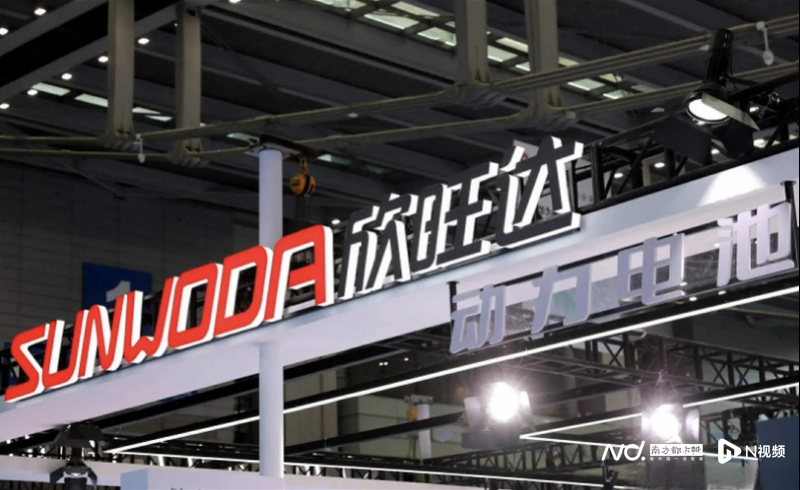
欣旺达再陷电池安全漩涡背后:毛利率承压,涉事子公司仍亏损
Nan Fang Du Shi Bao· 2026-01-17 03:49
Core Viewpoint - The company Xiwanda is facing significant challenges due to safety issues with its battery products, leading to recalls and legal claims from partners, which may impact its financial performance and market reputation [1][6][8]. Group 1: Battery Safety Issues - Volvo has initiated a recall of its EX30 model due to potential overheating risks in high-voltage batteries, which are produced by a joint venture between Xiwanda and Geely [3][4]. - The recall affects multiple markets, with specific numbers including 40 vehicles in the U.S. and 2,815 in Australia, highlighting the scale of the issue [4]. - Xiwanda has not clearly defined its responsibility in the recall and has not disclosed potential impacts on its battery business [5][6]. Group 2: Legal Challenges - Xiwanda is facing a lawsuit from Geely's subsidiary, Weirui Electric Vehicle Technology, claiming damages of 2.314 billion yuan due to quality issues with battery cells delivered between June 2021 and December 2023 [6][8]. - The lawsuit is linked to previous quality complaints, including a situation where Zeekr, a Geely brand, offered free battery replacements to customers due to performance issues [7]. Group 3: Financial Performance and Market Position - Xiwanda's revenue from its automotive battery business has grown rapidly, from 428 million yuan in 2020 to 151.39 billion yuan in 2024, increasing its share of total revenue from less than 3% to 27.02% [8][9]. - Despite this growth, the gross margin for Xiwanda's electric vehicle batteries is only 9.77%, significantly lower than competitors like CATL and EVE Energy, which have margins of 22.41% and 17.6%, respectively [9]. - The company reported a net loss of 877 million yuan in the first half of 2025, despite generating 7.392 billion yuan in revenue from its battery segment [9].

固态电池“小巨人”,1.2GWh产线投产
DT新材料· 2026-01-16 16:05
Core Viewpoint - The article highlights the successful launch of a 1.2GWh solid-state battery production line by Jinyu New Energy, emphasizing its innovative technologies and significant contributions to the battery industry [3][10]. Group 1: Company Overview - Jinyu New Energy is recognized as a national-level specialized and innovative "little giant" enterprise, founded by a team of young PhD graduates from Peking University and other institutions [6]. - The company has established itself as a key player in the industry, being a member of the Ministry of Industry and Information Technology's lithium-ion battery safety standard working group and leading the formulation of industry standards [6]. Group 2: Technological Innovations - The production line focuses on three core product series, utilizing self-generating negative electrode technology, including the "Wuji" series all-solid-state lithium metal batteries, "Wanshan" series ultra-fast charging semi-solid batteries, and "Shanhai" series high-safety semi-solid batteries [4]. - Jinyu New Energy has achieved breakthroughs in core technologies, such as the negative electrode technology that significantly reduces production costs and internal resistance by using a copper foil thinner than a human hair [6]. - The electrolyte membrane preparation employs an oxide-polymer composite system, enhancing thermal stability and safety while eliminating traditional battery components like separators and liquid injection [7]. Group 3: Future Plans and Vision - The company aims to continue enhancing its core competitiveness and deepen collaboration across the industry chain, focusing on high-quality development in the global new energy sector [9]. - The chairman of Jinyu New Energy expressed gratitude to various stakeholders, indicating that the new production line marks a critical milestone in the company's efforts to scale production and improve its industrial layout [10].
全球首个圆柱电池灯塔工厂! 亿纬锂能树立智能制造新标杆
Quan Jing Wang· 2026-01-16 13:22
Core Insights - EVE Energy has been awarded the world's first cylindrical battery lighthouse factory certification by the World Economic Forum and McKinsey, showcasing its integration of advanced technologies like AIoT, physical simulation, and large language models in its manufacturing processes [1] Group 1: Intelligent Manufacturing and Efficiency - EVE Energy has established a highly efficient digital intelligence system that spans the entire research, production, and sales chain, featuring a domestic first 300ppm high-speed production line capable of producing 300 cylindrical battery cells per minute, with an average of nearly 27 cells produced every second [2] - The integration of physical simulation and AI process models has led to a 75% reduction in the number of R&D experiments, significantly shortening the time from R&D to mass production [2] - Automation in key production processes has reached 100%, with all materials being delivered without human intervention, and an AIoT-driven equipment health prediction system has improved overall equipment efficiency to 95% [2] Group 2: Quality Control and Product Consistency - EVE Energy has implemented a comprehensive quality intelligent control system, achieving a product first-pass yield rate of over 97% [3] - The AI production quality prediction model collects key indicator data in real-time and optimizes processes dynamically, resulting in a 70% improvement in cell voltage consistency [3] - An AI visual inspection system has enabled a transition from sampling to 100% inspection, achieving "zero missed judgments" in quality control [3] Group 3: Green Innovation and Sustainability - EVE Energy aims to reduce carbon emissions per unit of production by over 60% and energy consumption per unit product by over 55% from 2022 to 2025 [4] - The deployment of an AI energy efficiency optimization model has led to a 5%-10% reduction in energy consumption for core systems such as air conditioning and air compression [4] - The introduction of a "battery passport" provides each battery with a unique digital ID, covering over 200,000 data nodes in the supply chain, facilitating accurate recycling and second-life utilization [4] Group 4: Human-Machine Collaboration and Safety - EVE Energy emphasizes a human-centered approach in its Industry 4.0 transformation, utilizing AR training and remote expert guidance to reduce the skill acquisition period for key positions from months to days [5] - The factory has implemented a "360° integrated security platform" with over 1,000 smart sensors and drones to monitor operations, achieving a "zero-accident" safety record through real-time risk alerts [5] - The practices of EVE Energy's lighthouse factory demonstrate a viable path to achieving breakthroughs in manufacturing efficiency and green performance through advanced technologies [5][6]
