石化

Search documents
市场监管总局:2026年将推动完成1800余项标准制修订
Yang Shi Xin Wen· 2025-12-26 07:06
Group 1 - The State Administration for Market Regulation will focus on optimizing traditional industries, promoting high-quality development in the service sector, and boosting consumption in 2026 [1] - A total of over 1,800 standards will be revised and developed to support the high-quality development needs of ten traditional industries, including petrochemicals, machinery, light industry, steel, non-ferrous metals, building materials, textiles, shipbuilding, automotive, and electric power [1] - The implementation of a special action for updating and upgrading mandatory national standards will be promoted, particularly in areas related to life and property safety [1] Group 2 - The agency will collaborate with relevant departments to accelerate the development of standards in critical areas such as thermal insulation materials, hazardous chemicals, special equipment, and the recycling of power batteries [1] - Important recommended national standards in relevant fields will be timely converted into mandatory national standards to strengthen safety standards [1]
云南持续推动产业转型升级
Zhong Guo Jing Ji Wang· 2025-12-26 06:02
Core Insights - Yunnan Province's economy is projected to reach a historic milestone of 3.27 trillion yuan in 2023, with an average annual growth rate of approximately 4.7% during the 14th Five-Year Plan period [1] Economic Structure and Investment - The economic structure of Yunnan is undergoing rapid adjustment, with industrial investment becoming the main driver, increasing its share of fixed asset investment from 26.7% in 2020 to 52.1% by 2024 [1] - Private sector investment has significantly increased, with its share rising from 39.8% to 65.7% [1] Industry Development and Upgrading - The "new three" industries—green aluminum, silicon photovoltaic, and new energy batteries—are showing strong growth, contributing over 20% to the increase in industrial added value [1] - The deep processing rate of coffee has improved from 20% to 80%, with total output value increasing from less than 10 billion yuan to over 80 billion yuan [1] - In the green aluminum sector, the alloying rate has reached 51.4%, with electrolytic aluminum production capacity at 6.5 million tons and output value doubling to over 160 billion yuan [1] Strategic Focus Areas - The Yunnan Provincial Committee emphasizes the need to focus on industrial transformation and upgrading, aiming to build a modern industrial system with Yunnan's unique advantages [2] - Key areas of focus include green aluminum, silicon photovoltaic, phosphorous chemicals, and non-ferrous and rare metals, as well as highland characteristic agriculture, cultural tourism, green energy, and modern logistics [2] Action Plans for Industrial Upgrading - Yunnan will focus on major industrial projects to drive quality upgrades, particularly in green aluminum, petrochemicals, phosphorous chemicals, and rare earths [3] - The province aims to cultivate new growth points in non-tobacco and non-energy industries, targeting sectors like biomedicine, new materials, and advanced equipment manufacturing [3] - Emphasis will be placed on technology empowerment, promoting core technology breakthroughs and enhancing the integration of technological and industrial innovation [3] Park Development and Efficiency - Yunnan plans to implement an action plan to enhance park economies, establishing a comprehensive evaluation system focused on efficiency, environmental impact, and industrial clustering [4] - The strategy includes leveraging parks to foster leading industries and promote regional industrial complementarity and collaborative development [4]
证券代码:600346 证券简称:恒力石化 公告编号:2025-080
Zhong Guo Zheng Quan Bao - Zhong Zheng Wang· 2025-12-26 03:48
● 恒能投资目前持有公司股份1,498,478,926股,持股比例为21.29%,累计质押公司股份566,200,000股, 占其所持有公司股份的37.78%,占公司总股本的8.04%。 重要内容提示: ● 控股股东恒力集团有限公司及其一致行动人目前合计持有公司股份5,310,675,080股,持股比例为 75.45%,累计质押公司股份1,674,200,000股,占其所持有公司股份的31.53%,占公司总股本的23.78%。 本次被质押的股份不存在被用作重组业绩补偿等事项的担保或用于其他保障用途的情况。 本公司董事会及全体董事保证本公告内容不存在任何虚假记载、误导性陈述或者重大遗漏,并对其内容 的真实性、准确性和完整性承担法律责任。 一、上市公司部分股份质押及解除质押情况 恒力石化股份有限公司(以下简称"公司")近日接到公司控股股东恒力集团有限公司(以下简称"恒力 集团")之一致行动人恒能投资(大连)有限公司(以下简称"恒能投资")通知,获悉其将所持有的公 司部分股份办理了质押及解除质押业务。具体事项如下: 1、本次股份质押基本情况 ■ 恒能投资本次股份质押系用于补充流动资金,被担保的主债权到期日为2027 ...

张利军:国产乙烯技术研发的“传承者”
Zhong Guo Hua Gong Bao· 2025-12-26 03:22
近日,第十七届侯德榜化工科学技术奖揭晓,已是北京化工研究院(以下简称"北化院")乙烯研究所所长 的张利军获"创新奖"。面对祝贺,他依然谦逊:"荣誉属于团队,我只是运气比较好。" 1994年,《读者》杂志登出第一则广告,"开创美好生活"的广告语来自一家化工企业。18岁的张利军看 到后第一次对化工萌生了兴趣。他不曾料到,这份最初的心动,会引领自己走入化工科研深水区,一扎 根就是20余年。 随着国民经济发展,如何大幅增加乙烯产量,同时又显著降低综合能耗和碳排放成为新课题。张利军和 团队步步推进,跌倒爬起,不断优化设计。"科研不怕走错路。一条路走不通也是成功的——因为别人 就不用再走了。"在张利军的科研字典里,"成功"有着另一重含义。 2021年,原油裂解制乙烯技术在天津石化成功完成工业实验,实现大幅缩短生产流程、降低生产成本、 减排二氧化碳等多个目标,国产乙烯技术工业化应用再进一步。 传承:助力乙烯技术"从一到百" "我算是国产乙烯技术研发的第三代'传承者'。"张利军回忆道,"在北化院念书时,我曾见证科研前 辈'为祖国献石油'的爱国情怀和淡泊名利潜心研究的科学家精神。他们将乙烯技术引进、消化、吸收, 开创国产乙烯技 ...
人民币破7!荣盛石化领衔大化工板块迎双重利好
Quan Jing Wang· 2025-12-26 03:16
Core Viewpoint - The offshore RMB has appreciated against the USD, surpassing the 7.0 mark for the first time since September 2024, with a year-to-date increase of 4.6%. This appreciation positively impacts the chemical industry, particularly oil-head refining enterprises, by reducing import costs and enhancing profit margins [1][2]. Company Analysis - Rongsheng Petrochemical, a major player in the oil-head refining sector, has a high sensitivity to exchange rate fluctuations due to its reliance on imported crude oil, which constitutes approximately 50%-90% of its total costs. The company benefits from a "more variety, less oil" strategy to increase the proportion of high-value-added products, leading to improved profit margins with RMB appreciation [1][2]. - The company operates the world's largest integrated refining project with a capacity of 40 million tons per year and has significant production capacities for PX and PTA, positioning it as a leader in the chemical sector [2]. - If the crude oil procurement price is estimated at $60 per barrel, a 3% appreciation in the RMB could save Rongsheng Petrochemical approximately 1 billion RMB in costs per quarter, potentially increasing annual profits by up to 4 billion RMB [2]. Industry Overview - The domestic demand for chemical raw materials is steadily recovering, with prices for downstream products like PX and PTA continuing to rise, creating a favorable environment characterized by "declining costs and product premiums" [2]. - Major refining enterprises are seen as having significant price elasticity, with RMB appreciation further amplifying their profit potential, making them attractive low-position assets for incremental capital [2]. - The recent increase in trading activity in the A-share market, coupled with RMB appreciation, has led to accelerated foreign investment in core assets, supporting the upward price trends of major oil-head refining companies like Rongsheng Petrochemical, Hengli Petrochemical, and Hengyi Petrochemical [2].

国家发展改革委:持续实施粗钢产量调控 综合整治“内卷式”竞争
Xin Hua Cai Jing· 2025-12-26 02:08
Group 1: Traditional Industries - The core focus during the "14th Five-Year Plan" period for traditional industries is to deepen supply-side structural reforms, ensuring a balance between supply and demand while upgrading product structures [1] - The raw materials industry, including steel and petrochemicals, aims to optimize structure and balance supply and demand, with an emphasis on increasing high-end capacity supply [1] - Continuous monitoring and management of the industry will be implemented, including strict controls on crude steel production and prohibiting illegal new capacity [1] Group 2: New Industries - For new industries such as electric vehicles, lithium batteries, and photovoltaics, the key is to regulate order and lead innovation, addressing "involution" competition and enhancing industry concentration [2] - The implementation of fair competition review systems and price monitoring will be crucial to prevent disorderly low-price competition [2] - Strengthening supply chain governance and ensuring timely payments to small and medium enterprises will foster a mutually beneficial industry ecosystem [2] Group 3: Resource-Intensive Industries - In resource-intensive industries like alumina and copper smelting, the focus will be on strengthening management and optimizing layout based on regional industrial foundations and resource endowments [2] - Encouragement of mergers and acquisitions among large enterprises will enhance competitiveness and scale [2] - A new round of mineral exploration strategies will be promoted to optimize overseas resource exploration and development cooperation [2] Group 4: Light Industry and Textiles - For light industries and textiles, the emphasis is on cost reduction, volume expansion, and quality improvement, with a push for product innovation and diversification [3] - Support for equipment upgrades and technological transformation will accelerate digital and green transitions [3] - Brand building and quality enhancement initiatives will be prioritized to elevate the recognition and influence of Chinese brands [3]
国家发改委:对钢铁、石化等原材料产业,关键在于平衡供需、优化结构
Di Yi Cai Jing· 2025-12-26 02:00
Core Insights - The article emphasizes the importance of optimizing and upgrading traditional industries while fostering innovation and maintaining order in emerging sectors like new energy vehicles, lithium batteries, and photovoltaics [2][4][11] Group 1: Traditional Industry Development - The traditional industries are crucial for the national economy, encompassing essential raw materials and consumer goods [4][11] - Significant achievements were made during the 14th Five-Year Plan, with a focus on enhancing core competitiveness and international competitiveness [5][11] - The manufacturing value added is projected to reach 33.6 trillion yuan in 2024, with traditional industries accounting for approximately 80% [11] Group 2: Technological and Digital Transformation - There is a strong push for digital transformation and intelligent upgrades in traditional industries, with over 30,000 basic intelligent factories established [6] - The average product development cycle in top-tier intelligent factories has been reduced by 28.4%, and production efficiency has improved by 22.3% [6] Group 3: Green Development - The green transformation of industries is being prioritized, with significant advancements in energy efficiency and carbon reduction [7] - By the end of 2024, China's new energy vehicle sales are expected to reach 12.866 million units, an increase of over eight times since 2020 [7] Group 4: International Competitiveness - The international competitiveness of traditional industries is being strengthened, with industrial product exports exceeding 20 trillion yuan for four consecutive years [9][14] - Exports of new energy vehicles, lithium batteries, and photovoltaic products are projected to increase by 2.6 times compared to 2020 [9] Group 5: Policy and Regulatory Framework - The government is focusing on balancing supply and demand in raw material industries, emphasizing structural optimization and high-end capacity supply [15] - There is a need to regulate market competition and enhance the innovation capacity of industries to maintain a fair competitive environment [2][16]
国家发展改革委:加强行业管理,坚持“减油、增化、提质”,持续实施粗钢产量调控
Yang Shi Wang· 2025-12-26 01:59
央视网消息:据国家发展改革委微信公众号消息,国家发展改革委产业发展司发表《大力推动传统产业 优化提升》。对钢铁、石化等原材料产业,关键在于平衡供需、优化结构。原材料行业是我国国民经济 的重要基础产业和支柱产业。当前,钢铁、石化等原材料行业普遍面临供需动态性平衡不足、产品结构 不优等问题。"十五五"时期,原材料行业要深化供给侧结构性改革,坚持供需两侧协同发力,增加高端 产能供给,确保总量规模适度、供需基本平衡、产品结构升级。加强行业管理,坚持"减油、增化、提 质",持续实施粗钢产量调控,严禁违规新增产能,促进优胜劣汰。聚焦重点产业链需求,支持企业加 快产业科技创新,推动创新产品研发和产业化,加快补齐短板弱项,推动产业加速迈向中高端。加强常 态化运行监测调度,发挥好预警机制作用。 ...
国家发改委:加强行业管理,坚持“减油、增化、提质”,持续实施粗钢产量调控
Ge Long Hui· 2025-12-26 01:49
格隆汇12月26日|国家发改委发表《大力推动传统产业优化提升》。对钢铁、石化等原材料产业,关键 在于平衡供需、优化结构。原材料行业是我国国民经济的重要基础产业和支柱产业。当前,钢铁、石化 等原材料行业普遍面临供需动态性平衡不足、产品结构不优等问题。"十五五"时期,原材料行业要深化 供给侧结构性改革,坚持供需两侧协同发力,增加高端产能供给,确保总量规模适度、供需基本平衡、 产品结构升级。加强行业管理,坚持"减油、增化、提质",持续实施粗钢产量调控,严禁违规新增产 能,促进优胜劣汰。聚焦重点产业链需求,支持企业加快产业科技创新,推动创新产品研发和产业化, 加快补齐短板弱项,推动产业加速迈向中高端。加强常态化运行监测调度,发挥好预警机制作用。 ...
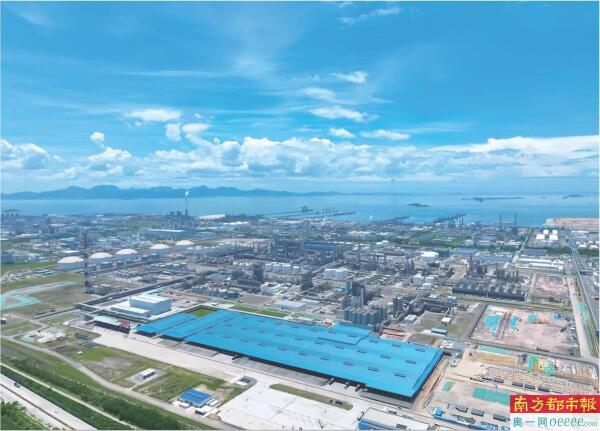
石化“双子星”辉映 万亿级集群崛起
Nan Fang Du Shi Bao· 2025-12-25 23:15
Core Insights - The Daya Bay Petrochemical Zone is rapidly developing, with 125 projects established, making it a leading integrated refining and chemical production area in China [3][7] - The Huizhou New Materials Industrial Park, located 10 kilometers north of Daya Bay, is leveraging raw materials from the petrochemical zone to develop high-end downstream industries, attracting nearly 50 projects [3][9] Project Development - The Daya Bay Petrochemical Zone is home to major projects, including the CNOOC Shell's third-phase ethylene project, which will have an annual capacity of 3.8 million tons, solidifying its position as the largest single ethylene plant in China [4][6] - The petrochemical zone has achieved significant production capacities: 22 million tons/year for refining, 3.8 million tons/year for ethylene, 2.5 million tons/year for aromatics, and 5 million tons/year for PTA, accounting for substantial market shares in Guangdong province [7] Supply Chain and Collaboration - The "隔墙供应" (wall-to-wall supply) model allows for efficient material supply between companies in the Daya Bay Petrochemical Zone, with over 90% of enterprises having direct supply relationships with major players like CNOOC Shell and Huizhou Petrochemical [5][6] - The circular interconnection rate within the petrochemical zone is 95%, with over 70% of basic chemical raw materials being converted on-site [5][6] Industry Growth and Future Plans - The Daya Bay Petrochemical Zone has attracted 13 Fortune 500 companies, including BASF and ExxonMobil, contributing to a robust industrial ecosystem [6][8] - By 2027, Huizhou aims to achieve an ethylene production capacity of 5.4 million tons and high-end polyolefins of 6.6 million tons, with a vision to become a world-class petrochemical hub by 2035 [10]