
家电制造

Search documents
连续13年线下第一:A.O.史密斯何以成为中国家电业的“非典型”样本?
Sou Hu Wang· 2025-12-03 06:57
Core Insights - The Chinese home appliance industry in 2025 is characterized by "anxiety" due to the decline of real estate benefits, intensified competition in the stock market, and ongoing price wars [1] - A.O. Smith has emerged as a leader in the high-end market, winning multiple awards at the 15th China Home Appliance Marketing Annual Conference, including "Annual Person," "Quality Leadership Award," "User Reputation Award," and "Breakthrough Innovation Award" [1][3] - A.O. Smith's market share in core categories such as water heaters and water purifiers remains at the top, indicating strong performance despite industry challenges [1] Company Strategy - A.O. Smith has adopted a localized approach, understanding the pain points of Chinese families, which differentiates it from other foreign brands that either replicate global strategies or become mere OEMs [3] - The company's AI-LiNK digital system exemplifies its strategy of creating a comprehensive user experience by integrating AI technology for real-time monitoring and control of home environments [5][6] - A.O. Smith's innovation is not just limited to products but extends to business models and management transformations, with a focus on digital transformation through its COP platform [8][9] Innovation and Competitive Advantage - A.O. Smith's core competitive advantage lies in its continuous innovation, which is deeply embedded in its corporate culture and values [6][9] - The company has made significant technological advancements, such as developing a seamless stainless steel gas water heater and a self-cleaning reverse osmosis water purification system, setting new industry standards for durability and efficiency [8] - A.O. Smith's ability to adapt and innovate positions it as a resilient player capable of navigating market uncertainties and maintaining growth [9]


2025年1-9月中国家用冷柜(家用冷冻箱)产量为2041.5万台 累计下降1.8%
Chan Ye Xin Xi Wang· 2025-12-03 03:30
相关报告:智研咨询发布的《2025-2031年中国冰箱行业市场现状调查及发展趋向研判报告》 根据国家统计局数据显示:2025年9月中国家用冷柜(家用冷冻箱)产量为254万台,同比下降6.7%;2025 年1-9月中国家用冷柜(家用冷冻箱)累计产量为2041.5万台,累计下降1.8%。 上市企业:美的集团(000333),海尔智家(600690),澳柯玛(600336),海信家电(000921) 数据来源:国家统计局,智研咨询整理 知前沿,问智研。智研咨询是中国一流产业咨询机构,十数年持续深耕产业研究领域,提供深度产业研 究报告、商业计划书、可行性研究报告及定制服务等一站式产业咨询服务。专业的角度、品质化的服 务、敏锐的市场洞察力,专注于提供完善的产业解决方案,为您的投资决策赋能。 2020-2025年1-9月中国家用冷柜(家用冷冻箱)产量统计图 ...

铭记历史,共同珍视岁月凝结的友谊纽带
Ren Min Ri Bao· 2025-12-02 22:33
Group 1 - The 2025 Guling Forum was held in New York, focusing on themes of historical reflection and future cooperation between China and the U.S., with over 150 attendees from various sectors [4][5] - The forum emphasized the importance of people-to-people connections and mutual understanding as the foundation for stable international relations [5][6] - The event featured exhibitions and activities aimed at promoting friendship and cooperation, including a call for image submissions capturing moments of Sino-American friendship [2][4] Group 2 - The forum serves as a platform for deepening civil exchanges and promoting mutual understanding, with a focus on youth engagement and local initiatives [6][7] - Various organizations and individuals highlighted the historical contributions of Chinese Americans and the importance of cultural exchange in strengthening bilateral relations [9][10] - Companies like China Bank and Fujian Airlines expressed their commitment to facilitating communication and cooperation between the two nations through their services and initiatives [8][19] Group 3 - The forum showcased the ongoing efforts of businesses like Fuyao Glass and Hisense in fostering Sino-American ties through their operations and community engagement in the U.S. [20][21] - The historical context of the Flying Tigers and their contributions during World War II was referenced as a significant example of U.S.-China friendship [14][17] - The event underscored the potential for economic collaboration and cultural exchange to create a positive impact on both nations and the global community [15][22]

人民日报海外版丨中国有色集团“安全、绿色、高效、低耗”合作实践获得海外伙伴高度认可
Xin Lang Cai Jing· 2025-12-02 11:44
Core Insights - China's total foreign direct investment (FDI) exceeded 1 trillion yuan from January to October this year, marking a 7% year-on-year increase, solidifying its position as a major global investor [8][29] - Chinese enterprises are shifting from merely "going out" to "going in," indicating a transition from simple product exports to a dual focus on product service exports and foreign investment [10][33] - The report highlights the importance of high-level openness, which balances outbound and inbound investments, benefiting global resource allocation and local economic development [8][29] Investment Overview - In the first ten months of this year, China's FDI reached 10,332.3 billion yuan, with domestic investors making non-financial direct investments in 9,553 overseas enterprises across 152 countries and regions, totaling 8,726 billion yuan, a 6% increase [8][29] - China has established 52,000 overseas enterprises in 190 countries and regions, with 19,000 of these in Belt and Road Initiative countries [13][36] Sectoral Trends - In 2024, investments in wholesale and retail, leasing and business services, manufacturing, finance, and mining each exceeded 10 billion USD, with construction and information technology sectors seeing significant growth rates of 80.5% and 205.5% respectively [15][38] - The investment landscape is diversifying, with private enterprises playing a crucial role in innovation and exploration, utilizing flexible investment strategies and localized business models [15][39] Case Studies - SANY Group's South Africa industrial park, covering 28,000 square meters, is expected to produce 1,000 excavators annually, showcasing China's commitment to local economic development and skills training [12][35] - Haier's air conditioning production base in Thailand, which became operational in just 10 months, is now the largest of its kind in Southeast Asia, emphasizing digitalization and green operations [39][40] Local Development and ESG Practices - Chinese enterprises are increasingly focused on respecting local interests and contributing to environmental and social governance (ESG), as demonstrated by the recognition of China National Petroleum Engineering's project in Iraq for its outstanding ESG practices [18][41] - The construction of the Al-Hafaya gas processing plant is expected to significantly reduce local emissions and create thousands of jobs, reflecting a commitment to sustainable development [20][44] Future Directions - Experts suggest enhancing the management system for outbound investments and promoting innovative development, particularly in diversified investments and overseas processing trade [22][45] - The emphasis is on improving the ability to "go in" while ensuring risk management and investment quality to support high-level openness and quality development [22][45]
海尔智家荣膺全国企业文化优秀成果最高奖
Xin Lang Cai Jing· 2025-12-02 10:52
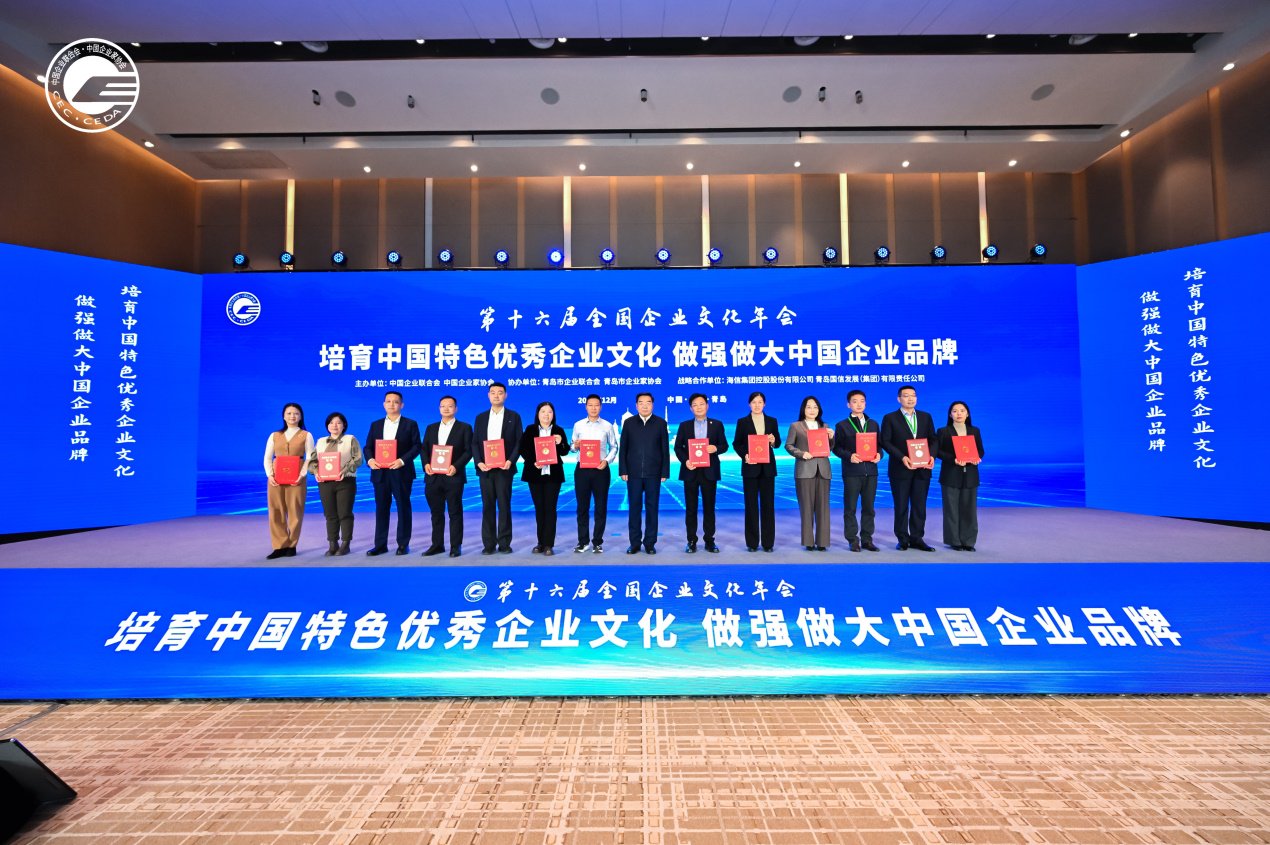
转自:推广 12月2日,由中国企业联合会、中国企业家协会主办的第十六届全国企业文化年会在青岛举行。大会现场发布了全国企业文化优秀成果,共包含13项特等成 果、145 项一等成果、271 项二等成果。海尔智家《以"人的价值第一"为核心的卓越企业文化建设》成功荣膺"特等成果"最高荣誉。 海尔智家企业文化部部长、公关部总经理孙明法(左三)上台领奖 据悉,该奖项是在企业自愿申报及各地方企联、行业协会、有关企业集团推荐的基础上,经过了初审、复审和终审等严格程序评定出来的。以特等成果为代 表的13项企业文化成果,充分彰显了各自的企业文化建设特色及内涵。 海尔智家企业文化部部长、公关部总经理孙明法介绍,在海尔智家,企业文化不是抽象的概念,也不是贴在墙上的理念口号,而是可落地、可感知、可增值 的核心力量。具体体现在三个维度: 第一,企业文化是战略。我们始终把企业文化放在战略高度去建设布局。这是因为企业文化一方面可以"自上而下"地战略传达;另一方面又能"自下而上"地 反馈战略落地情况。企业文化就是要让每一位员工在全球舞台上都能找到与企业同频共振的动力。 第二,企业文化是业务。在海尔智家的实践中,企业文化也是业务。因为企业文化也 ...

欧洲科学院院士刘向阳:我如何在最「难啃」的制造业里做云计算?丨GAIR 2025
雷峰网· 2025-12-02 06:04
" 甲方造云,带给云大厂的是机会还是威胁? " 作者丨赵之齐 编辑丨胡敏 2025年 12 月 12-13 日, 由 GAIR 研究院与雷峰网联合主办的「 第八届 GAIR 全球人工智能与机器人 大会 」 ,将在深圳南山·博林天瑞喜来登酒店举办。点击文末"阅读原文",即可报名参会。 今年大会,将开设三个主题论坛,聚焦大模型、算力变革、世界模型等多个议题,描绘 AI 最前沿的探索 群像,折射学界与产业界共建的智能未来。 欧洲科学院院士、IEEE Fellow 刘向阳也将莅临 12 月 13 日 《AI 算力新十年》论坛,分享对算力底座的趋势洞察与发展预判。 在此之前,我们与他进行了一场深度对话,欢迎大家来现场聆听他更多的分享。 2021 年 12 月 28 日,佛山的冬日薄雾裹着美的总部。寒风乍起,楼内会客厅里却暖意恰好,在这里, 刘向阳用了整整一小时,向董事长方洪波阐述了自己的宏伟蓝图: 要做制造业里的云计算。 他把全球云计算的技术路径与市场情况进行了透彻分析,随即,便被任命为美的软件工程院首任院长。 入职第一天,方洪波在自己的办公室接见他,笑着握住他的手: "刘教授,你做云计算的想法,非常令人兴奋。" 方洪 ...


海尔智家:11月当月累计回购A股股份42万股
Mei Ri Jing Ji Xin Wen· 2025-12-01 08:12
每经AI快讯,海尔智家12月1日晚间发布公告称,2025年11月当月,公司通过集中竞价交易方式已累计 回购A股(下同)股份42万股,占公司总股本的比例为0.004%,购买的最高价为27.53元/股、最低价为 26.82元/股,支付的金额约为1136万元;本次回购实施起始日(2025年4月7日)至2025年11月底,公司 已累计回购股份约4090万股,占公司总股本的比例为0.436%,购买的最高价为27.53元/股、最低价为 23.6元/股,支付的金额约为10.28亿元。 (记者 曾健辉) 每经头条(nbdtoutiao)——5年期大面积下线,3年期利率低至1.5%仍一单难求:要么"售罄"要么"额度 紧张"!中长期大额存单为何在消失? ...
海尔智慧家庭成立创新实验室 布局好房子住居生态
Quan Jing Wang· 2025-12-01 06:49
Core Insights - Haier's smart home strategy continues to strengthen, open up, and accelerate its layout, achieving new results through the establishment of the "Smart Home Innovation Laboratory" in collaboration with various authoritative institutions and leading enterprises [1][2]. Group 1: Strategic Developments - The "Smart Home Innovation Laboratory" aims to deepen the "good house" living ecosystem layout, embedding smart capabilities throughout the entire lifecycle of residential properties, from planning and design to service provision [2]. - The laboratory focuses on analyzing living behaviors to create personalized scene solutions that meet the real demands of users across different family structures and age groups [2]. Group 2: Technological Advancements - The laboratory will enhance smart technology research and development, utilizing AI perception, decision-making, and interaction technologies, along with multi-modal sensing devices to capture resident behaviors and environmental conditions accurately [2]. - The transition from passive response to proactive service is emphasized, with features such as AI-controlled air conditioning and proactive ingredient management being developed [2]. Group 3: Product Implementation - The laboratory will convert mature scene solutions into standardized modules and mass-producible products, promoting the application of upgraded smart home system capabilities [3]. - An integrated solution combining hardware, software, and services will be created, allowing products like vacuum cleaners and water purifiers to be incorporated into comprehensive living scenarios [3]. Group 4: Future Directions - The laboratory plans to leverage past experiences to introduce more technological achievements and collaborative projects, aiming to enhance smart living technology standards and improve user experience [4].

安徽联通助力9家工厂入选国家5G工厂名录
Ke Ji Ri Bao· 2025-12-01 05:30
Core Insights - The article highlights the successful establishment of nine 5G factories in Anhui, which have been recognized in the national directory by the Ministry of Industry and Information Technology, marking a significant milestone in the province's industrial internet development [1][2] - Anhui Unicom is positioned as a key player in driving digital transformation in manufacturing, leveraging 5G and industrial internet technologies to support high-quality development in the region [1][2] Group 1: 5G Factory Development - Nine 5G factories in Anhui have been included in the national-level directory, showcasing the province's advancements in smart manufacturing [1][2] - These factories are distributed across multiple cities, including Wuhu, Suzhou, and Huangshan, indicating a collaborative regional approach to smart manufacturing [1] Group 2: Technological Advancements - Anhui Unicom is utilizing breakthroughs in 5G technology, mobile edge computing, artificial intelligence, and digital twins to fill technological gaps in smart manufacturing scenarios [2] - The company aims to create sustainable value for industrial enterprises through the application of cutting-edge technologies like 5G [1] Group 3: Strategic Vision - Anhui Unicom's vision is to become the preferred partner for the intelligent upgrade of manufacturing in the Jianghuai region, emphasizing a technology-led and collaborative empowerment approach [1] - The company is committed to enhancing regional collaboration and industrial integration to contribute to the high-quality development of the Yangtze River Delta [2]

58同城与美的集团达成战略合作
Zheng Quan Shi Bao Wang· 2025-12-01 02:01
人民财讯12月1日电,近日,58同城与美的集团(000333)达成战略合作,双方将基于共同的市场愿景 与资源优势,围绕业务拓展选址、智慧楼宇智慧商办建设以及生态协同等方向展开深度合作,携手推动 中国智慧商办市场的发展。 ...