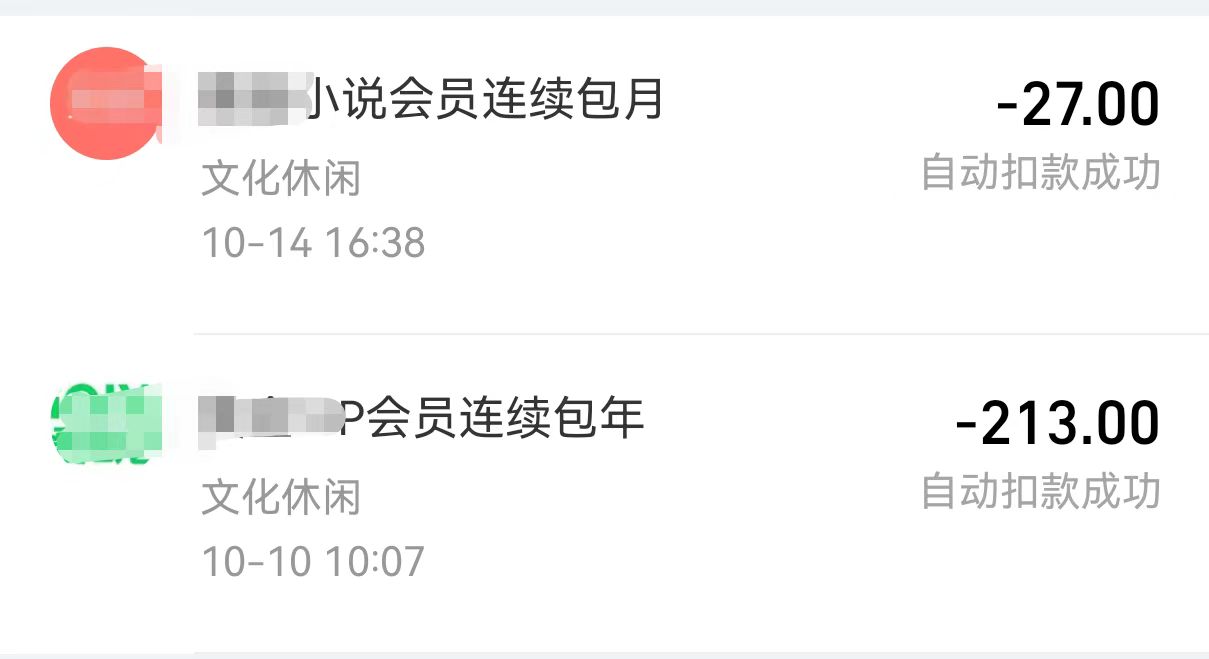
支付

Search documents
易宝支付航旅合作伙伴大会在西昌举办
Zhong Guo Min Hang Wang· 2025-11-18 12:43
Core Insights - The conference themed "Co-creating New Chapters in International Expansion" highlighted opportunities for the aviation and travel industry in internationalization, digitalization, and intelligence [1][4] - The aviation industry is in a critical phase for modernization and high-quality development during the 14th Five-Year Plan, focusing on enhancing quality and efficiency through three main initiatives [1][4] - Global air travel is expected to grow steadily, with a projected 5.8% increase in passenger volume by 2025, particularly driven by the Asia-Pacific region [1][2] Industry Developments - The China Civil Aviation Association emphasized the need for expanding the "Air Silk Road" network and enhancing airport infrastructure to create world-class airport clusters and cargo hubs [1] - The integration of digital technology, finance, and industry is seen as essential for the development of the aviation sector, aiming for streamlined processes and improved efficiency [2][3] - EasyPay has launched a global B2B transaction service solution for airlines, addressing international payment challenges and supporting airlines' global business expansion [3] Strategic Initiatives - EasyPay's new strategy, "Easy to Go Global, Smart to Gather Worldwide," was unveiled, marking a new phase in international payment solutions for the aviation industry [3] - The conference facilitated high-level discussions on building a collaborative ecosystem in the travel industry, aiming to enhance international market strategies and operational efficiency [4] - EasyPay plans to leverage its digital technology and financial services to foster collaboration across the aviation industry, focusing on international pathways and service quality improvements [4]


两支付机构获批更名,公司名称新增“支付”字样
Bei Jing Shang Bao· 2025-11-18 12:31
此外,同意北京雅酷时空信息交换技术有限公司变更公司名称为北京酷宝支付科技有限公司。 北京商报讯(记者 岳品瑜 董晗萱)11月18日,据人民银行北京市分行非银行支付机构重大事项变更许 可信息公示,同意北京中投科信电子商务有限责任公司变更公司名称为北京安心支付有限公司,变更叶 泽锋为董事(董事长),变更王玟为监事(监事会主席)。 ...
多项数据全球第一!数说我国消费大市场的“世界之最”
Sou Hu Cai Jing· 2025-11-17 14:35
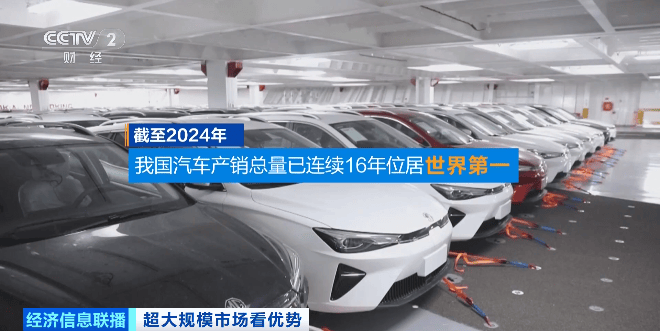
Group 1 - The core viewpoint emphasizes the importance of fully unleashing the market potential of a consumer powerhouse like China to drive high-quality economic development and enhance endogenous growth momentum [1] Group 2 - As of 2024, China's total automobile production and sales have ranked first in the world for 16 consecutive years, with home appliance sales such as air conditioners, washing machines, and refrigerators also leading globally [3] - China has the largest number of movie screens in the world, creating the largest film screening network globally, and is the largest single domestic tourism market, with domestic residents traveling 4.998 billion times in the first three quarters of this year, a year-on-year increase of 18% [5] Group 3 - In the digital consumption sector, China has the largest online retail market in the world, with online retail sales reaching 12.79 trillion yuan in the first ten months of this year, a year-on-year growth of 9.6% [7] - China leads globally in digital consumption and innovative payment methods, with mobile payment transaction volume expected to reach 563.7 trillion yuan in 2024 [9]
全球跨境数字支付生态联盟正式成立
Zhong Zheng Wang· 2025-11-17 05:51
Core Insights - The "2025 International Fintech Forum" was held in Shanghai, focusing on the theme of "Technology Leading Cross-Border Payments, Wealth Management, and Industrial Upgrading" [1] - The "Global Cross-Border Digital Payment Ecosystem Alliance" was officially established during the forum, attracting significant industry attention [1] Group 1: Forum Highlights - The forum featured in-depth discussions on three main areas: cross-border payments, digital assets, and artificial intelligence [1] - The alliance aims to promote the collaborative development of cross-border payment technologies, application scenarios, and financial infrastructure [1] Group 2: Alliance Objectives - The alliance seeks to enhance the diversity of payment networks and multi-currency options [1] - It will explore compliance and sustainable development in cross-border payments [1] - The alliance aims to build an international communication and cooperation platform to form a global industry ecosystem [1] Group 3: Academic Insights - The phenomenon of "money not reaching its destination" highlights global coordination bottlenecks [2] - The "WealthCare" concept demonstrates the potential of technology in personalized wealth management [2] - The integration of data intelligence, blockchain, and cloud computing is increasingly blurring technological boundaries, leading to deep integration in payment, smart technology, and wealth management sectors [2]

申万期货品种策略日报——股指-20251117
Shen Yin Wan Guo Qi Huo· 2025-11-17 03:45
1. Report Industry Investment Rating - No information provided in the report. 2. Core Viewpoints of the Report - The 15th Five - Year Plan still focuses on technological self - reliance, and the technology sector is expected to be a long - term direction [2]. - Domestically, the liquidity environment is expected to remain loose, and residents may increase their allocation of equity assets. With the Fed's interest rate cut and RMB appreciation, external funds are also expected to flow into the domestic market [2]. - Near the end of the year, funds are relatively cautious, and the market style is more balanced compared to the third quarter. From the current trend, the market is still expected to maintain a long - term and slow - bull trend [2]. 3. Summary by Relevant Catalogs 3.1 Stock Index Futures Market - **IF Contracts**: The previous day's closing prices of IF contracts (current month, next month, next quarter, and far - quarter) were 4614.00, 4600.40, 4572.40, and 4531.60 respectively, with declines of - 75.00, - 72.80, - 68.60, and - 65.60. The trading volumes were 22853.00, 67288.00, 14864.00, and 4984.00, and the open interest changes were - 424.00, 543.00, 3546.00, and 1709.00 respectively [1]. - **IH Contracts**: The previous day's closing prices of IH contracts were 3034.00, 3030.40, 3025.80, and 3017.00, with declines of - 36.60, - 37.40, - 37.40, and - 39.40. The trading volumes were 9482.00, 32072.00, 5074.00, and 1605.00, and the open interest changes were - 824.00, 1112.00, 452.00, and 66.00 respectively [1]. - **IC Contracts**: The previous day's closing prices of IC contracts were 7208.00, 7137.40, 6960.00, and 6762.00, with declines of - 111.40, - 113.40, - 109.20, and - 104.00. The trading volumes were 22554.00, 71699.00, 16437.00, and 5922.00, and the open interest changes were - 1650.00, 610.00, 1362.00, and 986.00 respectively [1]. - **IM Contracts**: The previous day's closing prices of IM contracts were 7468.40, 7372.00, 7140.00, and 6913.40, with declines of - 81.80, - 90.80, - 91.80, and - 88.80. The trading volumes were 34335.00, 125074.00, 23113.00, and 10057.00, and the open interest changes were - 1680.00, - 1368.00, 2359.00, and 1746.00 respectively [1]. - **Inter - month Spreads**: The current values of inter - month spreads for IF, IH, IC, and IM next - month minus current - month contracts were - 13.60, - 3.60, - 70.60, and - 96.40 respectively, compared to previous values of - 16.60, - 3.80, - 66.40, and - 87.60 [1]. 3.2 Stock Index Spot Market - **Major Indexes**: The previous day's values of the CSI 300, SSE 50, CSI 500, and CSI 1000 indexes were 4628.14, 3038.43, 7235.46, and 7502.76, with declines of - 1.57%, - 1.15%, - 1.63%, and - 1.16% respectively. The trading volumes (in billions of lots) were 192.09, 48.80, 205.86, and 271.97, and the total trading amounts (in billions of yuan) were 4447.20, 1203.76, 3104.85, and 4062.93 respectively [1]. - **Industry Indexes**: Among CSI 300 industry indexes, energy, raw materials, industry, and optional consumption had declines of - 1.04%, - 2.09%, - 1.63%, and - 1.22% respectively. Main consumption, medical and health, real - estate finance, and information technology had declines of - 1.09%, - 0.83%, - 0.40%, and - 3.39% respectively. Telecommunication services and public utilities had declines of - 2.87% and - 0.71% respectively [1]. 3.3 Spot - Futures Basis - **IF Contracts**: The previous day's spot - futures basis values of IF contracts (current month, next month, next quarter, and far - quarter) minus the CSI 300 index were - 14.14, - 27.74, - 55.74, and - 96.54 respectively, compared to previous two - day values of - 8.47, - 25.07, - 56.27, and - 100.67 [1]. - **IH Contracts**: The previous day's spot - futures basis values of IH contracts minus the SSE 50 index were - 4.43, - 8.03, - 12.63, and - 21.43 respectively, compared to previous two - day values of - 1.07, - 4.87, - 9.67, and - 14.07 [1]. - **IC Contracts**: The previous day's spot - futures basis values of IC contracts minus the CSI 500 index were - 27.46, - 98.06, - 275.46, and - 473.46 respectively, compared to previous two - day values of - 19.89, - 86.29, - 267.89, and - 469.89 [1]. - **IM Contracts**: The previous day's spot - futures basis values of IM contracts minus the CSI 1000 index were - 34.36, - 130.76, - 362.76, and - 589.36 respectively, compared to previous two - day values of - 24.58, - 112.18, - 344.58, and - 578.58 [1]. 3.4 Other Domestic and Overseas Indexes - **Domestic Indexes**: The previous day's values of the Shanghai Composite Index, Shenzhen Component Index, Small and Medium - sized Board Index, and ChiNext Index were 4002.76, 13289.01, 8077.94, and 3134.32, with declines of - 0.39%, - 1.03%, - 1.31%, and - 1.40% respectively [1]. - **Overseas Indexes**: The previous day's values of the Hang Seng Index, Nikkei 225, S&P 500, and DAX Index were 26696.41, 50911.76, 6846.61, and 24088.06, with increases of 0.18%, 1.26%, 0.21%, and 0.53% respectively [1]. 3.5 Macroeconomic Information - National People's Congress Standing Committee Chairman Zhao Leji will conduct an official friendly visit to New Zealand and Australia from November 19th to 25th [2]. - Han Wenxiu proposed to cultivate and expand emerging and future industries, and accelerate the development of strategic emerging industry clusters such as new energy, new materials, aerospace, and low - altitude economy [2]. - Hong Kong's economy is expected to achieve positive growth for the third consecutive year, and the economy is expected to continue growing next year [2]. - By the end of the third quarter of 2025, the balance of insurance funds' investment reached 37.46 trillion yuan, with the book balance of stocks at 3.62 trillion yuan, an increase of nearly 50% compared to the end of last year. The third - quarter increase was 5524 billion yuan. Bank stocks remained the favorite of insurance funds, and industries such as steel, communication, and food and beverage were heavily increased in the third quarter, while power equipment, non - ferrous metals, and transportation were reduced [2]. 3.6 Industry Information - In the era of the stock housing market, the substitution effect of second - hand housing for new housing is increasing. From January to October, the online signing area of second - hand housing transactions in China increased by 4.7% year - on - year, accounting for 45% of the total transaction volume. In more than a dozen cities, the online signing area of second - hand housing transactions increased by more than 10% year - on - year [2]. - In 2025, the global clothing market size is expected to reach 1.84 trillion US dollars, accounting for 1.6% of the global GDP [2]. - In the third quarter, many large Wall Street hedge funds reduced their positions in the "Magnificent Seven" US stocks and increased their investments in application software, e - commerce, and payment fields. They also reduced their risk exposure to well - known enterprises in the healthcare and energy sectors [2].
华尔街对冲基金削减美股“七巨头”的持仓
Huan Qiu Wang· 2025-11-17 01:47
Group 1 - Major hedge funds on Wall Street reduced their holdings in the "Big Seven" U.S. stocks during the third quarter while increasing investments in software applications, e-commerce, and payment sectors [1] - Several funds lowered their risk exposure to well-known companies in the healthcare and energy sectors during the quarter ending September 30 [1] - Nomura Asset Management noted that technology stocks experienced significant declines due to their recent strong performance and relatively high valuations, but the growth trend in AI remains unchanged, and cloud service providers continue to increase capital expenditures [1]

连连数字高管变动:创始人章征宇将接任CEO 双联席总裁机制启动
Zhong Guo Jing Ying Bao· 2025-11-14 12:36
Core Viewpoint - Lianlian Digital (02598.HK) announced a series of senior management appointments, including the upcoming resignation of CEO Xin Jie in March 2026, who will continue as an advisor, while founder Zhang Zhengyu will take over as CEO [1][2] Management Changes - Xin Jie will resign as CEO in March 2026 for personal reasons but will remain as an advisor for ecosystem and capital operations [1] - Zhang Zhengyu, the current chairman and founder, will officially assume the CEO role in March 2026 [1] - The company has introduced a co-president system, appointing Shen Enguang and Sun Dali as co-presidents starting November 11, 2025 [2] Strategic Focus - Zhang Zhengyu will lead the company into a new phase of global digital payments driven by advanced technologies such as AI and blockchain [2] - Shen Enguang will focus on global business expansion, while Sun Dali will enhance domestic market capabilities [2] Company Background and Performance - Lianlian Digital was established in 2009 and obtained a payment license from the central bank in 2011, offering services in over 100 countries and supporting transactions in more than 130 currencies [3] - The company holds 66 payment licenses globally and a virtual asset trading platform license from the Hong Kong Securities and Futures Commission [3] - In 2024, Lianlian Digital reported a total payment volume (TPV) of 3.30 trillion RMB, a year-on-year increase of 64.7%, with total revenue of 1.315 billion RMB, up 27.9%, and adjusted net profit improving from a loss of 403 million RMB to a profit of 78.7 million RMB [3]
“免密支付”怎么关闭?记者多平台实测:一步开通,关掉步骤繁琐
Mei Ri Jing Ji Xin Wen· 2025-11-13 22:32
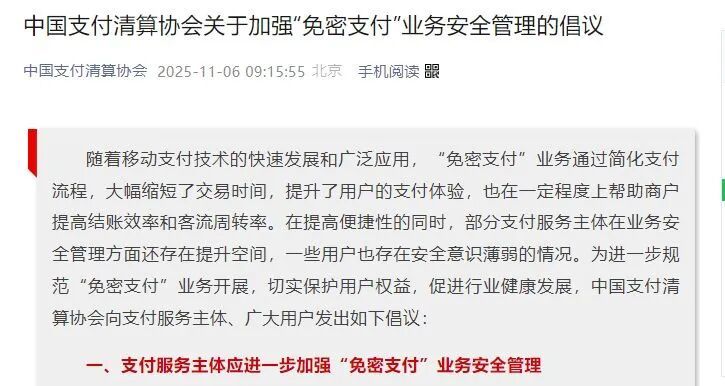
Core Viewpoint - The China Payment and Clearing Association has emphasized the need for enhanced security management in "no-password payment" services, highlighting existing vulnerabilities in both service providers and user awareness [1][3]. Group 1: Security Management Recommendations - The association advocates for payment service providers to strengthen security management for "no-password payment" by eliminating default activation, offering limit management features, and prominently providing a one-click cancellation option [3][20]. - Users are encouraged to regularly check their agreements for no-password payment services [3]. Group 2: User Experience and Feedback - Users have reported difficulties in canceling no-password payment services, with an average of 5 to 6 page jumps required on various platforms to deactivate the service [4][6]. - Many users have expressed frustration on social media about unintentionally activating no-password payment due to misleading interfaces or accidental clicks [5][6]. Group 3: Payment Limits and Merchant Practices - Different merchants have varying single transaction limits for no-password payments, with platforms like Xiaohongshu allowing up to 1,000 yuan, while others like Xianyu only support transactions below 100 yuan [8][9]. - Some platforms impose daily limits on the number of no-password transactions, enhancing security through transaction restrictions [9]. Group 4: Safety Concerns and Comparisons - Concerns regarding the safety of no-password payments include risks associated with lost devices and erroneous transactions, similar to issues previously raised about traditional bank card no-password payments [11][12]. - The security of no-password payments is supported by multiple safeguards, including chip card technology, trusted merchant selection, transaction limits, intelligent risk control, and full compensation for verified losses [12][14]. Group 5: User Choice and Functionality - The functionality of no-password payments is deemed reasonable in high-frequency, low-value transaction scenarios, where entering a password can hinder user experience [16][20]. - The emphasis is placed on respecting user choice, with a call for platforms to avoid default selections that may lead to unintended activations [15][20].

中国支付清算协会倡议“免密支付”不得默认开通 记者多平台实测:一步开通,N步才关闭
Mei Ri Jing Ji Xin Wen· 2025-11-13 16:02
Core Viewpoint - The China Payment and Clearing Association has emphasized the need for enhanced security management of "no-password payment" services, highlighting existing gaps in both service providers' security measures and users' awareness of security risks [1][4]. Group 1: Security Management Recommendations - The association advocates for payment service providers to strengthen security management of "no-password payment" by eliminating default activation, providing limit management features, and prominently offering a one-click cancellation option [4][20]. - Users are encouraged to regularly check their agreements regarding no-password payment services [4]. Group 2: User Experience and Challenges - Users have reported difficulties in canceling no-password payment services, often requiring multiple page navigations within apps to do so, with an average of 5 to 6 page jumps noted across various platforms [5][6][7]. - Many users express frustration over inadvertently activating no-password payment features due to misleading interfaces or accidental clicks during transactions [5]. Group 3: Payment Security Concerns - The convenience of no-password payments is countered by potential security risks, such as unauthorized access if a mobile device is lost or incorrect charges due to scanning errors [9][10]. - Traditional bank cards also offer no-password payment options, which have been widely accepted, but concerns about security have been raised in the past [10][13]. Group 4: Safety Mechanisms - Bank card no-password payments are secured through multiple layers, including chip technology, merchant vetting, transaction limits, intelligent risk control, and full compensation for verified losses [11][12][13]. - In contrast, third-party payment platforms like Alipay and WeChat rely on their risk control systems, which assess factors such as device usage and transaction location to ensure security [13][14]. Group 5: User Choice and Functionality - The discussion around no-password payments emphasizes the importance of respecting user choice, with calls for clearer communication during activation and easier cancellation processes [20]. - Experts suggest that while no-password payments can enhance user experience in high-frequency, low-value transactions, the design should prioritize user consent and awareness [14][20].
“免密支付”乱象频出 中国支付清算协会倡议规范
2 1 Shi Ji Jing Ji Bao Dao· 2025-11-13 12:04
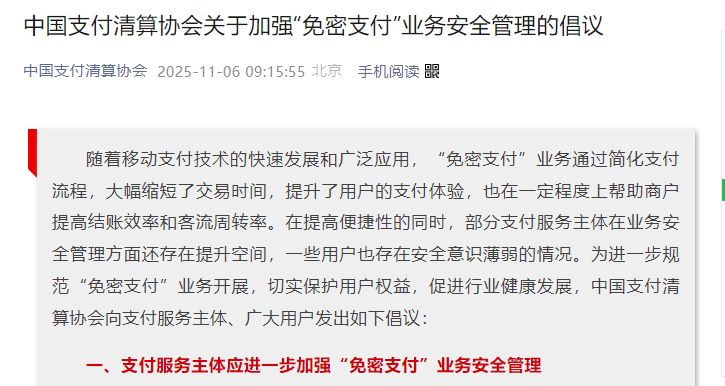
Core Viewpoint - The rise of "no-password payment" systems has led to convenience but also significant issues with unauthorized charges, prompting the China Payment and Clearing Association to propose safety management measures for these services [3][4]. Group 1: Issues with No-Password Payments - Users have reported difficulties in canceling no-password payment authorizations, leading to unexpected charges [1][4]. - There is a growing concern over the transparency of authorization processes and the challenges users face when trying to opt-out of these services [4][5]. - Incidents of unauthorized transactions, such as a user being charged over 80,000 yuan in a single night, highlight the risks associated with no-password payments [10]. Group 2: Recommendations from the China Payment and Clearing Association - The association has outlined five key requirements for payment service providers, emphasizing the need for clear user consent and easy cancellation options [4][5]. - It calls for enhanced risk management practices for merchants and improved monitoring of transactions to prevent unauthorized charges [4][5]. - Special attention is given to protecting elderly users, ensuring they receive clear information and easy access to cancel no-password payment options [5]. Group 3: User Awareness and Security Measures - Users are advised to strengthen their account security through measures like two-factor authentication and regular password changes [6]. - There is a recommendation for users to be vigilant about potential marketing traps and to avoid saving payment information on public devices [7]. - Regular checks of no-password payment agreements and prompt action on any suspicious transactions are encouraged to enhance user security [8]. Group 4: Industry Response and Future Outlook - Analysts expect payment service providers to respond positively to the association's recommendations, leading to improvements in product design and customer service [8]. - The emphasis on user education and collaborative governance between platforms and consumers is seen as essential for balancing convenience and security in the payment landscape [11].