卫星

Search documents
钧达股份涨超7% SpaceX申请部署百万颗卫星 机构看好太空光伏与设备环节受益
Zhi Tong Cai Jing· 2026-02-02 01:47
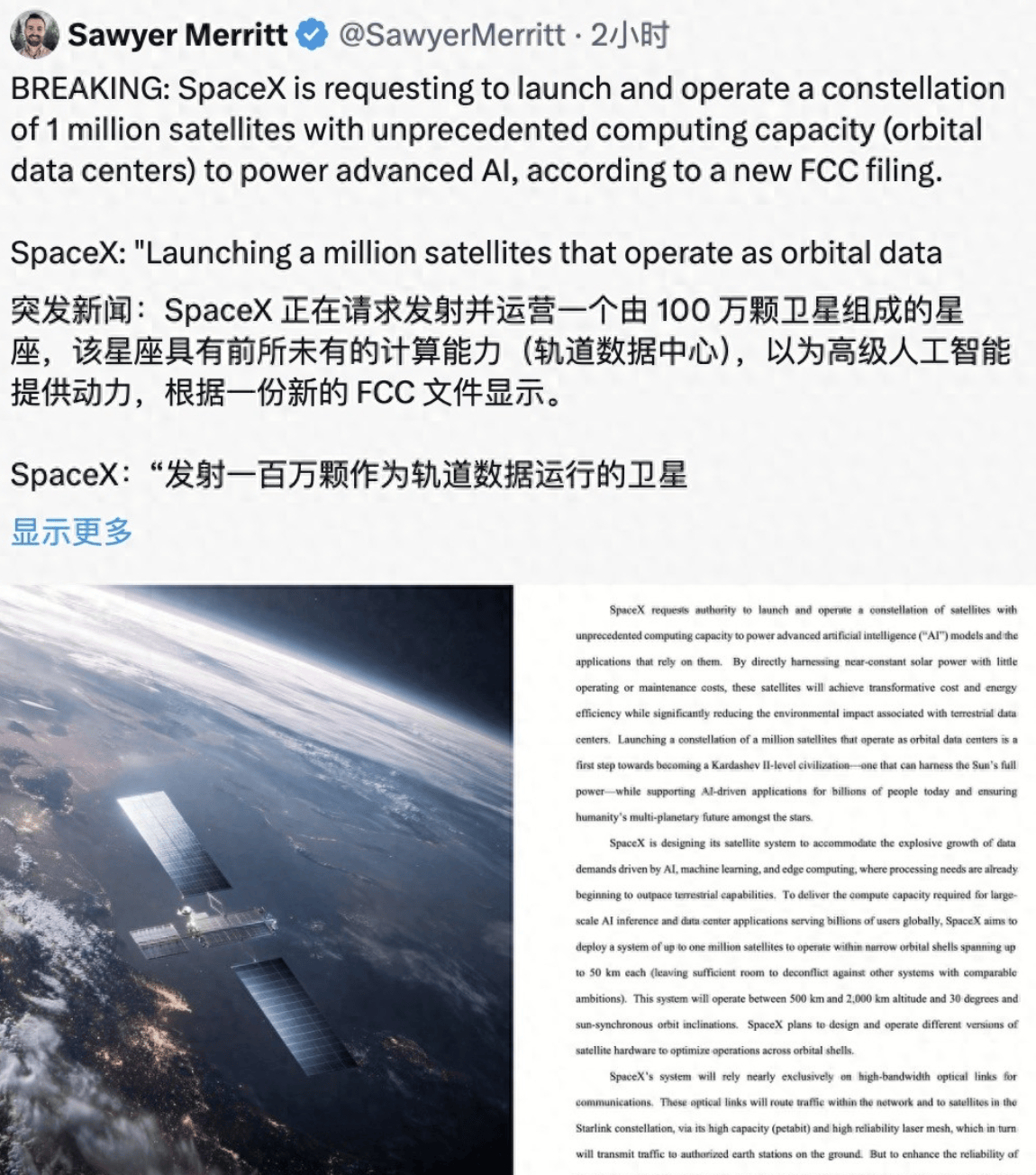
Core Viewpoint - JunDa Co., Ltd. (002865) has seen its stock price increase by over 7%, currently trading at 38.54 HKD with a transaction volume of 124 million HKD, driven by developments in the satellite and space photovoltaic sectors [1] Group 1: Industry Developments - The U.S. Federal Communications Commission (FCC) has revealed that SpaceX is applying to launch and operate a constellation of up to 1 million satellites, which will possess unprecedented computing capabilities to support advanced artificial intelligence [1] - As SpaceX advances its satellite launch and related in-orbit applications, the trend of exploring orbital AI data centers is becoming increasingly evident [1] Group 2: Company Strategy - Guotai Junan Securities believes that the company is well-positioned to benefit from the growing application opportunities in the construction of orbital data centers, particularly in the photovoltaic sector [1] - The company has made a strategic move by investing 30 million CNY to acquire a 16.67% stake in Shanghai Xingyi Chip Energy, becoming its second-largest shareholder, and plans to establish a joint venture focusing on CPI films and products combining CPI films with crystalline silicon batteries for low-orbit and space photovoltaic applications [1] - The company is transitioning from ground-based photovoltaic systems to space photovoltaic systems, leveraging its advantages in crystalline silicon manufacturing and deep industry experience, which is expected to drive new growth in the global low-orbit satellite and space computing power industries [1]

图解1月ETF涨跌幅、资金流
Ge Long Hui· 2026-02-01 09:04
Group 1 - In January 2026, the A-share ETF market showed a clear divergence, with over 200 billion yuan flowing into industry-themed ETFs such as non-ferrous metals, gold, chemicals, and satellite, while core broad-based ETFs like CSI 300 and CSI 1000 experienced a net outflow exceeding 1 trillion yuan [1][6] - The Shanghai Composite Index rose by 3.76% in January, reaching above the 4100-point mark, while the Sci-Tech 50 Index saw an increase of over 12% [2] - Significant gains were observed in various ETFs, with semiconductor and gold stock ETFs rising over 40%, and mining and non-ferrous metal ETFs increasing by over 20% [2][3] Group 2 - In January, the banking ETF fell by over 6%, along with declines in the automotive and battery ETFs [4] - On January 28, a notable increase in ETF trading volume was recorded, with the Huatai-PineBridge CSI 300 ETF exceeding 40 billion yuan in trading volume, marking the highest since 2015 for the SSE 50 ETF [5] - Over 1 trillion yuan was withdrawn from broad-based ETFs in January, with significant outflows from the CSI 300, CSI 1000, and SSE 50 ETFs, while industry-themed ETFs saw net inflows exceeding 10 billion yuan [6] Group 3 - In January, there was a substantial inflow of overseas funds into Chinese stock assets, with a net inflow of 16.659 billion USD into mainland Chinese stock funds, according to Goldman Sachs [7]
马斯克不“装”了?SpaceX申请部署100万颗卫星,太空“争夺战”已打响
Sou Hu Cai Jing· 2026-02-01 05:55
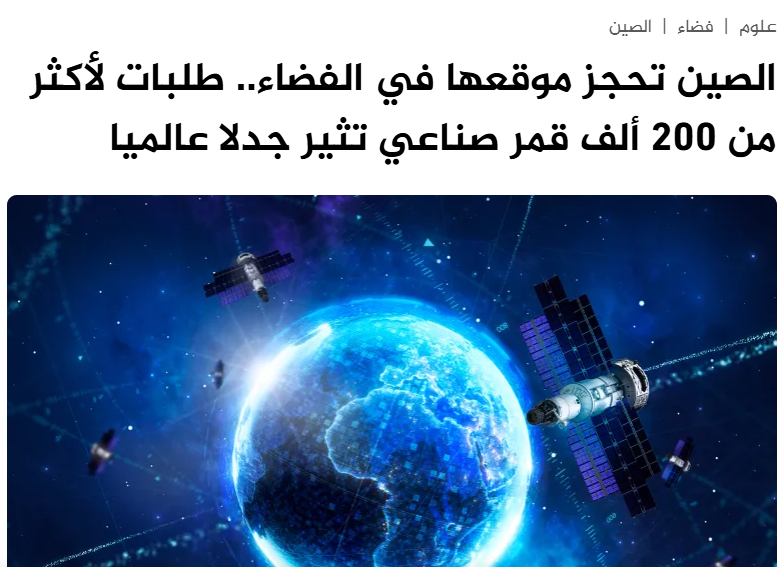
Core Viewpoint - Elon Musk's application to launch one million satellites represents a significant leap in satellite deployment, potentially increasing the number of active satellites in space from approximately 14,300 to over one million, which is more than a hundredfold increase [1][4]. Group 1: Satellite Deployment - The proposed satellites are not ordinary; they are AI chip-equipped "orbital data centers," essentially moving cloud computing capabilities into space [4]. - Each satellite will function as a high-performance computer powered by solar energy and interconnected via lasers, creating a vast network in low Earth orbit [4]. Group 2: Implications for Space Competition - The sheer number of satellites could monopolize prime orbital slots, making it difficult for other entities to deploy their satellites without interference from Musk's network [8]. - The competition in space is not just about the number of satellites but also about utilizing space resources to improve life on Earth, highlighting a strategic difference in approaches between commercial expansion and national projects [10][13]. Group 3: China's Response - In response to Musk's plans, China has applied for nearly 200,000 satellite orbits and frequency resources, indicating an escalating space race [11]. - China's existing satellite systems, like Beidou, have already provided tangible benefits, such as precision agriculture and disaster prevention, showcasing a different focus compared to Musk's ambitious satellite count [13].

新年首月大盘飘红
Xin Lang Cai Jing· 2026-01-31 07:07
连建明 2026年头一个月,A股走势让许多股民感到犹如"坐过山车",好在主要指数月K线都收阳,为全年开了 好头。不过,周五的大幅震荡也在提示市场风险悄悄降临,展望未来,慢牛行情有望持续,但风险也需 提高警惕。 再细看个股方面,上涨股票数量远多于下跌股票。1月份上涨股票3800只,下跌股票1300多只。聚焦热 点板块,既有去年的"老明星",又有今年出现的"新贵",通过1月份净申购的ETF就能看出,净申购前 几名分别是有色金属ETF、化工ETF、电网设备ETF、黄金ETF等,这些板块几乎是本月涨幅最大的板 块,涨幅最大的是有色和黄金板块,黄金板块涨幅高达40%,这当然与本月黄金价格暴涨有关,但风险 也在显现,1月最后一个交易日由于黄金出现震荡,A股中的黄金类企业股票大幅下跌,很多股票跌 停。至于去年最热门的科技股尤其是半导体、人工智能板块热度还在延续,人工智能从去年炒硬件转为 AI应用,导致软件和传媒板块大涨,中证传媒指数1月份涨幅为22%。卫星和电网设备去年12月份就开 始成为热点,今年1月份炒作延续,但下半月出现明显回调。化工板块则是1月份异军突起的板块,表现 突出。 1月份还有一个显著特点,就是大盘股、小盘 ...
宏观固收周报(20260119-20260125):国际避险情绪提升与国内投资风险偏好高企-20260130
Shanghai Securities· 2026-01-30 06:12
1. Report Industry Investment Rating - No relevant content provided 2. Core Views of the Report - The bond market has long - term allocation value, and there is still room for reserve requirement ratio cuts in 2026. The 10 - year Treasury bond yield of 1.83% has long - term investment value, though it may fluctuate in the short term due to high investor risk preference [12] - For A - shares, investors can follow the trend and focus on opportunities in four directions: satellite, commercial aerospace, and military industries; technology sectors like artificial intelligence, chips, etc.; bulk resource products such as non - ferrous metals, gold, and rare earths; and oil, gas, chemical, and petrochemical industries [13] - The US dollar may face continued depreciation pressure during the Fed's interest - rate cut cycle. The euro, pound, and yen will appreciate against the US dollar, while the RMB's appreciation against the US dollar may be relatively lower. Bulk commodities like gold, silver, copper, and oil may continue to rise in price [14] 3. Summary by Related Contents Stock Market Performance - US stock market: The three major US stock indexes declined. From 20260119 - 20260125, the Nasdaq, S&P 500, and Dow Jones Industrial Average changed by - 0.06%, - 0.35%, and - 0.53% respectively. The Hang Seng Index also declined by 0.36% during the same period [4] - A - share market: The large - cap stocks in A - shares declined while small - cap stocks rose, and most growth sectors increased. From 20260119 - 20260125, the Wind All - A Index changed by 1.81%. The CSI A100, CSI 300, CSI 500, CSI 1000, CSI 2000, and Wind Micro - cap stocks changed by - 0.69%, - 0.62%, 4.34%, 2.89%, 4.04%, and 5.16% respectively. In terms of sector styles, blue - chip stocks in the Shanghai Stock Exchange declined while growth stocks rose; in the Shenzhen Stock Exchange, both blue - chip and growth stocks declined; the Beixin 50 Index increased by 2.60%. Among the 30 CITIC industries, 24 industries rose and 6 declined. Leading industries with a weekly increase of more than 5.0% included building materials, petroleum and petrochemicals, steel, non - ferrous metals, basic chemicals, and real estate. Gold, photovoltaic, building materials, satellite, petrochemical, and aerospace ETFs led with a weekly increase of over 5% [5][6] Bond Market Performance - Chinese bonds: The yields of medium - and long - term Treasury bonds in China declined in the past week. From 20260119 - 20260125, the 10 - year Treasury bond futures main contract rose by 0.12% compared to January 16, 2026. The yield of the 10 - year active Treasury bond declined by 1.26 BP to 1.8298% compared to January 16, 2026. Yields of bonds with a maturity of 3 years and above declined [7] - US bonds: US bond yields showed mixed performance. As of January 23, 2026, the 10 - year US bond yield remained unchanged at 4.24% compared to January 16, 2026. Yields of various maturities showed mixed performance from 20260119 - 20260125 [8] Exchange Rate and Commodity Performance - Exchange rates: The US dollar depreciated. From 20260119 - 20260125, the US dollar index declined by 1.88%. The US dollar against the euro, pound, and yen changed by - 1.87%, - 1.89%, and - 1.43% respectively. The US dollar against the offshore RMB exchange rate declined by 0.27% to 6.9487 as of January 23, 2026, and the US dollar against the on - shore RMB exchange rate declined by 0.07% to 6.9642 [9][10] - Commodities: Gold prices rose. From 20260119 - 20260125, the London gold spot price rose by 7.27% to $4946.25 per ounce; the COMEX gold futures price rose by 7.00% to $4936.00 per ounce. The domestic Shanghai gold spot price rose by 7.52% to 1110.3 yuan per gram, and the futures price rose by 7.71% to 1111.88 yuan per gram [11]
York Space valued at $4.75 billion as shares rise in NYSE debut
Reuters· 2026-01-29 17:27
York Space Systems shares rose 11.8% in their New York Stock Exchange debut on Thursday, valuing the satellite company at $4.75 billion. ...

AI赋能资产配置(三十六):更高、更快、更强!AI技术分析进化论
Guoxin Securities· 2026-01-28 15:01
Core Insights - The report emphasizes that the best practice model for technical analysis using large models is a combination of "rule-based prompt engineering and large model reasoning," delegating complex tasks to code [1] - The current technical analysis engine can automatically identify multi-level trends, with specific recommendations for the Shanghai Composite Index and semiconductor equipment [1][4] Group 1: Pain Points in Large Model Technical Analysis - Precision issues arise as large models can only capture general trends (upward, downward, sideways) but struggle with exact High/Low values [2][10] - Logical consistency is a challenge, particularly in complex spatial structures, where large models may fail to maintain cross-cycle logical coherence without prompt adjustments [2][12] - Context handling is limited by window constraints and a lack of sensitivity to numerical relationships, making it difficult for large models to perform accurate calculations [2][13] Group 2: Prompt Engineering as a Key Component - The report outlines a four-step process for effective prompt engineering, including building foundational information, formatting pen data, segment data, and central data [3][15] - It highlights the importance of initializing trading instances and creating a natural language mapping dictionary for various analysis components [3][15] Group 3: Technical Analysis Engine Capabilities - The technical analysis engine is designed to be faster, with real-time data sources and minimal analysis time (15-20 seconds) [3][23] - It supports multi-level automatic identification of trends and can analyze various asset classes, including A-shares, Hong Kong stocks, futures, and forex [3][24] Group 4: Analysis Cases and Results - The Shanghai Composite Index has shown a "three-buy" signal, indicating a potential buying opportunity, while semiconductor equipment is in a "three-buy observation zone" [4][34] - The report provides specific analysis for the Shanghai Composite Index and satellite ETFs, indicating short-term volatility but potential for upward movement [4][38][41]
北京市推动卫星上下游企业并购重组,外媒评价将“重新塑造太空规则”
Huan Qiu Wang· 2026-01-28 00:57
Group 1 - The core viewpoint of the article highlights Beijing's initiative to promote the development and utilization of commercial satellite remote sensing data resources from 2026 to 2030, encouraging mergers and acquisitions among capable enterprises to enhance the industry chain [1] - The initiative supports the planning and construction of commercial satellite constellations with differentiated advantages and clear commercial value and application prospects [1] - The successful connection of the humanoid robot "Embodied Tian Gong" to a new type of internet satellite by Galaxy Aerospace marks the first global trial of humanoid robots directly connecting to low Earth orbit satellites for high-throughput data transmission [1] Group 2 - Analysts suggest that China's actions are a strategic response aimed at seizing orbital and frequency resources, indicating significant challenges in satellite manufacturing, launch platform construction, and ground infrastructure development [4] - The deployment of such a large-scale network may face hurdles, including the need for approval from the International Telecommunication Union, leading some requests to potentially serve as future resource reservations rather than complete execution plans [4] - If China partially implements its plans, it could fundamentally alter the space power dynamics, indicating a desire not only to compete in the space race but also to reshape space regulations in the coming decades [4]
各国竞相布局“卫星主权”
Xin Lang Cai Jing· 2026-01-27 05:52
Core Viewpoint - The increasing geopolitical tensions and the actions of the Trump administration have led countries to prioritize satellite sovereignty, investing in domestic satellite infrastructure to ensure stable communication, data, and intelligence transmission [1][8]. Defense Strategy - Countries are establishing their own satellite assets as part of broader efforts to increase defense spending, highlighting the strategic importance of satellites in national security, especially in light of recent conflicts like the Russia-Ukraine war [9]. - The experience of Ukraine with the Starlink satellite network has prompted Europe to develop the IRIS2 system, which aims to provide secure communication for governments and address internet connectivity gaps [10]. National Interests - Industry insiders predict that spending on space-related projects will increase in the coming years, creating new sales opportunities for companies in this sector [3][11]. - The U.S. Department of Defense is becoming a key customer for satellite operators due to its substantial budget, with companies like Blue Origin and Planet Labs securing contracts related to national security [11]. - Planet Labs has recently announced agreements with the Swedish Armed Forces and other nations to provide satellite and data support, reflecting the growing demand for satellite services driven by geopolitical factors [5][11][12]. - Governments are increasingly supporting domestic companies as a means to achieve security and strategic goals, exemplified by Canada's $1.6 billion loan to Telesat for its Lightspeed satellite communication network [11][12].
各国竞相布局“卫星主权”
财联社· 2026-01-27 05:43
Core Viewpoint - The article discusses the increasing importance of satellite sovereignty among nations due to geopolitical tensions and the need for secure communication and data transmission [3][4]. Group 1: National Investment in Satellite Infrastructure - Countries in Europe, the Middle East, and Asia are investing in their own satellite systems or paying for exclusive access to private satellites to ensure stable communication and data transmission [3]. - Germany plans to invest €35 billion (approximately $41 billion) in space projects, including satellites, by 2030 [3]. - Oman has signed a multi-million dollar agreement with Astranis for internet satellite collaboration, aiming to gain sovereign control over its digital infrastructure [3]. Group 2: Defense Strategies and National Security - The establishment of national satellite assets is part of broader efforts to increase defense spending, highlighting the strategic importance of satellites in national security [4]. - The experience of Ukraine during the conflict, relying on SpaceX's Starlink for communication, has raised concerns about dependency on private companies for satellite services [4][5]. - The European Union is planning the IRIS2 system, which will consist of 290 satellites to provide secure communication for governments and address internet connectivity issues [5]. Group 3: Growth Opportunities in the Space Sector - Increased government spending on space-related projects is expected to create new sales opportunities for companies in the sector [6]. - The U.S. Department of Defense is becoming a key customer for satellite operators due to its substantial budget [7]. - Planet Labs has secured national security-related agreements with various governments, indicating strong demand for satellite services driven by geopolitical factors [8]. Group 4: Support for Domestic Companies - Governments are increasingly supporting local companies as a means to achieve security and strategic objectives [9]. - The Canadian government has provided approximately $1.6 billion CAD (around $1.2 billion USD) in loans to Telesat for its planned Lightspeed satellite communication network [9]. - Eutelsat, a satellite company based near Paris, received funding support from the French and British governments, reflecting a trend of national investment in domestic satellite capabilities [10].