智能电动车

Search documents
技术、生态与品牌的全面换道,中国造车新势力正迈入“物理 AI”时代
Guan Cha Zhe Wang· 2025-12-03 13:13
Core Insights - The article discusses the emerging trend of "Physical AI" in the Chinese smart electric vehicle industry, highlighting how companies like Xpeng and Li Auto are shifting their focus from hardware and software competition to a more integrated approach that combines AI with physical interactions [1][4][16]. Group 1: Industry Trends - The Chinese smart electric vehicle industry is transitioning from "technical configuration competition" to "cross-terminal intelligent platform competition" [1]. - The rapid development of sectors such as wearable devices, smart electric vehicles, low-altitude economy, and robotics is providing a fertile ground for the implementation of "Physical AI" [4][6]. - In 2024, China's total vehicle production and sales are expected to reach historical highs, with new energy vehicles achieving over 12.88 million units, marking a year-on-year growth of over 30% [4]. Group 2: Company Strategies - Li Auto's "Livis" strategy aims to create a system brand and OS that integrates various physical endpoints, enhancing user experience through a "memory and action" framework [7][9]. - Xpeng is focusing on expanding its AI capabilities to include more physical forms, aiming to make vehicles an integral part of users' lives [11]. - Both companies are leveraging their growing user bases and data pools to commercialize "Physical AI," with Li Auto targeting nearly 500,000 annual deliveries in 2024 [4][11]. Group 3: Market Opportunities - The wearable device market in China is projected to exceed 61 million units in 2024, positioning the country as a global leader [6]. - The low-altitude economy market is expected to reach 1.5 trillion RMB by 2025, while the robotics market is forecasted to surpass 150 billion RMB in the same year [6]. - The integration of "Physical AI" across various sectors is seen as a realistic and promising entry point for automotive companies [6][15]. Group 4: Challenges and Future Outlook - The implementation of "Physical AI" will face challenges such as regulatory issues, user adoption, and the need for high investment [16]. - The competition in the smart electric vehicle sector is evolving towards a higher dimension of "AI-ification" of the physical world, moving beyond traditional automotive performance comparisons [16][17]. - The future winners in this space may not be the companies with the best hardware, but those that can create a unified AI experience in people's lives [17].


阿维塔IPO:一次战略节点的冷观察
Sou Hu Cai Jing· 2025-12-03 10:40
从产业与资本联动的视角审视,阿维塔科技近日向港交所递交IPO申请,标志其发展进入了依托公开市场融资以实现规模化、国际化扩张的新阶段。此次阿 维塔IPO的推进,建立在公司已完成多轮私募融资、并获得头部战略合作伙伴支持的坚实基础之上。特别是在此前的融资中,阿维塔获得了超百亿元的单笔 投资,并完成了对华为系公司的战略性持股,这两点共同构成了评估此次阿维塔IPO价值与潜力的关键背景。 支撑阿维塔IPO估值的核心在于其可量化的业务进展。公司已建立起从高端到主流市场的产品阵列,销量呈现出持续且健康的增长曲线,营业收入在近几个 财年实现了大幅同比增长。这些运营指标表明,阿维塔已成功验证其产品市场匹配度,并具备了可持续的商业化能力。 根据其招股文件披露,阿维塔IPO募集资金的主要投向明确聚焦于长期竞争力的构建:包括下一代产品与技术的研发、全球品牌影响力的提升以及销售与服 务渠道的扩展。其公布的路线图,如计划与华为深化合作推出多款车型、设定明确的海外市场进入目标,均指向一个系统性的全球化发展战略。阿维塔IPO 的成功执行,将成为该战略得以充分实施的关键资源保障。 综上,阿维塔IPO事件可被视为中国智能电动车产业中,一家具备核心 ...
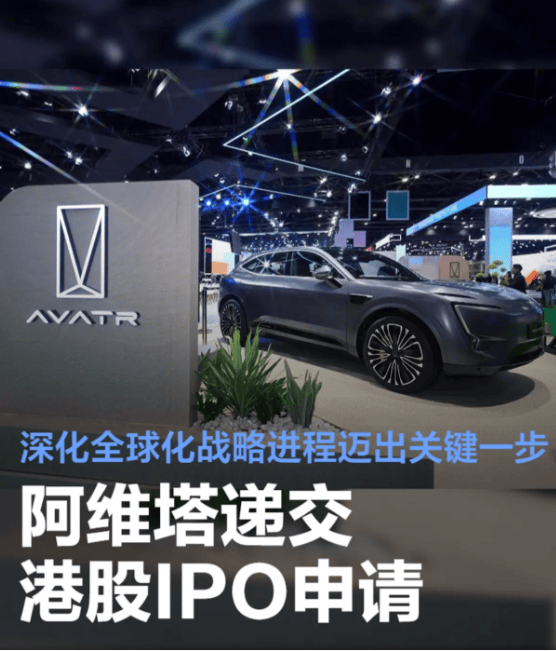
阿维塔携三巨头赴港IPO营收翻倍毛利率转正
Sou Hu Cai Jing· 2025-11-30 00:53
Core Event and Market Positioning - Avita Technology officially submitted its IPO application to the Hong Kong Stock Exchange on November 27, 2025, aiming for a listing in the second quarter of 2026, marking it as the first state-owned enterprise in the new energy vehicle sector to pursue a Hong Kong IPO [2] Fundraising Scale and Use - The company plans to raise approximately $1 billion (78 billion HKD) for technology research and development, global channel expansion targeting 80 countries by 2030, brand building, and operational funding [3] Shareholder Structure and Strategic Cooperation - The "Golden Triangle" partnership includes Changan Automobile as the largest shareholder (40.99%), CATL as the second largest (14.1%), and Huawei as a technology partner, with Avita acquiring 10% of Huawei's subsidiary for 11.5 billion yuan, forming a capital link [4] Financial Performance and Business Progress - Revenue growth is explosive, with 2023 revenue at 5.645 billion yuan, projected to reach 15.195 billion yuan in 2024 (+169%), and 12.208 billion yuan in the first half of 2025 (+98.5%), with an annual target of over 30 billion yuan [6] - The gross margin improved from 6.32% in 2024 to 10.1% in the first half of 2025, with R&D investment increasing by 167% year-on-year [7] - Cumulative sales from January to October 2025 reached 104,000 units, with a record monthly sales of 13,500 units in October, achieving a 47% completion rate of the annual target of 220,000 units [8][9] Strategic Planning and Global Ambitions - Avita has entered 34 countries, including Thailand and the UAE, with plans to achieve sales of 400,000 units and revenue of 100 billion yuan by 2027, and to cover 80 countries with 800,000 units sold by 2030 [11] Industry and Regional Significance - Avita serves as a benchmark for intelligent manufacturing in Chongqing, promoting the region's transition from traditional manufacturing to smart manufacturing [12] - The company's IPO represents a critical step in the capital market for state-owned enterprises in the new energy sector, potentially establishing a new valuation benchmark for Huawei's ecosystem of automotive companies [12]
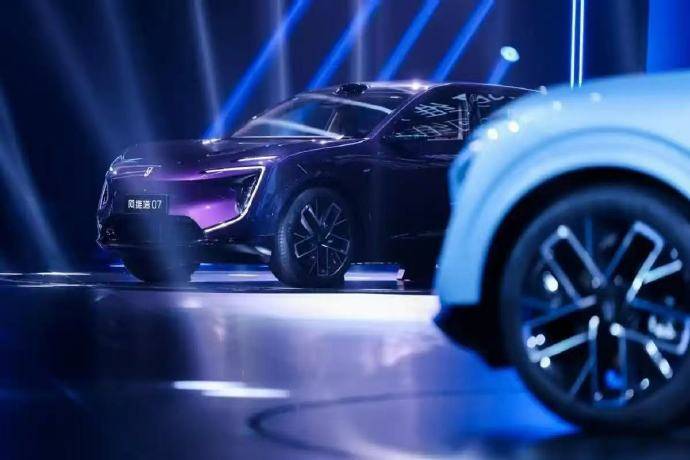
亏超百亿仍赴港IPO,阿维塔深夜递表,豪赌还是求生?
Sou Hu Cai Jing· 2025-11-29 11:35
Core Viewpoint - Avita Technology, backed by Changan, Huawei, and CATL, is pursuing an IPO on the Hong Kong Stock Exchange amid significant financial losses, indicating a desperate need for capital to sustain operations and growth [3][7][15] Group 1: Company Background and Financial Performance - Avita Technology was established with a unique partnership among Changan, Huawei, and CATL, which was expected to mitigate common challenges faced by new car manufacturers [4] - Financial data reveals that Avita's net losses from 2022 to 2024 are projected to reach 2.016 billion, 3.693 billion, and 4.018 billion yuan respectively, totaling 9.726 billion yuan over three years [3] - By mid-2025, the company has already incurred an additional loss of 1.585 billion yuan, bringing cumulative losses since 2022 to over 11 billion yuan [3] Group 2: Market Position and Challenges - Despite its strong backing, Avita has struggled to gain significant market traction in the competitive high-end electric vehicle sector, facing stiff competition from brands like NIO, Li Auto, and Aito [6] - The overall industry is experiencing a slowdown, with a shift in investor sentiment from enthusiasm to caution, leading to a tightening of financing opportunities for new energy vehicle companies [6][7] Group 3: Strategic Decisions and Future Outlook - The decision to file for an IPO is seen as a critical move to secure necessary funding before cash reserves are depleted, highlighting the urgency of the situation [7] - Avita's reliance on Huawei's technology raises concerns about its brand independence, as it must establish a distinct identity to avoid being perceived merely as a subsidiary of Huawei [8] - The upcoming IPO will test market confidence in Avita's unique business model and its ability to deliver on its promises, with the success of future product launches being crucial for its survival [9][12][15]
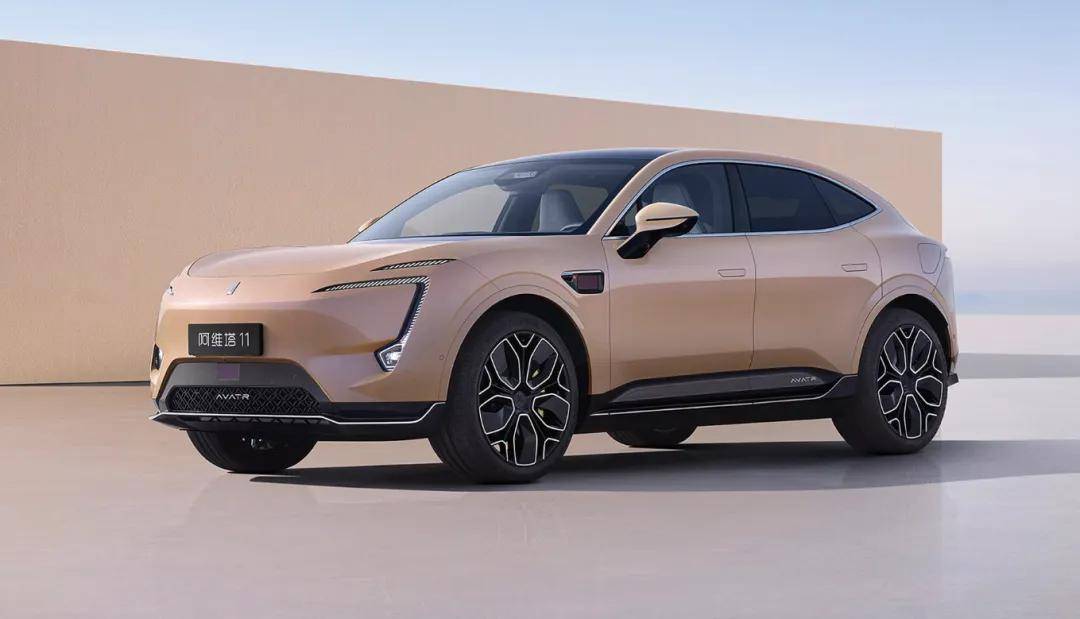
阿维塔递表港交所 三强携手打造智能电动车行业新标杆
Zheng Quan Ri Bao Wang· 2025-11-29 02:37
Core Viewpoint - Avita Technology's IPO application to the Hong Kong Stock Exchange marks a significant step in its international development and capital operation strategy, aiming to enhance its core competitiveness and support long-term high-quality growth [1][5]. Group 1: Company Overview - Avita was established in July 2018 as a joint investment by Changan Automobile and NIO, officially renamed in May 2021, leveraging resources from industry leaders Changan, Huawei, and CATL to create a unique "three-strong alliance" development model [2]. - Changan holds a 40.99% stake as the controlling shareholder, providing extensive experience in vehicle R&D and manufacturing, while CATL, with a 9.17% stake, ensures leading battery technology, and Huawei offers advanced smart automotive solutions [2]. Group 2: Financial Performance - Avita's revenue surged from 28.34 million in 2022 to 5.645 billion in 2023, with projections of 15.195 billion in 2024, reflecting a year-on-year growth of 169.16% [3]. - The company reported a gross profit improvement from a loss of 169 million in 2023 to a profit of 961 million in 2024, with further growth to 1.238 billion in the first half of 2025, despite a loss of 1.585 billion in the same period [3]. Group 3: Product Strategy - Avita has developed a comprehensive product line covering price ranges from 200,000 to 700,000, including four mass-produced models and two limited editions, catering to diverse consumer needs [4]. Group 4: Future Development Strategy - The funds raised from the IPO will be allocated to product development, platform and technology development, brand building, sales service network construction, and operational funding, enhancing Avita's core competitiveness [5]. - Avita plans to launch five upgraded products in collaboration with Huawei by 2026 and aims to introduce a total of 17 models by 2030, expanding its market presence to over 80 countries and establishing more than 700 sales channels [5][6]. - The company targets global sales of 400,000 vehicles by 2027, 800,000 by 2030, and 1.5 million by 2035, supported by a strategy of differentiation, continuous technological innovation, and globalization [6].


九号公司-WD大宗交易成交27.60万股 成交额1460.87万元
Zheng Quan Shi Bao Wang· 2025-11-28 15:33
九号公司-WD11月28日大宗交易平台出现一笔成交,成交量27.60万股,成交金额1460.87万元,大宗交 易成交价为52.93元,相对今日收盘价折价6.99%。该笔交易的买方营业部为机构专用,卖方营业部为国 泰海通证券股份有限公司北京安贞门证券营业部。 证券时报·数据宝统计显示,九号公司-WD今日收盘价为56.91元,上涨1.03%,日换手率为1.05%,成交 额为3.28亿元,全天主力资金净流入562.39万元,近5日该股累计上涨4.10%,近5日资金合计净流出 2603.43万元。 两融数据显示,该股最新融资余额为17.04亿元,近5日减少1.22亿元,降幅为6.67%。(数据宝) 11月28日九号公司-WD大宗交易一览 | 成交量 | 成交金额 | 成交价格 | 相对当日收盘折溢 | 买方营 | 卖方营业部 | | --- | --- | --- | --- | --- | --- | | (万股) | (万元) | (元) | 价(%) | 业部 | | | 27.60 | 1460.87 | 52.93 | -6.99 | 机构专 | 国泰海通证券股份有限公司北京安 | | | | | | 用 ...
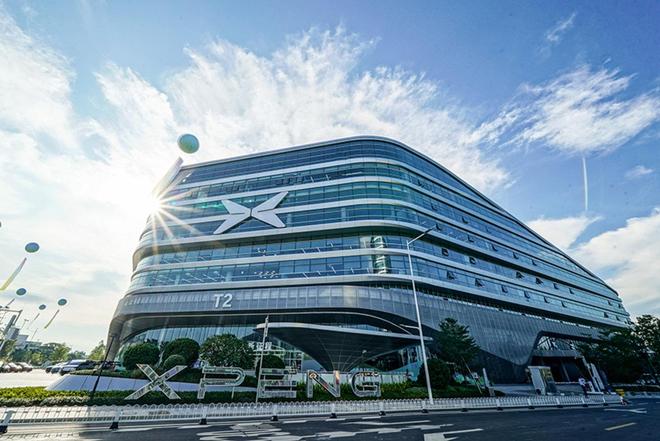
不止于造车:小鹏正在重构其估值逻辑
Tai Mei Ti A P P· 2025-11-28 05:25
Core Insights - Xiaopeng Motors has demonstrated a significant turnaround, achieving a revenue of 20.38 billion yuan in Q3, a year-on-year increase of 100%, and a record delivery of 116,000 vehicles, with a gross margin of 20.1% [2] - The company has evolved from a struggling new energy vehicle manufacturer to a global provider of physical AI infrastructure, indicating a shift in its business model and market perception [2] Financial Performance - Q3 revenue reached 20.38 billion yuan, doubling from the previous year [2] - The delivery volume of 116,000 units marks a historical high for the company [2] - The gross margin of 20.1% signifies a transition to a more stable and profitable business model [2] Valuation Perspective - Major investment banks are adopting the Sum of the Parts (SOTP) valuation method for Xiaopeng, recognizing its diverse business segments beyond traditional automotive metrics [3][4] - The company is now viewed as a technology entity rather than just an automotive manufacturer, similar to how Tesla was re-evaluated in the past [5] Business Segments - Xiaopeng's operations are divided into four key segments: 1. Automotive business, providing stable cash flow [4] 2. AI chips, which support future AI computing needs [4] 3. Robotaxi services, representing a recurring revenue model [4] 4. Humanoid robots and flying cars, seen as the ultimate form of embodied intelligence [4] Strategic Moves - The introduction of the Kunpeng Super Range Extender is a tactical decision to expand market reach and data collection capabilities, addressing range anxiety for consumers [6][9] - The company is focusing on building a comprehensive data network through its vehicles to enhance AI model training [9] Technological Advancements - Xiaopeng is developing a self-research Turing AI chip, which serves as a universal brain for various intelligent terminals, including cars and robots [10] - The second-generation VLA model allows for a more intuitive AI driving experience, reducing costs and enhancing the feasibility of Robotaxi services [12] Ecosystem Development - Xiaopeng is shifting towards an ecosystem approach, collaborating with major players like Volkswagen and opening its Robotaxi and humanoid robot SDKs to the industry [14][16] - The company aims to position itself as a foundational technology provider in the physical AI space, similar to Android in the software domain [16] Global Expansion - Xiaopeng's overseas strategy has evolved to include local production and R&D in Europe, with Q3 overseas sales doubling, indicating a successful adaptation to global markets [16] Future Outlook - The company is poised for significant developments by 2026, with plans for Robotaxi trials, humanoid robot production, and flying car deliveries, potentially transforming its revenue streams [13] - Xiaopeng's vision of becoming a global embodied intelligence company is supported by its strong cash reserves and technological advancements [18]

就在今天|国泰海通次世代新能源沙龙-上海站
国泰海通证券研究· 2025-11-27 22:22
Group 1 - The article discusses the future outlook of various sectors, including commercial space, smart electric vehicles, and nuclear fusion, highlighting investment opportunities in these areas [3][4]. - It emphasizes the acceleration of China's commercial space development and its implications for the industry [4]. - The article provides insights into the expected growth of the global smart electric vehicle market by 2026, indicating significant investment potential [3][4]. Group 2 - The article outlines the 2026 outlook for the domestic and international large-scale energy storage industry, suggesting a growing market [4]. - It mentions the importance of nuclear fusion as a potential investment opportunity, reflecting ongoing advancements in this field [3][4]. - The event features discussions from industry leaders, providing a platform for investors to engage and explore these emerging sectors [3].


蔚来汽车
数说新能源· 2025-11-26 05:58
Core Viewpoint - The company has shown significant growth in electric vehicle deliveries and financial performance, driven by new product launches and cost reduction strategies, positioning itself for continued expansion in the market [1][4][5]. Delivery and Sales Performance - In Q3, the company delivered 87,071 smart electric vehicles, a year-on-year increase of 40.8% [1]. - October deliveries reached 40,397 units, marking a 92.6% year-on-year growth and setting a new monthly delivery record for three consecutive months [1]. - Q4 delivery guidance is set at 120,000 to 125,000 units, representing a year-on-year increase of 65.1% to 72% [1]. Financial Performance - Total revenue for Q3 was 21.8 billion RMB, a year-on-year increase of 16.7% [4]. - Vehicle sales revenue was 19.2 billion RMB, up 15% year-on-year, while other sales reached 2.6 billion RMB, a 31.2% increase [4]. - The gross margin for vehicles improved to 14.7%, up from 13.1% year-on-year, attributed to reduced material costs [4][5]. Cost Management and Efficiency - The company achieved a non-GAAP operating loss of 3.5 billion RMB, a reduction of 32.8% year-on-year [5]. - R&D expenses decreased by 28% year-on-year to 2.4 billion RMB, reflecting organizational optimization [4][5]. - The company reported positive operating cash flow and free cash flow for the quarter, supported by an 11.6 billion USD equity financing completed in September [5]. Product Development and Technology - The company launched two new large three-row electric SUVs, ONVO L90 and the new ES8, which received strong market recognition [1]. - The introduction of the world's first world model (NWM) enhances the company's smart driving capabilities [2]. - Upcoming software updates, including COCONUT 2.1.0, aim to improve driving experiences with advanced models [2]. Market Strategy and Expansion - The company operates a comprehensive sales and service network with 172 NIO centers and 3,641 battery swap stations globally [3]. - The company is focusing on expanding its presence in international markets, with plans to introduce new models at competitive price points [16]. - The strategy includes a phased approach to market entry, prioritizing the Firefly brand for overseas expansion [16]. Future Outlook - The company aims for a gross margin of 20% by 2026, driven by high-margin models and cost control measures [10]. - Management expresses confidence in achieving quarterly breakeven in Q4 despite potential impacts from subsidy changes [6]. - The company plans to maintain R&D spending at approximately 2 billion RMB per quarter while ensuring long-term competitiveness [10].


为了升级老用户的智驾,极氪这次下了血本
远川研究所· 2025-11-24 13:05
Core Viewpoint - The article discusses the impact of Moore's Law on the smart electric vehicle industry, highlighting the rapid increase in chip computing power and the decline in prices, which has led to the widespread adoption of advanced features like lidar and air suspension. This creates a dilemma for automakers in balancing the needs of existing car owners with the demands of new users as technology evolves rapidly [1]. Group 1: Technological Advancements - The rise of computing power in chips has significantly enhanced the capabilities of smart electric vehicles, allowing for more advanced features at lower costs [1]. - The latest flagship cockpit chip, Qualcomm 8295P, has an AI computing power of 60 TOPS, which is 7.5 times that of the previous generation 8155, enabling support for multiple 4K displays [7]. - The evolution of driver assistance systems has shifted from rule-based to data-driven models, requiring significantly higher chip computing power, as seen with the latest Nvidia Thor-U chip, which boasts 700 TOPS [8][12]. Group 2: Challenges for Existing Owners - Existing car owners face the challenge of feeling left behind as new models offer better features at lower prices, leading to dissatisfaction and a sense of being "backstabbed" [1]. - The difficulty of upgrading existing vehicles' hardware and software is compounded by the need for extensive testing and validation, making it a costly and time-consuming process [11][24]. - Upgrading driver assistance systems is particularly complex due to safety requirements and the need for new hardware, which can involve replacing numerous components [12][23]. Group 3: Case Study of Zeekr - Zeekr's recent crowdfunding initiative for upgrading the smart driving system of older models illustrates a proactive approach to addressing the concerns of existing owners [26]. - The upgrade from Mobileye's EyeQ5H chip to Zeekr's self-developed Thor-U chip represents a significant leap in capabilities, enhancing the driving experience from "usable" to "good" [27]. - The crowdfunding project is seen as a strategic move by Zeekr to maintain user trust and demonstrate commitment to customer satisfaction, despite the high costs involved [32][37].