
电力装备

Search documents
屈贤明:重点突破领域应增加智能仪器仪表、生物制造产业
Feng Huang Wang Cai Jing· 2025-12-29 06:26
Group 1 - The 10th China Manufacturing Power Conference was successfully held in Beijing, focusing on the theme "Rooted in Reality, Moving Towards New Directions" and discussing the high-quality development path of China's manufacturing industry during the 14th and 15th Five-Year Plans [1] - The conference highlighted the achievements of China's manufacturing sector over the past decade, particularly in ten key areas, reinforcing China's position as the world's leading manufacturing power and its entry into the second tier of global manufacturing powers [3] - The future strategy for manufacturing power construction will involve two main aspects: continuing the "key breakthroughs" strategy with adjustments to include smart instruments and biological manufacturing, and increasing support for foundational research and cutting-edge technologies in five industries that have reached world-leading levels [3] Group 2 - Five industries, including information communication equipment and new energy vehicles, are currently at the forefront globally, with expectations for five to six more key industries to achieve breakthroughs in the next decade [3] - The overall goal is for China's manufacturing industry to transition into the mid-to-high-end sector within the next ten years [3]

屈贤明展望:未来十年再突破五、六个产业,中国制造将整体迈入中高端
Xin Lang Cai Jing· 2025-12-29 03:56
Core Viewpoint - The "10th China Manufacturing Power Conference" highlighted China's achievements in manufacturing over the past decade and outlined future strategies for advancing its manufacturing capabilities [1][3][5]. Group 1: Achievements in Manufacturing - Over the past ten years, China has made significant breakthroughs in ten key areas of manufacturing, solidifying its position as the world's leading manufacturing power [3][5]. - China has entered the second tier of global manufacturing powers, with five industries—information and communication equipment, marine engineering equipment and high-tech ships, advanced rail transit equipment, new energy vehicles, and electric power equipment—leading the world [3][5]. Group 2: Future Strategies - For the next decade, the second phase of the manufacturing power strategy will focus on two main areas: continuing the "key breakthroughs" strategy while adjusting the focus to include smart instruments and biological manufacturing [3][5]. - Increased support for basic research and cutting-edge technologies in the five leading industries is essential to achieve breakthroughs in original innovation [3][5]. - It is anticipated that five to six additional key industries will achieve breakthroughs and join the ranks of world-leading industries, elevating China's manufacturing sector to a mid-to-high-end level overall [3][5].
工信部原副部长刘利华:未来五年,推动制造业实现战略性跨越应聚焦四个方面
Xin Lang Cai Jing· 2025-12-28 02:39
Core Viewpoint - The 10th China Manufacturing Power Conference highlighted the significant achievements of China's manufacturing sector during the 14th Five-Year Plan, emphasizing the need for continued innovation and adaptation in a rapidly changing global environment [3][4][9]. Group 1: Achievements in Manufacturing - China's manufacturing value added has maintained a stable global share of around 30%, holding the top position for 15 consecutive years [3][8]. - Key industries such as new energy vehicles, information communication equipment, and advanced rail transit have reached world-leading status, while aerospace, automotive, steel, petrochemicals, and building materials have achieved advanced global levels [3][8]. - In the first 11 months of 2025, China's goods trade surplus exceeded $1.08 trillion, marking a historical high, with contributions shifting from labor-intensive sectors to technology-intensive sectors like electric vehicles and lithium batteries [3][8]. Group 2: Challenges and Strategic Focus - The international environment presents uncertainties, including major power competition and technological rivalry, which pose challenges to the manufacturing sector [4][9]. - The upcoming Five-Year Plan emphasizes the importance of building a modern industrial system, with manufacturing as a key focus, and aims to maintain a reasonable proportion of advanced manufacturing [4][9]. - Future strategies for manufacturing should focus on four areas: solidifying industrial foundations, accelerating technological self-reliance, nurturing new productive forces, and optimizing the development ecosystem [10][11].
宏盛华源(601096.SH)拟投资设立陕西盛世金源电力装备有限公司
智通财经网· 2025-12-26 13:06
智通财经APP讯,宏盛华源(601096.SH)发布公告,公司拟投资设立全资子公司陕西盛世金源电力装备 有限公司,注册资本6300万元,主要业务为铁塔、钢结构制造,金属表面处理及热处理加工等业务。 ...

宏盛华源拟投资设立陕西盛世金源电力装备有限公司
Zhi Tong Cai Jing· 2025-12-26 12:04
宏盛华源(601096)(601096.SH)发布公告,公司拟投资设立全资子公司陕西盛世金源电力装备有限公 司,注册资本6300万元,主要业务为铁塔、钢结构制造,金属表面处理及热处理加工等业务。 ...
许昌高新区推动产业高质量发展交出亮眼“成绩单”
Huan Qiu Wang· 2025-12-24 03:08
许昌高新区产业体系完备,集聚发展格局已然成形。长期深耕电力装备产业,该区已构建起完备 的"源、网、荷、储"一体化产业生态。拥有许继电气、开普检测等上市企业3家,规上工业企业34家, 聚焦"发电、输变电、配用电、电网控制及检测、新型储能"五大产业链,初步形成以许继为龙头,许昌 智能、开普检测、瑞尔电气、联桥科技、智能云科、初心智能等与之关联配套的产业集群,产品覆盖电 力系统"发、输、变、配、用、调"各个环节。 同时,该区着力打造集检验检测、科研创新、标准研制、技术服务等功能于一体的综合性公共技术服务 平台,集聚开普检测、四达检测等优质检验检测服务企业,建成开普国家电工电子检测公共服务平台和 国家中低压输配电产品质量监督检验中心(河南),为企业创新提供强力支撑。 来源:环球网 近日,许昌高新区在推动产业高质量发展上交出亮眼"成绩单",凭借千亿级电力装备产业集群获 评"2025河南开发区'十四五'综合成就典型案例",并成功入选河南省首批产业园区集群地标名单,标志 着该集群的发展成效与模式正式获得省级层面的权威认定,跻身产业发展的"第一梯队"。 2025年前三季度,区内制造企业上云数量达65家,数字化研发设计工具普及 ...
未来10年,人民币将逐步升值,最大机会在哪?
Sou Hu Cai Jing· 2025-12-23 05:16
Core Viewpoint - The former mayor of Chongqing and economist Huang Qifan predicts that the RMB will gradually appreciate against the USD over the next decade, potentially reaching around 6 from its current level above 7, driven by the natural results of China's high-quality economic development [1]. Group 1: Economic Transition - China's manufacturing is shifting from "quantity" to "quality," with industrial added value accounting for 32% of the global total, establishing a competitive advantage in sectors like automotive, shipbuilding, high-speed rail, and renewable energy [3]. - The structure of exports has changed significantly, with 60% now being high-end equipment and electronic products, indicating a move away from low-cost competition towards value-added products [3]. Group 2: Supply Chain Independence - China has achieved significant autonomy in its industrial supply chain, with over 80% of export products having more than 80% domestic added value, reducing reliance on processing trade [5]. - This shift means that China is no longer just a processing hub but is exporting with its own technology and brands, necessitating stronger domestic currency support [5]. Group 3: Foreign Investment Dynamics - Despite external pressures, China's actual foreign investment usage has doubled over the past decade, averaging about $120 billion annually, with a shift from quantity to quality in foreign investments [6]. - Foreign enterprises contribute significantly to China's exports, accounting for 30% of total exports and 50% of high-value-added product exports, which supports the demand for RMB [6]. Group 4: Implications of RMB Appreciation - For consumers, an appreciation of the RMB means cheaper imports, potentially lowering costs for education, luxury goods, and travel [8]. - For businesses, it will necessitate upgrades and discourage low-margin export strategies, promoting only those with technology and brand strength to thrive internationally [8]. Group 5: Investment Strategy Adjustments - Investors holding significant USD assets may face depreciation in value when converted back to RMB, while investments in high-quality Chinese assets could yield benefits from both economic fundamentals and currency appreciation [9]. - Huang Qifan emphasizes a gradual appreciation of the RMB, predicting that by 2035, China's per capita GDP in USD could rise from $13,000 to between $25,000 and $26,000, partly due to currency appreciation effects [9].
人民币要变得更值钱了?黄奇帆预言:今后十年人民币将逐步升值至6.0左右
Sou Hu Cai Jing· 2025-12-22 17:22
Core Viewpoint - The former mayor Huang Qifan predicts that the RMB may appreciate from around 7.0 to approximately 6.0 against the USD over the next decade, indicating that the same amount of RMB will exchange for more USD internationally, which will lower costs for consumers and businesses [1][12]. Group 1: Manufacturing Industry Transformation - Over the past decade, China's manufacturing sector has undergone a significant transformation, with its industrial added value accounting for 32% of the global total, establishing a "one-third" global structure [3]. - The nature of export goods has changed, with 60% of China's exports now being high-end equipment and electronic products, and industrial manufactured goods making up 90% of total exports [3]. - China has developed global competitive advantages in five key sectors: automotive, shipbuilding, high-speed rail, power equipment, and renewable energy, particularly in photovoltaics [3]. Group 2: Foreign Investment Trends - China has maintained an average of $120 billion in actual foreign investment annually over the past decade, doubling the total from ten years ago, with a trend of fewer projects but larger individual investments in high-tech and capital-intensive fields [3][5]. - Foreign enterprises contribute approximately 30% of China's export value, with a 50% share in high-value-added equipment and electronic product exports [5]. Group 3: Domestic Industry Chain Completeness - China is the only country with a complete industrial classification across all categories, allowing for a robust domestic supply chain that enhances resilience and cluster effects [5]. - The proportion of processing trade in exports has decreased to below 20%, with over 80% of export products now having a domestic value-added share exceeding 80% [5][6]. Group 4: Currency and Trade Dynamics - The shift from low-value processing to high-value embedded exports is a core indicator of the strengthening of China's foreign trade, providing fundamental support for the RMB exchange rate [6]. - A strategic choice to promote moderate appreciation of the RMB is seen as beneficial for enhancing purchasing power and balancing domestic and international markets [8]. - The People's Bank of China aims to maintain a stable RMB exchange rate while promoting internationalization, which will enhance the currency's attractiveness as a reserve and pricing currency [8][10]. Group 5: Future Trade Structure - China aims to reduce price competition in exports and enhance brand value, focusing on high-quality rather than low-cost products [10]. - The goal is to develop a balanced trade structure, with services trade expected to account for 20% of total trade by 2040, aligning with global averages [10]. - The RMB's exchange rate is expected to exhibit "two-way fluctuations," with the central bank equipped with various tools to manage excessive market volatility [10].
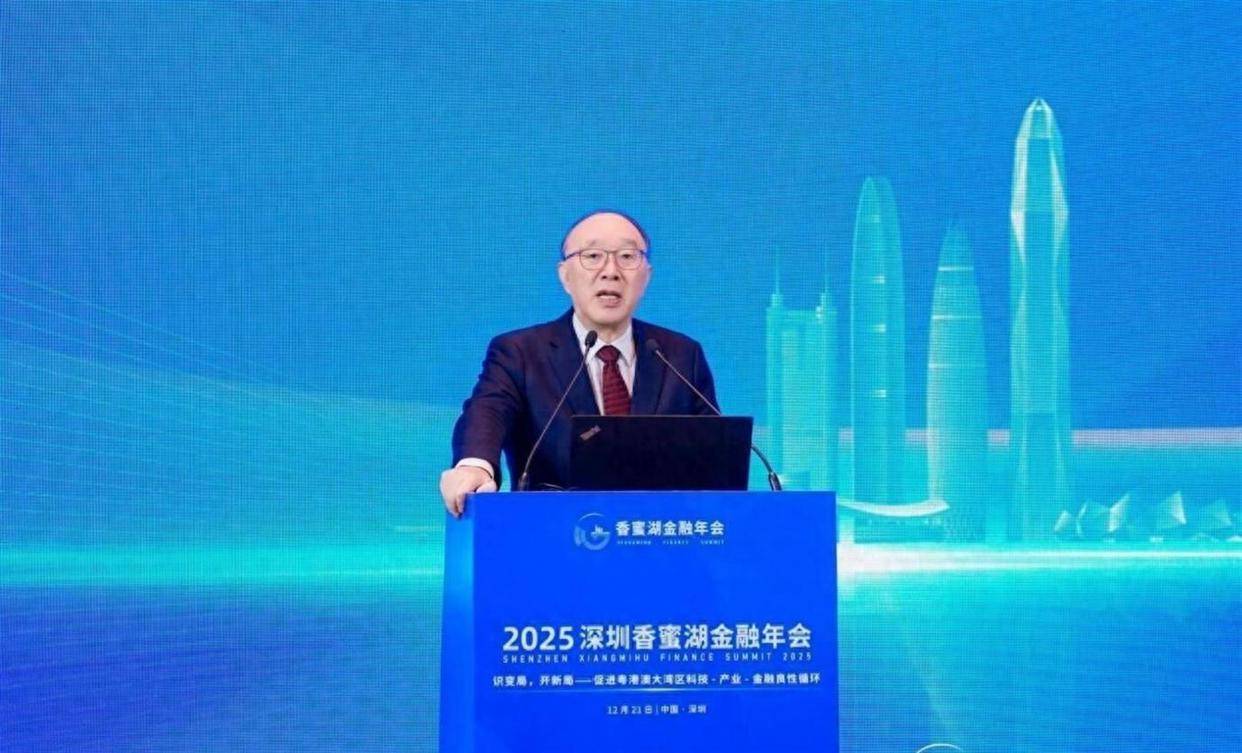
黄奇帆:今后十年人民币将逐步升值至6.0左右
Bei Jing Shang Bao· 2025-12-21 14:43
Group 1 - China's foreign trade achievements are a natural result of deep transformation and high-quality development in the manufacturing sector over the past decade [2] - China's industrial added value accounts for 32% of the global total, establishing a "one-third" structure where Chinese manufacturing represents one-third, developed countries one-third, and other developing countries one-third [2] - China has formed global competitive advantages in five key sectors: automotive, shipbuilding, high-speed rail, power equipment, and renewable energy (photovoltaics) [2] Group 2 - The structure of foreign investment in China continues to optimize, with actual foreign investment doubling over the past decade to an average of approximately $120 billion annually [3] - Foreign-funded enterprises contribute about 30% of national exports, 50% of high-value-added equipment and electronic product exports, and 15% of industrial and commercial tax revenue [3] - Exports have shifted from a focus on processing trade to a cluster-based export model with embedded domestic value [3] Group 3 - China should promote a balanced approach to imports and exports, enhance trade quality, and increase the internationalization of the Renminbi [4] - An appropriate appreciation of the Renminbi is suggested to enhance purchasing power and promote import growth, aiming for a doubling of per capita GDP in USD terms over the medium to long term [4] Group 4 - It is recommended to moderately reduce export tax rebates based on industry differences and overall needs, reallocating fiscal resources to domestic welfare and innovation [5] - There is an emphasis on improving minimum wage standards and implementing paid leave to promote common prosperity and consumption upgrades [5] Group 5 - The need to prevent "involution" domestically from affecting international trade is highlighted, with a focus on enhancing the brand value and overall profit levels of Chinese manufacturing [6] - China aims to improve service trade, targeting that by 2040, service trade will account for 20% of the total volume of goods and service trade, aligning with the global average [6]

申科股份密集推出战略举措 剑指燃气轮机深海风电等领域
Zheng Quan Ri Bao Wang· 2025-12-21 13:47
Core Insights - Shenkai Sliding Bearing Co., Ltd. is intensifying its strategic focus on high-end equipment and R&D capabilities, establishing a new R&D headquarters in Shanghai and subsidiaries for gas turbines and deep-sea wind power [1][4] Strategic Layout - The company is prioritizing deep-sea wind power, gas turbines, and nuclear power as key growth areas, with plans to develop high-reliability thick-walled sliding bearings and customized solutions [2][3] - The establishment of a subsidiary in Shandong aims to enhance manufacturing capabilities for power equipment and specialized ship components, facilitating close supply and customized services for key clients [3] R&D Enhancement - The new R&D headquarters in Shanghai will focus on advanced materials, smart bearings, gas turbines, nuclear power equipment, and deep-sea wind power, with an investment capped at 50 million yuan [4] - The company plans to increase R&D investment to over 6% by 2026 and 8% by 2028, aiming to improve overall R&D, design, and process capabilities [4] Industry Positioning - As the first listed company in thick-walled sliding bearings in China, Shenkai has a diversified business structure, covering 55%-65% of components in power generation equipment and 12%-25% of its value [5] - The power equipment sector is in a long-term expansion phase, driven by industrial electrification and other technological demands, presenting significant investment opportunities for the company [5]
