
科技制造

Search documents
美国关税政策大变!小企业纷纷裁员倒闭,大企业赚得盆满钵满?
Sou Hu Cai Jing· 2025-11-20 10:54
Core Viewpoint - The article highlights the stark contrast between the struggles of small businesses and the booming performance of large corporations in the U.S. due to the impact of tariffs, raising questions about the underlying reasons for this disparity [1][20]. Group 1: Impact on Small Businesses - Small businesses, which account for 99.9% of U.S. enterprises, are facing severe challenges due to increased tariffs, leading to inventory reductions and even existential threats [1][3]. - Approximately 36 million small businesses contribute 43% of the U.S. GDP and are responsible for nearly half of private sector employment, yet they are heavily burdened by rising costs from tariffs on raw materials like steel and aluminum, which have doubled to 50% [3][5]. - The cost pressures have significantly squeezed the already thin profit margins of small businesses, forcing many to drastically cut inventory levels compared to previous years [5][9]. Group 2: Performance of Large Corporations - In contrast, large retailers like Amazon and Walmart have seen substantial revenue growth, with Amazon's net sales increasing by 13% to $180 billion and Apple's revenue reaching $102 billion, up 8% [5][11]. - Large corporations benefit from economies of scale, allowing them to negotiate better terms with suppliers and distribute tariff costs across a vast array of products, thus mitigating the direct impact of tariffs [11][16]. - The disparity in operational capabilities between small and large businesses is exacerbated by the tariff policies, which act as a magnifying glass on existing inequalities [11][18]. Group 3: Broader Economic Implications - The struggles of small businesses are likely to have a ripple effect on the employment market, as many may resort to layoffs due to high costs and shrinking profits [13][18]. - Retaliatory tariffs from other countries are specifically targeting U.S. small business exports, further constraining their operational viability [13][16]. - The exit of small businesses from the market could disrupt supply chain diversity, potentially leading to increased costs for large corporations in the future [13][16]. Group 4: Consumer Impact - While large corporations have managed to absorb costs in the short term, the long-term exit of small businesses could reduce market competition, allowing larger firms to gain pricing power [15][20]. - The imbalance in the industry ecosystem may lead to higher hidden costs for large companies as supply chain connections weaken [16][20].


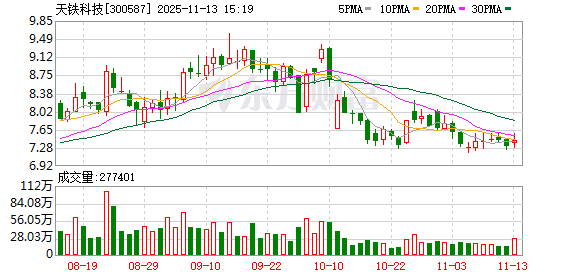
天铁科技:公司年产5万套液冷系统产品及20万根液冷管路项目已完成环评审批
Mei Ri Jing Ji Xin Wen· 2025-11-13 07:18
Group 1 - The company Zhejiang Tiantian Technology Co., Ltd. has completed the environmental assessment approval for its project to produce 50,000 sets of liquid cooling systems and 200,000 liquid cooling pipes [2] - The company is focusing on two main business directions: "vibration reduction business" and "lithium-based new energy business" [2] - The company will continuously monitor national policy guidance and market development trends, emphasizing innovation and improving its product system [2]
辛识平:中国市场强大“磁吸力”从何而来
Xin Hua Wang· 2025-11-12 14:57
Core Insights - China's market exhibits strong "magnetic attraction" due to its vast scale and potential for cooperation and mutual benefit with global partners [1][2][3] Group 1: Market Size and Opportunities - The China International Import Expo (CIIE) showcased 461 new products, technologies, and services, with over 200 being global debuts, highlighting the country's innovation capacity [1] - The Canton Fair attracted over 310,000 foreign buyers from 223 countries and regions, with nearly a 10% increase in buyers from Belt and Road Initiative countries [1][2] - China's retail sales of consumer goods are expected to exceed 50 trillion yuan this year, reinforcing its position as the world's second-largest consumer and import market [2] Group 2: Foreign Investment and Business Environment - In the first nine months of the year, China established 48,921 new foreign-invested enterprises, marking a 16.2% year-on-year increase, indicating a robust foreign investment climate [3] - The reduction of the negative list for foreign investment and the expansion of visa-free travel for foreign businesses reflect China's commitment to creating a favorable business environment [3] Group 3: Global Cooperation and Future Growth - The ongoing collaboration between China and global businesses is seen as a pathway to shared opportunities and growth, with many foreign companies expressing confidence in the Chinese market [3][4] - Major foreign investment projects have been successfully launched in China this year, demonstrating the country's appeal as a destination for international business [3]
摩根士丹利证券钱菁:中企跨境并购呈现多元新趋势,战略与整合成成功关键
Xin Lang Zheng Quan· 2025-11-12 10:05
Core Insights - The Shanghai Stock Exchange International Investor Conference highlighted the evolving landscape of Chinese enterprises' overseas mergers and acquisitions (M&A), emphasizing a dual-driven model of state-owned and private enterprises [1][2] - The "Belt and Road" initiative has significantly guided cross-border M&A activities, with notable examples of large-scale transactions by state-owned enterprises [1] - Private enterprises, particularly in the renewable energy sector, are increasingly active in overseas M&A, supported by diverse capital sources [2] Group 1: Trends in Overseas M&A - Chinese enterprises are experiencing a multi-dimensional evolution in overseas M&A, with both state-owned and private enterprises playing crucial roles [1] - The participation of foreign capital in China's advanced industries is on the rise, particularly in biopharmaceuticals and renewable energy [2] - Middle Eastern capital is actively seeking investment opportunities in China's petrochemical and technology sectors, enhancing cross-border capital flows [2] Group 2: Success Factors in Cross-Border M&A - Four core elements for successful cross-border M&A include strategic planning, cultural compatibility, timing, and valuation [3] - Clear strategic planning is essential for M&A success, requiring companies to define target selection criteria and strategic goals [3] - Cultural compatibility is often overlooked but is critical for governance efficiency and post-merger integration [3] Group 3: Enhancing M&A Capabilities - Companies should build internal M&A teams with expertise in industry knowledge, valuation analysis, and legal compliance [4] - The importance of professional intermediary institutions is emphasized for effective process management and negotiation support [4] - Regulatory bodies are encouraged to enhance institutional supply and align approval processes with international practices [4]
从“新面孔”到“回头客”再到“常驻客”,进博机遇展现中国超大规模市场活力
Hua Xia Shi Bao· 2025-11-06 08:57
Core Insights - The 8th China International Import Expo (CIIE) opened on November 5, showcasing China's commitment to high-level openness and economic cooperation with the world [1][2] - The theme of this year's expo is "Open Up and Create New Opportunities Together, Share a New Future," emphasizing China's role as a bridge connecting global economies [1][2] - The number of participating companies reached a historical high, with 4,108 foreign enterprises, including 290 Fortune 500 companies, reflecting strong international confidence in the "CIIE opportunities" and the Chinese economy [2][5] Group 1: Participation and Scale - A total of 155 countries, regions, and international organizations participated in this year's expo, with the exhibition area exceeding 430,000 square meters, marking record highs in both exhibition space and number of exhibitors [2][5] - Long-term participants like L'Oréal and IKEA have consistently attended the expo for eight years, indicating a growing commitment to the Chinese market [2][3][5] Group 2: Corporate Strategies and Innovations - Schneider Electric expressed strong confidence in the Chinese market, highlighting its long-term commitment to participating in the CIIE and benefiting from China's high-level openness [3][5] - IKEA has expanded its presence in China by opening new stores and enhancing its multi-channel ecosystem, demonstrating its investment in the Chinese market and commitment to sustainability [4][5] - Companies like Cargill plan to sign strategic procurement agreements worth over $3 billion during the expo, showcasing the potential for significant business growth through participation [6][5] Group 3: Future Outlook and Commitment - Many companies, including Henkel and L'Oréal, have already signed up for the 9th CIIE, indicating their long-term strategies focused on innovation and collaboration in the Chinese market [7][8] - The CIIE is seen as a vital platform for global brands to connect with the Chinese market, with previous expos generating over $500 billion in intended transaction value [5][6]

马应龙投资成立海南广为泽科技公司
Zheng Quan Shi Bao Wang· 2025-11-05 01:26
Core Insights - Hainan Guangweize Technology Co., Ltd. has been established, focusing on manufacturing and sales of household textiles, industrial textiles, and Class I medical devices [1] Company Overview - The company is co-owned by Mayinglong (600993) and its subsidiary Wuhan Tianyi Pharmaceutical Technology Investment Co., Ltd. [1]

APEC选择深圳 企业家看到未来
Nan Fang Du Shi Bao· 2025-11-02 13:31
Group 1 - The APEC meeting in 2026 will be held in Shenzhen, marking the third time China hosts this event, highlighting the city's role in innovation and globalization [1][2] - The event is seen as an opportunity for technology companies rooted in Shenzhen to showcase their growth and contributions to the global economy [2][4] - APEC's presence in Shenzhen is recognized as a validation of the city's innovative vitality and internationalization, providing a platform for global innovation exchange [2][4] Group 2 - Ying Shi Innovation, a technology company based in Shenzhen, views the APEC meeting as a chance to demonstrate the essence of "Made in China" and share experiences in technology innovation [2][4] - The company emphasizes the importance of technology as a cultural medium and communication tool, aiming to foster cooperation among Asia-Pacific nations [4] - The event is expected to enhance collaboration and consensus among Asia-Pacific partners, showcasing Shenzhen's dynamic innovation landscape [4] Group 3 - Zhou Ming Technology, a local enterprise in Shenzhen, highlights the city's transformation from manufacturing to intelligent manufacturing, affirming the significance of APEC's choice of location [7][10] - The company has developed a strategic ecosystem centered around "LED+AI," benefiting from Shenzhen's open and inclusive innovation environment [10] - Zhou Ming Technology anticipates the APEC meeting will provide a platform for exploring advanced development paths in LED and AI, sharing practical experiences with global partners [10]


这场科技金融对接会搭平台铺通道合作成果丰硕 金融活水赋能 创新活力迸发
Zhen Jiang Ri Bao· 2025-11-01 23:48
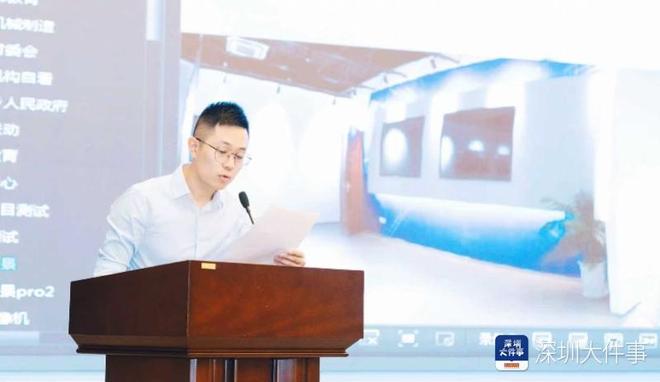
Group 1 - The 2025 Zhenjiang Science and Technology Finance Matching Conference was successfully held, focusing on "Innovation Leading, Financial Empowerment" [1] - The event aimed to create a platform for technology talent, projects, and enterprises to connect with financial institutions, facilitating a green channel for technology SMEs to access capital [1][2] - The local government has implemented the "876" innovation leading project, establishing a risk compensation fund of 240 million yuan to support technology financial products [2] Group 2 - A total of 47 technology financial products were launched during the event, with significant participation from various banks and insurance companies [3] - The cooperation between technology enterprises and financial institutions is expected to enhance R&D, capacity expansion, and talent acquisition, potentially doubling revenues in emerging fields [4] - Insurance institutions are playing a crucial role in alleviating financing difficulties for technology enterprises by providing credit enhancement through a government-bank-insurance risk-sharing mechanism [5] Group 3 - The city aims to optimize technology financial products and develop a comprehensive investment and financing service system covering the entire lifecycle of technology enterprises [5][6] - The focus is on creating a financial ecosystem that encourages early, small, and long-term investments in technology innovation [5][6]



金鹰基金:规划指引中期向好 风格均衡仍存机会
Xin Lang Ji Jin· 2025-10-31 09:05
Core Viewpoint - The equity market experienced a phase of adjustment in October due to external economic and trade environment impacts, but is expected to rebound supported by significant planning and positive discussions [1] Group 1: Market Performance - In October, the equity market saw a temporary reduction in trading volume, but sectors such as electric equipment, new energy, and non-ferrous metals began to perform well, taking over from the technology sector [1] - The technology sector is anticipated to rise again following the release of the "14th Five-Year Plan" and the third-quarter earnings reports [1] - The banking sector, representing dividend stocks, gained an advantage during the market's risk-off phase due to overseas tariff impacts [1] Group 2: Future Outlook - By November 2025, the market is expected to undergo wide fluctuations to alleviate funding pressure, with a rising possibility of a balanced style [2] - The "14th Five-Year Plan" is expected to clarify domestic policy directions, focusing on industrial upgrades and technological innovation as key economic drivers for the next five years [2] - Although domestic demand remains weak, incremental policy deployments may be anticipated for the following year [2] Group 3: Key Factors to Monitor - The release of supporting details for the "14th Five-Year Plan" is expected in mid to late November, with a focus on information from the Ministry of Science and Technology, National Development and Reform Commission, and Ministry of Industry and Information Technology [2] - The potential continuation of the U.S. government shutdown could disrupt federal data releases, impacting the Federal Reserve's decision-making process [3] - Upcoming technology conferences may reveal new product details and industry opportunities [3] Group 4: Sector Focus - In the technology manufacturing sector, companies with overseas orders, core technologies, stable profits, and industry barriers are likely to outperform as the market enters a selective phase [3] - The innovative pharmaceutical and non-ferrous metal sectors are expected to benefit from continued low interest rates and economic recovery, with a focus on the ongoing development of overseas business deals [3] - High-dividend consumer stocks may face short-term performance pressure, but their current valuations reflect mid-term pessimism, suggesting potential for excess returns as the "14th Five-Year Plan" outlines economic growth and demand expansion [4]
增量扩面!债券市场“科技板”加速支持科技创新
Xin Hua Wang· 2025-10-25 23:10
Core Viewpoint - The launch of the "Technology Board" in the bond market has accelerated the support for technological innovation financing, with significant growth in the issuance of technology innovation bonds since its establishment on May 7, 2023 [1][2]. Group 1: Market Performance - From May 7 to the end of September, a total of 530 institutions issued technology innovation bonds amounting to 1,167.267 billion yuan, with 88 financial institutions contributing 319.67 billion yuan and 442 non-financial enterprises issuing 847.597 billion yuan [1]. - Approximately 280 entities in the interbank bond market have issued technology innovation bonds totaling 670 billion yuan, with nearly half of the technology enterprises having bond maturities of 3 years or more, and equity investment institutions averaging 5.8 years [1][2]. Group 2: Characteristics of Technology Innovation Bonds - The average coupon rate for technology innovation bonds issued by technology enterprises and equity investment institutions is around 2%, showcasing a low financing cost [1]. - The issuance of technology innovation bonds is characterized by a diverse structure of technology enterprises, flexible issuance methods, and a broad distribution of issuers [1][2]. Group 3: Mechanism Innovations - The rapid growth in the issuance of technology innovation bonds is attributed to innovations in disclosure requirements, rating systems, risk-sharing mechanisms, and issuance processes [2]. - The People's Bank of China and the China Securities Regulatory Commission have created a risk-sharing tool for technology innovation bonds, providing low-cost re-lending funds to purchase these bonds and collaborating with local governments and market-based credit enhancement institutions [2]. Group 4: Future Development - While positive results have been achieved in supporting technology enterprises through technology innovation bonds, further development requires continuous collaboration among various stakeholders, including local governments, enterprises, investors, and intermediaries [4]. - Sustainable expansion of technology innovation bonds will depend on the ongoing role of policy tools, diversified product design, and enhanced transaction mechanisms to address financing challenges for enterprises [4].