
半导体制造

Search documents
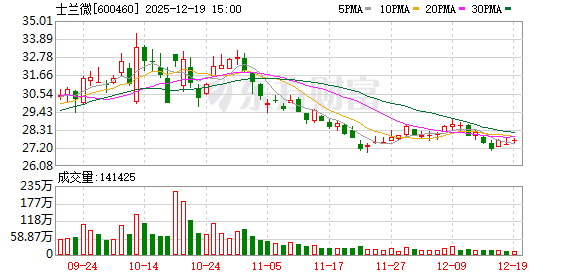
士兰微:第九届董事会第七次会议决议公告
Zheng Quan Ri Bao· 2025-12-19 12:22
(文章来源:证券日报) 证券日报网讯 12月19日晚间,士兰微发布公告称,公司第九届董事会第七次会议审议通过《关于向国 开新型政策性金融工具有限公司申请新型政策性金融工具借款的议案》。 ...


赛微电子:公司将继续以MEMS专业制造厂商的角色参与相关领域的产业发展
Zheng Quan Ri Bao Zhi Sheng· 2025-12-19 11:08
Core Viewpoint - The company, Saiwei Electronics, is actively developing MEMS-OCS micro-mirror arrays to enhance optical link performance and stability while reducing system costs and power consumption, with applications in data center networks and supercomputing clusters [1] Group 1: Technology Development - The MEMS-OCS micro-mirror array technology allows precise adjustment of the refraction direction of optical links, enabling signal switching and bidirectional transmission [1] - The company has nearly 10 years of experience in the MEMS-OCS field, from initial contact to staged development, risk trial production, and mass production [1] Group 2: Industry Position - The company aims to continue its role as a specialized MEMS manufacturer, participating in the development of related industries [1] - Ongoing research and development efforts will focus on silicon photonic communication chip manufacturing technology and advancing related technical challenges and foundational application research [1]

东芯股份(688110.SH):公司SLC NAND Flash、NOR Flash以及MCP等产品陆续有更多料号通过AEC-Q100的验证
Ge Long Hui· 2025-12-19 10:56
格隆汇12月19日丨东芯股份(688110.SH)在互动平台表示,公司SLC NAND Flash、NOR Flash以及MCP 等产品陆续有更多料号通过AEC-Q100的验证。目前公司的产品可应用在汽车仪表盘、汽车ADAS系 统、激光雷达、娱乐影音系统以及车载网络通讯等领域。 ...

狂涨74000%,最疯妖股被查!
华尔街见闻· 2025-12-19 10:56
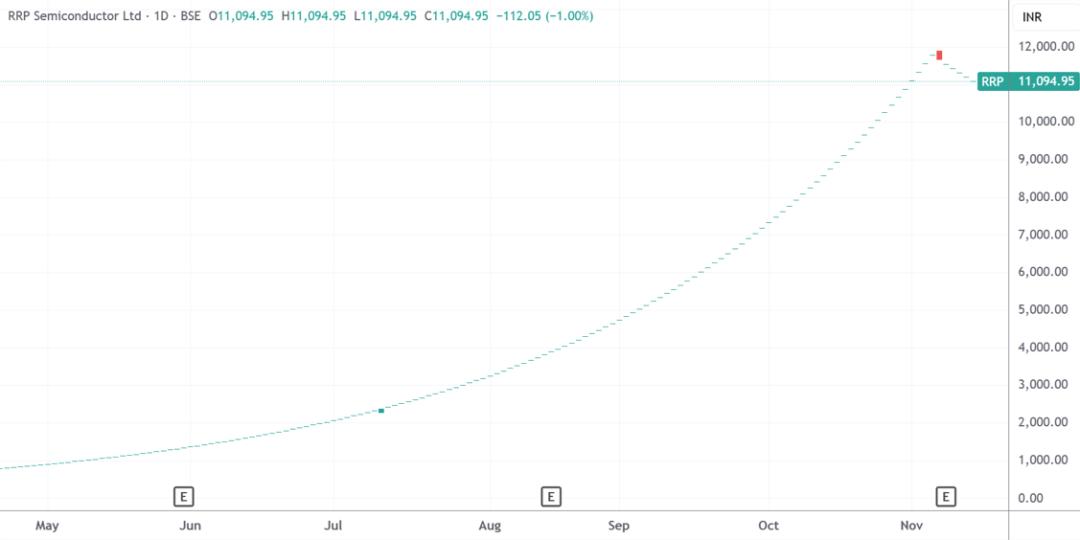
RRP的狂飙突进凸显了监管机构在保护散户投资者免受投机狂潮影响时面临的巨大挑战。 全球表现最让人瞠目结舌的股票并非来自硅谷,而是出现在印度市场。 印度一家公司 因更名 RRP Semiconductor Ltd.(RRP 半导体)引发狂热炒作,虽然 自11月7日触及高点以来,该股下跌6%,但其 股价在 截至12月15 日的约20个月内飙升了 73866.33%。 2024年4月2日,其股价仅报15印度卢比,目前 RRP半导体股价报11094.95印度卢比。 值得注意的是, 这家公司的营收为负,更与半导体行业的实际联系微乎其微。 这一令人咋舌的涨幅已引起监管机构的高度警觉, 目前交易所已限制该股每周只能交易一次。 据知情人士向媒体透露, 印度证券交易委员会(SEBI)已开始 调查RRP股价飙升背后是否存在不当行为。 特别是在印度市场,由于缺乏上市的芯片制造企业,散户投资者极度渴望获得任何能够接触全球AI热潮的替代标的,这种情绪助推了市场的非理性繁荣。 这个全球表现最佳的股票正在演变成一个关于追逐人工智能泡沫风险的警示故事。 尽管该公司的走势不太可能影响Nvidia Corp.等全球巨头的广泛反弹,但它揭示了在市 ...

“光刻机,新机会”
半导体芯闻· 2025-12-19 10:25
Core Viewpoint - The article discusses the potential of Free Electron Lasers (FELs) to overcome current limitations in extreme ultraviolet (EUV) lithography, enabling advancements in semiconductor manufacturing at the atomic scale [2][36]. Group 1: Current Challenges in Semiconductor Manufacturing - The semiconductor industry faces significant challenges as transistor sizes approach atomic scales, necessitating breakthroughs in lithography technology [3]. - EUV lithography operates at a wavelength of 13.5 nm, which presents difficulties due to high absorption rates of materials, leading to expensive equipment and complex manufacturing processes [3][6]. - The current EUV light source, Laser-Produced Plasma (LPP), has low efficiency, requiring approximately 1 MW of power to produce 500 W of usable EUV output, resulting in a mere 0.05% efficiency [7][38]. Group 2: Advantages of Free Electron Lasers (FELs) - FELs can produce significantly higher EUV power with lower energy consumption, offering a fourfold power output with half the energy input compared to traditional methods [2][11]. - The brightness of FELs, a critical performance metric, is vastly superior to that of traditional sources, allowing for better lithography precision [12][16]. - FELs can achieve multi-kilowatt power levels, making them the only verified technology capable of scaling to meet the increasing demands of semiconductor manufacturing [38][39]. Group 3: Technical Mechanisms of FELs - FELs utilize high-energy electron beams that travel close to the speed of light, interacting with electromagnetic waves to produce tunable and exponentially amplified light beams [20][22]. - The unique properties of FELs, such as coherent radiation and high spectral purity, enable them to maintain high image contrast and reduce random defects in lithography processes [37][39]. - The energy recovery linear accelerator (ERL) technology enhances the overall energy efficiency of FEL systems by recycling energy from the electron beams [40][41]. Group 4: Economic and Industrial Implications - Transitioning to FEL technology represents a paradigm shift in lithography, comparable to the move from mercury lamps to excimer lasers [42]. - The operational costs of semiconductor manufacturing can be significantly reduced with FELs, as they eliminate the need for frequent replacement of optical components and lower energy consumption [38][39].

安森美联合格罗方德 开发下一代氮化镓功率器件
Zheng Quan Shi Bao Wang· 2025-12-19 07:36
Core Viewpoint - On December 19, Ansem and GlobalFoundries announced a new collaboration agreement to jointly develop and manufacture the next generation of gallium nitride power devices, starting with 650V devices [1] Group 1: Collaboration Details - The collaboration will leverage GlobalFoundries' 200mm enhanced silicon-based gallium nitride process along with Ansem's industry-leading silicon-based drivers, controllers, and advanced thermal packaging technology [1] - The partnership aims to provide optimized system solutions that are smaller and more energy-efficient for various applications [1] Group 2: Target Applications - The optimized solutions are intended for use in AI data centers, automotive, industrial, and aerospace applications [1]

印度半导体妖股两年暴涨55000%
3 6 Ke· 2025-12-19 02:11
就在全球主流市场近几天为"AI泡沫"忧心忡忡之际,一只默默暴涨两年的印度人工智能妖股,刷新了全球股民对于炒作的认知。 (RRP Semiconductor日线图,来源:TradingView) 自那时开始,RRP半导体已经从高点回撤了近7%。有市场传闻称,印度证券交易委员会已开始调查极端异动背后是否存在不当行为。 但在横跨两年的爆炒背后,RRP半导体的基本面几乎只有概念——在最新年报中公司仅报告存在两名全职员工,而在最新季报中公司营收甚至是负的6820 万卢比(约合人民币负532万元),净亏损7150万卢比。 | | | | | | | (Rs. In Lakhs) | | --- | --- | --- | --- | --- | --- | --- | | | | | | Standalone | | | | | | Quarter ended | | Six months ended | | Year ended | | Particulars | 30.09.2025 | 30 06 2025 | 30 09-2024 | 30 09.2025 | 30.09.2024 | 31 03 2025 | ...
GaN,生变
半导体行业观察· 2025-12-19 01:40
Core Viewpoint - The GaN market is experiencing a dramatic shift, with major players like NXP and TSMC withdrawing from GaN-related businesses, while other companies continue to invest heavily in GaN technology, indicating a complex interplay of market demand, business logic, and technological evolution [2][4][15]. Group 1: Major Players' Withdrawal - NXP has decided to close its ECHO wafer fab in Arizona, marking its exit from the GaN-based 5G power amplifier market due to disappointing market demand and low investment returns from 5G base station deployments [6][8]. - TSMC announced plans to gradually exit the GaN foundry business by 2027, citing low profitability and intense competition from lower-cost manufacturers [9][10]. - Wolfspeed sold its GaN RF business for $125 million, focusing instead on its SiC business due to declining market share and demand in the SiC sector [12][13]. Group 2: Market Dynamics and Opportunities - Despite the withdrawal of major players, companies like Infineon, Texas Instruments, and domestic firms such as Innoscience and Sanan continue to expand their investments in GaN technology, indicating a bifurcated market landscape [2][15][20]. - The GaN market is shifting from a focus on technological advancement to a competition based on market potential, engineering capabilities, and profitable business models [15][26]. - The power GaN market is projected to grow significantly, with a compound annual growth rate of 42%, reaching approximately $3.0 billion by 2030, driven by demand in sectors like electric vehicles and data centers [26][28]. Group 3: IDM vs. Foundry Models - The competition between IDM (Integrated Device Manufacturer) and foundry models is intensifying, with IDM firms like Infineon leveraging their vertical integration to optimize product performance and reliability [31][32]. - Foundry models, while allowing for rapid market entry and lower initial capital investment, face challenges in customization and supply chain stability, especially with the exit of key players like TSMC [31][32]. - The future of GaN technology may favor the IDM model due to its advantages in cost control and supply chain stability, although foundry models will still play a role in niche markets [33][34]. Group 4: Future Pathways for GaN - The industry is undergoing a profound restructuring, moving away from blind expansion towards a focus on specific market applications and sustainable business models [36][38]. - Cost efficiency is becoming a critical competitive factor, with Chinese manufacturers adopting strategies to lower production costs through large-scale production [37]. - The GaN industry is expected to see increased consolidation, with smaller firms facing challenges in a market that favors those with scale and technological advantages [39].





汽车芯片紧缺,全球汽车龙头宣布减产,产业还迎国产化关键期
Xuan Gu Bao· 2025-12-18 23:31
据环球网援引共同社报道,本田公司17日透露,受半导体短缺影响,计划从12月下旬至明年1月上旬暂 停或减产日本和中国工厂的整车生产。其中,与广汽集团的合资工厂12月29日起停产5天,日本埼玉工 厂、铃鹿工厂等明年1月将停产2天且后续3天产量低于计划。北美工厂虽已恢复运转,但生产体制仍处 于岌岌可危状态,本田表示后续生产将根据芯片供应情况动态调整。 资料显示,据了解,自今年9月底荷兰政府对安世半导体实施运营冻结后,其荷兰总部又对安世中国采 取断供晶圆等单边操作,引发全球车规级芯片结构性短缺,多个国家的车企因此出现减产、停产情况。 在汽车用分立半导体领域,安世半导体的全球市场份额约达40%,该类产品是车辆电动助力转向系统、 动力控制单元等关键部件的核心元件,几乎适配全球多数车型,这也是其供应中断能引发全球多家车企 减产的核心原因。 汽车芯片短缺持续扰动全球车企生产,凸显供应链自主可控的战略重要性,也为国产芯片企业带来替代 机遇。 华泰证券表示,功率器件行业处于周期磨底阶段,汽车电子需求的稳健增长成为行业复苏的核心驱动 力,AI技术赋能与国产化替代将共同加速行业拐点向上,具备车规级认证和规模化生产能力的企业有 望率先 ...
本田确认“将暂停部分中国工厂生产”,最新回应:因安世半导体短缺
Mei Ri Jing Ji Xin Wen· 2025-12-18 09:41
Group 1 - Honda announced production halts and reductions at its factories in Japan and China from late December to early January due to semiconductor shortages, while North American plants have resumed normal operations but remain in a precarious state [1] - The joint venture factory with GAC Group in China will halt production for five days starting December 29, and Japanese factories will stop production on January 5 and 6, with reduced output from January 7 to 9 [1] - Honda's production adjustments will depend on the supply situation of semiconductors [1] Group 2 - In the North American market, Honda's sales exceeded 1.6 million units in the 2023 fiscal year, marking a 36.2% increase year-on-year, and this region accounted for 40% of Honda's global sales in the 2024 fiscal year [2] - Honda is taking measures to minimize the impact of chip shortages, including reassessing supply chain conditions and potentially seeking alternative components, although technical validation may delay replacements [2] - The semiconductor supply issues have affected the global automotive supply chain, with warnings from European and U.S. automotive organizations about potential production disruptions [2] Group 3 - The Dutch government has frozen operations of Nexperia, a semiconductor company, citing national security concerns, and has suspended the former CEO's duties [3] - Nexperia's Chinese operations continue normally despite the Dutch government's unilateral decisions, and the company is seeking constructive dialogue to resolve governance issues [5][6] - Honda's financial outlook has been impacted by semiconductor shortages, with a projected operating profit reduction of 150 billion yen (approximately 6.8 billion RMB) due to lower-than-expected production [6]

