娱乐

Search documents
六部门联合发布指导意见明确方向重点—— 加大金融支持提振消费力度
Jing Ji Ri Bao· 2025-06-24 22:07
Core Viewpoint - The People's Bank of China and five other departments have issued guidelines to enhance financial support for consumption growth, aiming to build a multi-level financial service system to stimulate high-quality consumption and unleash consumer potential [1][2]. Group 1: Financial Support for Consumption - The guidelines emphasize the importance of boosting consumption as a key driver for domestic demand and economic stability, aligning with the central government's focus on expanding domestic demand [1][2]. - The document outlines 19 key measures across six areas, including enhancing consumer capacity, expanding financial supply, and tapping into consumer potential [1][2]. Group 2: Focus Areas for Consumption - The guidelines identify key areas for financial support, including goods consumption, service consumption, and new types of consumption, consistent with previous action plans [2][3]. - Goods consumption is currently robust, with durable goods spending reaching levels comparable to the U.S., while service consumption remains underdeveloped, accounting for only 18% of GDP compared to over 40% in developed countries [2][3]. Group 3: Service Consumption Development - Increased financing support will be directed towards sectors such as wholesale and retail, catering, and elder care to unlock basic service consumption potential [3]. - The People's Bank of China has allocated 500 billion yuan for service consumption and elderly care loans, encouraging financial institutions to enhance support for sectors like hospitality, entertainment, and education [3][4]. Group 4: New Consumption Models - The guidelines promote financial support for digital, green, and health-related consumption, encouraging innovation in financial products tailored to new consumption trends [3][4]. - Financial institutions are urged to collaborate with merchants to develop suitable financial products and services that cater to the characteristics of new consumption [3][4]. Group 5: Market Opportunities - The evolving market environment presents structural opportunities for consumer finance, with potential market expansion and optimization of market dynamics [4]. - Financial institutions are encouraged to adapt to market changes and leverage their strengths to pursue differentiated development strategies [4].
全面构建金融服务体系支持提振和扩大消费
Shang Hai Zheng Quan Bao· 2025-06-24 18:12
Group 1 - The core viewpoint of the articles emphasizes the importance of enhancing consumer capacity and supporting service consumption through financial measures [1][2][3] - The People's Bank of China has established a 500 billion yuan service consumption and elderly re-loan to encourage financial institutions to increase support for service consumption sectors [1] - The articles highlight the need for financial innovation to support new consumption models such as digital, green, and health consumption [1][2] Group 2 - The articles outline three important directions for financial support to boost and expand consumption: enhancing consumer capacity, improving supply efficiency, and strengthening basic financial services [2][3] - The focus on increasing household disposable income is seen as crucial for stimulating consumer potential and confidence [3] - The articles discuss the necessity of improving consumption infrastructure, including logistics and supply chain efficiency, to facilitate market expansion and quality [3]
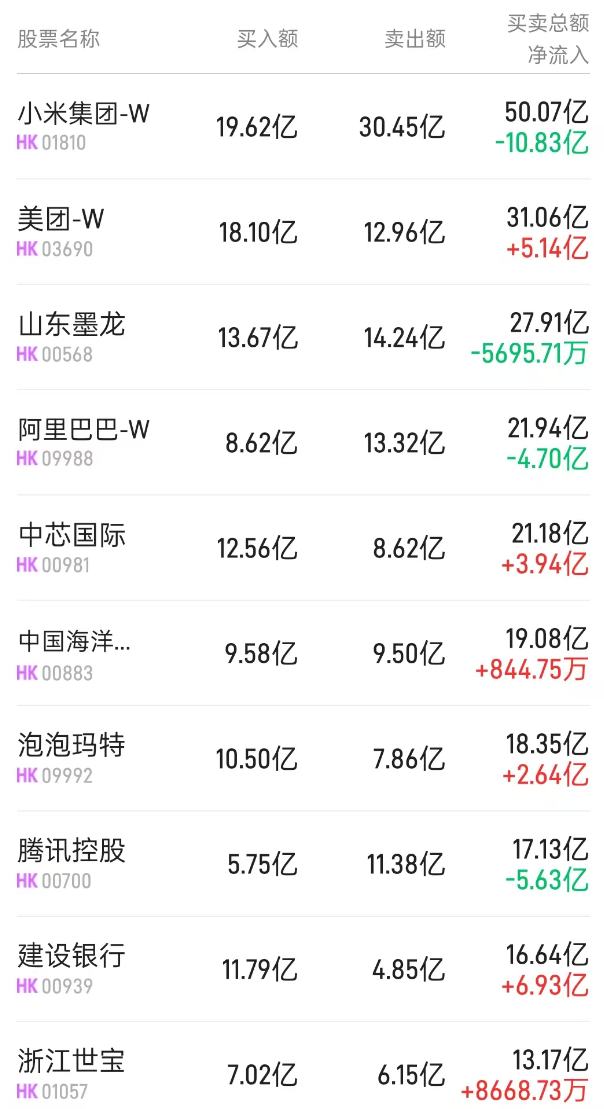
北水动向|北水成交净买入25.89亿 美团(03690)继续受追捧 小米(01810)遭北水抛售超15亿港元
智通财经网· 2025-06-24 09:55
Group 1: Market Overview - Northbound capital recorded a net purchase of HKD 25.89 billion in the Hong Kong stock market, with HK Stock Connect (Shanghai) net buying HKD 8.12 billion and HK Stock Connect (Shenzhen) net buying HKD 17.77 billion [1] - The most net bought stocks included Meituan-W (03690), SMIC (00981), and China Construction Bank (00939) [1] Group 2: Net Buying and Selling Details - Meituan-W (03690) received a net inflow of HKD 7.85 billion, with a focus on consolidating operations in key regions and expanding its flash purchase and supermarket services [6] - SMIC (00981) saw a net inflow of HKD 7.23 billion amid reports of potential changes in U.S. technology export policies affecting major chip manufacturers [6] - China Construction Bank (00939) had a net inflow of HKD 6.93 billion, supported by favorable dividend yields compared to A-shares [6] - Xinda Biopharmaceutical (01801) received a net inflow of HKD 5.99 billion due to its ADC product being included in breakthrough therapy designations [7] - Pop Mart (09992) had a net inflow of HKD 5.26 billion, attributed to improved supply chain capabilities and sales management [7] Group 3: Net Selling Highlights - Xiaomi Group-W (01810) faced a net outflow of HKD 15.51 billion, with analysts noting potential risks from macroeconomic conditions and slower EV demand growth [9] - Alibaba-W (09988) experienced a net outflow of HKD 7.51 billion, following its merger of Ele.me and Fliggy into its e-commerce division, which was seen as a move to enhance operational efficiency [8] - Tencent (00700) had a net outflow of HKD 9.44 billion, reflecting broader market trends [9] - Shandong Molong (00568) and CNOOC (00883) were sold off due to declining oil prices amid geopolitical developments [8]





霍汶希:专业挖掘青少年艺术潜力至关重要
Zhong Guo Xin Wen Wang· 2025-06-24 09:26
Group 1 - The core idea of the news is the collaboration between Emperor Entertainment and Lehua Entertainment to launch a youth art training program aimed at nurturing young talents in the arts [1][2][3] - The open day event showcased the newly developed art curriculum, which integrates professional teaching resources and industry expertise from both entertainment companies [1] - The program includes diverse training in vocal, dance, performance, and stage presence, with renowned artists and teachers involved in the instruction [1] Group 2 - The CEOs of both companies shared their parenting experiences and emphasized the importance of early interest cultivation in children's growth [2] - The training program is designed to balance artistic development with academic responsibilities, ensuring that students do not face additional burdens while also engaging in physical activities [2] - The collaboration aims to create a systematic and high-standard youth art education system, providing a platform for talented children to connect with the industry and gain international exposure [3]
央行等六部门:围绕文化旅游、体育、娱乐、教育培训、居住服务等领域创新融资模式
news flash· 2025-06-24 09:15
Core Viewpoint - The People's Bank of China and six other departments have issued guidelines to support the expansion of consumption, focusing on innovative financing models in various service sectors [1] Group 1: Financial Support for Service Consumption - Emphasis on combining consumption promotion with improving people's livelihoods, increasing credit support for key areas of service consumption [1] - Targeted credit investments in wholesale retail, catering, accommodation, domestic services, and elderly care, particularly for small and micro enterprises [1] - Development of personalized and differentiated financial products and services tailored to specific service consumption scenarios [1] Group 2: Innovative Financing Models - Encouragement to innovate financing models in cultural tourism, sports, entertainment, education training, and residential services [1] - Proposals to extend loan terms in line with industry development cycles while ensuring compliance and risk control [1] - Promotion of accounts receivable and intellectual property pledge financing to stimulate the vitality of improved service consumption [1]
上班前先发个疯,都市白领现在流行「早八蹦迪」
后浪研究所· 2025-06-23 08:31
Core Viewpoint - The emergence of "Coffee Raves" represents a cultural shift in nightlife, where the focus is on caffeine and music rather than alcohol, appealing to the health-conscious Z generation [1][2][12]. Group 1: Definition and Characteristics of Coffee Raves - Coffee Raves are defined as events held in coffee shops or similar venues, emphasizing non-alcoholic beverages and electronic music, creating a "sober socializing" experience [9][11][28]. - The four essential conditions for Coffee Raves include: venue selection (coffee shops, bakeries, parks), timing (during regular coffee shop hours), beverage options (various non-alcoholic drinks), and music style (primarily electronic genres like House and Chillout) [9][10][11]. Group 2: Cultural Context and Evolution - The trend began in cities known for their nightlife, such as Amsterdam, London, and New York, and has since spread globally, including cities like Dubai and Mumbai [12][13]. - The concept of "sober socializing" is gaining traction, with 63% of Gen Z preferring social activities without alcohol, highlighting a shift in social norms [28]. Group 3: Economic Implications - Coffee Raves are more cost-effective compared to traditional nightlife, with entry fees typically equivalent to the price of a coffee (20-50 yuan), contrasting sharply with the high costs associated with clubs [31]. - The rise of Coffee Raves is linked to the decline of traditional nightclubs, with over 7,000 bars closing in the UK over the past decade, indicating a significant shift in consumer preferences [36][38]. Group 4: Social Dynamics and Community Engagement - Coffee Raves foster a more genuine form of social interaction, moving away from the reliance on alcohol as a social lubricant, thus promoting healthier relationships [27][28]. - The trend appeals not only to younger audiences but also to those over 30, who appreciate the opportunity to socialize without the pressures of late-night partying [25]. Group 5: Future Outlook - The ongoing discussions and interest in Coffee Raves suggest a potential transformation in nightlife culture, where traditional clubs may adapt to incorporate elements of this new trend [45]. - The phenomenon reflects a broader desire among the Z generation for experiences that allow for both enjoyment and mindfulness, indicating a shift towards more conscious forms of entertainment [45].

演唱会票根秒变“万能消费卡” 龙岗深度释放票根经济发展势能
Shen Zhen Shang Bao· 2025-06-22 16:27
Core Insights - The article highlights the booming event economy in Longgang District, Shenzhen, driven by a series of high-profile concerts and sports events, which have significantly increased local tourism and consumption [1][4]. Group 1: Event and Economic Impact - Longgang District has hosted 93 large-scale events in the previous year and 60 events by June 12 this year, with an additional 32 expected in the second half of the year [1]. - Major events, such as concerts by Jay Chou and Mayday, have led to full hotel bookings and attracted fans from across provinces, showcasing the area's appeal [1]. - The "ticket economy" concept is being leveraged to stimulate secondary consumption in dining, accommodation, and shopping, transforming a single ticket purchase into a comprehensive experience [2][4]. Group 2: Consumer Engagement Strategies - Longgang District has introduced a "ticket root economy" that connects various consumption scenarios, allowing concert tickets to unlock discounts on hotels and attractions [2]. - The district's cultural and tourism bureau has implemented three main strategies to enhance consumer experience: discounted hotel packages, free KTV sessions for ticket holders, and exclusive discounts at local businesses [3]. - The collaboration with 372 merchants across eight major shopping districts has resulted in various promotional offers, including discounts and special deals for ticket holders [3]. Group 3: Data and Performance Metrics - Data from the Longgang District Business Bureau indicates significant increases in foot traffic and sales during major events, with a 20.35% increase in foot traffic and a 12.1% increase in sales during a concert by Sun Yanzi [4]. - The concert by Ren Xianqi saw even higher increases, with foot traffic up by 52.6% and sales by 31.98% [4]. - The development of the "ticket root economy" is centered around two key elements: the ticket as a flow entry point and discounts as a consumption driver, which together activate the entire consumption chain [4][5]. Group 4: Future Developments - Longgang District aims to enhance its event-driven economy by exploring deeper collaborations with event organizers and ticket platforms to provide immediate discount information upon ticket purchase [5]. - The district is also looking to create an "all-in-one" electronic card that integrates various discounts across different consumption scenarios, inspired by successful models from other cities [5].
沉浸式文旅体验邀民众“入戏”
Zhong Guo Xin Wen Wang· 2025-06-21 20:26
Core Insights - The article highlights the shift in China's cultural tourism projects from functional to experiential, inviting tourists to engage deeply with local culture and history through immersive dining and entertainment experiences [1][2] Group 1: Immersive Cultural Tourism - Immersive cultural tourism projects are transforming traditional tourism by allowing visitors to become part of the experience, such as dining in themed settings that reflect local history and culture [1][2] - Examples include the "Imperial Banquet" in Hangzhou and the "Martial Emperor Feast" in Luoyang, which integrate local cultural elements and performances to enhance visitor engagement [1] - The trend is expanding to smaller cities and towns, with projects like "Snowy Ningguta" in Heilongjiang and "Follow the Leader to the County" in Shandong gaining popularity [1] Group 2: Economic Impact and Development - The transformation of old grain warehouses into immersive theaters demonstrates the potential for cultural tourism to drive local economic growth by attracting visitors and generating revenue across various sectors, including dining and accommodation [2] - Local governments are actively promoting the development of immersive tourism projects as part of rural revitalization efforts, creating a complete industry chain that benefits the community [2] - The integration of local culture, such as the incorporation of silk culture and historical narratives in immersive experiences, helps to sustain and enhance the local economy [2] Group 3: Technological Integration - Immersive tourism leverages advanced technologies like holography, naked-eye 3D, and sound and light effects to create engaging experiences that resonate with visitors [2] - The essence of immersive tourism is to transform tourists from passive observers into active participants, enhancing their connection to the cultural narratives being presented [2]
京口区健康路街道:特色文化商业街区构建多元消费场景
Zhen Jiang Ri Bao· 2025-06-20 23:41
Core Viewpoint - The development of the Su Ning business district in the Jingkou District is enhancing community engagement and satisfaction through the integration of historical culture and modern commercial activities [1][2][4] Group 1: Cultural and Community Development - The Su Ning business district is positioned as an important urban window to improve public happiness and satisfaction with life [1] - The area features a blend of historical and modern elements, creating a vibrant consumer landscape that stimulates commercial vitality [1][2] - The transformation of streets into interactive art corridors enhances community identity and fosters a sense of belonging among residents [2][4] Group 2: Economic and Commercial Growth - The introduction of trendy dining establishments and entertainment options aims to attract younger consumers and revitalize the local economy [3] - The development of a night economy is expected to increase the liveliness of the old town and improve residents' quality of life [2][3] Group 3: Civic Engagement and Social Responsibility - Initiatives like shared discussion platforms and volunteer services are being implemented to promote community governance and social responsibility [4] - The establishment of "bench classrooms" for theoretical discussions and community service activities aims to integrate civility and charity into daily life [4]
环万绿湖“智囊团”成立,世界级“湖泊+”要来了!
21世纪经济报道· 2025-06-20 08:06
Core Viewpoint - The establishment of the "Lake+" Green Development Zone around Wanlv Lake aims to integrate ecological protection with economic development, creating a new model for green development in Guangdong Province [1][4]. Group 1: Committee Formation and Objectives - The professional committee consists of 19 expert members and 8 enterprise members, focusing on implementing a green development strategy based on world-class standards [1]. - The planning aims to address regional development imbalances in Guangdong, leveraging the Dongjiang River as a connector for various strategic areas [5][6]. Group 2: Implementation Scope and Planning - The initial implementation area covers 7,909 square kilometers, including parts of Heyuan, Huizhou, and Shaoguan, with a core area of 4,528 square kilometers [4][3]. - The planning includes a comprehensive approach that connects the green development zone with other strategic areas, promoting a balanced regional development model [5]. Group 3: Economic and Ecological Integration - The Wanlv Lake area, as the largest artificial lake in South China, serves as a crucial drinking water source, with a total area of 1,600 square kilometers and a water storage capacity of 139 billion cubic meters [8]. - The region has attracted significant water-related industries, with a total output value of 9.29 billion yuan from 40 enterprises [9]. Group 4: Future Development Plans - The proposed development includes a modern water industry system, focusing on ecological agriculture, modern aquaculture, and water-related technologies [10]. - Major projects such as a water expo park and a water technology industrial park are planned to enhance the region's water economy [9][10].