港口

Search documents
上港集团1月15日大宗交易成交4740.00万元
Zheng Quan Shi Bao Wang· 2026-01-15 14:43
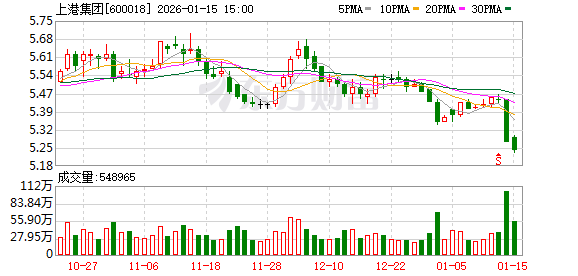
Group 1 - The core transaction of Shanghai Port Group on January 15 involved a block trade of 10 million shares, amounting to 47.4 million yuan, with a transaction price of 4.74 yuan, representing a discount of 9.54% compared to the closing price of the day [2] - The closing price of Shanghai Port Group on the same day was 5.24 yuan, reflecting a decrease of 0.57%, with a turnover rate of 0.24% and a total trading volume of 289 million yuan [2] - Over the past five days, the stock has seen a cumulative decline of 3.15%, with a total net outflow of funds amounting to 247 million yuan [2] Group 2 - The latest margin financing balance for Shanghai Port Group is 707 million yuan, which has increased by 11.51 million yuan over the past five days, representing a growth rate of 1.65% [2]


2025回顾·经济大事记 | 量效齐增势头劲 山东港口滨州港四大货种吞吐量突破200万吨
Xin Lang Cai Jing· 2026-01-15 14:20
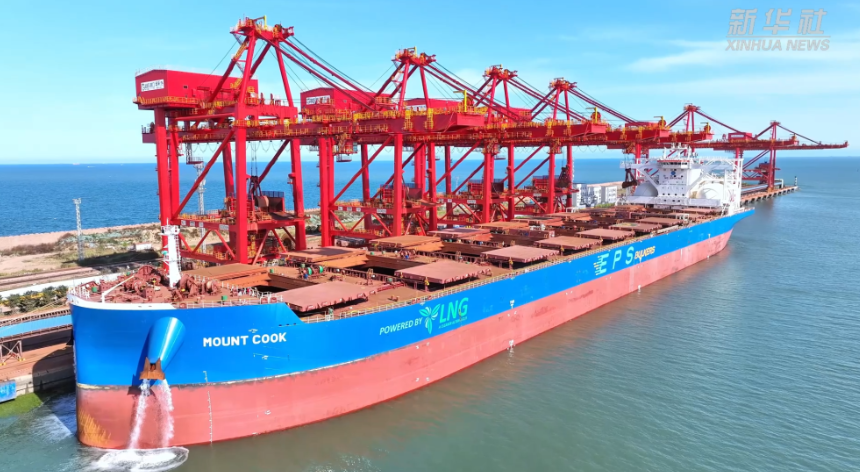
滨州日报/滨州网北海讯 2026年已悄然走过半月,回望山东港口滨州港,2025年生产经营成绩单亮点依 然夺目,全年货物吞吐量突破1200万吨,创下港区历史纪录。尤为值得关注的是,港口货源结构实现跨 越式丰富与多元——铝矾土、铁精矿、油品、LPG四大重点货种吞吐量均突破200万吨,同比增幅均保 持在25%以上,量效齐增的发展态势尽显港口强劲活力。 LPG业务则成为年度增长亮点,为港口营收稳定增长注入强劲动力。山东港口滨州港在深化与重点客户 战略合作的基础上,精准对接贸易客户的增量需求,创新推行"一个高潮一离一靠""四天三船"的高效作 业模式,仅用4个月时间,LPG吞吐量便突破百万吨,业务增长潜力得到充分释放,为港口货源结构稳 定筑牢坚实保障。自LPG泊位投用运营以来,已累计成功接卸VLGC船舶百艘次,在外贸LPG接卸领域 的专业运营能力获得市场持续认可,成为拉动港口效益增长的全新引擎。 针对腹地重点客户的原油运输需求,滨州港量身打造安全、优质、高效的物流新通道,通过优化航线规 划、统筹转水船舶运力、提升靠离泊效率和装卸作业质量等举措,大幅增强物流通道的稳定性与经济 性。项目运营后成效显著,连续4个月原油转水运量 ...
孙岩任日照港副总经理
Xin Lang Cai Jing· 2026-01-15 14:14
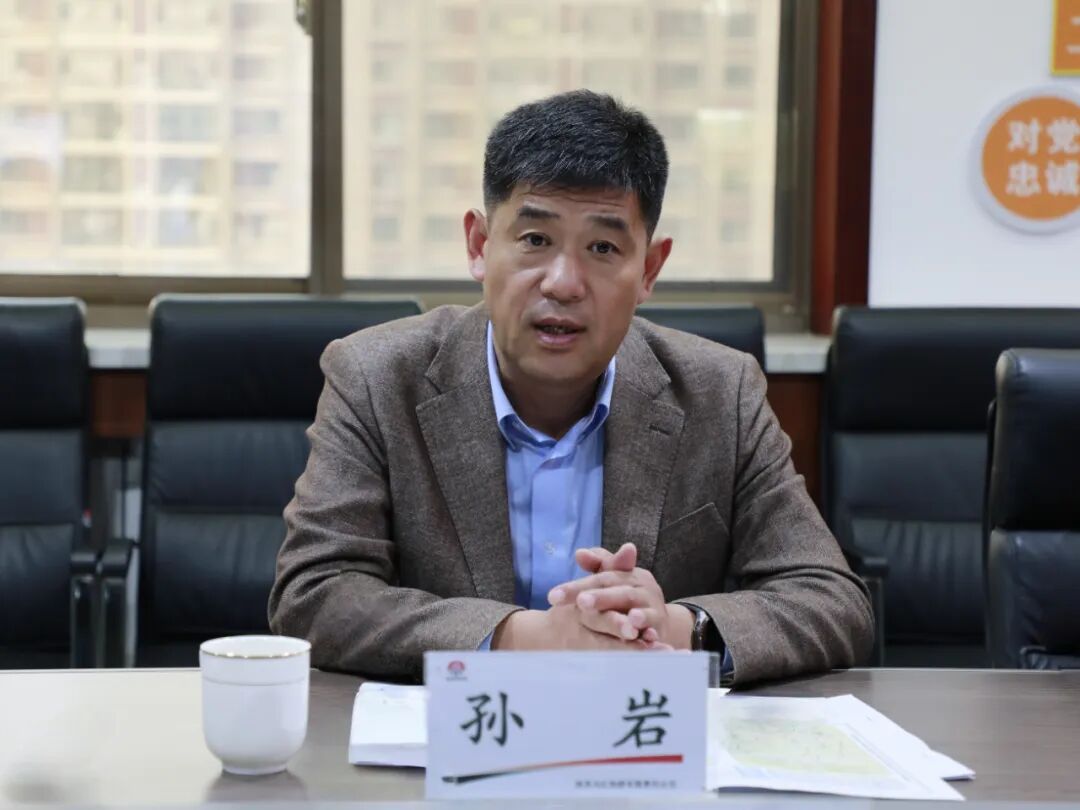
Core Viewpoint - Rizhao Port Co., Ltd. has appointed Sun Yan as the new Vice General Manager, with the appointment approved during the 21st meeting of the 8th Board of Directors held on January 14, 2026 [1][5]. Group 1: Appointment Details - The appointment of Sun Yan as Vice General Manager is effective until the current Board of Directors' term ends [1][5]. - The Nomination Committee of the Board has reviewed Sun Yan's qualifications, confirming compliance with relevant laws and regulations for senior management positions [1][5]. Group 2: Background of Sun Yan - Sun Yan, born in December 1971, is a male engineer and a member of the Communist Party of China [3][7]. - He has held various positions within Rizhao Port, including Deputy Manager of Lianshan Loading and Unloading Branch, and has served as Party Committee Member and Deputy Manager at Rizhao Port Lianshan Port Co., Ltd. [3][7]. - Currently, he is the Party Secretary and Manager of the First Port Operation Branch of Rizhao Port Container Development Co., Ltd. [3][7].

宁波港:2025年度公司预计完成集装箱吞吐量5296万标准箱
Zheng Quan Ri Bao Wang· 2026-01-15 09:47
Core Viewpoint - Ningbo Port (601018) is focused on becoming a "three good" listed company, emphasizing good fundamentals, governance, and investor reputation, while actively communicating its value to the capital market [1] Group 1: Company Performance - The company expects to achieve a cumulative container throughput of 52.96 million TEUs by 2025, representing a year-on-year growth of 11.2% [1] - The projected cumulative cargo throughput is 1.216 billion tons, with a year-on-year increase of 7.2% [1] - The company plays a significant role in helping Ningbo-Zhoushan Port's container throughput exceed 40 million TEUs for the first time [1] Group 2: Investor Returns - The company has maintained a stable cash dividend policy, distributing a total of 18.84 billion yuan in cash dividends to shareholders since its listing [1] - By the ninth year since its IPO, the company has returned all of the 7.4 billion yuan raised during the IPO to investors [1] - Over the past seven years, the annual cash dividend payout ratio has consistently reached 60% of distributable profits, and the company plans to initiate interim dividends in 2025 [1] - The company has been recognized twice in the annual cash dividend ranking of A-share listed companies by the China Listed Companies Association [1]

从“新蓝图”到“实景画”丨山东港口日照港:推动“无人化” 抢占“智”高点
Xin Lang Cai Jing· 2026-01-15 09:07
Core Viewpoint - The article highlights the transformation of Shandong Port's Rizhao Port into a smart and green demonstration port, emphasizing its role in enhancing operational efficiency and supporting national energy and economic development. Group 1: Operational Efficiency - Rizhao Port features advanced automation with equipment such as automatic unloading machines and precise stackers, resulting in a busy yet efficient operation without large crowds [3] - The port has implemented a "digital brain" for command and control, significantly improving operational efficiency in its 5.1 million square meters dry bulk cargo area [3] Group 2: Technological Innovations - The port has launched a zero-carbon offshore information platform called "Longjing Tower," which enables real-time data collection and transmission at sea [5] - The development of a marine digital twin application platform has enhanced the efficiency of ship docking and undocking by 10% and reduced waiting times by 20% through a four-dimensional display of terrain, weather, water flow, and vessels [5] Group 3: Strategic Importance - The transformation of Rizhao Port from a traditional bulk cargo terminal to a smart and green port is part of a broader strategy to ensure the smooth flow of national energy resources and support regional economic development [7]
厦门港务海顺码头公司增资至10亿,增幅约7592%
Xin Lang Cai Jing· 2026-01-15 07:27
天眼查工商信息显示,1月12日,厦门港务海顺码头有限公司发生工商变更,注册资本由1300万人民币 增至10亿人民币,增幅约7592%。厦门港务海顺码头有限公司成立于2015年8月,法定代表人为洪宝 财,经营范围为港口经营、港口货物装卸搬运活动、船舶港口服务、港口设施设备和机械租赁维修业 务。股东信息显示,该公司由厦门集装箱码头集团有限公司全资持股。 ...

青岛港涨0.36%,成交额1.07亿元,后市是否有机会?
Xin Lang Cai Jing· 2026-01-15 07:26
Core Viewpoint - Qingdao Port is positioned favorably due to its strategic location and recent agreements, which are expected to enhance its operational performance and growth potential [2][6]. Group 1: Company Overview - Qingdao Port International Co., Ltd. is located in Shandong Province and was established on November 15, 2013, with its listing date on January 21, 2019 [6]. - The company primarily engages in the handling of containers, metal ores, coal, crude oil, and provides logistics and port value-added services [6]. - Revenue composition includes 56.72% from handling and related services, 36.96% from logistics and port value-added services, and smaller percentages from other port-related services [6]. Group 2: Financial Performance - For the period from January to September 2025, Qingdao Port achieved operating revenue of 14.238 billion yuan, representing a year-on-year growth of 1.86%, and a net profit attributable to shareholders of 4.180 billion yuan, up 6.33% year-on-year [6]. - The company has distributed a total of 13.770 billion yuan in dividends since its A-share listing, with 6.638 billion yuan distributed over the past three years [7]. Group 3: Market Activity - On January 15, Qingdao Port's stock rose by 0.36%, with a trading volume of 107 million yuan and a turnover rate of 0.24%, bringing the total market capitalization to 54.006 billion yuan [1]. - The stock has seen a net inflow of 7.5767 million yuan from major investors today, ranking 7th out of 35 in its industry [3][4]. Group 4: Strategic Partnerships - Huawei has signed a cooperation agreement with Qingdao Port to accelerate the development of smart port operations in major domestic ports [3]. Group 5: Industry Context - Qingdao Port is strategically located near South Korea and benefits from the China-South Korea Free Trade Agreement, enhancing its role as a key player in the Northeast Asia port network [2]. - The port is recognized as a significant node in the Belt and Road Initiative and is the only comprehensive operator in the Qingdao Port area, which is the seventh largest port globally [2].
重庆港跌0.92%,成交额6592.65万元,后市是否有机会?
Xin Lang Cai Jing· 2026-01-15 07:12
Core Viewpoint - The company, Chongqing Port, is experiencing a decline in stock performance and financial metrics, with a focus on its port and logistics operations in the context of significant regional development strategies like the Belt and Road Initiative and Western Development [1][2][6]. Company Overview - Chongqing Port Co., Ltd. is located in Jiangbei District, Chongqing, and was established on January 8, 1999, with its stock listed on July 31, 2000 [6]. - The company primarily engages in port terminal operations, including loading, warehousing, and multi-modal transportation logistics, with a revenue composition of 67.46% from commodity trading and 27.86% from loading and logistics services [6]. - The company has a strong port throughput capacity, ranking first in container handling in the southwestern region of China [2]. Financial Performance - For the period from January to September 2025, Chongqing Port reported a revenue of 3.281 billion yuan, a year-on-year decrease of 5.10%, and a net profit attributable to shareholders of 48.1743 million yuan, down 35.43% year-on-year [6]. - The company has distributed a total of 799 million yuan in dividends since its A-share listing, with 148 million yuan distributed over the past three years [7]. Market Activity - On January 15, the stock price of Chongqing Port fell by 0.92%, with a trading volume of 65.9265 million yuan and a turnover rate of 1.03%, resulting in a total market capitalization of 6.362 billion yuan [1]. - The stock has seen a net outflow of 2.981 million yuan from major investors today, with a lack of clear trends in major holdings [3][4]. Technical Analysis - The average trading cost of the stock is 5.65 yuan, with recent accumulation activity noted, although the strength of this accumulation is weak [5]. - The current stock price is near a support level of 5.35 yuan, which, if breached, could lead to further declines [5].

惠誉跳级上调评级!阿曼砸88亿美元打造物流枢纽,数字转型跑赢目标?
Sou Hu Cai Jing· 2026-01-15 05:54
阿曼交通、通信和信息技术部发布的2025年成就简报显示,该国当年在交通物流领域投入11亿阿曼里亚 尔(约合29亿美元),2021至2025年累计投入达34亿阿曼里亚尔(约合88亿美元),加速推进运输、物 流与数字经济领域转型,着力打造区域和国际贸易关键物流枢纽。 投资重点覆盖港口、物流枢纽、陆路运输系统及数字平台,推动产业效率与一体化水平提升。2025年阿 曼集装箱吞吐量从2024年的430万标准箱跃升至超500万标准箱,普通货物吞吐量从1.157亿吨增长至1.43 亿吨,港口承载能力与区域供应链整合深度持续提升。受益于货运量增长与运营效率优化,该国港口业 收入同比增长12.9%,海事相关收入增长6.5%,陆路运输收入以18%的增幅领跑,2026年货运与出行服 务需求有望保持强劲。 在数字治理领域,阿曼国家数字化转型计划执行率从2024年的73%提升至2025年的94%。截至2025年 底,2523项核心政府服务中已有2277项实现全面数字化,公共服务数字化进程接近完成,政府跨部门协 调机制与数字项目监管效率进一步优化。信息技术领域人才本土化比例从38%提升至45.5%,就业群体 更多参与高价值数字岗位,助力 ...
11家公司业绩快报抢先看
Zheng Quan Shi Bao Wang· 2026-01-15 01:52
Core Insights - The article discusses the performance forecasts and reports of 11 companies that released their earnings reports as of January 15, 2025, highlighting the accuracy of earnings quick reports compared to forecasts [1] Group 1: Revenue Performance - The highest revenue among the companies reporting was achieved by CITIC Bank, with a revenue of 212.475 billion yuan, showing a year-on-year decline of 0.55% [1] - Following CITIC Bank, Shanghai Pudong Development Bank and Yangtze Power reported revenues of 173.964 billion yuan and 85.882 billion yuan, respectively [1] - Seven companies reported a year-on-year increase in revenue, with CITIC Securities leading at 74.830 billion yuan, marking a growth of 28.75% [1][2] Group 2: Profit Performance - All companies that released earnings quick reports reported profits, with five companies achieving net profits exceeding 10 billion yuan [1] - CITIC Bank reported the highest net profit of 70.618 billion yuan, reflecting a year-on-year increase of 2.98% [1] - The largest increase in net profit was reported by Quanyuan Quanyuan, with a net profit of 0.15 billion yuan, showing a remarkable growth of 147.89% [1][2]