
芯片制造

Search documents
越秀证券每日晨报-20251202
越秀证券· 2025-12-02 03:22
Market Performance - The Hang Seng Index closed at 26,033, up 0.67% for the day and up 29.78% year-to-date [1] - The Hang Seng Tech Index rose by 0.82% to 5,644, with a year-to-date increase of 26.33% [1] - The Shanghai Composite Index increased by 0.65% to 3,914, with a year-to-date rise of 16.77% [1] - The Dow Jones Index fell by 0.90% to 47,289, with a year-to-date increase of 11.15% [1] Currency and Commodity Overview - The Renminbi Index stands at 97.920, with a 1-month increase of 0.38% and a 6-month increase of 1.79% [2] - Brent crude oil is priced at $63.570 per barrel, down 0.98% over the past month but up 3.13% over the past six months [2] - Gold is priced at $4,256.22 per ounce, with a 1-month increase of 6.37% and a 6-month increase of 25.87% [2] Company News - Kangji Medical's privatization plan has been approved by the Grand Court, with the plan expected to take effect on December 5, 2025 [19] - HashKey Holdings has passed the listing hearing with plans to raise $500 million and seek a listing this month [16] - The real estate crisis in China continues, with major data providers instructed to halt the release of sales data for property companies [17] Economic Indicators - China's official manufacturing PMI for November recorded at 49.2, below market expectations of 49.3 [13] - The non-manufacturing PMI for November was reported at 49.5, also below expectations of 50 [10] - Hong Kong's retail sales value for October increased by 6.9% year-on-year, with online sales rising over 27% [15]




显卡抵押成风?“大空头”唱衰英伟达芯片债:经济逻辑已崩!
Jin Shi Shu Ju· 2025-12-01 13:14
Core Insights - Emerging AI cloud companies are leveraging loans backed by GPUs from a $5 trillion chip manufacturer to expand their operations and challenge tech giants [1] - These companies are renting data centers filled with AI hardware and leasing computing power to tech firms for AI model training and operation [1] - Jim Chanos has raised concerns about the debt levels of these "neoclouds," which exceed $20 billion, as they lack clear paths to profitability [1] Group 1: Financing and Debt - The financing trend initiated by CoreWeave involves asset-backed loans, allowing loss-making companies to secure funding using their assets as collateral [1] - CoreWeave and its competitor Fluidstack each have approximately $10 billion in debt backed by GPU reserves, while Lambda and Crusoe have $500 million and $425 million in GPU-backed debt, respectively [2] - CoreWeave reported a loss of about $65 million in 2024, while Fluidstack's loss was under $1 million [2] Group 2: Risks and Valuation - A significant risk associated with GPU-backed debt is the potential depreciation of Nvidia's GPUs, which could occur faster than accounted for by companies [2] - Most cloud providers, including CoreWeave, expect their AI chips to generate revenue within approximately six years, but Amazon has reduced the depreciation period for its AI chips from six years to five [2] - Chanos indicated that the rapid introduction of new AI products by Nvidia every 18 months could accelerate chip depreciation, complicating debt repayment [3] Group 3: Profitability Concerns - Chanos emphasized that many new cloud providers, including CoreWeave and Nebius, are currently unprofitable even with extended depreciation periods of 8 to 10 years [3] - High capital costs are exceeding the returns from AI data center transactions, raising concerns about the economic viability of these business models [3] - If the economic lifespan of Nvidia's chips is only three years, the overall economic logic of many transactions could collapse [3]

“圣诞老人“恐爽约?本周美联储静默期持续,波动12月开局聚焦零售与云计算领军者业绩
Zhi Tong Cai Jing· 2025-12-01 01:15
Market Overview - The Nasdaq Composite Index ended a seven-month streak of gains, while the S&P 500 Index is just 1% away from its all-time high [1] - Despite a strong performance in the last five trading days of November, the overall month was marked by significant volatility, with concerns over a potential AI bubble impacting major companies [1] - Notable stock movements included a 13% drop in Meta, an 8% decline in Nvidia, and a nearly 30% fall in Oracle, while Google saw a 20% increase following strong earnings and positive news regarding AI chip deals [1] Federal Reserve Focus - Investors are closely watching the possibility of a 25 basis point rate cut at the upcoming Federal Reserve meeting, with an 86.9% probability currently estimated [2] - The Fed has entered a mandatory quiet period ahead of its meeting scheduled for December 9-10 [2] - The economic calendar is expected to normalize following a government shutdown, with upcoming reports on manufacturing, services, and private sector employment [2] December Market Sentiment - Traditionally, December is a strong month for the stock market, but this year may deviate from that trend due to various economic uncertainties [3][4] - Analysts suggest that volatility may be a more significant theme this December, with increased bearish sentiment in the options market [5] Long-term Market Outlook - Despite short-term volatility, long-term projections remain optimistic, with expectations for the S&P 500 to reach between 7,500 and 8,000 points by the end of 2026, driven by resilient economic conditions and AI advancements [9][10] - The S&P 500 companies reported a 13.4% profit growth in Q3, with large tech firms being the primary drivers of this expansion [9] - Analysts emphasize the importance of rebalancing portfolios amid increasing uncertainty and volatility [9][11]

“圣诞老人”恐爽约?本周美联储静默期持续,波动12月开局聚焦零售与云计算领军者业绩
智通财经网· 2025-12-01 00:37
Market Overview - The Nasdaq Composite Index ended a seven-month streak of gains, while the S&P 500 Index is just 1% away from its all-time high [1] - Despite a strong performance in the last five trading days of November, the overall market was highly volatile, with concerns over a potential AI bubble impacting major companies [1] - Notable stock movements included Meta's 13% decline, Nvidia's 8% drop, and Oracle's nearly 30% fall, while Google's stock rose approximately 20% following strong earnings and positive AI developments [1] Federal Reserve and Economic Outlook - Investors are focused on the possibility of a 25 basis point rate cut by the Federal Reserve in December, with an 86.9% probability currently estimated [2] - The upcoming Federal Open Market Committee meeting will take place from December 9 to 10, during which the Fed will be in a quiet period [2] - Economic data collection is expected to normalize after a 43-day government shutdown, with upcoming reports on manufacturing, services, and private sector employment [2] December Market Sentiment - Traditionally, December is a strong month for the stock market, but this year may deviate from that trend due to various economic uncertainties [3][4] - Analysts suggest that volatility may be a more significant theme this December, with increased bearish sentiment in the options market [5] - The market is experiencing a divergence in performance across sectors, with signs of momentum trading beginning to wane [7][8] Long-term Market Projections - Despite short-term volatility, long-term projections remain optimistic, with expectations for the S&P 500 Index to reach between 7,500 and 8,000 points by the end of 2026 [10] - The anticipated growth is attributed to resilient economic conditions and an AI-driven supercycle, which is expected to support capital expenditure and profit expansion [10] - Analysts emphasize that while the outlook for 2026 is positive, market volatility is likely to persist in the interim [11]
美联储静默期金价周涨超4%,欧佩克暂停增产
Sou Hu Cai Jing· 2025-12-01 00:22
Group 1: Market Trends - The U.S. stock market saw a significant rebound in technology and AI-related stocks, with the Dow Jones and S&P 500 indices both rising over 3%, and the Nasdaq increasing by more than 4.9% due to heightened expectations of a Federal Reserve interest rate cut [1] - International oil prices experienced a slight increase, with U.S. oil futures rising by 0.84% and Brent oil futures by 1.02%, as investors cautiously assessed the prospects of a peace agreement in Ukraine and the ongoing impact of U.S. sanctions on Russia's oil industry [2] - International gold prices surged over 4.3% last week, driven by rising expectations for a Federal Reserve rate cut in December and a decline in the U.S. dollar index [4] Group 2: Economic Indicators - The Federal Reserve has entered a quiet period ahead of its December 9-10 meeting, with key economic data being released, including the U.S. September Personal Consumption Expenditures (PCE) price index, which is expected to maintain a high year-on-year growth rate of 2.9% [5] - The ISM Manufacturing PMI for November is anticipated to slightly rise to 49.0, still indicating contraction, with potential implications for market sentiment regarding a recovery in manufacturing [5] - Additional economic indicators, including the final value of the S&P Global Manufacturing PMI for November and the preliminary consumer sentiment index from the University of Michigan for December, will also be released, providing insights into the current economic situation and consumer spending trends post-Black Friday [5] Group 3: Corporate Earnings - This week, several U.S. technology companies involved in the AI industry, including Credo, Marvell Technology, and ServiceTitan, are set to release their earnings reports, which will be closely monitored for their impact on market enthusiasm for AI-related stocks [6]


8点1氪:取款超5万元不再需要登记;爱马仕继承人被25年财管好友骗光财产;罗永浩称周一有大事件官宣
36氪· 2025-11-30 23:53
Group 1 - The new regulation allows for simplified measures for cash withdrawals over 50,000 yuan, depending on risk assessment, eliminating the previous requirement for all individuals to register the source of funds [4] - The heir of Hermes, Nicolas Piesch, claims to have lost approximately 15 billion USD in Hermes shares due to betrayal by a long-time wealth manager, who recently died under suspicious circumstances [5][6] - The Canon printer factory in Zhongshan has ceased operations and is currently settling accounts with employees and suppliers [9] Group 2 - The Airbus company has ordered a global recall of about 6,000 A320 aircraft due to a software defect related to solar radiation, which has caused safety concerns [10] - Beyond Meat, known as the first public company in the plant-based meat sector, has closed its flagship store on Tmall and is currently selling off existing inventory [11] - The first batch of frozen durians imported from Indonesia has arrived in China, with expected prices between 40 to 50 yuan per pound [12] Group 3 - Under Armour has reported a continuous decline in sales for eight consecutive quarters, with a market value drop of 14 billion USD over the past decade [13] - The People's Bank of China reported that the bond market issued a total of 63,574.6 billion yuan in October, with various types of bonds contributing to this figure [14] - The proportion of one-person households in South Korea has surpassed 36%, indicating a significant demographic shift [14]

美股五连涨:机器人和共封装光学上涨,英特尔涨10%,中概股普涨
Sou Hu Cai Jing· 2025-11-30 17:21
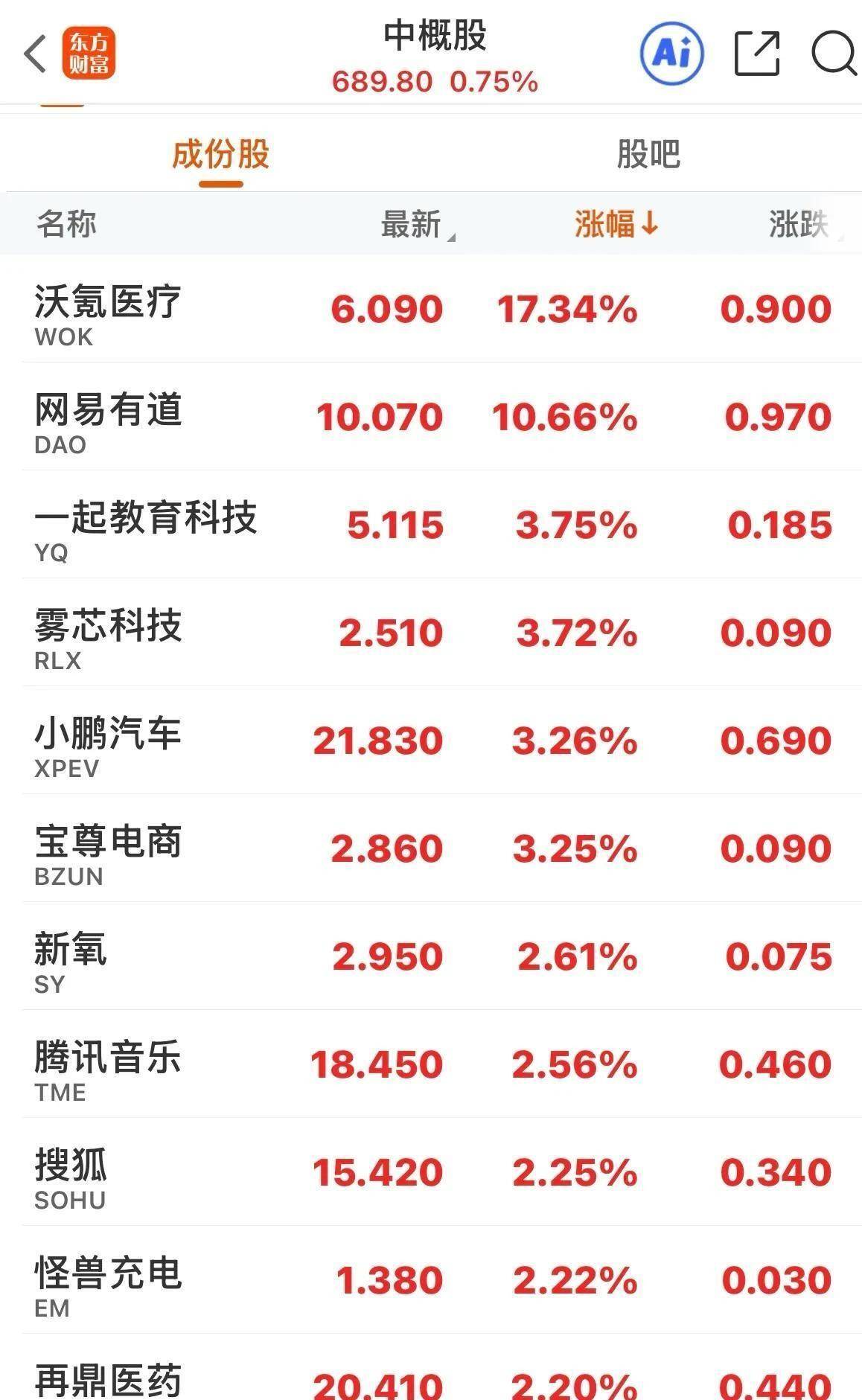
Market Overview - The U.S. stock market experienced an unexpected rebound, with the three major indices achieving a rare five-day winning streak, driven primarily by Intel rather than the anticipated AI giant Nvidia [1] - The Nasdaq index rose nearly 5% over the week, the S&P 500 increased by over 3.7%, and the Dow Jones Industrial Average climbed more than 3%, nearing historical highs [1] Federal Reserve Influence - The market sentiment shifted positively following dovish signals from Federal Reserve officials, particularly from Governor Christopher Waller, who indicated a lack of strong evidence for sustained inflation and supported pausing interest rate hikes in December [1] - The probability of a pause in rate hikes in December surged to over 80% according to the FedWatch tool [1] Technology Sector Performance - The technology sector saw a significant surge, with various tech concepts experiencing substantial gains; digital currency stocks rose over 5%, while mixed reality and co-packaged optics (CPO) concepts increased by over 4% [4] - Robotics stocks emerged as standout performers, with RBOT and LAZR soaring nearly 12% and 11%, respectively, driven by developments in Tesla's humanoid robot and IPOs from leading domestic robotics firms [4] Intel's Strategic Developments - Intel is positioned to potentially produce entry-level M-series processors for Apple starting in 2027, utilizing its advanced 18A process technology, which could lead to shipments of 15 to 20 million units [7][8] - The collaboration with Apple signifies a potential turnaround for Intel's foundry services, marking a significant milestone in regaining its competitive edge in the semiconductor industry [8] Broader Market Trends - Chinese concept stocks also saw a broad increase, with notable performances from companies like WoKe Medical and Xpeng Motors, reflecting a positive sentiment in the market [9] - European markets showed strength, with major indices like the FTSE 100 and DAX rising significantly over the past week, supported by expectations of stable interest rates from the European Central Bank [9] Conclusion - The year-end rally in the U.S. stock market was fueled by the Federal Reserve's interest rate outlook and Intel's potential recovery in its foundry business, alongside strong performances in robotics and CPO sectors [11]

英特尔可能与苹果达成合作 28日股价大涨超10%
Sou Hu Cai Jing· 2025-11-29 12:42
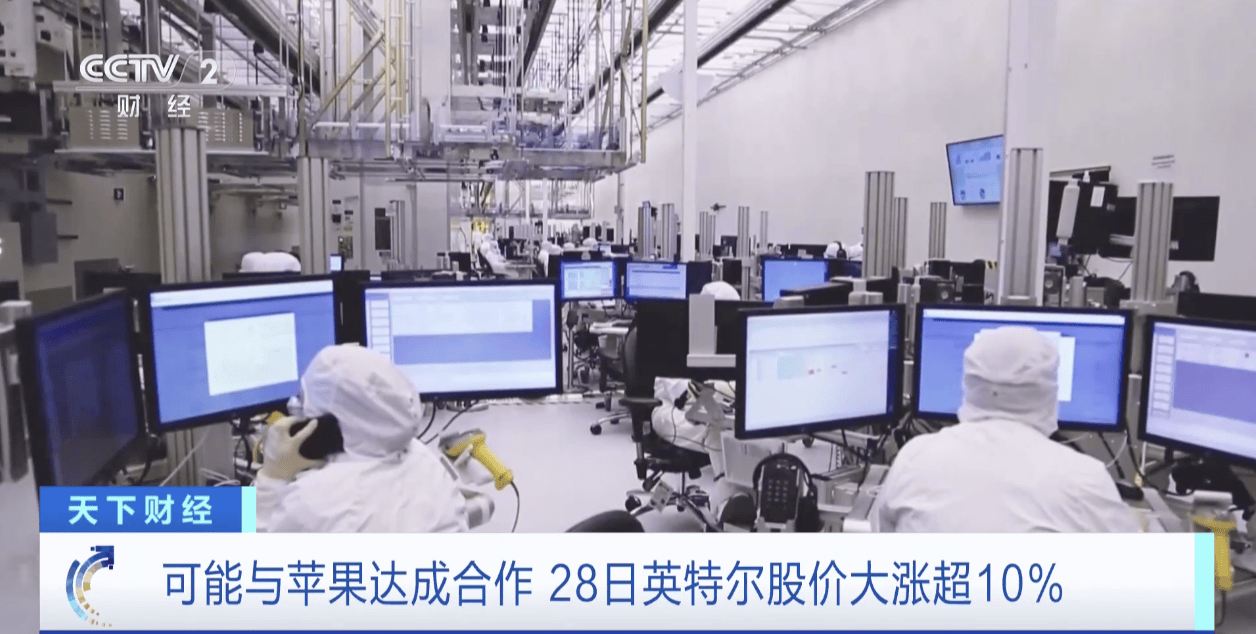
Core Viewpoint - The likelihood of collaboration between Intel and Apple in chip manufacturing has significantly increased, leading to a notable rise in Intel's stock price by over 10% on the day of the announcement [1][3]. Group 1: Collaboration Potential - Recent industry chain investigations indicate a heightened possibility of Intel becoming a supplier for Apple's advanced process technology [3]. - Apple has signed a confidentiality agreement with Intel and has obtained the design kit for Intel's advanced process 18AP, with key simulation and R&D projects progressing as expected [3]. - If developments proceed as planned, Apple aims to have Intel start manufacturing its entry-level M series processors using the 18AP process by the second to third quarter of 2027 [3]. Group 2: Market Impact - The news of potential collaboration led to a significant increase in Intel's stock price, marking its largest single-day gain in over two months, closing up more than 10% [1][3]. - The lowest-end M series chips, primarily used in Apple's MacBook Air and iPad Pro, are expected to have a combined shipment volume of approximately 20 million units this year [3]. Group 3: Historical Context - Intel previously collaborated with Apple, but the partnership was halted due to Intel's inability to meet Apple's chip upgrade demands [5]. - Analysts suggest that if Intel successfully partners with Apple this time, the implications would extend beyond mere business growth, potentially enhancing Intel's market position significantly [5].

2艘巨轮将抵华,中国运回更多黄金,特朗普访华前,中美相互赠礼
Sou Hu Cai Jing· 2025-11-29 08:27
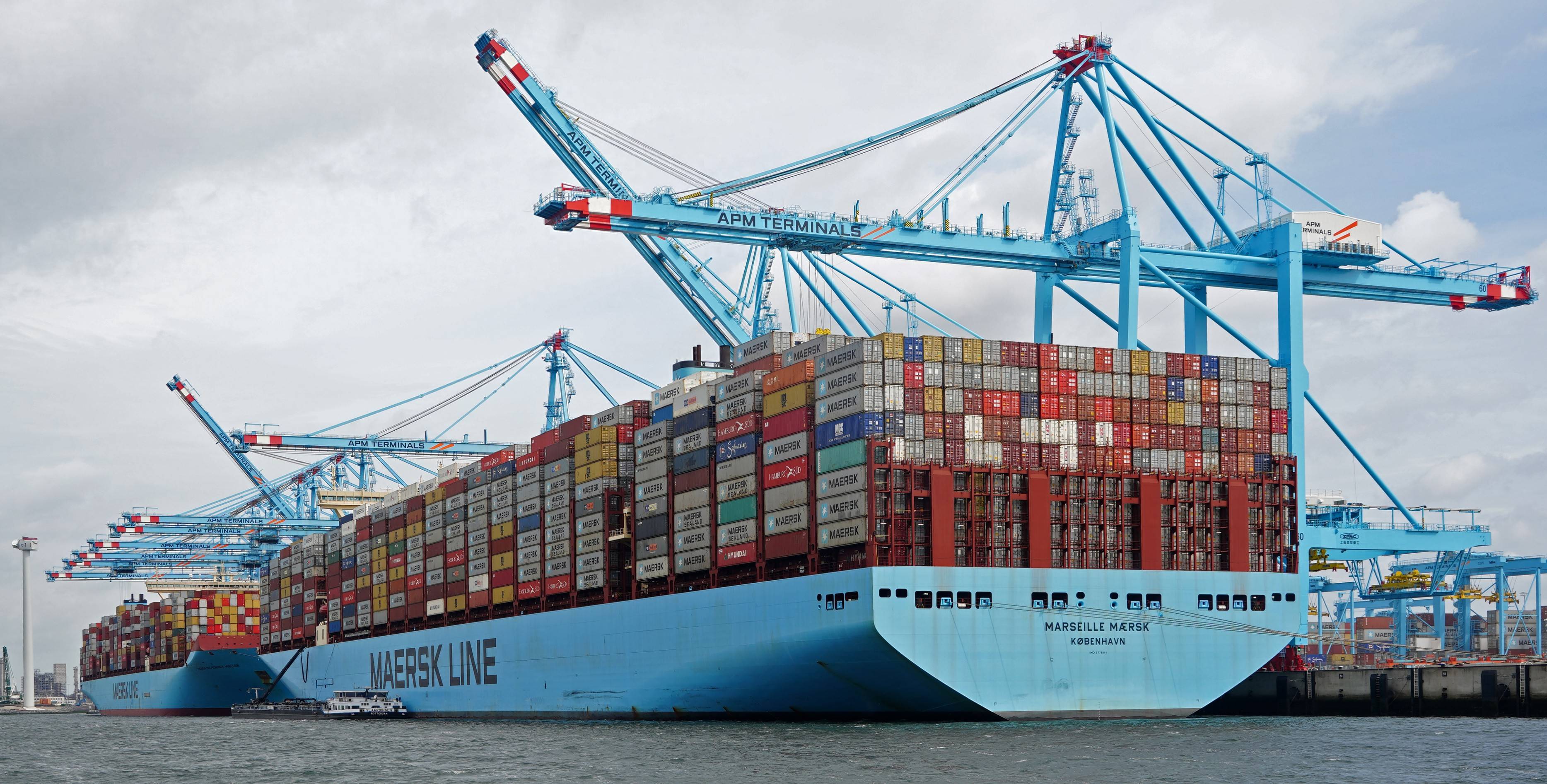
Group 1 - The core message of the article highlights the interconnectedness of recent events between China and the U.S., including gold repatriation, soybean trade, and discussions on AI chip exports, suggesting a nuanced approach to their relationship rather than outright reconciliation [1][10] Group 2 - China's gold reserves have increased for 12 consecutive months, surpassing 70 million ounces, as a strategy to reduce risk and stabilize its economic foundation amid global financial uncertainties [4] - The recent shipment of U.S. soybeans to China marks a significant moment in trade relations, indicating that despite political tensions, there remains a willingness to engage in mutually beneficial trade [6] - The ongoing discussions in the U.S. regarding the potential easing of AI chip export restrictions to China reflect the complexities of balancing national security concerns with economic interests, particularly for companies like Nvidia [8] Group 3 - The combination of gold repatriation, soybean purchases, and AI chip discussions illustrates a new phase in U.S.-China relations, characterized by pragmatic engagement rather than emotional ties, with both countries seeking to explore common ground while maintaining their respective interests [10]
广西柳州“智造”赋能产业园 为传统工业注入新动能
Zhong Guo Xin Wen Wang· 2025-11-28 09:21
中新网柳州11月28日电 日前,"2025主流媒体看广西产业园区高质量发展采风团"走进广西工业重镇柳 州,近距离感受这座老牌制造之城向"智造"迈进的成果。 在广西思必驰科技有限公司(下称"思必驰")的体验区内,一辆搭载人工智能座舱的汽车根据语音指令, 能自动调节空调、规划导航并推荐周边服务。 "我们的首个车载硬件客户是上汽通用五菱汽车股份有限公司,这是我们落地柳州的重要基础。"思必驰 总经理施宋磊表示,企业布局柳州主要基于三方面考量:核心客户集聚、政府支持力度大、产业生态协 同高效。"在柳州,技术人才资源池深厚,隔壁企业培养的人才也可能为我们所用,这大幅降低了用工 与生产成本。" 施宋磊透露,落地广西还看中这里的区位优势。该公司与广西民族大学开展校企合作,聘请近80名小语 种专业学生,共同研发面向越南、泰国等国家的语音模型,实现"北上广研发+广西集成+东盟应用"。 在柳州市北部生态新区,采风团还探访了广西首家芯片企业——广西飓芯科技有限责任公司。在这里, 国内首条氮化镓半导体激光器量产线正有序运转,实现了该类芯片的进口替代和自主可控。 近年来,以人工智能及机器人产业为突破口,北部生态新区已构建起从核心部件到终 ...