家电

Search documents
核心资产基金池202602:低波动质量投资
Guolian Minsheng Securities· 2026-02-14 05:09
Group 1: Report's Industry Investment Rating - No relevant content provided Group 2: Report's Core View - The report defines core assets in A - shares from four perspectives: track leaders, resource endowments, excellent business models, and technological advantages, and selects core - asset funds for investors' reference. From February 2, 2015, to February 6, 2026, the fund pool had an annualized return of 9.14% and a portfolio annualized Sharpe ratio of 0.51. The core - asset portfolio achieved excess returns in most years, with excess returns mainly coming from industry and stock selection, and a style more inclined to large - cap quality investment. The current long - term industry allocation is mainly in consumption, cycles, and finance, with a significant increase in the latest cycle - sector holdings and a reduction in consumption - sector allocation [7]. Group 3: Summary According to the Directory 1 Core Asset Fund Pool Concept Introduction and Historical Performance 1.1 Core Asset Investment Concept Introduction - Core assets are companies with core competitive advantages, excellent financial indicators, and stable governance. The report looks for core - asset enterprises from four perspectives: track leaders, resource endowments, excellent business models, and technological advantages, aiming to form a regularly updated core - asset stock pool. The industry distribution of the core - asset stock pool follows macro - economic changes, shifting from the financial and cycle sectors to a relatively balanced distribution of consumption, TMT, and manufacturing [10][13]. 1.2 Core Asset Fund Pool: Low Portfolio Volatility - From February 2, 2015, to February 6, 2026, the fund pool had an annualized return of 9.14% and a portfolio annualized Sharpe ratio of 0.51. The core - asset portfolio achieved excess returns in most years, especially in volatile, bear, and structural bull markets. The excess returns mainly came from stock selection and industry allocation, but it was not dominant in dynamic returns. The configuration style is large - cap high - quality investment, with relatively low portfolio elasticity and growth, prominent value attributes, and strong profitability of holdings. The current industry allocation is mainly in cycles and consumption, with a significant increase in the latest cycle - sector holdings and a reduction in consumption - sector allocation [16][18][24]. 2 Core Asset Fund Pool Definition and Screening 2.1 Definition of Core - Asset Type Funds - The definition is based on the relatively low - valuation characteristics of holdings. The research objects are active equity funds, with a sample of fund products and fund managers. The requirements include a tenure of over 1 year, a current scale of over 100 million yuan, exclusion of fixed - open and holding - period products, an average equity position of over 60% since the current fund manager took office, an average proportion of the top ten heavy - holding stocks in stock investment of over 35%, an average proportion of core - asset stocks in heavy - holding stocks of over 50% since the current fund manager took office, an average proportion of core - asset stocks in heavy - holding stocks of over 60% in the past year, and a minimum heavy - holding proportion of over 40% [27]. 2.2 Core Asset Fund Pool Screening - Select funds with low exposure to the heavy - holding beta factor in the past 12 months and a high ratio of operating cash flow TTM to total market value. Construct relevant factor combinations and select the top 10 funds by factor score with equal weight. The current portfolio holding list includes 10 funds such as Southern Component Selection A, with scale data as of December 31, 2025, and performance data as of February 6, 2026 [28]. 3 Multidimensional Analysis of Portfolio Funds - Southern Component Selection A focuses on the growth style, invests in multiple growth tracks such as electronics and machinery, and has outstanding stock - picking ability, suitable for investors who can tolerate short - term market fluctuations [30]. - Dacheng Selective Value - Added A adheres to a value - growth balanced strategy, focuses on consumer leaders, high - dividend technology, and consumer - technology hardware, has stable long - term stock - picking ability and good drawdown control, but is limited in elasticity during extreme style switches [32]. - Penghua Strategy Preferred focuses on the mid - cap growth style, focuses on "cycle + growth" tracks such as non - ferrous metals and power equipment, and is suitable for investors seeking long - term stable returns [35]. - Taiping Flexible Allocation uses a top - down multi - factor analysis method to dynamically adjust the investment ratio of assets such as stocks, bonds, and stock index futures to reduce risks and maximize returns [36][37]. - Nord New Prosperity A advocates a long - term investment concept, focuses on excavating high - quality enterprises with continuous growth potential, and obtains returns through medium - and long - term holding [39]. - ICBC New Blue - Chip A looks for undervalued assets in industries with low market attention, focuses on industry supply - side changes and improvement opportunities in supply - demand relationships, and lays out at the market's expected low point [41]. - Penghua Extended Growth has a bottom - up investment style, dilutes timing, diversifies industries but concentrates on individual stocks, and uses a self - built model to lock in the "certainty" of performance growth [43]. - HSBC Jintrust Consumption Dividend uses a combination of top - down and bottom - up methods, analyzes the macro - economic environment, policy orientation, and industry development trends to judge the prosperity of different consumer sub - industries, and preferentially allocates industries in the upward cycle or with long - term growth potential [46][47]. - Southern Quality Preferred A believes that the essence of investment is to judge the difference between the intrinsic value and market price of assets, and emphasizes finding "undervalued" opportunities through in - depth research [49]. - Dacheng Core Value Selection A adheres to the value - investment concept, looks for high - quality enterprises with intrinsic value through in - depth analysis of enterprise financial conditions, free cash flow, competitive barriers, and long - term profitability, and aims for long - term holding [52].
“小发票”里的大文章丨市场“净化器”——从“不开票”到“抢着开”的深层博弈
Sou Hu Cai Jing· 2026-02-14 02:09
Core Viewpoint - The implementation of the "prize invoice" pilot program in 50 cities aims to encourage consumers to request invoices, thereby promoting compliance among businesses and enhancing tax revenue collection [1][2][3] Group 1: Industry Practices - The practice of "not issuing invoices and offering drinks" has been a common unspoken rule in industries closely related to personal consumption, such as dining and retail, allowing businesses to hide income and evade taxes [1] - This behavior creates an unfair competitive advantage for non-compliant businesses, leading to a situation where law-abiding companies suffer from price pressures [1][2] Group 2: Impact of Prize Invoices - The "prize invoice" initiative allows consumers to participate in a lottery for invoices over 100 yuan, with potential rewards up to 800 yuan, thereby increasing the incentive to request invoices [2] - Early trials in some provinces showed significant increases in invoice issuance rates and amounts, particularly in the furniture and home improvement sectors, with invoice counts up over 70% and amounts up over 90% [3] Group 3: Tax Revenue and Compliance - The program is expected to enhance tax compliance and improve the overall tax environment by encouraging consumers to demand invoices, which in turn pressures businesses to operate legally [2][3] - The initiative leverages small fiscal expenditures to stimulate large-scale social oversight, improving tax administration efficiency and fostering a sense of fairness in tax burdens across industries [3]
财信证券袁闯: 估值驱动行情延续 节后把握结构性机会
Zhong Guo Zheng Quan Bao· 2026-02-13 20:31
Core Viewpoint - The A-share market is expected to continue its upward trend post-Spring Festival, driven by a combination of trend inertia, seasonal effects, and policy environment support [3] Market Characteristics - The A-share market is influenced by multiple factors, exhibiting a complex overall pattern characterized by clear trends, numerous short-term disturbances, and significant structural differentiation [1] - The core driving force for the market's upward trend is the self-propelling nature of the market, supported by regulatory measures to mitigate risks and prevent overheating [1][3] - Key support for the market's upward movement includes improving corporate profit outlooks, increased willingness of residents to invest savings, and ongoing policies to optimize industry competition [1][2] Short-term Market Dynamics - Short-term market fluctuations are influenced by holiday effects, with some funds opting to secure profits before the Lunar New Year, leading to a temporary decrease in trading activity [2] - The performance of U.S. tech giants, Federal Reserve policy, and geopolitical events indirectly affect the rotation of A-share industries [2] Investment Strategy - Post-Spring Festival, the investment logic will focus on "value supporting growth," with a shift from low-risk to high-risk preferences, emphasizing technology and cyclical price increases [5] - Five main investment lines are suggested: 1. AI industry chain focusing on application breakthroughs [5] 2. High dividend assets in stable cash flow sectors [5] 3. Anti-involution sectors benefiting from improved competition [5] 4. Core areas of domestic demand recovery, particularly in health and travel sectors [6] 5. Investment opportunities in strategic and industrial metals [6] Market Outlook - The market is expected to experience a "red envelope market" post-Spring Festival, with potential for further expansion due to the current market's performance being below historical averages [3] - The growth of the A-share market is anticipated to be independent of the overall yearly trend, with a focus on technology growth while balancing risks across multiple sectors [6]
“科技年货”畅销,家电以旧换新国补、店补、厂补齐上场
第一财经· 2026-02-13 13:37
Core Viewpoint - The article highlights the impact of the new national subsidy program and promotional activities on consumer electronics sales during the upcoming Spring Festival, emphasizing the popularity of large-screen AI televisions and smart appliances [3][4]. Group 1: National Subsidy and Consumer Behavior - The new round of national subsidies has led to a significant increase in consumer demand for home appliances, particularly large-screen AI televisions and smart cleaning devices, as consumers take advantage of promotional offers [3][5]. - The Ministry of Commerce and other nine organizations have launched a special Spring Festival activity plan to ensure consumers can access subsidies for old-for-new appliance exchanges and to enhance product supply during the holiday [3][4]. Group 2: Sales Performance and Trends - Sales of air conditioners, smartphones, and computers have consistently topped the subsidy leaderboard, with offline sales experiencing a 15%-30% increase due to optimized immediate consumption incentives [4][5]. - High-end products are seeing a notable boost from the subsidies, with sales of energy-efficient appliances and high-end smartphones making up over 70% of sales in certain categories [5][6]. - Local retailers have reported significant sales growth, with some experiencing nearly 40% year-on-year increases in revenue since the start of the new subsidy program [6]. Group 3: Market Predictions - The orderly implementation of the new subsidy program is expected to lead to a strong start for the domestic home appliance market in early 2026, contrasting with previous years where there were disruptions [6].

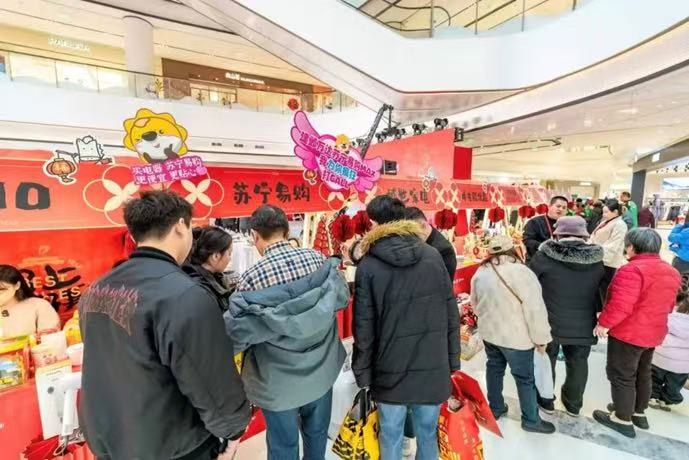
中国厂商掌握6成日本电视市场
36氪· 2026-02-13 13:34
Core Viewpoint - The article discusses the significant shift in the Japanese television market, highlighting the increasing dominance of Chinese companies and the necessity for Japanese firms to adapt their business models as they retreat from the consumer electronics sector [4][5]. Group 1: Market Dynamics - Sony Group plans to divest its television business, transitioning it to a joint venture led by Chinese giant TCL, which will result in Chinese companies controlling 60% of the Japanese domestic television market by 2025 [5][6]. - REGZA, a brand associated with Toshiba, is primarily manufactured and sold by TVS REGZA, which is 95% owned by China's Hisense Group, indicating a significant shift in capital ownership within the market [5][6]. Group 2: Competitive Landscape - Chinese companies, such as TCL, are outperforming Japanese firms in pricing, with a 43-inch 4K LCD TV priced around 50,000 yen (approximately 2,257.55 RMB) compared to Sony's price of around 100,000 yen (approximately 4,515.1 RMB) [5]. - By 2025, if Sony's brand is fully integrated into the TCL-led joint venture, the Chinese market share in Japan's television sector is projected to reach 60% [6]. Group 3: Broader Implications - The global television market is increasingly dominated by companies like Samsung and LG, with Japanese firms losing their competitive edge [8]. - Panasonic is the only major Japanese company pursuing an independent strategy in the television sector, while others are considering divestment or restructuring [8][9]. - Japanese companies are shifting focus from hardware to digital services and infrastructure, as exemplified by Sony and Hitachi's transition to revenue models based on continuous service offerings [9].



“科技年货”畅销,家电以旧换新国补、店补、厂补齐上场
Di Yi Cai Jing· 2026-02-13 11:52
Group 1 - Consumer demand for household appliances, home gatherings, and tech gifts is significantly increasing as the Spring Festival approaches [1][4] - The new 75-inch Mini LED TV with AI features was purchased at a discounted price of 7500 yuan after various subsidies and promotions [3] - The Ministry of Commerce and other nine units have launched the "2026 'Happy Shopping Spring Festival' Special Activity Plan" to support consumer purchases through subsidies and promotional activities during the Spring Festival [3] Group 2 - High-end appliances and 3C products are becoming popular as consumers seek efficiency and atmosphere for home gatherings [4] - Sales of energy-efficient and water-efficient products have reached 92% in the home appliance category at Suning, with over 70% of mobile phone sales being high-end models [4] - The introduction of new national subsidies has led to a significant increase in sales, with some companies reporting revenue growth of nearly 40% year-on-year [5] Group 3 - AI features are transitioning from high-end products to mainstream offerings, with nearly 60% of related product sales at Suning [5] - The local distribution of national subsidy vouchers has been increased to stimulate consumer spending ahead of the Spring Festival [5] - The domestic home appliance market is expected to see a strong start this year due to the orderly implementation of the new round of national subsidies [5]

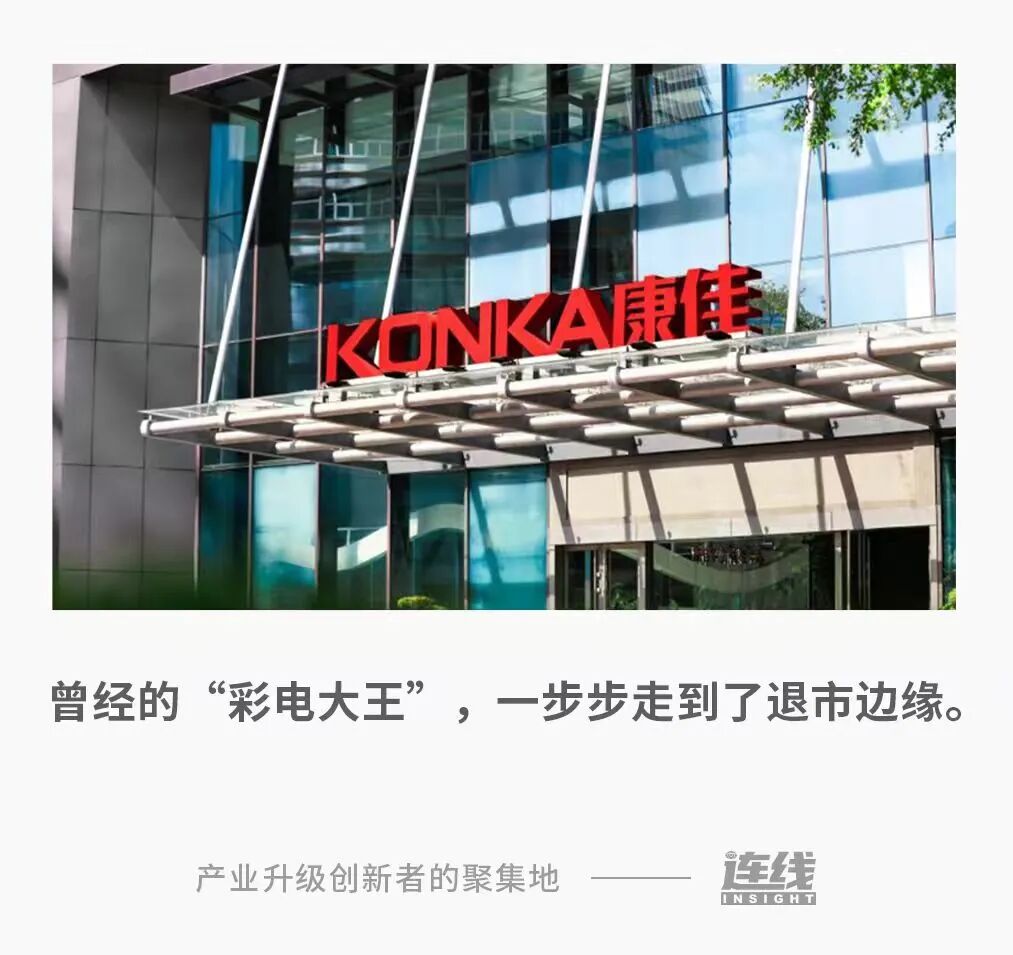
巨亏百亿、节节败退,康佳究竟犯了什么错?
Xin Lang Cai Jing· 2026-02-13 11:07
Core Viewpoint - The article discusses the decline of Konka, a once-prominent player in the Chinese television market, highlighting its significant financial losses and strategic missteps that have led to its current precarious position in the industry [5][11]. Financial Performance - Konka is expected to report a net profit loss of between 12.581 billion to 15.573 billion yuan for 2025, a staggering increase from a loss of 3.296 billion yuan the previous year, marking a year-on-year increase of 3.8 to 4.7 times [5][6]. - The company's revenue for 2025 is projected to be between 9 billion to 10.5 billion yuan, reflecting a decline of 5.53% to 19% compared to the previous year [5][6]. - As of the end of 2025, Konka's net assets are expected to turn negative, ranging from -5.334 billion to -8.001 billion yuan, which could trigger delisting risks under stock exchange regulations [10][11]. Business Strategy and Challenges - Konka's diversification strategy has led to a lack of focus on its core consumer electronics business, resulting in diminished market presence and competitiveness [5][17]. - The company has ventured into various sectors such as real estate, semiconductors, and environmental protection, but these efforts have not yielded profitable results and have instead strained its resources [17][18]. - The consumer electronics segment, which accounts for approximately 90% of Konka's revenue, has been underperforming, with a gross margin of only 3.23% and significant losses in its core television business [7][8]. Market Position - Once a leading brand in the television market, Konka has fallen to a position outside the top tier, with its brand recognition declining among younger consumers [8][11]. - The company's market share has diminished significantly, with its television shipments ranking it outside the top four in the industry [8][11]. Management Changes and Future Outlook - Following a change in control to China Resources Group, Konka's management has undergone significant restructuring, with hopes that the new leadership will stabilize the company and guide it through its financial difficulties [19][20]. - China Resources has provided financial support, including a low-interest loan of 3.97 billion yuan, aimed at alleviating Konka's cash flow issues and supporting its operational needs [22][24]. - The path to recovery for Konka involves focusing on its core consumer electronics business while also developing its semiconductor and PCB sectors, requiring time and strategic effort to regain market position [24].

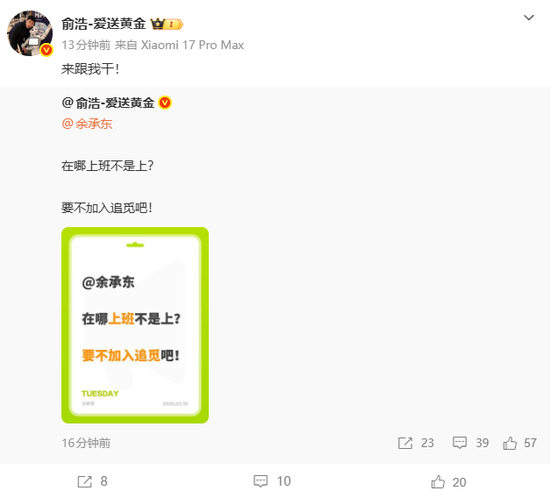
追觅“狂人”CEO,刚刚公开挖角余承东,还称要在5年内当上世界首富
Xin Lang Cai Jing· 2026-02-13 09:17
Core Viewpoint - The article discusses the recent activities and ambitions of Yu Hao, the CEO of Dreame Technology, highlighting his aggressive marketing strategies and plans for diversification into automotive, mobile, and aerospace sectors, while also drawing comparisons to other tech leaders like Lei Jun and Yu Chengdong [1][2][3]. Group 1: Company Background and Market Position - Dreame Technology, founded in 2017, initially focused on vacuum cleaners and robotic vacuums, becoming a key player in Xiaomi's ecosystem [4][26]. - The company achieved a market share of 20.4% in the domestic robotic vacuum market by mid-2024, but currently ranks third globally with a share of 12.4% [4][12][36]. - In the Chinese market, Dreame's share is approximately 8.8%, placing it behind competitors like Ecovacs and Roborock [14][36]. Group 2: Expansion Plans and New Ventures - Yu Hao has announced ambitious plans for Dreame to enter the automotive sector, with a goal to launch a luxury electric vehicle by 2027, directly competing with brands like Bugatti [4][26]. - The company is also venturing into mobile phone production, aiming for the high-end market, although the competitive landscape is challenging [5][27]. - Additionally, Dreame has established a new business unit focused on aerospace, citing the natural extension of its technology capabilities into space exploration [7][29]. Group 3: Marketing and Public Relations Strategy - Yu Hao's recent social media activity has significantly increased Dreame's visibility, with claims of becoming the world's first trillion-dollar company and aiming to be the world's richest person in five years [2][24]. - The strategy includes leveraging his personal brand to drive traffic and sales for Dreame's core products, particularly in the robotic vacuum segment [17][39]. - Controversies have arisen, such as accusations against competitor Ecovacs for allegedly using paid promotions to undermine Dreame's brand [39][40]. Group 4: Industry Comparisons and Challenges - Comparisons are drawn between Yu Hao and other tech entrepreneurs like Lei Jun and Yu Chengdong, suggesting that his high-profile approach may be a strategy to enhance Dreame's brand recognition [9][43]. - The article raises concerns about the feasibility of Yu Hao's ambitious plans, likening him to Jia Yueting, who faced challenges in executing his vision for electric vehicles [20][43]. - The article suggests that while Dreame has grand aspirations, the immediate focus may still be on outperforming competitors like Ecovacs and Roborock in the robotic vacuum market [21][43].
鄂尔多斯旗区也派消费红包!家政年货都实惠
Nei Meng Gu Ri Bao· 2026-02-13 08:51
Group 1 - The core idea of the news is the launch of a comprehensive consumer subsidy program in Ordos City, aimed at boosting spending during the upcoming Spring Festival with significant financial incentives for various sectors [1][2] - The program includes a vehicle trade-in subsidy of up to 20,000 yuan and a maximum subsidy of 1,500 yuan for energy-efficient home appliances and digital products, encouraging consumers to upgrade their purchases [1] - Multiple rounds of consumer vouchers will be distributed, covering shopping, dining, cultural tourism, and home services, effectively reducing costs for consumers and stimulating spending [1] Group 2 - The East Victory District will issue 2 million yuan in consumer vouchers weekly, covering supermarkets and restaurants, along with an additional 3 million yuan in vehicle trade-in subsidies to enhance consumer experience [2] - The Yijinhuoluo Banner focuses on cultural tourism with a 5 million yuan subsidy benefiting scenic spots and lantern festivals, allowing residents and tourists to enjoy discounts while exploring the city [2] - The Ordos City has planned nearly 100 Spring Festival consumer activities, catering to various needs from purchasing New Year goods to leisure and quality upgrades, ensuring a comprehensive approach to meet festive demands [2]

大江时评:“千集万店”春潮涌,赣鄱消费“马”蹄疾
Sou Hu Cai Jing· 2026-02-13 08:51
Core Viewpoint - The launch of the "Thousand Collections and Ten Thousand Stores" New Year Consumption Season in Jiangxi Province aims to stimulate consumer spending with a total funding of 1.7 billion yuan, focusing on rural and New Year consumption [1][3]. Group 1: Funding and Subsidies - Jiangxi Province has allocated 1.7 billion yuan to support various categories of new purchases and subsidies during the New Year season, including up to 20,000 yuan for car scrapping and replacement, 15% off for energy-efficient home appliances, and 500 yuan subsidy for new mobile devices [1]. - The introduction of a "blind box surprise" initiative allows consumers to enter a lottery for every 200 yuan spent, enhancing the shopping experience and turning policy benefits into enjoyable surprises for consumers [1]. Group 2: Rural Consumption Strategy - The "Thousand Collections and Ten Thousand Stores" initiative emphasizes the integration of urban and rural consumption, with a focus on enhancing the quality and expansion of rural consumption through targeted actions [2]. - A special action plan to promote rural consumption will be implemented, focusing on increasing income, strengthening supply, and improving the environment to support rural markets [2]. Group 3: Overall Economic Impact - The consumption season is expected to not only boost spending during the New Year but also contribute to the overall economic vitality of Jiangxi Province throughout the year, reinforcing the idea that increased consumption leads to a thriving economy [3].