
农产品贸易

Search documents
颍上县玖昌贸易有限公司成立 注册资本10万人民币
Sou Hu Cai Jing· 2025-09-16 01:41
Group 1 - A new company, Yushang County Jiuchang Trading Co., Ltd., has been established with a registered capital of 100,000 RMB [1] - The legal representative of the company is Chen Chen [1] - The company's business scope includes the sale of pre-packaged food, health food, and agricultural products, as well as various consulting services [1] Group 2 - The company is permitted to produce food-grade plastic packaging containers and tools, as well as health food and infant formula [1] - The company can engage in internet sales of pre-packaged food and other agricultural products [1] - The business operations are subject to approval from relevant authorities for certain activities [1]
外贸一线观察:中国东盟农品贸易八年共赢之路
Yang Shi Wang· 2025-09-16 00:02
央视网消息:我国与东盟充分发挥各自的资源优势、产业结构优势,经贸关系日益紧密,贸易互补 也不断增强,尤其是在农产品合作方面互惠互利,东盟已连续8年保持中国农产品第一大贸易伙伴地 位。 ...
德黑兰时报编译版:哈萨克斯坦对伊朗石化产品仍有需求
Shang Wu Bu Wang Zhan· 2025-09-15 16:03
Core Viewpoint - Kazakhstan continues to have a demand for Iranian petrochemical products despite launching multiple petrochemical projects in recent years, as domestic production has not yet met local needs [1] Group 1: Trade Relations - The trade situation between Iran and Kazakhstan has been positive this year, with Iranian exports to Kazakhstan amounting to 9 million USD and imports from Kazakhstan reaching 53 million USD from March 21 to June 21, 2025, both showing year-on-year growth [1] - Major trade goods between the two countries include sunflower seeds, corn, barley, and livestock products [1]
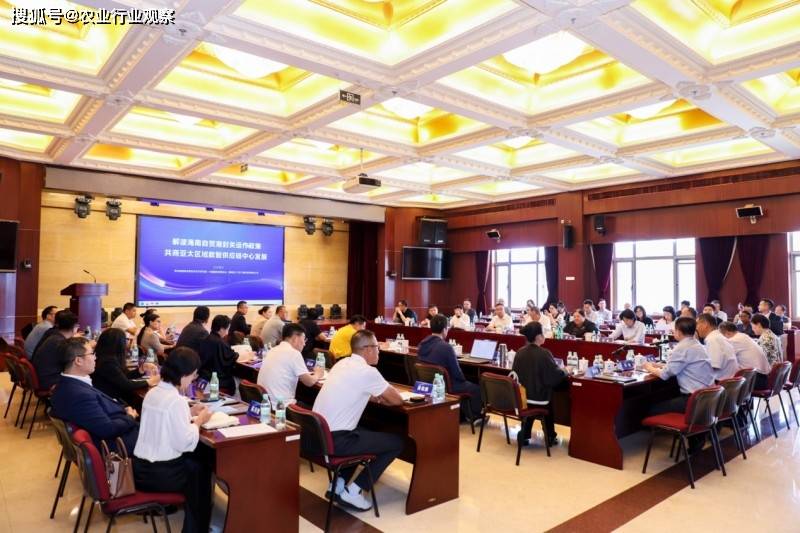
聚焦海南自贸区发展,共探数智供应链与可信体系建设
Sou Hu Cai Jing· 2025-09-15 10:23
Core Viewpoint - The seminar focused on the operational policies of Hainan Free Trade Port and the development of a digital supply chain center in the Asia-Pacific region, emphasizing the integration of digital technology and trade facilitation [1][3][13] Group 1: Hainan Free Trade Port - Hainan Free Trade Port is positioned as a frontier for China's institutional opening, aiming to enhance trade facilitation and promote regional digital economy connectivity [3] - The core value of Hainan Free Trade Port lies in integrating dispersed policies into an efficient collaborative system, significantly reducing cross-border operational costs for SMEs through digital supply chain solutions [5] - The phased implementation of the closure operation is expected to reach a certain scale by early 2025 and be fully mature by 2035, with private enterprises holding a 63.7% share in foreign trade [8] Group 2: Digital Supply Chain Development - The establishment of a credible trade system and full-chain traceability technology is crucial for enhancing the international reputation and bargaining power of agricultural products [8] - Recommendations include strengthening policy support, aligning with high-standard international rules like CPTPP and RCEP, and developing a regional logistics circle [6] - The goal is to create a transparent, reliable, and compliant credible mechanism supported by technologies such as blockchain and big data, enhancing supply chain resilience and efficiency [9] Group 3: Future Prospects - The construction of a competitive digital supply chain platform is essential for enabling two-way trade and creating a global trade network [13] - The successful hosting of the seminar is seen as a significant step towards outlining a grand blueprint for the future development of Hainan Free Trade Port [13]

海口兰卡斯里贸易有限公司成立 注册资本60万人民币
Sou Hu Cai Jing· 2025-09-13 11:13
Core Viewpoint - Haikou Lankasri Trading Co., Ltd. has been established with a registered capital of 600,000 RMB, focusing on various trading activities including jewelry and art products [1] Company Summary - The legal representative of Haikou Lankasri Trading Co., Ltd. is Xiao Feng [1] - The company has a registered capital of 600,000 RMB [1] - The business scope includes wholesale of jewelry, arts and crafts, and agricultural products, as well as manufacturing and repair services for jewelry [1] Industry Summary - The company operates in the jewelry and arts industry, with a focus on wholesale and manufacturing [1] - The business activities are compliant with local regulations, as indicated by the self-managed operation of general business projects [1]
u200b2025年1-7月俄对华粮食出口增长10%,农工产品贸易总额同比增长14%
Shang Wu Bu Wang Zhan· 2025-09-12 16:33
Core Insights - In the period from January to July 2025, Russia's grain exports to China increased by 10%, while the total trade volume of agricultural products grew by 14% [1] Group 1: Trade Growth - The increase in grain exports is attributed to significant rises in the supply of Russian canola oil, frozen fish, peas, crustaceans, and pork [1] - Russia is actively promoting a wider variety of livestock and plant products to enter the Chinese market [1] Group 2: Export Agreements - By 2024, over 100 Russian fish producers have obtained export qualifications to China, significantly diversifying the seafood supply [1] - In 2025, agreements were reached regarding the export of coarse wheat flour and rye flour, along with the signing of protocols for the export of deer antlers and live reindeer to China [1]
前8个月中越河口口岸出口农产品逾55亿元
Zhong Guo Xin Wen Wang· 2025-09-12 16:15
Core Insights - The export value of agricultural products through the Vietnam-China border at the Hekou port reached 5.57 billion yuan in the first eight months of 2025, marking a year-on-year increase of 10.7% [1] - The Hekou port is the largest land port in the Yunnan section of the China-Vietnam border, facilitating significant trade in fresh fruits and vegetables [1] - The establishment of a "green channel" for rapid customs clearance of agricultural products in 2019 has enhanced the efficiency of cross-border logistics [1] Export Performance - In the first eight months of 2025, the total import and export value at Hekou port was 12.63 billion yuan, with exports valued at 8.85 billion yuan, reflecting a year-on-year growth of 24.5% [1] - The peak season for agricultural product exports occurs from June to October, with over 70 trucks of fresh fruits and vegetables exported to Vietnam daily [1] Logistics and Efficiency - The cross-border logistics model has been upgraded, with the GMS (Greater Mekong Subregion) direct transport mode operating regularly at Hekou port [1] - The rapid customs clearance process allows for fresh pomegranates to be picked and packaged in the morning and delivered to Vietnamese customers by the afternoon, emphasizing the importance of freshness in competition [1]

金健米业(600127.SH)拟对子公司金健国贸增资9000万元
智通财经网· 2025-09-12 10:10
Core Viewpoint - The company aims to optimize its financial structure and enhance its credit rating and financing capabilities through a capital increase in its subsidiary, thereby improving operational efficiency and market competitiveness [1] Group 1: Capital Increase - The company has decided to increase the capital of Hunan Agricultural Development Jinjian International Trade Co., Ltd. by 90 million yuan [1] - After the capital increase, the registered capital of Jinjian International Trade will rise from 10 million yuan to 100 million yuan [1] - The company will directly hold 99% of Jinjian International Trade and indirectly hold 1% through its wholly-owned subsidiary, Hunan Jinjian Rice Industry Marketing Co., Ltd., resulting in 100% ownership [1] Group 2: Strategic Objectives - The capital increase is intended to enhance the stability of the company's supply chain and the resilience of its industrial chain [1] - The company aims to strengthen its role as a stabilizing force in price and supply as a state-owned enterprise [1] - The initiative is part of a broader strategy to improve market competitiveness and strategic support capabilities [1]

金健米业拟对子公司金健国贸增资9000万元
Zhi Tong Cai Jing· 2025-09-12 10:07
Group 1 - The company, Jinjian Rice Industry, announced an increase in capital of 90 million RMB to optimize the financial structure of its subsidiary, Jinjian International Trade Co., Ltd. [1] - After the capital increase, the registered capital of Jinjian International Trade will rise from 10 million RMB to 100 million RMB, with the company holding 99% of the shares directly and 1% indirectly through its wholly-owned subsidiary [1] - This move aims to enhance the company's credit rating, financing capacity, operational efficiency, and market competitiveness, while ensuring the stability of its supply chain [1]
金健米业(600127.SH)对金健国贸公司增资9000万元
Ge Long Hui A P P· 2025-09-12 09:30
Core Viewpoint - The company aims to optimize its financial structure and enhance its credit rating and financing capabilities through a capital increase in its subsidiary, Jin Jian International Trade Co., Ltd. This move is intended to improve operational efficiency and strengthen the stability of its supply chain and market competitiveness [1] Group 1: Capital Increase Details - The company will increase its capital in Jin Jian International Trade Co., Ltd. by 90 million yuan, funded from its own resources [1] - Following the capital increase, the registered capital of Jin Jian International Trade Co., Ltd. will rise from 10 million yuan to 100 million yuan [1] - The company will directly hold 99% of Jin Jian International Trade Co., Ltd. and indirectly hold 1% through its wholly-owned subsidiary, Hunan Jin Jian Rice Industry Marketing Co., Ltd., resulting in a total ownership of 100% [1] Group 2: Subsidiary Operations - Jin Jian International Trade Co., Ltd. is a wholly-owned subsidiary that primarily supports the company's core production and processing needs [1] - The subsidiary focuses on procurement and sales activities related to key agricultural products such as oils, rice, and wheat flour [1]